
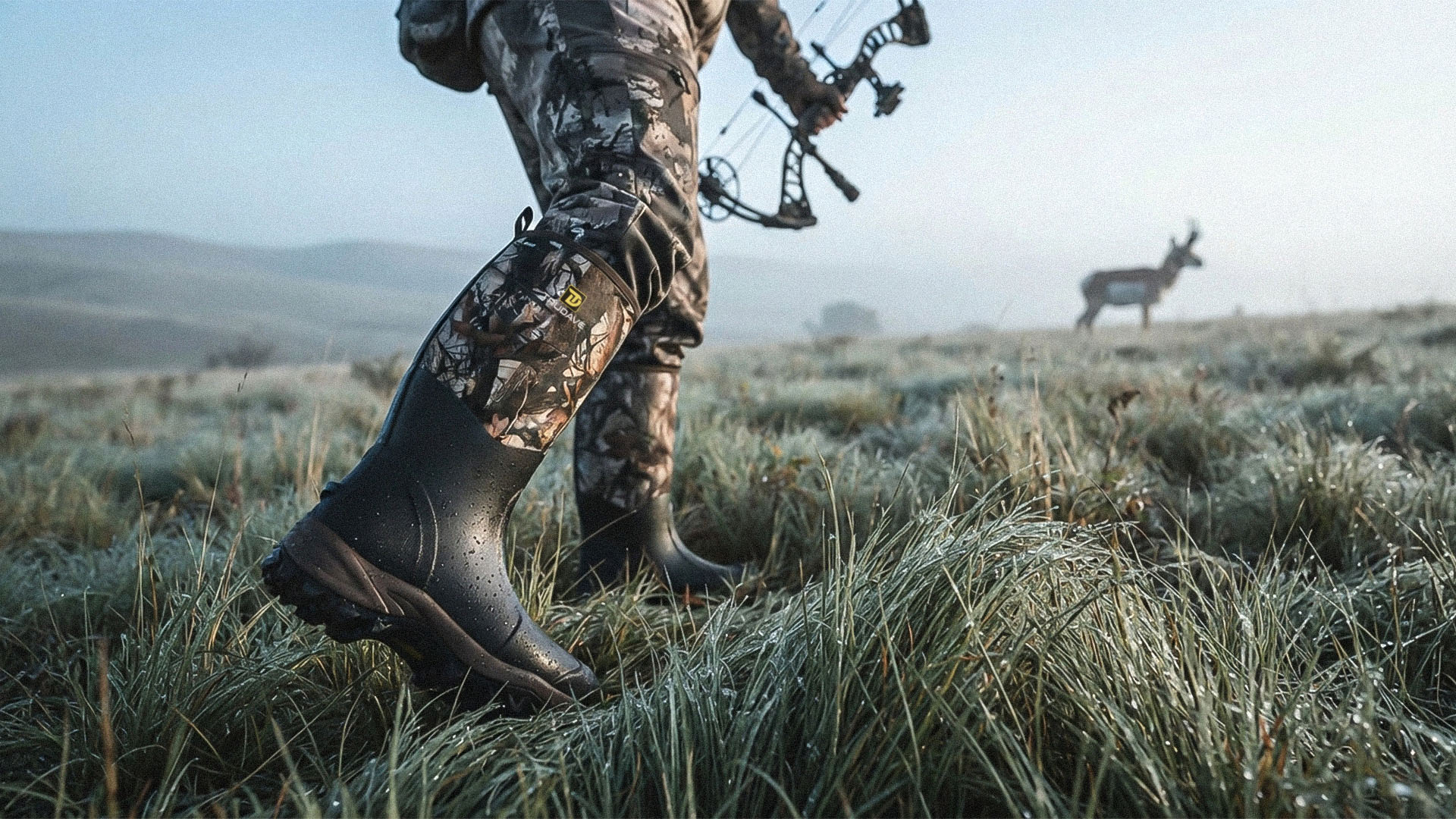
Pronghorn country looks simple.
That is what makes it difficult.
A hunter stands on a ridge and sees miles of open prairie.
Short grass.
Rolling hills.
Sagebrush.
Dry creek beds.
There appears to be nowhere for an animal to hide.
Then a pair of binoculars reveals a small group of pronghorn several miles away.
The hunter immediately understands the challenge.
There is no thick forest to conceal movement.
No dense brush to crawl through.
No easy way to disappear.
Pronghorn survive because they see danger before most animals even know it exists.
They are among the fastest land animals in North America, and their eyesight is one of their greatest defenses.
Successful pronghorn hunting is not about moving faster.
It is about planning better.
It is about using terrain, wind, distance, and patience to overcome an animal built for open country.
Pronghorn Are Designed for Open Landscapes
Pronghorn are strongly associated with western open-country environments.
Their habitat often includes:
- Shortgrass prairie
- Sagebrush flats
- High desert
- Rolling plains
- Desert grasslands
- Agricultural edges
- Open basins
- Rocky foothills
Unlike many big-game animals, pronghorn do not depend on heavy cover.
Their survival strategy is based on:
- Excellent vision
- Speed
- Distance
- Early detection
This changes the entire hunting approach.
The hunter must think differently.
Instead of asking:
“Where can I hide?”
The better question is:
“How can I move without being detected?”
Glassing Is the Most Important Skill
Pronghorn hunting begins with optics.
Because the landscape is so open, walking blindly is usually inefficient.
A good glassing point allows hunters to inspect:
- Large basins
- Water sources
- Sage flats
- Ridgelines
- Fence lines
- Agricultural edges
Spend time behind binoculars before moving.
A pronghorn may be visible from miles away.
Finding the animal first creates the advantage.
Look for Movement, Not Just Animals
Pronghorn blend into open terrain surprisingly well.
Hunters often miss them because they expect a large obvious shape.
Look for:
- Ear movement
- White patches
- Walking patterns
- Dark horns
- Shadows changing position
A group may appear as small dots until they move.
Open-country hunting rewards slow observation.
Water Is a Major Factor
In dry western environments, water can influence pronghorn movement.
Important areas may include:
- Stock tanks
- Springs
- Small reservoirs
- Water developments
- Creek areas
But hunting directly over water is not always the best approach.
Pronghorn may visit water at low-light periods.
The more valuable information is often:
Where do they feed before and after drinking?
Where do they spend the middle of the day?
Understand the entire daily pattern.
Agriculture Can Create Strong Patterns
Pronghorn often use areas where native habitat meets agriculture.
Potential feeding areas include:
- Grain fields
- Alfalfa
- Crop edges
- Pastures
The best habitat often combines:
Food.
Water.
Escape visibility.
A huge field alone may not be enough.
A field next to open grassland and gentle terrain can be much more valuable.
Fences Influence Movement
One of the unique challenges of western pronghorn hunting is fencing.
Pronghorn are excellent runners but are not built like deer for jumping high fences.
They often prefer moving under fences.
Look for:
- Fence crossings
- Low spots
- Travel corridors
- Water access points
A fence that seems insignificant to humans can shape animal movement.
Terrain Features Matter More Than They Appear
Open country does not mean flat.
Small terrain changes can completely influence movement.
Look for:
- Low ridges
- Small draws
- Rolling hills
- Creek cuts
- Depressions
A twenty-foot elevation change may be enough to hide a hunter from a pronghorn.
Use every piece of terrain available.
The Spot-and-Stalk Strategy
The classic pronghorn method is spot-and-stalk.
The process:
- Find animals with optics.
- Study direction and behavior.
- Plan the route.
- Use terrain and wind.
- Close distance carefully.
The hardest part is usually not locating pronghorn.
It is getting close without being seen.
Wind Is Everything
Pronghorn have excellent senses.
A bad wind can ruin a perfect stalk instantly.
Always check:
- Current wind
- Changing direction
- Terrain effects
- Afternoon shifts
Open landscapes provide fewer opportunities to recover from mistakes.
A deer may tolerate a small error.
A pronghorn usually will not.
Use Terrain Instead of Speed
When hunters see pronghorn far away, the natural reaction is to hurry.
That usually fails.
Move through:
- Draws
- Low areas
- Behind ridges
- Sage patches
Avoid crossing open ground whenever possible.
The best stalk often looks slow and inefficient.
That is exactly why it works.
Do Not Skyline Yourself
A hunter standing on a ridge is easy to detect.
Pronghorn are constantly scanning the horizon.
Stay below ridgelines.
Move through lower terrain.
Use the landscape to hide your outline.
In open-country hunting, silhouette is often the biggest mistake.
Rain Changes Pronghorn Country
Rain can completely change western plains.
It creates:
- Fresh vegetation
- Softer ground
- Better tracking conditions
- Cooler temperatures
After rain, check:
- Muddy roads
- Water crossings
- Fresh feeding areas
Pronghorn may adjust movement based on newly available food.
Wet Conditions Create Gear Challenges
Western plains are often dry, but storms can quickly change conditions.
Hunters may encounter:
- Mud
- Wet grass
- Slick trails
- Standing water
Hunters covering these environments may benefit from waterproof hunting boots for western pronghorn hunting that provide traction, moisture protection, and comfort during long-distance scouting and stalking.
Open-country hunts often involve more walking than expected.
Long-Distance Walking Requires Good Boots
Pronghorn hunting frequently involves covering large areas.
A single stalk may require:
- Several miles of approach
- Multiple elevation changes
- Repeated glassing stops
Footwear should provide:
- Comfort
- Stability
- Durability
- Weather protection
A painful foot reduces patience.
Patience is one of the biggest advantages in pronghorn hunting.
Lightweight Gear Matters
Unlike some mountain hunts, pronghorn hunting often involves long distances over relatively open terrain.
Every unnecessary pound matters.
Choose equipment carefully.
Heavy gear becomes noticeable after hours of walking.
Efficiency improves endurance.
Heat Can Be a Serious Issue
Western plains can become extremely hot.
Even during hunting seasons, exposed terrain creates challenges.
Carry enough water.
Watch for:
- Fatigue
- Headache
- Dizziness
- Confusion
Heat reduces judgment.
A clear mind matters when making stalk decisions.
Cold Weather Can Be Equally Difficult
Open landscapes provide little protection from wind.
Cold conditions may create:
- Faster heat loss
- Reduced comfort
- More difficult glassing
Carry appropriate layers.
Weather can change quickly on the plains.
Snow Can Concentrate Movement
Winter conditions can change pronghorn behavior.
Deep snow may reduce mobility.
Animals may move toward:
- Windblown areas
- Lower elevations
- Food sources
- Exposed vegetation
Fresh snow also creates valuable tracks.
Public Land Requires Scouting
Western pronghorn hunting often involves public lands.
Research:
- Unit boundaries
- Access roads
- Water locations
- Pressure areas
- Private-land boundaries
A good tag does not guarantee easy access.
Preparation creates opportunity.
Private Land Access Can Be Valuable
Many productive pronghorn areas include private ranches.
When requesting permission:
- Be respectful
- Explain your plans
- Follow property rules
After receiving access:
- Leave gates as found
- Avoid damaging roads
- Respect livestock
Good relationships create future opportunities.
Roads Provide Valuable Information
Driving and glassing can reveal:
- Herd locations
- Travel routes
- Water use
However, do not assume animals close to roads are easy to hunt.
Road pressure often changes behavior.
Use roads for scouting.
Then create a proper approach.
Patience Beats Aggression
Pronghorn hunting often rewards hunters who wait.
A herd may move into a better position.
Wind may improve.
Terrain may provide a better route.
The hunter who rushes usually creates the mistake.
The hunter who waits allows the landscape to work.
Shooting Distance Requires Discipline
Open country creates temptation.
Hunters often feel comfortable shooting farther because they can see clearly.
But visibility is not the same as certainty.
Consider:
- Effective range
- Wind
- Animal position
- Recovery
Responsible decisions matter.
Recovery Planning Matters
Even a successful shot requires planning.
Consider:
- Distance from vehicle
- Terrain
- Weather
- Pack capacity
Open country can make an animal look close when the actual recovery is much longer.
Regulations Must Be Checked
Pronghorn hunting regulations vary widely.
Verify:
- Seasons
- Draw requirements
- Tags
- Weapon rules
- Unit restrictions
- License requirements
Use current wildlife agency information.
Common Pronghorn Hunting Mistakes
Walking Before Glassing
Find animals first.
Moving Too Fast
Open-country animals notice movement.
Ignoring Wind
Scent destroys stalks.
Crossing Open Ground
Use terrain.
Underestimating Distance
Flat landscapes create illusions.
Wearing Poor Footwear
Long approaches require comfort.
Ignoring Water Patterns
Resources shape movement.
Frequently Asked Questions
Where do pronghorn live?
Pronghorn commonly inhabit western grasslands, sagebrush country, high desert, and open plains.
What is the best way to hunt pronghorn?
Spot-and-stalk hunting using optics, wind control, and terrain awareness is one of the most common strategies.
Are pronghorn harder to hunt than deer?
Many hunters find them challenging because their eyesight and open habitat make close approaches difficult.
What boots are best for pronghorn hunting?
Waterproof hunting boots with comfort for long walks, traction, durability, and weather protection are ideal for western pronghorn hunts.
Is pronghorn hunting physically demanding?
Yes. Although terrain may appear flat, covering large distances and making long stalks requires endurance.
Final Thoughts
Pronghorn hunting teaches a different kind of patience.
You cannot simply disappear into thick cover.
You cannot rely on surprise.
You have to earn every opportunity.
Glass longer.
Plan smarter.
Respect wind.
Use every small fold in the landscape.
Wear boots that can handle miles of grass, mud, and changing western weather.
Because on the open plains, the animal is not hiding.
It is watching.
And the hunter who learns to move like part of the landscape is the one who succeeds.
