
A tidal marsh looks open from a distance.
There are few trees.
No mountain ridges.
No deep hardwood forest.
No obvious place for a deer to hide.
Then a sika deer disappears into grass barely taller than its back.
One second the animal is standing beside a drainage ditch.
The next second, it is gone.
That is what makes marsh hunting deceptive.
Sika deer do not need heavy timber to stay hidden. They use reeds, salt-marsh vegetation, small islands, drainage channels, wetland edges, and subtle changes in elevation to move through country that appears almost completely exposed.
For hunters accustomed to whitetail woods, the environment requires a different mindset.
The terrain is flatter.
Water moves.
Wind can be relentless.
Mud can make a half-mile walk feel like three miles.
And the best travel route may disappear beneath several inches of water when the tide changes.
Successful sika deer hunting begins with understanding that a marsh is not an empty field.
It is a constantly changing network of cover, water, feeding areas, bedding islands, and travel corridors.
Sika Deer Use Cover Differently Than Whitetails
Sika deer and whitetails may live in some of the same broader regions, but their habitat use can feel very different to hunters.
In coastal marsh environments, sika deer may rely heavily on:
- Tall marsh grass
- Phragmites
- Reed edges
- Wetland islands
- Brushy upland margins
- Drainage ditches
- Creek banks
- Small timber pockets
- Agricultural edges
- Elevated spoil banks
What appears to be a flat marsh from a road may contain dozens of tiny habitat changes.
A rise only one or two feet higher than surrounding ground can become bedding cover.
A drainage channel may function like a deer trail.
A narrow line of brush can connect several secure areas.
Hunters who recognize these small features begin to see the marsh differently.
Start With High Ground
High ground is one of the first things to identify in tidal deer habitat.
It may not look high by ordinary hunting standards.
A dry island rising slightly above the marsh can still be important.
Sika deer may use these spots for:
- Bedding
- Resting
- Escaping high water
- Avoiding deep mud
- Feeding
- Staging before entering open marsh
- Observing surrounding terrain
Search maps and aerial imagery for small changes in vegetation.
Different plant color or texture may indicate slightly higher ground.
Old roads, spoil banks, natural ridges, and abandoned field edges can also create elevated habitat.
Do not assume the largest island is always best.
A small isolated rise surrounded by difficult access may receive less hunting pressure.
Marsh Islands Can Hold Deer All Day
A small island of brush or trees can become an important security area.
Hunters may avoid it because reaching the island requires crossing water or mud.
That difficulty can help deer feel secure.
Look for islands containing:
- Brush
- Cedars
- Small hardwoods
- Thick reeds
- Dry grass
- Slight elevation
- Multiple trails entering the marsh
Fresh tracks around the perimeter may show repeated use.
However, walking directly onto every island during scouting can destroy the advantage.
Glass from a distance when possible.
Use trails and mud around the edges to determine activity before entering the core cover.
Drainage Ditches Are Marsh Highways
One of the most important features in tidal marsh habitat is the drainage system.
Ditches and small creeks create structure.
Deer may travel:
- Along the bank
- Through shallow sections
- Parallel to the ditch inside grass
- Across narrow crossings
- Toward higher islands
- Between feeding and bedding areas
Some ditches are natural.
Others may come from historical drainage or land management.
Either way, they can concentrate movement.
Look for places where several smaller channels meet.
A junction can function like a trail intersection in hardwood deer country.
Crossings Matter More Than Long Ditch Sections
A hunter can walk a mile along a marsh ditch and see tracks everywhere.
The important question is where deer actually cross.
Crossing points often occur where:
- Banks are lower
- Water is shallow
- Vegetation creates cover
- A high-ground trail approaches
- Two habitat types meet
- The channel narrows
Soft mud records tracks clearly.
Repeated crossing sign may include:
- Multiple hoofprints
- Worn vegetation
- Mud on grass
- Trails on both banks
- Droppings
- Hair caught on vegetation
A crossing connecting a bedding island to feeding habitat can be a strong stand location.
Read the Mud After Rain
Wetland hunters have one major scouting advantage.
Mud records movement.
After rain, fresh tracks can reveal which travel routes are active.
Look for tracks on:
- Ditch banks
- Mud flats
- Old roads
- Marsh islands
- Creek crossings
- Agricultural edges
- Boat landings
- Elevated trails
Fresh prints usually show sharper edges and clear disturbance.
Older tracks may be softened by rain, tide, sun, or repeated flooding.
A track above the most recent waterline can be especially useful.
It may tell you where deer traveled after the tide dropped.
Tide Can Reset Sign
In tidal habitat, water may erase tracks just as quickly as rain creates them.
This makes timing important.
Tracks below the recent high-tide mark may disappear.
Tracks left after water falls can remain clear.
Hunters should think about sign relative to the tide.
Ask:
- Was this track made before or after high water?
- Is the trail usable at high tide?
- Does water force deer toward another route?
- Which areas remain dry?
- Where do deer go when low trails flood?
This adds another layer to ordinary deer scouting.
You are not only tracking animals.
You are tracking how animals respond to moving water.
Tide Can Change Travel Routes
A marsh trail that is dry in the morning may be underwater later.
Sika deer adjust.
They may move toward:
- Higher banks
- Island edges
- Raised roads
- Creek levees
- Upland transitions
- Narrow crossing points
During lower water, deer may spread out.
During higher water, movement can become more concentrated.
This is one reason hunters should understand tide conditions before choosing access and stand locations.
A perfect low-tide setup may become impossible to exit several hours later.
Plan the Exit Before the Hunt
This sounds obvious, but marsh hunters sometimes focus completely on reaching the stand.
The bigger problem may be getting back.
Before entering, consider:
- Tide stage
- Expected water level later
- Rain
- Wind
- Sunset time
- Creek depth
- Mud
- Boat location
- Alternative routes
Do not cross a shallow channel in the morning without considering what it may look like after several hours.
Wetland water can change faster than hunters expect.
The safest route may not be the shortest one.
Wind Is Often Easier to Feel but Harder to Escape
Open marsh makes wind obvious.
Grass moves.
Water ripples.
There are fewer trees to create confusion.
But strong wind can still create problems.
A deer may approach from a long distance downwind.
Your scent can travel across open marsh with few barriers.
Set up where:
- Wind carries scent into open water
- The expected deer trail remains crosswind
- A creek separates scent from bedding cover
- You can enter without crossing the travel route
In marsh country, a good wind may be more important than concealment.
A deer hidden in reeds still relies heavily on its nose.
Creek Wind Can Shift
Large open areas usually produce predictable wind, but creek bends, tree islands, and transitions into upland cover can alter airflow.
Cold morning air may settle around wet ground.
Sunlight can warm dry islands faster than surrounding marsh.
Wind may also follow larger waterways.
Check wind repeatedly at the actual stand.
Do not assume the parking-area wind is the same as the wind one mile into the marsh.
Tall Grass Makes Deer Hard to See
Sika deer are relatively small compared with many North American deer hunters are used to seeing.
Tall marsh vegetation can hide much of the animal.
Instead of searching for a full-body profile, look for:
- Ears
- A head above grass
- Antler tips
- Grass moving against the wind
- A horizontal section of back
- A leg crossing an opening
- Movement along ditch banks
Glassing marsh habitat requires patience.
Scan openings repeatedly.
A deer may stand still for several minutes and suddenly become visible when it takes one step.
Small Openings Can Be Better Than Big Fields
Large open marshes offer visibility, but deer may avoid crossing them during daylight.
Small openings inside secure cover can provide more predictable movement.
Look for:
- Short-grass pockets
- Old roads
- Mud flats
- Ditch junctions
- Small agricultural edges
- Islands with open centers
- Narrow lanes between tall reeds
A deer crossing a twenty-yard opening may provide a better opportunity than a deer feeding in a hundred-acre field after dark.
Think in terms of daylight security, not maximum visibility.
Reed Edges Function Like Timber Edges
In forest hunting, hunters study transitions between timber types.
The same idea works in wetlands.
Pay attention where:
- Tall reeds meet short marsh grass
- Marsh meets brush
- Wet ground meets agricultural land
- Ditch banks meet high islands
- Cedar cover meets open wetland
- Phragmites meets natural grass
These edges create food, cover, and predictable movement.
A trail along the edge may be more important than one running through the middle of either habitat.
Agricultural Fields Can Pull Deer From Marsh Cover
Where tidal wetlands border agriculture, deer may move toward fields to feed.
Possible food sources can include:
- Soybeans
- Corn
- Wheat
- Clover
- Grasses
- Other crops depending on the region
The challenge is daylight timing.
Deer may stage inside reeds before entering a field after dark.
Instead of sitting directly over the open field, look for marsh trails fifty to several hundred yards back from the edge.
A staging route can provide more daylight opportunity.
Pressure Pushes Deer Deeper Into Wet Cover
Easy access attracts hunters.
Roadside marsh edges, obvious islands, and major trails can receive significant pressure.
Sika deer may respond by moving into:
- More isolated islands
- Reeds behind wide ditches
- Thick marsh interior
- Areas accessible only by boat
- Muddy zones hunters avoid
- Pockets close to human activity but difficult to reach on foot
Distance alone is not the answer.
Difficulty of access often matters more.
A small island half a mile away across mud may receive less pressure than a remote-looking marsh beside a boat channel.
Hunting Boots Determine Where You Can Go
Tidal marsh hunting exposes footwear to a combination of conditions that ordinary upland hunting rarely does.
A single approach can include:
- Deep mud
- Standing water
- Wet grass
- Marsh vegetation
- Slippery ditch banks
- Brackish water
- Hidden holes
- Soft creek edges
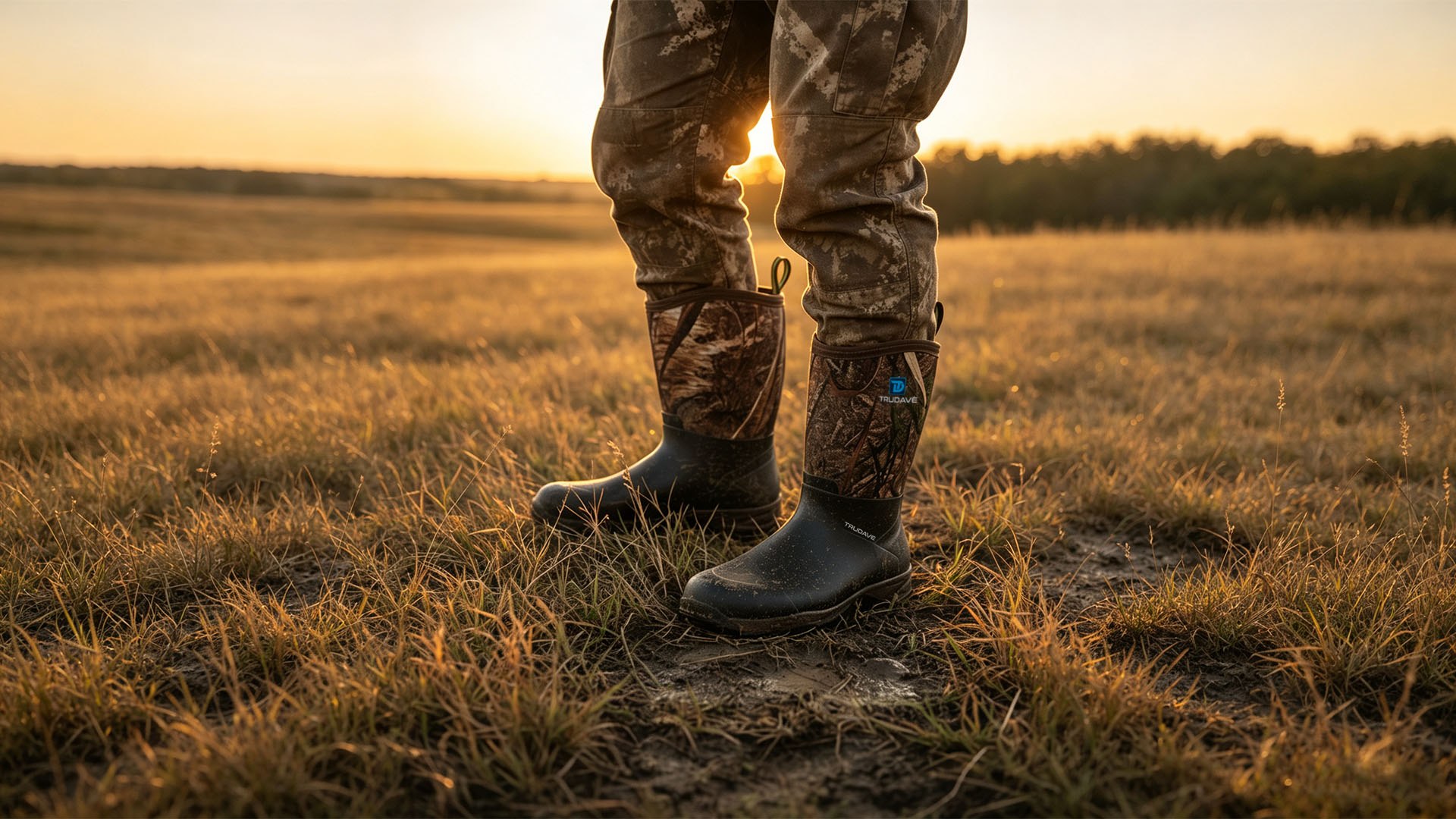
Hunters working this terrain may benefit from waterproof hunting boots for tidal marsh deer hunting that provide enough shaft height, secure heel retention, dependable traction, and waterproof protection for repeated exposure to wet ground.
Boot fit matters especially in mud.
If the heel slips while the outsole remains stuck, every step becomes harder.
In deep mud, secure footwear can be the difference between controlled movement and fighting the ground all morning.
Tall Boots Can Have an Advantage
Compared with rocky western hunts, tidal marsh hunting often favors additional boot height.
Water may exceed ankle height.
Wet grass constantly brushes the lower leg.
Mud can splash over low footwear.
However, taller boots still need to fit securely.
A tall boot that feels loose may become exhausting during long walks.
The ideal design balances:
- Waterproof height
- Heel retention
- Walking comfort
- Traction
- Flexibility
- Insulation appropriate to the season
Do not choose only by height.
Choose for the complete environment.
Mud Suction Changes How You Walk
Deep marsh mud can grab the entire boot.
Trying to take normal long strides wastes energy.
Use shorter steps.
Place weight carefully.
Twist the foot slightly when necessary to release suction before lifting.
Search for firmer ground:
- Grass roots
- Raised banks
- Old trails
- Natural ridges
- Dry vegetation
- Firm creek edges
Avoid stepping into dark holes without knowing the depth.
A trekking pole or walking stick can help test questionable ground.
Never Trust a Marsh Surface by Appearance
Some ground looks solid because vegetation grows across it.
Underneath may be:
- Deep mud
- Hidden water
- Crab holes
- Drainage channels
- Soft peat
- Old ditch cuts
Test uncertain areas before putting full weight on them.
Move more slowly in darkness.
Many marsh injuries happen because hunters focus on the stand location rather than what is directly under the next step.
Waterproof Clothing Works as a System
Boots alone cannot keep hunters dry if water runs down soaked pants and enters from above.
A practical wetland system may include:
- Waterproof boots
- Quiet rain pants
- Gaiters where appropriate
- Moisture-managing socks
- Waterproof storage
- Dry backup layers
Wet marsh grass can soak clothing even when there is no rain.
Dress for vegetation as much as weather.
Early Season Can Be Hot
Wetland hunting does not always mean cold weather.
Early seasons can involve high humidity, insects, and warm temperatures.
Heavy insulated boots may create unnecessary heat.
Choose insulation based on:
- Temperature
- Walking distance
- Time spent sitting
- Water exposure
- Wind
- Activity level
A hunter walking a mile through marsh grass produces significant body heat.
Too much insulation leads to sweat.
Sweat becomes cold later when you sit.
Late Season Changes the Challenge
Cold weather introduces different problems.
Mud may freeze.
Shallow water develops ice.
Wind becomes more dangerous.
Boots need enough insulation for long stationary periods.
Late-season hunters should prepare for:
- Icy banks
- Frozen reeds
- Cold water
- Strong wind
- Shorter daylight
- Changing access routes
A route that was easy in October may become unsafe after freezing weather.
Scout conditions rather than relying on memory.
Boat Access Can Open Better Habitat
Some marsh areas are much easier to reach by shallow-draft boat.
Boat access may reduce walking distance and reach less pressured islands.
It also introduces risks.
Consider:
- Water depth
- Tide
- Wind
- Cold-water exposure
- Navigation
- Boat capacity
- Personal flotation devices
- Motor reliability
- Legal landing areas
Do not overload small boats with hunters, stands, packs, and game.
Wear appropriate flotation protection.
Cold tidal water can become dangerous immediately after a capsize.
Mark the Boat Location
Marshes can look completely different after dark.
Fog, tide, grass, and winding creeks make navigation confusing.
Mark the boat, vehicle, and major turns with GPS waypoints.
Carry:
- Offline maps
- Backup battery
- Compass
- Headlamp
- Spare light
- Communication device where practical
Do not depend only on visible landmarks.
The reed line that looked obvious during daylight may disappear after sunset.
Tree Stands Require Limited Trees
Some marshes have very few suitable stand trees.
A small cedar island or upland edge may contain the only usable options.
Inspect trees carefully.
Salt exposure, wet soil, wind, and storms can weaken timber.
Avoid trees showing:
- Rot
- Lean
- Damaged roots
- Dead limbs
- Cracks
- Storm damage
Tree-stand safety remains critical even if the deer sign looks perfect.
Ground Hunting Can Work Well
Where trees are limited, hunters can use natural ground cover or legal ground blinds.
Look for:
- Reed edges
- Brush islands
- High banks
- Cedar clumps
- Tall grass behind the hunter
- Elevated spoil banks
Keep the setup low and natural.
Do not cut excessive vegetation.
Make sure you have a clear and safe shooting lane.
Marsh habitat often allows long visibility in some directions and almost none in others.
Shot Opportunities Can Be Brief
A deer crossing a ditch opening may be visible only for seconds.
Do not allow that urgency to create a poor shot.
Prepare before movement occurs.
Know the distance to:
- Opposite bank
- Trail crossing
- Reed edge
- Island corner
- Mud flat
Keep the firearm or bow positioned safely and ready.
Wait for a clear ethical opportunity.
A deer disappearing into grass is not a reason to rush.
Recovery Can Be Extremely Difficult
A deer traveling only fifty yards after the shot can disappear into reeds, mud, water, or drainage channels.
Before shooting, consider:
- Tide direction
- Water depth
- Thick cover
- Property boundaries
- Weather
- Light remaining
- Recovery help
- Boat access
Mark the exact position of the animal at the shot.
Choose several landmarks.
Marsh grass can make distance and direction confusing once you leave the stand.
Blood Trails Can Disappear in Water
Rain and tidal water can wash away blood quickly.
Wet vegetation also hides droplets.
During recovery, look for:
- Blood
- Hair
- Tracks
- Broken grass
- Mud disturbance
- Water splashes
- Trails through reeds
- Direction of bent vegetation
Move systematically.
Do not rush through the entire trail and destroy remaining sign.
If legal tracking-dog services are available in the area, know the rules before the hunt rather than searching only after a difficult situation develops.
Pay Attention to Where Water Flows
A wounded deer entering a drainage channel may leave limited ground sign.
Observe water direction.
Check both banks.
Look for disturbed mud and vegetation where the animal exited.
Do not enter deep channels without testing them.
A recovery effort should not put the hunter in unnecessary danger.
Dragging a Deer Through Mud Is Hard
A successful hunt may create the hardest part of the day.
Dragging a deer through saturated marsh is far more difficult than dragging across dry ground.
Plan recovery equipment before hunting.
Depending on terrain and regulations, useful options may include:
- Game sled
- Drag rope
- Pack system
- Boat
- Additional help
- Legal cart on firm access routes
Do not assume the same trail used to enter will be the easiest recovery route.
A nearby tidal creek may provide better boat access.
Salt and Brackish Water Are Hard on Gear
Coastal marsh environments can accelerate corrosion.
After hunting, clean and dry:
- Firearms
- Knives
- Metal stand components
- Boot hardware
- Zippers
- Optics mounts
- Tools
Do not leave salty mud on equipment.
Rinse footwear according to manufacturer care instructions.
A wetland hunt may end at the truck, but gear maintenance should continue at home.
Insects Can Be Brutal
Warm marshes can contain mosquitoes, biting flies, ticks, and other insects.
Use appropriate protection.
Consider:
- Insect repellent
- Head net
- Lightweight gloves
- Treated clothing where appropriate
- Long sleeves
- Checking for ticks after the hunt
Do not let insects create constant movement in the stand.
Small swatting motions can alert nearby deer.
Plan before the hunt.
Weather Changes Fast on Open Marshes
Open wetlands provide little shelter.
Wind, thunderstorms, heavy rain, and fog can become dangerous.
Monitor conditions carefully.
Leave early when severe weather approaches.
Avoid exposed marsh during lightning.
Do not assume a low flat environment is automatically safe.
Water, metal equipment, boats, and open horizons make weather awareness essential.
Public-Land Marsh Hunting Requires Backup Plans
Wetland access points can become crowded.
Several hunters may use the same boat ramp, levee, road, or island.
Prepare multiple locations.
Possible alternatives include:
- Secondary marsh islands
- Less obvious ditch systems
- Longer walking routes
- Small upland edges
- Pockets away from major boat channels
Do not crowd another hunter.
Do not cross directly through someone else’s setup.
A backup marsh can save the morning.
Property Boundaries Can Be Hard to See
Marsh boundaries rarely follow visible fences.
Private property may extend into open wetland.
Use accurate maps.
Confirm legal access and waterway rules.
Do not assume boat access gives permission to hunt adjacent land.
Know:
- Public boundaries
- Private islands
- Refuge zones
- No-hunting areas
- Legal access channels
- Special permit areas
Sika deer can move across those boundaries freely.
Hunters cannot.
Regulations Need to Be Checked Locally
Sika deer hunting is geographically limited compared with whitetail hunting, and regulations can vary significantly between jurisdictions and management areas.
Before hunting, verify current requirements for:
- Seasons
- Licenses
- Tags
- Sex restrictions
- Weapon types
- Shooting hours
- Public-land permits
- Hunter-orange requirements
- Sunday hunting where applicable
- Boat access
- Refuge boundaries
- Reporting requirements
Use official wildlife-agency information for the specific area you plan to hunt.
Common Tidal-Marsh Sika Hunting Mistakes
Treating the Marsh as Flat Empty Ground
Small islands, drainage ditches, and vegetation edges create structure.
Ignoring Tide
Water can completely change access and deer travel.
Walking Directly Into Bedding Islands
Scout the edges before entering secure cover.
Using Short Footwear in Deep Wet Grass
Waterproof height and secure fit matter in marsh environments.
Taking Long Steps Through Mud
Short controlled movement reduces fatigue and suction.
Ignoring Wind Because Cover Is Open
Scent can travel a long distance across marshes.
Failing to Plan Recovery
Water, reeds, mud, and tide can make recovery extremely difficult.
Trusting Marsh Ground by Appearance
Vegetation can hide deep mud and drainage holes.
Forgetting Gear Maintenance
Brackish water and mud can damage equipment.
Frequently Asked Questions
Where do sika deer live in marsh habitat?
They may use tidal marsh grass, reed beds, small islands, drainage systems, brushy upland edges, and nearby agricultural habitat.
How do you find sika deer trails in a marsh?
Look for muddy crossings, flattened grass, trails along ditch banks, tracks around high-ground islands, droppings, and repeated routes between feeding and bedding habitat.
Does tide affect deer movement?
In tidal wetlands, changing water levels can alter which trails and crossings remain usable, potentially concentrating deer movement onto higher routes.
What boots work best for marsh deer hunting?
Waterproof hunting boots with sufficient height, secure heel retention, reliable mud traction, and walking comfort are especially useful in wet grass, standing water, and soft tidal ground.
Are marsh islands good places to hunt?
They can be important bedding and travel areas, especially when slightly higher than surrounding wetland. Avoid disturbing the core until you understand how deer enter and leave.
How should hunters recover deer in thick tidal marsh?
Mark the shot and last visible location carefully, account for tide and water channels, use a systematic tracking approach, and plan legal boat, sled, pack, or partner assistance before the hunt.
Final Thoughts
A tidal marsh does not hide deer the way a forest does.
It hides them through scale.
Grass.
Water.
Small elevation changes.
Ditches.
Mud.
Islands barely high enough to stay dry.
Sika deer understand every one of those details.
Hunters must learn them too.
Find the high ground.
Study the crossings.
Read tracks after rain and after tide changes.
Watch vegetation edges.
Respect the wind.
Plan your exit before the water rises.
Wear footwear built for the ground you are actually crossing.
And never assume that because you can see across the marsh, you can see everything inside it.
In sika country, the deer can disappear without a tree anywhere in sight.
