
The desert looks empty from the road.
Low shrubs stretch toward distant hills. Dry washes cut through pale gravel, and scattered mesquite trees cast narrow shadows across the ground. There is no thick forest, flooded field, or obvious food plot to concentrate birds.
A hunter can walk a mile through this country without seeing anything larger than a lizard.
Then a covey erupts from beneath a patch of desert brush.
A dozen Gambel’s quail burst in different directions, flying low and fast through cactus, mesquite, and uneven terrain. Within seconds, every bird disappears.
The desert looks empty again.
Gambel’s quail hunting is rarely about covering the greatest amount of open country. These birds concentrate around specific combinations of food, water, shade, escape cover, and travel structure.
The most productive habitat often follows washes, brush lines, foothill drainages, agricultural edges, and desert neighborhoods where vegetation is denser than the surrounding landscape.
Hunters who learn to read these subtle edges can find birds consistently without wandering aimlessly across miles of open desert.
Why Desert Washes Matter
A desert wash may remain dry for most of the year, but it still influences the surrounding habitat.
Water moving through the drainage during seasonal storms can support thicker vegetation than nearby uplands.
A wash may contain:
- Mesquite
- Palo verde
- Acacia
- Ironwood
- Desert willow
- Grasses
- Seed-producing plants
- Insects
- Shaded resting cover
The banks also create changes in elevation.
Even a shallow cut can provide concealment from predators and protection from wind.
Quail may feed along the open edges, move through the bottom, and retreat beneath dense brush when disturbed.
The wash is not always the destination.
It is often the structure connecting several resources the birds need.
Start With Vegetation Density
Large areas of desert can appear similar from a distance.
The best quail habitat usually contains more plant diversity and denser low cover than the surrounding ground.
Look for places where several vegetation types meet.
Examples include:
- Mesquite beside grass
- Cactus beside brushy washes
- Desert shrubs meeting agricultural land
- Palo verde growing along drainage banks
- Foothill cover meeting flatter desert
- Abandoned fields becoming overgrown
Gambel’s quail need open ground for feeding, but they rarely want to be far from escape cover.
A completely bare flat may contain seeds without providing enough security.
An impenetrable wall of brush may offer protection but limited feeding space.
The best habitat often lies between those extremes.
Hunt the Edge of the Wash
Walking directly down the center of a wash can be convenient.
It may also place the hunter below the birds.
Quail frequently hold along the upper banks, beneath brush, or near small side drainages entering the main channel.
A hunter staring only at the wash bottom may walk past an entire covey sitting a few yards above eye level.
Work one edge carefully.
Watch for:
- Tracks in soft sand
- Droppings beneath shrubs
- Dusting areas
- Feeding scratches
- Feathers
- Small side trails
- Escape cover above the bank
After covering one side, return through the opposite edge if the habitat remains promising.
Small Side Drainages Can Hold More Birds Than the Main Wash
The largest wash attracts attention because it is easy to identify on maps.
Smaller side channels may provide better cover and receive less hunting pressure.
These tributaries often contain:
- Narrow brush pockets
- Protected feeding areas
- Quieter roosting cover
- Short connections to upland vegetation
- Less foot traffic
A side drainage only fifty yards long can hold an entire covey when it combines shade, seeds, and dense escape cover.
Do not judge habitat value only by size.
In desert country, a small increase in vegetation can create an important concentration point.
Listen Before You Begin Walking
Gambel’s quail are vocal birds.
Coveys often communicate with distinctive calls, especially during the morning and evening.
Before entering a promising wash, stop and listen.
You may hear birds calling from:
- Mesquite thickets
- Hillside brush
- Neighborhood edges
- Agricultural borders
- Water sources
- Roosting cover
Calling does not reveal the exact position of every bird, but it helps narrow the search.
Move slowly toward the general area while using terrain and vegetation for concealment.
Avoid charging directly toward the sound.
The covey may begin running before the hunter gets close.
Early Morning Can Reveal Covey Locations
At first light, Gambel’s quail may leave roosting cover and move toward feeding areas.
Cool temperatures also make desert walking safer for hunters and dogs.
Early activity may occur around:
- Wash edges
- Seed-producing flats
- Agricultural ground
- Water developments
- Foothill benches
- Desert roadsides
Observe before entering.
A covey moving in open ground may eventually travel toward predictable cover.
Rather than pushing immediately, watch where the birds go.
The cover they choose after feeding can become a more effective hunting location.
Evening Calling Can Help With Future Hunts
Late afternoon and evening observations can identify where coveys gather before roosting.
Birds may call as they regroup after feeding.
Hunters can use this information to plan the following morning.
Observe from a legal public road, elevated point, or distant location where practical.
Avoid entering the roost and scattering birds unnecessarily.
The goal is gathering information without changing their behavior.
Roosting Cover Is Different From Feeding Cover
Gambel’s quail may feed in relatively open areas and roost in denser vegetation.
Common roosting locations can include:
- Thick mesquite
- Palo verde
- Desert shrubs
- Dense brush along washes
- Trees near agricultural edges
- Protected foothill cover
Roost sites provide security from predators and weather.
Hunters should avoid repeatedly disturbing the same roost.
Instead, intercept the covey after it begins moving toward feeding habitat.
Coveys Often Run Before They Fly
One of the biggest challenges in desert quail hunting is that birds may run through cover instead of holding in place.
A hunter sees fresh tracks and assumes the birds are close.
The covey may already be one hundred yards ahead.
Watch for signs of running birds:
- Tracks continuing in one direction
- Birds briefly visible between shrubs
- A dog moving quickly without establishing point
- Calls shifting farther down the wash
- Sudden silence after nearby movement
Do not race after them.
Move deliberately and use terrain to get ahead when possible.
Pressure from directly behind may keep the covey running indefinitely.
Use Wash Bends to Cut Off Running Birds
A straight wash allows birds to remain ahead of the hunter.
A sharp bend creates opportunity.
The hunter may leave the bottom, cross higher ground, and approach the next section from the side.
This can place the hunter near where the covey expects to continue traveling.
Before attempting this strategy, confirm:
- Legal access
- Safe terrain
- Property boundaries
- Wind
- Partner positions
- Visibility
Do not move so quickly that safety and navigation are compromised.
The objective is predicting movement, not chasing blindly.
Desert Quail Frequently Use Brush Islands
A single dense patch of vegetation can become important in otherwise open habitat.
These brush islands provide:
- Shade
- Escape cover
- Feeding edges
- Protection from raptors
- A location for the covey to regroup
Approach carefully.
Birds may flush from several sides.
Do not focus only on the largest shrub.
Check the smaller cover around it.
Some birds may remain hidden after the first group flushes.
A Covey Rise Is Not the End of the Hunt
When a covey flushes, the birds often scatter across the surrounding habitat.
This can create individual or small-group hunting opportunities.
Watch where each bird lands.
Choose a clear visual reference such as:
- A large cactus
- A distinctive mesquite
- A rock outcrop
- A wash bend
- A fence corner
- A patch of taller grass
Do not immediately fire at every available bird and lose track of the group.
After the initial flush, pause and plan.
Scattered birds may hold more tightly than the original covey.
Mark Landing Areas Carefully
Desert vegetation creates misleading distance.
A bird appearing to land near one shrub may actually travel much farther.
Keep watching until it disappears completely.
Note the line of flight and the last visible landmark.
Approach slowly.
A landed bird may run before flushing again.
Search the cover around the marked location rather than walking directly to one exact point and assuming the bird vanished.
Avoid Pressuring a Covey Too Long
Repeatedly flushing the same birds creates unnecessary stress and may push them into unsafe or inaccessible terrain.
Set a reasonable limit.
After one or two attempts at scattered birds, consider leaving the covey to regroup.
This is especially important during:
- Drought
- Extreme heat
- Low population years
- Late season
- Periods with limited water
Responsible hunting protects future opportunity.
Population Numbers Can Change Dramatically
Desert quail populations often respond strongly to rainfall and habitat conditions.
A wet year may produce excellent nesting cover, insect availability, and chick survival.
A dry year may result in smaller coveys and fewer birds.
Do not assume last season’s productive area will hold the same number of quail.
Scout current conditions.
Adjust harvest expectations to local abundance.
Some seasons should be approached more conservatively than others.
Rainfall Shapes the Entire Season
Rain affects:
- Seed production
- Grass growth
- Insect numbers
- Drinking water
- Nesting cover
- Chick survival
- Vegetation density
Winter and spring precipitation may influence breeding conditions.
Summer monsoon rains can create additional food and cover.
Hunters should pay attention to long-term rainfall patterns rather than only the weather during hunting week.
The desert records rainfall in vegetation.
Greener, more diverse washes frequently deserve additional scouting.
Water Helps, but It Is Not Always the Best Place to Hunt
Gambel’s quail need water, but their dependence on visible water can vary with weather and food.
Birds may obtain moisture from vegetation, insects, and seasonal sources.
Common water locations include:
- Wildlife drinkers
- Springs
- Stock tanks
- Irrigation areas
- Creek pools
- Residential water
- Agricultural canals
Hunting directly over water may be restricted, unethical under certain conditions, or prohibited in some locations.
Verify current rules.
Avoid interfering with wildlife water developments.
A better strategy may be hunting travel cover leading toward water rather than sitting directly beside it.
Wildlife Drinkers Should Be Treated Carefully
Desert wildlife developments support many species.
Hunters should never:
- Damage fencing
- Move equipment
- Block access
- Contaminate water
- Build unauthorized blinds
- Park in maintenance routes
- Disturb monitoring devices
Follow agency rules and posted restrictions.
Observe from an appropriate distance.
The wash or ridge connecting the drinker with feeding habitat may provide a more responsible hunting location.
Agricultural Edges Can Hold Large Coveys
Where desert habitat meets farming, quail may find abundant food and water.
Potential areas include:
- Grain fields
- Irrigated pastures
- Citrus edges
- Abandoned farm ground
- Equipment lanes
- Canal banks
- Brushy property borders
These locations are often private property.
Obtain explicit permission.
Respect crops, workers, livestock, equipment, and irrigation systems.
Do not assume birds crossing from public land create permission to follow them.
Canal Banks Can Guide Movement
In irrigated desert country, canals create long habitat edges.
Vegetation may grow along the banks, and nearby fields provide food.
Quail may travel parallel to the canal while using brush and maintenance roads.
Canals also create serious hazards.
Banks can be steep and unstable.
Concrete linings may be impossible to climb.
Water may move quickly.
Do not enter canals or allow dogs near unsafe sections.
Use bridges and legal crossings.
Neighborhood Edges Can Hold Birds but Limit Hunting
Gambel’s quail frequently live around desert communities, golf courses, ranches, and suburban edges.
The presence of birds does not mean hunting is legal or safe.
Consider:
- Discharge restrictions
- Occupied buildings
- Roads
- Parks
- Private property
- Local ordinances
- Recreational users
Never pursue birds into developed areas.
Scout habitat farther from residences where legal hunting and safe shooting are possible.
Foothill Washes Provide Different Habitat
As flat desert rises into rocky foothills, washes become narrower and terrain becomes steeper.
These areas may contain:
- Denser brush
- Rock cover
- Springs
- More varied vegetation
- Reduced vehicle access
- Cooler shaded slopes
Quail may use lower foothill benches and drainage systems throughout the season.
Walking becomes more demanding.
Loose rock, cactus, and steep banks require careful footwear and controlled movement.
Rock Outcrops Can Provide Shade and Protection
Large rocks create small shaded pockets.
Vegetation may grow around their bases where moisture lasts longer.
Quail can use these areas for loafing and escape cover.
Search around:
- Rock-brush transitions
- Shaded cliff bases
- Small caves or overhangs
- Boulder fields near washes
- Foothill benches
Do not climb unstable rock simply because birds entered it.
Wait and watch for movement along the edges.
Midday Shade Can Concentrate Birds
During warm conditions, quail may reduce activity and seek shade.
Productive midday locations can include:
- Dense mesquite
- North-facing wash banks
- Rock shadows
- Thick palo verde
- Vegetation near water
- Overhanging desert trees
Hunting during extreme heat can be dangerous for both hunters and dogs.
Whenever possible, focus effort during cooler morning and evening periods.
Use midday for rest, scouting from a distance, or leaving the field entirely.
Heat Management Is Essential
Desert temperatures can rise rapidly after sunrise.
Carry more water than expected.
Monitor for:
- Headache
- Dizziness
- Confusion
- Nausea
- Weakness
- Unusual fatigue
- Reduced coordination
Wear sun protection and breathable clothing.
Take breaks in shade.
Do not rely on a vehicle water supply if the hunt takes you several miles away.
Every hunter should carry water independently.
Dogs Require Even More Water
Bird dogs can overheat quickly in desert terrain.
Carry enough water for the dog and hunter.
Offer frequent drinks.
Monitor:
- Heavy panting
- Excessive drooling
- Slowing pace
- Stumbling
- Glassy eyes
- Reluctance to continue
- Vomiting
End the hunt immediately if heat illness is suspected.
Do not force a dog to continue simply because birds are nearby.
Cactus Is a Constant Hazard
Desert quail cover often contains:
- Cholla
- Prickly pear
- Barrel cactus
- Agave
- Thorny shrubs
- Sharp grass seeds
Hunters and dogs should avoid rushing blindly through vegetation.
Carry appropriate tools for removing cactus spines.
Do not use bare hands to grab cholla segments.
Inspect dogs frequently, especially:
- Paws
- Legs
- Chest
- Face
- Mouth
Protective dog boots may help in some terrain but require proper fit and conditioning.
Snake Awareness Matters in Warm Weather
Venomous snakes may remain active during warm portions of the season.
Watch where you place hands and feet.
Avoid stepping blindly over rocks and logs.
Keep dogs under control.
Understand local snake species and emergency procedures.
Do not attempt to handle or kill a snake unnecessarily.
Move away and give it space.
Desert Ground Can Destroy Poorly Chosen Footwear
A desert hunt may appear dry, but walking conditions can include:
- Loose gravel
- Sharp rock
- Soft sand
- Mud after storms
- Thorny vegetation
- Steep wash banks
- Morning dew
- Shallow water near springs or canals
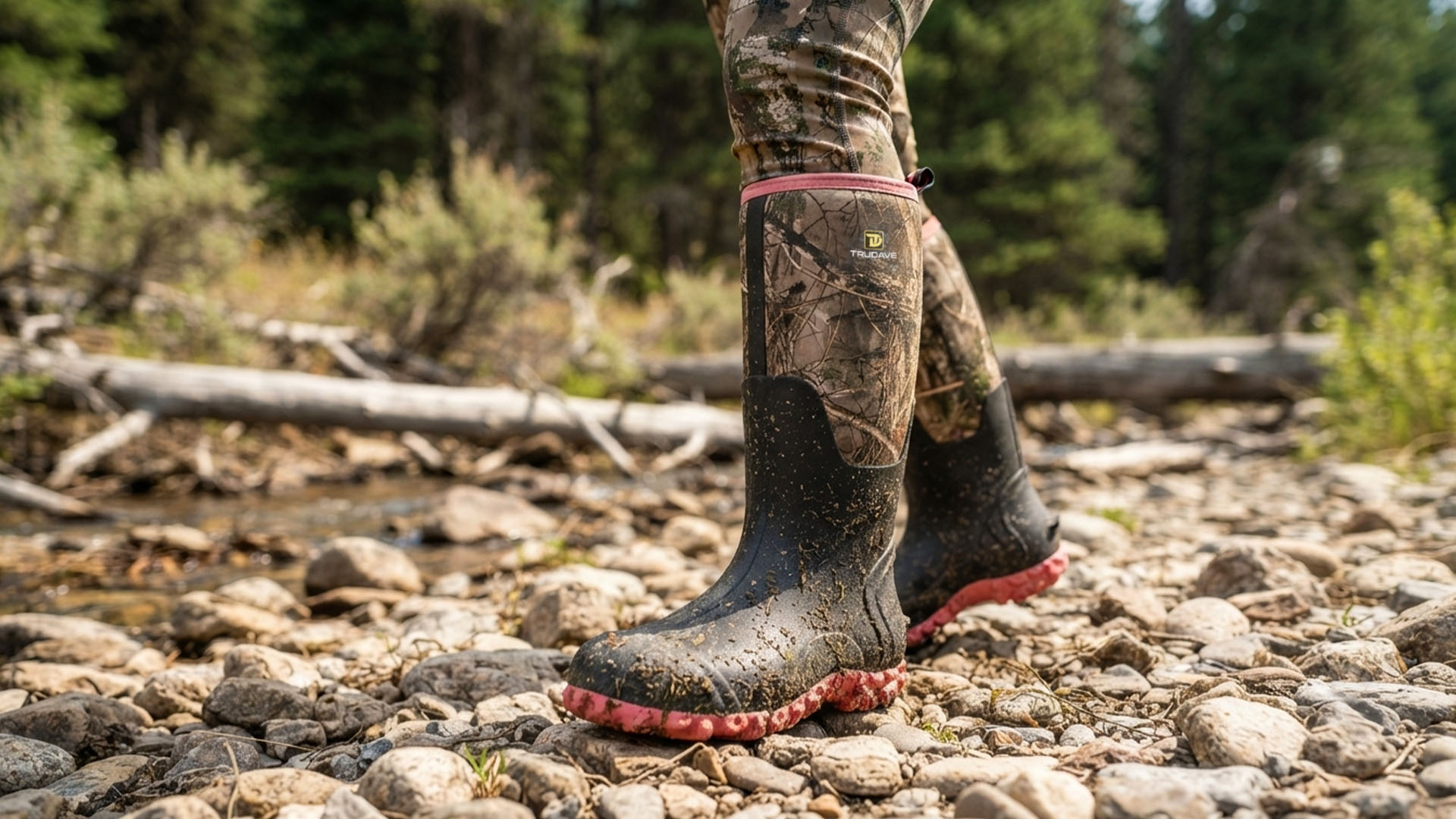
Hunters covering these mixed conditions may benefit from lightweight waterproof hunting boots for desert wash hunting that provide secure heel retention, underfoot protection, and reliable traction without the excessive insulation or weight of a cold-weather stationary boot.
Waterproof protection can be useful after monsoon rain or around irrigated ground.
Breathability and weight remain important in warm conditions.
Heavy Insulated Boots Can Cause Overheating
A boot designed for freezing tree-stand hunts is usually unnecessary in the desert.
Excess insulation traps heat and increases sweat.
Damp socks create friction and blisters.
Choose footwear based on:
- Temperature
- Distance
- Terrain
- Recent rainfall
- Pack weight
- Activity level
A lightweight supportive boot often performs better than a tall, heavily insulated model during active desert hunting.
Sand and Gravel Can Enter Low Boots
Small stones and sand create irritation.
Gaiters may help keep debris out while also providing limited protection from seeds and low thorns.
Choose breathable gaiters suitable for warm weather.
Check the feet during breaks.
Remove debris before it creates hot spots.
Wet Clay Appears Quickly After Desert Rain
Desert soil can change dramatically during storms.
A dry road becomes deep mud.
Clay packs into outsole tread.
Washes may begin flowing.
Do not enter narrow drainages when storms threaten upstream.
Flash floods can arrive even when no rain is falling at the hunting location.
Check forecasts across the complete watershed.
Never Camp or Park in a Wash During Storm Season
A dry wash can fill rapidly.
Avoid parking, resting, or camping in drainage bottoms when rain is possible.
Look for debris caught high in shrubs, water marks, and eroded banks that indicate previous flooding.
Move to higher ground when thunderstorms develop.
Do not wait until water becomes visible.
Desert Roads Can Become Impassable
Remote access roads may contain:
- Sand
- Clay
- Deep ruts
- Rock ledges
- Wash crossings
- Limited turnaround space
Four-wheel drive does not guarantee safe travel.
Check land-management restrictions.
Avoid damaging wet roads.
Carry recovery equipment, extra water, navigation, and emergency supplies.
Know when to park and continue on foot.
Walking Slowly Produces More Birds
Desert hunters often move too quickly because visibility appears good.
Quail may remain motionless beneath brush.
Walk several steps.
Pause.
Listen.
Watch the edges.
A covey may begin running during the pause, revealing movement or sound.
Fast walking can push birds ahead without creating a clear shot opportunity.
Listen for Footsteps and Soft Calls
Quail moving through dry leaves and gravel can be heard before they flush.
Listen for:
- Scratching
- Small stones moving
- Leaves rustling
- Contact calls
- Wings brushing vegetation
Stop frequently enough for the hunter’s own noise to fade.
The desert is not silent.
It becomes informative when you slow down.
Work Into or Across the Wind With Dogs
Wind helps dogs locate scent.
A crosswind route allows the dog to encounter scent while searching both sides of the wash.
Strong desert wind can make bird location difficult and reduce hearing.
Use terrain and brush to select a route that supports the dog.
Do not allow the dog to range so far that it pushes coveys out of range.
Hunting Without a Dog Is Still Effective
A dog is useful, but Gambel’s quail can be hunted without one.
Focus on:
- Fresh tracks
- Calls
- Dusting areas
- Feeding sign
- Wash edges
- Dense brush islands
- Morning travel routes
Move slowly and stop often.
After a covey flush, watch landing locations carefully.
Scattered birds may hold well enough for a deliberate follow-up search.
Dusting Areas Confirm Regular Use
Quail use dry, loose soil for dust bathing.
A dusting area may appear as several shallow depressions beneath protective cover.
Look for:
- Feathers
- Tracks
- Droppings
- Repeated circular depressions
- Nearby escape brush
An active dusting site indicates regular use of the general area.
It does not guarantee the covey is present at that moment.
Use it as one piece of the habitat pattern.
Droppings Beneath Cover Can Reveal Loafing Areas
Quail may rest beneath dense shrubs during warm periods.
Concentrated droppings and feathers can identify frequently used shade.
Check beneath mesquite, palo verde, and other broad cover.
Avoid crawling directly into thick vegetation without watching for snakes, cactus, and sharp branches.
Observe from the edge first.
Tracks Are Best in Sand and Soft Wash Bottoms
Gambel’s quail tracks can be visible in soft sand, mud, and dust.
Study:
- Direction
- Number of birds
- Freshness
- Whether tracks enter or leave cover
- Relationship to feeding areas
- Nearby predator tracks
Wind can erase desert tracks quickly.
Sharp prints with loose displaced soil are more useful than faint old marks.
A broad cluster of tracks may indicate a feeding covey rather than one traveling bird.
Predator Activity Can Change Covey Behavior
Desert quail face predators such as:
- Hawks
- Owls
- Coyotes
- Bobcats
- Foxes
- Snakes
Coveys use dense brush and rapid group flushing to survive.
Heavy raptor activity may keep birds closer to overhead cover.
Predator tracks do not mean quail have abandoned the area.
They often indicate a productive food chain.
Focus on habitat providing both feeding opportunity and immediate escape cover.
Public-Land Pressure Can Be Uneven
Road-accessible washes receive more hunters.
A covey near parking may be pushed repeatedly.
Look for habitat separated from roads by:
- A low ridge
- A rocky approach
- A confusing wash network
- Thick cactus
- A longer walk
- Limited parking
Distance is helpful only when it reduces actual pressure.
A hidden wash one-quarter mile from the road may receive less traffic than a famous location several miles deep.
Do Not Crowd Other Hunters
Desert terrain allows sound and vehicle visibility to travel long distances.
If another group is already working a wash, choose another drainage.
Do not enter ahead of them, parallel them too closely, or push birds toward their position.
Carry several backup locations.
Respectful spacing improves safety and hunting quality.
Know Where Every Partner Is Located
Brush, wash banks, and terrain can hide people quickly.
Before entering a drainage, agree on:
- Direction of travel
- Spacing
- Shooting zones
- Regrouping points
- Communication signals
Wear legally required and appropriate hunter orange.
Never fire at movement inside brush.
Identify the bird and confirm a safe background.
Low-Flying Birds Require Discipline
Gambel’s quail often fly low through desert vegetation.
Shots may be blocked by cactus, brush, terrain, dogs, or partners.
Do not swing below the skyline without knowing what lies beyond.
Roads, homes, livestock, other hunters, and recreational users may be hidden by terrain.
Passing on unsafe shots is a routine part of desert quail hunting.
Mark Downed Birds Immediately
A quail can disappear beneath sparse-looking vegetation.
When a bird falls:
- Keep watching the exact location.
- Select a fixed landmark.
- Walk directly toward it.
- Mark the starting point of the search.
- Search beneath every shrub and grass clump.
Do not continue shooting until you have a recovery plan.
The open desert can be deceptive.
A bird may be hidden by only a few inches of grass.
Watch for Running Wounded Birds
A downed quail may move quickly through low cover.
Look for:
- Tracks
- Feathers
- Grass movement
- Small blood spots
- Dog behavior
Search in a controlled expanding pattern.
Make every reasonable recovery effort before continuing the hunt.
Warm weather increases the importance of retrieving and cooling birds promptly.
Carry Birds Where Air Can Circulate
Desert heat can spoil game quickly.
Use a breathable game vest or appropriate storage method rather than sealing warm birds inside plastic.
Keep them shaded.
Cool them as soon as practical.
Follow current regulations for identification, transport, and possession.
Prepare a cooler in the vehicle before the hunt.
Regulations Must Be Verified Locally
Gambel’s quail seasons and limits vary across western states and hunting units.
Hunters should verify current requirements involving:
- Season dates
- Daily bag limits
- Possession limits
- Licenses
- Legal shooting hours
- Weapon restrictions
- Public-land closures
- Non-toxic ammunition areas
- Hunter-orange requirements
Some desert regions contain protected species or overlapping quail species.
Learn identification before hunting.
Use official wildlife-agency information every season.
Common Gambel’s Quail Hunting Mistakes
Walking Open Desert Without a Habitat Plan
Focus on washes, vegetation edges, food, water, and escape cover.
Hunting Only the Main Wash
Small tributaries may hold less pressured coveys.
Following Running Birds Directly
Use wash bends and terrain to anticipate movement.
Leaving After the First Covey Flush
Scattered birds may hold more tightly nearby.
Pressuring One Covey All Day
Allow birds to regroup, especially during difficult population years.
Wearing Heavy Cold-Weather Boots
Active desert hunts require manageable weight, support, and heat control.
Underestimating Water Needs
Hunters and dogs can dehydrate quickly.
Ignoring Flash-Flood Risk
Storms far upstream can affect a dry wash.
Shooting at Low Unidentified Movement
Know the target, dog location, partners, and background.
Following Birds Onto Private Property
Always confirm legal access before beginning the pursuit.
Frequently Asked Questions
Where is the best place to find Gambel’s quail?
Look for desert washes, mesquite edges, foothill drainages, agricultural borders, brush islands, and other locations combining seeds, water, shade, and dense escape cover.
What time of day is best for Gambel’s quail hunting?
Early morning and late afternoon are often productive because temperatures are cooler and birds may be moving between roosting, feeding, and watering areas.
Can you hunt Gambel’s quail without a dog?
Yes. Hunters can use calls, tracks, dusting areas, habitat edges, and slow systematic walking to locate coveys.
What should you do after a covey flushes?
Watch where individual birds land, mark clear landmarks, allow the birds to settle, and work the scattered cover slowly.
Do Gambel’s quail need standing water?
They use water where available, but their dependence varies with weather, food, and moisture sources. Hunters should focus on complete habitat rather than water alone.
What boots are best for desert quail hunting?
Choose lightweight, supportive footwear based on heat, distance, rock, sand, mud, and recent rain. Waterproof protection can be useful around washes and irrigated ground.
Final Thoughts
Gambel’s quail country looks open only from a distance.
At bird level, the desert is divided by washes, brush islands, cactus, shade, rocky banks, food patches, water sources, and escape corridors.
The coveys know every one of those edges.
Successful hunters learn them too.
Start with vegetation.
Listen before walking.
Hunt wash banks instead of only the center.
Check small tributaries.
Watch where the covey runs.
Use terrain to anticipate its movement.
After the flush, mark individual birds and slow down.
Protect the dog from heat, cactus, wire, and rough ground.
Carry enough water.
Confirm legal access.
Most importantly, stop treating the desert as one large empty space.
The birds are usually concentrated in the small pieces of habitat where food and security meet—and those are the places most hunters walk past too quickly.
