
The orchard does not look productive anymore.
Most of the trees are old and twisted. Several have fallen, briars cover the rows, and young hardwoods are slowly reclaiming the opening. The fruit is small, irregular, and nothing like the apples sold in a grocery store.
From a distance, the area looks abandoned.
To a whitetail deer, it may still provide food, bedding cover, browse, travel security, and one of the most overlooked late-season destinations on the property.
Old orchards are common around abandoned farms, historic homesteads, rural field edges, and properties that were once managed more intensively than they are today. Some continue producing fruit decades after regular maintenance ends.
Hunters often walk past these places while searching for soybean fields, food plots, oak ridges, and newer agricultural ground.
That can be a mistake.
An overgrown orchard may combine several habitat features within only a few acres. Fallen fruit attracts deer. Thick vegetation provides cover. Old fence rows guide movement, and nearby buildings, wells, roads, or field edges create additional terrain structure.
The challenge is determining whether the orchard still produces useful food and how deer approach it during daylight.
Not Every Old Orchard Is Productive
An abandoned orchard can look promising without offering much current value.
Some trees no longer produce fruit.
Others produce only during certain years.
Disease, late frost, drought, insects, and poor soil conditions can reduce the crop.
Before planning a hunt, confirm that the orchard contains food deer are actually using.
Look for:
- Fallen apples
- Partially eaten fruit
- Deer tracks beneath trees
- Fresh droppings
- Browsed lower branches
- Trails entering thick cover
- Fruit crushed into the soil
- Trail-camera activity
Old fruit on the ground does not automatically indicate current deer use.
Fresh tracks and feeding evidence matter more.
Wild and Abandoned Apples Do Not Look Perfect
Hunters sometimes dismiss fruit because it appears small, damaged, or partially rotten.
Deer do not judge apples by grocery-store standards.
Wild and neglected trees may produce fruit that is:
- Small
- Spotted
- Misshapen
- Sour
- Insect-damaged
- Partially fermented
- Covered in dirt
The appearance matters less than whether deer are eating it.
Walk beneath several trees and inspect the ground.
Apples showing fresh bite marks or repeated disturbance can identify active feeding locations.
Different Trees Drop Fruit at Different Times
One of the biggest advantages of an old orchard is variety.
Several apple varieties may have been planted together. Even when the original names are unknown, different trees can ripen and drop fruit at different times.
One tree may finish dropping in September.
Another may hold fruit into November.
A few late varieties may continue providing food after nearby agricultural crops are harvested and acorns become scarce.
This timing can make a forgotten orchard more valuable later in the season than it was during opening week.
Mark which individual trees are producing.
Do not treat the entire orchard as one food source.
Late-Dropping Trees Deserve Special Attention
A single late-dropping apple tree can attract more deer than twenty trees that finished producing earlier.
During late fall and early winter, dependable calories become increasingly important.
Locate trees with:
- Fruit still attached
- Fresh apples beneath them
- Heavy tracks
- Recently disturbed leaves
- Fresh droppings
- Trails leading toward bedding cover
These trees may create short-term feeding patterns.
Monitor them regularly because the opportunity can disappear once the remaining fruit is consumed.
Pear Trees May Be Mixed Into the Orchard
Historic orchards did not always contain only apples.
Old pear, plum, crabapple, persimmon, and other fruit trees may remain around abandoned homesteads.
Some hunters walk through the area without recognizing them.
Learn to identify common regional fruit trees by bark, leaf shape, branch structure, and fruit.
A single pear tree can become highly attractive when it produces during a period with limited competing food.
The exact value depends on the region and seasonal timing.
The Orchard Edge Is Often Better Than the Center
An open orchard may provide food, but mature bucks do not always enter the middle during daylight.
The surrounding cover can be more important.
Look for staging areas where deer pause before feeding.
These may include:
- Briar patches
- Cedar edges
- Young hardwoods
- Old fence rows
- Brush piles
- Creek bottoms
- Overgrown field corners
- Abandoned equipment lanes
Does and young deer may enter the open area first.
Older bucks may remain inside nearby cover until darkness.
A stand positioned along the transition between cover and fruit can create a better daylight opportunity than one overlooking the entire orchard.
Overgrowth Can Turn the Orchard Into Bedding Cover
As regular mowing and pruning stop, vegetation fills the spaces between trees.
Blackberry, honeysuckle, young saplings, tall grass, and fallen branches create visual security.
The orchard may gradually become both a feeding and bedding area.
Look for beds:
- Beneath low branches
- Beside fallen trees
- Inside briar patches
- On dry rises
- Along cedar edges
- Behind old stone walls
- Near brush-covered fence lines
A deer bedding inside the orchard may not use a long, visible trail to approach the fruit.
It may stand and begin feeding only a few yards from its bed.
This requires careful scouting and low-impact access.
Fallen Trees Create Natural Funnels
Old fruit trees eventually break or fall.
A large fallen trunk can block movement through the orchard.
Several downed trees may guide deer toward narrow openings.
Search around the ends of fallen trees for:
- Worn trails
- Tracks
- Rubs
- Droppings
- Hair
- Muddy crossings
These small gaps can create predictable movement within otherwise complicated cover.
Do not climb unstable branches or trunks.
Old orchard trees can be brittle and may shift unexpectedly.
Old Fence Rows Can Connect the Orchard With Other Habitat
Historic orchards were often fenced.
Even when most of the fence is gone, the vegetation line may remain.
Birds spread seeds along the fence. Shrubs and trees grow where mowing once stopped. Over time, the old boundary becomes a narrow strip of cover.
These fence rows can connect the orchard with:
- Woodlots
- Creek bottoms
- Crop fields
- Abandoned pastures
- Farm buildings
- Roadside cover
Deer may use them as concealed travel corridors.
Look for gaps, low sections, broken wire, and trail intersections.
Hidden Wire Is a Serious Hazard
Old orchards frequently contain abandoned fencing.
Wire can disappear beneath leaves, grass, snow, and briars.
Hunters and dogs may encounter:
- Barbed wire
- Woven wire
- Electric-fence remnants
- Metal posts
- Broken gates
- Loose strands around trees
Move carefully, especially before daylight.
Mark dangerous locations during preseason scouting.
Do not assume a clear-looking opening is safe to walk through quickly.
Stone Walls Can Shape Deer Movement
In parts of the Northeast and Appalachians, old farms often contain stone walls.
These walls may border former orchards or divide abandoned fields.
Deer cross them at predictable low points, gaps, and collapsed sections.
Search for:
- Tracks in leaves
- Hair on rocks
- Rubs near gaps
- Trails approaching from both sides
- Loose stones
- Repeated crossing damage
A stone-wall gap connecting thick cover with producing fruit can become a strong funnel.
Avoid climbing unstable sections.
Abandoned Farm Roads Provide Access and Travel
Old orchards were usually connected to barns, houses, roads, or storage areas.
The access lane may remain as a sunken road, grass strip, or opening through the timber.
Deer can use these routes for easy travel.
Hunters can use them too, which creates pressure.
Study both the center and edges.
Mature deer may walk a parallel trail inside brush rather than using the exposed lane during daylight.
Human boot tracks help show whether the route receives regular disturbance.
Old Homesteads Create Habitat Diversity
A former homesite may contain more habitat variety than surrounding forest.
Possible features include:
- Fruit trees
- Lilacs and ornamental shrubs
- Old gardens
- Wells
- Stone foundations
- Cellar holes
- Overgrown lawns
- Fence lines
- Barn ruins
- Roadbeds
These features create edges, browse, cover, and travel structure.
They also create hazards.
Never enter unstable buildings, wells, cellars, or collapsed foundations.
Scout from safe ground.
Wells and Cellar Holes Can Be Hidden
Vegetation may completely conceal old wells, cisterns, basements, and foundation openings.
These hazards can be deep and dangerous.
Before moving through an abandoned homesite:
- Walk slowly
- Use daylight
- Watch for stone outlines
- Avoid unstable boards
- Keep dogs controlled
- Mark hazardous areas
- Notify hunting partners
Do not focus so heavily on deer sign that you stop watching the ground.
Deer May Tolerate Nearby Human Activity
Some old orchards sit close to occupied farms, rural homes, or roads.
Deer may become familiar with predictable activity.
A farmer driving past every afternoon may cause little concern.
A hunter leaving the road and walking through the orchard before daylight creates a different pattern.
Do not assume proximity to houses makes the location unhuntable.
Study how deer respond to normal human routines.
Confirm all legal shooting distances and access rules before selecting a setup.
Wind Inside an Overgrown Orchard Can Be Unstable
Open rows, thick brush, buildings, stone walls, and surrounding timber can redirect airflow.
The forecast may show a steady wind while scent swirls inside the orchard.
Test conditions from the actual stand location.
Pay attention to:
- Openings between tree rows
- Dense evergreen edges
- Low ground
- Building ruins
- Hillsides
- Creek drainages
A location surrounded by good sign may remain difficult to hunt if air consistently moves toward bedding cover.
Evening Thermals Can Pull Scent Into Low Orchards
Many historic orchards were planted on slopes or near farm valleys.
As evening temperatures fall, cool air may move downhill and settle around the orchard.
A hunter positioned above the feeding area may have scent pulled directly toward approaching deer.
Monitor thermals near sunset.
A stand that appears safe during the afternoon can become risky during the final thirty minutes of light.
Morning Hunts Can Be Difficult
Deer may feed in the orchard during the night and remain nearby before sunrise.
A morning approach can push them from the area before the hunt begins.
Morning setups work best when the hunter can intercept deer leaving the orchard without crossing the feeding location.
Consider:
- Downwind travel routes
- Creek-bottom exits
- Fence-row connections
- Terrain leading toward bedding cover
- Parallel trails inside timber
If access requires walking through the orchard, an evening hunt may be safer.
Entry and Exit Routes Should Avoid Fallen Fruit
Walking through the feeding area leaves scent around the exact trees deer want to visit.
It can also crush fruit and create unnatural disturbance.
Plan access around the outside.
Use:
- Field edges
- Old roadbeds
- Terrain folds
- Creek bottoms
- Thick screens
- Existing human routes
The shortest approach is rarely the lowest-impact approach.
Wet Leaves and Rotten Fruit Create Slippery Ground
Late-season orchards can become surprisingly slick.
Wet leaves cover fallen apples.
Soft fruit breaks beneath boots.
Mud collects beneath low areas, and old branches lie hidden in vegetation.
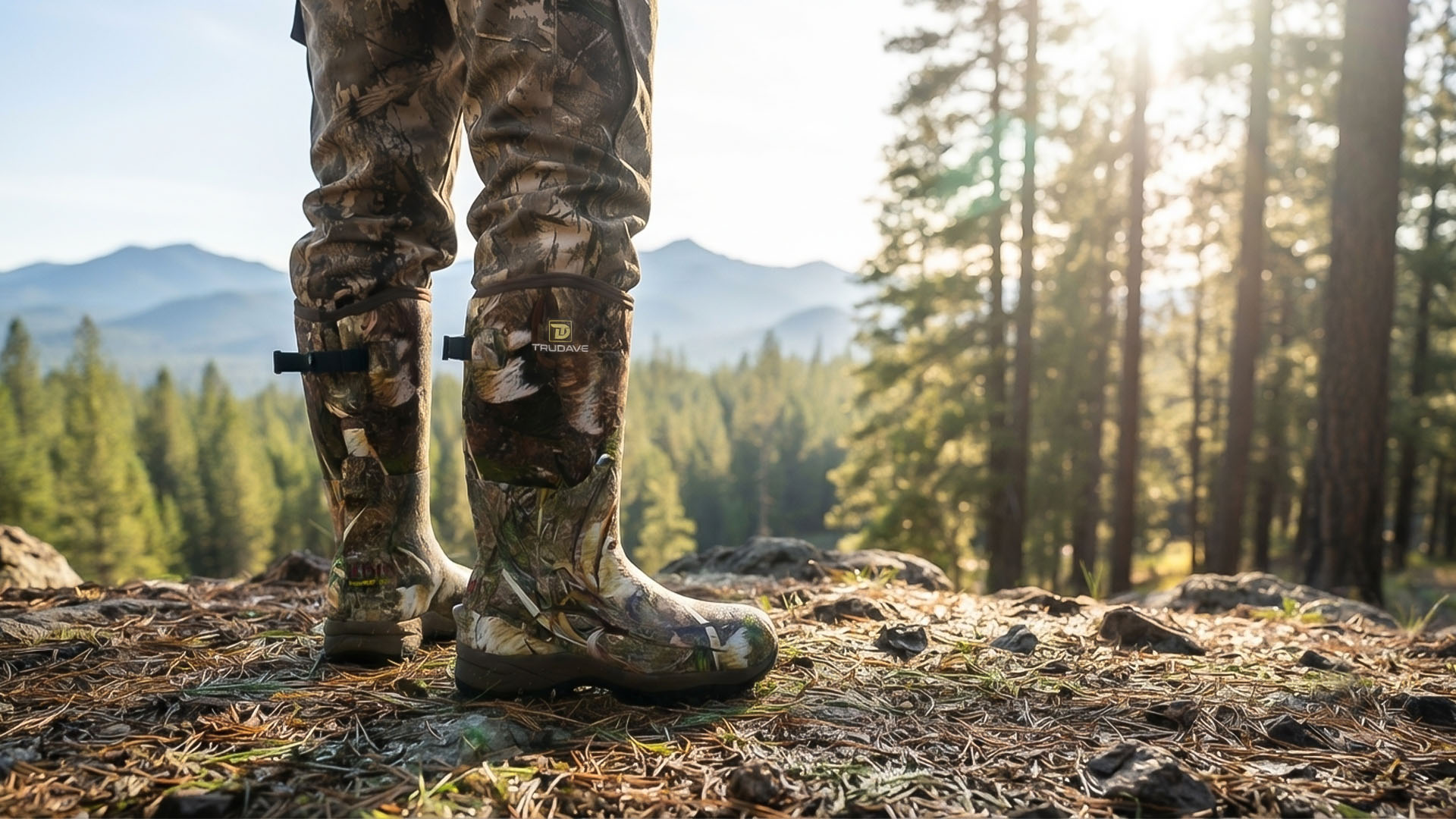
Hunters scouting or accessing these conditions may benefit from waterproof hunting boots for wet late-season scouting that provide dependable traction, secure fit, and protection from mud, wet vegetation, and shallow water.
Walk carefully even when the terrain appears flat.
A rotten apple beneath wet leaves can create a sudden loss of footing.
Orchard Mud Can Be Deeper Than Expected
Repeated deer movement, fallen fruit, vehicle ruts, and poor drainage can create soft ground.
Low sections may remain muddy long after surrounding fields dry.
Avoid walking directly through the most active trails.
Use grass-covered edges and firmer old roadbeds where possible.
If the orchard sits near a creek or spring, expect additional moisture.
Fruit Can Attract More Than Deer
Old orchards may attract:
- Black bears
- Coyotes
- Foxes
- Raccoons
- Turkeys
- Small mammals
- Wasps
- Bees
Fresh tracks and droppings help identify which animals are using the area.
In bear country, remain aware of local activity.
Do not assume every sound inside thick orchard cover comes from a deer.
Follow regional wildlife-safety guidance.
Fermented Fruit Requires Caution
Fallen fruit can ferment as it decomposes.
Insects may gather around it.
The ground can become slick and unpleasant.
Hunters should avoid eating unknown or decomposing fruit from abandoned trees.
Old orchards may also have a history of agricultural chemical use, although residues and risks vary widely.
Treat the location as wildlife habitat, not a source of food for people unless the fruit and property history are understood.
Trail Cameras Can Identify the Best Trees
A camera covering the entire orchard may capture deer without revealing which tree attracts them.
Instead, monitor:
- Producing late-drop trees
- Fence-row entrances
- Staging trails
- Orchard corners
- Parallel routes inside cover
- Low stone-wall crossings
Angle the camera along the trail where possible.
Use multiple cameras when available.
Reduce visits during the hunting season.
Camera Timing Reveals Daylight Security
A tree may receive heavy deer activity entirely after dark.
Another tree closer to bedding cover may produce fewer photos but more daylight movement.
Do not judge a location only by total image count.
Compare:
- Time of day
- Wind direction
- Moon phase if you track it
- Temperature
- Hunting pressure
- Entry direction
- Individual deer behavior
Daylight consistency matters more than nighttime volume when choosing a hunting setup.
Rubs Can Reveal How Bucks Approach
Old orchard trees may be too large or irregular for rubbing, but young trees along the edge often show buck activity.
Look for rubs along:
- Fence rows
- Orchard corners
- Access lanes
- Cedar transitions
- Creek routes
- Staging cover
A rub line connecting bedding cover with a late-producing tree can reveal a repeatable route.
One rub is not enough.
Several fresh rubs combined with tracks and camera activity provide stronger evidence.
Scrapes May Appear Near Orchard Edges
Bucks may create scrapes where several travel routes meet.
Look beneath overhanging branches near:
- Orchard entrances
- Fence gaps
- Field corners
- Logging roads
- Stone-wall crossings
- Staging cover
The open orchard floor may not contain the best scrape location.
The first secure cover outside it often does.
Monitor without creating excessive disturbance.
The Rut Can Change Orchard Use
During the rut, bucks may visit the orchard for more than food.
Does feeding in the area attract buck activity.
Linear cover around the orchard helps bucks scent-check multiple travel routes.
A buck may travel the downwind edge without entering the opening.
Stand placement should reflect this behavior.
The best rut setup may be inside cover on the downwind side rather than directly over producing trees.
Hunt the Downwind Edge Carefully
The downwind side of a food source can attract scent-checking bucks.
It can also be difficult to hunt because the same wind carries hunter scent toward the route.
Look for terrain or access that allows you to sit crosswind.
Avoid placing the stand directly where your scent will reach the deer before they pass.
A slightly farther setup with safer airflow may produce better results.
Late-Season Hunting Can Become Highly Focused
As natural food decreases, remaining fruit can concentrate deer.
This does not guarantee daylight activity.
Cold weather, hunting pressure, and distance from bedding cover still matter.
Monitor the orchard until fruit is gone.
Once the food disappears, deer may shift quickly.
A productive late-season stand can become empty within a few days.
Snow Makes Orchard Patterns Easier to Read
Fresh snow reveals:
- Entry trails
- Bedding areas
- Fence crossings
- Feeding beneath specific trees
- Parallel buck routes
- Human pressure
Search around producing trees and cover transitions.
Avoid walking throughout the entire orchard simply to count tracks.
Use the information to refine a low-impact setup.
Deer May Paw Through Snow for Fruit
Fallen apples can remain available beneath light snow.
Deer may paw through the surface to reach them.
Disturbed snow beneath a producing tree can reveal active feeding.
After deep snow or repeated freezing, accessibility may decline.
Check actual use rather than assuming fruit remains attractive.
Old Fruit Trees Can Be Dangerous Stand Trees
A producing apple tree may appear like the perfect place for a tree stand.
Old fruit trees are often unsuitable.
They can contain:
- Hollow trunks
- Rot
- Weak limbs
- Split leaders
- Disease
- Storm damage
- Poor root stability
Choose a healthy nearby tree.
Never climb an old orchard tree solely because it overlooks the food source.
Nearby Trees May Also Be Compromised
Abandoned orchards can contain dead limbs and storm-damaged hardwoods.
Inspect overhead hazards carefully.
Wind can break old branches without warning.
A safe stand tree should be evaluated from the roots to the crown.
When suitable trees are unavailable, consider a carefully placed ground setup.
Ground Blinds Need Time
A fabric blind can stand out among irregular orchard trees.
Place it early when possible.
Use natural brush to break up the outline.
Avoid blocking active deer trails.
Consider how the blind will appear after leaf drop or snow.
A setup hidden by summer vegetation may become exposed later.
Natural Ground Cover Can Be Effective
Fallen trees, stone walls, cedar clumps, brush piles, and old foundations can provide background cover.
Choose a location with:
- Safe shooting lanes
- Stable ground
- Favorable wind
- Legal distance from structures and roads
- Quiet access
- Enough visibility
Do not sit directly beside a hidden well, unstable wall, or collapsed building.
Neighboring Properties Influence Orchard Use
A small orchard may receive deer traveling from a much larger bedding area on adjoining land.
Study:
- Property boundaries
- Nearby timber
- Crop fields
- Hunting pressure
- Residential areas
- Public access
A deer may spend only a short period on the orchard property.
Stand placement should intercept the route while remaining within legal access.
Obtain recovery permission in advance when possible.
Orchard Ownership Can Be Complicated
Abandoned-looking land is not automatically unowned or open to hunting.
Old farms may belong to:
- Private landowners
- Municipalities
- Land trusts
- Historical organizations
- Utility companies
- Public agencies
Confirm ownership and current rules.
Do not rely only on the absence of signs.
Obtain permission before scouting or hunting private property.
Historical Sites May Have Additional Restrictions
Some old homesteads and orchards are protected cultural or archaeological sites.
Digging, removing artifacts, damaging foundations, or altering vegetation may be prohibited.
Hunt only where allowed.
Do not disturb bottles, tools, structures, or historical materials.
The hunting value of the site does not override preservation rules.
Common Old-Orchard Hunting Mistakes
Assuming Every Orchard Still Produces Useful Food
Confirm current fruit and feeding activity.
Hunting the Center Instead of the Staging Cover
Mature bucks may remain near the edge until darkness.
Treating Every Tree Equally
Individual varieties drop fruit at different times.
Walking Through the Feeding Area for Access
Human scent can contaminate the most valuable trees.
Ignoring Hidden Wire and Foundations
Old farm sites contain serious hazards.
Climbing Old Fruit Trees
Rot and weak limbs make them unsafe.
Trusting Total Trail-Camera Photos
Daylight timing matters more than nighttime volume.
Hunting Old Sign After the Fruit Is Gone
Deer can shift quickly when the food disappears.
Assuming Abandoned Land Is Open to Hunting
Always confirm ownership and permission.
Frequently Asked Questions
Are old apple orchards good places to hunt deer?
They can be. Producing trees may provide seasonal food, while surrounding brush, fence rows, and overgrowth offer bedding and travel cover.
What time of year do deer use apple orchards?
Use depends on when individual trees drop fruit. Some varieties produce during early season, while late-dropping trees may remain valuable into November or winter.
Should you hunt directly beneath an apple tree?
Not always. Hunting staging cover or travel routes near the orchard may provide better daylight opportunities, especially for mature bucks.
Do deer eat rotten apples?
Deer may eat damaged or partially decomposed fruit, but hunters should rely on fresh tracks and feeding evidence to confirm current use.
How do you find an abandoned orchard?
Look near old homesteads, stone walls, former fields, historic roads, cellar holes, and rural properties visible on historical aerial imagery.
Are old apple trees safe for tree stands?
Often they are not. Old fruit trees may contain rot, weak limbs, splits, and hollow trunks. Use a healthy nearby tree or another safe setup.
Final Thoughts
An abandoned orchard may look like a forgotten piece of an old farm.
To deer, it can remain a valuable combination of food, cover, and secure travel.
The best tree may not be the largest.
The best stand may not overlook the center.
The most important trail may follow an old fence row, stone wall, or brushy access lane that hunters barely notice.
Confirm which trees still produce.
Monitor when the fruit drops.
Search the staging cover.
Study daylight camera activity.
Plan access around the feeding area.
Watch for hidden wire, wells, foundations, and unstable trees.
Most importantly, treat the orchard as a changing seasonal food source rather than a permanent hunting guarantee.
When other late-season foods disappear, one forgotten tree holding a few dozen apples may become the most important destination on the property.
