
The old railroad bed does not look like much on a satellite image.
A straight line cuts through timber, crosses a creek, passes behind several agricultural fields, and disappears into a wetland. The tracks were removed decades ago, and most of the route is now covered with grass, brush, young trees, and fallen limbs.
To a hunter, it may look like an easy walking trail.
To a whitetail, it can function as a travel corridor, bedding edge, crossing point, escape route, and connection between several pieces of habitat.
Abandoned railroad grades are easy to overlook because they are man-made features rather than classic deer terrain. They do not appear on a topographic map like a natural ridge, saddle, point, or creek drainage.
But deer do not care whether a terrain feature was created by erosion or heavy machinery.
They care whether it helps them travel efficiently, remain concealed, access food, monitor danger, and avoid hunting pressure.
An old railroad grade can provide all of those advantages.
The key is understanding that the best hunting location is rarely the widest, clearest section of the grade. Productive setups are usually found where the old rail line intersects cover, water, food, elevation changes, and human access.
Why Deer Use Old Railroad Grades
Railroad grades were built to remain relatively level.
To accomplish that, construction crews often created raised roadbeds, cuts through hillsides, bridges over water, and narrow passages through difficult terrain.
Even after the tracks disappear, those features remain.
Deer may use them because they provide:
- Easier walking
- Dry ground through wetlands
- Connections between woodlots
- Brushy edge habitat
- Predictable creek crossings
- Openings through steep terrain
- Access to agricultural food
- Escape routes around human activity
A deer traveling across a steep hillside may follow an old railroad bench rather than constantly climbing and descending.
In wet country, a raised grade may provide one of the only dependable strips of dry ground.
In agricultural areas, the corridor may connect several isolated pieces of cover without requiring deer to cross large open fields.
The Grade Is a Corridor, Not Automatically a Stand Location
Finding deer tracks on an abandoned rail bed can be exciting.
The trail is easy to see, and soft soil often preserves excellent sign.
That does not mean you should place a stand directly beside the center of the route.
Old railroad grades also attract:
- Hikers
- ATV riders
- Cyclists
- Small-game hunters
- Utility workers
- Landowners
- Other deer hunters
Deer may use the grade primarily at night if human activity is frequent.
Mature bucks may travel parallel to it while remaining inside cover.
The most productive location is often an intersection, crossing, pinch point, or hidden secondary trail rather than the main grade itself.
Start by Mapping the Entire Route
Do not scout only the section closest to parking.
Trace the old rail line across the entire property.
Identify where it crosses or approaches:
- Creeks
- Wetlands
- Crop fields
- Clear-cuts
- Ridge systems
- Logging roads
- Property boundaries
- Thick bedding cover
- Utility corridors
- Public access points
The value of the grade comes from what it connects.
A straight section running through uniform mature timber may receive limited daylight activity.
A section linking a cedar swamp with standing corn could become an important travel route.
Mark every major intersection before scouting on foot.
Raised Grades Create Dry Travel Through Wet Country
Many railroad beds were built above the surrounding ground.
In marshes, river bottoms, and low agricultural country, that elevation difference can be significant.
A grade only two or three feet high may remain dry while the surrounding habitat holds mud and standing water.
Deer can travel along the top or use the brushy sides.
Look for:
- Trails climbing onto the grade
- Tracks crossing from one side to the other
- Beds on elevated shoulders
- Rubs along young trees
- Narrow dry strips beside wetlands
- Trails leaving toward food
The top of the grade may feel exposed during daylight.
Mature deer may use the lower shoulder, where brush provides more cover.
The Sides May Be Better Than the Center
An abandoned rail bed often has a flat center with sloped sides.
Vegetation grows differently across these sections.
The center may contain grass, gravel, or open travel.
The shoulders may support:
- Briars
- Young saplings
- Dogwood
- Cedar
- Blackberry
- Tall weeds
- Fallen trees
These brushy sides can provide more security.
When scouting, search ten to thirty yards away from the obvious route.
A faint parallel trail inside the vegetation may receive better daylight use than the open center.
This is especially common in areas where people frequently walk the grade.
Railroad Cuts Can Funnel Deer Movement
To maintain a level route through hills, railroads were sometimes cut directly through ridges.
These railroad cuts create steep banks on both sides of a narrow corridor.
Deer movement can be influenced in several ways.
Animals may:
- Travel through the cut
- Cross above it
- Use a low point in the bank
- Follow the upper edge
- Move around the end of the cut
The best location depends on bank height, vegetation, wind, and surrounding habitat.
A steep cut may limit where deer can cross, creating a natural funnel.
Look for worn trails climbing the banks.
Mud, exposed soil, tracks, and broken vegetation can reveal the preferred crossing.
The Ends of Cuts Deserve Attention
The middle of a deep railroad cut may be difficult for deer to enter or leave.
At the ends, the terrain gradually becomes easier.
Multiple trails may converge where the banks become lower.
These transition areas can combine:
- Easy crossing
- Brushy cover
- Terrain edges
- Parallel travel
- Access to the grade
A stand placed near the end of a cut may cover deer traveling along the rail bed and those crossing it.
Do not set up until you understand which direction deer are coming from and how your scent will move through the cut.
Railroad Fills Create Different Opportunities
A railroad fill is a raised section built across lower terrain.
The sides can be steep, and deer may cross only at certain locations.
Look for:
- Eroded gaps
- Gradual slopes
- Culverts
- Creek crossings
- Trails around the ends
- Old maintenance roads
The top may provide easy travel, but the fill can also act as a barrier.
Wherever deer repeatedly climb or descend, movement may concentrate.
These crossings can become excellent trail-camera locations when they can be checked without contaminating the route.
Culverts Can Become Major Crossings
Old railroad culverts direct water beneath the grade.
The surrounding terrain often creates natural pinch points.
A creek may pass through a narrow opening while dry banks on either side guide deer movement.
Check both sides of the culvert for:
- Tracks
- Rubs
- Droppings
- Worn trails
- Beds
- Hair on fences
- Muddy crossings
Deer may cross over the grade, follow the creek beneath it, or use a bank beside the structure.
The obvious route is not always the most active one.
Bridges and Former Bridge Sites Change Movement
Some abandoned railroad corridors still contain bridges.
Others have gaps where bridges were removed.
These locations can strongly influence deer travel.
An intact bridge may provide a dry crossing over a creek or wetland.
A removed bridge may force deer to descend into the drainage or travel around the gap.
Never assume an old bridge is safe.
Wood, steel, supports, and decking can deteriorate over time.
Do not climb or cross a damaged structure simply because deer tracks lead onto it.
Scout from safe ground and find a legal, stable access route.
Creeks Multiply the Value of the Corridor
A railroad grade intersecting a creek combines two travel features.
Deer may follow either one.
Where they meet, several routes can converge.
Look for:
- Shallow creek crossings
- Brushy banks
- Dry benches
- Trails climbing the grade
- Parallel creek-bottom routes
- Rubs near the intersection
Wind can be difficult.
Cold air settles into low ground, and the railroad cut may channel airflow.
Use a wind indicator throughout the hunt.
A visually perfect funnel can be almost impossible to hunt when scent moves unpredictably.
Agricultural Fields Create Feeding Connections
Old railroad lines frequently pass beside or behind farm fields.
The brushy corridor can provide concealed access between bedding cover and food.
Instead of walking directly into an open field, deer may travel the rail grade and enter through a hidden corner.
Focus on:
- Field corners
- Brushy gaps
- Ditch intersections
- Standing crop edges
- Trails entering the grade
- Staging cover inside timber
The best daylight setup may be several hundred yards from the field, where deer still feel secure.
Once deer reach the open food source, mature bucks may wait until after dark.
Crop Harvest Can Make the Grade More Important
Standing corn and other crops provide seasonal cover.
After harvest, the landscape becomes more exposed.
Deer may rely more heavily on brushy railroad corridors, fence rows, waterways, and woodlot edges.
Trail-camera activity can change quickly.
A section of the grade receiving little early-season movement may become important after surrounding crops are removed.
Scout again after major agricultural changes.
Do not rely on September patterns during November.
Clear-Cuts Can Turn the Grade Into an Edge
When timber is harvested beside an abandoned railroad, the grade may form a strong edge between young regeneration and mature cover.
This transition can provide:
- Browse
- Bedding security
- Travel routes
- Rub lines
- Staging areas
Deer may travel just inside the thick cut or use the open grade during low-light periods.
Look for trails crossing between the two habitat types.
The downwind side of the cut can be especially valuable when bucks scent-check bedding cover without entering it.
Wetlands Can Make the Grade a Rare Access Route
In swamps and marshes, an elevated railroad bed may be one of the few continuous dry corridors.
That attracts both deer and hunters.
Do not assume a wet access barrier guarantees low pressure.
Other hunters may recognize the same feature.
Look for human sign:
- Boot tracks
- Trail markers
- Cut branches
- Camera straps
- ATV tracks
- Old stands
The overlooked location may be where deer leave the grade and enter difficult cover rather than the easy corridor itself.
Deer May Bed on the Railroad Shoulder
Raised grades can provide dry bedding above wet ground.
Vegetation on the shoulder may offer wind protection and visual cover.
Look for beds:
- Behind brush piles
- Beneath cedars
- On sun-exposed slopes
- Near fallen trees
- Above creek bottoms
- Where the grade widens
A bedding area directly beside the corridor may seem too exposed.
Human activity patterns matter.
If people stay on the center of the grade and rarely enter the brush, deer may tolerate predictable traffic while bedding nearby.
South-Facing Banks Can Attract Winter Deer
A railroad cut or fill with a south-facing slope may receive more winter sunlight.
That can create:
- Earlier snowmelt
- Warmer bedding
- Exposed browse
- Reduced frost
- Protected loafing areas
During late winter, check sunlit banks connected to food and cover.
Tracks, beds, and droppings can reveal regular use.
The same location may receive less activity during warmer parts of the season.
Shade Can Matter During Early Season
North-facing cuts and brushy corridors can remain cooler during warm weather.
They may hold moisture and provide shaded travel.
Early-season deer may use these protected sections when open field edges are hot and exposed.
Food and bedding still determine overall value.
Shade alone is not enough.
Look for current tracks, browse, and connections to security cover.
Rub Lines Often Follow Linear Features
Bucks frequently rub trees along routes they travel repeatedly.
An old railroad corridor provides a long, consistent edge.
Look for rub lines along:
- Brushy shoulders
- Parallel trails
- Field approaches
- Creek intersections
- Cutover edges
- Grade crossings
A single rub proves little.
Several fresh rubs connecting bedding cover with food provide much more useful information.
Pay attention to whether the rub line stays on the main grade or shifts into adjacent cover.
Scrapes Can Appear at Intersections
Trail intersections provide natural communication locations.
Scrapes may appear where:
- A field trail reaches the grade
- A creek crossing meets the corridor
- A logging road intersects
- The grade enters thick cover
- Multiple parallel trails merge
Look for overhanging licking branches.
An active scrape can become a useful trail-camera location, but repeated visits may reduce its hunting value.
Use efficient access and favorable wind.
Railroad Grades Can Become Rut Travel Routes
During the rut, bucks cover more ground.
Linear corridors can help them move between doe bedding areas.
A grade connecting several woodlots or clear-cuts may receive increased buck activity.
Do not assume bucks will walk directly down the center.
They may use:
- Parallel trails
- Downwind shoulders
- Creek crossings
- Cut edges
- Brushy side routes
Position trail cameras where several possible routes intersect.
Rut movement can be unpredictable, but terrain still influences efficiency.
Downwind Sides Can Be Better for Mature Bucks
A buck may use the downwind side of an old railroad corridor to scent-check bedding or travel cover.
This creates a subtle parallel route.
Look for trails twenty to eighty yards off the grade, depending on vegetation and terrain.
Fresh rubs and large tracks can confirm use.
The main corridor may carry does and young bucks while a mature buck remains inside cover.
Hunting only the most obvious trail can place you on the wrong movement line.
Human Access Can Destroy an Otherwise Good Setup
Railroad grades are easy to walk.
That makes them attractive access routes.
The more hunters use the corridor, the more deer may shift toward nighttime movement or secondary trails.
Before selecting a stand, ask:
- How often do people travel here?
- At what time?
- Do they leave the grade?
- Is vehicle access allowed?
- Are nearby trails more heavily used?
- Can I enter from another direction?
A setup beside the grade may provide great visibility but poor daylight movement.
Use the Grade for Access Carefully
The corridor can still provide quiet, efficient access under the right conditions.
Wet grass and soft ground may reduce noise.
The linear route helps navigation before daylight.
However, walking the grade may spread scent across multiple deer crossings.
Consider leaving the main corridor before reaching the hunting location.
Use wind.
Avoid passing through staging areas.
Do not assume easy access is automatically good access.
Mud Collects in Low Sections
Abandoned railroad beds are not always dry.
Drainage problems, collapsed culverts, equipment ruts, and vegetation can create muddy sections.
Hunters may encounter:
- Standing water
- Clay
- Soft shoulders
- Flooded cuts
- Creek crossings
- Hidden holes
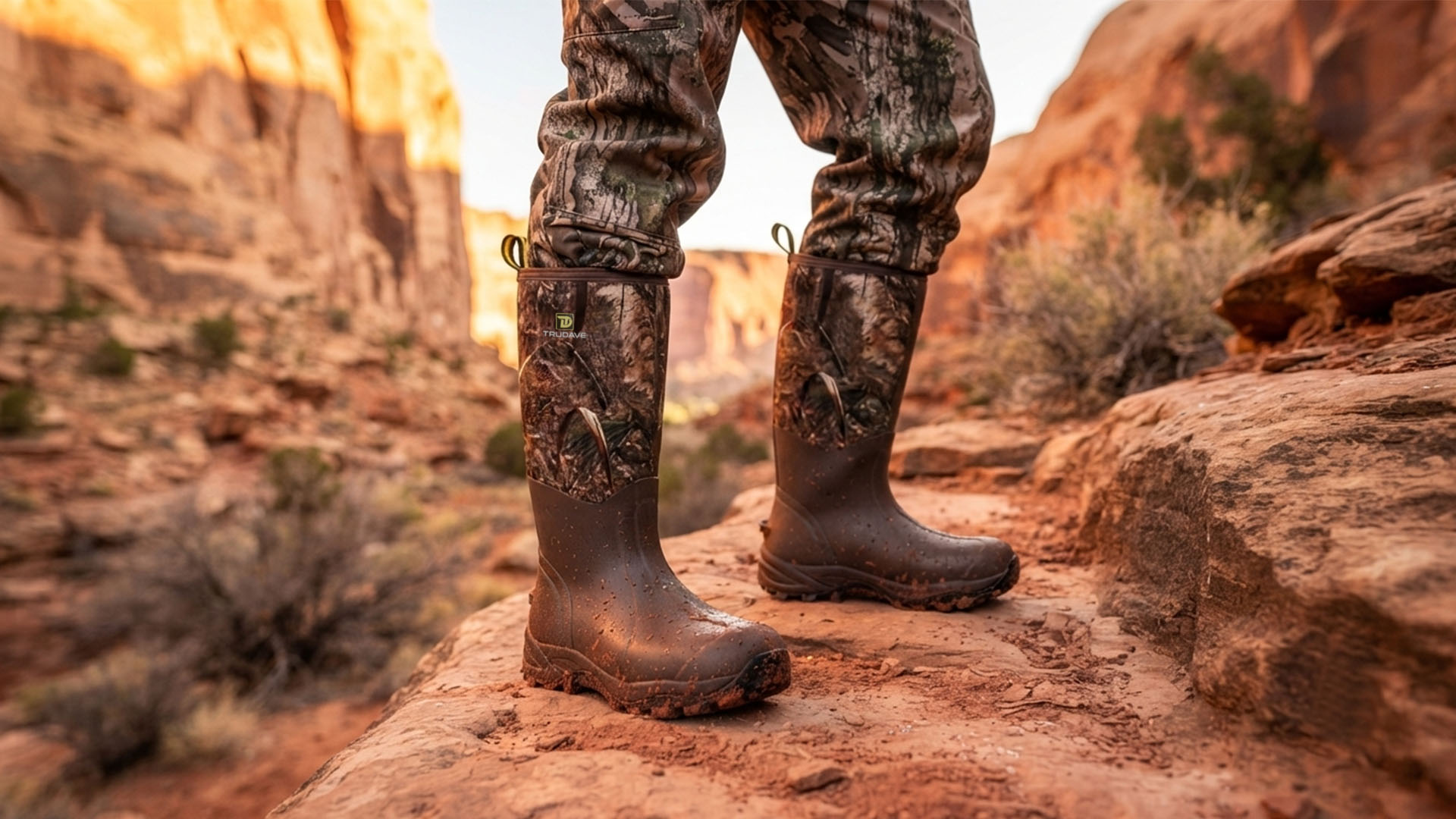
Hunters using these corridors and nearby off-trail setups may benefit from waterproof hunting boots for muddy off-trail access that provide secure heel retention, dependable traction, and enough walking comfort for long approaches.
The correct boot depends on temperature, water depth, and distance.
A tall rubber boot may handle wet lowland sections, while a lace-up waterproof boot may provide better control on steep railroad cuts.
Gravel Can Be Noisy
Some railroad grades retain crushed stone.
Dry gravel creates significant noise.
Walking quickly before daylight can alert deer along the entire corridor.
Use grass-covered edges when possible.
Take shorter steps.
Pause frequently.
Avoid kicking loose rock.
Wet weather may reduce some noise, but slick stones can create traction problems.
Fallen Trees Can Create Funnels
When trees fall across the old rail bed, deer may walk around the same end repeatedly.
Several blowdowns can force movement through a narrow gap.
Check for tracks and rubs around these obstacles.
Do not climb unstable timber unnecessarily.
A fallen tree may conceal holes, sharp branches, wire, or old railroad debris.
The safest route for a deer may not be safe for a hunter.
Old Railroad Debris Creates Hazards
Abandoned rail corridors can contain:
- Spikes
- Wire
- Broken ties
- Metal plates
- Glass
- Culvert openings
- Concrete foundations
- Hidden fencing
Watch every step, especially in grass, snow, or leaves.
Keep dogs under control.
Wear footwear with adequate underfoot protection.
Carry a first-aid kit.
Do not collect or disturb historical materials where prohibited.
Property Boundaries Can Be Confusing
Railroad ownership history can complicate land boundaries.
Some corridors remain under separate ownership.
Others have become public trails, private property, utility access, or reverted land.
Never assume an abandoned railroad is open to hunting.
Confirm:
- Current ownership
- Legal access
- Hunting permission
- Trail regulations
- Discharge restrictions
- Vehicle rules
Mapping applications can contain errors.
Use official records and current signs.
Recreational Trails Require Extra Caution
Some old rail lines have become hiking or cycling trails.
Hunting may be restricted or prohibited.
Even where nearby hunting is legal, public use creates serious safety considerations.
Know required distances from trails.
Never shoot toward or across a recreational corridor.
Expect people at unusual times.
A location with heavy trail use may still hold deer, but it may not provide a safe or legal hunting setup.
Trail Cameras Need Discreet Placement
A camera directly beside an easy walking route is more visible to other people.
Place cameras where legal and where they do not create conflicts with trail users.
Consider secondary crossings off the main corridor.
Secure the camera.
Reduce visits.
Avoid pointing cameras toward areas where they unnecessarily record recreational users.
Follow all applicable privacy and public-land rules.
Ground Setups Can Work in Railroad Cuts
A cut bank can provide natural background cover.
The hunter may sit above or below the grade, depending on wind and visibility.
Choose stable ground.
Avoid loose rock, erosion, and dead trees.
Confirm a safe shooting direction.
Do not sit where other users may approach unseen along the corridor.
Visibility works both ways.
Tree Stands Require Careful Tree Selection
Trees growing beside railroad grades may lean toward the opening or have shallow roots in fill soil.
Inspect for:
- Root instability
- Erosion
- Dead tops
- Trunk damage
- Loose bark
- Lean
- Overhead limbs
Do not choose a tree solely because it overlooks the trail.
Safety remains the priority.
A stand farther from the grade may provide a better tree and more secure deer movement.
Wind Can Follow the Linear Corridor
Railroad cuts and raised grades can redirect airflow.
Wind may move along the corridor rather than across it.
Cuts can create turbulence.
Low sections collect cool air.
Use a wind indicator at the setup.
Check throughout the hunt.
A general west wind does not guarantee scent will move east inside a narrow railroad cut.
Thermals Affect Cuts and Fills
Sunlight warms exposed banks quickly.
Morning thermals may rise along one side of the cut before the other.
Evening air may settle into the corridor.
A setup that appears safe during midday can become dangerous near sunset.
Study slope direction, shade, vegetation, and air movement.
Do not hunt close to bedding cover without understanding how scent behaves.
Snow Reveals Hidden Crossings
Fresh snow can show which sections of the grade receive current deer activity.
Look for tracks:
- Crossing the corridor
- Following the shoulder
- Climbing cut banks
- Using culverts
- Entering fields
- Moving toward bedding cover
Human tracks are equally useful.
They show where other hunters and trail users travel.
Use both types of sign to identify overlooked sections.
Rut Pressure Can Shift Bucks Off the Main Grade
As hunting pressure increases, mature bucks may avoid the obvious corridor.
They may cross it quickly or use thick parallel cover.
Late-season snow can reveal these subtle routes.
Search beyond the center.
The best buck trail may barely touch the rail bed before disappearing into brush.
Game Recovery Can Be Easier Along the Grade
An abandoned railroad bed can provide a useful deer-drag or game-cart route.
Its relatively level surface may reduce effort.
However, access rules still apply.
Do not use motorized equipment unless permitted.
Inspect bridges, culverts, and washouts before relying on the route.
A section easy to walk may be impossible for a cart after rain.
Plan the recovery before hunting deep along the corridor.
Common Railroad-Grade Hunting Mistakes
Sitting Directly Over the Main Corridor
Mature deer may use parallel cover during daylight.
Assuming Every Old Railroad Is Public
Ownership and hunting regulations vary.
Walking the Grade Before Every Hunt
Human scent can affect numerous crossings.
Ignoring Cuts and Fills
These structures may create the strongest funnels.
Trusting Visible Muddy Tracks Too Much
Soft ground can exaggerate activity compared with dry parallel trails.
Forgetting Recreational Users
Safety and legal restrictions take priority.
Ignoring Wind Channeling
Linear terrain can redirect air movement.
Walking Carelessly Through Old Debris
Railroad hardware, wire, glass, and holes may remain hidden.
Hunting Old Patterns After Crop or Timber Changes
The corridor’s value depends on the habitat it currently connects.
Frequently Asked Questions
Are abandoned railroad beds good places to hunt deer?
They can be. Old railroad grades may create travel corridors, dry routes through wetlands, creek crossings, habitat edges, and funnels through difficult terrain.
Do mature bucks walk directly on old railroad beds?
Sometimes, especially during low-light periods. In pressured areas, mature bucks may use parallel trails inside cover or cross the grade quickly.
Where should you place a stand near an old railroad grade?
Focus on creek crossings, culverts, cut ends, field approaches, clear-cut edges, bedding-cover intersections, and secondary trails rather than automatically sitting over the center.
How do railroad cuts affect deer movement?
Steep cut banks can limit crossing locations and funnel deer toward lower banks, cut ends, erosion gaps, and connecting trails.
Can you hunt on an abandoned railroad?
Only when current ownership, access, and hunting regulations allow it. Some corridors remain private or have become recreational trails.
Are railroad grades useful for deer recovery?
Their relatively level surface can make dragging or carting easier, but hunters must verify access rules, bridge safety, washouts, and current trail conditions.
Final Thoughts
An abandoned railroad grade is more than an old trail through the woods.
It can be a raised route through wet ground.
A bench across steep terrain.
A bridge between isolated woodlots.
An edge beside a clear-cut.
A hidden connection between bedding cover and food.
But the obvious center of the corridor is not always where mature deer move during daylight.
Study the shoulders.
Find parallel trails.
Inspect the ends of cuts.
Check culverts, creek crossings, field approaches, and wetland pinch points.
Measure human pressure.
Confirm legal access.
Monitor the wind from the actual terrain.
Most importantly, follow the railroad grade far enough to understand what it connects.
The best deer funnel may not look natural on the map.
Sometimes it was built more than a century ago.
