
The blind looks perfect from the parking area.
Branches cover the roof.
Tall grass hides the lower edges.
The camouflage pattern blends with the surrounding timber, and the shooting windows face a trail covered in fresh tracks.
Then the first deer appears.
It steps into the opening, freezes, and stares directly at the blind.
The animal does not smell you.
The wind is favorable.
You have not moved.
Still, the deer refuses to continue.
After several minutes, it turns around and disappears into the cover.
Ground blinds can be extremely effective for whitetail hunting. They provide concealment, protection from weather, flexible shooting positions, and an accessible option for hunters who do not want to climb.
But a blind is not automatically invisible because it is covered with branches.
Deer notice changes in their environment.
A new shape, dark opening, unfamiliar scent, disturbed vegetation, or poorly planned access route can make an otherwise productive location difficult to hunt.
Successfully using a ground blind requires more than placing it beside a deer trail. Hunters must consider timing, visibility, wind, sunlight, background cover, scent, noise, and how deer naturally approach the location.
Deer Notice New Objects
Whitetails survive by recognizing changes.
A tree that falls overnight changes the landscape.
A vehicle parked in a new location creates suspicion.
Fresh human tracks provide information.
A large fabric box that appears beside a trail can receive immediate attention.
Young deer may tolerate a new blind quickly. Mature deer often behave more cautiously.
This does not mean every ground blind must remain in place for weeks before hunting. It means hunters should consider how much the blind changes the appearance of the location.
A blind placed inside existing cover creates less visual disruption than one standing alone in an open field.
Set the Blind Early When Possible
The best time to place a ground blind is before you need to hunt it.
Allowing the blind to remain in position gives deer time to become familiar with its presence.
How much time is necessary depends on:
- Hunting pressure
- Deer age structure
- Habitat
- Distance from normal travel
- Amount of natural cover
- Human activity already present
On agricultural properties where deer regularly encounter equipment, buildings, and vehicles, animals may accept a blind more quickly.
On remote public land, a mature buck may treat a new object with greater caution.
When possible, place the blind several days or weeks before the planned hunt.
Natural Cover Matters More Than Camouflage Patterns
Camouflage fabric can reduce contrast.
Natural vegetation helps break up the shape.
A ground blind has straight lines, flat walls, and a recognizable roof. Those shapes do not occur naturally in most deer habitat.
Place the blind where surrounding cover disrupts its outline.
Useful locations may include:
- Brush piles
- Field corners
- Cedar edges
- Fallen trees
- Thick fence rows
- Tall grass
- Creek-bank vegetation
- Young timber
- Standing corn
- Logging debris
Avoid placing the blind on a clean skyline or in the middle of an open area unless deer have enough time to accept it.
Brush the Blind Into the Habitat
“Brushing in” a blind means using natural vegetation to make it appear like part of the location.
This does not mean piling random branches against the fabric.
Use vegetation that matches the surrounding area.
In a cedar edge, use cedar branches.
In tall grass, use grass and local stems.
In hardwood timber, use brush, fallen limbs, and existing vegetation.
Focus on breaking up:
- Roofline
- Corners
- Vertical edges
- Lower fabric
- Window outlines
Do not block ventilation or shooting windows.
Make sure branches cannot fall into the blind during wind.
Follow land-management regulations before cutting live vegetation, especially on public land.
Avoid Creating a Large Disturbed Area
Hunters sometimes clear too much vegetation around a blind.
They cut branches.
Remove grass.
Create a wide walking path.
Level the ground.
The blind becomes easier to enter, but the area looks completely different.
Deer may notice the disturbance before they notice the blind.
Clear only what is necessary for:
- Safe access
- Shooting lanes
- Visibility
- Stable footing
Leave the surrounding habitat as natural as possible.
Place the Blind Back From the Trail
A deer trail may look like the obvious place to set up.
Putting the blind directly beside it can create a problem.
The closer the blind is to the trail, the more likely deer are to notice its shape, sound, or scent.
When cover allows, move the blind farther back.
Use a shooting lane to reach the trail.
The correct distance depends on:
- Weapon
- Hunter ability
- Cover density
- Shot angle
- Terrain
- Safe background
Bowhunters may need to remain closer than firearm hunters, but even a small amount of additional distance can make the blind less threatening.
Consider How Deer Will See the Blind
Hunters usually evaluate the blind from their own approach.
Deer may see it from another direction.
Walk the expected deer trail before hunting.
Look toward the blind from:
- Upwind approach
- Downwind approach
- Feeding area
- Bedding-side trail
- Lower terrain
- Higher terrain
Does the blind appear as a dark block?
Does a window create a black square?
Is the roof visible above the grass?
Does sunlight reflect from the fabric?
Study the location from the deer’s perspective.
Dark Windows Create Suspicion
A closed blind with open windows can appear as a series of dark holes.
Those openings may stand out, especially in bright surroundings.
Open only the windows necessary for the hunt.
Keep unused windows closed.
Use mesh when appropriate and compatible with the hunting method.
Be aware that some projectiles should not be fired through mesh unless the blind and equipment are specifically designed for it.
Always follow the manufacturer’s instructions.
Control the Light Inside the Blind
A bright interior makes movement easier to see.
Wear dark clothing inside the blind when appropriate.
Keep the rear windows closed to reduce backlighting.
If sunlight enters from behind the hunter, the hunter’s outline may become visible through the front window.
Position the blind so direct sunlight does not create unnecessary contrast during expected deer movement.
Even small movements can become obvious when the hunter is silhouetted.
Do Not Open Every Window
More windows provide more visibility.
They also increase:
- Light inside the blind
- Air movement
- Scent release
- Visible movement
- Unnatural dark openings
Open only what you need.
Determine likely shooting directions before the hunt.
Use narrow openings when possible.
A controlled field of view is often better than a blind that is completely open on every side.
Wind Still Determines Whether the Blind Is Huntable
A ground blind reduces visible movement.
It does not eliminate human scent.
Fabric slows some airflow but does not create a sealed environment.
Scent escapes through windows, doors, seams, and ventilation openings.
Choose the blind location based on prevailing wind and expected deer movement.
Do not place the blind where the only available access requires crossing an active trail.
A perfect visual setup with an unreliable wind is still a poor hunting location.
Thermals Affect Ground Blinds Too
Ground hunters sit close to the surface where thermal currents can become important.
Morning air may settle into low areas before rising as the ground warms.
Evening air may fall into creek bottoms, ditches, and valleys.
A blind located beside a drainage can experience scent movement that differs from the general forecast.
Use a wind indicator before and during the hunt.
Do not assume the fabric will contain your scent when the local air begins moving toward deer.
Plan the Access Route Before Placing the Blind
Many ground-blind setups fail because the hunter’s entrance is poorly planned.
Ask:
- Where will deer be before daylight?
- Which trails will they use?
- Can I approach from behind cover?
- Will my headlights be visible?
- Does the route cross a feeding area?
- Will mud or water slow the approach?
- Can I leave without disturbing evening activity?
The blind location and access route should be planned together.
A productive blind that cannot be reached quietly may not be worth hunting.
Wet Ground Can Improve Concealment and Complicate Access
Ground blinds are often placed near field edges, creek bottoms, wetland transitions, and low cover.
These locations can provide excellent concealment, but access may involve dew-covered grass, mud, standing water, and saturated trails.
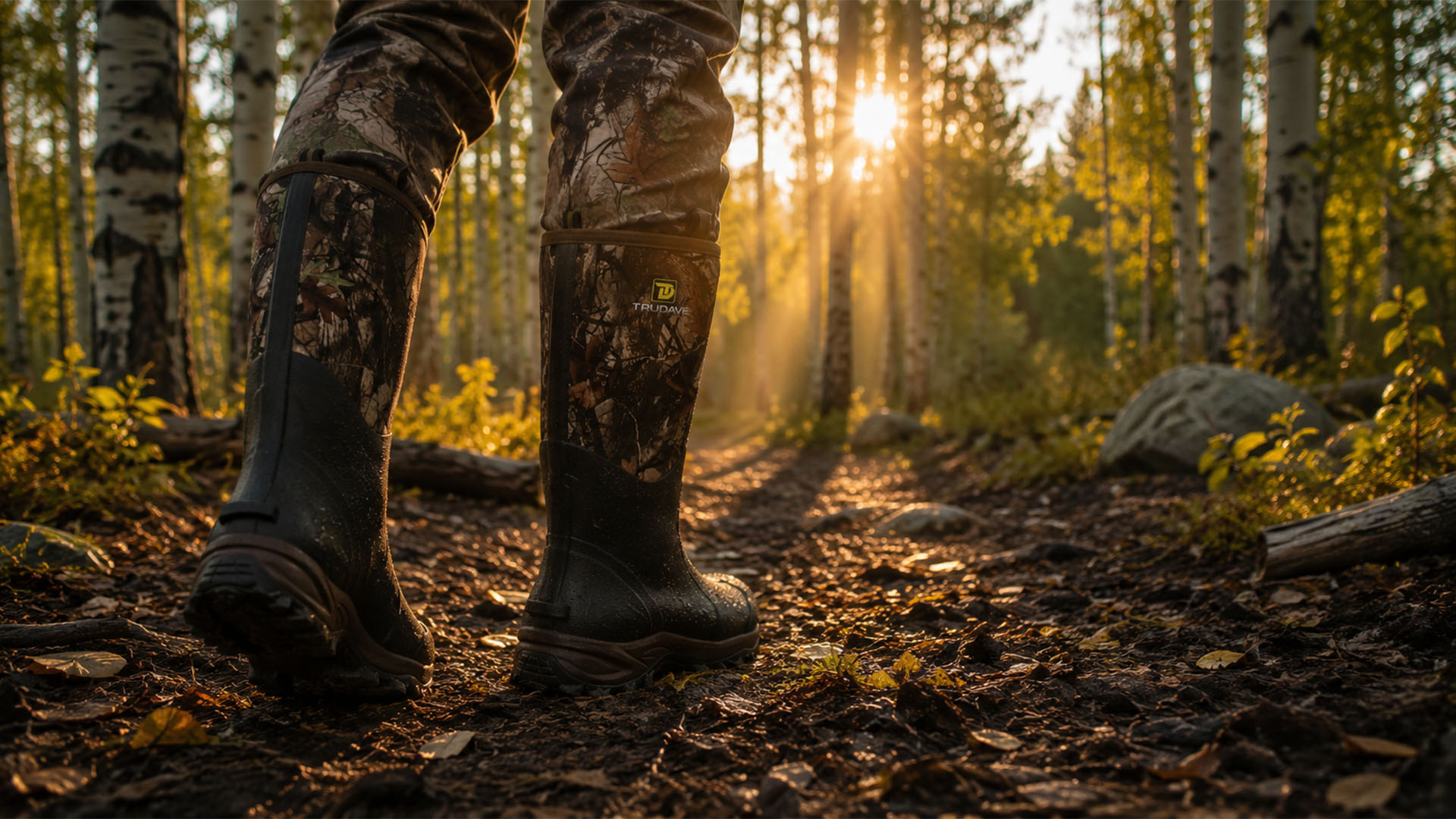
Hunters making repeated approaches through these conditions may benefit from waterproof hunting boots for quiet access through wet ground that provide secure heel retention and dependable traction without creating excessive noise.
Footwear should allow the hunter to move slowly and safely.
A loud slip, mud-filled boot, or soaked sock can ruin the approach before the hunter reaches the blind.
Clear the Blind Floor Carefully
Leaves, sticks, and dry vegetation create noise inside the blind.
Before the season, remove obvious debris from the sitting area.
Do not clear a large bare patch around the outside.
A small piece of outdoor carpet or appropriate floor covering may reduce noise when legal and practical.
Make sure the floor remains dry enough to prevent slipping.
Check for insects, snakes, rodents, and other animals before entering a blind that has remained in place for an extended period.
Choose a Stable Chair
The chair is part of the hunting system.
A noisy or unstable seat causes unnecessary movement.
Use a chair that:
- Fits inside the blind
- Allows a comfortable shooting position
- Does not squeak
- Works on uneven ground
- Provides enough back support
- Allows the hunter to turn slowly
Test the chair before hunting.
Sit with all equipment in place.
Practice raising the bow or firearm without striking the blind.
Practice From the Actual Blind
Shooting from a ground blind feels different from shooting in an open range.
Windows limit movement.
Chair height changes angles.
A bow may contact the roof.
A firearm barrel may approach the window edge.
Practice with an unloaded weapon or appropriate training setup.
Confirm:
- Window height
- Chair position
- Shooting rest location
- Bow clearance
- Safe muzzle movement
- Available shooting angles
Never discover these limitations while a deer is standing outside.
Keep the Weapon Inside the Blind
Do not extend a firearm or bow through the window for long periods.
Movement becomes visible.
The equipment can contact branches or fabric.
Rain and moisture may affect it.
Keep the weapon ready inside the blind until the shot opportunity develops.
Move slowly.
Avoid allowing a barrel, limb, or stabilizer to strike the window frame.
Use a Shooting Rest When Appropriate
A stable rest can improve firearm accuracy.
Tripods, shooting sticks, or blind-mounted rests may work depending on the blind and hunting style.
Set the rest before deer arrive.
Adjust its height to match the chair and window.
Make sure it does not create noise when moved.
Do not allow the rest to force an unsafe shooting angle.
Keep Equipment Organized
Ground blinds become cluttered quickly.
Backpacks, water bottles, calls, binoculars, gloves, and other gear can interfere with movement.
Place equipment where it can be reached without searching.
Keep the floor around your feet clear.
Secure loose objects.
A falling bottle or shifting pack can create enough noise to alert nearby deer.
Enter Earlier Than You Think Necessary
Ground-level access often requires more care than climbing into a stand.
The hunter may pass close to bedding cover or field-edge staging areas.
Arrive early enough to move slowly.
Allow the area to settle.
Do not rush because daylight is approaching.
A quiet arrival thirty minutes earlier is better than a loud arrival five minutes before shooting light.
Avoid Repeated Door Noise
Blind doors can create loud zipper, buckle, hook-and-loop, or fabric sounds.
Practice opening and closing the blind quietly.
Prepare the entrance before the season when possible.
Once inside, secure the door without unnecessary movement.
Do not repeatedly enter and leave during the hunt.
Rain Changes Ground-Blind Hunting
One advantage of ground blinds is weather protection.
Rain can reduce hunter participation and make deer access routes quieter.
However, rain creates additional considerations.
Water may collect on the roof.
Mud can form around the entrance.
Fabric can drip.
Condensation may build inside.
Check the blind after storms.
Make sure stakes, tie-downs, and support poles remain secure.
Never assume a blind survived severe wind without damage.
Strong Wind Can Make a Blind Unsafe
Ground blinds present a large surface area to wind.
Poorly secured blinds can collapse, shift, or blow away.
Use all recommended stakes and tie-down points.
Check weather forecasts.
Avoid hunting from a damaged or unstable blind.
Remove portable blinds when severe storms are expected if possible and permitted.
Do not place a blind beneath dead limbs or damaged trees.
Snow Can Change the Blind’s Appearance
A blind placed in autumn may stand out after snowfall.
Dark fabric against white snow becomes highly visible.
Snow can also collapse roof sections or block windows.
Clear excessive accumulation safely.
Add seasonal brushing when practical.
Evaluate how the blind appears under current conditions rather than assuming the original camouflage remains effective.
Permanent Blinds Require Maintenance
Wooden or elevated box blinds may feel permanent, but they still require inspection.
Check:
- Floor strength
- Steps
- Railings
- Door hinges
- Windows
- Roof
- Wasps or other insects
- Rodent damage
- Structural rot
- Mold
- Loose hardware
Inspect before every season and after severe weather.
A familiar blind can become unsafe over time.
Do Not Overhunt One Blind
A blind can become comfortable.
That makes it tempting to hunt the same location under every condition.
Repeated access leaves scent and disturbance.
Deer may begin avoiding the area during daylight.
Use multiple locations when possible.
Save the best blind for favorable wind, weather, and seasonal movement.
Comfort should not replace strategy.
Trail Cameras Can Help Evaluate Blind Placement
Place cameras where they can monitor deer behavior near the setup without requiring frequent visits.
Look for:
- Deer staring at the blind
- Routes shifting away
- Daylight movement changes
- Wind-specific use
- Entry direction
- Time required for deer to accept the blind
Camera information can reveal whether the blind is influencing movement.
Do not move the blind after one cautious deer encounter.
Look for repeated patterns.
Watch Does Carefully
Does often provide early warning that something is wrong.
They may stare, stomp, circle downwind, or avoid a new object.
Their reaction can alert other deer.
Remain still.
Do not assume a nervous doe will immediately leave.
She may eventually relax if she cannot confirm danger.
Any unnecessary movement inside the blind can turn suspicion into alarm.
Mature Bucks May Approach Differently
A mature buck may not follow the same trail after noticing a blind.
It may:
- Stop inside cover
- Approach from downwind
- Use a parallel trail
- Wait until darkness
- Circle the location
- Avoid the opening entirely
Hunt more than the obvious trail.
Look for secondary approaches and nearby staging cover.
The best blind position may intercept movement before the buck reaches the location where younger deer enter the field.
Ground Blinds Work Well for New Hunters
Ground blinds can provide a controlled environment for beginners.
They hide movement, offer weather protection, and make communication easier.
Before the hunt:
- Explain safe muzzle direction
- Define shooting lanes
- Practice quiet movement
- Confirm identification rules
- Discuss when not to shoot
- Arrange equipment safely
A blind does not remove the need for firearm or bow safety.
It creates a smaller space where organization becomes even more important.
Ground Blinds Can Improve Accessibility
Ground-level hunting can be useful for hunters with limited mobility.
Choose locations with practical access while still protecting the hunting area.
Consider:
- Trail condition
- Chair comfort
- Distance from vehicle
- Width of entrance
- Ground stability
- Equipment transport
- Emergency access
A successful setup should support both hunting effectiveness and hunter safety.
Common Ground-Blind Hunting Mistakes
Placing the Blind Immediately Before the Hunt
Mature deer may react to the sudden change.
Setting Up Directly Beside the Trail
Additional distance can make the blind less threatening.
Opening Every Window
Excess light and dark window shapes reveal movement.
Ignoring Background Cover
A blind standing alone remains easy to notice.
Clearing Too Much Vegetation
Large disturbed areas can alert deer.
Trusting the Blind to Contain Scent
Wind and thermals still matter.
Using a Noisy Chair
Small sounds become significant at close range.
Failing to Practice From the Blind
Window height and equipment clearance affect shooting.
Hunting the Same Blind Under Every Wind
Convenience does not make bad conditions safe.
Frequently Asked Questions
How early should you set up a ground blind for deer?
When possible, place it several days or weeks before hunting so deer have time to become familiar with it. The necessary time varies with habitat, pressure, and local deer behavior.
Should you brush in a ground blind?
Yes. Natural vegetation can help break up the blind’s outline and make it appear more consistent with the surrounding habitat.
How far should a ground blind be from a deer trail?
Distance depends on weapon, cover, visibility, shot angle, and hunter ability. Avoid placing the blind so close that deer immediately notice its shape or scent.
Can deer smell hunters inside a ground blind?
Yes. Ground blinds do not completely contain human scent. Hunters must continue considering wind, thermals, access, and scent contamination.
Should ground-blind windows remain open?
Open only the windows needed for visibility and safe shooting. Keeping unused windows closed reduces light, scent movement, and visible dark openings.
Are ground blinds good in the rain?
They can provide useful weather protection, but hunters should inspect the blind, secure it properly, manage condensation, and approach carefully through wet terrain.
Final Thoughts
A ground blind is not invisible simply because the fabric has a camouflage pattern.
Deer notice shape.
Contrast.
Movement.
Scent.
Noise.
Disturbed vegetation.
Unfamiliar access.
Successful ground-blind hunting begins before the hunter sits down.
Place the blind early when possible.
Use natural background cover.
Break up the outline.
Limit open windows.
Control interior light.
Plan the wind.
Create a quiet access route.
Practice from the actual chair and shooting position.
Then hunt the blind only when conditions support the location.
A properly placed ground blind should not look like equipment added to deer habitat.
It should look like part of the habitat that has always been there.
