
There’s a moment every hunter knows too well.
You’re standing at the edge of a flooded timber hole, the sun just starting to paint the sky, and you feel it—that first telltale trickle of cold water seeping through a crack you didn’t know was there. The hunt isn’t over yet, but the clock is ticking. Cold, wet feet end hunts early. And cracked boots are the reason.
I learned this lesson the hard way. For years, I treated my hunting boots like they were disposable. Wear them hard, toss them when they crack, buy another pair. I figured that’s just the cost of doing business in the outdoors.
Then I started paying attention to what actually makes a boot last—and what kills them before their time. Here’s what I learned about keeping your feet dry season after season.
Why Hunting Boots Crack (And How to Stop It)
Even the best rubber or neoprene boots can crack over time. But here’s the thing—this usually isn’t because the boots are “bad quality.” It’s because the materials naturally break down without proper care.
The most common culprits? Heat exposure—sun, heaters, or hot garages pull moisture from rubber and cause cracking. Chemicals like fertilizers, oils, and fuels weaken boot materials. Repeated bending or folding creates stress cracks. And storing boots wet or in extreme temperatures accelerates deterioration.
Here’s the science: waterproof boots are made from natural rubber, neoprene, or blends. These materials stay flexible because of oils within the compound. When those oils evaporate or break down—from UV rays, heat, or chemicals—the material gets stiff. Then it cracks.
The good news? With the right habits, you can easily double—or even triple—the lifespan of your hunting boots.
The Simple Care Routine That Works
Across every Trudave boot series—TrailGuard, WildGuard, and StreamTrek—the care instructions are remarkably consistent. And they work.
After every hunt, rinse off mud and debris with clean water. A garden hose works great. Don’t let mud dry and cake on; it traps moisture against the rubber and accelerates breakdown.
Wipe with mild soap if needed. Never use degreasers, bleach, or harsh chemicals—these strip essential oils from the rubber.
Air dry naturally—never use heat. This is the single most important rule. No radiators, no hair dryers, no direct sunlight. Heat cracks rubber and ruins the waterproof seal.
Store boots upright in a cool, shaded area. Avoid garages without temperature control, where summer heat bakes the rubber and winter cold makes it brittle. Don’t fold or crease the boots, which creates weak points that lead to splitting.
Apply rubber conditioner every few weeks to maintain flexibility.
Check the soles regularly for early signs of dryness or stiffness.
These simple steps can save you money and preserve your gear season after season.
The 7-Day Torture Test: What Happens When You Actually Use These Boots
I’ve read a lot of gear reviews. Most of them are written by people who took a pair of boots out of the box, walked around their manicured lawn, snapped a few photos, and called it a “field test.” That doesn’t cut it.
Trudave did something different. They put on a brand new pair of boots on Monday morning and didn’t take them off for anything other than sleeping for the next seven days. Field scouting, truck driving, warehouse work, and trudging through flooded timber—these boots had to do it all.
Day 1 — The Break‑In Myth. “Right out of the box, the flexibility of the upper and the EVA midsole felt completely dialed in.” After 8 hours on concrete and a 2‑mile gravel hike: zero hot spots or blisters.
Day 3 — The Mud & Water Assault. Knee‑high wet grass, thick clay mud, and standing water. The tester stood in a creek for ten minutes. The aggressive tread pattern cleared the thick mud with every step, preventing the boots from turning into heavy, slick bowling balls. Socks? Bone dry.
Day 5 — The “Sweat Box” Check. Fast‑paced hiking in 75°F weather. The moisture‑wicking lining pulled sweat away from the skin, avoiding the dreaded “swamp foot” that plagues many waterproof boots.
Day 7 — The Aftermath. After 168 hours, the boots were beaten to crap visually. But a garden hose revealed an upper that was fully intact. No blown seams. No peeling soles. No cracked rubber at the toe flex point.
The final verdict? “A 7‑day continuous wear test is stupid. You should rotate your boots to let them dry and recover. But this test proved exactly what we built Trudave gear to do: survive when you don’t have the luxury of a backup plan.”
When It’s Time to Replace Your Boots
Even with perfect care, boots don’t last forever. Here’s when to let them go:
- Deep cracks in the rubber or neoprene
- Separation between the boot and upper
- Loss of flexibility in high‑stress areas
- Water seeping in even after patching attempts
If you hunt or fish often, upgrading to a pair built for heavy outdoor use will save you money in the long run.
TrailGuard vs. WildGuard: Which One Fits Your Hunt?
Trudave builds two primary hunting boot series, each designed for different conditions.
The TrailGuard Series is built for long sits and stealthy approaches. Made from premium rubber with sealed seams, these boots are 100% waterproof for wetlands, rain, or muddy terrain. They feature 5mm neoprene insulation and a fleece lining that provide excellent warmth during cold‑weather hunts—ideal for deer, duck, or late‑season hunting. The deep‑lug outsole locks onto wet ladders, metal rungs, and soft ground. Designed with cushioned EVA insoles and shock‑absorbing midsoles for all‑day comfort.
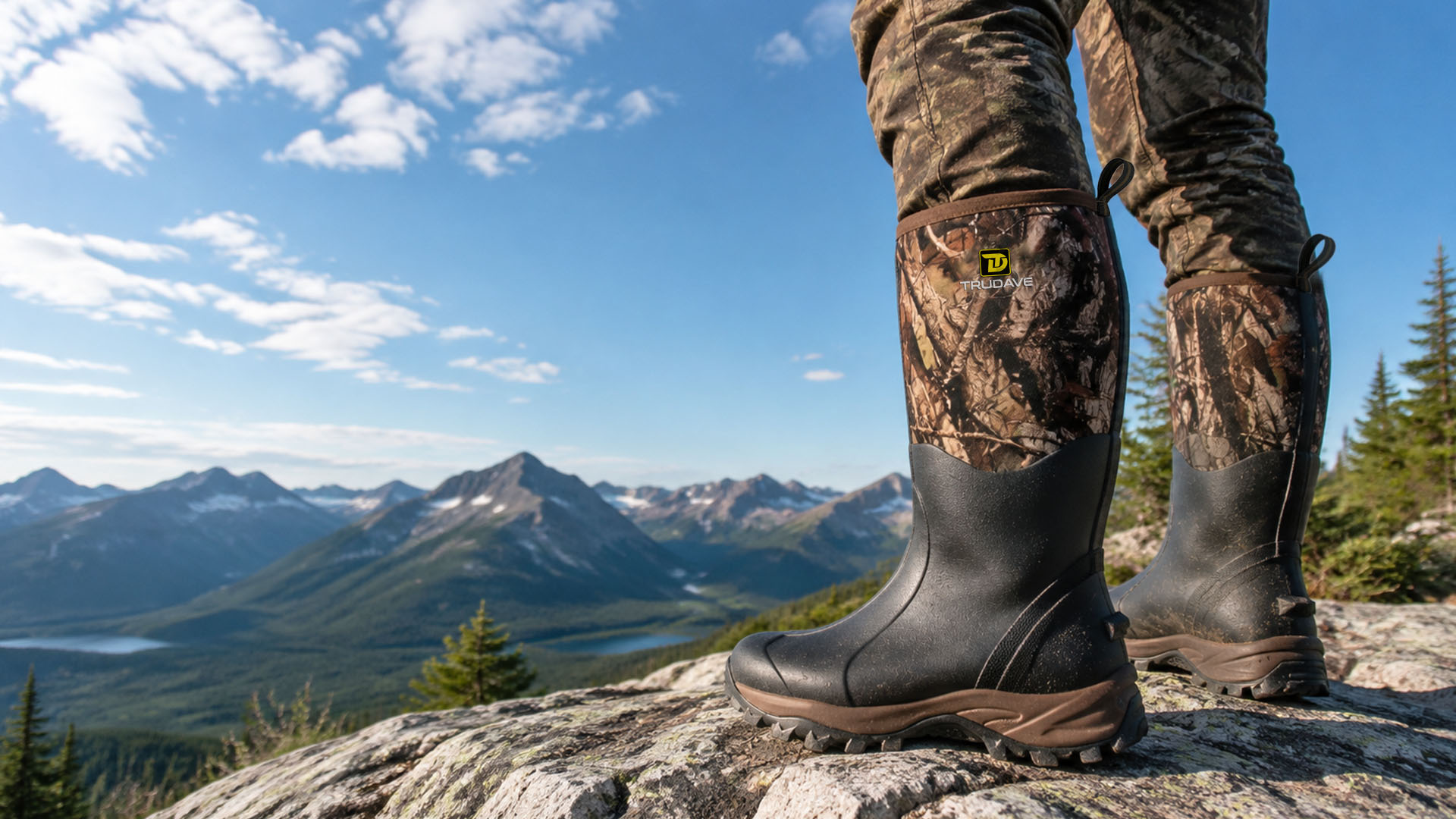
The WildGuard Series is designed for hunters who need to disappear. The full camo finish blends with timber, reeds, or brush, keeping you hidden. These boots are 100% waterproof, made from 5mm neoprene and a tough rubber shell. The 5mm neoprene insulation with a breathable liner traps warmth without overheating—perfect for early morning or winter hunts in cold, wet conditions. Cushioned EVA midsoles and arch support reduce fatigue on long treks.
Both series feature the same essential care requirements: rinse with water, wipe with mild soap, air dry in the shade.
What Independent Reviewers Are Saying
Weapongenetics, a 2026 gear roundup, included Trudave among the best rugged lightweight hunting boots, noting they “provide insulated warmth and durable outsoles” and “balance comfort, traction, and durability to keep you agile all day.” The combination of waterproof rubber and 5mm neoprene insulation keeps feet dry and warm.
PickHunting ranked Trudave as the No. 1 warm weather hunting boot for 2026, highlighting the steel shank in the midsole for “enhanced safety and durability.” The boots feature an anti-slip outsole that is “abrasion-resistant, and is self-cleaning for super grip while hunting.”
Trudave holds a solid rating on Trustpilot based on verified purchaser reviews. One customer wrote: “Bought some boots from Trudave, These boots are well made and comfortable. The size is slightly larger, but with socks they fit well and comfortably.” Another noted: “It has been about two months now and these boots are still going strong and keeping our feet protected.”
A recurring note from verified buyers: sizing runs slightly large. Wearing medium‑to‑heavy socks provides the best fit.
The Bottom Line
Here’s the honest truth about hunting boots in 2026.
You can spend $200 on a pair of boots and treat them like they’re disposable, and they’ll fail in a season. Or you can spend $70–$85 on a pair of Trudave boots, give them five minutes of care after each hunt, and get years of reliable service.
The 7‑day torture test proved these boots can handle the abuse. The care routine proves they can last. And independent reviewers confirm they deliver value that punches well above their price point.
The deer don’t care what logo is on your boots. The ducks don’t check the brand tag. They only care if you’re still in the field when they finally move—warm, dry, and planted on the ground.
Trudave keeps you there. Without emptying your wallet.
Now stop reading and go get in the woods. Your feet will handle the rest.
