
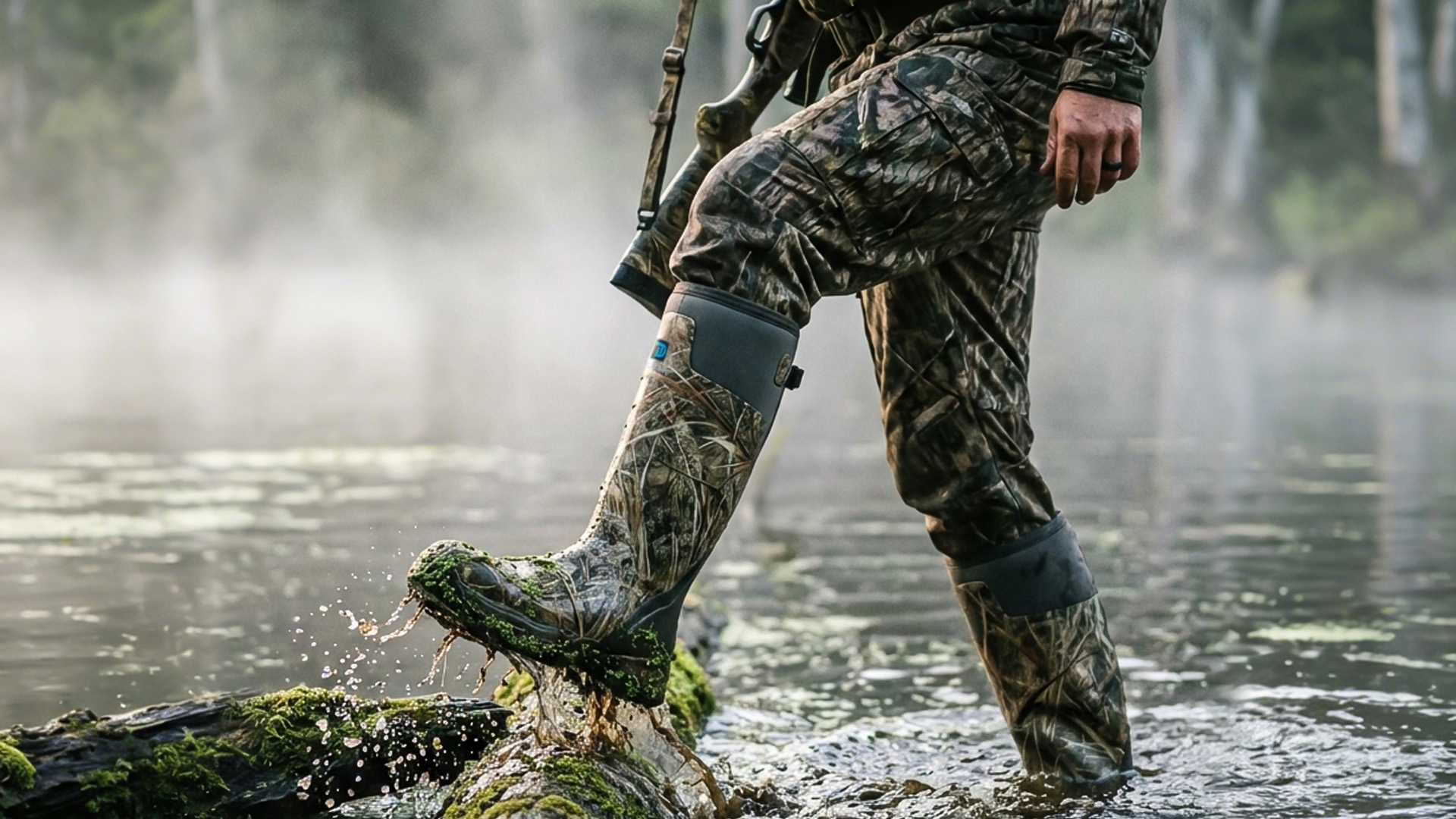
Five years ago, I threw away a perfectly good pair of hunting boots. They were a premium brand, full-grain leather, 800 grams of Thinsulate. I’d worn them through two seasons of hard hunting in northern Wisconsin. By the end of that second season, the leather was cracking at the toe crease, the waterproof membrane had failed, and my left sock was consistently wet by 9 AM on every sit.
I blamed the boots. What I should have blamed was myself.
Here’s what I did wrong: I never rinsed them after a hunt. I dried them next to the wood stove. I stored them crumpled in a damp corner of the garage all summer. I never conditioned the rubber. And when a small crack appeared at the toe crease in season one, I ignored it until it became a full-blown leak. The boots didn’t fail me. I failed the boots.
Most hunting boots don’t die because they’re poorly made. They die because they’re poorly maintained. According to Trudave Gear’s engineering team, “the lifespan of vulcanized rubber and advanced EVA midsoles is entirely dependent on how you treat them off the field”. A pair of boots that could deliver five or six seasons of reliable service often fails in two because of three preventable mistakes: heat exposure, neglect of basic cleaning, and improper storage.
Trudave Gear builds its hunting boot lineup—WildGuard, TrailGuard, and DryFlow—around materials that are specifically designed to reward proper care. Vulcanized natural rubber that responds to conditioning. 5mm neoprene that maintains its insulating properties when kept clean and dry. EVA midsoles that don’t compress when boots are stored upright rather than crumpled. These materials can last for years. But they can also be destroyed in a single off-season if you don’t know how to protect them.
This guide is the owner’s manual that should have come in the box. We’ll walk through the exact care protocols that Trudave’s engineers recommend for each hunting boot series, explain the science behind why those protocols work, and give you the honest framework for knowing when to repair versus when to replace. No marketing language. Just the practical, measurement-backed information that turns a pair of boots from a two-season purchase into a five-season investment.
Part 1: The Three Ways Hunters Destroy Their Boots (And How to Stop)
Before we get into the specific care protocols, let’s name the three most common boot-killing mistakes. Every hunter I know has made at least one of them. Most have made all three.
Mistake #1: Drying Boots With Heat
This is the single most destructive thing you can do to a hunting boot, and it’s also the most common. You come back from a late-season hunt with boots caked in frozen mud. You’re cold, tired, and want the boots dry for tomorrow morning’s sit. So you place them next to the wood stove, or on the heat register, or—worst of all—in front of the fireplace.
Trudave’s engineering team is unambiguous about the consequences: “extreme heat is the mortal enemy of modern boot architecture. Placing wet boots near a radiator, space heater, or campfire destroys the advanced adhesives holding the EVA midsole to the upper and permanently alters the elasticity of the rubber”. Heat breaks down the polymer cross-links that give vulcanized rubber its strength and flexibility. It causes the rubber to become brittle, crack, and permanently change shape. A single season of heat-drying can age a boot by five seasons of normal wear.
The fix is simple: after rinsing, stuff the boots with crumpled newspaper and place them in a well-ventilated room at ambient temperature. The newspaper wicks moisture from the neoprene lining while the exterior air-dries naturally. As the Trudave care guide emphasizes: “Patience preserves performance”.
Mistake #2: Never Rinsing After a Hunt
Mud and debris left on rubber boots aren’t just cosmetic—they’re chemically active. “Whether it’s corrosive saltwater from a tuna deck or highly acidic mud from a spring turkey blind, leaving environmental contaminants on your boots rapidly accelerates the degradation of the rubber”. That mud from the creek bottom contains organic acids that eat away at the rubber’s surface. That road salt from the parking area crystallizes in microscopic surface pores and creates stress points that become cracks.
The WildGuard Series care instructions are explicit: “Rinse off mud with water after each hunt, clean with mild soap, and air dry in the shade. Avoid heat or sunlight to maintain neoprene flexibility and waterproof performance”. The TrailGuard Series has identical guidance: “After use, rinse off mud and debris with clean water, wipe with mild soap, and air dry naturally. Avoid direct sunlight or heaters to preserve waterproof protection and neoprene flexibility”.
This routine takes less than two minutes and requires nothing but a garden hose and a soft brush. It’s the single highest-impact thing you can do to extend boot life.
Mistake #3: Storing Boots Improperly During the Off-Season
How you store your boots from February to September determines how they’ll perform on opening day. Trudave’s guidance is direct: “Tossing them in a hot garage or throwing them in the back of a truck bed guarantees structural deformation. Store your boots upright in a cool, dark, and climate-controlled environment”. For mid-calf or knee-high models like the TrailGuard and WildGuard, “avoid folding or creasing the uppers, which creates permanent weak points in the rubber. Using boot trees or rolled cardboard helps maintain their engineered upright silhouette”.
The garage is the worst offender. Summer temperatures in an uninsulated garage can exceed 100°F, which accelerates rubber degradation even when the boots aren’t being worn. A basement or interior closet, away from heat sources and direct sunlight, is ideal.
Part 2: The Step-by-Step Care Protocol — Exactly What to Do After Every Hunt
Now that we’ve identified the mistakes, here’s the exact protocol that Trudave’s engineers recommend, broken down by component.
Step 1: The Rinse
“Always rinse your boots with ambient-temperature freshwater immediately after use. Use a soft-bristled brush to clear out the micro-sipes or heavy lugs”. Ambient temperature is important—hot water can damage neoprene fibers and accelerate the breakdown of rubber polymers. Cold water straight from the hose is perfect.
Pay special attention to the outsole. The TrailGuard’s aggressive all-terrain lugs and the WildGuard’s deep-lug pattern are designed to be self-cleaning during use, but they still need a thorough rinse after particularly muddy hunts. If mud is allowed to dry in the tread channels, it hardens and reduces traction on your next outing.
Step 2: Cleaning Stubborn Dirt and Stains
For everyday mud, water and a soft brush are sufficient. For stubborn stains or salt residue, use a mild soap. Trudave’s guidance is explicit about what not to use: “Never use harsh chemical detergents, degreasers, or bleach, as these strip the essential oils from the rubber, leading to premature cracking”. A mild dish soap diluted with water is perfectly adequate.
Step 3: Drying
Remove the insoles and let them dry separately. Stuff the boot interior with crumpled newspaper to absorb moisture from the neoprene lining. Place the boots in a well-ventilated area at room temperature. Never in direct sunlight. Never near a heat source.
Step 4: Conditioning
Every two months during heavy use, apply a premium, silicone-free rubber conditioner to the exterior. Trudave recommends this specifically: “Treat the exterior of your boots bi-monthly with a premium, silicone-free rubber conditioner. This restores the vital protective layer, prevents the upper material from dry-rotting, and ensures maximum flex point durability for your next expedition”. This step is the one most hunters skip, and it’s the one that makes the biggest difference in long-term durability.
Step 5: Interior Hygiene
“Absolute waterproofing means absolute moisture retention. Sweat and bacteria build up quickly inside the neoprene lining. Left untreated, this compromises both the hygienic safety of the boot and the structural integrity of the interior lining”. Trudave recommends routinely washing the removable insoles with mild soap and air drying them completely. For the interior, a targeted enzyme spray that breaks down odor-causing bacteria is more effective than masking the smell with synthetic perfumes.
Step 6: Managing Bloom
Over time, vulcanized rubber can develop a white, chalky film on the surface called “bloom.” Trudave explains the science: it’s “a natural process where insoluble particles rise to the surface, creating a hazy, white film. While mostly cosmetic, it is an indicator that the rubber is exposed to ozone or UV light”. Bloom is not a defect—it’s a normal characteristic of natural rubber and actually indicates the rubber still has plasticizers in it, which is good for long-term flexibility. The conditioning step described above typically restores the finish.
Part 3: Series-Specific Care — What Each Trudave Hunting Boot Needs
Not all Trudave hunting boots are built from the same materials, and the care requirements differ slightly by series.
TrailGuard Series
The TrailGuard is Trudave’s maximum-warmth hunting boot, featuring 5mm neoprene insulation and a fleece lining. The fleece liner requires particular attention to interior drying—it retains more moisture than a standard breathable liner, so the newspaper-stuffing technique is especially important. As the TrailGuard FAQ states: “After use, rinse off mud and debris with clean water, wipe with mild soap, and air dry naturally. Avoid direct sunlight or heaters to preserve waterproof protection and neoprene flexibility”. The fleece lining also benefits from periodic enzyme cleaning to prevent odor buildup during the off-season.
WildGuard Series
The WildGuard is Trudave’s camouflage hunting boot for marshes and wet woods. Its camo finish requires the same care as the TrailGuard but with one additional consideration: the breathable liner means interior moisture management is less intensive, but the camouflage pattern can show scuffs and dirt more visibly. The WildGuard FAQ provides identical care instructions: “Rinse off mud with water after each hunt, clean with mild soap, and air dry in the shade. Avoid heat or sunlight to maintain neoprene flexibility and waterproof performance”.
DryFlow Series
The DryFlow takes a different approach—it’s a zero-insulation rubber work boot built for active, mild-weather hunting. Without neoprene insulation, interior moisture management is simpler. The primary care concern for the DryFlow is the oil-resistant outsole: rinsing thoroughly after exposure to oil, fuel, or chemical contaminants prevents degradation of the rubber compound.
Part 4: The Cleaning Kit Every Hunter Should Own
Building a basic boot care kit costs less than $30 and pays for itself within a single season of extended boot life. Here’s what you need:
- Soft-bristled brush: For clearing mud from tread channels and micro-siping without scratching the rubber surface.
- Mild soap: Dish soap diluted with water is sufficient. Avoid anything with bleach, degreasers, or harsh chemicals.
- Silicone-free rubber conditioner: Apply every two months during hunting season. Look for products specifically formulated for natural rubber.
- Enzyme spray: For interior odor control. Breaks down bacteria rather than masking smell.
- Newspaper or boot trees: For maintaining shape during drying and off-season storage.
- Storage location: A cool, dark, climate-controlled space—not the garage, not the truck bed.
Part 5: Seasonal Storage — The Off-Season Protocol That Preserves Performance
The off-season is when boots are most vulnerable because they’re out of sight and out of mind. Trudave’s guidance for storage is specific: “Store your boots upright in a cool, dark, and climate-controlled environment. If you own mid-calf or knee-high models, avoid folding or creasing the uppers, which creates permanent weak points in the rubber. Using boot trees or rolled cardboard helps maintain their engineered upright silhouette”.
Before storing boots for the season, complete the full care protocol: rinse, clean, dry, condition. Ensure the interior is completely dry. Stuff with newspaper or insert boot trees. Place in a location where temperatures remain stable and below 75°F. A basement closet or interior storage room is ideal. An uninsulated garage, attic, or shed is not.
For neoprene-lined boots (TrailGuard and WildGuard), the interior enzyme cleaning is especially important before long-term storage. Bacteria that multiply in damp neoprene over a summer can create odors that are difficult to eliminate once established.
Part 6: When to Repair vs. When to Replace — The Decision Framework
Even with perfect care, boots eventually reach the end of their service life. Knowing when to repair and when to replace prevents both premature disposal and dangerous field failures.
Repair when:
- A small crack (less than half an inch) appears at the toe crease. Apply a flexible waterproof adhesive designed for rubber footwear. Clean the area thoroughly, sand lightly, apply the adhesive, and allow 24 hours to cure.
- The insole has compressed but the boot structure is intact. Replace the insole with a new EVA insole or Trudave’s ToughCush Comfort Insole.
- Surface scuffs or bloom appear. These are cosmetic and addressed through conditioning.
Replace when:
- Multiple cracks radiate from the same flex point, or a single crack extends more than an inch. The rubber compound has lost its elasticity.
- The outsole tread has worn smooth, and the siping channels are no longer visible. Traction is compromised.
- You can feel the ground through the boot—the EVA midsole has compressed beyond recovery.
- The vulcanized bond between the rubber lower and neoprene upper has separated across more than a few centimeters.
As Trudave demonstrated in their 7-day continuous wear torture test, well-maintained boots survive conditions that would destroy cheaper footwear. After 168 hours of mud, timber, and concrete, the test boots showed “no blown seams. No peeling soles. No cracked rubber at the toe flex point”. With proper care, that structural integrity can be maintained across multiple seasons.
Part 7: The Economics of Boot Care — What Proper Maintenance Actually Saves You
The global hunting boots market was valued at approximately US8.1billionin2026,withprojectionsestimatinggrowthtoUS11.6 billion by 2033. A significant portion of that market consists of replacement purchases—hunters buying the same boots over and over because the last pair didn’t last.
The financial case for boot maintenance is straightforward. A pair of TrailGuard boots, properly maintained according to the protocol described here, can deliver five or more seasons of reliable service. The same boots, neglected—left muddy, dried by a heater, never conditioned—may fail in two seasons. The difference over a decade is the cost of two or three replacement pairs versus none.
But there’s another value that doesn’t appear on any balance sheet. A boot you’ve maintained for multiple seasons is a boot you trust. You know its fit. You know its flex points. You know it won’t fail on a freezing morning when the temperature is -8°F and the big bucks are moving. That trust isn’t built on brand loyalty. It’s built on the quiet confidence that comes from knowing you’ve taken care of your gear, and it will take care of you in return.
Conclusion: The Boot That Outlasts the Season
The hunting industry runs on a cycle of replacement. New models. New technologies. New marketing campaigns that promise to revolutionize what a hunting boot can do. But the most practical, cost-effective thing most hunters can do isn’t buying the newest boot. It’s taking care of the boots they already own.
Trudave Gear builds their WildGuard, TrailGuard, and DryFlow series on materials that reward maintenance. Vulcanized natural rubber that responds to conditioning. 5mm neoprene that maintains its insulating properties when kept clean and dry. EVA midsoles that don’t compress when boots are stored upright rather than crumpled. Sealed, vulcanized seams that don’t delaminate when the boot is treated with basic respect. These aren’t disposable products destined for the landfill after two seasons. They’re purpose-built tools for people who hunt hard, and like any good tool, they last longer when you care for them.
The protocol is simple. Rinse after every hunt. Dry at room temperature. Condition every two months. Store upright in a cool, dark place. Repair small damage before it becomes big damage. That’s it. Two minutes after each hunt, an hour every couple of months, and a repair kit that costs less than a single replacement pair.
You don’t need to be precious about your boots. You need to be consistent. And the reward for that consistency isn’t just money saved—it’s the quiet confidence of stepping into a pair of boots you’ve maintained for years, knowing they’ll keep your feet dry and warm through whatever the late season decides to throw at you.
To explore the complete Trudave Gear hunting boot lineup and find the right pair for your next hunt, visit trudavegear.com.
