
Sandhill crane country can look almost too open to hunt.
A harvested grain field stretches to the horizon.
A shallow wetland sits beyond the road.
Prairie grass covers the low ground.
Wind pushes across miles of flat country.
Then the cranes appear.
Long-necked silhouettes cross the sky.
One flock turns toward a stubble field.
Another continues toward a distant marsh.
A third group circles high, studies the ground, and disappears behind a low ridge.
That is one of the defining challenges of sandhill crane hunting.
The birds are large.
The landscape is larger.
And cranes often use open country where they can see danger from a long distance.
Successful hunters learn to connect:
- Feeding fields
- Roost water
- Wind
- Open visibility
- Agricultural food
- Wetland edges
- Current migration movement
The goal is not simply finding cranes somewhere in the region.
It is understanding why they are using one specific field, one wetland, or one travel corridor that day.
Sandhill Cranes Are Birds of Open Country
Sandhill cranes use a wide range of habitats during migration and seasonal movements.
Depending on region, useful habitat may include:
- Grain fields
- Prairie wetlands
- Shallow marshes
- River valleys
- Grasslands
- Agricultural flats
- Wet meadows
They often move between feeding habitat and secure resting or roosting areas.
Start With Food
Agricultural fields can be extremely important.
Cranes may feed in harvested fields containing:
- Corn residue
- Small grain
- Other crop waste
The best field is not always the biggest field.
Current food availability matters.
Watch the Birds, Not Just the Crop
Two neighboring stubble fields may appear identical.
One may attract cranes repeatedly.
The other may remain empty.
Actual bird use tells you more than the crop label.
Harvest Timing Can Change Everything
A newly harvested field may expose fresh food.
Birds can respond quickly.
Recently Worked Fields Can Lose Value
Tillage or other agricultural activity may:
- Cover food
- Disturb birds
- Change surface conditions
Rescout after major field changes.
Food Availability Is Never Static
One field may be excellent for several days.
Then birds shift.
Current Scouting Matters
Do not assume yesterday’s feeding location is automatically today’s best location.
Watch current movement.
Roost Water Organizes the Landscape
Cranes may spend the night around:
- Shallow wetlands
- Rivers
- Large marshes
- Other secure water
and move toward feeding habitat after daylight.
Watch Morning Flight Direction
A major morning movement can reveal which agricultural areas birds currently prefer.
Record more than bird numbers.
Watch:
- Direction
- Altitude
- Flock size
- Where birds begin descending
Evening Flights Confirm the Pattern
Birds leaving feeding fields later in the day can reveal the relationship between:
- Feeding ground
- Roost area
Do Not Disturb Roosts Unnecessarily
Repeated disturbance can change local movement.
Observe from distance where possible.
Prairie Wetlands Matter
Shallow wetlands provide:
- Resting areas
- Water
- Open visibility
for cranes during migration.
Shallow Water Can Be More Useful Than Deep Water
Open shallow flats may provide security without forcing birds into deep water.
Wetland Edges Can Hold Feeding Activity
Mud, grass, and shallow water can support food resources.
Mud Flats Can Change With Water Level
As wetlands rise or fall, birds may shift to newly exposed or newly flooded areas.
Water Levels Can Change Rapidly
Rain, snowmelt, and management can alter habitat quickly.
Prairie Potholes Can Create a Network
One small wetland may be less important than a group of:
- Ponds
- Marshes
- Grasslands
connected across a larger landscape.
Cranes May Use Several Wetlands
Do not assume the first group you see is tied to one pond.
Watch the broader movement.
Open Visibility Is Important
Sandhill cranes live comfortably in country where they can see long distances.
That means hunters must take movement and concealment seriously.
One Person Standing Up Can Be Visible From Far Away
Open agricultural land provides few visual barriers.
Reduce unnecessary motion.
Small Terrain Features Still Help
A field that looks completely flat may contain:
- Low swales
- Shallow ditches
- Terrace lines
- Grass waterways
These can reduce visibility.
Use Low Ground Carefully
A shallow depression may provide a better approach than crossing the center of an open field.
Avoid Skyline Movement
Even small ridges can expose a human silhouette.
Stay slightly below the crest.
Grass Waterways Can Provide Concealment
Agricultural drainage strips often contain:
- Taller grass
- Weeds
- Small elevation changes
They may provide useful walking routes.
Drainage Ditches Can Be Deeper Than Expected
Scout before entering in darkness.
Culverts Create Hidden Hazards
Farm drainage systems may contain:
- Pipes
- Steep banks
- Deep mud
Watch footing.
Sandhill Crane Hunting Is a Scouting Game
Finding cranes is not enough.
You need to know:
- Where they feed
- Where they roost
- How they travel
- Which wind they are using
Scout From Roads Where Legal
Observe without disturbing birds.
Do not stop in unsafe traffic locations.
Binoculars Are Extremely Useful
Use optics to evaluate:
- Flock size
- Feeding direction
- Field position
- Movement between wetlands
Spot Exact Field Position
Do not record only:
“Cranes in corn.”
Record whether they are using:
- North end
- Low corner
- Wet center
- Field edge
- Grass strip
Birds Often Prefer One Section
Food distribution and water can make one part of a field much more attractive.
Repeated Use Matters
A flock landing once is interesting.
Birds repeatedly choosing the same area are much more useful.
Watch How They Leave
Departure direction can help identify:
- Roost
- Alternative feeding fields
- Major travel lanes
Migration Can Change Bird Numbers Overnight
Sandhill cranes are migratory birds.
Weather can cause rapid changes in regional abundance.
Do Not Hunt the Calendar Alone
Traditional migration periods provide context.
Current birds determine the hunt.
Cold Fronts Can Bring New Movement
A weather shift may:
- Bring new flocks
- Push existing birds onward
- Change feeding schedules
Warm Periods Can Accelerate Migration
Birds may leave a region quickly.
Wind Changes Flight Behavior
Wind influences:
- Travel direction
- Flight height
- Landing direction
Study Wind Before Setting Up
The field may be correct.
The location inside the field may still be wrong.
Strong Wind Can Change Travel Corridors
Birds may shift toward:
- Lower terrain
- Protected field edges
Calm Days Create Different Challenges
Birds may have more time to inspect an area.
Concealment becomes even more important.
Crosswinds Can Shift Landing Positions
A flock may slide across the field rather than approach directly.
Watch actual behavior.
Prairie Wind Can Be Physically Demanding
There may be no natural windbreak.
Dress appropriately.
Windproof Layers Matter
A moderate temperature can feel much colder in open agricultural country.
Rain Changes Agricultural Habitat
Rain can create:
- Mud
- Standing water
- Fresh tracking surfaces
- Newly flooded low spots
Crane Hunting After Rain Can Change Quickly
A field that was firm yesterday may become saturated.
Low corners may collect water.
Birds may respond to those changes.
Fresh Mud Can Reveal Bird Use
Tracks may confirm:
- Feeding areas
- Field entry points
- Current concentration
Bird Tracks Should Support Visual Scouting
Do not depend only on ground sign.
Current flock observation is stronger evidence.
Rain Can Make Access Difficult
Farm roads and field approaches may become:
- Slick
- Deeply rutted
- Easy to damage
Do Not Damage Agricultural Roads
If conditions are too soft:
Park farther away.
Walk.
Landowner Relationships Matter
Agricultural access depends heavily on trust.
Snow Creates Another Type of Hunt
Later migration periods may involve:
- Snow-covered fields
- Frozen ground
- Ice
- Exposed grain
Snow Can Cover Food
Deep accumulation may reduce access to waste grain.
Windblown Ground Can Remain Productive
Strong wind may expose portions of fields.
Cranes may concentrate there.
Thawing Can Create Mud Fast
A field frozen at sunrise can become soft by afternoon.
Plan Vehicle Access for the Warmest Part of the Day
Do not judge the exit route only at dawn.
Frozen Ruts Are Hard on Ankles
Farm tracks become sharp and uneven.
Snow Can Hide Those Ruts
Move carefully.
Sandhill Crane Hunting Is Hard on Footwear
A typical hunt may involve:
- Mud
- Wet stubble
- Frozen soil
- Snow
- Shallow water
- Grass waterways
- Long equipment carries
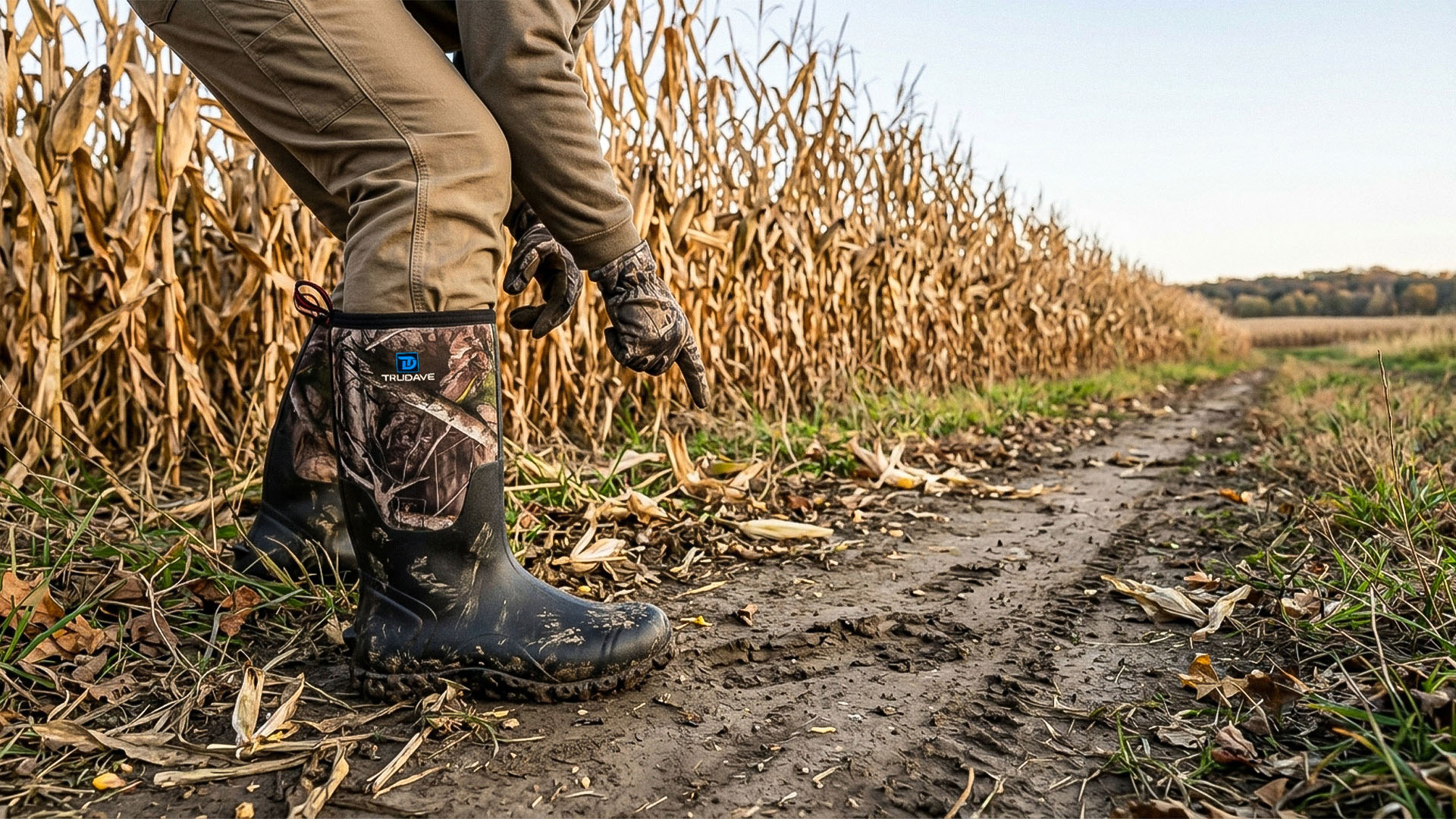
Hunters may benefit from waterproof hunting boots for prairie bird hunting that provide secure heel retention, dependable traction, and enough waterproof protection for changing agricultural conditions without becoming unnecessarily heavy.
Waterproofing Matters
Even an apparently dry field may contain:
- Wet grass
- Puddles
- Meltwater
- Mud
Tall Rubber Boots Can Be Excellent
Flat muddy fields are one of the environments where rubber hunting boots can work especially well.
Secure Heel Fit Is Critical
Mud suction pulls at every step.
Loose boots create:
- Fatigue
- Heel slip
- Blisters
Boot Weight Matters
Hunters may already be carrying:
- Field gear
- Clothing
- Other equipment
Heavy boots add effort.
Lace-Up Waterproof Boots Can Work on Firmer Ground
If most walking occurs on:
- Dry stubble
- Farm roads
- Grass
supportive waterproof lace-ups may be more comfortable.
Choose Boots for the Entire Day
Morning frost and afternoon mud may require very different performance.
Think ahead.
Traction Matters in Agricultural Clay
Some soils become extremely slippery when wet.
Mud Packs Into Tread
A boot can have aggressive tread and still lose grip once the grooves fill.
Clean Soles When Practical
Especially before crossing:
- Hard roads
- metal surfaces
- vehicle steps
Boot Insulation Depends on Season
Early migration can be mild.
Late-season hunting can become very cold.
Do Not Automatically Choose Maximum Insulation
Long walks generate heat.
Sweaty Feet Become Cold Later
Moisture management matters during long stationary periods.
Gaiters Can Be Useful
They help reduce:
- Snow
- Wet grass
- Field debris
entering footwear.
Waders May Be Useful in Certain Wetland Situations
Where access involves shallow flooded ground beyond normal boot height, properly fitted hunting waders may provide additional protection.
Waders Are Not Necessary for Every Crane Hunt
Most agricultural-field hunts may be better suited to waterproof boots.
Waders Do Not Make Deep Water Safe
They do not protect against:
- Unexpected channels
- Current
- Deep mud
Test Unknown Wet Ground
Do not walk blindly into flooded agricultural areas.
Field Ditches Can Hide Deep Water
Tall grass may conceal the edge.
Cold Water Adds Risk
Late-season shallow water can still be dangerously cold.
Agricultural Fields Contain Hidden Hazards
Possible hazards include:
- Fence wire
- Irrigation equipment
- Drainage pipe
- Deep wheel ruts
Scout Access During Daylight
Especially before entering a new property before sunrise.
Barbed Wire Can Disappear in Grass
Watch both:
- Hunter movement
- Dog movement
Leave Gates As Directed
Working farms depend on correct livestock management.
Do Not Block Field Entrances
Farmers may need equipment access.
Private Land Permission Is Essential
Many productive grain fields are private.
Clarify:
- Parking
- Vehicle use
- Hunting boundaries
- Retrieval
before hunting.
One Field May Have Multiple Owners
Do not assume one continuous agricultural block belongs to one person.
Know Exact Boundaries
Use current property information.
A Bird Crossing the Fence Does Not Create Access
Respect property lines.
Discuss Retrieval Before the Hunt
Know how the landowner wants you to handle a bird that crosses a property boundary.
Livestock May Share Crane Country
Cattle may be present around:
- Pastures
- Feedlots
- Water
Open Ground Is Not Automatically Safe
Know the full background.
Roads and Houses Can Be Farther Than They Appear
Flat terrain provides long sight lines.
Establish Safe Shooting Zones
Partners should understand:
- Positions
- Safe directions
- No-shoot areas
before the hunt starts.
Do Not Change Position Without Communication
Wide field setups can separate hunters significantly.
Low-Flying Birds Require Discipline
Never shoot toward:
- Partners
- Roads
- Homes
- Livestock
Positive Identification Is Critical
Sandhill crane habitat may contain other large birds.
Hunters must know the legal target.
Large Birds Are Not Automatically Cranes
Wetlands and agricultural areas can contain:
- Herons
- Swans
- Geese
- Other protected birds
Study Sandhill Crane Identification
Use official identification materials before the season.
Learn:
- Body shape
- Long legs
- Neck posture
- Flight profile
- Wing movement
Voice Can Be a Supporting Clue
Sandhill cranes are highly vocal.
Their calls may reveal approaching flocks.
Visual identification still comes first.
Juvenile Birds Can Look Different
Do not study only adult plumage.
Lighting Can Change Appearance
Backlit birds may lose visible coloration.
Use structural features.
Never Shoot at an Unidentified Silhouette
Wait for certainty.
Sandhill Cranes Are Migratory Game Birds
Hunting opportunities are highly regulated and not available everywhere.
Seasons Can Be Limited by Region
Some areas may offer hunting opportunities.
Other populations or jurisdictions may be closed.
Special Permits May Apply
Hunters may need:
- Specific crane permits
- Migratory bird validation
- Additional reporting
depending on jurisdiction.
Do Not Assume a General Waterfowl License Is Enough
Check the exact requirements.
Population-Specific Rules Can Matter
Crane management can distinguish between different migratory populations.
Verify Current Official Regulations
Before hunting, confirm:
- Open hunt area
- Season dates
- Permit requirements
- Daily bag limits
- Possession limits
- Shooting hours
- Licensing
- Migratory bird requirements
- Non-toxic ammunition rules
- Property-specific restrictions
Do Not Use Last Year’s Regulations
Migratory game bird rules can change.
Public Land May Add Restrictions
Individual properties may regulate:
- Hunting days
- Entry times
- Parking
- Equipment
- Restricted zones
Check the Exact Management Area
Statewide legality does not automatically mean every public property is open.
Wetland Refuges May Have Closed Zones
Birds may roost in areas where hunting is prohibited.
Know Refuge Boundaries
Open prairie provides few visual clues.
Water Does Not Make Boundaries Obvious
Use accurate maps.
Hunting Pressure Changes Crane Behavior
Cranes can become cautious around heavily hunted fields.
They may:
- Change feeding locations
- Fly higher
- Avoid common access areas
Rescout Frequently
Past success is not a permanent pattern.
Pressure Can Shift Birds Toward Private Ground
This makes permission and regional scouting more important.
Do Not Over-Disturb Feeding Birds During Scouting
Observe from distance.
Vehicle Pressure Can Matter
Repeated stops close to feeding flocks may push birds.
Watch From Farther Away
Good optics reduce disturbance.
Morning Movement Is Not the Only Movement
Cranes may shift fields during the day.
Weather Can Create Midday Flights
Strong wind, disturbance, or changing conditions may cause unexpected movement.
Stay Alert
Quiet periods can end quickly.
Agricultural Activity Can Move Birds
Farm equipment may push cranes from one field into another.
Human Disturbance Becomes Part of the Pattern
A normally productive field may temporarily go quiet.
Dogs Can Assist Recovery Where Appropriate
A trained dog may help find birds in:
- Stubble
- Grass
- Shallow wet areas
if conditions and local rules permit.
Agricultural Ground Is Hard on Dogs
Potential hazards include:
- Sharp stubble
- Wire
- Frozen ruts
- Mud
Check Paws Regularly
Look for:
- Cuts
- Ice
- Irritation
Mud Exhausts Dogs Too
Soft soil adds resistance.
Cold Wet Conditions Can Chill Dogs
Provide:
- Dry resting space
- Appropriate protection
Warm Migration Weather Can Cause Heat Stress
Open fields often lack shade.
Carry clean drinking water.
Do Not Depend on Agricultural Runoff
Bring fresh water.
Recovery Can Be Difficult
A large bird can still disappear in:
- Standing stubble
- Tall grass
- Wetland vegetation
Mark Every Fall
Use multiple landmarks such as:
- Utility pole
- Field corner
- Ditch
- Tree line
Do Not Immediately Look Away
Watch the bird to the ground.
Wind Can Shift Perspective
Long flat fields make distance difficult to judge.
Use Multiple Reference Points
One patch of corn stubble is not enough.
Search Methodically
Without a dog, use:
- Parallel passes
- Expanding circles
from the marked point.
Wounded Birds Can Move
Search beyond the apparent landing area.
Do Not Follow Into Unsafe Water
Find a safer recovery route.
Property Boundaries Still Apply
Know retrieval rules before the hunt.
Warm Weather Requires Game Care
Migration seasons can include unexpectedly mild temperatures.
Keep harvested birds:
- Clean
- Cool
according to current food-safety guidance.
Direct Sun Adds Heat
Do not leave harvested game exposed unnecessarily.
Muddy Fields Require Clean Storage
Use appropriate containers or game bags.
Prepare Cooling Before the Hunt
Do not wait until after success.
Common Sandhill Crane Hunting Mistakes
Hunting a Famous Field Instead of Current Birds
Migration and feeding locations change quickly.
Scouting Only Bird Numbers
Travel direction and exact feeding position matter more.
Ignoring Wind
Wind influences flight, approach, and field use.
Underestimating Mud
Agricultural soil can turn difficult within hours.
Wearing Loose Boots
Mud suction makes poor fit exhausting.
Assuming All Large Marsh Birds Are Legal Cranes
Positive identification is essential.
Assuming Crane Seasons Exist Everywhere
Hunting opportunities can be population- and jurisdiction-specific.
Using Old Migratory Bird Regulations
Always verify the current season.
Frequently Asked Questions
Where do sandhill cranes usually feed?
Sandhill cranes may use harvested grain fields, grasslands, agricultural flats, wet meadows, and other open habitats offering suitable food.
Are cornfields good for sandhill crane hunting?
Harvested cornfields can be productive where waste grain remains available and birds are actively feeding there.
Do sandhill cranes use wetlands?
Yes. Shallow wetlands, marshes, river systems, and other open water habitats can serve as resting, roosting, or feeding areas depending on region and season.
Does wind matter for sandhill crane hunting?
Yes. Wind affects travel direction, landing approaches, flight height, and which sections of open fields birds prefer.
Is crane hunting good after rain?
Rain can create new shallow water, fresh tracking surfaces, and changing field conditions, but it can also make agricultural access extremely muddy.
What boots are best for sandhill crane hunting?
Waterproof hunting boots with secure heel fit, strong traction in mud and wet stubble, and insulation appropriate to the season are practical for prairie agricultural hunting.
Are waders necessary for sandhill crane hunting?
Usually not for dry agricultural fields. Properly fitted waders may be useful where legal access requires shallow flooded wetlands, but they do not make deep water or soft mud safe.
Do sandhill crane hunting regulations vary?
Yes. Open hunting areas, permits, seasons, bag limits, migratory bird requirements, shooting hours, ammunition rules, and public-land restrictions can vary significantly. Hunters should verify current official regulations for the exact hunt.
Final Thoughts
Sandhill crane hunting teaches hunters that seeing birds is not the same as understanding birds.
A flock in the sky is obvious.
The pattern connecting:
- Grain
- Water
- Wind
- Roost
- Feeding fields
- Weather
is much harder to see.
One harvested field holds more waste grain.
One shallow wetland provides secure resting water.
One low corner stays muddy after rain.
One wind direction changes the approach.
One cold front brings completely different birds into the region.
Scout current movement.
Watch where birds feed.
Learn the connection between grain and water.
Respect the wind.
Protect landowner relationships.
Know your property boundaries.
Identify every bird confidently.
Wear boots that let you cross wet stubble, sticky agricultural mud, frozen ruts, snow, shallow grass waterways, and miles of prairie farmland without making soaked feet, poor traction, or heel slip the reason the hunt ends early.
And when hundreds of cranes fly over apparently identical fields but repeatedly descend into one specific patch of harvested grain beside a shallow wetland, remember the lesson.
The prairie was never random.
The birds were following food, water, wind, and security.
Your job is to learn how those pieces connect.
