
Columbian blacktail deer country can make a hunter question whether deer live there at all.
Rain falls through Douglas fir.
Sword ferns cover the slope.
Salal grows thick enough to hide a deer completely.
Old logging roads disappear into young timber.
A clearcut opens on the opposite hillside.
The hunter glasses.
Nothing.
Ten minutes pass.
Still nothing.
Then one ear moves above a fern.
A dark antler appears beside a stump.
The shape becomes a deer for three seconds.
Then it steps into timber and disappears.
That is blacktail deer hunting.
These deer live in some of the thickest, wettest, most visually difficult big-game habitat in the West.
Successful hunters rarely rely on seeing large numbers of animals.
Instead, they learn to find small places where:
- Food
- Security cover
- Timber
- Clearcuts
- Water
- Terrain
- Low hunting pressure
come together.
In blacktail country, the deer may be close.
The challenge is seeing them before they see—or smell—you.
Columbian Blacktails Are Forest Deer
Columbian black-tailed deer occupy portions of the Pacific Northwest.
Productive habitat can include:
- Coastal forest
- Douglas-fir timber
- Clearcuts
- Young regeneration
- Fern-covered slopes
- Brushy creek bottoms
- Logging-road systems
- Timber edges
They are closely related to mule deer, but hunting them often feels very different.
Visibility Changes Everything
Mule deer hunters may glass open basins.
Blacktail hunters often glass:
- Small clearcuts
- Logging-road openings
- Timber edges
- Tiny windows between trees
A deer can be only fifty yards away and remain nearly invisible.
Look for Parts of Deer
In thick cover, do not expect to see the entire animal.
Search for:
- Ear
- Leg
- Antler
- Back line
- Tail movement
Movement Is Often the Best Clue
A stationary blacktail blends exceptionally well.
A single head turn can reveal it instantly.
Glass the Same Area More Than Once
A deer may:
- Stand up
- Step into an opening
- Enter sunlight
after you already scanned the area.
Patience matters.
Clearcuts Can Be Excellent Feeding Habitat
Logging creates openings that may later produce:
- Forbs
- Shrubs
- Berries
- Young hardwoods
Blacktails may feed heavily in these areas.
Clearcut Age Matters
Very fresh cuts may provide limited cover.
After several years of regeneration, the same cut may provide excellent food and security.
Older Cuts Can Become Extremely Thick
Eventually, young trees and brush can make visibility almost impossible.
Do not assume an overgrown cut is empty.
Hunt the Timber Edge
The transition between clearcut and mature timber is especially important.
Deer can feed near the opening and retreat into cover within seconds.
Early Morning Can Be Productive
Blacktails may remain visible around:
- Clearcut edges
- Logging roads
- Open feeding areas
near first light.
Evening Can Produce Similar Movement
As daylight falls, deer may return to open feeding zones.
Midday Is Not Automatically Dead
Blacktails often bed inside:
- Timber
- Brush
- Ferns
during portions of the day.
Careful still-hunting can sometimes locate them.
Logging Roads Are One of the Best Scouting Tools
Forest-road systems provide:
- Easier walking
- Visibility
- Fresh mud
- Access to multiple habitat ages
Rain Makes Roads Better Tracking Surfaces
Fresh blacktail tracks can stand out clearly in mud.
Look around:
- Road bends
- Culverts
- Clearcut edges
- Creek crossings
Track Direction Matters
A road crossing tells you more when you ask:
Where did the deer come from?
Where was it going?
Repeated Crossings Reveal Patterns
Several tracks using the same location may indicate a regular connection between:
- Feeding habitat
- Bedding cover
Closed Logging Roads Can Be Especially Useful
Where legal foot travel is allowed, gated roads may receive less vehicle disturbance.
They can provide excellent quiet access.
Always Verify Access
Private timber companies and managed forests may have:
- Seasonal closures
- Vehicle restrictions
- Permit systems
Check current property rules.
Creek Bottoms Can Hold Deer
Pacific Northwest drainages often provide:
- Dense cover
- Water
- Cooler temperatures
- Rich vegetation
Hunt Slightly Above the Creek
The deepest bottom may be:
- Too wet
- Too brushy
- Difficult to move through
Deer may use benches just above it.
Creek Benches Are Easy to Miss
Topographic maps can reveal small flat areas inside steep terrain.
These benches may provide:
- Bedding
- Travel
- Feeding
Mountain Benches Can Be High-Value Habitat
A small shelf on a steep slope allows deer to move and bed without constant climbing.
Saddles Can Funnel Travel
Low ridge crossings connect:
- Clearcuts
- Timber
- Drainages
Tracks can reveal whether deer use them regularly.
Ridge Shoulders Deserve Attention
Blacktails may travel slightly below ridge tops where they gain:
- Cover
- Easier movement
- Wind advantage
Do Not Skyline Yourself
Walking directly along an exposed crest makes your movement easier to detect.
Stay below it where possible.
Rain Is Part of the Hunt
Pacific Northwest deer hunting often includes:
- Drizzle
- Heavy rain
- Fog
- Wet vegetation
- Saturated ground
Rain is not automatically bad hunting weather.
Blacktail Hunting After Rain Can Be Productive
Wet ground can provide:
- Fresh tracks
- Quieter leaves
- Improved sign reading
Rain Makes Still-Hunting Quieter
Dry sticks and leaves become less noisy.
But visibility may also decline.
Heavy Rain Can Push Deer Into Cover
During intense weather, deer may use:
- Dense timber
- Protected slopes
- Brushy benches
Movement Can Increase When Rain Eases
A break in weather may encourage deer to resume:
- Feeding
- Traveling
Fog Can Help and Hurt
Fog can reduce your visibility.
But it can also create quieter, lower-light conditions.
Never Depend on Fog for Concealment Alone
Wind and scent still matter.
Wind Is Critical
Blacktails live in thick country where hunters may not see them until close.
That makes scent control especially important.
Mountain Wind Can Swirl
Timber, ridges, and drainages create unpredictable airflow.
Check wind often.
Thermals Change Through the Day
Morning and afternoon air movement can differ significantly.
Plan approaches accordingly.
Creek Drainages Can Funnel Scent
Cool air may move along low terrain.
A seemingly good route can send scent directly toward bedding cover.
Entry Routes Matter
Do not simply walk the easiest road if it crosses:
- Fresh trails
- Bedding zones
- Feeding edges
Avoid Contaminating the Area Before the Hunt Begins
Sometimes a longer approach is better.
Fern Slopes Are Classic Blacktail Cover
Sword fern can hide a deer almost completely.
Hunters may only see:
- Head
- Shoulder
- Antler
above the vegetation.
Slow Down in Ferns
Blacktails may hold tight.
Fast movement can push them before you ever identify them.
Stop Frequently
Move a short distance.
Then:
- Scan
- Listen
- Check wind
Thick Salal Can Be Even Harder
Salal and other coastal brush can reduce visibility to only a few yards.
Hunt the Edges of Impenetrable Cover
Instead of forcing through the center, check:
- Trails
- Roads
- Timber transitions
around it.
Young Timber Is Security Cover
Regenerating plantations can become almost impossible to hunt directly.
But deer may use:
- Open roads
- Small gaps
- Cut edges
around them.
Clearcut Fingers Can Funnel Movement
A strip of mature timber extending into a cut can connect two security zones.
These narrow features can be productive.
Small Openings Matter
A tiny grassy logging-road opening may receive regular feeding activity.
Do not focus only on huge clearcuts.
Powerline Cuts Can Provide Food
Open corridors may produce:
- Browse
- Forbs
- Berries
depending on maintenance.
Hunt Nearby Security Cover
Deer may step into these openings only briefly.
Burns Can Create New Feeding Habitat
After fire, recovering landscapes may produce:
- New shrubs
- Forbs
- Young growth
Burn Age Matters
A fresh burn may have little cover.
Several years later, it may provide excellent forage.
Burn Edges Can Be Especially Productive
The transition between:
- Regeneration
- Mature timber
provides both food and security.
Blacktails Often Use Small Home Areas
Individual deer can become strongly associated with a relatively small patch of habitat.
This makes fresh local sign valuable.
One Buck Track Can Matter
You may not see many deer.
A single large fresh track repeatedly using the same corridor can justify patient hunting.
Do Not Expect Western Herd Numbers
Blacktail hunting often rewards patience rather than volume.
Hunting Pressure Changes Behavior Quickly
Road-accessible deer may become:
- More nocturnal
- More cover-oriented
- Harder to see
after pressure begins.
Gated Road Systems Can Reduce Disturbance
Where legal access permits walking, these areas may offer lower vehicle pressure.
Distance Is Not Everything
A productive clearcut near access can still hold deer.
Do not walk past good habitat solely to be farther from the truck.
Food Determines Where Deer Spend Time
Blacktail diets vary seasonally.
Useful foods may include:
- Browse
- Forbs
- Berries
- Mast
- Agricultural crops
depending on region.
Berries Can Be Important
Clearcuts and openings may produce:
- Blackberry
- Other fruits
during parts of the year.
Mast Can Matter in Hardwood Pockets
Where oak or other mast-producing trees occur, deer may concentrate locally.
Agricultural Edges Can Attract Deer
Where forest meets:
- Pasture
- Orchards
- Cropland
food availability can influence movement.
Private Boundaries Become Important
Many productive low-elevation areas include mixed ownership.
Know exactly where legal access ends.
A Deer Crossing a Fence Does Not Create Permission
Respect private property.
Ask About Retrieval Before Hunting Boundaries
Do not wait until after success to learn the rules.
Snow Changes Blacktail Hunting
At higher elevations or later in the season, snow can transform deer movement.
Fresh Snow Reveals Tracks
This makes current travel much easier to interpret.
Snow Can Push Deer Lower
Deep accumulation may move animals toward:
- Lower elevations
- Protected slopes
- Accessible forage
depending on local conditions.
South-Facing Slopes Can Become Important
Sun exposure can reduce snow and create warmer feeding conditions.
Snow Can Hide Ground Hazards
Logs, rocks, and holes may disappear under a thin layer.
Move carefully.
Blacktail Hunting Is Hard on Footwear
A typical hunt may involve:
- Continuous rain
- Wet fern
- Mud
- logging roads
- loose rock
- creek crossings
- steep slopes
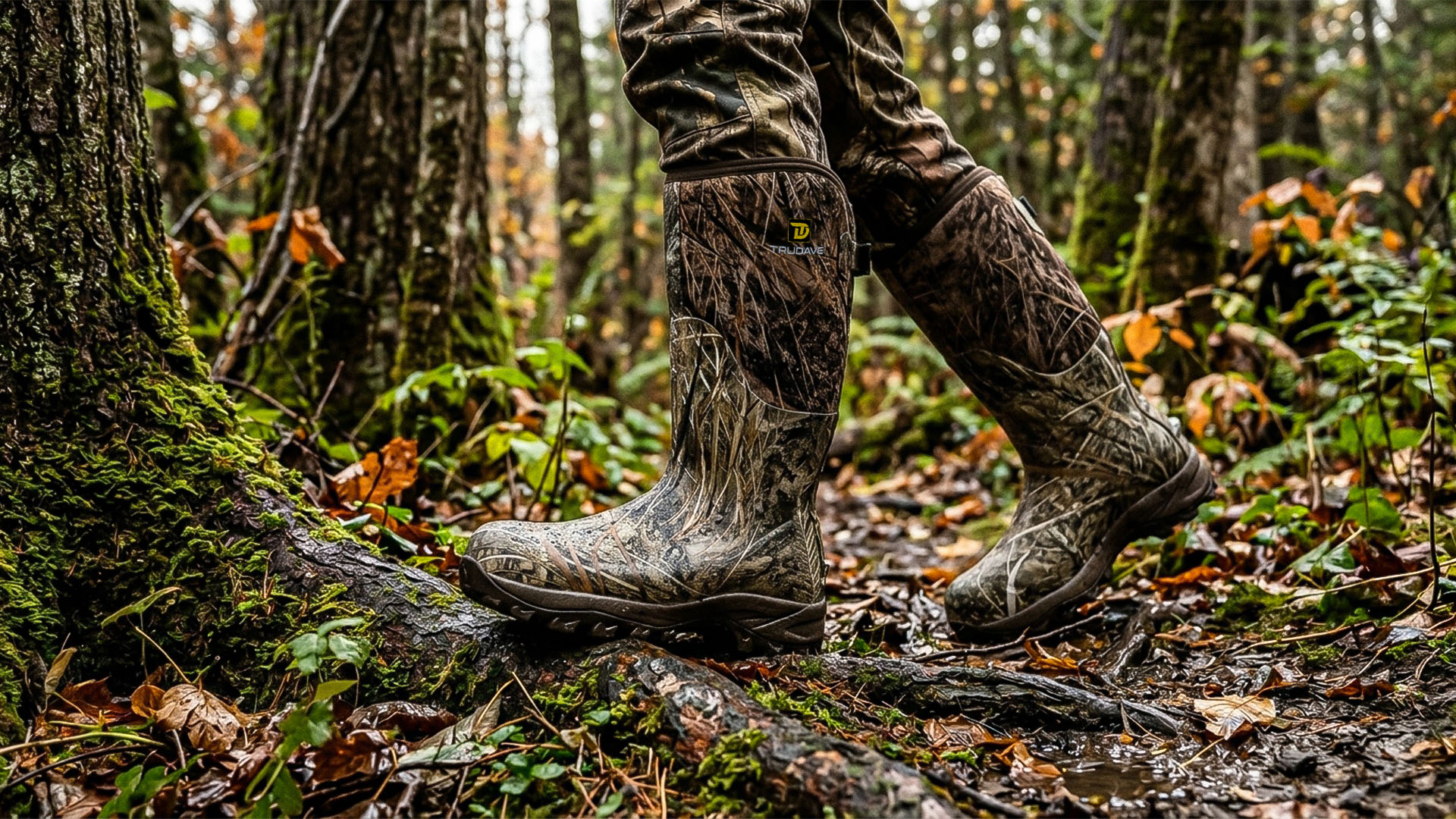
Hunters may benefit from waterproof hunting boots for blacktail deer hunting that provide secure heel retention, dependable wet-ground traction, and enough ankle support for long days in Pacific Northwest forest terrain.
Waterproofing Is Essential
Rain is only part of the moisture problem.
Wet vegetation can soak footwear long after the weather clears.
Ferns Transfer Huge Amounts of Water
Walking through waist-high wet vegetation can saturate:
- pants
- boots
- socks
Gaiters Are Extremely Useful
They can help reduce:
- rain runoff
- mud
- forest debris
entering boots.
Support Matters on Slopes
Blacktail habitat may require repeated:
- climbing
- descending
- sidehilling
Secure Heel Fit Prevents Blisters
Wet feet combined with heel movement can become painful quickly.
Toe Room Matters Downhill
Long descents push feet forward.
Proper sizing is essential.
Traction Matters Constantly
One mile may contain:
- wet leaves
- moss
- mud
- rock
- roots
- wood
Moss Is Extremely Slick
Never assume a moss-covered rock or log provides grip.
Wet Roots Can Be Nearly Frictionless
Step around them when possible.
Clay Mud Can Be Worse Than Deep Mud
A thin layer over hard ground can become extremely slippery.
Tall Rubber Boots Can Work in Lowlands
Flat, muddy coastal bottoms may favor rubber hunting boots.
Rubber Boots Are Less Ideal on Steep Terrain
Mountain slopes often require stronger:
- heel lock
- ankle control
Lace-Up Waterproof Boots Often Work Better in Hills
They can provide more precise footing.
Boot Weight Still Matters
Blacktail hunting can require substantial mileage.
Do not automatically choose the heaviest option.
Choose Boots for the Entire Hunt
Consider:
- road walk
- clearcut
- creek
- hill
- temperature
together.
Break Boots In Before Season
Wet mountain terrain is a bad place to discover fit problems.
Carry Spare Socks
If water enters from the top, dry socks can rescue the hunt.
Manage Sweat Too
Waterproof footwear can still become damp internally.
Use appropriate moisture-managing socks.
Rain Gear Is Just as Important as Boots
Long coastal storms require durable protection.
Vent During Climbs
Sweat can soak layers from the inside.
Add Insulation When Stationary
Glassing clearcuts after a climb can cool hunters rapidly.
Windproof Layers Help
Exposed cuts and ridges can be much colder than timber.
Gloves Need Water Resistance
Wet hands reduce:
- warmth
- dexterity
Carry Backup Gloves
A dry second pair is extremely valuable.
Optics Need Protection
Rain on binoculars makes glassing difficult.
Carry a clean dry lens cloth.
Do Not Rub Mud Into Lenses
Clean carefully.
Binoculars Are Still Critical
Blacktail country is thick.
But every opening should be glassed thoroughly.
Glass From Opposite Slopes
Where terrain allows, watching a clearcut from across a drainage can be effective.
Distance Creates Better Visibility
A cut that is impossible to understand from inside may be easy to read from several hundred yards away.
Look Along the Timber Line
Deer may stand only a few feet inside cover.
Glass Stumps Carefully
Dark stumps create many false alarms.
Watch for movement.
Patience Beats Constant Relocation
A blacktail may appear after twenty minutes in a place that looked empty.
Stay Longer at Good Vantage Points
Repeat scans.
Early Light Can Reveal Deer Briefly
Be ready before legal shooting time so you can observe movement when it begins.
Legal Shooting Hours Must Be Followed
Check the current local regulations.
Evening Light Can Be Equally Useful
Plan the return route before staying late.
Carry a Headlamp
Blacktail recovery often extends after dark.
Carry Backup Light
Rain and cold can reduce battery reliability.
Navigation Can Be Difficult
Dense forest limits landmarks.
Offline Maps Are Essential
Download:
- property boundaries
- roads
- topography
- timber cuts
before hunting.
Mark the Vehicle
A stalk through multiple logging roads can become confusing.
Recent Satellite Imagery Can Help
Timber harvest changes quickly.
Old imagery may show:
- forest that is now cut
- clearcut that is now dense regeneration
Forestry Maps Can Be Valuable
Where available, harvest-age information can help locate useful habitat stages.
Private Timber Access Can Change Frequently
Check current rules before every hunt.
Some Roads May Require Permits
Others may be:
- walk-in only
- closed
- seasonally restricted
Do Not Drive Around Closed Gates
Respect land-management rules.
Do Not Block Logging Equipment
Active timber roads can be dangerous.
Stay Visible Around Working Forest Operations
Follow property requirements.
Positive Identification Is Essential
Blacktail range can overlap with other deer types depending on location.
Hunters need to know exactly which deer is legal.
Blacktails and Mule Deer Are Closely Related
Appearance can vary.
Study official local identification materials.
Tail Characteristics Help
Black-tailed deer show distinctive tail coloration and form.
Use multiple characteristics.
Antler Rules May Apply
Some hunts may regulate:
- antler points
- legal sex
- hunt area
Do Not Assume Every Buck Is Legal
Verify the exact tag.
Regulations Can Be Highly Unit-Specific
Before hunting, confirm current official:
- season dates
- tag validity
- unit boundaries
- legal sex
- antler restrictions
- weapon rules
- shooting hours
- reporting requirements
- private timber access rules
Rain Can Trigger Temporary Road Problems
High water, landslides, or washouts may affect access.
Check current conditions.
Public-Land Rules Can Add Restrictions
National forest, state forest, and wildlife areas may differ.
Harvest Recovery Is Difficult in Steep Wet Terrain
A deer that goes downhill can create a major pack-out.
Plan Recovery Before Taking a Deep Stalk
Ask:
If I am successful down there, how do I get back up?
Mark the Last Known Location
Dense timber makes relocation difficult.
Use:
- stump
- road
- tree
- creek
- clearcut feature
as references.
Rain Can Wash Away Sign
Wet conditions can make recovery more difficult.
Follow Current Hunter-Education Guidance
Use appropriate tracking and recovery procedures.
Do Not Rush Into Thick Cover
A methodical recovery is better than destroying sign.
Terrain Can Carry a Deer Farther Than Expected
Steep downhill movement can add distance quickly.
Recovery After Dark Becomes Harder
Lighting and navigation matter.
Game Care Is Important Even in Cool Rain
Wet weather does not automatically cool a harvested deer properly.
Humidity Can Slow Cooling
Plan accordingly.
Clean Game Bags Help
Protect meat from:
- mud
- leaves
- insects
Pack-Out Loads Change Footing
Wet slopes become significantly harder under weight.
Trekking Poles Can Help
They may improve balance during:
- descents
- creek crossings
- pack-outs
Use Manageable Loads
Do not overload yourself.
Common Blacktail Deer Hunting Mistakes
Moving Too Fast Through Thick Cover
Blacktails may be much closer than expected.
Glassing a Clearcut Once and Leaving
Deer often appear only briefly.
Ignoring Logging Roads
Fresh mud provides useful current sign.
Hunting Only Huge Clearcuts
Small openings can be equally productive.
Ignoring Wind Because Visibility Is Short
Scent matters even more in close cover.
Wearing Boots With Poor Wet-Surface Traction
Pacific Northwest terrain stays slick.
Going Downhill Without Planning the Pack-Out
Recovery can become the hardest part of the hunt.
Assuming Blacktail Regulations Match Mule Deer Rules
Always verify the exact hunt and unit.
Frequently Asked Questions
Where do Columbian black-tailed deer live?
Columbian blacktails commonly use Pacific Northwest coastal forests, clearcuts, young timber, fern-covered slopes, creek bottoms, logging-road systems, and other habitats combining food with dense security cover.
Are clearcuts good for blacktail deer hunting?
Yes. Clearcuts can provide excellent browse, berries, forbs, and visibility, especially when they are adjacent to mature or dense young timber.
Is blacktail deer hunting good in the rain?
Rain can create fresh tracks and make forest movement quieter, while breaks after storms may encourage deer movement. It also makes slopes, roads, roots, and logs more slippery.
Are logging roads good places to find blacktail deer?
They are excellent scouting corridors because mud can reveal fresh crossings and road edges can create feeding habitat. Deer may also use them briefly during low-light periods.
What boots are best for blacktail deer hunting?
Waterproof hunting boots with secure heel fit, reliable traction on mud, wet leaves, moss, rock, and roots, plus enough ankle support for steep terrain are practical.
Are rubber boots good for blacktail hunting?
Tall rubber boots can work well in flatter wet coastal habitat, while steep hills, logging slash, and longer mountain walks often favor more supportive waterproof lace-up boots.
Why are blacktail deer so difficult to spot?
They live in extremely dense vegetation and their dark coloration blends well with wet timber, fern, brush, and shadow. Hunters often see only a small part of the animal.
Do blacktail deer hunting regulations vary?
Yes. Tags, legal sex, antler restrictions, seasons, units, weapon rules, reporting requirements, and private timber access can vary substantially. Hunters should verify current official regulations for the exact hunt.
Final Thoughts
Blacktail deer hunting teaches hunters that dense forest does not mean deer movement is random.
One clearcut provides food.
One timber edge creates security.
One creek bench gives deer a place to bed.
One muddy logging road records last night’s crossing.
One fern-covered slope hides an animal only yards away.
The challenge is not finding forest.
It is finding the exact combination of food, cover, terrain, and low disturbance that deer are using now.
Glass longer.
Walk slower.
Read fresh mud.
Watch clearcut edges.
Study timber ages.
Respect wind, logging roads, and property boundaries.
Wear boots that let you cross rain-soaked fern, sticky mud, slippery roots, mossy logs, steep forest slopes, creek bottoms, and miles of Pacific Northwest timber without making wet feet or poor traction the reason the hunt ends early.
And when a blacktail buck finally rises from behind a stump in a clearcut you had already glassed three times, remember the lesson.
The deer was not necessarily far away.
It was simply better at disappearing than you were at looking.
