
Snowshoe hare country can look almost impossible to hunt.
Snow covers every opening.
Spruce branches hang low.
Cedar closes in around swamp edges.
Alder stems weave together so tightly that visibility disappears after only a few yards.
Then fresh tracks cross the trail.
Several long prints.
Two larger hind feet landing ahead of the front feet.
The tracks enter dense conifers.
A hunter follows slowly.
Nothing moves.
Another ten yards.
Still nothing.
Then a white shape explodes from beneath a spruce and disappears through cover that looked too thick for anything to run through.
That is snowshoe hare hunting.
These animals survive winter by combining excellent camouflage with habitat that gives them immediate escape cover.
The best hunting is rarely in the most open snow.
It is usually where:
- Snow
- Browse
- Conifers
- Alder
- Swamps
- Young forest
all come together.
Successful hunters learn to read winter sign and identify the cover that allows hares to feed without moving far from protection.
Snowshoe Hares Are Built for Northern Winter
Snowshoe hares are strongly associated with northern and higher-elevation forests.
Productive habitat may include:
- Spruce
- Fir
- Cedar
- Alder
- Young hardwoods
- Regenerating cuts
- Brushy swamp edges
- Dense conifer stands
The most important feature is usually thick ground-level cover.
Thick Cover Is Security
A mature open forest may look beautiful.
But if hunters can see fifty yards through it, a hare may have fewer places to hide.
Dense young forest often provides better habitat.
Think at Hare Height
The canopy is not the main question.
Look at the first three feet above the ground.
Ask:
Can a hare move beneath the branches?
Can it disappear quickly?
Is there winter browse nearby?
Cedar Swamps Can Be Excellent
Northern cedar provides:
- Dense cover
- Wind protection
- Reduced snow depth
in some winter environments.
Hares may use cedar swamp edges where food and security overlap.
Hunt the Edge Before the Center
The middle of a cedar swamp may be:
- Extremely wet
- Difficult to walk
- Nearly impossible to see through
Start where cedar meets:
- Alder
- Aspen
- Young hardwoods
- Slightly higher ground
Small Dry Islands Matter
Inside wet swamp habitat, slightly elevated patches can provide:
- Firmer footing
- Bedding cover
- Feeding vegetation
These small islands deserve attention.
Alder Edges Are Classic Winter Cover
Alder thickets can provide:
- Dense stems
- Browse
- Travel corridors
especially around wet lowlands.
Tracks Along Alder Tell a Story
Fresh tracks may reveal whether hares are:
- Feeding
- Circling
- Crossing toward conifers
Look at the pattern rather than one footprint.
Young Aspen Can Be Productive
Regenerating aspen stands often provide:
- Dense stems
- Young woody growth
- Excellent concealment
Forest Age Matters
Very mature aspen may become open below.
Younger regeneration can offer much better hare cover.
Logging Cuts Can Create Habitat
Timber harvest can produce dense new growth after several years.
That regeneration may include:
- Aspen
- Birch
- Shrubs
- Conifer saplings
Fresh Cuts May Be Too Open
Immediately after harvest, security cover can be limited.
As vegetation develops, habitat often improves.
Older Cuts Can Become Excellent
Once young stems grow thick enough to hide animals, snowshoe hare use can increase.
Follow Habitat Age
A productive cut does not stay productive forever.
As trees mature, the best hare cover may shift elsewhere.
Snow Is the Best Tracking Surface
Fresh snow turns hare movement into a visible map.
Tracks can reveal:
- Feeding zones
- Escape routes
- Bedding cover
- Recent movement
Learn the Track Pattern
Snowshoe hare tracks typically show the larger hind feet landing ahead of the smaller front feet during normal hopping.
Pattern recognition helps distinguish them from some other small mammals.
Track Freshness Matters
Fresh tracks often have:
- Sharp edges
- Clean snow displacement
- Little wind filling
Older tracks soften.
Snowfall Resets the Forest
After new snow, every track has a clearer timeline.
Fresh sign becomes much easier to prioritize.
Hunt Soon After Fresh Snow
A new layer can make scouting extremely efficient.
Instead of guessing where hares are:
Follow the newest sign.
Do Not Follow Every Track Forever
A hare can create complicated loops.
The goal is not to trace every step.
The goal is to identify the cover it is currently using.
Look for Concentrated Tracks
If one thicket contains:
- Feeding tracks
- Droppings
- Repeated trails
slow down.
Feeding Sign Adds Confidence
Hares feed on woody vegetation during winter.
Look for clipped stems and browsing around:
- Willow
- Aspen
- Birch
- Other local browse
Fresh Browse Looks Different
Recently cut stems often appear:
- Lighter
- Cleaner
- Less weathered
than older damage.
Droppings Can Confirm Repeated Use
Pellets beneath feeding cover may indicate an area has been used regularly.
Freshness still matters.
Beds Can Be Difficult to See
A hare may rest beneath:
- Spruce branches
- Fallen limbs
- Dense young conifers
where snow is partially sheltered.
Look Under Low Evergreen Branches
The best hiding places may be almost at ground level.
Snow Depth Changes Habitat Use
Deep snow can bury low vegetation.
That may shift feeding toward taller browse.
Deep Snow Can Also Improve Hare Mobility
Their large hind feet help them move efficiently over snow.
Hunters may struggle much more.
Do Not Assume You Can Follow Every Route
A hare may cross:
- Deep drifts
- Soft swamp snow
that is exhausting for a person.
Choose your own safe route.
Snowshoes May Be Useful for Hunters
In deep soft snow, appropriate snowshoes can reduce sinking and conserve energy.
Use equipment suited to terrain and experience.
Snowshoes Change Foot Placement
Practice before hunting.
Dense brush and logs can make them awkward.
Packed Trails Can Save Energy
Old logging roads, snowmobile routes where legal to walk, and animal paths may provide easier access.
But Easy Trails Are Not Always Where Hares Sit
Use them to reach habitat.
Then hunt the edges.
Conifer Borders Deserve Attention
The transition between:
- Thick spruce
- Open hardwoods
- Young regeneration
can concentrate movement.
Hares Need Food Near Cover
A feeding area far from security may be less attractive than one immediately beside dense conifers.
Small Openings Can Be Useful
Tiny openings may provide:
- Browse
- Young growth
without exposing hares for long.
Large Openings Can Be Less Attractive
A hare crossing a broad clearing becomes more visible to predators.
They often prefer staying close to brush.
Swamp Edges Can Hold Dense Winter Cover
Wetlands often support:
- Cedar
- Willow
- Alder
that remain useful even after surrounding vegetation changes.
Frozen Swamps Can Improve Hunter Access
Ground that is difficult during fall may become easier once properly frozen.
But safety still matters.
Never Assume Swamp Ice Is Uniform
Water depth and current can create weak sections.
Snow Can Hide Thin Ice
A white surface does not prove safety.
Use established safe access.
Beaver Activity Can Complicate Wetlands
Old channels and ponds may remain under snow.
Avoid unknown areas.
Warm Spells Change Everything
A winter thaw can turn:
- Snow
- Frozen mud
- Creek crossings
into wet, difficult terrain.
Meltwater Can Flood Low Trails
A route used safely in the morning may deteriorate later.
Refreezing Creates Ice
Temperatures dropping after a thaw can create:
- Hard crust
- Slick trails
- Frozen ruts
Ice Traction Becomes Important
Boot tread that works well in snow may perform differently on polished ice.
Move carefully.
Snow Crust Can Change Hare Movement
A hard crust may affect where animals travel.
They may use:
- Dense cover
- Softer protected snow
more heavily.
Wind Changes Winter Cover
Strong wind increases exposure in open hardwoods.
Dense conifers can offer better protection.
Hunt the Leeward Side
Protected edges may hold more activity during severe wind.
Conifers Reduce Snow and Wind
The ground beneath thick evergreen cover can feel completely different from nearby open forest.
That difference matters.
Sunny Winter Days Can Create Microclimates
South-facing edges may warm earlier.
Hares may use these areas for feeding.
But Thick Cover Still Remains Close
Look for sunny feeding pockets next to dense escape habitat.
Early Morning Can Reveal Fresh Movement
Tracks made overnight may be easy to follow before:
- Wind
- New snow
- Other hunters
disturb them.
Midday Can Still Be Productive
Hares may hold tightly beneath cover.
This can make slow still-hunting effective.
Late Afternoon Can Bring Feeding Activity
Animals may begin moving again before dark.
Fresh tracks near browse become more useful.
Move Slowly Through Good Cover
Snowshoe hares often rely on remaining motionless.
A hunter moving too fast may walk past them.
Stop Frequently
Pause.
Scan beneath:
- Spruce
- Fallen trees
- Alder
Look for the Eye First
Sometimes the easiest clue is:
- Dark eye
- Ear outline
- Small patch of brown or gray
against snow.
Winter Camouflage Is Excellent
Snowshoe hares often become mostly white during winter.
But coloration and molt timing vary by location and season.
Patchy Snow Makes Them Harder to See
During transitional periods, white fur against brown ground or partial snow can create unusual camouflage patterns.
Do Not Depend Only on Color
Look for:
- Shape
- Movement
- Tracks
A Hare May Let You Walk Very Close
Some animals hold until the last moment.
Stay ready in dense cover.
Flushes Can Be Sudden
A hare leaving a bed may move extremely quickly.
Maintain safe direction before entering brush.
Ground-Level Hunting Requires Background Awareness
Never shoot toward:
- Dogs
- Partners
- Roads
- Buildings
- Livestock
Snow Can Hide Other Hunters
White clothing, brush, and terrain can reduce visibility.
Know where everyone is.
Establish Hunter Spacing
Before moving through cover, agree on:
- Direction
- Position
- Safe shooting zones
Never Shoot at Movement Alone
Brush can hide many things.
Positive identification comes first.
Hunting With Dogs Can Be Effective
Where legal, beagles or other trained dogs may be used to pursue snowshoe hares.
Dog use changes the hunt substantially.
Dogs Can Follow Hare Scent Through Thick Cover
They may help reveal:
- Escape routes
- Circling patterns
Hares May Circle
A pressured hare can sometimes loop through familiar cover.
Hunters should remain alert near established trails.
Do Not Assume Every Hare Behaves the Same
Some may:
- Circle
- Run straight
- Use heavy cover
differently.
Dog Safety Matters in Winter
Cold conditions create additional concerns.
Monitor:
- Paws
- Hydration
- Body temperature
Snow Can Ball Between Toes
Ice accumulation can become painful.
Check paws frequently.
Crusted Snow Can Cut Pads
Hard icy surfaces can cause abrasion.
Cold Does Not Remove Hydration Needs
Working dogs still require water.
Do Not Depend on Snow Alone
Eating snow is not a reliable hydration plan for working dogs.
Carry clean water.
Dogs Can Disappear in Thick Conifers
Use reliable recall and locating equipment where legal.
Roads Are a Major Hazard
Snowmobile routes and forest roads may still have traffic.
Know where dogs are.
Traps May Be Present in Some Northern Areas
Small-game country can overlap with legal trapping activity.
Hunters with dogs should understand local trapping seasons and risks.
Snowshoe Hare Hunting Is a Serious Footwear Test
A typical hunt may involve:
- Deep snow
- Wet brush
- Slush
- Cedar swamp
- Frozen logging roads
- Mud during thaws
- Long winter walks
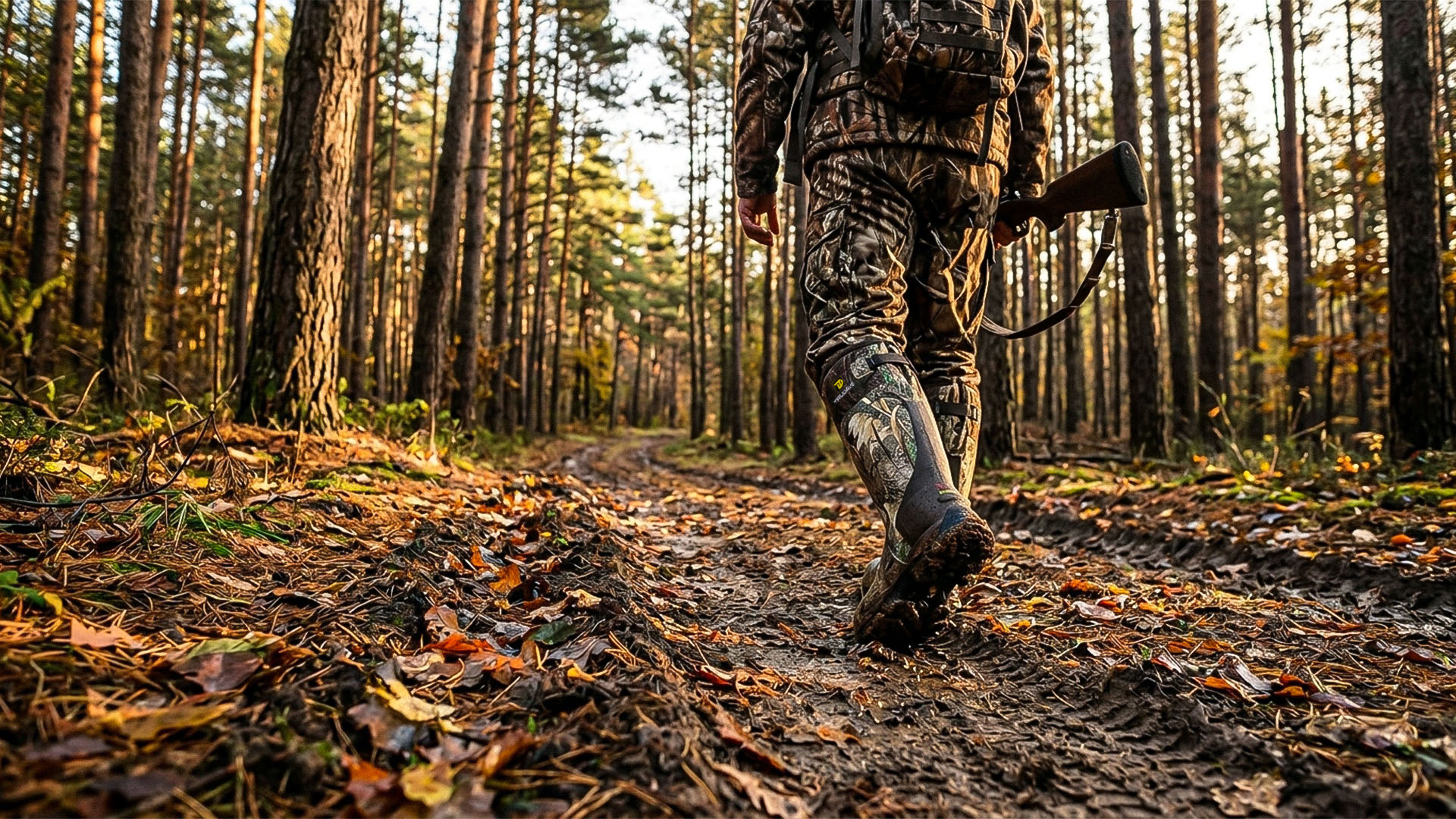
Hunters may benefit from waterproof hunting boots for snowshoe hare hunting that provide secure heel retention, dependable snow and mud traction, and enough insulation for cold northern conditions without becoming unnecessarily heavy.
Waterproofing Matters in Winter
Snow eventually melts against warm footwear.
Without waterproof protection, socks can become wet even during dry snowfall.
Insulation Should Match Activity
Still hunters walk constantly.
Too much insulation may cause sweating.
Sweaty Feet Can Become Cold Later
Moisture inside the boot reduces comfort during pauses.
Choose Insulation for the Whole Day
Consider:
- Temperature
- Snow depth
- Activity level
- Wind
Secure Heel Fit Matters
Deep snow increases resistance with every step.
Heel slip can quickly create blisters.
Boot Height Matters
Deep powder and brush can send snow over shorter boots.
Gaiters Are Extremely Useful
Gaiters help keep:
- Snow
- Slush
- Debris
out of boots.
Tall Waterproof Boots Can Work in Swampy Conditions
During warmer periods, tall rubber or waterproof hunting boots may handle:
- Slush
- Mud
- Shallow water
well.
Rubber Boots Need Adequate Winter Insulation
Cold conditions require footwear designed for the temperature.
Lace-Up Boots Often Provide Better Walking Control
Long winter mileage through:
- Slopes
- Logging roads
- Forest
can favor supportive lace-up designs.
Traction Matters on Mixed Surfaces
One hunt can include:
- Powder
- Packed snow
- Ice
- Frozen mud
- Wet logs
Snow Packed Into Tread Can Reduce Grip
Clear excessive buildup when necessary.
Ice Requires Extra Caution
No boot outsole makes all ice safe.
Short steps and route selection matter.
Frozen Logs Are Extremely Slippery
Avoid stepping directly on them.
Snow Hides Holes and Stumps
Lift your feet.
Do not rush after a moving hare.
Fallen Branches Can Catch Boots
Young forest contains many hidden obstacles.
Winter Hunting Is Physically Demanding
Deep snow multiplies effort.
A short distance can become exhausting.
Plan Shorter Routes
Do not measure effort only by miles.
Save Energy for the Return
Snow may deepen or soften later in the day.
Carry High-Energy Food
Cold weather increases energy use.
Hydration Still Matters
Hunters often drink too little during winter.
Carry accessible water.
Prevent Bottles From Freezing
Insulated storage may be useful in severe cold.
Layering Is Critical
Hunters may alternate between:
- Hard walking
- Long pauses
Start Slightly Cool
Too much clothing early can cause sweating.
Add Layers When Stopping
Protect dry insulation inside the pack.
Windproof Clothing Is Valuable
Northern wind can make moderate temperatures feel much colder.
Gloves Need Dexterity
Choose gloves that allow safe equipment handling.
Carry Backup Gloves
Snow and brush can soak the first pair.
Face Protection Helps
Cold wind through open cuts can be uncomfortable quickly.
Eye Protection Can Help in Dense Brush
Branches hidden under snow may snap toward the face.
Clear glasses are useful.
Snow Falling From Trees Can Soak Clothing
After a thaw or warm sun, overhead snow may drop constantly.
A waterproof shell can help.
Fogging Optics Can Be Annoying
Moving from warm clothing to cold air can create condensation.
Keep lenses clean and dry.
Navigation Is Still Important
Snow can cover:
- Trails
- Roads
- Small landmarks
Offline Maps Are Useful
Download:
- Forest roads
- Wetlands
- Property boundaries
- Timber cuts
before hunting.
Mark the Vehicle
Following fresh tracks can pull hunters farther than expected.
Carry a Headlamp
Winter daylight is short.
Darkness Comes Early
A late-afternoon hare hunt can quickly become a night walk.
Carry Backup Light
Cold drains batteries.
Property Boundaries Matter
Snowshoe hare habitat may occur across:
- National forest
- State forest
- Private timber
- Other managed land
Snow Covers Boundary Clues
Fences and signs may become harder to see.
Use reliable mapping.
Logging Roads Can Have Seasonal Rules
Vehicle access may change in winter.
Verify current property restrictions.
Snowmobile Trails Need Special Awareness
Where shared use is allowed, traffic may approach quickly.
Do Not Stand in Active Trails
Move off to safe cover.
Public Land May Have Other Seasonal Users
Winter recreation can include:
- Skiers
- Snowshoers
- Snowmobilers
Know the background before shooting.
Positive Identification Is Essential
Snowshoe hare range may overlap with:
- Cottontail rabbits
- Other hares
depending on region.
Snowshoe Hares Have Distinctive Features
Study:
- Large hind feet
- Ear shape
- Body size
- Seasonal coloration
using official wildlife resources.
Seasonal Color Can Vary
Not every snowshoe hare is fully white all winter.
Molt timing depends partly on seasonal conditions.
Do Not Identify Only From Color
Confirm the whole animal.
Regulations Vary by Jurisdiction
Before hunting, verify current official:
- Season dates
- Daily bag limits
- Possession limits
- License requirements
- Legal methods
- Dog regulations
- Public-land restrictions
Hare and Rabbit Rules May Differ
Do not assume snowshoe hare regulations match cottontail rules.
Some Areas May Have Long Seasons
Others may impose more restrictive limits.
Always check current regulations.
Hunter-Orange Rules May Apply
Overlapping big-game seasons can create additional visibility requirements.
Public Properties Can Add Rules
Vehicle access, firearms restrictions, or hunting zones may differ.
Habitat Conservation Matters
Snowshoe hares depend heavily on dense young forest and conifer cover.
Forest Succession Changes Habitat
A productive thicket today may mature into open forest later.
Young Forest Management Can Create Cover
Regeneration can benefit hares and other wildlife.
Cedar Swamps Are Sensitive Systems
Avoid unnecessary damage to wetland vegetation.
Stay on Legal Vehicle Routes
Do not create tracks through swamp habitat.
Pick Up All Trash
Leave no:
- Food wrappers
- Dog supplies
- Equipment debris
behind.
Recovery Can Be Difficult
A hare can disappear in:
- Snow
- Conifer branches
- Brush
after falling.
Mark the Location Immediately
Use:
- Spruce tree
- Log
- Trail
- Alder clump
as reference.
Snowy Forests Repeat Visually
Use multiple landmarks.
Tracks Can Help Recovery
Fresh snow may reveal short movement after the fall.
Dogs Can Improve Recovery
A trained dog may locate animals hidden beneath thick branches.
Without a Dog, Search Methodically
Start at the marked point.
Work:
- Small circles
- Parallel passes
Look Beneath Low Branches
The animal may be hidden under evergreen cover.
Do Not Destroy the Track Immediately
If fresh snow provides useful sign, move carefully.
Warm Winter Days Still Require Game Care
Temperatures around freezing or above can affect harvested game.
Follow current food-safety guidance.
Clean Storage Matters
Keep harvested animals away from:
- Dirty snow
- Road salt
- Mud
Common Snowshoe Hare Hunting Mistakes
Hunting Open Mature Forest
Dense young forest usually provides better security.
Ignoring Cedar and Alder Edges
These can be some of the best winter habitats.
Following Every Track Without Reading the Habitat
Tracks are useful when they lead you toward current feeding and bedding cover.
Walking Too Fast
Hares may hold extremely tight.
Underestimating Deep Snow
Mileage becomes much harder.
Wearing Boots That Are Too Warm or Too Loose
Sweat and heel slip create problems during long winter walks.
Forgetting Snow Can Hide Ice and Water
Wetlands remain hazardous.
Assuming Rabbit and Hare Regulations Are Identical
Always verify current local rules.
Frequently Asked Questions
Where do snowshoe hares usually live?
Snowshoe hares commonly use dense young northern forest, spruce and fir cover, cedar swamp edges, alder thickets, regenerating cuts, and other habitats with thick ground-level concealment.
Is fresh snow good for snowshoe hare hunting?
Yes. Fresh snow makes tracks easier to age and follow, helping hunters identify actively used feeding and bedding habitat.
Are cedar swamps good places to find snowshoe hares?
They can be excellent because cedar provides dense winter security, wind protection, and habitat near willow, alder, and other browse.
Do snowshoe hares stay white all winter?
Seasonal coloration varies. Many become largely white during winter, but timing and completeness of the molt can differ with location and seasonal conditions.
What boots are best for snowshoe hare hunting?
Waterproof insulated hunting boots with secure heel fit, dependable snow and mud traction, and enough comfort for long winter walks are practical. Gaiters are especially useful for keeping snow and slush out.
Are snowshoes useful for hare hunting?
They can be extremely useful in deep soft snow, though dense brush and fallen timber can make them cumbersome. Hunters should practice using them before the hunt.
Can dogs help hunt snowshoe hares?
Yes, where legal. Trained dogs can follow scent through dense cover, but hunters should manage roads, ice, cold, paw condition, deep snow, and local dog-use rules carefully.
Do snowshoe hare hunting regulations vary?
Yes. Seasons, bag limits, possession limits, licenses, legal methods, dog regulations, and public-land rules can vary by jurisdiction. Hunters should verify current official regulations before hunting.
Final Thoughts
Snowshoe hare hunting teaches hunters that winter forest is not defined by how much snow falls.
It is defined by what remains useful underneath it.
One cedar swamp blocks the wind.
One alder strip provides browse.
One young aspen cut creates thick security.
One spruce branch shelters a bed.
One fresh track shows exactly which piece of cover a hare used after last night’s snowfall.
Follow the newest sign.
Look for thick ground-level cover.
Hunt the edges of cedar, alder, and young forest.
Move slowly.
Expect animals to hold tighter than the cover seems capable of hiding them.
Respect frozen wetlands, logging roads, dogs, and property boundaries.
Wear boots that let you cross deep snow, slush, frozen mud, cedar swamp edges, wet brush, icy logging roads, and miles of winter forest without making cold, wet, or blistered feet the reason the hunt ends early.
And when a white hare erupts from beneath a spruce only a few yards away after you stared directly at that exact spot, remember the lesson.
Winter camouflage helps.
But thick cover is what makes the disappearing act complete.
