
Mule deer country can look completely empty.
Sagebrush stretches across a dry basin.
Rocky ridges rise above distant draws.
Juniper dots the higher slopes.
A hunter can glass for twenty minutes and see nothing.
Then one ear moves.
A gray shape separates from the brush.
Another deer stands behind it.
Seconds later, an entire group becomes visible in terrain that seemed vacant moments earlier.
That is mule deer hunting.
The challenge is rarely finding huge country.
Western mule deer country is full of huge country.
The challenge is identifying the small portion of that landscape deer actually want to use.
Successful hunters learn to connect:
- Feed
- Bedding cover
- Water
- Escape terrain
- Sun exposure
- Wind
- Hunting pressure
One hidden basin can hold deer while miles of similar-looking sage remain empty.
The better you become at reading those differences, the less country you need to walk.
Mule Deer Are Built for Big Western Landscapes
Mule deer occupy a wide variety of habitats across western North America.
Depending on region and season, hunters may find them in:
- Sagebrush basins
- High desert
- Mountain foothills
- Aspen pockets
- Pinyon-juniper country
- Alpine edges
- Agricultural transitions
The species is adaptable.
The hunting strategy needs to be adaptable too.
Habitat Changes With Elevation
A mule deer may spend different portions of the year in completely different terrain.
Seasonal habitats can include:
- Low winter range
- Mid-elevation transition country
- High summer basins
Understanding the season is essential.
Do Not Hunt Summer Habitat Automatically in Fall
Deer may shift as:
- Temperature changes
- Snow arrives
- Food changes
- Hunting pressure increases
Always scout current conditions.
Start With Food
Mule deer need quality forage.
Depending on region and season, that may include:
- Browse
- Forbs
- Shrubs
- Agricultural plants
- Green mountain vegetation
Look for places where food remains attractive.
Sagebrush Country Is Not All the Same
One sage flat may contain:
- Mature browse
- Good understory
- Nearby bedding terrain
Another may be nearly sterile.
Look at habitat quality rather than simply the presence of sage.
Broken Sagebrush Is Often More Interesting
Uniform flats can be difficult.
Better country may combine sage with:
- Rock
- Draws
- Ridges
- Juniper
- Small openings
Habitat diversity helps deer move between feeding and bedding areas.
Draws Can Hide Deer
A shallow drainage may be invisible from the road.
Inside it, deer can find:
- Shade
- Wind protection
- Cover
Glass every terrain fold.
Small Terrain Features Matter
A draw only ten feet deep may completely hide several deer.
Never assume flat-looking country is actually flat.
Glass Before Walking
This is one of the most important mule deer principles.
Use optics before burning energy.
Good glassing can save miles.
Find an Elevated Observation Point
Look for a location where you can study:
- Opposite slopes
- Basins
- Ridge shoulders
- Brush transitions
without constantly moving.
Let the Landscape Settle
When you first arrive at a glassing position, deer may be difficult to see.
Spend time.
Search slowly.
Look for Parts, Not Entire Deer
You may first see:
- Ear
- Antler
- Leg
- Back line
instead of a full animal.
Movement Is Often the Best Clue
A deer turning its head can reveal itself immediately.
Scan repeatedly.
Morning Light Can Help
Low-angle sunlight creates:
- Shadows
- Contrast
that may make animals easier to identify.
Evening Light Can Do the Same
Late afternoon often provides another useful glassing window.
Midday Is Not Automatically Dead
Mule deer may bed during the middle of the day.
That does not mean they disappear.
Careful glassing can locate bedded animals.
Search Shaded Sides of Brush
A bedded deer may position itself:
- Behind sage
- Under juniper
- Below rock
where direct sun is reduced.
North-Facing Slopes Can Stay Cooler
During warmer conditions, deer may prefer cooler exposures.
These slopes may also retain greener vegetation longer.
South-Facing Slopes Matter in Cold Weather
During winter conditions, sunny slopes may provide:
- Earlier snowmelt
- Warmer bedding
- Exposed food
Season Determines Which Exposure Is Better
Do not memorize one slope direction.
Read current conditions.
Bedding Cover Is Critical
Mule deer need places where they can:
- Rest
- Watch danger
- Escape quickly
Good bedding areas often combine visibility with concealment.
Ridge Shoulders Can Make Excellent Bedding Terrain
A deer may bed where it can:
- See below
- Smell wind from behind
This gives it multiple warning systems.
Wind Often Shapes Bed Position
Deer may choose locations allowing them to use prevailing wind.
Study how air moves through terrain.
Thermals Matter in Mountain Country
Morning air often behaves differently from afternoon air.
Temperature changes can move scent:
- Uphill
- Downhill
depending on conditions.
Do Not Assume the Wind Is Constant
Mountain basins can contain swirling air.
Use indicators frequently.
Sun-Warmed Slopes Can Create Rising Thermals
As the day warms, air often begins moving uphill.
Plan movement accordingly.
Evening Cooling Can Reverse Airflow
Descending air can change the scent picture.
A route that worked in the morning may not work later.
Hidden Basins Can Hold Deer
Small bowls between ridges often provide:
- Food
- Water
- Bedding cover
- Reduced disturbance
They are excellent areas to glass.
Basins Away From Roads Can Receive Less Pressure
But distance alone does not create deer.
Habitat still matters first.
Roadless Does Not Automatically Mean Better
A remote basin with poor feed may hold fewer deer than a productive area closer to access.
Pressure Changes Mule Deer Behavior
Once hunting season begins, deer may:
- Move deeper into cover
- Use steeper terrain
- Become more nocturnal
- Change feeding times
Adapt quickly.
Easy-Access Deer Often Disappear First
Locations visible from roads may receive early pressure.
Later, focus on terrain that provides security.
Escape Terrain Matters
Mule deer are excellent at using:
- Steep slopes
- Broken rock
- Brushy ridges
to create distance quickly.
Deer Often Escape Sideways
Hunters sometimes expect animals to run directly away.
Mule deer may angle across terrain toward familiar cover.
Watch the Whole Group
One deer may reveal the escape route.
Do not focus only on one animal.
Water Can Matter in Dry Country
In arid environments, deer may use:
- Springs
- Seeps
- Stock tanks
- Creek bottoms
depending on season.
Water Is Not Always the Best Hunting Spot
A deer may visit briefly and move away.
The travel route between:
- Bedding
- Water
- Feeding
may be more useful.
Springs Can Create Green Habitat
Even a small water source can support:
- Better vegetation
- Cooler ground
- Shade
nearby.
Respect Water Developments
Do not interfere with:
- Tanks
- Pipes
- Springs
- Wildlife guzzlers
Agricultural Edges Can Attract Deer
Where high desert meets:
- Alfalfa
- Grain
- Irrigated fields
deer may feed heavily.
Private Property Complicates Agricultural Hunting
Deer may feed on private land and bed on public land.
Know exact boundaries.
Never Assume a Moving Deer Creates Access
A legal animal crossing a fence does not grant permission to cross the fence.
Fence Lines Can Organize Movement
Look for repeated crossings.
Tracks may reveal:
- Entry
- Exit
- Travel direction
Tracks Become Valuable After Rain or Snow
Fresh conditions can reset the ground.
New movement becomes easier to identify.
Snow Can Transform Mule Deer Hunting
Fresh snow is one of the best tracking surfaces.
Look for:
- Tracks
- Bedding areas
- Feeding zones
- Travel routes
Fresh Snow Can Reveal Animals That Were Invisible
Deer movement becomes much easier to interpret.
Snow Also Changes Habitat Availability
Deep accumulation may push animals toward:
- Lower elevation
- Windblown slopes
- South-facing terrain
Windblown Ridges Can Expose Food
Where snow blows away, deer may access browse more easily.
Deep Snow Increases Energy Costs
Animals may reduce unnecessary movement.
This can concentrate activity around efficient feeding areas.
Cold Weather Can Increase Daylight Movement
Conditions vary, but colder periods can influence feeding schedules.
Observe current patterns.
Rain Changes High-Desert Habitat Too
Wet conditions can make:
- Tracks
- Roads
- Vegetation
easier to read.
Mule Deer Hunting After Rain Can Improve Tracking
Fresh mud may show recent activity along:
- Two-track roads
- Springs
- Canyon bottoms
Wet Sage Can Soak Hunters Quickly
Brush holds water.
Walking through it transfers moisture continuously.
Mud Can Make Access Difficult
High-desert clay becomes extremely sticky after rain.
Roads may become impassable.
Do Not Damage Wet Two-Tracks
If access becomes soft:
Park.
Walk.
Future Access Matters More Than Convenience
Rutting ranch or public roads creates long-term problems.
Mule Deer Hunting Is a Serious Footwear Hunt
A typical hunt may involve:
- Wet sage
- Mud
- Loose rock
- Steep slopes
- Snow
- Creek crossings
- Long mileage
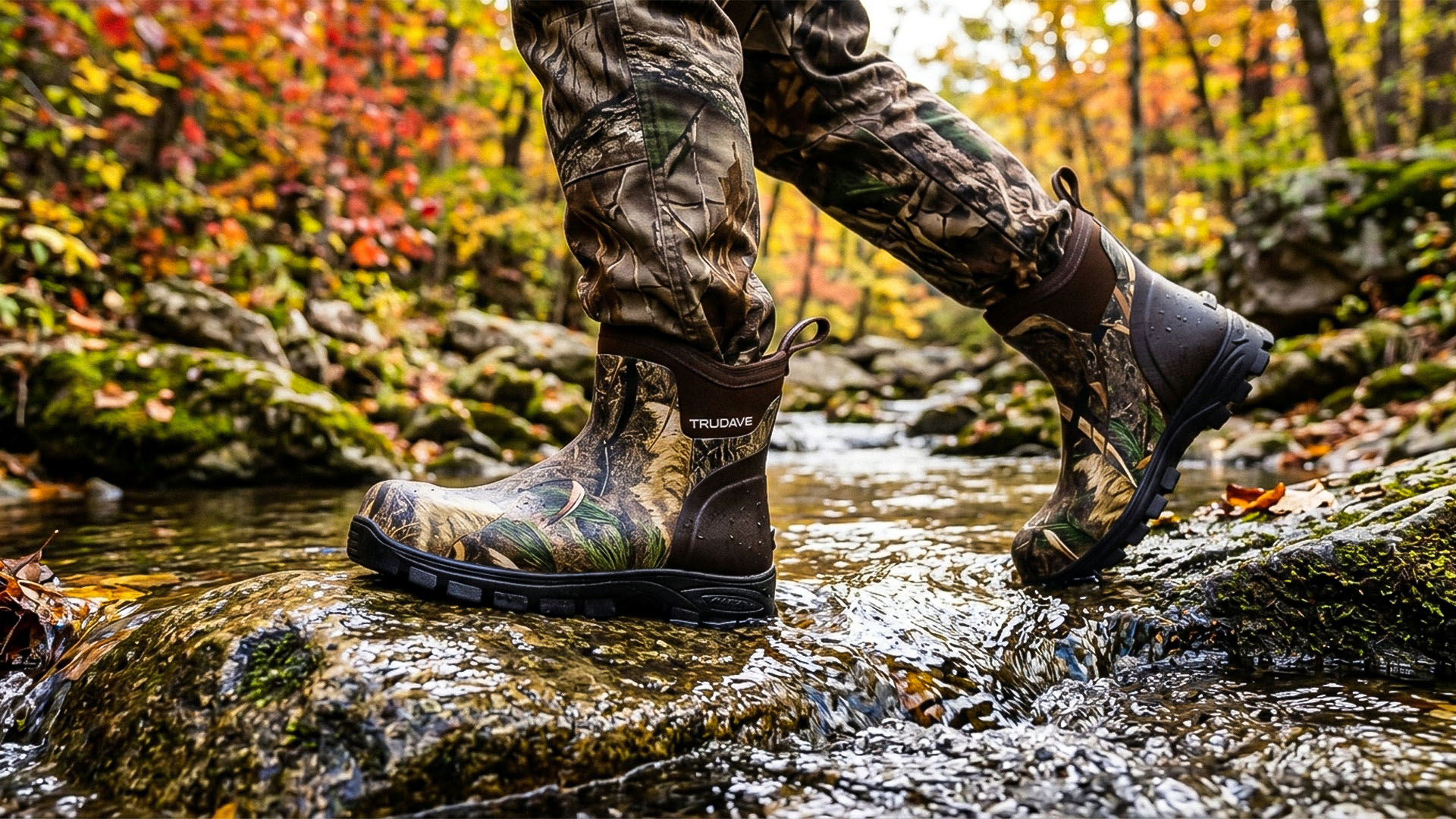
Hunters may benefit from waterproof hunting boots for mule deer hunting that provide secure heel retention, dependable traction, and enough ankle support for long days in broken western terrain without unnecessary weight.
Waterproofing Matters More Than Many Hunters Expect
Western hunting is often described as dry.
But hunters may encounter:
- Morning frost
- Wet brush
- Snow
- Rain
- Shallow creeks
Dry feet matter on long hunts.
Lightweight Boots Reduce Fatigue
Every additional ounce is carried for miles.
Balance:
- Weight
- Support
- Durability
- Waterproofing
Heavy Boots Are Not Automatically Better
Maximum stiffness may be unnecessary in moderate sage terrain.
Match footwear to actual conditions.
More Support Helps in Steeper Country
Rocky basins and mountain ridges may justify stronger ankle structure.
Secure Heel Fit Matters on Climbs
Uphill movement repeatedly lifts the heel.
Poor fit creates:
- Blisters
- Hot spots
Toe Room Matters on Descents
Long downhill travel pushes feet forward.
Proper sizing protects toes.
Traction Matters on Loose Rock
Dry gravel can roll underfoot.
Mud can become slick.
Snow adds another challenge.
One Outsole Must Handle Multiple Surfaces
Look for dependable performance across:
- Dirt
- Rock
- Wet grass
- Mud
rather than one ideal surface.
Gaiters Can Be Extremely Useful
Gaiters help keep:
- Snow
- Mud
- Seeds
- Wet vegetation
out of boots.
Wet Sage Can Soak Pants
Lower-leg protection improves comfort.
Cactus Can Occur in Lower Desert Habitat
Depending on region, mule deer country may include:
- Prickly pear
- Cholla
Watch footing.
Thorny Vegetation Can Damage Lightweight Clothing
Durable hunting pants help.
Rock Can Damage Soft Footwear
Toe and sidewall durability matter.
Long Distance Magnifies Every Small Foot Problem
A minor hot spot at mile two can become a serious blister by mile eight.
Break Boots In Before Hunting
Do not use brand-new footwear for the first time deep in mule deer country.
Train With the Same Footwear
Preseason hikes reveal fit issues.
Physical Conditioning Matters
Mule deer hunting can involve:
- Long climbs
- Descents
- Sidehilling
- Pack weight
Prepare before the season.
Train for Elevation
Useful preparation may include:
- Hill walking
- Stairs
- Loaded hiking
Hiking Speed Is Less Important Than Endurance
You need enough energy to hunt effectively after reaching the basin.
Do Not Exhaust Yourself Before Prime Glassing Time
Plan access carefully.
Sometimes a slower early climb creates a better day.
Save Energy for the Return
A successful hunt may create a much harder pack-out.
Pack Weight Changes Everything
Carrying harvested game increases stress on:
- Feet
- Knees
- Ankles
Good footwear becomes even more important.
Plan Recovery Before Going Deep
Ask yourself before entering:
How will I return if I am successful?
Remote Hunting Requires Navigation
Large western basins can look similar.
Carry reliable:
- Offline maps
- GPS
- Backup navigation
Mark the Vehicle
A long stalk or animal recovery can pull you into a different drainage.
Topographic Maps Are Extremely Valuable
Use them to identify:
- Ridges
- Saddles
- Benches
- Basins
- Water
Satellite Imagery Adds Habitat Information
Aerial imagery may reveal:
- Sage density
- Timber pockets
- Roads
- Burns
Recent Imagery Is Better
Wildfires, logging, and vegetation change can make old images less useful.
Wildfire Can Dramatically Change Mule Deer Habitat
Burned areas may later produce:
- New shrubs
- Forbs
- Open feeding habitat
but habitat value changes through time.
Burn Edges Can Be Productive
Transitions between:
- Burned
- Unburned
vegetation often deserve attention.
New Growth Can Attract Deer
Early-successional vegetation may provide quality forage.
Burns Can Also Reduce Bedding Cover
Again, the habitat combination matters.
Aspen Pockets Can Be Important
Mountain mule deer may use aspen areas for:
- Shade
- Feeding
- Cover
Timber Edges Deserve Attention
Look where:
- Aspen
- Conifer
- Meadow
- Sage
meet.
Juniper Country Can Hide Deer Extremely Well
Sparse-looking woodland can conceal animals surprisingly effectively.
Glass Through Openings
Search between trunks rather than trying to see entire deer.
Morning Shade Can Keep Deer Hidden
Do not write off a slope until light reaches it.
Deer May Stand Before Leaving
A bedded animal may rise, stretch, or feed briefly.
Long glassing sessions are often rewarded.
Patience Is a Major Mule Deer Skill
Constant movement can reduce what you see.
Sometimes the best strategy is simply remaining behind good optics.
Good Optics Save Legs
In huge country, high-quality glassing can reduce random walking.
Spotting Scopes Can Help Evaluate Distant Deer
Where appropriate, they can prevent unnecessary approaches.
Use Stable Positions
Tripods or solid rests improve long glassing sessions.
Eye Fatigue Is Real
Take short breaks.
Then rescan the same country.
A Deer Can Appear Where You Already Looked
It may have:
- Stood up
- Moved
- Entered sunlight
Never assume one scan is enough.
Stalking Requires Terrain Awareness
Once deer are located, study the route before moving.
Do Not Walk Directly Toward the Animal Automatically
Use:
- Ridge backs
- Draws
- Brush
- Terrain folds
to hide movement.
Stay Out of the Skyline
A human shape on a ridge is easy to see.
Move slightly below the crest.
Plan for Wind Before Moving
A perfect terrain route can fail if scent drifts toward deer.
Check Wind Repeatedly
Conditions can change every hundred yards.
Thermals Can Switch During Long Stalks
A stalk beginning in cool morning conditions may finish after warming changes the airflow.
Wait When Necessary
Sometimes holding position until wind improves is better than forcing movement.
Deer May Stand and Watch
Mule deer often stop after being disturbed.
Do not assume the hunt is over immediately.
But Never Depend on This Behavior
Each animal reacts differently.
Public-Land Pressure Requires Adaptation
Popular trailheads can concentrate hunters.
Consider:
- Different access
- Midday glassing
- Less obvious basins
where legal.
Do Not Assume Farther Is Always Better
Pressure can exist deep in the backcountry too.
Find habitat first.
Private Land Boundaries Are Critical
Western hunting landscapes can include:
- BLM
- State land
- National forest
- Private ranch
within a short distance.
Open Country Makes Boundaries Hard to See
Use accurate current maps.
Crossing Private Land May Require Permission
Public land behind private land is not automatically legally accessible through the private parcel.
Understand local access rules.
Gates Need Respect
Leave them as directed.
Do not damage fences.
Livestock Often Shares Mule Deer Country
Cattle may be:
- In sage flats
- Near springs
- Behind ridges
Know the Background
Do not take unsafe opportunities toward:
- Livestock
- Roads
- Buildings
- Other hunters
Long-Distance Visibility Can Create False Confidence
Just because terrain appears empty does not mean it is.
Use optics.
Positive Identification Is Essential
Western deer country may hold:
- Mule deer
- White-tailed deer
in overlapping regions.
Know the legal species.
Mule Deer and Whitetail Identification Can Matter
Study features such as:
- Ear size
- Tail pattern
- Antler structure
- Movement
using official local resources.
Antler Regulations May Apply
Some jurisdictions regulate:
- Antler points
- Sex
- Hunt unit
- Tag type
Do Not Assume Every Buck Is Legal
Verify exact current regulations.
Tags Can Be Unit-Specific
A deer standing across a road or ridge may be inside a different unit.
Know boundaries.
Hunting Seasons Can Vary by Weapon
Dates may differ for:
- Archery
- Muzzleloader
- General seasons
depending on jurisdiction.
Verify Current Official Rules
Before hunting, confirm:
- Season dates
- Tag validity
- Hunt unit boundaries
- Legal sex or antler requirements
- Shooting hours
- Weapon rules
- Access restrictions
- Mandatory reporting where applicable
Public-Land Rules Can Add Restrictions
Vehicle use, camping, and seasonal closures may differ by property.
Hunter-Orange Requirements Vary
Check the exact state and season.
Wildlife Migration Corridors Matter
Mule deer may move significant distances between seasonal ranges.
Protecting connected habitat is important.
Winter Range Is Especially Sensitive
Animals may be under greater energetic stress during winter.
Avoid unnecessary disturbance where restrictions apply.
Habitat Fragmentation Can Affect Movement
Roads and development can interrupt traditional routes.
Responsible Hunters Minimize Habitat Damage
Avoid:
- Driving off legal roads
- Damaging wet meadows
- Cutting fences
Stay on Authorized Routes
High-desert vehicle tracks can persist for years.
Pick Up All Trash
Leave no:
- Food packaging
- Equipment debris
behind.
Water Sources Should Be Left Undisturbed
Do not camp directly on:
- Springs
- Tanks
- Wildlife water
if doing so blocks animal access.
Harvest Recovery Must Be Planned Carefully
Big-game recovery is very different from recovering a bird.
Terrain, distance, and temperature matter.
Mark the Location
After a shot or animal movement, identify:
- Rock
- Tree
- Ridge
- Brush patch
before changing position.
Use Multiple Landmarks
Western terrain repeats visually.
One sage bush is not enough.
Take Time Before Moving
Rushing can make recovery more difficult.
Follow current hunter-education and wildlife-agency guidance for tracking wounded big game.
Search Methodically
Look for legally and ethically relevant signs without trampling the entire area unnecessarily.
Terrain Can Carry an Animal Farther Than Expected
Downhill movement can add substantial distance.
Recovery Gets Harder After Dark
Carry a headlamp even for morning hunts.
Warm Weather Makes Game Care Urgent
Early-season mule deer hunts can occur under high afternoon temperatures.
Proper cooling becomes critical.
Plan Meat Care Before the Hunt
Before hiking deep, know:
- Pack-out route
- Cooling method
- Storage plan
Shade Helps, but Cooling Requires More Than Shade
Follow current food-safety and wildlife-agency guidance.
Clean Game Bags Are Valuable
Protect meat from:
- Dirt
- Insects
- Vegetation
during pack-out.
Do Not Let Meat Sit Inside a Hot Vehicle
Plan appropriate cooling before leaving home.
Multiple Trips May Be Necessary
Do not overload yourself dangerously.
A slower safe pack-out is better than an injury.
Heavy Loads Change Footing
Loose rock becomes harder to manage when carrying extra weight.
Use deliberate steps.
Trekking Poles Can Help
Poles may improve:
- Balance
- Descents
- Stream crossings
- Pack-out stability
Keep Hands Available for Balance Where Possible
Falling under a heavy load can be serious.
Common Mule Deer Hunting Mistakes
Walking Before Glassing
Use optics to eliminate empty country.
Treating Every Sage Basin the Same
Small habitat differences matter.
Ignoring Wind and Thermals
Scent can ruin an otherwise good approach.
Hunting Only Road-Visible Terrain
Pressure often changes deer behavior.
Walking Too Fast Through Good Country
You may bump animals you could have glassed.
Wearing Heavy or Poorly Fitting Boots
Long western miles amplify every footwear problem.
Ignoring Wet Weather
Dry country can become mud quickly.
Failing to Plan the Pack-Out
The hunt is not finished when the animal is located.
Frequently Asked Questions
Where do mule deer usually live?
Mule deer use a wide range of western habitats including sagebrush basins, foothills, mountain forests, high desert, agricultural edges, and alpine transition zones depending on season.
Is sagebrush good mule deer habitat?
Yes. Sagebrush landscapes can provide browse, cover, and migration habitat, especially when combined with terrain diversity, water, and other vegetation.
What is the best way to find mule deer in open country?
Glassing from elevated positions is one of the most efficient methods. Hunters can search large basins, ridges, draws, and feeding areas before committing to long walks.
Is mule deer hunting good after snow?
Fresh snow can reveal tracks, feeding areas, and travel routes while also moving deer toward lower or windblown habitat depending on depth and temperature.
Does rain help mule deer hunting?
Rain can create fresh tracks and quieter conditions, but it can also turn high-desert roads and clay into difficult mud.
What boots are best for mule deer hunting?
Waterproof hunting boots with secure heel retention, dependable traction, and support appropriate to the terrain are practical. Lighter boots may work in rolling sagebrush, while steeper rocky country may justify stronger ankle support.
Why is glassing so important for mule deer hunting?
Mule deer occupy large landscapes and blend extremely well into sagebrush, rock, and timber. Good glassing allows hunters to locate animals before spending energy crossing empty terrain.
Do mule deer regulations vary by hunt unit?
Yes. Tags, season dates, unit boundaries, legal sex, antler restrictions, weapon rules, access requirements, and reporting obligations can vary significantly. Hunters should verify current official regulations for the exact hunt before entering the field.
Final Thoughts
Mule deer hunting teaches hunters that western landscapes are never as empty as they look.
One shaded draw hides a bedded buck.
One sage basin holds better browse.
One spring keeps a strip of vegetation green.
One ridge blocks the wind.
One snow-covered slope pushes deer toward exposed food.
One tiny movement gives away an animal that has been in your binoculars for ten minutes.
The country is huge.
The useful details are small.
Glass before walking.
Study terrain.
Watch thermals.
Look for food near bedding cover.
Follow fresh snow.
Respect roads, ranches, migration habitat, and property boundaries.
Plan the pack-out before hiking deep.
Wear boots that let you cross wet sage, mud, gravel, loose rock, creek bottoms, snow, and miles of broken high-desert terrain without making your feet the reason you stop hunting.
And when a mule deer finally stands from behind a sagebrush clump in a basin you were certain was empty, remember the lesson.
The deer was not invisible.
You simply had not watched the country long enough yet.
