
American wigeon country often looks easier than it really is.
A shallow lake stretches across a broad wetland.
Short grass disappears beneath several inches of water.
Submerged vegetation moves under the surface.
Small points divide one bay from another.
A few ducks sit far offshore.
Then a flock of wigeon appears.
They cross the lake.
Ignore the deepest water.
Pass one open shoreline.
Turn toward a shallow grassy pocket.
And drop into water that barely looks deep enough to hold ducks.
That is one of the defining patterns of wigeon hunting.
These birds often respond strongly to food that other hunters overlook.
They may concentrate around:
- Flooded grass
- Submerged aquatic vegetation
- Shallow lake edges
- Protected bays
- Muddy shoreline transitions
- Grazed wetland margins
The biggest mistake is searching only where the most water exists.
Wigeon often reward hunters who search where water and green food overlap.
American Wigeon Are Shallow-Water Feeders
American wigeon use a variety of wetland habitats during migration and winter.
Productive areas may include:
- Shallow lakes
- Marshes
- Flooded grasslands
- Reservoir coves
- Coastal wetlands
- Agricultural water
- Aquatic vegetation beds
They can use open water.
But they often show strong interest in relatively shallow feeding zones.
Food Is One of the Strongest Clues
Wigeon consume a considerable amount of plant material.
That means hunters should pay close attention to areas containing:
- Aquatic vegetation
- Flooded grass
- Green shoots
- Seed-producing wetland plants
A shallow bay with abundant food may outperform much larger water nearby.
Look Below the Surface
Some of the best feeding habitat is not obvious from shore.
Submerged plants may sit only inches below the waterline.
Clues can include:
- Vegetation floating after feeding
- Ducks repeatedly tipping or feeding
- Clear patches among plants
Feeding Activity Reveals the Best Water
When wigeon repeatedly use one pocket:
Pay attention.
The reason may be:
- Better food
- Better depth
- Less disturbance
- More protection from wind
Actual bird behavior is more useful than guessing from maps.
Flooded Grass Can Be Excellent
When water rises over low grasslands, birds gain access to new feeding habitat.
A field that was dry last week may become highly attractive after:
- Rain
- Managed flooding
- Seasonal water rise
Newly Flooded Habitat Can Change Fast
Wigeon may discover fresh flooded grass quickly.
Hunters should rescout after major water-level changes.
Shallow Water Is Often Better Than Deep Water
A huge open lake can hold birds.
But the best feeding activity may occur in:
- Ankle-deep margins
- Shallow shelves
- Flooded flats
near vegetation.
Water Depth Can Change Daily Patterns
If a wetland becomes too deep, birds may shift toward:
- Shoreline shelves
- Elevated grass edges
- Smaller nearby ponds
Follow the usable depth.
Falling Water Can Expose New Feeding Zones
As water drops, birds may move toward:
- Mud edges
- Newly accessible vegetation
- Shallow flats
The productive line can move across the wetland.
Rising Water Opens New Territory
Heavy rain can flood:
- Meadow edges
- Pasture
- Marsh grass
creating temporary feeding habitat.
Learn the Shape of the Wetland
A flat-looking marsh may contain small differences in elevation.
Those differences determine:
- Water depth
- Plant growth
- Bird use
Small Depressions Can Hold Better Water
A shallow basin may collect enough water to support food while surrounding grass remains dry.
These microhabitats are easy to miss.
Points Help Organize Movement
A shoreline point extending into shallow water may influence:
- Travel
- Landing
- Feeding movement
Wigeon often follow edges.
Not Every Point Is Productive
A good point usually intersects something useful:
- Food
- Wind
- Travel
- Water-depth change
Scout birds first.
Protected Bays Can Be Valuable
During strong wind, wigeon may favor:
- Leeward coves
- Sheltered marsh pockets
where feeding is easier.
Wind Changes More Than Flight
It also changes:
- Water surface
- Vegetation movement
- Bird comfort
A productive calm-day bay may become too exposed under different wind.
Hunt the Leeward Side During Rough Weather
Protected water can hold birds that have left larger open sections.
Windward Edges Can Still Feed Birds
In some conditions, wave action may expose or move food.
Observe what the ducks actually choose.
Wigeon Can Move Between Feeding and Resting Water
A flock feeding in one shallow bay may later shift toward:
- Open water
- Protected loafing areas
Understanding both locations helps explain the day.
Do Not Confuse Resting Water With Feeding Water
A large flock sitting offshore may not be using the best hunting habitat there.
Watch where they go when they begin feeding.
Morning Flights Can Reveal Travel Routes
Early movement may connect:
- Roost water
- Feeding flats
- Agricultural wetlands
Watch direction carefully.
Evening Movement Can Reveal the Same Pattern
Birds may leave feeding areas and return toward safer resting water.
Scout both ends of the cycle.
Migration Can Change Bird Numbers Overnight
Wigeon may arrive or depart quickly.
A wetland that looked average yesterday can become productive after:
- Weather changes
- Migration movement
Recent Scouting Matters
Do not rely only on:
- Last season
- Last week
- Historical reputation
Current birds matter most.
Cold Fronts Can Shift Distribution
Changing weather may bring new birds or move existing flocks.
Rescout after major fronts.
Warm Weather Can Spread Birds Out
When food and open water are widely available, birds may use many locations.
The wetland becomes harder to predict.
Freeze-Up Can Concentrate Birds
As shallow water freezes, remaining open sections can become more important.
Wind Can Keep Some Water Open
Exposed channels and large lakes may remain available longer.
But ice adds new safety risks.
Never Assume Thin Ice Is Safe
Waterfowl use does not prove human-safe ice.
Stay on established safe access.
Ice Edges Can Move With Wind
Floating ice can shift rapidly.
Do not allow yourself or a boat to become trapped.
Wigeon Can Mix With Other Ducks
Shallow feeding water may attract:
- Gadwall
- Mallards
- Pintails
- Teal
- Other dabblers
Positive identification matters.
Learn American Wigeon Identification
Hunters should recognize features such as:
- Compact body
- Head pattern
- Wing characteristics
- Bill
using official waterfowl identification resources.
Drakes and Hens Look Different
Do not study only adult males.
Females and immature birds can be more difficult.
Low Light Complicates Identification
Early morning can reduce visible color.
Use:
- Shape
- Wing pattern
- Overall profile
along with plumage.
Mixed Flocks Require Individual Attention
One wigeon does not make every bird in the flock a wigeon.
Identify the specific bird.
Flight Calls Can Be Supporting Clues
Wigeon are vocal.
Calls can alert hunters to approaching birds.
Sound helps.
Visual confirmation still comes first.
Wigeon Often Travel in Active Flocks
They can appear suddenly and change direction quickly.
Remain alert even when the wetland seems quiet.
Low Birds Require Strict Safety
Shallow marsh ducks may fly close to:
- Water
- Grass
- Shoreline
Never shoot toward:
- Dogs
- Hunters
- Roads
- Buildings
Establish Safe Zones
Partners should know:
- Positions
- Allowed directions
- No-shoot angles
before legal shooting time.
Marsh Vegetation Can Hide Hunters
A person only a short distance away may disappear behind reeds.
Communicate before moving.
Never Relocate Silently
Tell partners if you change position.
Shallow Wetlands Create Difficult Footing
The water may look easy.
The bottom may not be.
Hunters can encounter:
- Soft mud
- Submerged grass
- Muskrat channels
- Uneven depressions
Mud Can Be More Difficult Than Water
A wetland only boot-deep may still be exhausting if every step sinks.
Test the Bottom
A walking stick can help check:
- Mud firmness
- Hidden channels
- Water depth
before committing weight.
Wetland Channels Can Be Surprisingly Deep
Small drainage cuts may cross otherwise shallow flats.
Never assume consistent depth.
Vegetation Can Hide Drop-Offs
Flooded grass makes depth difficult to judge.
Move slowly.
Wigeon Hunting Is Hard on Footwear
A typical hunt may involve:
- Wet grass
- Sticky mud
- Shallow water
- Reed edges
- Cold shoreline
- Flooded fields
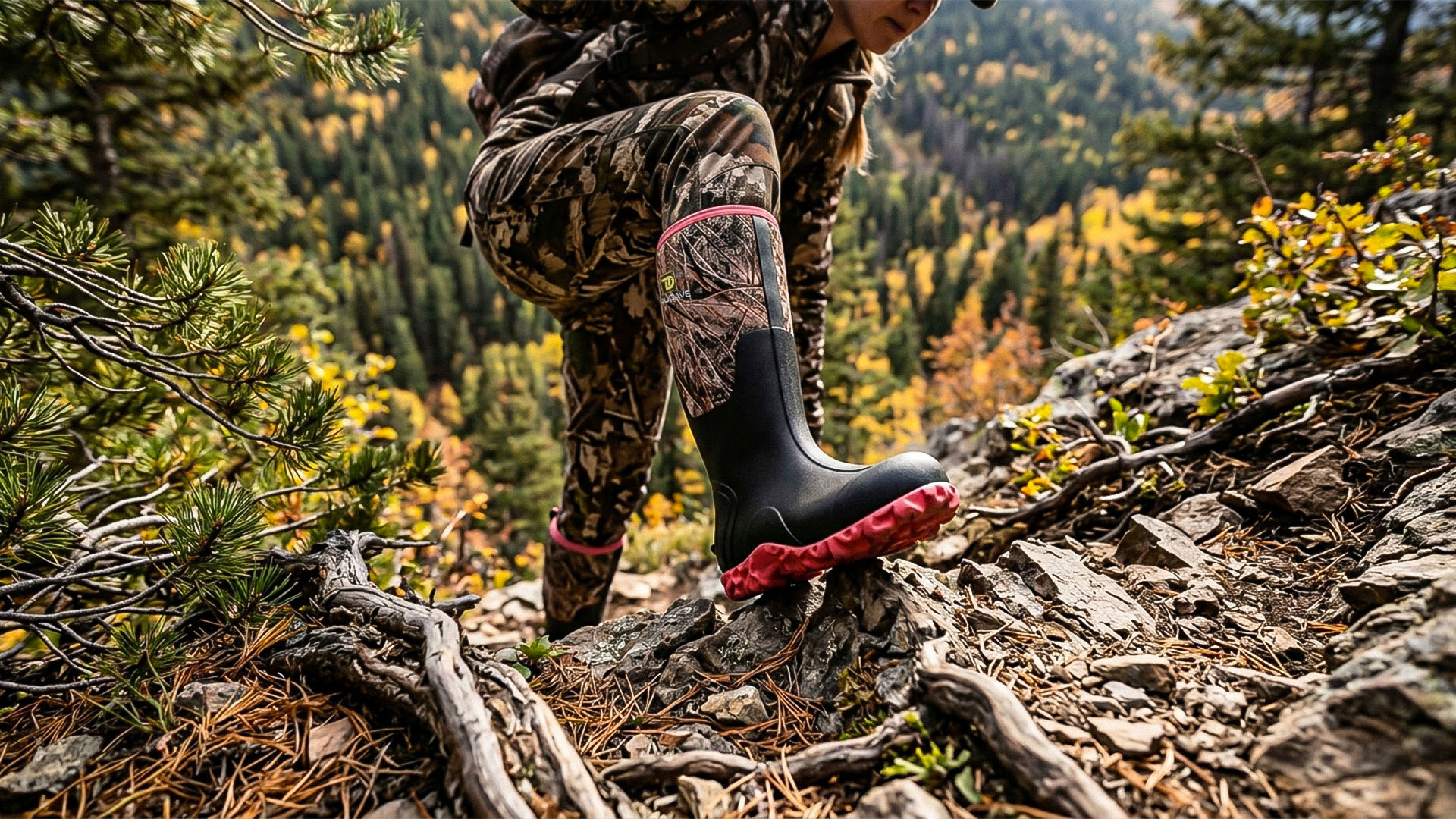
Hunters may benefit from waterproof hunting boots for shallow wetland hunting that provide secure heel retention, dependable mud traction, and enough waterproof height for repeated walking through saturated habitat.
Tall Rubber Hunting Boots Can Work Well
Where water stays below boot height, rubber boots offer:
- Simple waterproofing
- Mud protection
- Easy cleanup
Secure Heel Fit Matters in Mud
Suction pulls footwear upward.
Loose boots create:
- Heel slip
- Fatigue
Lightweight Boots Can Be Better on Firm Shoreline
If much of the hunt involves:
- Dikes
- Farm roads
- Grass
with only limited shallow water, lighter waterproof boots may improve mobility.
Waders May Be Necessary
When water consistently exceeds normal boot height, properly fitted hunting waders may provide the needed protection.
Waders Do Not Make Deep Water Safe
They keep clothing dry.
They do not eliminate:
- Drop-offs
- Deep mud
- Current
Never Follow Birds Into Unknown Water
A productive flock is not worth a dangerous crossing.
Soft Mud Can Trap Feet
Pulling aggressively can disrupt balance.
Shift weight gradually.
Gaiters Can Help in Wet Grass
Where water remains below boot height, gaiters may reduce:
- Moisture
- Seeds
- Debris
entering from above.
Dew Can Soak Hunters Before Sunrise
Wet grass often holds enormous moisture.
Waterproof lower-leg protection helps.
Reed Edges Can Be Rough on Clothing
Dry stems may cut or abrade lightweight fabric.
Durable hunting pants are useful.
Gloves Matter Around Wet Gear
Hunters may handle:
- Decoys
- Wet lines
- Boats
for extended periods.
Carry a Dry Pair
Cold wet gloves reduce hand function quickly.
Layering Matters
Wigeon hunts may involve:
- Active setup
- Long stationary periods
Avoid sweating during the walk in.
Add Insulation After Setup
Dry base layers improve warmth later.
Windproof Clothing Is Valuable
Open shallow wetlands offer little protection.
Face and Neck Protection Helps
Strong wind can make moderate temperatures feel much colder.
Early-Season Hunts Can Still Be Warm
Not every wigeon hunt occurs in winter conditions.
Avoid excessive insulation.
Match Footwear Insulation to Temperature
Too much boot insulation can cause sweat.
Too little can become uncomfortable during long stationary periods.
Rain Changes the Wetland Quickly
A storm may raise water levels and flood:
- New grass
- Shoreline vegetation
Birds can shift almost immediately.
Wigeon Hunting After Rain Can Be Productive
Freshly flooded habitat may expose new food.
But road and access conditions can worsen.
Muddy Farm Roads Need Respect
Do not create deep ruts.
If necessary:
Park farther away.
Walk.
Private Wetlands Require Permission
Many productive shallow wetlands occur on:
- Farms
- Managed private properties
Clarify access.
Ask About Water-Control Structures
Never adjust:
- Gates
- Pumps
- Boards
without authorization.
Managed Water Levels Are Deliberate
Changing them can damage habitat and property.
Public Wetlands May Have Special Rules
Wildlife areas may regulate:
- Entry
- Parking
- Boats
- Blinds
- Hunting days
- Permits
Property-Specific Rules Can Be More Restrictive
Check the exact area.
Dikes Can Provide Useful Access
Raised embankments often offer firm walking.
They may also separate legal hunting zones.
Do Not Block Management Roads
Park only where allowed.
Boats Can Help on Larger Wetlands
Where legal and appropriate, small boats may improve access to:
- Shallow bays
- Islands
- Vegetation beds
Shallow Water Can Still Hide Deep Channels
Use appropriate flotation equipment.
Do Not Overload Small Boats
Hunters, dogs, decoys, and gear add weight quickly.
Boat Capacity Matters
Respect manufacturer limits.
Muddy Launches Can Be Dangerous
A shoreline launch may be:
- Slick
- Soft
- Uneven
Walk carefully.
Cold Water Requires Conservative Decisions
Even shallow-looking lakes can contain deep water nearby.
Dogs Can Be Valuable for Recovery
A trained retriever may help recover wigeon in:
- Flooded grass
- Shallow marsh
- Vegetation beds
Dense Vegetation Can Hide Birds Completely
A duck may disappear beneath:
- Grass
- Reeds
- Floating plants
only yards from where it fell.
Dog Control Matters
Wetlands may contain:
- Deep channels
- Roads
- Property boundaries
Maintain reliable control.
Mud Exhausts Dogs Too
Repeated pushing through soft bottom can be harder than swimming.
Monitor fatigue.
Carry Clean Drinking Water
Do not rely only on wetland water.
Cold Retrieves Can Chill Dogs
Monitor:
- Shivering
- Weakness
- Reduced coordination
Warm Weather Can Create Heat Problems
Early migration hunts may still be mild.
Give dogs:
- Water
- Breaks
- Shade where available
Recovery Starts Before the Shot
Before taking an opportunity, consider:
Can the bird be safely recovered from where it may fall?
Mark Every Fall
Use:
- Reed point
- Dike marker
- Tree
- Mud opening
as reference.
Water Can Move Birds
Wind or current can shift a downed duck.
Begin recovery promptly.
Keep Watching
Do not focus on the next flock until the first bird is accounted for.
Trained Dogs Improve Recovery
Allow the dog to work before trampling the entire area.
Without a Dog, Search Methodically
Use:
- Parallel paths
- Expanding circles
from the marked location.
Ethical Shot Selection Improves Recovery
If the bird is moving toward:
- Deep channel
- Private property
- Unsafe water
consider passing.
Warm Weather Requires Prompt Game Care
Keep harvested birds:
- Clean
- Cool
as soon as practical.
Muddy Wetlands Make Clean Storage More Important
Use appropriate game bags or clean containers.
American Wigeon Are Migratory Game Birds
Hunters must verify current regulations before hunting.
Check official rules for:
- Season dates
- Daily bag limits
- Possession limits
- Species-specific restrictions
- Legal shooting hours
- License and stamp requirements
- Non-toxic ammunition
- Property-specific rules
Do Not Rely on Last Year’s Rules
Migratory bird regulations can change annually.
Use the current season.
Wigeon May Be Included in General Duck Limits
But hunters should still confirm whether any species-specific restrictions apply locally.
Non-Toxic Ammunition Rules Matter
Use current official guidance.
Shooting Hours Must Be Confirmed
Do not begin simply because other hunters start shooting.
Public Wetlands Can Include Closed Refuge Zones
Use accurate maps.
Water Does Not Make Boundaries Obvious
A legal marsh can sit directly beside a closed sanctuary.
Do Not Drift Across Boundaries
Wind and boat movement can shift hunters or gear.
Maintain awareness.
Habitat Conservation Matters
Wigeon depend on healthy shallow-water wetlands containing:
- Aquatic vegetation
- Flooded grass
- Productive shoreline
Water Quality Affects Food
Changes in:
- Sediment
- Nutrient levels
- Water clarity
can affect aquatic plant growth.
Wetland Restoration Can Create Excellent Habitat
Managed shallow-water systems can provide important migration resources.
Flooded Grasslands Support Many Species
They can also benefit:
- Other ducks
- Shorebirds
- Amphibians
Hunters Benefit Directly From Good Water Management
Protect wetland infrastructure.
Prevent Invasive Species Spread
Clean boats, boots, and gear when moving between water bodies according to local recommendations.
Aquatic Plants Can Travel on Equipment
Inspect:
- Boat hulls
- Trailers
- Waders
before leaving.
Pick Up All Trash
Remove:
- Food packaging
- Broken line
- Equipment debris
from the wetland.
Common American Wigeon Hunting Mistakes
Hunting the Deepest Water
Wigeon often favor shallow feeding habitat.
Ignoring Flooded Grass
Newly inundated vegetation can be highly attractive.
Treating Every Bay the Same
Food and water depth create major differences.
Using Old Scouting Information
Water levels and migration change rapidly.
Wearing Boots That Are Too Loose
Mud suction makes poor fit exhausting.
Assuming Waders Make Deep Water Safe
They do not.
Failing to Account for Wind
Bird use and wetland safety both change.
Using Old Migratory-Bird Regulations
Always check the current season.
Frequently Asked Questions
Where do American wigeon usually live?
American wigeon commonly use shallow lakes, marshes, flooded grasslands, protected bays, reservoirs, coastal wetlands, and other habitats containing abundant aquatic vegetation.
Why do wigeon like shallow water?
Shallow water often gives them easier access to aquatic plants, flooded grasses, and other plant-based food.
Are flooded grasslands good for wigeon hunting?
They can be excellent, especially when newly flooded vegetation creates abundant shallow feeding habitat.
Does wind affect wigeon hunting?
Yes. Wind affects flight direction, landing approaches, which bays remain protected, and how birds move between feeding and resting areas.
What boots are best for wigeon hunting?
Waterproof hunting boots with secure heel fit and strong traction in wet grass and mud are practical for shallow wetlands. Tall rubber boots work well where water remains below boot height.
Are waders necessary for wigeon hunting?
Not always. Some feeding habitat is only shallow enough for tall waterproof boots. Deeper marshes may require properly fitted hunting waders, but hunters should always assess water depth and bottom conditions.
Can dogs help recover American wigeon?
Yes. A trained retriever can be especially helpful in flooded grass and dense marsh vegetation, but hunters should consider water depth, temperature, mud, and dog fatigue.
Do American wigeon hunting regulations vary?
Yes. Seasons, bag limits, possession limits, licensing requirements, shooting hours, ammunition rules, and property-specific restrictions vary by jurisdiction. Hunters should verify current official regulations before hunting.
Final Thoughts
American wigeon hunting teaches hunters that shallow water can be more valuable than big water.
One flooded grass flat creates food.
One vegetation bed attracts a flock.
One protected bay blocks the wind.
One low shoreline shelf becomes the place birds use all morning.
The wetland may look simple.
The birds are responding to details beneath the surface.
Scout recently.
Follow green food.
Watch the water level.
Study wind.
Look for flooded vegetation.
Respect private and public wetland rules.
Wear boots that let you cross wet grass, sticky mud, shallow water, reed edges, flooded fields, and slick shoreline without making every step a struggle.
Use properly fitted waders when the water actually requires them.
And when a flock of wigeon ignores acres of deep open lake and drops into a shallow grassy corner you almost overlooked, remember the lesson.
More water does not always mean better duck habitat.
Sometimes the best water is barely deep enough to cover the food.
