
Sage grouse country can look almost impossibly large.
Sagebrush stretches from one ridge to the next.
Dry basins fade into distant mountains.
A few green meadow bottoms cut through the gray landscape.
From the road, almost every acre looks the same.
It is not.
A hunter can walk miles through apparently perfect sage without seeing a bird.
Then the vegetation changes slightly.
The sage becomes taller.
A damp meadow sits below a low ridge.
Fresh droppings appear along a two-track road.
Several birds suddenly rise from cover only forty yards away.
That is sage grouse hunting.
The biggest challenge is rarely finding sagebrush.
There is often too much of it.
The challenge is finding the specific portion of the sagebrush landscape birds are using that day.
Successful hunters learn to look for combinations of:
- Sagebrush structure
- Moisture
- Food
- Topography
- Seasonal cover
- Disturbance
- Weather
One small transition can matter more than thousands of acres of uniform habitat.
Greater Sage-Grouse Are Sagebrush Specialists
Greater sage-grouse are closely associated with broad sagebrush landscapes.
Depending on season and region, useful habitat may include:
- Sagebrush basins
- Rolling high desert
- Wet meadow edges
- Springs
- Creek bottoms
- Sage-covered ridges
- Open flats
The landscape may look simple from above.
At ground level, it contains enormous variation.
Not All Sagebrush Is Equal
Hunters sometimes see sage and assume the entire basin is suitable.
But sagebrush varies in:
- Height
- Density
- Age
- Understory vegetation
- Moisture
Birds respond to those differences.
Look at the Ground Beneath the Sage
A productive area may contain:
- Grass
- Forbs
- Bare travel spaces
beneath and between shrubs.
If the understory is almost nonexistent, habitat may function differently.
Uniform Sage Can Be Hard to Hunt
A basin containing the same shrub height for miles provides few obvious clues.
Look for subtle changes such as:
- Drainages
- Taller sage
- Wet pockets
- Terrain breaks
Habitat Transitions Are Valuable
Whenever one type of sage country changes into another:
Slow down.
Examples include:
- Dry sage to wet meadow
- Short sage to taller sage
- Flat basin to ridge shoulder
- Sage to grass opening
Transitions often concentrate bird activity.
Wet Meadows Can Be Extremely Important
In otherwise dry landscapes, green wet areas create a major contrast.
These may occur around:
- Springs
- Creeks
- Seep zones
- Irrigated valleys
Birds may use the surrounding sage and meadow edges differently depending on season.
Hunt the Edge, Not the Wettest Center
The middle of a wet meadow may be:
- Too open
- Too saturated
Birds may remain in nearby sage while feeding along greener margins.
Focus on the transition.
Moisture Creates Food Diversity
Wet areas can support more:
- Green plants
- Insects
- Forbs
than dry surrounding country.
That can make relatively small areas disproportionately important.
Springs Deserve Attention
A tiny spring can create:
- Green vegetation
- Damp soil
- Taller shrubs
across an otherwise dry basin.
Look beyond the water itself.
The surrounding habitat often matters more.
Seep Areas Can Be Hard to See
Some moisture zones have no obvious open water.
Clues may include:
- Greener grass
- Darker soil
- Taller plants
These subtle pockets deserve scouting.
Creek Bottoms Can Organize Movement
High-desert creeks may be seasonal.
Even when water is low, the drainage can support:
- Different vegetation
- Cooler conditions
- Travel structure
Search slightly above the deepest channel.
After Rain, the Desert Changes Quickly
A storm can create:
- Mud
- Wet sage
- Temporary puddles
- Greener vegetation
almost overnight.
Sage Grouse Hunting After Rain Can Reveal Fresh Sign
Soft ground makes:
- Tracks
- Droppings
- Road crossings
easier to notice.
Recent sign becomes easier to separate from old sign.
Muddy Two-Tracks Can Be Valuable Scouting Surfaces
High-desert roads often pass through large areas of sage.
After rain, look for:
- Bird tracks
- Repeated crossings
where birds move between habitat types.
Road Sign Is Only a Starting Point
Finding tracks does not mean the birds remain beside the road.
Use direction to understand where they may be moving.
Early Morning Can Be Productive
Cool morning temperatures may keep birds active in more open habitat.
Glass and walk:
- Basin edges
- Wet meadow margins
- Gentle slopes
before the day warms.
Morning Dew Can Reveal More Than Expected
Sagebrush country is dry overall.
But vegetation around low areas can hold heavy dew.
That moisture can soak:
- Pants
- Boots
surprisingly quickly.
Midday Can Change Bird Position
Warm conditions may push birds toward:
- Taller sage
- Shaded slopes
- Cooler low areas
rather than exposed flats.
Shade Exists Even in Low Shrubs
Sagebrush may not look like much cover.
At bird level, it can provide meaningful shade and concealment.
Late Afternoon Can Bring More Movement
As temperature falls, birds may become active again around:
- Feeding areas
- Meadow edges
- Open sage
Topography Matters
High-desert basins often look flat until hunters begin walking.
Small features may include:
- Low ridges
- Benches
- Saddles
- Drainages
These can influence bird movement.
Ridge Shoulders Can Be Productive
A low ridge may provide:
- Wind exposure
- Better visibility
- Different vegetation
Birds may use the shoulder rather than the crest.
Saddles Can Connect Basins
A saddle provides easier movement between terrain units.
Look for fresh sign where:
- Roads
- Sage
- Low terrain
converge.
Gentle Benches Can Hold Birds
A flat shelf above a basin may combine:
- Sage
- Grass
- Better drainage
and can support birds even when the surrounding slope appears similar.
Wind Changes Everything
Sagebrush country can be extremely windy.
Strong wind influences:
- Bird location
- Hunter comfort
- Dog scenting
- Flight
Hunt Leeward Slopes
Protected sides of ridges may offer:
- Less wind
- Better thermal comfort
for both birds and hunters.
Low Basins Can Be More Sheltered
A shallow depression may reduce wind significantly.
These subtle features become important on harsh days.
Strong Wind Makes Flight Fast
A flushing sage grouse moving with the wind can cover distance quickly.
Stay controlled.
Pick One Bird
When several birds flush at once:
Choose one clearly identified bird.
Follow it.
Do not shoot into the center of the group.
Groups May Be Widely Spread
Sage grouse can occupy a broad area.
The first few birds may not represent the whole group.
After a flush:
Slow down.
Second Flushes Can Happen Later
Several birds may remain hidden fifty or one hundred yards away.
Do not assume the area is empty.
Birds Can Hold Tighter Than Expected
Large open habitat makes hunters assume birds will flush early.
Sometimes they remain hidden until relatively close.
Sagebrush Provides Excellent Camouflage
A motionless bird can disappear against:
- Gray-green shrubs
- Dry grass
- Soil
Look for movement.
Binoculars Can Help
Optics are useful in large open landscapes.
Scan:
- Meadow edges
- Road crossings
- Basin shoulders
before walking miles.
Glass From Elevated Ground
A small rise can reveal:
- Birds
- Habitat transitions
- Water
that are invisible from the basin floor.
Do Not Glass While Walking
Sage country hides:
- Holes
- Rock
- Badger burrows
Stop first.
Burrows Are a Major Footing Hazard
Tall or dense sage can hide deep holes.
Watch every step.
Livestock Ground Can Be Uneven
Cattle may create:
- Hoof holes
- Trails
- Mud depressions
around water.
Wet Meadows Can Be Especially Rough Underfoot
Soft ground can hide:
- Channels
- Mud holes
beneath grass.
Move carefully.
Sage Grouse Hunting Requires Long-Distance Walking
A typical day may include:
- Dry sage
- Wet grass
- Gravel
- Mud
- Two-track roads
- Rolling high desert
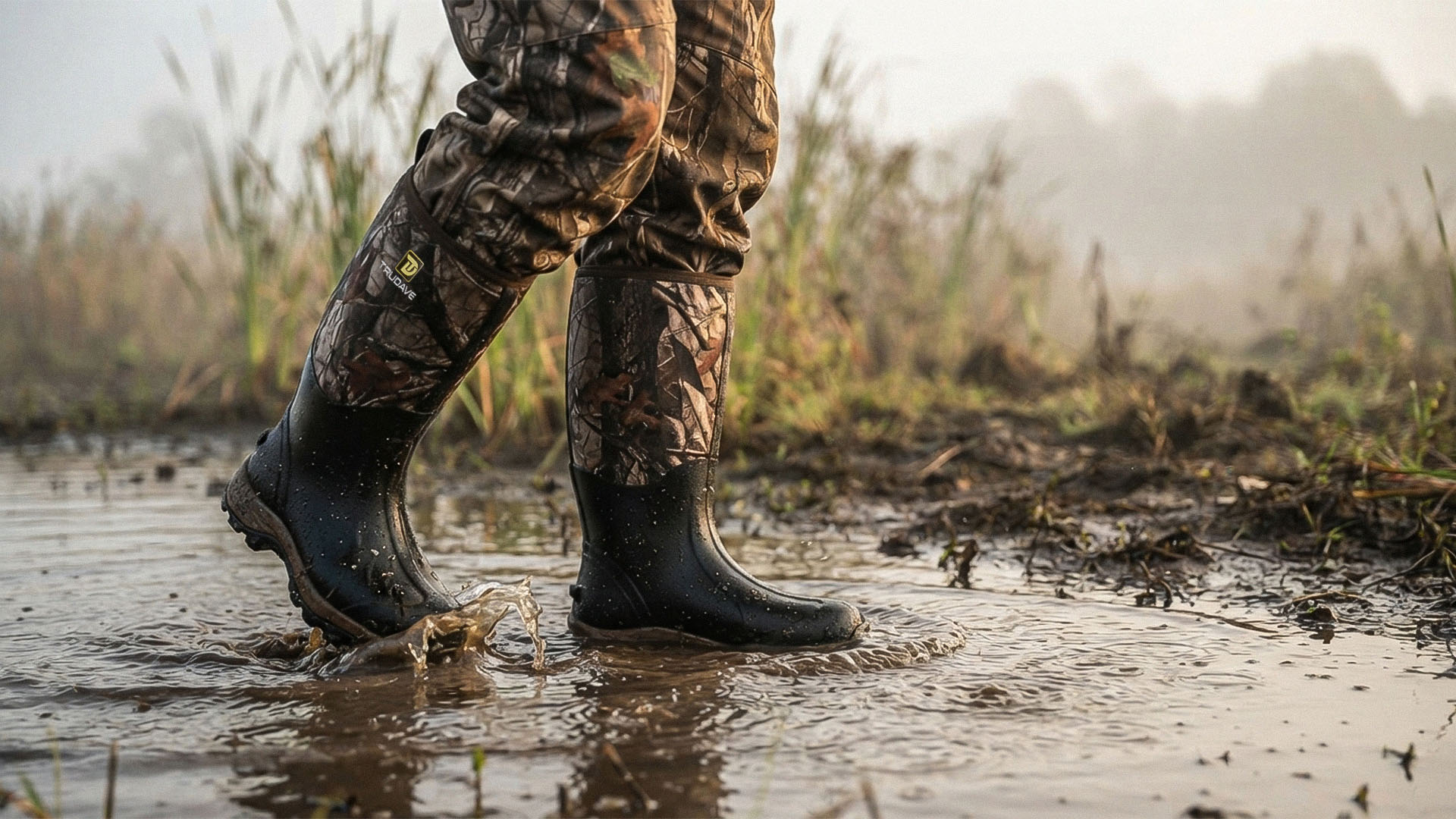
Hunters may benefit from waterproof hunting boots for sagebrush hunting that provide secure heel retention, dependable traction, and enough support for long open-country walks without excessive weight.
Lightweight Boots Are Usually Valuable
High-desert hunts often involve many miles.
Every extra ounce becomes noticeable.
Balance:
- Support
- Durability
- Waterproofing
- Weight
Waterproofing Still Matters in Dry Country
Wet grass around:
- Springs
- Meadows
- Morning lowlands
can soak footwear quickly.
Rain can turn roads into mud.
Secure Heel Fit Matters
Long, repetitive walking exposes poor fit.
Heel slip creates:
- Hot spots
- Blisters
Moderate Ankle Support Is Useful
Hidden holes and uneven terrain can twist ankles.
You do not necessarily need a heavy mountain boot.
But some structure helps.
Toe Protection Helps Around Rock
High desert may contain:
- Sharp gravel
- Broken volcanic rock
A durable front section protects the foot.
Traction Matters on Dry Gravel
Loose small rock can behave like marbles.
Use controlled steps on slopes.
Mud Can Be Worse Than It Looks
High-desert clay can become extremely sticky after rain.
Each step may add weight.
Mud Packs Into Tread
Once grooves fill, traction drops.
Clean soles when practical.
Rubber Boots Can Work Around Wet Meadows
Tall rubber boots may be useful where hunts involve:
- Saturated grass
- Mud
- Shallow water
But they can be tiring over long distances.
Lace-Up Waterproof Boots Are Often Better for Big Mileage
Where most of the terrain is firm, lighter lace-up footwear may provide:
- Better heel control
- Better walking efficiency
Choose Boots for the Entire Route
Do not let one muddy spring dictate footwear for ten miles of dry sage.
Think about the full day.
Gaiters Can Be Extremely Useful
Gaiters help keep:
- Seeds
- Dust
- Mud
- Snow
out of boots.
Sage Seeds and Dry Vegetation Get Everywhere
Low vegetation can constantly contact:
- Socks
- Pants
- Boots
Lower-leg protection improves comfort.
Sagebrush Can Be Rough on Clothing
Repeated contact wears thin fabric.
Durable upland pants can help.
Gloves Can Protect Hands
Hunters may use hands to move around:
- Fence lines
- Brush
Light gloves are useful.
Eye Protection Can Be Helpful
Although sage is low, occasional:
- Tall stems
- Brush
can reach face height.
Dogs Can Be Very Effective
Pointing dogs may help cover huge expanses of sage.
A trained dog can find scent that hunters would otherwise walk past.
Dog Range Needs Control
Open country allows dogs to range far.
But birds may also move.
Keep range practical.
Watch for Changes in Dog Behavior
A dog that slows or begins working a small patch carefully may be entering bird scent.
Do not rush past.
Wind Can Help and Hurt Dogs
A steady breeze can carry scent.
Strong gusts can make scenting more difficult.
Dogs Work Much More Ground Than Hunters
Water needs can be substantial.
Carry enough.
Do Not Depend on Natural Water
Springs shown on maps may be:
- Dry
- Fenced
- Unsafe
Bring water for the dog.
Heat Can Still Be a Problem
High desert can become warm even during fall.
Open sun and dry air increase dehydration.
Give Dogs Breaks
Shade may be limited.
Use:
- Vehicle shade
- Terrain shade
- Large sage pockets
when available.
Dog Paws Take Abuse
Sharp rock and dry ground can cause:
- Abrasion
- Cuts
Check paws regularly.
Grass Seeds Can Affect Dogs
Inspect:
- Ears
- Paws
- Coat
during and after the hunt.
Cold High-Desert Mornings Can Be Severe
Temperature can begin near freezing and rise dramatically later.
Layering matters.
Do Not Overdress for the First Hour
Walking generates heat quickly.
Remove insulation before sweating excessively.
Windproof Layers Matter More Than Bulk
A thin wind-resistant layer can provide significant comfort in exposed country.
Snow Can Arrive Early
Higher sagebrush country may receive snow during hunting seasons.
This changes both bird and hunter movement.
Fresh Snow Makes Tracks Visible
Bird tracks may reveal:
- Feeding areas
- Travel routes
- Roosting activity
Snow Can Hide Holes
Footing becomes more difficult.
Slow down.
Windblown Ground Can Remain Exposed
Birds may feed around bare areas where snow is removed.
Check:
- Ridge shoulders
- Open flats
South-Facing Slopes Can Melt First
Sun exposure may reopen feeding ground.
Birds may use these warmer zones.
Wet Snow Can Soak Footwear
Waterproof boots and gaiters become more valuable.
High-Desert Weather Changes Fast
A calm morning can become:
- Windy
- Rainy
- Snowy
within hours.
Carry enough clothing.
Thunderstorms Can Be Dangerous
Open basins and ridges provide little lightning protection.
Monitor weather.
Do Not Remain on Exposed Ridges During Lightning
Move to safer terrain according to current lightning-safety guidance.
Flash Flooding Can Affect Desert Roads
Storm runoff may fill:
- Dry channels
- Road crossings
quickly.
Do Not Drive Through Moving Water
Turn around.
Wet Two-Tracks Can Become Impassable
Clay roads may become:
- Slick
- Deeply rutted
Avoid damaging roads.
Walking Can Preserve Access
If conditions deteriorate:
Park.
Walk.
Navigation Is Important
Large sage basins can look repetitive.
One ridge can resemble another.
Offline Maps Are Essential
Download:
- Roads
- Boundaries
- Water
- Topography
before the hunt.
Mark the Vehicle
After several hours following birds, returning to the exact road can be harder than expected.
Carry a Headlamp
Late recovery can extend past sunset.
Open desert darkness can be complete.
Property Boundaries Matter
Sage grouse habitat may cross:
- Public land
- Private ranch
- State land
without obvious visual differences.
Open Sage Does Not Mean Open Access
Use current ownership maps.
Private Ranches Require Permission
Clarify:
- Roads
- Parking
- Dogs
- Gates
- Water access
before hunting.
Leave Gates As Directed
Do not automatically change their position.
Follow the landowner’s instructions.
Livestock Often Shares Sage Country
Cattle may be widely dispersed.
Know the background before every shot.
Water Developments Require Respect
Do not interfere with:
- Stock tanks
- Pipes
- Springs
- Wildlife guzzlers
Fence Lines Can Be Hard to See
Old wire may disappear into sage.
Watch both:
- Hunter footing
- Dog movement
Barbed Wire Is Common
Use designated or safe crossing points.
Dogs Can Hit Fences at Speed
Open terrain encourages fast movement.
Know major fence locations.
Low Birds Require Background Awareness
A sage grouse may stay relatively low after flushing.
Never shoot toward:
- Hunters
- Dogs
- Livestock
- Roads
Open Country Allows Long Projectile Travel
Sparse vegetation is not a backstop.
Know what lies beyond.
Partner Spacing Matters
Groups may spread widely across a basin.
Maintain:
- Visibility
- Communication
- Safe shooting zones
Do Not Let One Hunter Drift Ahead
A changing line creates unsafe angles.
Positive Identification Is Critical
Sagebrush country may contain other upland birds depending on region.
Hunters need to identify the legal target confidently.
Greater Sage-Grouse Have Distinctive Features
Study:
- Large body size
- Tail shape
- Wing pattern
- Overall coloration
using current official wildlife resources.
Sexes Can Look Different
Do not rely only on an adult male display photograph.
Hunters often encounter birds away from breeding displays.
Young Birds Can Look Different Again
Study multiple ages and sexes.
Habitat Alone Is Not Identification
A bird flushing from sage is not automatically a sage grouse.
Confirm visually.
Regulations Can Be Highly Restrictive
Greater sage-grouse hunting opportunities can vary substantially by jurisdiction and population status.
Some areas may have:
- Short seasons
- Limited units
- Low bag limits
- Complete closures
Hunters must verify current official regulations for the exact area before hunting.
Do Not Assume a Historical Hunting Area Is Still Open
Management can change as populations and conservation needs change.
Use current information.
Unit Boundaries Matter
One basin may be open.
A neighboring basin may be closed.
Use official maps.
Permit Requirements May Apply
Some jurisdictions may require:
- Special permits
- Additional validation
beyond a general hunting license.
Season Dates May Be Very Short
A legal opportunity may last only a limited period.
Know exact dates.
Bag Limits May Be Conservative
Management often reflects local population conditions.
Always confirm current limits.
Public-Land Regulations May Add Restrictions
Vehicle use, camping, or access rules may differ by property.
Hunter-Orange Rules Can Vary
Overlapping big-game seasons may trigger visibility requirements.
Check current rules.
Conservation Is Central to Sage-Grouse Habitat
Sage-grouse depend on large connected sagebrush landscapes.
Habitat fragmentation can reduce suitable space.
Wet Meadows Are Part of the Sagebrush System
Although sage dominates the landscape, green moist areas can be important seasonal habitat.
Fire Can Change Sage Habitat Dramatically
Large wildfires may remove mature sagebrush across broad areas.
Recovery can take many years.
Invasive Plants Can Alter the System
Changes in understory vegetation can affect fire frequency and habitat quality.
Responsible Hunters Should Avoid Creating New Vehicle Damage
Do not drive across:
- Wet meadows
- Unroaded sage
simply to shorten the walk.
Stay on Legal Routes
High-desert soils can be damaged easily.
Protect Springs
Small water sources may support:
- Wildlife
- Livestock
- Sensitive vegetation
Do not disturb them unnecessarily.
Pick Up All Trash
Leave no:
- Food wrappers
- Dog supplies
- Equipment debris
behind.
Recovery Can Be Difficult
A large sage grouse can still disappear in:
- Tall sage
- Grass
- Broken terrain
after falling.
Mark the Fall Carefully
Use:
- Ridge
- Large sage patch
- Road
- Rock feature
as references.
Use More Than One Landmark
Sagebrush repeats visually.
A single bush is not enough.
Dogs Can Greatly Improve Recovery
A trained dog may locate birds hidden in dense sage.
Give the Dog Room to Search
Do not immediately cover the entire fall area with human footprints.
Without a Dog, Search Methodically
Begin at the marked point.
Work:
- Parallel passes
- Expanding circles
Birds May Fall Farther Than Expected
Momentum can carry them beyond the apparent point.
Search beyond it.
Ethical Shot Selection Improves Recovery
If a bird is moving toward:
- Private property
- Unsafe livestock area
- Deep inaccessible terrain
consider passing.
Warm Conditions Require Game Care
High-desert afternoons can become warm.
Keep harvested birds:
- Clean
- Cool
according to current food-safety guidance.
Direct Sun Heats Game Quickly
Move birds to appropriate shade and cooling.
Common Greater Sage-Grouse Hunting Mistakes
Treating All Sagebrush as Equal
Habitat structure varies dramatically.
Ignoring Wet Meadow Edges
Small moisture zones can be disproportionately important.
Walking Before Glassing
Open country gives hunters a chance to save miles.
Moving Too Fast After the First Flush
More birds may still be nearby.
Carrying Too Little Water
High desert is dehydrating even in cool weather.
Wearing Heavy or Poorly Fitting Boots
Long sagebrush walks reward light, secure footwear.
Losing Track of Property Boundaries
Open basins can cross multiple ownership types.
Assuming Sage-Grouse Hunting Is Open Everywhere
Legal opportunity may be highly restricted.
Frequently Asked Questions
Where do greater sage-grouse usually live?
Greater sage-grouse are closely associated with broad sagebrush landscapes that may include basins, ridges, wet meadow edges, springs, and other high-desert habitat.
Are wet meadows important for sage grouse?
They can be, especially where green vegetation and moisture create seasonal feeding habitat within otherwise dry sagebrush country.
Is sage grouse hunting good after rain?
Rain can create fresh tracking surfaces, wet meadow growth, and temporary water, but it can also spread birds farther and make clay roads difficult to travel.
Does wind affect sage grouse hunting?
Yes. Strong wind can influence where birds seek shelter and can make both dog scenting and bird flight more challenging.
What boots are best for sage grouse hunting?
Lightweight waterproof hunting boots with secure heel fit, dependable traction on gravel and mud, and enough support for long uneven sagebrush walks are practical.
Can dogs help with sage grouse hunting?
Yes. Pointing dogs can help cover large areas and locate birds, but hunters should carefully manage hydration, range, fences, sharp rock, grass seeds, and warm high-desert conditions.
Why is sagebrush structure important?
Different sage height, density, understory vegetation, and moisture levels create different feeding, security, and movement conditions for birds.
Is greater sage-grouse hunting legal everywhere?
No. Hunting opportunity can be highly location-specific and may include short seasons, limited units, low bag limits, permit requirements, or closures. Hunters should verify current official regulations before planning a hunt.
Final Thoughts
Greater sage-grouse hunting teaches hunters that a landscape can look uniform while functioning like a patchwork.
One basin has better sage.
One meadow stays green.
One spring changes the vegetation for hundreds of yards.
One ridge blocks the wind.
One muddy road crossing shows where birds moved that morning.
The differences are subtle.
But the birds notice them.
Learn to notice them too.
Glass before walking.
Check wet meadow edges.
Watch terrain.
Use wind-protected basins.
Carry enough water.
Respect springs, ranch roads, and property boundaries.
Wear boots that let you cross dew-soaked sage, gravel, sticky clay, wet meadow grass, snow, and miles of high desert without making your feet the reason you turn back.
And when a group of sage grouse suddenly rises from a basin that looked exactly like the ten miles of country around it, remember the lesson.
There was a difference.
The birds found it first.
Your job is to learn how to find it next.
