
Ruffed grouse country rarely looks comfortable.
Young aspen grows shoulder to shoulder.
Alder crowds the low ground.
Fallen branches cover the forest floor.
Wet leaves hide roots and rocks.
Old logging roads disappear into regeneration.
A hunter walks fifty yards into the cover and can barely see ten yards ahead.
Then something explodes beside a sapling.
Wings hammer through the trees.
The bird crosses one tiny opening.
And disappears.
That is ruffed grouse hunting.
These birds are built for young forest.
They thrive in habitat that gives hunters problems:
- Thick saplings
- Brush
- Alder
- Aspen
- Regenerating cuts
- Creek edges
- Tangled forest transitions
The biggest mistake is searching only the easiest woods to walk.
Mature open timber may feel perfect to a hunter.
But grouse often prefer the younger, messier forest next door.
Successful hunters learn to recognize the age, density, food, and edge structure that make one patch of young forest productive while another remains empty.
Ruffed Grouse Are Birds of Young Forest
Ruffed grouse commonly use early- and mid-successional forests containing a mixture of:
- Aspen
- Birch
- Alder
- Young hardwoods
- Conifer cover
- Brushy edges
- Logging cuts
- Creek bottoms
The exact plant community varies by region.
But one pattern appears repeatedly:
Structure matters.
Forest Age Can Be More Important Than Forest Size
A thousand acres of mature woods may provide less grouse habitat than a much smaller block of younger regeneration.
Young forest creates:
- Dense stems
- Ground-level cover
- Food
- Escape habitat
Birds can disappear almost instantly.
Aspen Is Classic Grouse Country
Young aspen stands often provide excellent structure.
They can contain:
- Dense stems
- Buds
- Understory vegetation
that grouse use throughout the year.
Not Every Aspen Stand Is Equal
Very young growth may be almost impossible to walk.
Old aspen may become too open underneath.
The most productive age depends on local conditions.
Look for a balance between:
- Dense security
- Ground-level movement
Learn to Recognize Regeneration
A young aspen cut often has:
- Many small trunks
- Tight spacing
- Limited long-distance visibility
That uncomfortable structure can be exactly what birds want.
Recent Logging Can Create Future Habitat
Timber harvest changes forest structure.
Immediately after cutting, habitat may be too open.
As regeneration develops, the area can become much more valuable.
Fresh Cuts Are Not Always the Best Cuts
A clearcut only one year old may offer:
- Food
- Open ground
but not enough security cover.
Several years of regeneration can dramatically change its value.
Older Cuts Can Age Out
As trees become taller and the canopy closes, low cover may decline.
The best grouse hunters keep finding new young forest rather than relying on the same covert forever.
Different Age Classes Together Can Be Excellent
One especially useful landscape may contain:
- Very young regeneration
- Medium-age aspen
- Mature forest
- Conifer pockets
all close together.
That diversity gives birds options.
Alder Lowlands Deserve Attention
Alder often grows in:
- Moist soils
- Creek bottoms
- Wet depressions
and creates thick cover.
Ruffed grouse may use alder edges for:
- Feeding
- Security
- Travel
Hunt the Edge of Alder First
The center may be extremely wet or nearly impossible to walk.
Start where alder meets:
- Aspen
- Logging road
- Higher hardwood ground
These transitions can be productive.
Creek Bottoms Can Create Excellent Habitat
Small streams add:
- Moisture
- Dense vegetation
- Insects
- Shrub growth
to the landscape.
The most useful zone may sit slightly above the wettest bottom.
Wet Does Not Mean Flooded
Grouse often benefit from moist forest.
They do not need to stand in deep water.
Search:
- Creek terraces
- Damp alder
- Soft forest edges
instead of the deepest swamp.
Logging Roads Are Excellent Scouting Tools
Old logging roads allow hunters to move efficiently through dense forest.
They also create:
- Edge habitat
- Open feeding strips
- Gravel
- Clover
- Insects
depending on local management.
Closed Logging Roads Can Be Especially Productive
Reduced vehicle traffic creates quieter travel corridors.
Walk slowly.
Watch both sides.
Do Not Hunt Only the Road
The road is useful.
The birds often sit ten to fifty yards inside the cover.
Use the road to locate productive habitat.
Then work the edge.
Road Bends Can Be Good
A curve may create:
- Wider grass
- Brush pockets
- Young regeneration
that differs from the straight section.
Slow down around every habitat change.
Road Intersections Can Concentrate Edges
Where multiple logging roads meet, hunters may find:
- Clover
- Shrub growth
- Several forest ages
in one location.
These areas deserve extra attention.
Gravel Roads Can Provide Grit
Grouse may visit roads or gravel areas.
Fresh tracks or droppings can reveal local activity.
Roadside Birds Still Require Safe Hunting
Know:
- Road status
- Vehicle traffic
- Local legal restrictions
before hunting near any roadway.
Forest Edges Are Important
Ruffed grouse often use transitions between different cover types.
Examples include:
- Aspen and conifer
- Young cut and mature timber
- Alder and hardwood
- Road and regeneration
Whenever the forest changes:
Slow down.
Edge Habitat Provides Options
A grouse near an edge can move between:
- Feeding cover
- Thermal shelter
- Dense escape habitat
without traveling far.
Conifers Can Be Important
Spruce, fir, cedar, or other evergreen cover may provide:
- Shelter
- Wind protection
- Snow interception
depending on region.
Conifer Pockets Matter More in Bad Weather
During:
- Wind
- Snow
- Cold rain
birds may spend more time near protected cover.
Check mixed forest edges.
Do Not Ignore Small Evergreen Clumps
A patch only fifty yards wide may provide important thermal shelter inside deciduous habitat.
Food Changes Through the Season
Ruffed grouse diets vary with:
- Season
- Region
- Available plants
Hunters should watch what vegetation is producing food now.
Berries Can Be Important Earlier
Depending on local habitat, grouse may feed on:
- Berries
- Soft mast
- Green vegetation
during warmer months.
Buds Become More Important Later
As colder weather arrives, tree and shrub buds may become more significant.
Aspen and other woody plants can matter greatly.
Clover Along Roads Can Attract Birds
Logging roads may support:
- Clover
- Other green plants
that provide feeding opportunities.
Early Morning Road Edges Can Be Productive
Birds may feed near open edges before returning to thicker cover.
Move quietly.
Late Afternoon Can Produce Another Feeding Window
As daylight drops, birds may become active near:
- Roads
- Openings
- Food-rich edges
Midday Can Still Be Productive
Grouse do not disappear in the middle of the day.
They may simply use different cover.
Look toward:
- Thick security
- Conifer edges
- Protected slopes
Weather Changes Cover Use
Ruffed grouse live in regions where weather can shift quickly.
Rain, snow, wind, and temperature all influence how the forest feels.
Light Rain Can Help the Hunter
Wet leaves reduce:
- Crunch
- Noise
and can make still-hunting quieter.
Grouse Hunting After Rain Can Be Excellent
Once heavy rain slows, hunters may move more quietly through:
- Young cuts
- Alder
- Logging roads
while fresh mud preserves tracks.
Fresh Mud Can Reveal Movement
Check:
- Road edges
- Creek crossings
- Soft trails
for recent tracks.
Heavy Rain Can Push Birds Toward Better Shelter
Dense:
- Conifer
- Thick saplings
- Brush
may become more important during poor weather.
Wet Forests Create Slippery Footing
Rain makes:
- Leaves
- Roots
- Logs
more dangerous.
Do not rush simply because movement is quieter.
Wind Makes Grouse Hunting Harder
Moving leaves and branches reduce your ability to hear birds.
Wind can also make flush direction more unpredictable.
Hunt Protected Terrain During Strong Wind
Look for:
- Lee slopes
- Creek bottoms
- Conifer pockets
where conditions are calmer.
Birds May Hold Tighter in Wind
A grouse relying on thick cover may allow a hunter or dog to approach closely.
Stay ready.
Calm Mornings Make Sound Valuable
In still forest, hunters can sometimes hear:
- Walking
- Wingbeats
- Leaves moving
before seeing a bird.
Ruffed Grouse Can Hold Extremely Tight
Their camouflage is excellent.
A bird may sit only a few yards away.
Do not assume empty-looking cover is empty.
Walk Slowly
Continuous fast movement creates wild flushes.
Use a rhythm:
- Walk.
- Stop.
- Scan.
- Listen.
- Continue.
Pausing Can Make Birds Nervous
A grouse that was comfortable while you walked may flush after you stop.
Be ready during every pause.
Cover Visibility Is Often Terrible
A ten-yard opening may be a good shooting lane in grouse country.
Learn to recognize short clear windows.
Do Not Force Shots Through Brush
Branches can hide:
- Hunters
- Dogs
- Unsafe backgrounds
Wait for clear opportunities.
Ruffed Grouse Flushes Are Fast
The first few seconds can feel chaotic.
A bird may:
- Rise quickly
- Turn behind a tree
- Cross an opening
before disappearing.
Do Not Shoot at Sound
The wingbeat is distinctive.
But sound is not target identification.
See the bird.
Pick a Clear Flight Lane
Dense forest makes safe shot selection more important than speed.
If the bird is already behind brush:
Let it go.
Dogs Can Be Extremely Useful
Pointing and flushing dogs may help locate grouse in thick forest.
Dog style should match the terrain.
Close Dog Range Is Often Better
In dense young forest, a dog only fifty yards away can already be invisible.
Maintain practical control.
Bells or Legal Tracking Systems Can Help
Locating equipment may improve awareness in thick cover where permitted.
But it does not replace training.
Dogs Must Learn How to Handle Running Birds
Some grouse may move through cover rather than holding perfectly.
Watch the dog’s behavior.
A Sudden Relocation Can Mean the Bird Moved
Do not assume the dog lost scent.
Slow down.
Prepare for a flush.
Dogs Face Forest Hazards
Young timber can contain:
- Sharp branches
- Wire
- Stumps
- Logging debris
Inspect dogs regularly.
Eye Injuries Are a Real Concern
Saplings and alder can strike dogs at face height.
Check for:
- Redness
- Squinting
- Irritation
Paw Injuries Can Occur
Gravel roads, sticks, and sharp rock may cause:
- Cuts
- Abrasion
Grass Seeds and Burrs Can Also Matter
Inspect:
- Ears
- Coat
- Feet
after working thick edges.
Carry Clean Water for Dogs
Do not rely entirely on:
- Creeks
- Puddles
- Logging-road water
Bring safe water when practical.
Warm Early-Season Hunts Can Overheat Dogs
Dense cover restricts airflow.
Provide frequent breaks.
Cold Weather Does Not Eliminate Hydration Needs
Working dogs still require water in winter.
Grouse Hunting Is Physically Demanding
The terrain may not be mountainous.
But dense forest makes every mile harder.
One Mile Through Saplings Is Not One Mile on a Road
Branches:
- Catch clothing
- Slow dogs
- Reduce stride
Plan realistic distances.
Travel Light
Large packs snag constantly.
Carry only what the hunt requires.
Secure Loose Straps
Anything hanging from the pack may catch:
- Alder
- Saplings
- Briars
Brush-Resistant Pants Are Valuable
Ruffed grouse habitat often includes:
- Raspberry
- Blackberry
- Alder
- Young hardwoods
Durable clothing improves mobility.
Lightweight Fabric May Not Last
Thin material can tear quickly in dense regeneration.
Gloves Protect Hands
Hunters often push through:
- Branches
- Briars
Light gloves reduce scratches.
Eye Protection Is Especially Useful
Clear protective glasses can help prevent injuries from:
- Saplings
- Alder stems
- Brush
A Brimmed Hat Can Help Too
It can deflect:
- Rain
- Small branches
from the face.
Ruffed Grouse Hunting Is Hard on Footwear
A typical hunt may involve:
- Wet leaves
- Mud
- Creek edges
- Morning dew
- Logging roads
- Roots
- Fallen timber
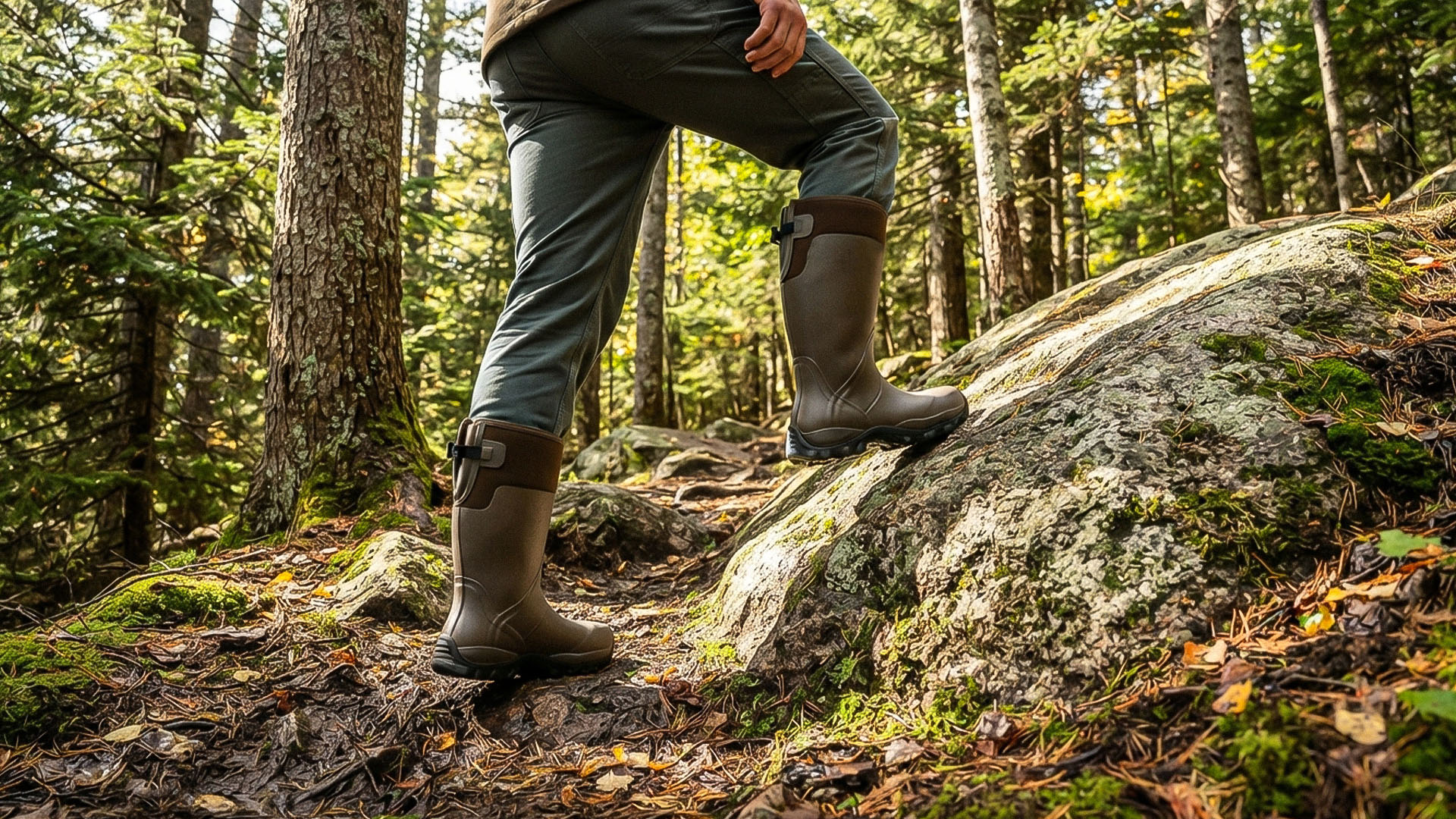
Hunters may benefit from waterproof hunting boots for grouse hunting that provide secure heel retention, dependable wet-ground traction, and enough support for all-day young-forest walking without unnecessary bulk.
Waterproofing Matters
Moisture may come from:
- Rain
- Dew
- Wet brush
- Mud
- Creek crossings
A hunter can soak non-waterproof boots without ever stepping into standing water.
Lightweight Boots Are Often Ideal
Grouse hunting involves constant movement.
Heavy boots may become tiring.
Balance:
- Protection
- Support
- Weight
Secure Heel Fit Prevents Blisters
Repeated walking on uneven ground exposes poor fit quickly.
Heel slip becomes painful.
Traction Matters on Wet Leaves
A carpet of leaves can slide over:
- Rock
- Clay
- Roots
Short controlled steps improve stability.
Wet Roots Are Extremely Slippery
Avoid stepping directly on exposed smooth roots when possible.
Fallen Logs Are Worse After Rain
Wet bark can be almost frictionless.
Step over carefully or walk around.
Moderate Ankle Support Helps
Young forests hide:
- Holes
- Stumps
- Rocks
beneath leaves.
Support can reduce fatigue and improve control.
Tall Rubber Boots Can Work in Wet Lowlands
Where habitat contains:
- Alder swamp
- Mud
- Shallow water
rubber boots may be practical.
Fit Still Matters
Loose rubber boots create heel movement over long distances.
Lace-Up Waterproof Boots May Be Better on Hills
Where hunting includes:
- Rolling terrain
- Long road walks
- Rocky slopes
supportive lace-up boots may provide better control.
Choose Footwear for the Entire Hunt
One wet creek crossing should not determine your whole setup.
Think about:
- Distance
- Terrain
- Temperature
- Mud depth
Gaiters Can Help
Gaiters may keep:
- Wet vegetation
- Leaves
- Snow
- Seeds
out of boots.
Early Snow Changes Grouse Hunting
Fresh snow can reveal:
- Tracks
- Movement
- Feeding areas
and make birds easier to locate indirectly.
Snow Also Changes Cover Value
Birds may use:
- Conifers
- Dense young forest
more heavily during harsh weather.
Deep Snow Can Concentrate Travel
Certain roads, edges, and packed routes may become easier for both birds and hunters.
Snow-Covered Logs Become Dangerous
Footing can be difficult to read.
Move slowly.
Winter Cold Changes Daily Activity
Birds may remain in protected cover longer.
Sunny periods can become productive.
South-Facing Slopes Can Warm Earlier
During cold conditions, these areas may provide:
- Warmer microclimate
- Exposed feeding opportunities
Conifer Shelter Matters During Wind
Evergreen cover reduces:
- Wind
- Snow accumulation
and may attract birds during severe weather.
Navigation Can Be Surprisingly Difficult
Young cuts often remove long-distance visibility.
One stand can look identical to the next.
Offline Maps Are Useful
Download:
- Logging roads
- Property boundaries
- Wetlands
- Timber cuts
before hunting.
Recent Satellite Imagery Can Save Time
Young forest changes quickly.
Old imagery may show a clearcut that has already matured.
Forestry Maps Can Be Valuable
Where publicly available, timber-age or harvest information can help locate:
- Recent cuts
- Regeneration
Mark the Vehicle
A hunter following roads and cuts can wander farther than expected.
Save the parking location.
Carry a Headlamp
Late recoveries and long walks can extend past daylight.
Logging Roads Can Be Confusing in Darkness
Multiple intersections may look identical.
Use navigation before guessing.
Cell Service May Be Weak
Northern forest hunting often occurs far from reliable coverage.
Plan accordingly.
Property Boundaries Matter
Grouse habitat may cross:
- Public forest
- Private timber
- Farms
Know legal access.
Timber Company Land May Have Special Rules
Some properties may allow hunting but restrict:
- Vehicles
- Gates
- Camping
Check current policies.
Closed Gates Must Be Respected
A gated road may allow foot access—or may not.
Verify before entering.
Do Not Block Logging Operations
Active forest roads may carry:
- Trucks
- Equipment
Park only where permitted.
Fresh Logging Operations Create Hazards
Heavy equipment areas may contain:
- Slash
- Deep ruts
- Machinery
Stay clear of active operations.
Private Land Requires Permission
Do not assume a forest road means public access.
Public Land Can Offer Excellent Grouse Habitat
State forests, national forests, and wildlife areas may contain extensive young forest.
Look for:
- Recent timber management
- Aspen regeneration
- Alder drains
Hunting Pressure Can Change Bird Behavior
Easy cover near parking may receive repeated pressure.
Later-season birds may use:
- Denser cuts
- Remote road systems
Distance Alone Does Not Guarantee Birds
A perfect covert near the road may still be better than poor habitat two miles in.
Habitat quality comes first.
Positive Identification Matters
Depending on region, ruffed grouse habitat may overlap with:
- Spruce grouse
- Other upland birds
Know local species.
Ruffed Grouse Have Distinctive Features
Study:
- Tail pattern
- Overall plumage
- Body shape
- Flight behavior
through official identification resources.
Color Varies
Ruffed grouse can show different color phases.
Do not rely on one photograph.
Habitat Helps but Does Not Replace Identification
A grouse in young aspen may likely be ruffed grouse in suitable range.
Still confirm visually.
Regulations Vary by Jurisdiction
Before hunting, verify current official:
- Season dates
- Bag limits
- Possession limits
- License requirements
- Public-land rules
- Dog regulations
Different Grouse Species May Have Different Rules
Do not assume all grouse share:
- Seasons
- Limits
Public Properties Can Add Restrictions
Individual areas may regulate:
- Ammunition
- Vehicle access
- Hunting zones
Overlapping Big-Game Seasons Matter
Hunter-orange requirements may apply during certain periods.
Check current local rules.
Forest Safety Becomes More Important During Deer Season
Other hunters may be using the same timber.
Maintain visibility and awareness.
Never Shoot at Uncertain Movement
Dense cover can hide people.
Positive identification is mandatory.
Habitat Conservation Is Central to Ruffed Grouse
Young forest does not remain young forever.
Without disturbance, stands mature.
Forest Succession Constantly Moves Habitat
A great covert today may become poor grouse habitat in ten or twenty years.
Meanwhile, another cut may become excellent.
Active Forest Management Can Create Habitat Diversity
Timber harvest, natural disturbance, and other management can produce multiple forest age classes.
Diverse Forests Support More Wildlife
A landscape containing:
- Young forest
- Mature timber
- Wetland
- Conifer
can benefit many species.
Aspen Regeneration Is Especially Valuable in Many Regions
Healthy aspen systems provide important habitat for grouse and other wildlife.
Responsible Hunters Should Respect Regeneration
Do not damage young trees unnecessarily.
Stay on Legal Roads With Vehicles
Avoid creating new tracks through forest habitat.
Pick Up All Trash
Leave no:
- Food wrappers
- Shell packaging
- Dog supplies
behind.
Recovery Can Be Difficult
A downed grouse can disappear in:
- Ferns
- Leaves
- Brush
- Fallen timber
Mark the fall immediately.
Watch the Bird All the Way Down
Do not immediately search for another bird.
Pick a landmark.
Use Multiple Landmarks
Choose:
- Large aspen
- Road edge
- Log pile
- Brush opening
Dogs Are Extremely Valuable for Recovery
A trained dog can find birds hidden in thick vegetation.
Give it room to work.
Do Not Trample the Entire Area First
Human scent and disturbed cover can make recovery harder for the dog.
Without a Dog, Search Methodically
Begin at the marked point.
Work:
- Small circles
- Parallel passes
Birds Can Fall Farther Than Expected
A grouse hit in flight may carry momentum through the trees.
Search beyond the first visual point.
Dense Leaves Can Hide a Bird Completely
Look under:
- Ferns
- Downed branches
- Leaf piles
Ethical Shot Selection Improves Recovery
A bird disappearing behind dense brush may create a poor opportunity.
Let uncertain shots pass.
Warm Early Seasons Require Prompt Game Care
Temperatures may still be mild.
Keep harvested birds:
- Clean
- Cool
according to current food-safety guidance.
Cold Weather Still Requires Clean Handling
Mud and wet leaves can contaminate game.
Use appropriate storage.
Common Ruffed Grouse Hunting Mistakes
Hunting Mature Open Woods All Day
Young dense forest is usually more important.
Ignoring Aspen Age
Not every stand provides the same structure.
Walking Too Fast
Birds may hold tightly and flush behind you.
Skipping Logging-Road Edges
These transitions can be productive.
Avoiding Alder Because It Is Difficult
Moist dense edges can hold birds.
Wearing Heavy or Non-Waterproof Boots
Wet forest rewards light waterproof mobility.
Letting Dogs Range Too Far
Dense cover eliminates visibility quickly.
Giving Up on a Good Covert After One Quiet Walk
Weather and daily movement can change bird location.
Frequently Asked Questions
Where do ruffed grouse usually live?
Ruffed grouse commonly use young and mixed forests containing aspen, birch, alder, regenerating timber cuts, conifer cover, creek bottoms, and brushy logging-road edges.
Are young aspen stands good for grouse hunting?
Yes. Young and intermediate-age aspen can provide dense security, feeding opportunities, and suitable forest structure for ruffed grouse.
Are logging roads good places to hunt grouse?
They can be excellent scouting and hunting corridors because they create edges, open vegetation, grit, feeding opportunities, and easier access between young forest stands.
Is grouse hunting good after rain?
It can be. Wet leaves reduce hunter noise, mud can reveal fresh tracks, and birds may concentrate in protected cover after poor weather.
Can you hunt ruffed grouse without a dog?
Yes. Slow still-hunting through aspen cuts, logging-road edges, alder transitions, and other young forest habitat can be effective without dogs.
What boots are best for grouse hunting?
Lightweight waterproof hunting boots with secure heel fit, dependable traction on wet leaves, mud, roots, and logs, and moderate support for long forest walks are practical.
Why do ruffed grouse like young forests?
Young forests provide dense stems, ground-level security, food resources, and escape cover that become less abundant as many stands mature.
Do ruffed grouse regulations vary?
Yes. Seasons, limits, licenses, species rules, hunter-orange requirements, dog rules, and public-land restrictions may vary by jurisdiction. Hunters should verify current official regulations before hunting.
Final Thoughts
Ruffed grouse hunting teaches hunters to see forest age instead of simply seeing trees.
One mature stand looks beautiful but offers little low cover.
One ten-year-old aspen cut looks impossible to walk through and holds birds.
One alder edge stays damp.
One logging road creates food and grit.
One conifer pocket becomes valuable when the wind begins to blow.
Those details define the hunt.
Find young forest.
Walk the edges.
Check alder.
Use logging roads to connect cover.
Slow down.
Watch the dog.
Expect a flush when visibility is worst.
Wear boots that let you cross wet leaves, mud, creek edges, roots, logging roads, fallen timber, and hours of soaked young forest without forcing you toward the easiest cover.
And when a grouse erupts from a stand of saplings so thick you almost decided to walk around it, remember the lesson.
The cover was difficult for you.
That is exactly why the bird chose it.
