
American black duck country can look almost featureless from a road.
Miles of marsh grass.
A few tidal creeks.
Mud flats exposed at low tide.
Open bays beyond the grass.
Nothing seems to separate one section from another.
Then the tide begins moving.
A narrow creek fills.
Small pools reconnect.
Ducks appear from behind a grass island.
A pair drops into a protected pocket that looked completely empty twenty minutes earlier.
That is salt marsh hunting.
The marsh is not static.
It changes constantly.
Water rises.
Water falls.
Mud appears.
Channels deepen.
Flight lines shift.
Access routes disappear.
Successful black duck hunters learn that the tide controls almost everything.
The best hunting is often not about finding “duck water.”
It is about understanding:
- Tide stage
- Creek depth
- Feeding flats
- Protected pockets
- Wind
- Roosting habitat
- Safe access
Once those pieces are connected, the marsh begins to make sense.
American Black Ducks Are Birds of Coastal Wetlands
American black ducks use a variety of wetland habitats across parts of eastern North America.
Productive coastal environments may include:
- Salt marshes
- Tidal creeks
- Brackish wetlands
- Mud flats
- Coastal ponds
- River mouths
- Shallow bays
- Marsh islands
The most important feature is usually not open water alone.
It is the relationship between water, food, protection, and tide.
Start With the Tide
In tidal marshes, water level controls what habitat is available.
At low tide:
- Mud flats may be exposed
- Small creeks may become shallow
- Feeding areas may appear
At high tide:
- Marsh edges flood
- Small pools reconnect
- Birds may move into grass-lined pockets
Timing matters.
The Same Marsh Can Hunt Completely Differently Six Hours Later
A location that is perfect at one tide stage may become:
- Too deep
- Too shallow
- Inaccessible
later.
Always understand the tide cycle before entering.
Low Tide Reveals the Structure
When water drops, hunters can see features hidden at high tide.
Look for:
- Creek channels
- Mud banks
- Mussel beds
- Shallow flats
- Drainage cuts
These features can explain where birds feed when water returns.
High Tide Opens New Water
As the tide rises, water may push into:
- Grass edges
- Small potholes
- Marsh ponds
Black ducks may move with it.
Watch how birds relocate.
Falling Tide Can Concentrate Feeding
As water drains, food may become accessible along:
- Mud edges
- Shallow channels
- Exposed flats
Birds may follow these areas.
Rising Tide Can Push Ducks Toward Marsh Edges
Flooding can give birds access to previously dry habitat.
Search the first flooded vegetation.
Tidal Creeks Are the Roads of the Marsh
Narrow creeks connect:
- Feeding flats
- Ponds
- Bays
- Marsh interior
Birds may follow these corridors because they offer:
- Protection
- Food
- Navigation
Creek Bends Can Create Productive Pockets
A bend may provide:
- Reduced wind
- Slower current
- Better visibility
These small protected areas deserve attention.
Creek Junctions Can Concentrate Movement
Where two tidal creeks meet, birds may move between several habitat zones.
Watch:
- Entry direction
- Water depth
- Wind exposure
Narrow Creeks Can Be Better Than Big Water
Large open water looks impressive.
But black ducks often use smaller protected channels where they feel secure.
Do not ignore tight marsh water.
Back Creeks Can Receive Less Pressure
Creeks farther from obvious access may hold more birds.
But reaching them safely requires better tide knowledge.
Marsh Ponds Can Be Excellent
Small ponds inside the marsh may provide:
- Calm water
- Food
- Protection from wind
Birds may use them throughout the day.
Not Every Pond Is Connected at Every Tide
A pond that appears open on satellite imagery may become isolated at low water.
Scout access in person.
Mud Flats Can Be Feeding Areas
Exposed or shallow mud can support food resources used by ducks.
Watch where birds repeatedly land during changing tide.
Soft Mud Is Also a Major Hunter Hazard
Salt marsh mud can be:
- Deep
- Sticky
- Unstable
A surface that looks firm may collapse under body weight.
Never Assume Grass Means Solid Ground
Marsh grass can grow above extremely soft substrate.
Test uncertain footing.
Mud Suction Can Trap Boots
Each step may require extra effort.
Loose footwear can nearly pull off.
Secure fit is critical.
Salt Marsh Hunting Is a Serious Footwear Test
A typical black duck hunt may involve:
- Sticky mud
- Tidal water
- Wet marsh grass
- Cold wind
- Creek crossings
- Shell-covered flats
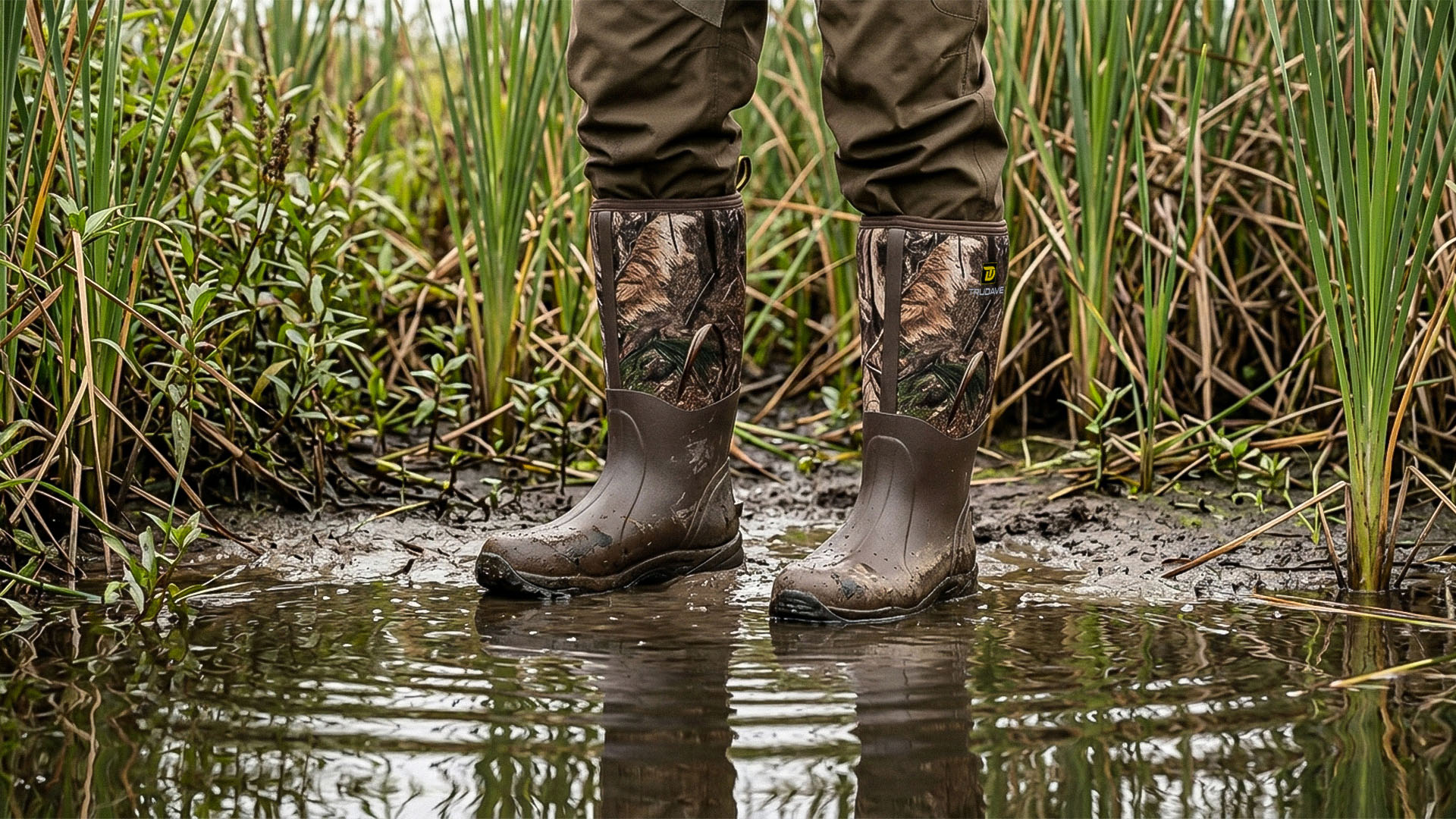
Hunters working these environments may benefit from waterproof hunting boots for salt marsh hunting that provide secure heel retention, dependable mud traction, and enough waterproof protection for repeated travel through wet coastal terrain.
Tall Rubber Boots Can Work in Shallow Marsh
Where water remains below boot height, rubber hunting boots provide excellent protection from:
- Mud
- Salt water
- Wet vegetation
But tide changes must be considered.
Boot Height Is Not the Same as Safe Water Depth
A creek may rise above the boot quickly.
Do not rely on footwear to solve a bad crossing decision.
Waders May Be Necessary
Deeper tidal areas may require properly fitted hunting waders.
They provide greater waterproof protection.
They do not make deep water safe.
Waders Do Not Prevent Falls
Soft mud, channels, and drop-offs remain dangerous.
Use conservative routes.
Never Enter Unknown Tidal Water Blindly
Dark creek water can hide:
- Deep cuts
- Oyster shells
- Sudden drop-offs
Scout in daylight first.
A Walking Stick Can Help
A sturdy stick allows hunters to test:
- Mud depth
- Creek bottom
- Bank stability
before committing weight.
Hidden Channels Are Common
Small drainage cuts may be invisible beneath high water.
At low tide, they can appear several feet deep.
Learn the marsh before hunting it.
Oyster Shells Can Be Sharp
Coastal flats may contain shell beds capable of cutting:
- Boots
- Waders
- Dog paws
Move carefully.
Wader Damage Can Become Serious Quickly
A small puncture in cold salt water can create a major problem.
Inspect gear before the hunt.
Carry a Repair Kit
A compact wader repair system can be valuable on remote coastal hunts.
Rinse Salt From Gear
Salt water can accelerate wear on:
- Zippers
- Hardware
- Footwear
- Equipment
Rinse and dry gear after hunting.
Tides Affect Access More Than Birds
A creek crossed easily on foot at low tide may be impossible several hours later.
Always plan the return.
Never Plan Only the Walk In
Ask:
What will this route look like at the expected tide when I leave?
That question can prevent serious problems.
Tide Tables Are Planning Tools, Not Guarantees
Wind and weather can influence actual water levels.
Use tide information together with current conditions.
Strong Onshore Wind Can Push Water Higher
Coastal wind can increase water depth beyond what hunters expect.
Be conservative.
Offshore Wind Can Pull Water Down
The marsh may drain lower than normal.
This can leave:
- Boats grounded
- Creeks too shallow
for the planned exit.
Weather and Tide Work Together
A hunt should consider:
- Tide
- Wind
- Rain
- Temperature
as one system.
Wind Is Critical for Duck Movement
Black ducks may shift toward sheltered water during strong weather.
Leeward marsh pockets can become more attractive.
Strong Wind Can Change Flight Lines
Birds may approach:
- Lower
- Faster
- From unexpected directions
Watch actual behavior.
Calm Days Can Make Birds More Cautious
With little wind, ducks may circle longer before landing.
Movement becomes easier for them to detect.
Concealment Matters
Open marsh provides little vertical cover beyond grass.
Minimize:
- Standing
- Sudden movement
- Bright equipment
Use Natural Marsh Structure
Grass islands and low banks can help break the hunter’s outline.
Do not damage vegetation unnecessarily.
Avoid Overbuilding a Setup
A huge unnatural profile can be obvious in flat coastal terrain.
The marsh itself should provide much of the concealment.
Black Ducks Can Be Cautious
Pressured birds may:
- Circle high
- Land outside the setup
- Avoid heavily hunted creeks
Recent bird behavior matters.
Scouting Pressure Can Hurt the Hunt
Do not repeatedly walk through the exact marsh pocket birds are using.
Observe from distance when possible.
Watch Flight Lines at Dawn and Dusk
These periods can reveal movement between:
- Feeding areas
- Resting water
- Roost habitat
Note the Direction, Not Just the Number of Birds
Where birds come from and where they go tells you how the marsh functions.
One Pair Can Reveal a Pattern
Even a small number of birds using the same route repeatedly can identify a valuable creek.
Weather Can Bring New Birds
Migration and regional movement can change bird numbers quickly.
A quiet marsh may become productive after changing conditions.
Do Not Judge a Marsh From One Hunt
Good habitat can be empty temporarily.
Revisit after:
- Weather changes
- Tide changes
- Migration movement
Cold Fronts Can Alter Activity
New weather may shift birds into protected coastal habitat.
Rescout.
Freeze-Up Changes Freshwater Availability
As inland ponds freeze, coastal or brackish water may become more important in some regions.
Bird distribution can change.
Salt Marsh Rarely Freezes the Same Way as Inland Water
Tide and salinity influence ice formation.
But ice can still develop.
Tidal Ice Is Dangerous
Ice broken by moving water can be:
- Unstable
- Sharp
- Difficult to cross
Never assume it is safe.
Floating Ice Can Damage Boats and Gear
Cold-weather coastal hunts require additional caution.
Fog Can Be Extremely Dangerous
Flat marshes lose nearly all landmarks in fog.
A hunter can become disoriented quickly.
GPS and Offline Maps Are Essential
Download:
- Marsh boundaries
- Creeks
- Access points
- Property lines
before hunting.
Mark the Boat or Vehicle
Save exact access locations before entering the marsh.
Use Multiple Navigation Methods
Electronics can fail.
Carry backup navigation appropriate to the remoteness.
Headlamps Are Essential
Many waterfowl hunts begin and end in darkness.
Carry:
- Primary headlamp
- Backup light
- Spare power
Darkness Makes Mud Harder to Read
Pre-dawn walking should follow a route already scouted in daylight.
Never Make the First Marsh Entry in Complete Darkness
Learn:
- Creek depth
- Mud
- Ditches
- landmarks
before hunting the area.
Small Boats Can Be Valuable
Where legal and appropriate, shallow-draft boats may provide access through tidal creeks.
Boating adds another layer of planning.
Know the Tide Before Launching
A creek deep enough at launch may be nearly dry on return.
Or the opposite.
Grounding Can Trap Hunters
A boat sitting in mud may remain stuck until water returns.
Plan carefully.
Do Not Overload Small Boats
Hunters, dogs, decoys, and gear add weight quickly.
Follow capacity limits.
Wear Appropriate Flotation Equipment
Cold coastal water can be dangerous within minutes.
Use current boating-safety guidance.
Cold Water Requires Conservative Decisions
A short crossing is still cold water.
Avoid unnecessary risks.
Saltwater Corrosion Affects Boats Too
Rinse:
- Motors
- Hardware
- Electronics
after exposure according to manufacturer guidance.
Dogs Can Be Valuable for Recovery
A trained retriever may help recover birds in:
- Marsh grass
- Tidal creeks
- Shallow bays
But salt marshes present unique hazards.
Mud Exhausts Dogs
Dogs pushing through soft bottom use enormous energy.
Monitor fatigue.
Tidal Channels Can Trap Dogs
A creek easy to cross on the way out may become much deeper later.
Keep dogs under control.
Oyster Shells Can Cut Dog Paws
Check feet after crossing shell beds.
Salt Water Is Not Drinking Water
Carry fresh water for dogs.
Do not allow them to rely on seawater.
Cold Salt Water Can Chill Dogs Quickly
Monitor:
- Shivering
- Reduced coordination
- Fatigue
Provide warm recovery periods.
Warm Early-Season Coastal Hunts Can Also Overheat Dogs
Humidity and mud increase effort.
Bring water and provide rest.
Marsh Grass Can Hide Dogs Completely
Use appropriate visibility or tracking systems where legal.
Maintain reliable recall.
Recovery Begins With Marking the Fall
A black duck can disappear in:
- Marsh grass
- Mud
- Tidal current
very quickly.
Watch every bird to the ground.
Use Fixed Landmarks
Mark the fall relative to:
- Creek bend
- Grass island
- Bank cut
- Pole or tree
Tide Can Move Birds
Current may shift a downed bird rapidly.
Account for water direction.
Wind Can Push Birds Too
Current and wind may act together.
Start recovery promptly.
Dense Grass Makes Visual Recovery Difficult
A bird can disappear only a few yards into marsh vegetation.
Dogs may be especially useful.
Do Not Rush Into Deep Mud
Recovery matters.
So does hunter safety.
Take the safest route.
Ethical Shot Selection Should Consider Recovery
A bird flying toward:
- Deep channel
- Strong current
- Unsafe private land
may create a poor recovery situation.
Let uncertain opportunities pass.
Species Identification Is Essential
American black ducks can be confused with other dabbling ducks, especially under:
- Low light
- Distance
- Mixed flocks
Hunters need strong identification skills.
Black Ducks and Mallards Can Look Similar
Study differences involving:
- Overall coloration
- Wing pattern
- Head and body contrast
- Bill characteristics
using current official resources.
Hybrids Can Complicate Identification
Where black ducks and mallards overlap, hybrid appearance can make field identification more challenging.
Use current agency guidance.
Do Not Identify by Darkness Alone
Lighting can make many ducks look dark.
Use multiple characteristics.
Mixed Flocks Require Extra Attention
A flock may contain several species.
Do not assume every bird follows the first bird’s identity.
Low-Light Coastal Hunting Makes ID Harder
If identification is uncertain:
Do not shoot.
Black Duck Regulations Can Be Restrictive
American black ducks are migratory game birds and may be subject to species-specific limits within broader duck regulations.
Before hunting, verify current official:
- Season dates
- Daily bag limits
- Possession limits
- Species-specific restrictions
- Legal shooting hours
- License and stamp requirements
- Non-toxic ammunition rules
- Property-specific regulations
Do Not Use Last Year’s Regulations
Migratory bird regulations can change annually.
Always check the current season.
Species-Specific Limits Matter
A general duck limit does not necessarily mean the same number is allowed for every species.
Know the black duck limit specifically.
Public Marshes May Add More Rules
Wildlife refuges and management areas may regulate:
- Hunting days
- Entry
- Boats
- Blind locations
- Permits
Check the exact property.
Non-Toxic Ammunition Requirements Apply
Waterfowl hunting requires attention to legal ammunition rules.
Use current official guidance.
Shooting Hours Must Be Confirmed
Do not begin because someone else starts shooting.
Know the legal time yourself.
Coastal Property Boundaries Can Be Complicated
Marshes may include:
- Public water
- Private marsh
- Refuge boundaries
that are difficult to see.
Use reliable maps.
Water Does Not Erase Ownership
A boat or hunter crossing a creek may still enter restricted property.
Know boundaries.
Refuge Closures Must Be Respected
Some nearby wetlands may function as protected resting areas.
Do not enter closed zones.
Marsh Ownership Can Look Continuous
Grass and water may appear identical across a boundary.
Digital mapping and posted rules matter.
Private Marsh Access Requires Permission
Clarify:
- Boat routes
- Parking
- Retrieval
- Hunting zones
before the hunt.
Respect Working Coastal Properties
Salt marshes may overlap with:
- Farms
- Aquaculture
- Commercial waterways
Do not interfere with equipment.
Channels May Be Used by Other Boats
Maintain awareness of:
- Fishermen
- Commercial traffic
- Other hunters
before shooting across water.
Open Water Is Not a Backstop
Know what lies beyond every bird.
Do not shoot toward:
- Boats
- Roads
- Buildings
Low Birds Make Background Awareness Critical
Waterfowl may cross only a few feet above the marsh.
Confirm safe direction every time.
Partner Positions Must Stay Clear
Marsh grass and creeks can separate hunters visually.
Maintain communication.
Do Not Relocate Without Telling Partners
Even a short move can create unsafe angles.
Decoy Placement Should Consider Tide
A shallow set at low tide may become:
- Too deep
- Shifted by current
later.
Plan for changing water.
Rising Tide Can Move Equipment
Secure gear appropriately.
Do not leave loose items where current can carry them away.
Current Can Drag Anchored Gear
Check placement periodically.
Mud Makes Decoy Setup Harder
Repeated walking through deep mud wastes energy.
Keep setups efficient.
Travel Light When Possible
Salt marsh walking is exhausting.
Every extra pound matters.
Wet Gear Gets Heavier
Waterlogged bags and equipment increase pack weight.
Use water-resistant storage.
Salt Marsh Weather Can Feel Colder Than the Forecast
Wind plus moisture increases heat loss.
Dress for exposure.
Layering Is Important
Hunters may alternate between:
- Hard walking through mud
- Long stationary waits
Avoid overheating during access.
Cold Sweat Becomes a Problem Later
Open clothing during the walk.
Add insulation once settled.
Windproof Layers Matter
Coastal wind can penetrate light clothing quickly.
Protect the core.
Gloves Need Water Resistance
Wet hands lose heat quickly.
Carry a dry backup pair.
Hats and Face Protection Help
Open marsh provides no windbreak.
Protect exposed skin.
Rain Can Be Relentless
Coastal systems may bring:
- Wind-driven rain
- Mist
Waterproof outerwear should be accessible.
Salt Marsh Hunting Can Be Physically Demanding
The terrain may appear flat.
But soft mud can make every hundred yards feel much longer.
Do Not Estimate Distance Only From Maps
A half-mile through firm ground is very different from a half-mile through marsh mud.
Plan conservatively.
Save Energy for the Return
The tide and weather may make the walk out harder than the walk in.
Hydration Still Matters in Cold Weather
Hunters lose fluids even in cool coastal conditions.
Carry water.
Bring Food on Longer Hunts
Cold wind and hard walking increase energy use.
Common American Black Duck Hunting Mistakes
Ignoring the Tide
Salt marsh habitat changes constantly.
Hunting Only Big Open Water
Protected creeks and ponds can be more productive.
Entering Unknown Mud Before Scouting
Soft substrate and hidden channels can be dangerous.
Wearing Loose Boots
Mud suction punishes poor heel retention.
Assuming Waders Make Deep Water Safe
They do not.
Ignoring the Return Tide
Access can completely change during the hunt.
Misidentifying Dark Ducks
Black duck and mallard identification requires careful study.
Using Old Migratory-Bird Regulations
Species-specific limits and property rules must be checked every season.
Frequently Asked Questions
Where do American black ducks usually live?
American black ducks may use salt marshes, tidal creeks, brackish wetlands, coastal ponds, shallow bays, river mouths, and other wetland habitats across parts of eastern North America.
Are tidal creeks good places to hunt black ducks?
They can be. Tidal creeks connect feeding flats, marsh ponds, and larger water while providing protected movement corridors.
Does tide matter for black duck hunting?
Yes. Tide stage affects water depth, food availability, access, landing areas, and how ducks move through the marsh.
Are mud flats useful black duck habitat?
Shallow or exposed mud flats can provide feeding opportunities, especially when connected to protected marsh water.
What boots are best for salt marsh duck hunting?
Tall waterproof hunting boots with secure heel retention and strong mud traction can work in shallow marsh conditions. Deeper tidal water may require properly fitted hunting waders.
Are waders necessary for black duck hunting?
Not always. It depends on water depth, tide, access, and marsh structure. Hunters should choose footwear based on actual conditions rather than assuming every salt marsh requires chest waders.
Why are American black ducks difficult to identify?
Their dark appearance can resemble mallards or other dabbling ducks under poor light, and mixed flocks or hybrids can complicate identification. Hunters should study current official waterfowl identification materials.
Do black duck hunting regulations vary?
Yes. American black ducks may have species-specific migratory-game-bird limits and season rules. Hunters should verify current federal, state, provincial, and property-specific regulations before hunting.
Final Thoughts
American black duck hunting teaches hunters that a salt marsh is never really still.
The grass stays in place.
Everything else changes.
One tide exposes a mud flat.
The next floods the grass.
One creek becomes shallow enough to walk.
Hours later it becomes too deep.
One protected pond fills with birds when the wind rises.
Another sits empty after the tide turns.
That constant change is the hunt.
Learn the tide.
Scout the creeks.
Watch protected pockets.
Study mud flats.
Respect refuge boundaries.
Carry fresh water for dogs.
Know the difference between a black duck and a mallard before legal shooting time.
Wear boots that let you cross salt-marsh mud, wet grass, shell flats, shallow creeks, and tidal edges without losing traction or allowing suction to pull your feet out of your footwear.
And when a pair of black ducks suddenly drops into a creek that was barely water a few hours earlier, remember the lesson.
In coastal marsh hunting, the birds are not only following habitat.
They are following water that is constantly rebuilding the habitat around them.
