
Bobwhite quail habitat can look almost too simple.
Open grass.
Scattered pine trees.
A few blackberry patches.
An old fence row.
A weedy field corner.
Nothing about the landscape seems capable of hiding an entire covey.
Then the dog stops.
Tail high.
Body frozen.
The hunter steps forward.
For one second, the field remains silent.
Then the ground seems to explode.
Ten birds erupt at once.
Some fly left.
Some fly right.
Several disappear behind pine trunks before the hunter has fully processed what happened.
That is bobwhite quail hunting.
These birds survive by combining three things extremely well:
- Feeding habitat
- Ground-level cover
- Fast escape routes
The best quail country is rarely one uniform field.
It is a patchwork.
Grass beside brush.
Open pine beside weeds.
A food-rich field edge beside a thick escape thicket.
Successful hunters stop looking for “quail fields.”
They start looking for the small transitions that allow a covey to feed, rest, move, and disappear without crossing large areas of dangerous open ground.
Bobwhite Quail Are Edge-Habitat Birds
Northern bobwhite typically benefit from landscapes containing a mixture of:
- Native grasses
- Forbs
- Brush
- Open woodland
- Weedy field borders
- Shrubby cover
- Bare ground
The exact vegetation differs by region.
The structure matters most.
Quail need enough openness to move and feed at ground level.
They also need dense security cover nearby.
Uniform Grass Is Not Always Good Quail Habitat
A huge field of grass can look perfect.
But if vegetation is too thick at ground level, birds may have difficulty moving.
Likewise, a field that is too short and open may provide little protection.
The best habitat often contains variation.
Think in Patches
Good quail country may contain:
- Short vegetation
- Taller bunchgrass
- Bare soil
- Weedy feeding areas
- Brush piles
all within a relatively small space.
That patchiness gives birds options.
Ground-Level Structure Matters More Than Tree Height
Hunters often look at the canopy.
Quail live primarily near the ground.
Ask:
Can a bird move beneath the vegetation?
Can it hide quickly?
Can it reach food?
That perspective makes habitat easier to read.
Open Pine Savannas Can Be Excellent
Southern pine systems managed with an open understory can provide valuable quail habitat.
Useful structure may include:
- Pine overstory
- Native grass
- Forbs
- Scattered shrubs
These landscapes can combine feeding and escape cover effectively.
Dense Pine Plantations Can Be Less Useful
A closed-canopy pine stand with little ground vegetation may provide fewer feeding opportunities.
Likewise, extremely dense young pine can become difficult to hunt.
Look for structural diversity.
Fire Can Shape Quail Habitat
In appropriate ecosystems, prescribed fire can help maintain:
- Open ground
- Native grasses
- Forbs
- Early-successional vegetation
Habitat quality often depends on keeping the landscape from becoming uniformly dense.
Recently Burned Areas Can Be Worth Scouting
After vegetation responds, burned areas may produce:
- New forbs
- Seeds
- Insects
that benefit quail.
The ideal stage varies with local conditions.
Firebreaks Can Reveal Bird Movement
Bare or lightly vegetated firebreaks can create:
- Feeding space
- Travel lanes
- Scouting visibility
Look for tracks or dusting activity.
Field Borders Are Classic Quail Habitat
Agricultural margins often contain:
- Ragweed
- Grasses
- Blackberry
- Shrubs
that differ from the crop field itself.
These narrow strips may be more important than hundreds of acres of crop.
Hunt the Edge, Not the Entire Field
A broad agricultural field may offer food.
But quail usually want security nearby.
Focus on the first band where:
- Crop
- Grass
- Brush
meet.
Weedy Corners Can Hold Coveys
Modern equipment often cannot farm every corner efficiently.
Those leftover areas may become filled with:
- Weeds
- Seeds
- Brush
which can create excellent quail habitat.
Fencerows Can Connect Cover
A narrow brushy fence line may link:
- Field corner
- Pine woods
- Food plot
- Creek edge
Quail can use it as a protected travel route.
Hunt Both Ends of a Fence Row
Coveys pressured along linear cover may move toward the thicker habitat at either end.
Do not lose focus near the end of the strip.
That final brush pile or plum thicket may hold the birds.
Hedgerows Can Be Even Better
Shrubby hedges provide:
- Overhead protection
- Escape cover
- Feeding edges
while connecting larger habitat blocks.
Walk the adjacent grass carefully.
Plum and Shrub Thickets Can Be Critical
Dense woody cover may provide important escape and loafing habitat.
Birds may feed in open ground nearby and retreat into shrubs when disturbed.
Do Not Push Blindly Through the Thickest Brush
The outside edge may provide safer and more productive hunting.
Work likely exit points.
Let dogs do the locating where appropriate and legal.
Brush Piles Can Hold Birds
Woody debris can create excellent security.
Quail may use:
- Fallen limbs
- Stacked branches
- Logging tops
especially when surrounded by feeding habitat.
Approach Brush Piles Carefully
Old farm debris may contain:
- Wire
- Nails
- Unstable wood
Do not step or reach blindly into piles.
Old Homesteads Can Create Great Habitat
Abandoned rural properties sometimes contain:
- Overgrown gardens
- Fence rows
- Shrubs
- Grass
that produce diverse early-successional cover.
Always confirm lawful access.
Young Forest Edges Can Be Productive
Recent disturbance may create:
- Saplings
- Briars
- Forbs
that quail use.
The exact value depends on how dense the ground layer becomes.
Mature Closed Forest Is Usually Less Ideal
Large mature trees with little understory may offer limited food and ground cover.
The transition between mature woods and open field is often more useful.
Creek Edges Can Provide Moisture and Cover
Small drainages may support:
- Green vegetation
- Shrubs
- Insects
during dry periods.
Quail may use these corridors without living directly in wet ground.
Hunt Slightly Above the Wettest Bottom
If a creek is muddy or flooded, birds may stay on:
- Dry banks
- Brushy terraces
- Higher grass
nearby.
Rain Can Change Quail Habitat
A storm may:
- Wet grass
- Soften soil
- Fill ditches
and change how hunters and dogs move.
The birds may remain nearby but shift slightly toward drier cover.
Quail Hunting After Rain Can Be Productive
Wet vegetation can improve scenting conditions for dogs in some situations.
It also quiets dry grass and leaves.
But footing becomes more difficult.
Heavy Dew Is Common on Morning Hunts
Southern grasslands can be saturated before sunrise.
A hunter may walk through no standing water and still soak non-waterproof footwear within minutes.
Quail Hunting Is Surprisingly Hard on Boots
A typical hunt may include:
- Dew-soaked grass
- Mud
- Field edges
- Pine needles
- Ditches
- Brush
- Long walking distances
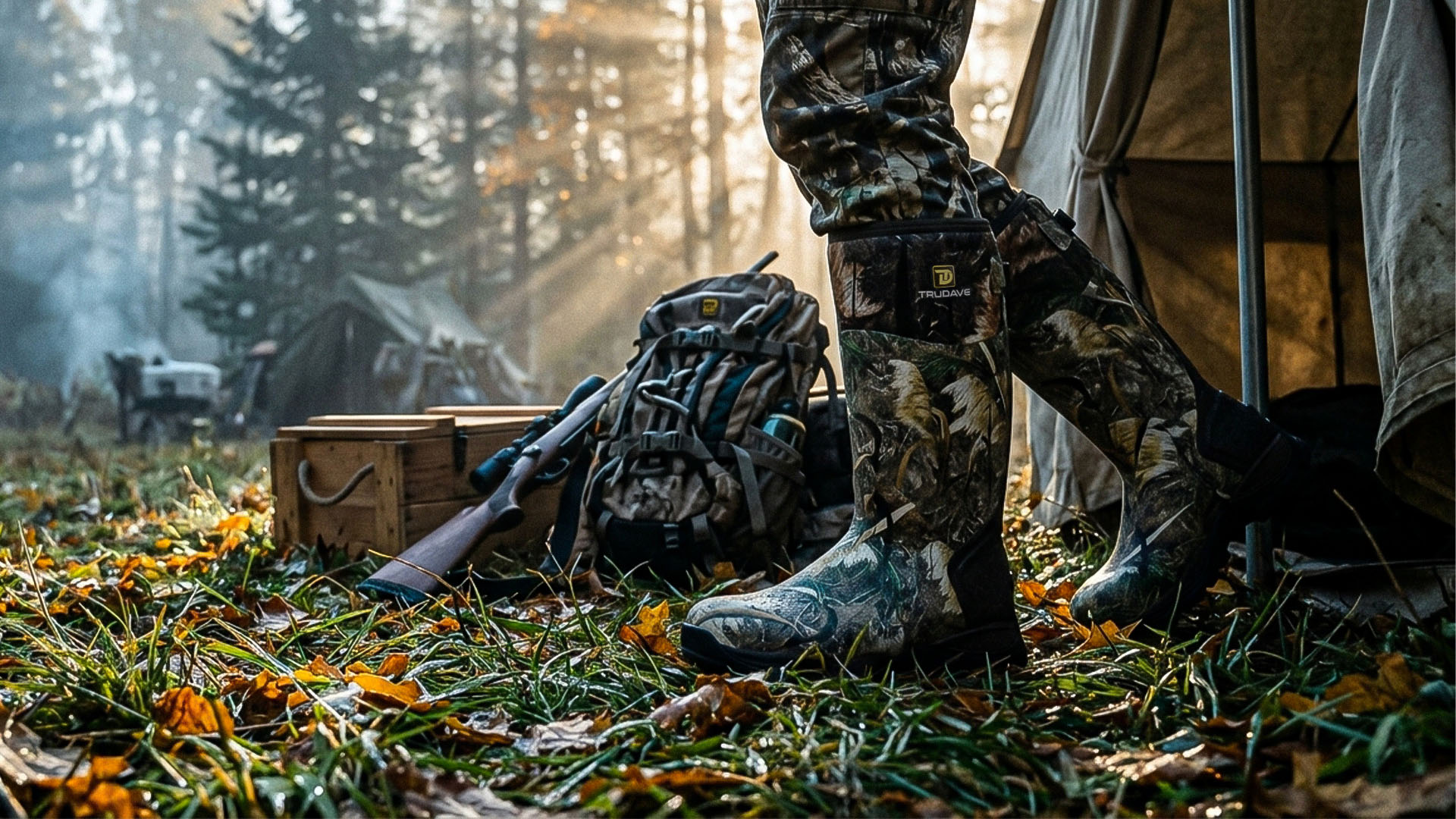
Hunters may benefit from waterproof hunting boots for quail hunting that provide secure heel retention, dependable traction, and enough protection for wet grass and brush without becoming excessively heavy.
Lightweight Boots Usually Make Sense
Bobwhite hunting is active.
Hunters often walk for hours.
Heavy insulated footwear creates unnecessary fatigue in mild weather.
Waterproofing Still Matters
Even warm hunts can involve:
- Heavy dew
- Wet grass
- Mud
- Creek crossings
Dry feet improve comfort over a long day.
Secure Heel Fit Prevents Hot Spots
Continuous walking exposes poor fit quickly.
Heel slip can lead to:
- Blisters
- Reduced mobility
Choose boots that hold the foot securely.
Flexible Support Can Be Better Than Maximum Stiffness
Most quail terrain is less extreme than mountain hunting.
A boot that balances:
- Support
- Flexibility
- Weight
may be more comfortable for constant walking.
Rubber Boots Can Work in Wet Flat Country
Tall rubber hunting boots can be practical around:
- Saturated grass
- Mud
- Shallow ditches
But they should fit well enough for long walks.
Loose Rubber Boots Become Exhausting
Every step creates heel movement.
Over several miles, that friction adds up.
Lace-Up Waterproof Boots Can Be Ideal on Mixed Ground
Where hunts combine:
- Pine forest
- Fields
- Rolling terrain
- Moderate mud
lightweight waterproof lace-ups can provide good all-day mobility.
Choose Footwear for the Whole Day
Do not select boots based on one wet ditch.
Think about:
- Mileage
- Heat
- Brush
- Terrain
- Water depth
Gaiters Can Help With Seeds and Moisture
Low gaiters may reduce:
- Wet grass
- Burrs
- Seeds
entering boots.
Grass Seeds Can Become Miserable
Certain field plants produce seeds that work into:
- Socks
- Boots
- Dog coats
Check frequently.
Burrs Can Slow Both Hunters and Dogs
Do not wait until the end of the day.
Remove irritating debris before it becomes a larger problem.
Briars Are a Major Part of Quail Habitat
The best cover may contain:
- Blackberry
- Greenbrier
- Thorny shrubs
Durable clothing helps hunters remain on productive edges.
Brush Pants Can Improve Mobility
If every thorn patch forces a detour, hunters may miss the exact habitat birds prefer.
Tough pants create more route options.
Gloves Protect Hands
Light gloves help around:
- Briars
- Fence lines
while maintaining dexterity.
Eye Protection Is Valuable
Young branches and thorny cover frequently sit at face height.
Clear protective glasses can help reduce eye injuries.
Dogs Are Central to Many Bobwhite Hunts
Pointing dogs are commonly used because quail can sit extremely tight in grass and brush.
A well-trained dog can locate scent before hunters walk past the covey.
Dog Range Should Match Habitat
Open country may allow a wider-ranging dog.
Tighter brush may require closer control.
The dog should remain manageable.
Coveys Can Move Before the Dog Arrives
Bobwhites may:
- Run
- Shift
- Hold
depending on pressure and conditions.
Hunters should watch the dog carefully.
A Sudden Change in Dog Behavior Matters
A working dog that slows, circles, or becomes intensely focused may be entering scent.
Pay attention.
Do Not Rush the Dog
Let the dog work.
Unnecessary pressure can push birds before hunters reach a safe position.
Once the Dog Points, Prepare Before Moving In
Check:
- Partner position
- Dog position
- Safe background
- Footing
before approaching the birds.
Covey Flushes Can Be Chaotic
A dozen birds may explode from one patch at once.
Do not try to track all of them.
Pick one bird.
Pick One Bird and Stay With It
Firing randomly into the center of a covey is poor practice.
Choose one clear legal bird.
Follow it visually.
Stay Aware of the Dog
Birds may flush low.
The dog may be directly beneath them.
Maintain strict safe shooting angles.
Partner Position Matters Just as Much
Multiple hunters should know:
- Who is left
- Who is right
- Which directions are safe
before entering birdy cover.
Never Swing Through Another Hunter
If the bird crosses the partner’s zone:
Let it go.
Low Birds Are Common
Bobwhites often stay relatively low when they first flush.
That makes ground-level safety essential.
Dense Grass Can Hide People
One hunter may disappear behind vegetation or terrain.
Maintain communication.
Blaze Orange Rules Vary
Follow current local requirements.
High visibility can also help partners keep track of each other in brush.
Mark Where the Covey Lands
After the flush, watch birds as long as possible.
They may scatter into:
- Grass
- Brush
- Pine edge
Use landmarks.
Scattered Singles Can Create Better Opportunities
After a covey breaks apart, individual birds may hold tighter.
This is one reason a careful follow-up can be productive.
Do Not Immediately Run Toward the Landing Area
First:
- Mark several birds
- Regain orientation
- Keep dog under control
Then approach systematically.
Use Multiple Landmarks
One “big pine” is not enough in pine country.
Use combinations like:
- Fence corner
- Lone oak
- Brush patch
- Firebreak
Singles Can Be Difficult to Relocate
A bird may land only a hundred yards away and disappear completely.
Move slowly in the marked zone.
Dogs Are Extremely Useful on Singles
Scattered birds may sit quietly and refuse to move.
Good dog work becomes especially valuable.
Give the Area Time
Do not rush through the landing zone.
Slow coverage produces better results.
Coveys Use Loafing Cover During the Day
Birds may move from feeding areas into:
- Shrubs
- Grass clumps
- Brush
during midday.
Understanding the daily cycle helps locate them.
Early Morning Feeding Can Occur Near Open Ground
Cool conditions may bring birds into:
- Weedy fields
- Seed-rich edges
before they retreat toward security cover.
Midday Can Shift Birds Into Thicker Cover
Warm sun and pressure may push coveys toward:
- Shrub thickets
- Pine shade
Adjust accordingly.
Late Afternoon Can Produce Another Feeding Period
Birds may move again before roosting.
Edges between feeding and cover become valuable.
Covey Roosting Behavior Matters
Bobwhites may roost on the ground.
Avoid unnecessary pressure on known roost areas after legal hunting hours.
Cold Weather Changes Bird Behavior
Coveys depend on group survival during cold conditions.
They may concentrate in:
- Dense cover
- Protected edges
that reduce wind exposure.
Wind Can Make Open Ground Less Attractive
Strong wind may move birds toward:
- Shrubs
- Pine edges
- Low terrain
Search protected cover.
Sunny Edges Can Matter on Cold Days
South-facing brush lines may warm earlier.
Birds may use these locations for feeding or loafing.
Hot Weather Creates Different Problems
Early-season southern hunts can still be warm.
Heat affects both hunters and dogs.
Start Early During Warm Conditions
Morning temperatures are easier on dogs.
Avoid excessive midday exertion.
Carry Plenty of Water
Do not assume:
- Creek
- Pond
water will be available or safe.
Bring enough for both hunters and dogs.
Heat Stress in Dogs Is Serious
Watch for:
- Excessive panting
- Weakness
- Poor coordination
Stop work if the dog becomes overheated.
Shade Breaks Matter
Use:
- Pine shade
- Tree lines
for cooling periods.
Dog Conditioning Should Begin Before Season
An unconditioned dog working dense cover in warm weather can fatigue quickly.
Build fitness gradually.
Paw Conditioning Matters Too
Dogs running across:
- Dry ground
- Gravel
- Pine needles
- Crop stubble
need durable pads.
Check Paws Throughout the Hunt
Look for:
- Cuts
- Seeds
- Burrs
before minor problems become major ones.
Eye Injuries Can Happen in Brush
Check dogs after pushing through:
- Briars
- Saplings
for redness or irritation.
Snake Risk Can Be Relevant
Warm southern quail country may contain venomous snakes depending on region and season.
Watch both:
- Hunter footing
- Dog behavior
Warm Weather Does Not End Snake Activity Automatically
Even later in the year, sunny warm days may produce activity.
Stay alert.
Ticks Can Be Common
Grass and brush can hold ticks.
Use appropriate prevention for:
- Hunters
- Dogs
and perform post-hunt checks.
Fire Ants Can Be a Problem in Parts of the South
Avoid sitting or placing equipment directly on active mounds.
Check ground carefully.
Old Farm Cover Can Hide Wire
Abandoned fence lines may contain:
- Barbed wire
- Woven wire
beneath grass.
This is dangerous for both dogs and hunters.
Do Not Step Over Unknown Vegetation Blindly
Lift grass or approach carefully around old boundaries.
Farm Equipment May Be Hidden Too
Old machinery or irrigation parts can remain in overgrown corners.
Scout where possible.
Logging Debris Creates Similar Hazards
Young pine and cutover habitat may contain:
- Broken limbs
- Stumps
beneath vegetation.
Long Grass Hides Holes
Livestock hoof holes, erosion, and small ditches can be hard to see.
Take controlled steps.
Rain Makes Clay Roads Slick
Southern farm roads can turn into deep mud quickly.
Do not damage access roads.
Walking Is Better Than Rutting the Property
Landowner trust matters more than convenience.
Park where instructed.
Private Land Can Offer Excellent Quail Habitat
Many productive landscapes are actively managed.
Always obtain permission.
Follow rules concerning:
- Parking
- Dogs
- Gates
- Fields
Landowner Relationships Are Especially Important With Dog Hunts
Dogs may range toward:
- Neighboring fields
- Roads
- Livestock
Clarify boundaries before releasing them.
A Dog Crossing a Property Line Does Not Grant Hunting Access
Know local laws and permission rules.
Maintain control.
Public Land Can Hold Quail Too
Depending on region, suitable habitat may occur on:
- Wildlife management areas
- National forests
- Grasslands
- Other public land
Look for early-successional management.
Public Habitat Often Changes
One compartment may be excellent after recent management.
Several years later, another may become better.
Keep scouting.
Habitat Maps Can Help
Look for information about:
- Prescribed burns
- Timber management
- Fields
- Wildlife openings
where publicly available.
Recent Management Is Often More Useful Than Old Reputation
A famous quail area can decline if habitat structure changes.
Current conditions matter.
Hunting Pressure Can Shift Coveys
Birds near roads and easy access may move toward:
- Thicker cover
- Remote field edges
later in the season.
Distance From Parking Is Not Everything
A small overlooked field corner near a road can still hold birds.
Habitat quality matters more than mileage.
Walk Slowly Near High-Quality Cover
Quail may remain motionless until hunters are very close.
Rushing can cause wild flushes.
Listen for Covey Calls
Bobwhites are vocal.
Calls may help confirm birds are present.
Learn current local vocalizations.
Calls Are Useful for Scouting, Not Identification Alone
Always visually identify birds before shooting.
Positive Identification Matters
Quail country may contain other upland birds.
Hunters should recognize local legal species.
Bobwhite Markings Are Distinctive
Study:
- Head pattern
- Body pattern
- Flight style
through official wildlife resources.
Young Birds Can Look Different
Age and sex may affect appearance.
Do not rely on one idealized photograph.
Habitat Helps but Does Not Replace Identification
A bird flushing from grass is not automatically a bobwhite.
Confirm visually.
Regulations Vary by State
Before hunting, verify current official:
- Season dates
- Daily bag limits
- Possession limits
- License requirements
- Dog rules
- Public-land restrictions
Public Properties May Have Different Seasons
A state season does not always mean every wildlife area follows identical dates or methods.
Check the exact property.
Quail Limits Can Differ From Other Upland Birds
Do not assume pheasant, grouse, or quail regulations are interchangeable.
Some Areas May Have Special Management Hunts
Permit systems or limited-access areas may apply.
Review current agency information.
Habitat Conservation Is Central to Bobwhite Recovery
Bobwhite populations depend heavily on habitat structure.
Good landscapes usually require a mixture of:
- Disturbance
- Grass
- Forbs
- Brush
rather than one uniform vegetation type.
Early-Successional Habitat Needs Maintenance
Without disturbance, grass and shrub systems can mature into closed forest.
That changes their value for quail.
Prescribed Fire Can Be an Important Tool
Where applied appropriately by land managers, fire can maintain open pine and herbaceous habitat.
Hunters benefit directly from good habitat management.
Field Borders Can Support Many Species
Weedy margins and shrub edges can also benefit:
- Songbirds
- Pollinators
- Rabbits
- Other wildlife
Avoid Damaging Habitat During the Hunt
Do not drive unnecessarily through:
- Wet fields
- Wildlife plantings
- Native grass
Pick Up All Trash
Leave no:
- Shell boxes
- Food wrappers
- Dog supplies
behind.
Recovery Can Be Difficult
A small quail can disappear quickly in:
- Tall grass
- Pine straw
- Brush
Mark every fall.
Do Not Watch the Remaining Covey Before Marking the First Bird
Choose a landmark immediately.
Recovery comes first.
Use Fixed Landmarks
Mark the fall relative to:
- Pine tree
- Fence post
- Brush clump
- Bare patch
Dogs Greatly Improve Recovery
A trained dog can locate birds hidden beneath dense grass.
Give the dog space to work.
Without a Dog, Search Methodically
Start at the marked fall.
Work:
- Small circles
- Parallel passes
instead of wandering.
Birds Can Slide or Run After Landing
Search slightly beyond the apparent point.
Do not assume the bird is exactly where you first saw it fall.
Warm Weather Makes Game Care Important
Early-season conditions may be mild or hot.
Keep harvested birds:
- Clean
- Cool
according to current food-safety guidance.
Do Not Leave Birds in Direct Sun
A shaded vest pocket may still become warm.
Use appropriate cooling.
Bring Game-Care Supplies Before the Hunt
Do not wait until after the first covey.
Common Bobwhite Quail Hunting Mistakes
Hunting Uniform Grass All Day
Good quail habitat usually contains multiple cover types.
Avoiding Brushy Edges
Escape cover is a major part of the habitat.
Walking Too Fast
Birds may hold tightly.
Losing Track of the Dog During the Flush
Low birds demand strict awareness.
Wearing Heavy or Non-Waterproof Footwear
Long miles through dew and mud reward lightweight waterproof mobility.
Ignoring Recent Rain
Wet conditions can move birds slightly and change scenting and footing.
Failing to Mark Scattered Birds
Singles can be difficult to relocate.
Assuming Every Pine Forest Is Quail Habitat
Ground-level structure matters more than the presence of pine alone.
Frequently Asked Questions
Where do bobwhite quail usually live?
Northern bobwhite commonly use grasslands, open pine savannas, brushy field borders, hedgerows, early-successional vegetation, and other habitats combining food with dense escape cover.
Are pine forests good for quail hunting?
Open pine systems with diverse native ground vegetation can be excellent. Dense closed-canopy pine with little grass or forb growth may be much less productive.
Are field edges good places to find bobwhite quail?
Yes. Field borders can provide seeds, insects, grass, and nearby brush, making them valuable feeding and travel habitat.
Is quail hunting good after rain?
Rain can soften ground, wet vegetation, and sometimes improve scenting conditions, but heavy rainfall may push birds away from flooded low spots toward slightly higher cover.
Can you hunt bobwhite quail without dogs?
Yes. Hunters can slowly work field borders, brush piles, pine edges, and other likely cover without dogs, although pointing dogs can greatly improve the ability to locate coveys in dense vegetation.
What boots are best for quail hunting?
Lightweight waterproof hunting boots with secure heel fit, dependable traction in wet grass and mud, and enough durability for briars, pine forest, and long walking are practical.
Why do bobwhite quail need brush?
Brush provides rapid escape and protection from predators and weather while allowing birds to remain close to feeding habitat.
Do bobwhite quail hunting regulations vary?
Yes. Seasons, bag limits, possession limits, licenses, dog rules, and public-land regulations can vary by jurisdiction, so hunters should verify current official rules before hunting.
Final Thoughts
Bobwhite hunting teaches hunters that great habitat is rarely neat.
The clean field may look attractive.
The birds may be in the ugly corner.
One brush pile provides escape cover.
One weedy border provides seed.
One open pine stand provides room to move.
One creek terrace stays green during dry weather.
One blackberry patch gives an entire covey somewhere to disappear.
That is the pattern.
Do not hunt only what looks pleasant.
Hunt what gives the birds everything they need within a short distance.
Find the edges.
Watch the dog.
Slow down around brush.
Mark every covey carefully.
Protect landowner relationships.
Carry enough water.
Wear boots that let you cross dew-soaked grass, muddy field edges, pine needles, shallow ditches, briars, and miles of southern upland habitat without forcing you toward the easiest ground.
And when a quiet patch of grass suddenly erupts with twelve birds at once, remember the lesson.
The covey did not need a huge wilderness.
It needed the right mix of food, movement space, and escape cover.
Once you learn to see that mixture, quail country starts looking completely different.
