
Ptarmigan country can look almost too empty to hold birds.
Rock.
Low tundra.
Snow lingering in shaded pockets.
Wind crossing a ridge with nothing tall enough to stop it.
A hunter scans the slope.
Nothing moves.
Then one rock turns its head.
Another white-and-gray shape steps from behind a patch of alpine vegetation.
Suddenly several birds become visible where the mountain looked completely empty seconds earlier.
That is ptarmigan hunting.
Few upland birds blend into their environment as effectively.
Their seasonal plumage can match:
- Rock
- Snow
- Tundra vegetation
so closely that hunters may walk past birds without ever realizing they were there.
Successful ptarmigan hunters learn to stop treating alpine country as featureless.
The mountain contains small habitat differences:
- Snow edges
- Wind-scoured ridges
- Tundra benches
- Willow pockets
- Rocky saddles
- Moist alpine depressions
Those details determine where birds spend their time.
Ptarmigan Live Above Most Other Upland Birds
Rock ptarmigan occupy cold northern and alpine environments.
Depending on region and season, productive habitat may include:
- Alpine tundra
- Rocky ridges
- Snowfields
- Dwarf shrubs
- High mountain benches
- Windblown slopes
- Arctic uplands
These birds are built for harsh weather.
Hunters usually are not.
That makes preparation especially important.
Elevation Is Part of the Hunt
Unlike many upland hunts, simply reaching suitable habitat can require:
- Long climbs
- Steep approaches
- Remote travel
Do not burn all your energy before the actual bird hunting begins.
Plan the approach conservatively.
Glass Before Crossing the Basin
Ptarmigan can sometimes be spotted from a distance.
Use binoculars to search:
- Rock edges
- Tundra benches
- Snow boundaries
- Ridge shoulders
before walking every slope.
Look for Movement
Color may not reveal birds.
Movement often does.
Watch for:
- Head turning
- Feeding
- Short walks between rocks
One small movement can reveal an entire group.
One Bird Often Means More
Ptarmigan may occur in groups.
Once one bird is spotted:
Slow down.
Search nearby.
Others may be:
- Behind rocks
- Slightly higher
- Bedded in tundra
Do not focus only on the first bird.
Seasonal Plumage Makes Them Hard to See
Ptarmigan coloration changes through the year.
This allows them to blend with changing alpine conditions.
A hunter may be searching for a white bird when the actual bird is showing much more:
- Gray
- Brown
- Mixed plumage
depending on season.
Do Not Search Only Snow
Snow patches are visually obvious.
Birds may actually be feeding on adjacent exposed tundra.
Search both sides of the snow line.
Snow Edges Can Be Excellent Habitat
The boundary where snow melts into open vegetation can provide:
- Moisture
- Fresh plant growth
- Insects
depending on season.
These areas deserve careful attention.
Melting Snow Creates Green Bands
As snow retreats, newly exposed ground may green rapidly.
Ptarmigan may use these small feeding zones.
A narrow strip of fresh vegetation can matter more than a huge dry slope.
Windblown Ridges Can Stay Exposed
Strong wind removes snow from:
- Ridge tops
- Saddles
- Shoulders
leaving vegetation accessible.
These exposed areas can become important during snowy periods.
Leeward Slopes Offer Shelter
The opposite side of a ridge may provide protection from strong wind.
Birds may move between:
- Feeding areas
- Sheltered pockets
throughout the day.
Hunt Both Sides of the Ridge
Do not assume the sunny or visible side is automatically best.
Wind can completely change habitat use.
Check:
- Windward feeding ground
- Leeward shelter
before leaving the area.
Tundra Benches Can Hold Birds
A small flat shelf on a mountain can provide easier feeding and movement.
These benches may contain:
- Low shrubs
- Grass
- Rock
- Snow patches
and can support several birds.
Benches Are Easier to Miss From Below
From the valley, the mountain may look uniformly steep.
Topographic maps can reveal flatter shelves invisible from the trailhead.
Study them before the hunt.
Saddles Can Connect Feeding Areas
A saddle between ridges may offer:
- Easier travel
- Reduced climbing
- Wind exposure
Ptarmigan may move through these areas.
Hunters can also use them to access multiple slopes efficiently.
Alpine Willow Can Be Important
Low willow patches may provide:
- Food
- Cover
- Wind protection
especially around wetter tundra.
Search carefully around vegetation changes.
Dwarf Shrubs Create Better Cover Than They Look
Plants only knee-high or lower may still hide birds effectively.
A ptarmigan can sit completely still underneath sparse-looking alpine vegetation.
Moist Tundra Can Hold Better Food
Small depressions may retain:
- Water
- Green plants
- Insects
longer than exposed ridges.
These wet pockets can be productive during warmer periods.
Do Not Walk Only the Dry Rock
Hunters naturally choose firm footing.
Birds may prefer vegetation several yards away.
Work the habitat, not only the easy walking surface.
Rock Fields Still Matter
Ptarmigan use rocky terrain for:
- Camouflage
- Security
- Travel
Look where rock mixes with vegetation.
Pure barren talus may be less useful than broken mixed habitat.
Rock-Vegetation Transitions Are Key
Whenever two habitat types meet, slow down.
Examples include:
- Rock and tundra
- Snow and grass
- Willow and open slope
Transitions often concentrate activity.
Ptarmigan Can Hold Extremely Tight
These birds may remain motionless until hunters approach relatively closely.
Their camouflage rewards staying still.
Walk slowly through high-quality habitat.
Pause Frequently
A bird that freezes while you move may start walking after you stop.
Use a rhythm:
- Walk.
- Stop.
- Scan.
- Listen.
- Continue.
Do Not Assume the Slope Is Empty
A completely motionless group can disappear visually.
Trust the habitat.
Give it time.
Binoculars Help at Surprisingly Short Distances
A bird only seventy yards away can blend with rock.
Use optics to check suspicious shapes.
This can reduce unnecessary walking.
Stop Before Using Optics
Alpine ground may contain:
- Loose rock
- Hidden holes
- Wet vegetation
Never glass while walking.
Early Morning Can Be Productive
Cool conditions may encourage birds to feed on exposed benches.
Morning light can also create useful contrast.
Search:
- Ridge shoulders
- Snow edges
- Green tundra
Low Sun Can Reveal Movement
Long shadows make subtle movement easier to detect.
A bird stepping across open tundra may stand out briefly.
Midday Can Still Be Productive
Ptarmigan do not disappear simply because the sun rises higher.
They may shift toward:
- Shade
- Wind protection
- Moist vegetation
Adjust habitat instead of ending the hunt.
Warm Weather Can Push Birds Toward Snow
During unexpectedly warm alpine conditions, snow patches may provide cooler microhabitats.
Search nearby vegetation.
Cold Weather Can Move Birds Into Shelter
Strong cold wind may concentrate birds behind:
- Ridges
- Rock
- Depressions
Use terrain to narrow the search.
Fog Changes Everything
Fog can turn a huge alpine basin into a twenty-yard world.
Visibility drops rapidly.
Navigation becomes more important than bird hunting.
Do Not Continue Blindly in Fog
If terrain contains:
- Cliffs
- Steep drop-offs
slow down or stop.
Wait for safer visibility if necessary.
Clouds Can Hide Familiar Landmarks
A mountain route that seemed obvious on the way up may become confusing when ridges disappear.
Carry reliable navigation.
Offline Maps Are Essential
High-country cell service may be inconsistent.
Download:
- Topography
- Trail information
- Boundaries
before leaving.
Mark the Vehicle or Camp
A long bird chase can pull hunters into another drainage.
Save important locations beforehand.
Carry a Headlamp
Short northern or late-season daylight can end quickly.
A delayed recovery or difficult descent can extend beyond sunset.
Weather Changes Quickly Above Timberline
Alpine hunters should expect rapid shifts involving:
- Wind
- Rain
- Snow
- Fog
- Temperature
Carry appropriate layers.
A Clear Morning Can Become Snowy by Afternoon
Never judge the entire day’s weather from the trailhead.
Check current forecasts before entering high country.
Wind Can Be Relentless
Above timberline there may be almost no shelter.
Wind affects:
- Body temperature
- Balance
- Bird flight
- Shooting control
Wind Chill Matters
A temperature that feels comfortable in the valley can feel very different on an exposed ridge.
Protect:
- Hands
- Head
- Core
Gloves Need Dexterity
Hunters may constantly handle:
- Optics
- Firearm
- Dog equipment
Choose gloves that balance warmth with control.
Carry a Dry Backup Pair
Rain, snow, and wet vegetation can soak gloves quickly.
A dry spare pair weighs little and can improve comfort greatly.
Layering Is Critical
The climb may make hunters hot.
The glassing stop may make them cold.
Use layers that can be removed and added quickly.
Avoid Sweating During the Approach
Sweat becomes cold moisture once you stop.
Slow down before overheating.
Vent clothing early.
Rain Gear Should Be Accessible
Do not bury waterproof layers under everything else.
Mountain weather can arrive quickly.
Wet Tundra Soaks Clothing
Low vegetation can hold moisture for hours after rain.
Even without active precipitation, hunters can become wet from:
- Knees downward
very quickly.
Alpine Bird Hunting Is Hard on Footwear
A typical ptarmigan hunt may involve:
- Wet tundra
- Loose rock
- Mud
- Snow
- Creek crossings
- Long climbs
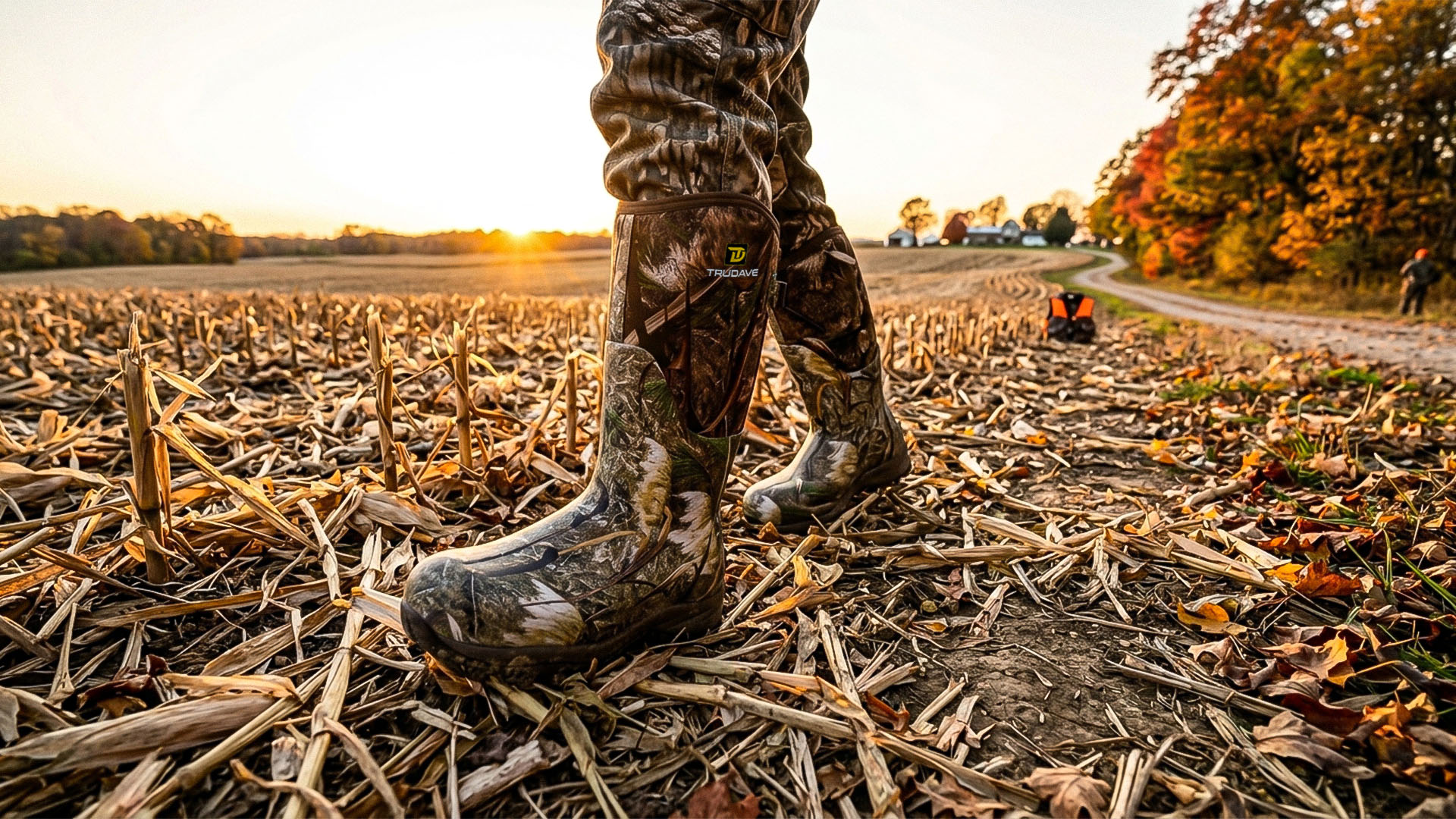
Hunters working these environments may benefit from waterproof hunting boots for alpine bird hunting that provide secure heel retention, dependable traction, and enough ankle support for broken high-country terrain without excessive weight.
Waterproofing Matters
Wet tundra can soak ordinary footwear surprisingly quickly.
Snowmelt and shallow alpine streams add more moisture.
Dry feet matter during long remote hunts.
Boot Weight Matters on Long Climbs
Every extra ounce is carried uphill all day.
Heavy boots may provide durability but can increase fatigue.
Balance:
- Weight
- Support
- Waterproofing
carefully.
Heel Retention Is Critical
Repeated uphill movement creates heel lift.
Poor fit produces:
- Hot spots
- Blisters
A small blister at high elevation can make the descent miserable.
Toe Room Matters on the Way Down
Long descents push feet forward.
Proper toe space protects against repeated impact.
Test footwear on slopes before the season.
Ankle Support Helps on Talus
Rock shifts unexpectedly.
Moderate ankle support can improve stability.
It does not replace careful foot placement.
Traction Matters on Wet Rock
Rain and snowmelt turn smooth alpine stone slippery.
Use controlled steps.
Avoid rushing downhill after flushed birds.
Moss and Lichen Can Be Slick
Rock covered with wet alpine growth can provide very little grip.
Step around slick surfaces when possible.
Gaiters Are Extremely Useful
Gaiters help keep:
- Snow
- Water
- Gravel
- Seeds
out of boots.
They also protect lower pants from wet tundra.
Snow Can Enter Boots From Above
Even waterproof boots become uncomfortable if snow fills through the collar.
Gaiters solve much of this problem.
Creek Crossings Add Risk
Alpine streams can be:
- Cold
- Fast
- Slippery
Use safe crossings.
Snowmelt Changes Creek Levels
A small morning stream may carry more water later.
Temperature changes can increase melt.
Always consider the return route.
Do Not Jump Wide Creeks in Heavy Gear
A fall can turn into a serious problem far from help.
Find a safer crossing.
Trekking Poles Can Help
Poles improve:
- Balance
- Stream crossing
- Descents
- Tundra travel
They are especially useful with a loaded pack.
Poles Help Test Hidden Ground
Vegetation may conceal:
- Holes
- Soft mud
Use a pole to check uncertain footing.
Snowfields Require Caution
Late snow can remain on steep slopes.
Assess:
- Angle
- Ice
- Runout
before crossing.
A Short Snowfield Can Still Be Dangerous
The risk comes from where a slide would end.
Not only the width of the snow.
Choose safe terrain.
Ptarmigan Can Use Snowfield Margins
You may see birds near a snow patch that is unsafe for humans to cross.
Do not follow them blindly.
Take the longer safe route.
Physical Conditioning Matters
High-country upland hunting may require:
- Long climbs
- Sidehilling
- Repeated elevation gain
Prepare before season.
Train With Hills
Useful conditioning may include:
- Stair climbing
- Hill walking
- Loaded hikes
The goal is sustainable movement.
Do Not Exhaust Yourself on the Approach
Finding birds is only part of the day.
You still need enough energy to:
- Hunt
- Recover birds
- Descend safely
Descents Can Be Harder Than Climbs
Tired legs and loose rock increase fall risk.
Save energy.
Move slower on the way down.
Hydration Matters at Elevation
Cool mountain air can hide dehydration.
Carry enough water.
Drink consistently.
Natural Water Is Not Guaranteed
Snow and streams shown on maps may:
- Disappear
- Be inaccessible
Carry enough water for the realistic route.
Water Treatment May Be Necessary
If relying on alpine streams, use appropriate water-treatment practices.
Clear water is not automatically safe.
Calories Matter
Climbing through cold windy terrain burns energy.
Carry food that is easy to eat without stopping for long.
Dogs Can Help With Ptarmigan
Where legal and practical, pointing dogs may help locate birds in low tundra.
But alpine terrain creates unique challenges.
Dog Conditioning Matters
A dog that handles flat upland fields easily may struggle with:
- Elevation
- Rock
- Long climbs
Condition gradually before the hunt.
Dog Pads Take Abuse
Sharp rock and rough tundra can cause:
- Cuts
- Abrasion
Check paws regularly.
Snow Can Build Between Toes
In cold conditions, ice may accumulate.
Inspect paws during the hunt.
Dogs Need Water Too
Cold temperatures do not eliminate hydration needs.
Carry enough for the dog.
Alpine Streams Can Be Difficult for Dogs
Fast cold water can be hazardous.
Use safe crossing points.
Keep Dogs Away From Cliffs
A bird may move toward terrain a dog should not follow.
Maintain control around:
- Drop-offs
- Steep rock
Birds May Run Before Flushing
Ptarmigan often move through tundra before taking wing.
A dog may help identify the moving group.
Hunters should stay prepared.
Flushes Can Be Surprisingly Close
Birds relying on camouflage may hold tightly.
This creates quick opportunities.
Remain balanced and ready.
Pick One Bird
When a group flushes, focus on a single bird.
Do not fire into the center of the flock.
Watch Where the Group Lands
Ptarmigan may fly only a moderate distance before settling again.
Mark:
- Rock patch
- Snow edge
- Ridge
carefully.
Scattered Birds May Hold Tighter
After the first flush, smaller groups or individual birds can become easier to approach.
Slow down near the landing area.
Mark With Multiple Landmarks
One white rock looks like another.
Use combinations:
- Snow patch
- Ridge notch
- Dark rock band
to relocate birds.
GPS Waypoints Can Help
In open alpine terrain, saving the landing zone may reduce confusion during a long approach.
Do Not Chase Birds Into Unsafe Terrain
A flock may land on:
- Steep cliff
- Dangerous snow
- Unstable rock
Safety comes first.
The birds can win that round.
Safe Shooting Zones Matter
Ptarmigan may flush low across:
- Tundra
- Rock
Know where hunting partners and dogs are.
Elevation Differences Complicate Safety
One hunter may stand above another on the slope.
Do not shoot toward:
- Uphill partner
- Downhill partner
even if the bird appears clear.
Establish Relative Positions
Before entering good habitat, agree who stays:
- Higher
- Lower
and how the group will move.
Bright Visibility Clothing May Be Useful or Required
Follow current local regulations.
In open high country, visible partners are easier to track.
Background Awareness Still Matters
An apparently empty alpine basin may contain:
- Hikers
- Other hunters
far away.
Know the direction of every shot.
Positive Identification Is Essential
High-country habitats may contain different ptarmigan or grouse species depending on region.
Hunters should learn local identification.
Seasonal Plumage Can Complicate Identification
Color changes through the year.
Do not rely on one photograph from one season.
Study current official identification resources.
Habitat Can Help but Is Not Enough
Finding a bird above timberline does not automatically identify the species.
Use physical characteristics too.
Regulations Can Be Highly Location-Specific
Before hunting, verify current official:
- Season dates
- Bag limits
- Possession limits
- License requirements
- Species rules
- Public-land restrictions
Ptarmigan Regulations May Differ From Other Grouse
Do not assume one upland bird season covers every species.
Check the exact regulation.
Remote Areas Can Have Additional Access Rules
Some alpine habitat may fall within:
- Wilderness
- Parks
- Special management areas
where hunting or access rules differ.
Verify boundaries before the trip.
Weather Closures Can Affect Access
Mountain roads and trails may close due to:
- Snow
- Fire
- Storm damage
Check current access before traveling.
Fragile Alpine Habitat Deserves Respect
Tundra vegetation grows slowly.
Where possible, use:
- Durable surfaces
- Established trails
during approaches.
Avoid Unnecessary Damage
Do not create new vehicle routes or disturb fragile vegetation.
High-country recovery can take decades.
Pack Out All Waste
Remote habitat depends on responsible users.
Leave the mountain cleaner than you found it.
Recovery Can Be Difficult
A small bird can disappear against:
- Rock
- Snow
- Tundra
after falling.
Watch it all the way down.
Mark the Exact Fall
Choose several landmarks before moving.
Do not rely only on distance.
Wind Can Move Feathers and Visual Clues
Strong alpine wind may make the recovery zone confusing.
Start searching immediately and systematically.
Dogs Can Be Valuable for Recovery
A trained dog may locate birds hidden against rock or tundra.
Keep the dog away from unsafe cliffs.
Search Below the Apparent Fall
Steep slopes can cause a downed bird to:
- Roll
- Slide
farther downhill.
Expand the search vertically.
Do Not Rush Through Loose Rock
Recovery urgency does not justify an injury.
Move carefully.
Warm Sun Can Affect Game Care
Even in cool alpine climates, direct sunlight can warm harvested birds.
Keep game:
- Clean
- Cool
- Ventilated
according to current food-safety guidance.
Common Ptarmigan Hunting Mistakes
Walking Miles Before Glassing
Use optics first.
Searching Only Snow
Birds often feed on adjacent exposed tundra.
Ignoring Wind-Scoured Ridges
They can provide exposed food during snowy periods.
Walking Too Fast
Camouflaged birds may hold extremely tight.
Wearing Heavy or Poorly Fitting Boots
High-country miles punish extra weight and heel movement.
Underestimating Wet Tundra
Low vegetation can soak footwear rapidly.
Chasing Birds Into Unsafe Terrain
The safest route matters more than another flush.
Assuming All Grouse-Like Birds Have the Same Regulations
Species and location rules vary.
Frequently Asked Questions
Where do rock ptarmigan usually live?
Rock ptarmigan commonly use alpine and Arctic tundra containing rocky slopes, low shrubs, snow patches, ridges, and other cold open habitats.
Why are ptarmigan difficult to see?
Their seasonal plumage blends extremely well with rock, snow, and tundra vegetation, and birds may remain motionless when approached.
Are snow edges good places to look for ptarmigan?
They can be. Melting snow can expose fresh vegetation and create useful feeding transitions, although habitat use varies with season and local conditions.
Is ptarmigan hunting physically difficult?
It can be. Hunters may need to reach high-elevation habitat, walk across wet tundra and loose rock, manage rapid weather changes, and descend safely after a long day.
What boots are best for ptarmigan hunting?
Lightweight waterproof hunting boots with secure heel retention, dependable wet-rock traction, moderate ankle support, and protection from wet tundra and snow are practical.
Can dogs be used for ptarmigan hunting?
Where legal and appropriate, pointing dogs can help locate birds, but conditioning, paw protection, hydration, and control around cliffs and cold water are especially important.
Do ptarmigan hunting regulations vary?
Yes. Species, season dates, bag limits, possession limits, licenses, and access rules can vary significantly by jurisdiction, so hunters should verify current official regulations.
Final Thoughts
Ptarmigan hunting teaches hunters that alpine country is never as empty as it looks.
One snow edge grows fresh vegetation.
One ridge loses snow to the wind.
One tundra bench provides food.
One willow pocket offers shelter.
One group of birds sits motionless among rocks while the hunter glasses directly past them.
The details matter.
Climb efficiently.
Glass often.
Search transitions.
Watch the wind.
Respect fog.
Carry enough water.
Keep dogs away from dangerous cliff terrain.
Wear boots that let you cross wet tundra, loose rock, snow, shallow creeks, and long alpine slopes without turning your feet into the reason you have to leave early.
And when a “rock” suddenly stands up and several other rocks begin walking with it, remember the lesson.
Ptarmigan country is not empty.
It is simply one of the few places where the birds can hide in plain sight almost perfectly.
