
A freshwater marsh can look almost completely empty.
Cattails stand shoulder high.
Shallow water fills narrow lanes between grass.
Mud disappears beneath floating vegetation.
A hunter walks slowly along the edge.
Nothing moves.
Then a tiny bird erupts from the marsh only a few yards away.
It flies low.
Fast.
Straight across an opening.
Then disappears back into the vegetation.
That is sora hunting.
These small rails can live inside marsh cover so dense that hunters may never see them until they flush.
The challenge is not finding a huge wetland.
It is finding the correct combination of:
- Shallow water
- Mud
- Seeds
- Emergent vegetation
- Cattail edges
- Wet meadow transitions
Soras live where land and water become difficult to separate.
Hunters who learn to read that transition can stop wandering through empty marsh and begin concentrating on the habitat birds actually use.
Soras Are Marsh Birds
Soras are closely associated with freshwater wetlands.
Productive habitat may include:
- Cattail marshes
- Sedges
- Rushes
- Shallow flooded vegetation
- Muddy wetland edges
- Wild rice habitat
- Wet meadows
- Pond margins
The key is usually shallow water mixed with dense emergent vegetation.
Wide open deep water is generally less important than the vegetated edge.
Hunt the Transition Between Water and Cover
One of the strongest habitat patterns is the zone where:
- Cattails become thinner
- Water becomes shallower
- Mud begins appearing
- Wet grass meets flooded vegetation
These transitions provide both:
- Food
- Security
Walk them carefully.
Shallow Water Is Often Better Than Deep Water
Soras spend much of their time feeding around shallow wetland habitat.
A marsh that averages only several inches of water can be highly productive.
Deep open water may hold far fewer birds.
Do Not Judge Wetlands by Size
A small marsh can hold plenty of sora if the habitat is right.
A huge lake with little emergent cover may offer much less.
Vegetation structure matters more than acreage.
Cattail Edges Are Classic Habitat
Dense cattail provides excellent security.
But birds often use the outer edge where they can move between:
- Cover
- Shallow feeding water
That edge deserves most of the hunter’s attention.
Do Not Walk the Deepest Cattails First
Dense cattail interiors can be:
- Difficult
- Deep
- Unsafe
Start with the easier outer transition.
Birds frequently flush from surprisingly narrow habitat bands.
Small Openings Inside Cattails Can Be Excellent
A pocket only twenty yards across may create:
- Feeding space
- Visibility
- Flight room
These openings can produce multiple flushes.
Mud Flats Can Reveal Feeding Habitat
Soft wet mud may contain food resources used by marsh birds.
Recently exposed mud beside vegetation deserves attention.
Look especially where shallow water is receding.
Falling Water Can Improve Habitat
As water levels drop, new muddy margins appear.
This can concentrate feeding birds around:
- Fresh mud
- Seed-producing vegetation
- Shallow pools
The productive zone moves with the shoreline.
Rising Water Changes Everything
Heavy rainfall can flood previously dry vegetation.
This creates new habitat.
Birds may shift quickly into:
- Newly flooded grasses
- Cattails
- Wet meadow edges
Rescout after major water changes.
Too Much Water Can Spread Birds Out
When an entire wetland floods deeply, sora may have much more habitat available.
Birds become less concentrated.
Search the shallowest vegetated edges.
Wet Meadows Can Be Productive
A marsh does not need tall cattails everywhere.
Soras may use low wet meadows containing:
- Sedges
- Short grasses
- Shallow flooded patches
especially when nearby cover is available.
Sedges Can Be Extremely Important
Dense sedge habitat provides:
- Cover
- Food
- Wet feeding ground
Look for areas where sedges meet shallow open water.
Rushes Create Similar Structure
Bulrush and other emergent vegetation can create narrow lanes and feeding pockets.
Birds often use the complexity rather than the most uniform cover.
Wild Rice Wetlands Can Be Productive
Where wild rice and similar aquatic vegetation occur, marsh habitat may support a variety of migratory birds.
Soras can use these areas when water depth and cover are suitable.
Seeds Matter
Rails consume a variety of wetland foods.
Seed-producing marsh vegetation can become especially important during migration periods.
Habitat quality can change as plants mature.
Migration Can Fill a Marsh Quickly
A wetland that holds few birds one week may suddenly become productive after migration conditions change.
Keep checking good habitat.
Do Not Permanently Abandon an Empty Marsh
If water depth and vegetation remain good, new birds may arrive.
One poor hunt does not always mean poor habitat.
Weather Systems Can Change Bird Numbers
Fronts and seasonal weather changes may move migratory birds.
A wetland can become dramatically different after changing conditions.
Morning Can Be Productive
Cool early conditions may keep marsh activity high.
Hunters can also benefit from:
- Lower temperatures
- Calmer wind
during active walking.
Midday Can Still Produce Birds
Unlike hunts that depend entirely on first light movement, rail hunting can remain productive while walking suitable habitat later in the day.
Habitat matters more than a single short window.
Wind Changes Marsh Hunting
Strong wind moves:
- Cattails
- Grass
- Water
and makes detecting bird movement harder.
Birds may also favor protected portions of the marsh.
Hunt Leeward Edges During Strong Wind
Protected marsh corners may offer:
- Calmer water
- Easier bird movement
- Better hunter control
Study the wind before entering.
Wind Can Affect Flush Direction
A flushed bird may immediately use the wind.
Hunters should remain balanced and ready for quick directional movement.
Soras Often Flush Close
These birds may hold until the hunter is relatively near.
That creates sudden opportunities.
Move at a controlled pace.
Do Not Walk Too Fast
Fast walking causes two problems.
You may:
- Miss birds that hold tight
- Lose safe footing
Slow movement works better in marsh terrain.
Pause Around Good Cover
After one bird flushes, stop.
Scan the surrounding vegetation.
Several birds may occupy the same habitat pocket.
One Flush Can Reveal the Productive Band
If a bird comes from the exact line where:
- Mud
- Cattail
- Shallow water
meet, follow that habitat across the marsh.
Do not continue randomly toward deeper water.
Multiple Birds May Use One Small Area
A productive pocket can contain several sora during migration.
Work the surrounding cover carefully after the first flush.
Low Flight Requires Extra Safety
Rails often fly relatively low.
That means hunters must know where:
- Partners
- Dogs
- Boats
- Roads
are located before the hunt begins.
Establish Shooting Zones
When hunting with partners, clearly define:
- Walking direction
- Safe side
- No-shoot zones
before entering cover.
Never Swing Through Another Hunter
A fast low bird is not worth an unsafe shot.
If the bird crosses another hunter’s direction:
Let it go.
Dense Marsh Can Hide People
Cattails may completely block visibility.
Maintain communication.
Do not let partners drift into unknown positions.
Bright Clothing May Be Appropriate Outside Active Hunting Positions
Follow current local requirements and hunting-safety guidance.
Visibility between hunters can be especially important in dense wetland vegetation.
Positive Identification Is Critical
Freshwater marshes may contain many birds.
Hunters can encounter:
- Rails
- Gallinules
- Shorebirds
- Small ducks
- Other protected wetland species
Never shoot simply because a small bird flushed from marsh grass.
Learn Sora Identification Before Hunting
Study features such as:
- Overall body shape
- Plumage
- Flight
- Vocalizations
using current official identification resources.
Low-Light Identification Is Harder
Early morning reduces visible detail.
If identification is uncertain:
Do not shoot.
Habitat Alone Is Not Identification
A bird flushing from cattails is not automatically a sora.
Many wetland species use similar habitat.
Calls Can Provide Useful Clues
Soras produce distinctive vocalizations.
Learning them can help hunters recognize active marshes.
Sound supports identification.
It does not replace visual confirmation.
Flight Can Help With Identification
Rails often fly:
- Low
- Relatively short distances
before dropping back into vegetation.
But flight behavior alone should never be the only identification feature.
Marsh Scouting Is Best Done Before the Hunt
Learn:
- Water depth
- Vegetation
- Safe walking routes
- Property boundaries
before carrying hunting gear into unknown wetlands.
Daylight Scouting Matters
Even if the hunt begins early, inspect the marsh in good visibility beforehand.
Dark water hides too many hazards.
Water Depth Can Change Rapidly
Rain, drainage control, and seasonal conditions may raise or lower wetlands.
A safe route from last month may no longer be appropriate.
Never Assume Water Is Uniform
A marsh that appears six inches deep can contain:
- Channels
- Holes
- Ditches
several feet deeper.
Test uncertain ground.
Mud Can Be More Dangerous Than Water
Soft wetland bottoms can trap footwear and exhaust hunters quickly.
A surface may look solid but collapse under body weight.
Mud Suction Wastes Energy
Each step may require extra effort.
Take shorter strides.
Do not fight the ground unnecessarily.
Secure Boots Matter
Loose footwear can become a serious problem in deep mud.
Every step pulls the heel upward.
This leads to:
- Blisters
- Fatigue
- Lost footwear
Sora Hunting Is a Perfect Waterproof-Footwear Scenario
A typical hunt may involve:
- Mud
- Wet grass
- Shallow water
- Cattail edges
- Saturated soil
- Marsh channels
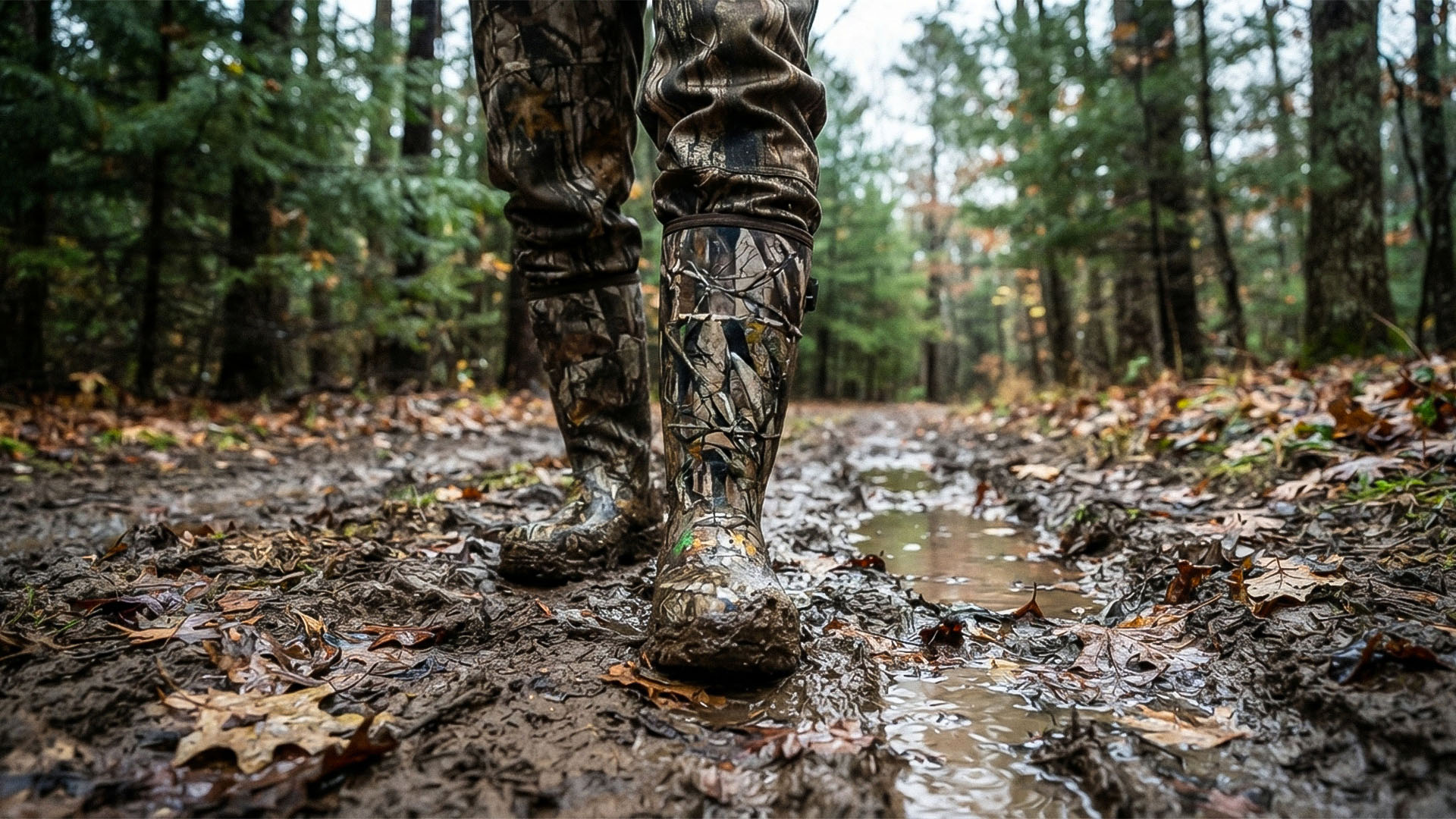
Hunters working these conditions may benefit from waterproof hunting boots for shallow marsh hunting that provide secure heel retention, dependable mud traction, and enough waterproof height for repeated wetland walking.
Tall Rubber Hunting Boots Can Work Well
When water stays relatively shallow, rubber boots provide excellent protection from:
- Mud
- Water
- Wet vegetation
They are simple and practical.
Fit Still Matters With Rubber Boots
Do not choose oversized boots simply for easy entry.
Repeated heel slip becomes painful during a long marsh walk.
Waders May Be Better in Deeper Marshes
Where water consistently exceeds normal boot height, properly selected hunting waders can provide better protection.
But deeper water means greater safety concerns.
Do Not Use Waders as Permission to Enter Any Water
Waders keep water off your clothing.
They do not make:
- Deep mud
- Strong current
- Hidden channels
safe.
Route choice still matters.
Hip Boots May Work in Some Habitat
Where conditions require more height than normal boots but less than full waders, other appropriate waterproof options may be useful.
Match equipment to actual water depth.
A Walking Stick Can Be Extremely Helpful
A sturdy stick helps test:
- Mud
- Water depth
- Bottom firmness
before transferring body weight.
Test Every Suspicious Step
Dark marsh water can hide sudden drop-offs.
A few seconds of checking can prevent a dangerous fall.
Muskrat Channels Can Create Hidden Depth
Wetlands may contain narrow animal channels through vegetation.
These can be deeper than the surrounding flat.
Watch for:
- Open lines
- Dark water
- Broken vegetation
Drainage Ditches Are Another Hazard
Managed wetlands may contain man-made channels.
They can be difficult to see through cattails.
Know the wetland layout.
Old Farm Wetlands Can Hide Wire
Former pasture or agricultural ground may contain:
- Fence wire
- Posts
- Metal debris
beneath grass and water.
Move slowly.
Submerged Logs Can Roll
A log beneath shallow water may appear stable.
It may shift underfoot.
Step onto firm bottom instead when possible.
Wet Vegetation Is Slippery
Flattened cattails and grass can become extremely slick.
Take controlled steps.
Gaiters Can Help in Wet Grass
Where water stays below boot height, gaiters may reduce moisture and vegetation entering from the top.
Wet Seeds and Plant Debris Get Everywhere
Marsh plants can fill:
- Socks
- Boot openings
- Pant cuffs
Proper lower-leg protection improves comfort.
Durable Pants Help Around Cattails
Dry and broken cattail stems can be rough on lightweight clothing.
Use durable field clothing appropriate to the conditions.
Gloves Can Protect Hands
Hunters may use hands for balance around:
- Cattails
- Reeds
- Brush
Light gloves can reduce scratches.
Eye Protection Can Be Useful
Dense wetland stems can strike the face.
Clear protective glasses can be useful when pushing thick vegetation.
Warm Early Seasons Can Be Physically Demanding
Many rail seasons occur while temperatures are still relatively warm.
Walking through mud generates significant heat.
Carry water.
Humidity Makes Cooling Harder
Wetland air can be:
- Warm
- Humid
Take breaks.
Do not over-layer clothing.
Waterproof Gear Can Trap Heat
Waterproof clothing protects from outside moisture.
It can also reduce ventilation.
Use the lightest system appropriate to current conditions.
Avoid Overheating in Waders
If wearing waders during warm conditions:
- Move slowly
- Vent where possible
- Take breaks
Heat stress can develop even while standing in water.
Mosquitoes Can Be Severe
Early-season freshwater marshes may contain heavy mosquito activity.
Use appropriate:
- Repellent
- Clothing
Biting Flies Can Be Another Problem
Wet meadow and marsh habitat may support:
- Deer flies
- Other biting insects
Insect protection improves concentration.
Ticks May Occur Along Marsh Edges
Tall grass and brush around access routes can hold ticks.
Use appropriate prevention and post-hunt checks.
Snakes May Be Present in Warm Wetlands
Depending on region, hunters may encounter venomous snakes near:
- Marsh edges
- Ditches
- Brush
Know local species.
Do Not Reach Blindly Into Thick Vegetation
Use caution around hidden wildlife and sharp debris.
Dogs Can Help Locate and Recover Birds
Where practical and appropriate, a trained dog may help work marsh cover or recover birds.
But wetland terrain adds several hazards.
Dogs Can Disappear in Cattails
Dense vegetation blocks visibility.
Maintain control.
A dog working too far away may enter:
- Deep water
- Roads
- Private property
Hidden Channels Are Dangerous for Dogs Too
Know the marsh before sending a dog into dense cover.
Warm Water Does Not Eliminate Exhaustion
Dogs working through heavy mud expend tremendous energy.
Give regular breaks.
Carry Clean Water for Dogs
Marsh water may contain:
- Agricultural runoff
- Algae
- Other contaminants
Bring clean drinking water when practical.
Check Dogs After the Hunt
Inspect for:
- Cuts
- Seeds
- Burrs
- Eye irritation
Small Boats Can Help in Large Wetlands
Where legal and suitable, a canoe or shallow-water craft may improve access.
Boating introduces additional safety requirements.
Wear Appropriate Flotation Equipment
Shallow-looking marshes can contain deep channels.
Use appropriate personal flotation equipment according to watercraft rules and conditions.
Do Not Overload Small Boats
Hunters, dogs, and gear add weight quickly.
Respect manufacturer capacity limits.
Mud Can Make Launching Difficult
A wetland edge may be too soft for vehicle access.
Do not destroy shoreline or roads to reach the water.
Walking In Can Be Better Than Driving Closer
Protect access and habitat.
Wet roads and fields rut easily.
Property Boundaries Are Often Difficult to See
Marsh vegetation ignores land ownership.
Use reliable maps.
Do not assume continuous wetland means continuous public access.
Private Wetlands Require Permission
Obtain clear access before hunting.
Respect:
- Crops
- Water-control structures
- Gates
- Livestock
Water-Control Structures Should Never Be Altered
Do not adjust:
- Gates
- Dikes
- Pumps
- Boards
unless specifically authorized.
Wetland managers depend on controlled water levels.
Dikes Can Be Valuable Access Routes
Managed wetlands may contain raised dikes providing firm walking.
They can also separate hunting zones.
Check property rules.
Do Not Block Maintenance Roads
Park only where permitted.
Wetland managers may need access.
Public Marshes Can Have Special Regulations
Wildlife areas may regulate:
- Entry
- Parking
- Boats
- Hunting days
- Ammunition
- Permits
Check the exact property.
Soras Are Migratory Game Birds
Because sora are migratory birds, hunting regulations require particular attention.
Before hunting, verify current official rules for:
- Season dates
- Daily bag limits
- Possession limits
- Legal shooting hours
- Required licenses
- Federal or state registrations where applicable
- Ammunition requirements
- Public-area restrictions
Do Not Use Last Year’s Regulations
Migratory game bird rules can change.
Always use the current season information.
Rail Limits May Include Multiple Species
Some jurisdictions may structure regulations around:
- Sora
- Virginia rail
- Other rail species
Know exactly which species count toward which limits.
Species Identification Is Part of Regulation Compliance
If you cannot confidently identify the bird:
Do not shoot.
This is especially important in diverse wetlands.
Non-Toxic Ammunition Rules May Apply
Wetland hunting often carries ammunition restrictions.
Check both:
- State regulations
- Property-specific rules
before arriving.
Public Wetlands May Require Additional Permits
Some properties use:
- Draws
- Daily permits
- Check-in systems
Plan ahead.
Hunting Pressure Can Move Rails
Repeated walking can push birds toward:
- Denser cover
- Quieter wetland corners
Rotate areas where possible.
Small Marshes Can Be Overhunted Quickly
One hunt may disturb much of a tiny wetland.
Allow productive areas time to rest.
Scout Several Marshes
A good rotation might include:
- Cattail pond
- Wet meadow
- Shallow impoundment
- Flooded grass flat
This reduces pressure on one location.
Habitat Changes Throughout the Season
Water levels drop.
Vegetation matures.
Migration progresses.
The best spot in early season may not remain best.
Keep Following the Waterline
When habitat changes:
Rescout.
The birds often move only a short distance to the new ideal moisture zone.
Recovery Can Be Difficult
A small rail can disappear instantly in:
- Cattail
- Mud
- Shallow water
Mark the exact fall.
Use Fixed Landmarks
Pick:
- Tall cattail clump
- Mud opening
- Dike post
- Tree
before moving.
Do Not Walk Directly Into the Fall Without a Plan
Dense marsh destroys visual reference quickly.
Move toward the mark from a known line.
Dogs Can Be Valuable for Recovery
A trained retriever or suitable bird dog may help locate downed birds in dense vegetation.
Give the Dog Room to Search
Do not immediately trample the entire fall area.
Let the dog work scent where appropriate.
Current Can Affect Recovery in Channels
Even small water movement can shift a bird.
Account for direction of flow.
Ethical Recovery Should Influence Shot Selection
Before shooting, consider whether the bird can realistically be recovered from:
- Thick cattail
- Deep channel
- Unsafe mud
A poor recovery situation is a reason to pass.
Common Sora Hunting Mistakes
Hunting Deep Open Water
Soras often favor shallow vegetated habitat.
Walking Randomly Through the Entire Marsh
Follow the mud-water-vegetation transition.
Ignoring Recent Water-Level Changes
A few inches can completely change productive habitat.
Walking Too Fast
Birds may hold tight and footing is uncertain.
Wearing Boots That Are Too Short or Too Loose
Wet marsh habitat punishes poor footwear quickly.
Entering Unknown Water Before Scouting
Hidden channels and deep mud create serious hazards.
Shooting Every Small Bird That Flushes
Positive species identification is essential.
Using Last Year’s Migratory-Bird Regulations
Current seasons and limits must be verified.
Frequently Asked Questions
Where do sora rails usually live?
Soras commonly use shallow freshwater marshes containing cattails, sedges, rushes, wet meadow vegetation, mud edges, and other dense emergent cover.
Is shallow water better than deep water for sora hunting?
Often, yes. Shallow vegetated water and saturated mud provide more suitable feeding habitat than large areas of deep open water.
Are cattail marshes good for sora hunting?
Yes. Cattail edges and small openings can provide excellent security and feeding habitat, especially where shallow water is present.
Is sora hunting good after rain?
Rain can flood new vegetation and create productive shallow habitat, although excessive flooding may move birds toward higher or shallower edges.
What boots are best for sora hunting?
Tall waterproof hunting boots with secure heel fit and strong mud traction can work well in shallow wetlands. Deeper marsh habitat may require appropriately fitted hunting waders.
Can dogs be used for sora hunting?
Dogs may help locate and recover birds where legal and practical, but dense vegetation, heat, mud, and hidden channels require careful control.
Are sora migratory game birds?
Yes. Hunters should always verify the current federal, state, and property-specific regulations covering sora and other rails before hunting.
Final Thoughts
Sora hunting teaches hunters that marsh habitat is measured in inches.
Six inches more water can move the birds.
A falling pond can expose the perfect mud edge.
A new rain can flood grass that was dry yesterday.
One narrow cattail opening can hold several birds while hundreds of yards of deeper marsh remain empty.
The productive zone keeps moving.
Follow it.
Watch water depth.
Walk the edge between mud and vegetation.
Slow down after the first flush.
Learn your bird identification before the season.
Scout every access route in daylight.
Wear boots that let you cross shallow water, sticky mud, saturated grass, cattail edges, and soft wetland ground without making every step a struggle.
And when a sora suddenly erupts from a patch of marsh that looked far too shallow and ordinary to hold anything, remember the lesson.
Wetland hunting is rarely about finding the most water.
It is about finding exactly the right water.
