
Wood duck habitat does not always look like classic duck country.
There may be no huge lake.
No endless open marsh.
No wide river filled with birds.
Instead, there is a narrow creek disappearing beneath hardwoods.
A beaver dam holds several acres of shallow water.
Acorns float beneath flooded oaks.
Cypress knees rise from dark water.
At first light, the swamp looks almost empty.
Then wings whistle through the trees.
Two wood ducks drop below the canopy.
A second group follows the creek.
Within seconds, the quiet woodland suddenly feels alive.
That is wood duck hunting.
These birds often use smaller, tighter, more wooded wetlands than hunters accustomed to open-water waterfowl expect.
Successful hunters learn to stop searching only for the biggest water.
They search for the right combination of:
- Flooded timber
- Mast
- Beaver activity
- Creek corridors
- Roosting habitat
- Quiet water
- Concealed travel routes
In wood duck country, a five-acre beaver pond can matter more than a five-hundred-acre reservoir.
Wood Ducks Are Birds of Timber and Water
Wood ducks commonly use wooded wetland environments.
Productive habitat may include:
- Beaver ponds
- Forested creeks
- Flooded hardwoods
- Cypress swamps
- River backwaters
- Oxbows
- Small ponds
- Bottomland forest
The key difference from many open-water ducks is simple.
Trees are part of the habitat.
Not just something beside it.
Start With Flooded Hardwood
Where hardwood forest floods seasonally, wood ducks can find:
- Food
- Cover
- Travel corridors
- Roosting habitat
Look especially where water reaches:
- Oak
- Gum
- Cypress
- Other bottomland trees
depending on region.
Shallow flooded timber deserves serious attention.
Acorns Can Be Extremely Important
When mast drops into shallow water, wood ducks may feed beneath hardwoods.
Look for areas where:
- Acorns are abundant
- Water is shallow enough for feeding
- Timber provides overhead cover
A small oak flat holding food can attract birds repeatedly.
Not Every Flooded Oak Flat Is Equal
One area may contain:
- Heavy mast
- Quiet water
- Good access
while another looks almost identical but holds few birds.
Scout for actual use.
Look for:
- Ducks
- Feathers
- Droppings
- Feeding disturbance
Current activity matters.
Beaver Ponds Can Create Ideal Habitat
Beavers can transform a narrow stream into a complex wetland.
The resulting habitat may include:
- Flooded timber
- Shallow edges
- Dead snags
- Open pockets
- Brush
This diversity can be excellent for wood ducks.
Small Beaver Ponds Should Not Be Ignored
A pond does not need to be large.
A narrow flooded area tucked inside forest can provide everything wood ducks need.
Small wetlands often receive less hunting pressure than obvious public marshes.
Old Beaver Ponds Can Be Productive Too
Even after a beaver system changes, the area may retain:
- Shallow water
- Standing timber
- Shrub edges
Habitat quality evolves over time.
A place that looked perfect three years ago may be too open now.
Another nearby pond may have improved.
Keep scouting.
Beaver Dams Shape Water Depth
A dam can create dramatic differences between:
- Deep channel
- Shallow flooded edge
- Exposed mud
Wood ducks may favor specific depth zones depending on food availability.
Walk the perimeter before assuming the middle is best.
Creek Corridors Are Natural Flight Routes
Wood ducks often travel along wooded creeks.
Trees create a natural corridor.
Birds can move while remaining relatively concealed.
Watch:
- Creek bends
- Junctions
- Wide pools
- Beaver impoundments
These locations can concentrate morning movement.
Creek Bends Can Create Visibility
A straight forest creek may offer almost no view.
A bend can open:
- Wider water
- Better approach visibility
- More landing room
These locations deserve scouting.
Creek Junctions Can Be Even Better
Where two drainages meet, bird traffic from multiple areas may converge.
Look for:
- Wider water
- Mast-producing trees
- Flooded edges
One junction can function like a wetland intersection.
Narrow Creeks Can Still Hold Ducks
Do not dismiss a creek because it is only:
- Twenty feet wide
- Thirty feet wide
Wood ducks are comfortable using tight wooded water.
In some places, narrow water receives less pressure.
Backwater Pools Can Hold Feeding Birds
Flood events can create quiet water beside a river or creek.
These areas may contain:
- Acorns
- Seeds
- Invertebrates
while avoiding strong current.
Search every calm pocket.
Oxbows Can Be Excellent
Old river channels often provide:
- Shallow water
- Timber
- Dense edges
that wood ducks use.
Because they are separated from the main river, they may be calmer and less disturbed.
Flooding Can Completely Change Duck Distribution
Water level matters enormously.
A dry oak flat cannot feed ducks the same way as one covered by several inches of water.
After heavy rain or river rise, birds may shift rapidly into newly flooded habitat.
Follow New Water
One of the strongest wood duck scouting principles is:
Watch where water recently entered forest.
New flooding can expose:
- Acorns
- Seeds
- Fresh feeding habitat
that was inaccessible days earlier.
Too Much Water Can Spread Birds Out
Moderate flooding may concentrate ducks.
Extreme flooding can create thousands of acres of available habitat.
Birds become harder to predict.
When water expands dramatically, focus on:
- Food
- Current breaks
- Protected pockets
rather than water alone.
Falling Water Changes Patterns Again
As floodwater recedes, shallow feeding areas shrink.
Birds may concentrate around:
- Remaining pools
- Creek channels
- Beaver ponds
Rescout after water-level changes.
Water Depth Should Guide Your Setup
A beautiful timber hole may be:
- Too deep
- Too shallow
- Too open
for current bird use.
Check actual conditions before committing to the hunt.
Morning Scouting Is Extremely Valuable
Wood duck movement can be very concentrated around early daylight.
Scouting from a distance can reveal:
- Flight direction
- Creek use
- Roost-to-feed movement
without immediately disturbing the birds.
Watch Where Birds Come From
Do not only record where they land.
Ask:
Where did they approach from?
That direction may lead toward:
- Roosting water
- Larger wetland
- River corridor
Understanding both ends of the movement helps predict future hunts.
Evening Observation Can Reveal Roost Patterns
Late-day scouting can show birds returning toward secure water.
Watch from far enough away to avoid disturbing the roost.
Repeated pressure near roost habitat can change patterns quickly.
Do Not Hunt the Roost Every Time
A productive roost may hold many birds.
Constant disturbance can push them away.
Whenever possible, hunt feeding or travel habitat instead of repeatedly pressuring the core roost.
Wood Ducks Can Arrive Fast
One of the defining features of wood duck hunting is speed.
Birds may appear:
- Below the treetops
- Around a bend
- Through a timber opening
with little warning.
This makes scouting important.
Knowing the likely flight line helps hunters stay prepared.
Visibility in Timber Is Short
Flooded forest may offer only a few open shooting lanes.
Before the hunt begins, identify:
- Open water
- Tree gaps
- Safe directions
so decisions are not made in a rush.
Timber Changes Distance Perception
A bird between trees may look:
- Closer
- Farther
than it really is.
Dense backgrounds remove normal visual references.
Hunters should remain disciplined about range and safe opportunities.
Safety Is More Important Than Speed
Wood ducks move quickly.
That does not justify rushed shots through:
- Trees
- Brush
- Unknown backgrounds
Let birds pass if the opportunity is not clear.
Know Where Hunting Partners Are
Flooded timber can hide people easily.
Before legal shooting time, establish:
- Positions
- Safe zones
- No-shoot directions
Do not change position without communicating.
Dogs Can Be Difficult to See in Flooded Timber
A retriever may disappear behind:
- Trees
- Brush
- Water
Maintain awareness before every shot.
Low birds require extra caution.
Tree Cover Creates Complicated Backgrounds
A bird may pass in front of:
- Road
- House
- Other hunter
that is invisible through vegetation.
Understand the surrounding property before hunting.
Small Openings Can Be Better Than Large Open Water
Wood ducks often feel comfortable around tight timber.
A small opening may provide:
- Landing space
- Feeding access
- Overhead security
without exposing birds to a huge open pond.
Timber Holes Should Have Some Landing Space
If branches completely cover the water, birds may have difficulty dropping in.
Look for openings within the canopy.
Natural gaps can become preferred landing zones.
Fallen Trees Can Create Useful Structure
Downed timber may produce:
- Quiet edges
- Protected water
- Feeding pockets
but can also create serious footing hazards.
Scout carefully.
Standing Dead Timber Requires Caution
Flooded forests may contain dead snags.
Wind can bring down:
- Limbs
- Entire trees
Avoid standing beneath obviously unstable timber.
Storms Can Increase Falling-Limb Risk
High wind and saturated soil make dead timber more dangerous.
Before hunting, look upward.
Do not focus only on the water.
Rain Can Improve Habitat Quickly
Rain may:
- Flood new timber
- Raise creeks
- Reconnect wetlands
These changes can bring wood ducks into areas that were dry only days earlier.
Rain Also Changes Access
A dry walk-in trail can become:
- Mud
- Standing water
- Flooded creek crossing
after one storm.
Always check current conditions.
Wood Duck Hunting Is Hard on Footwear
A typical hunt may involve:
- Mud
- Flooded timber
- Wet leaves
- Shallow creek water
- Cypress roots
- Beaver channels
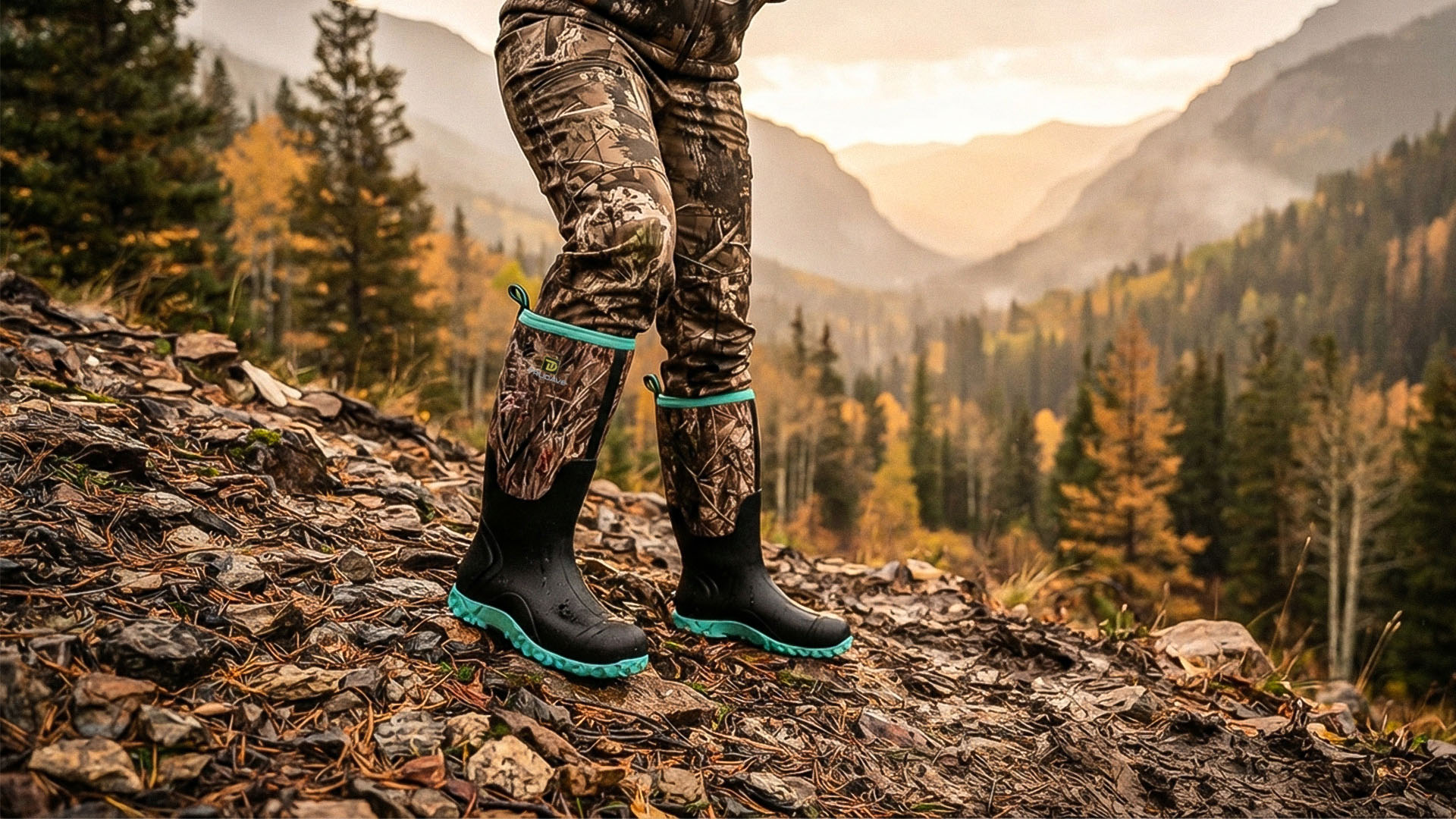
Hunters working these environments may benefit from waterproof hunting boots for flooded timber hunting that provide secure heel retention, reliable mud traction, and enough waterproof height for wet wooded terrain.
Tall Rubber Boots Can Be Extremely Practical
Rubber hunting boots work well when water remains:
- Shallow
- Predictable
They provide protection through:
- Mud
- Wet leaves
- Flooded grass
Fit is important.
Loose Boots Become Difficult in Suction Mud
Deep mud pulls against every step.
Loose footwear creates:
- Heel lift
- Blisters
- Fatigue
Secure fit matters.
Waders May Be Better in Deeper Water
Some wood duck habitat requires deeper entry.
Properly fitted waders may be more appropriate when water consistently exceeds boot height.
Choose equipment based on actual depth.
Do Not Guess Water Depth
Dark swamp water can hide:
- Drop-offs
- Channels
- Holes
Scout before the hunt.
Use established access whenever possible.
A Walking Stick Can Help
A sturdy stick can help test:
- Water depth
- Mud
- Hidden channels
before committing body weight.
Beaver Channels Can Be Surprisingly Deep
A shallow flooded flat may suddenly contain a narrow channel several feet deeper.
Watch for:
- Vegetation gaps
- Darker water
- Defined banks
Animal Trails Do Not Mean Human-Safe Footing
Deer, raccoons, and other wildlife cross routes that may be unsafe for people.
Evaluate every crossing independently.
Cypress Knees Create Constant Hazards
In southern swamp habitat, submerged cypress knees can trip hunters.
Move slowly.
Lift your feet.
Roots Become Slippery Under Water
Tree roots may be:
- Smooth
- Mud-covered
Avoid stepping directly on them when possible.
Fallen Logs Can Roll
A submerged log that appears stable may move under body weight.
Do not rely on one as a bridge unless you know it is secure.
Mud Can Hide Old Wire
Flooded former farmland may contain:
- Fence wire
- Posts
- Farm debris
Look for historical property features.
Pre-Dawn Access Requires Extra Caution
Wood duck hunts often begin before sunrise.
Darkness makes:
- Water
- Roots
- Channels
more difficult to judge.
Scout the route during daylight beforehand.
Never Make the First Walk-In in Complete Darkness
Whenever possible, learn the access route before hunting.
Know:
- Water depth
- Creek crossings
- Landmarks
A GPS line alone does not reveal underwater hazards.
Mark Safe Access Routes
Save waypoints for:
- Parking
- Creek crossing
- Hunting location
- Deep channels
before the hunt.
Offline Maps Are Helpful
Wet bottomlands may have weak cell service.
Download maps beforehand.
Include:
- Property boundaries
- Creeks
- Roads
Property Boundaries Can Be Difficult to See
Floodwater ignores fences and property lines.
Know where legal access ends.
A duck landing across a creek does not grant permission to enter.
Public Wetlands Can Have Special Rules
Some wildlife management areas may regulate:
- Entry time
- Boats
- Hunting days
- Permit systems
- Non-toxic ammunition requirements
Always check current property-specific regulations.
Waterfowl Regulations Change Annually
Wood ducks are migratory birds.
Hunters should verify current official rules for:
- Season dates
- Daily limits
- Possession limits
- Legal shooting hours
- Required licenses and stamps
- Approved ammunition
- Local area restrictions
before every season.
Do Not Rely on Last Year’s Limits
Migratory bird regulations can change.
Use the current season’s official wildlife-agency and federal information.
Species Identification Is Essential
Flooded timber may also contain other ducks.
Hunters should learn to distinguish wood ducks from other species in:
- Low light
- Fast flight
before hunting.
Plumage Is Not the Only Identification Tool
Study:
- Body shape
- Wing pattern
- Flight style
- Calls
using current identification resources.
Positive identification comes before the shot.
Low Light Makes Identification Harder
Early morning can reduce visible color.
Do not shoot solely because a bird followed the expected flight line.
Confirm the species.
Calls Can Help Identification but Are Not Enough
Wood ducks produce distinctive vocalizations.
Sound may alert hunters to approaching birds.
But visual identification remains necessary.
Small Groups Are Common
Wood ducks may move in:
- Pairs
- Small groups
rather than huge flocks.
Do not judge habitat quality only by flock size.
Several small groups using the same creek can indicate excellent habitat.
Pressure Can Change Flight Routes Quickly
After repeated disturbance, wood ducks may:
- Fly higher
- Use different creek branches
- Avoid specific ponds
Rotate hunting locations where possible.
Small Wetlands Can Be Easy to Overhunt
Because habitat is compact, one hunt can disturb the entire pond.
Let productive areas rest.
Scout More Than You Hunt
Maintaining several small locations can be better than hunting one beaver pond repeatedly.
A rotation may include:
- Creek
- Oxbow
- Beaver swamp
- Flooded oak flat
Boats Are Not Always Necessary
One advantage of small wood duck habitat is that some areas can be accessed on foot.
That can reduce:
- Equipment
- Noise
But only when water depth is safe.
Canoes or Small Boats Can Help in Larger Swamps
Where legal and appropriate, small watercraft may provide access to:
- Backwaters
- Beaver systems
- River sloughs
Use proper flotation equipment.
Small Boats Require Conservative Loading
Waterfowl gear adds weight.
Do not overload a canoe or boat with:
- Hunters
- Dog
- Decoys
- Equipment
Follow capacity ratings.
Cold Water Makes Boating More Serious
Fall and winter swamp water can be dangerously cold.
Wear appropriate flotation equipment.
Do not treat a short crossing casually.
Fog Can Make Wetland Navigation Difficult
A creek system that looks simple in daylight can become confusing under fog.
Use:
- Map
- GPS
- Known landmarks
Carry a Headlamp
Even if legal hunting ends well before darkness, packing equipment and retrieving birds can take time.
Carry reliable lighting.
Wet Gear Gets Heavy
After rain or repeated water exposure:
- Bags
- Clothing
- Equipment
can gain weight.
Pack only what the location actually requires.
Lightweight Setups Can Work Well for Wood Ducks
Small timber holes may not require enormous amounts of gear.
Reducing equipment can improve:
- Mobility
- Access
especially where hunters walk through mud.
Decoy Needs Depend on the Location
Different wetlands and hunting conditions call for different approaches.
The larger lesson is not quantity.
It is understanding where birds naturally want to be.
Habitat comes first.
Scouting Beats Carrying More Equipment
If wood ducks consistently use one creek bend, knowing that is more valuable than hauling unnecessary gear into the swamp.
Learn the birds before adding complexity.
Natural Feeding Areas Matter
When birds already want:
- Acorns
- Seeds
- Protected water
in a location, the habitat itself provides the strongest attraction.
Wind Can Affect Landing Direction
Even inside timber, ducks may respond to wind.
Watch how birds approach during scouting.
Tree cover can create complicated airflow.
Strong Wind Can Change Creek Use
Exposed open ponds may become rough.
Protected timber water can become more attractive.
Weather can concentrate birds in smaller wooded wetlands.
Calm Days Can Make Movement Quieter
Without wind, hunters may hear:
- Wingbeats
- Calls
earlier.
The swamp can provide useful audio clues.
Heavy Rain Can Reduce Visibility
Rain may limit how far hunters can see through timber.
Stay disciplined about identification.
Do not rush uncertain opportunities.
Cold Fronts Can Change Migration
Weather systems may bring:
- New birds
- Different local movement
A pond that was quiet one week may become productive after changing conditions.
Keep scouting.
Warm Conditions Can Affect Bird Distribution
In mild weather, birds may remain spread across available wetlands.
Colder weather can change:
- Feeding
- Roosting
- Regional movement
Current observations matter more than assumptions.
Dogs Can Be Valuable for Recovery
A trained retriever may help locate birds around:
- Flooded brush
- Timber
- Backwater edges
But swamp conditions add hazards.
Scout Dog Hazards Too
Potential dangers include:
- Submerged logs
- Beaver channels
- Sharp stumps
- Current
Know the water before sending a dog.
Cold Water Can Affect Dogs Quickly
Monitor:
- Shivering
- Energy
- Coordination
Provide breaks and warmth when needed.
Dogs Need Clean Drinking Water
Do not assume swamp water is appropriate.
Bring clean water when practical.
Check Dogs After the Hunt
Inspect for:
- Cuts
- Burrs
- Debris
- Eye irritation
Wetland vegetation can hide small injuries.
Recovery Should Begin Immediately
A downed bird can drift or move into:
- Brush
- Timber
- Current
Mark the location carefully.
Use Multiple Landmarks
From inside flooded timber, every tree can look similar.
Use:
- Large snag
- Creek bend
- Distinct oak
to mark the fall.
Do Not Rush Through Deep Water
Recovery urgency should not override safety.
Take a known safe route.
Current Can Move Birds
In creek habitat, a bird may drift away from the original location.
Consider water movement when marking the fall.
Dense Brush Can Hide Birds
Search:
- Base of brush
- Log edges
- Grass clumps
carefully.
A trained dog can be especially valuable.
Ethical Recovery Matters
Hunters should make every reasonable effort to recover harvested birds.
That responsibility should influence:
- Shot selection
- Habitat choice
- Dog use
- Water access
before the shot occurs.
Common Wood Duck Hunting Mistakes
Looking Only for Big Water
Small wooded wetlands can be excellent.
Ignoring Beaver Ponds
They create ideal combinations of water, timber, and food.
Hunting Every Flooded Forest Equally
Mast and current bird use matter.
Scouting Only at Midday
Morning and evening movements reveal much more.
Overhunting Small Ponds
Compact habitat can be disturbed quickly.
Wearing Footwear That Is Too Short or Too Loose
Flooded timber punishes poor wetland footwear.
Walking Unknown Water in Darkness
Scout access first.
Assuming Waterfowl Rules Are the Same Every Year
Migratory bird seasons and limits require current verification.
Frequently Asked Questions
Where do wood ducks usually live?
Wood ducks commonly use forested wetlands including beaver ponds, flooded hardwoods, creeks, oxbows, river backwaters, cypress swamps, and small wooded ponds.
Are beaver ponds good for wood duck hunting?
They can be excellent because they create flooded timber, shallow feeding areas, quiet water, and protected cover.
Do wood ducks eat acorns?
Wood ducks can use mast and other natural foods in flooded hardwood systems, making oak-rich wetlands particularly worth scouting when food is available.
Is flooded timber good for wood ducks?
Yes. Shallow flooded forest can provide food, cover, travel corridors, and protected feeding habitat.
What boots are best for flooded timber hunting?
Tall waterproof hunting boots with secure heel fit and good mud traction can work well in shallow flooded timber. Deeper water may require properly fitted waders.
Why is scouting important for wood duck hunting?
Wood ducks can use small, specific wetlands and flight corridors. Early-morning and evening observations can reveal exactly which creeks, ponds, and flooded timber pockets are currently active.
Final Thoughts
Wood duck hunting teaches hunters that more water does not automatically mean more ducks.
One creek bend can matter.
One flooded oak flat can hold food.
One beaver dam can create an entire wetland.
One narrow timber opening can become the flight route birds use every morning.
The best wood duck hunters notice those small places.
Scout early.
Watch creek corridors.
Find fresh flooding.
Look for mast.
Protect roosting habitat from unnecessary disturbance.
Respect changing water depth.
Wear boots that let you cross wet leaves, mud, shallow timber water, creek edges, and beaver swamps without forcing you onto the driest route.
And when the first wood duck drops through the trees into a pond small enough to miss on a road map, remember the lesson.
Great waterfowl habitat is not always measured in acres.
Sometimes it is measured in one quiet bend of flooded timber that the birds chose before you ever arrived.
