
Nilgai are large animals.
That should make them easy to find.
It usually does not.
A South Texas pasture may stretch for hundreds of yards between mesquite, thorn scrub, and low coastal brush.
A hunter glasses the open ground.
Nothing.
Then a dark head appears above the vegetation.
A shoulder becomes visible.
Within seconds, an animal that seemed impossible to hide steps out of the brush.
Another nilgai follows.
Then both disappear again.
That is one of the biggest lessons in nilgai hunting.
Large body size does not guarantee long visibility.
South Texas brush country is full of:
- Mesquite
- Thorn scrub
- Grass
- Drainages
- Brush lines
- Ranch roads
- Wet lowlands
Nilgai can move through those features while showing only small pieces of their bodies.
Successful hunters learn to treat openings as windows into the habitat rather than assuming the open ground itself is the entire hunt.
Nilgai Country Is a Landscape of Edges
South Texas hunting country often contains a mixture of:
- Coastal prairie
- Dense brush
- Mesquite
- Agricultural fields
- Wet depressions
- Ranch roads
- Senderos
- Drainages
The transitions between these habitats frequently deserve the most attention.
Animals can feed in open ground and retreat quickly into thick security cover.
That makes the edge between visibility and concealment especially important.
Start With the Brush Line
A large open pasture may look like the obvious place to watch.
But animals often remain close to cover.
Glass the first strip along:
- Mesquite
- Thorn brush
- Timber
more carefully than the center of the field.
A nilgai may stand only a few yards inside the vegetation.
Look for Parts of the Animal
Dense South Texas vegetation may reveal only:
- Head
- Ear
- Shoulder
- Leg
- Back
Do not expect the entire animal to step into the open immediately.
Binoculars help separate body shape from:
- Brush
- Shadow
- Tree trunks
Glassing Saves Energy
Brush-country hunting can involve long distances and hot conditions.
Do not walk every patch simply because nothing appeared immediately.
Find a stable position and glass:
- Open prairie
- Brush edges
- Ranch roads
- Senderos
- Water corridors
Carefully.
Recheck the Same Opening
An empty opening can become productive ten minutes later.
Animals may be:
- Feeding behind brush
- Moving along the edge
- Crossing between cover blocks
One quick scan is rarely enough.
Senderos Can Be Extremely Valuable
Long cleared lanes through dense brush create visibility.
These corridors may be used for:
- Ranch access
- Wildlife management
- Hunting observation
Nilgai and other wildlife may cross them briefly.
That brief crossing can provide valuable information.
Do Not Stare Only at the Center of the Sendero
Watch the vegetation on both sides.
An animal may stand just inside cover before crossing.
Look for:
- Ear movement
- Brush shaking
- Dark body shape
A few seconds of warning can make a major difference.
Ranch Roads Can Reveal Travel
Soft dirt roads record movement.
Look for:
- Fresh tracks
- Repeated crossings
- Direction
especially after rain.
A road crossing may reveal a trail connecting two larger habitat blocks.
Fresh Tracks Matter More Than Old Tracks
South Texas soils can preserve tracks for a long time when dry.
A large clear print may still be old.
Look for:
- Sharp edges
- Freshly disturbed soil
- Recent rain context
Current sign matters most.
Rain Can Reset the Property
After rainfall, older sign becomes easier to separate from fresh movement.
Check:
- Ranch roads
- Low crossings
- Water edges
- Senderos
soon afterward.
Fresh tracks can reveal which habitat animals are using now.
Wet Roads Can Become a Major Access Problem
South Texas ranch roads can turn from hard ground into:
- Slick clay
- Deep mud
- Standing water
very quickly.
Do not damage roads.
If conditions are poor:
Park.
Walk.
Mud Changes the Hunt More Than Hunters Expect
A hunt planned around:
- Easy vehicle access
- Short walks
may suddenly become a long muddy approach.
This makes footwear and route planning much more important.
Coastal Prairies Can Look Empty
Wide grasslands provide long visibility.
But small terrain changes can still hide large animals.
Watch:
- Grass depressions
- Drainage lines
- Brush islands
- Low rises
carefully.
Grass Height Matters
Tall grass can hide much more of an animal than expected.
A nilgai standing in vegetation may show only:
- Upper body
- Head
Use elevated glassing where legal and safe.
Brush Islands Can Become Security Cover
A small patch of dense vegetation inside open prairie can provide:
- Shade
- Bedding cover
- Escape cover
These isolated patches deserve attention.
Animals may feed nearby while remaining only seconds from concealment.
Drainages Create Hidden Travel Routes
Even shallow drainages can provide:
- Lower terrain
- Denser vegetation
- Moisture
- Concealed travel
A large animal can move surprisingly far without being visible.
Glass where drainages enter:
- Open fields
- Senderos
- Roads
Creek and Wetland Edges Can Attract Activity
Water availability can influence movement.
Look around:
- Ponds
- Drainages
- Wet depressions
for fresh tracks.
But do not assume animals will stand directly beside water during daylight.
Travel Routes Near Water May Be More Useful
The trail between:
- Brush
- Feeding habitat
- Water
can offer better observation opportunities than the water source itself.
Study where tracks enter and leave.
Wind Is Critical in Brush Country
Dense vegetation does not block scent reliably.
Always understand:
- Wind direction
- Likely animal cover
- Approach route
before moving.
South Texas Wind Can Change Across Openings
Large fields may have consistent wind.
Brush edges and creek bottoms can create localized changes.
Check wind from the actual hunting position.
Crosswind Approaches Can Be Useful
A crosswind route may allow hunters to move parallel to likely cover without pushing scent directly into it.
Terrain and vegetation should guide the plan.
Hot Weather Changes Activity
South Texas conditions can become warm even during hunting seasons.
Animals may reduce movement during the hottest periods.
Look for activity around:
- Early morning
- Late afternoon
- Shaded habitat
Midday Shade Deserves Attention
Nilgai may use:
- Mesquite
- Thick brush
- Creek cover
during warmer hours.
Glassing shaded brush edges can still be productive.
Overcast Conditions Can Extend Movement
Cloud cover may reduce heat.
Animals may spend more time moving through open habitat.
Do not treat every hunt as strictly a sunrise and sunset event.
Cold Fronts Can Change Patterns Quickly
A temperature drop may affect:
- Feeding
- Open-ground movement
- Water use
Rescout after major weather changes.
Thick Brush Makes Still-Hunting Difficult
South Texas thorn country can be extremely loud and difficult to move through.
Instead of forcing a direct route:
Use:
- Senderos
- Ranch roads
- Drainages
- Open edges
to move more efficiently.
Slow Movement Still Matters
When entering brush:
Take several steps.
Stop.
Listen.
Scan.
Movement in dense cover can reveal animals before full visibility appears.
Listen for Vegetation Movement
A large animal moving through brush can create:
- Branch noise
- Grass movement
- Footsteps
Sound may alert you before sight does.
But Do Not Shoot at Sound
Dense cover can hide:
- Other wildlife
- Livestock
- People
Positive identification is mandatory.
Mesquite Changes Visibility
Mesquite provides shade and security.
But it also creates short visual lanes.
Glass through:
- Trunk gaps
- Open understory
- Brush transitions
rather than only looking around the outside.
Thorn Scrub Punishes Lightweight Clothing
South Texas brush may contain:
- Mesquite thorns
- Acacia
- Other thorny vegetation
Durable clothing helps hunters follow productive routes.
Brush-Resistant Pants Are Worth Carrying
If your pants force you to avoid every thorn patch, the terrain begins dictating the hunt.
Stronger outer layers create more route options.
Eye Protection Can Be Useful
Low branches and thorns frequently reach face height.
Clear protective glasses can reduce:
- Eye scratches
- Branch injuries
during low-light approaches.
Gloves Help Around Thorny Vegetation
Light protective gloves can make:
- Fence crossings
- Brush movement
more comfortable.
Keep enough dexterity for equipment handling.
Cactus Can Still Be a Problem
Some South Texas ranches contain:
- Prickly pear
- Other cactus
Watch footing.
Do not kneel or sit without checking the ground.
Wet Grass Can Soak Boots Quickly
After rain or heavy dew, grass transfers water constantly.
A hunter may never step in standing water and still soak non-waterproof footwear.
Mud and Wet Grass Make Footwear Important
A typical nilgai hunt may involve:
- Wet prairie
- Clay mud
- Ranch roads
- Brush
- Shallow water
- Long walking
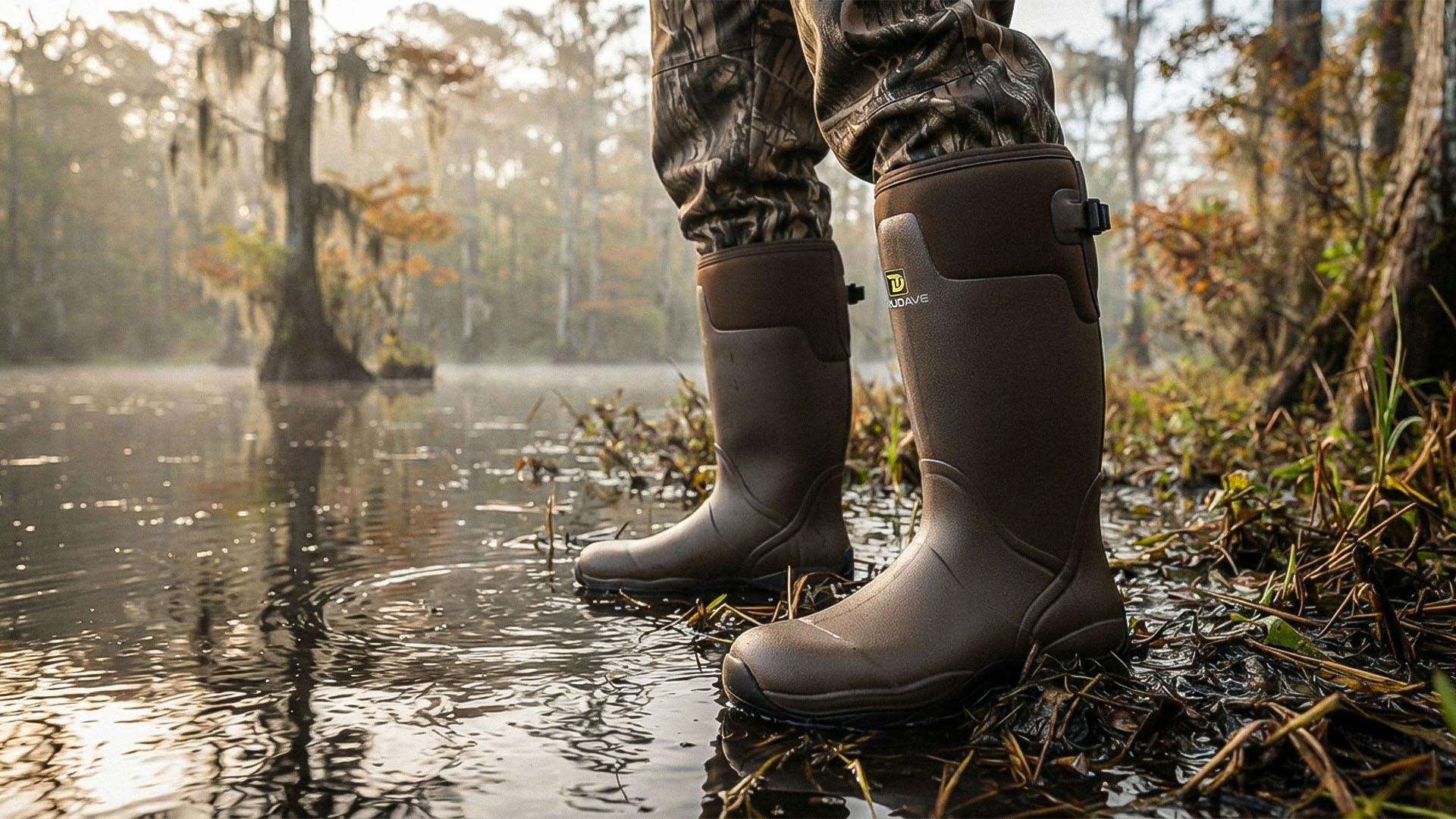
Hunters may benefit from waterproof hunting boots for South Texas hunting that provide secure heel retention, reliable traction, and enough protection for wet grass, mud, and brush-country travel.
Lightweight Boots Can Be Better in Warm Conditions
South Texas often rewards mobility.
Heavy insulated boots may become uncomfortable.
Choose footwear based on:
- Temperature
- Distance
- Water exposure
rather than assuming heavier is always better.
Too Much Insulation Can Cause Sweat
Warm feet can become:
- Wet
- Blister-prone
inside overly insulated boots.
Use insulation appropriate to actual conditions.
Secure Heel Fit Matters in Mud
Sticky soil pulls against every step.
Loose footwear creates:
- Blisters
- Fatigue
A good fit reduces unnecessary movement.
Traction Matters on Clay
Wet clay can become extremely slick.
Outsoles may pack with mud.
Use controlled steps on:
- Road banks
- Ditches
- Slopes
Tall Waterproof Boots Can Work Well in Low Wet Ground
Rubber hunting boots may be practical around:
- Wet pasture
- Mud
- Shallow water
But long walking still demands good fit.
Lace-Up Waterproof Boots Can Be Better for Long Ranch Walks
If most travel is on:
- Roads
- Firm prairie
- Dry brush
with only moderate wet ground, supportive lace-up boots may be more comfortable.
Choose Footwear Based on the Entire Route
One muddy hole should not determine the whole setup.
Think about:
- Mileage
- Heat
- Brush
- Terrain
- Water depth
Gaiters Can Help With Grass and Debris
Low gaiters can reduce:
- Seeds
- Mud
- Wet vegetation
entering from above.
Grass Seeds Can Become a Problem
Ranch vegetation may contain:
- Burrs
- Sharp seeds
Check:
- Socks
- Pants
- Boots
during long hunts.
Heat and Humidity Can Be More Dangerous Than Cold
Warm coastal conditions can increase:
- Dehydration
- Heat stress
Carry enough water.
Dry-Looking Air Can Still Dehydrate Hunters
Wind can increase moisture loss.
Drink regularly.
Do not wait until severe thirst appears.
Carry Water Away From the Vehicle
A short glass-and-stalk attempt can turn into a long loop.
Take water on every serious approach.
Sun Protection Matters
Open coastal prairie provides limited shade.
Use appropriate:
- Hat
- Sunscreen
- Clothing
especially during long glassing periods.
Thunderstorms Can Develop Quickly
Coastal weather can change fast.
Watch:
- Clouds
- Wind
- Lightning risk
Do not remain exposed during dangerous storms.
Heavy Rain Can Flood Low Ranch Roads
Drainages that were dry earlier can fill quickly.
Plan alternate routes.
Do not attempt unsafe water crossings.
Floodwater Can Hide Road Damage
Standing water may conceal:
- Washouts
- Deep ruts
- Holes
Do not drive blindly through unknown water.
Navigation Matters in Brush Country
Dense ranch roads and senderos can become confusing.
One intersection may look like another.
Use reliable navigation.
Mark the Vehicle
A stalk may pull hunters away from the original road system.
Save the truck location before leaving.
Offline Maps Are Useful
Cell service may be unreliable on large ranches.
Download:
- Roads
- Property boundaries
- Terrain
before hunting.
Property Boundaries Are Critical
Nilgai hunting often occurs on private or mixed-ownership landscapes.
Confirm:
- Permission
- Ranch boundary
- Neighboring property
before hunting.
A Moving Animal Can Cross Property Quickly
Do not follow across a boundary without permission.
Know the line before the stalk begins.
Ranch Rules Matter
Landowners may specify:
- Roads
- Parking
- Gates
- Hunting areas
Follow instructions exactly.
Leave Gates As Directed
Do not automatically close or open every gate.
Working livestock operations depend on specific gate management.
Ask first.
Livestock Is a Major Safety Consideration
Nilgai country may contain:
- Cattle
- Horses
- Other ranch animals
Before any shot, know exactly what lies behind the target.
Tall Grass Can Hide Livestock
An apparently empty background may contain animals behind:
- Brush
- Terrain folds
Use optics.
Wait for certainty.
Ranch Buildings Can Be Farther Away Than They Look
Flat country distorts distance.
Use maps to identify:
- Houses
- Barns
- Roads
before hunting.
Safe Backstops Matter
Open prairie can provide long sight lines.
That also means projectiles can travel far.
Avoid shots toward:
- Skyline
- Roads
- Buildings
- Livestock
Brush Is Not a Backstop
Dense thorn scrub can hide hazards.
Do not assume vegetation will safely stop a projectile.
Positive Identification Is Essential
South Texas properties may contain multiple large mammals.
Confirm:
- Species
- Legal animal
- Safe background
before shooting.
Nilgai Can Be Partially Hidden
Wait for a clear view.
Do not shoot at:
- Movement
- A dark shoulder
- An uncertain shape
through brush.
Group Animals Can Overlap
One nilgai may stand behind another.
Wait for clear separation.
Long Sight Lines Make Distance Hard to Judge
Flat coastal country lacks familiar reference points.
Use reliable ranging methods.
Know your demonstrated effective distance.
Do Not Let Open Country Encourage Poor Shots
Seeing animals far away does not mean the stalk is finished.
Use:
- Brush
- Drainages
- Terrain
to improve position where possible.
Stable Shooting Positions Matter
Ranch country may provide:
- Sitting
- Kneeling
- Supported positions
Practice before the hunt.
Do Not Shoot From Unstable Muddy Footing
Wet roads and grass can affect stance.
Move to a stable position before taking an opportunity.
Recovery Begins Before the Shot
Before shooting, mark:
- Brush line
- Road
- Lone tree
- Drainage
near the animal.
Dense cover can make the location difficult to find afterward.
Keep Watching After the Shot
Note:
- Direction
- Last visible point
- Other animals
Do not immediately move.
Mud Can Help Recovery
Fresh tracks may be visible in:
- Roads
- Low ground
Use them carefully.
Group tracks can also create confusion.
Brush Can Hide an Animal Quickly
A large animal moving only fifty yards into thorn scrub may disappear completely.
Use landmarks.
Move methodically.
Do Not Destroy Sign
If tracking is required:
Mark confirmed evidence.
Avoid unnecessary foot traffic.
Warm Weather Makes Game Care Critical
South Texas temperatures can remain high.
Before hunting, prepare:
- Cooler capacity
- Ice
- Game-care equipment
Large Animals Retain Heat
Body size makes rapid cooling especially important.
Begin proper field care promptly.
Humidity Can Slow Cooling
Warm humid air does not remove heat efficiently.
Move game toward suitable cooling conditions quickly.
Extraction Should Be Planned Before Shooting
A large nilgai may be difficult to move through:
- Mud
- Brush
- Wet pasture
Know the recovery route in advance.
Vehicle Access May Change After Rain
A truck that reached the area in the morning may not reach it after a storm.
Have an alternate extraction plan.
Do Not Damage Wet Ranch Roads During Recovery
A successful hunt does not justify:
- Deep ruts
- Property damage
Follow ranch instructions.
Multiple People May Be Needed
Large-game recovery can require additional help.
Plan before the hunt rather than improvising afterward.
Current Regulations Must Be Verified
Nilgai hunting rules can differ by:
- Jurisdiction
- Property
- Hunting method
Always verify current official:
- License requirements
- Season rules
- Legal methods
- Land-access requirements
before hunting.
Private-Land Rules Can Be More Restrictive
A method allowed under state law may still be prohibited by a ranch.
The property owner’s rules matter.
Do Not Assume Exotic Species Means No Regulation
Classification does not eliminate:
- Hunting laws
- Firearm laws
- Access rules
Check current requirements.
Night-Hunting or Specialized Equipment Rules May Differ
If considering any nontraditional method, verify current laws and property rules first.
Do not rely on information from another state or ranch.
Habitat Respect Still Matters
South Texas ranch landscapes support:
- Native wildlife
- Livestock
- Working agriculture
Responsible hunters should minimize disturbance.
Avoid Creating New Trails Through Sensitive Ground
Use established roads and routes where possible.
Do not damage:
- Fences
- Water systems
- Vegetation
unnecessarily.
Common Nilgai Hunting Mistakes
Glassing Open Fields Too Quickly
Animals may stand just inside brush.
Ignoring Senderos and Brush Edges
These transitions create visibility and travel routes.
Following Old Tracks
South Texas dirt can preserve sign for a long time.
Ignoring Rain-Changed Access
One storm can turn ranch roads into deep mud.
Wearing Heavy or Non-Waterproof Boots
Warm wet ranch country rewards waterproof mobility without unnecessary bulk.
Forgetting Livestock
Background awareness is essential.
Shooting Without Planning Extraction
Large animals and muddy roads complicate recovery.
Assuming Ranch Rules Are the Same Everywhere
Access and hunting methods can differ by property.
Frequently Asked Questions
Where do nilgai usually live in South Texas?
Nilgai may use coastal prairie, mesquite, thorn scrub, ranch grasslands, agricultural edges, drainages, and other habitats combining food with security cover.
Are senderos good places to hunt nilgai?
They can be useful because cleared lanes provide visibility through dense brush and may reveal regular animal crossings.
Is rain useful for nilgai hunting?
Rain can create fresh tracks and make current movement easier to distinguish, although it can also turn clay roads and low ranch ground into difficult mud.
Are coastal prairies good nilgai habitat?
Open grasslands can provide feeding habitat, particularly when connected to brush, water, and secure travel cover.
What boots are best for South Texas hunting?
Lightweight waterproof hunting boots with secure heel fit, dependable mud and wet-grass traction, and enough durability for thorn brush and long ranch walks are practical.
Why is glassing important for nilgai hunting?
Nilgai can remain partly concealed inside brush despite their large size. Slow glassing helps hunters detect small body movements and identify active travel edges before walking unnecessarily.
Final Thoughts
Nilgai hunting teaches hunters that a large animal does not need a large hiding place.
One mesquite line can conceal movement.
One shallow drainage becomes a covered travel route.
One sendero gives the hunter only a few seconds of visibility.
One rainstorm turns the entire road system into mud.
That is why the hunt starts with observation.
Glass the brush line.
Watch the senderos.
Read the freshest tracks.
Study water and food.
Respect the wind.
Plan for rain.
Wear boots that let you cross wet grass, sticky clay, ranch roads, thorn scrub, and shallow lowlands without making your feet the weakest part of the hunt.
And when a nilgai finally steps out of vegetation you were certain could not hide such a large animal, remember the lesson.
South Texas brush does not need to hide the entire animal.
It only needs to hide enough of it that a hunter looks away too soon.
