
Coastal marsh country looks too open to hide deer.
Tall reeds.
Mud.
Tidal creeks.
Small islands of higher ground.
Water reflecting the sky for hundreds of yards.
A hunter standing on the edge may think every animal should be easy to see.
Then a sika deer moves through the marsh.
One second, its back is visible above the grass.
The next, it disappears.
The deer has not run hundreds of yards.
It may only have stepped into a slightly lower channel hidden by reeds.
That is one of the defining challenges of sika deer hunting in coastal wetlands.
The landscape looks open from a distance.
At ground level, it is a maze.
Reed walls block visibility.
Creeks limit movement.
Mud slows hunters.
Tides change access.
Small pieces of dry ground become extremely important.
Successful hunters learn that marsh deer do not use the entire wetland equally.
They follow:
- Slightly elevated ground
- Tidal creek edges
- Brush islands
- Reed transitions
- Feeding zones
- Escape routes
Once you learn those patterns, the marsh stops looking random.
Sika Deer Are Well Adapted to Wet Habitat
Sika deer can use habitats very different from the upland forests associated with many other deer species.
Productive environments may include:
- Coastal marsh
- Wet woodland
- Reed beds
- Tidal wetlands
- Swamp edges
- Agricultural transitions
- Brush islands
In marsh country, even small changes in elevation matter.
Ground only several inches higher can provide:
- Drier bedding
- Easier travel
- Better vegetation
- Escape cover
Hunters need to learn to notice those differences.
High Ground Is More Valuable Than It Looks
A small island inside a marsh may appear insignificant.
To a deer surrounded by wet ground, it can provide:
- Bedding
- Resting cover
- Dry footing
- Shelter
Look for:
- Brush patches
- Slight ridges
- Old spoil banks
- Natural hummocks
These features can concentrate deer activity.
A five-acre island may matter more than hundreds of acres of surrounding reeds.
Map the Dry Ground First
Before hunting a coastal marsh, study where dry ground exists.
Useful features may include:
- Timber islands
- Levees
- Raised banks
- Field edges
- Old roadbeds
Then ask:
How does a deer move between them?
The answer often reveals the most useful travel corridors.
Tidal Creeks Shape Movement
Creeks divide marsh habitat.
Some are shallow.
Others become major barriers.
Deer may cross at:
- Narrow points
- Mud flats
- Higher banks
- Vegetated crossings
Repeated tracks can reveal preferred locations.
One crossing used night after night may be more valuable than a large area of random sign.
Mud Preserves Excellent Tracks
Soft marsh soil provides useful information.
Look along:
- Creek banks
- Trail intersections
- Dry-ground edges
- Mud flats
Fresh tracks can reveal:
- Direction
- Deer size
- Repeated use
A clean print with sharp edges may indicate recent activity.
Older tracks can become distorted quickly by:
- Tides
- Rain
- Soft mud
Freshness matters.
Tides Can Erase Sign
One of the unusual challenges of coastal hunting is that yesterday’s tracks may literally disappear.
A high tide can erase:
- Hoof prints
- Mud trails
- Crossing evidence
This makes scouting after falling water especially useful.
Fresh tracks appearing on newly exposed mud can provide strong timing information.
Learn the Tide Cycle
In tidal marshes, water level influences both deer and hunters.
Tide can change:
- Access
- Crossing depth
- Deer travel
- Available dry ground
Before hunting, understand the local tide schedule and how it affects the specific marsh.
A safe route at low tide may become inaccessible several hours later.
Never Assume the Return Route Will Stay Dry
This is one of the biggest wetland mistakes.
A hunter crosses a shallow channel in the morning.
Several hours later, incoming tide turns the same crossing into deeper water.
Always plan:
- Entry
- Exit
- Alternate route
before leaving firm ground.
Reed Beds Provide Serious Security
Tall marsh vegetation can hide deer extremely well.
Common cover may include:
- Reeds
- Cordgrass
- Phragmites
- Other wetland vegetation
A deer can travel almost invisibly inside it.
Hunters may detect:
- Movement
- Antlers
- Ears
- Vegetation shaking
before seeing the whole animal.
Hunt Reed Edges, Not Only the Center
The transition where dense reeds meet:
- Mud flat
- Timber
- Short grass
- Open marsh
can be especially productive.
Deer gain security while still having access to feeding and travel space.
These edges also provide hunters with better visibility.
Reed Channels Can Become Deer Trails
Repeated deer movement can create narrow lanes through thick vegetation.
Look for:
- Flattened stems
- Mud tracks
- Droppings
These channels may connect:
- Bedding islands
- Feeding areas
- Creek crossings
A barely visible trail inside reeds can be more important than an obvious open path.
Marsh Deer Often Travel Where Hunters Avoid
Humans naturally choose:
- Dry ground
- Easy paths
- Firm trails
Deer may choose:
- Mud
- Water edges
- Thick reeds
because these routes receive less pressure.
The uncomfortable ground often contains the best sign.
Food Changes Across the Wetland
Sika deer may feed on different vegetation depending on season and local habitat.
Useful feeding zones may include:
- Marsh grasses
- Agricultural edges
- Woodland browse
- Green wetland vegetation
The strongest locations combine food with nearby security.
A productive field several hundred yards from thick marsh cover can create reliable movement.
Agricultural Edges Can Be Important
Where coastal marsh borders:
- Corn
- Soybeans
- Grain
- Pasture
deer may move between wetland cover and feeding areas.
Look for trail systems entering the field.
These transitions can provide more predictable movement than the open marsh interior.
Hunt the Last Cover Before the Field
Instead of sitting directly in the field, hunters may gain better concealment near:
- Reed edge
- Brush
- Marsh trail
leading toward it.
This can provide an opportunity before deer fully enter the open.
Morning Movement Can Reveal Bedding Direction
Early movement may show deer returning from feeding habitat toward daytime security.
Tracks can indicate:
- Marsh entry
- Island destination
- Creek crossing
Use morning sign to understand where bedding cover is located.
Evening Movement May Reverse the Pattern
As daylight fades, deer may move from security toward:
- Food
- Open edges
- Travel corridors
Repeated scouting can reveal a reliable sequence.
The goal is not memorizing one trail.
It is understanding why the trail exists.
Fog Can Change Marsh Visibility
Coastal wetlands frequently develop:
- Fog
- Mist
- Humidity
Visibility may drop dramatically.
This can make deer harder to detect and navigation more difficult.
When fog is heavy:
- Slow down
- Confirm landmarks
- Avoid uncertain shots
Fog Also Makes Distance Harder to Judge
Flat terrain already lacks reference points.
Add fog and a deer can appear closer or farther than it really is.
Use known landmarks.
Do not rely only on visual impression.
Wind Is Critical in Open Marsh
Marsh landscapes often provide little protection from wind.
Wind influences:
- Deer scent detection
- Hunter comfort
- Water level
- Vegetation movement
Plan setup based on current wind direction.
Do not allow scent to blow directly into likely bedding or travel cover.
Marsh Wind Can Shift Around Vegetation
Even flat terrain can create local wind behavior.
Tall reeds, tree islands, and creek banks can redirect air.
Check wind at the actual stand.
Do not assume the parking-area wind is identical.
Strong Wind Can Push Deer Toward Protected Cover
During harsh weather, deer may use:
- Reed interiors
- Brush islands
- Timber edges
that reduce exposure.
Hunt the leeward side of major cover when practical.
Rain Can Improve Tracking
After rain, exposed mud becomes easier to read.
Fresh tracks stand out.
Rain may also make marsh vegetation quieter.
But it creates additional footing problems.
Wet Marsh Grass Soaks Hunters Quickly
Even without stepping into water, hunters may brush against wet vegetation for hundreds of yards.
Moisture transfers constantly to:
- Pants
- Boots
- Gear
Waterproof footwear becomes especially important.
Marsh Hunting Is a Footwear Challenge
A typical sika deer hunt may involve:
- Mud
- Shallow water
- Wet reeds
- Tidal creeks
- Slippery banks
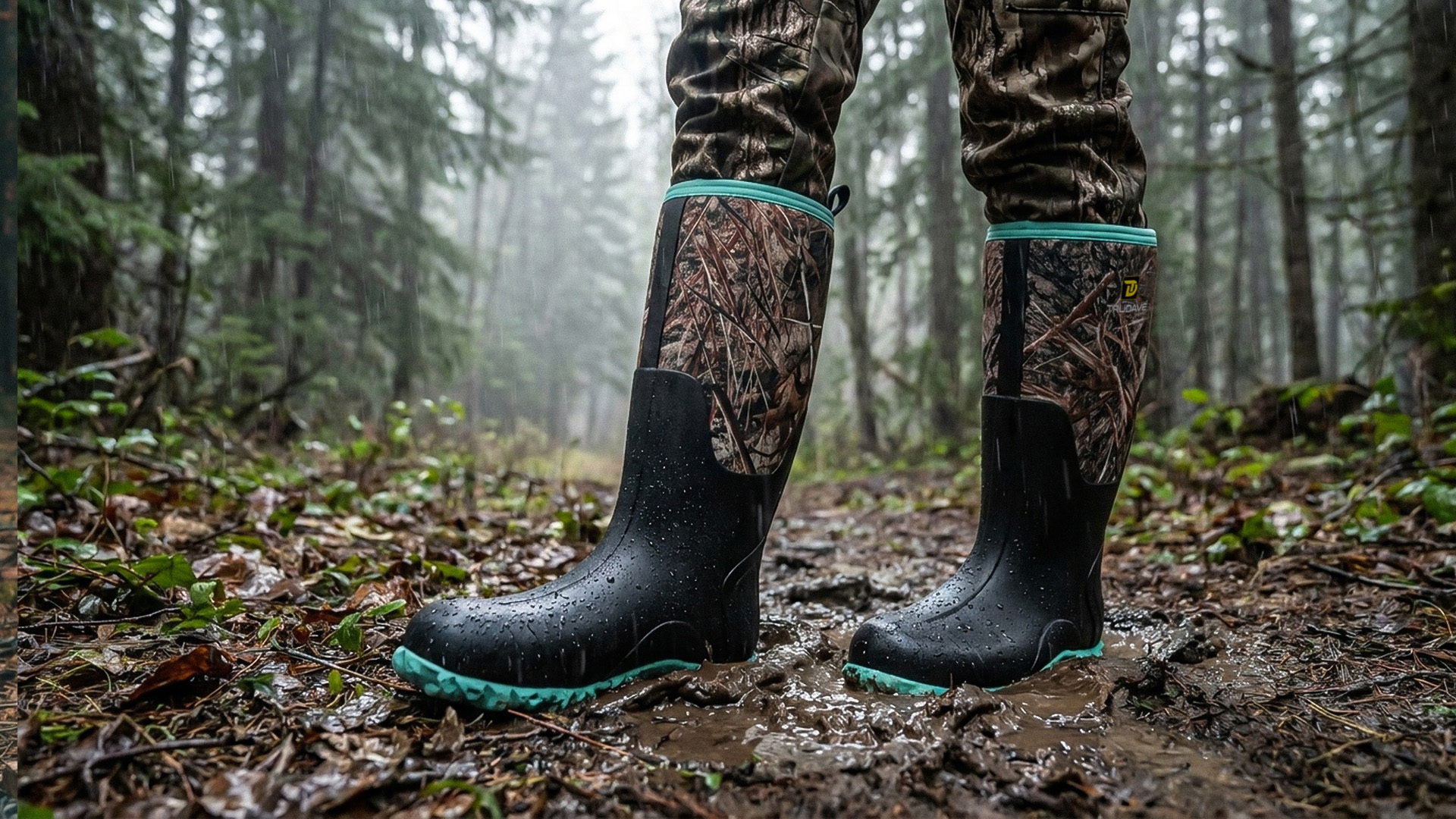
Hunters working these environments may benefit from waterproof hunting boots for marsh deer hunting that provide secure heel retention, dependable mud traction, and enough waterproof height for wetland travel.
The best deer trail may lead directly through the ground most hunters prefer to avoid.
Tall Rubber Hunting Boots Can Be Practical
Rubber boots are useful around:
- Mud
- Shallow water
- Saturated grass
They provide strong water protection.
Fit is critical.
Loose rubber boots become exhausting when mud grabs the outsole.
Secure Heel Fit Matters in Deep Mud
Every step in sticky marsh soil can pull the boot downward.
A loose heel creates:
- Blisters
- Fatigue
- Poor balance
Choose footwear that stays securely attached to the foot.
Boot Height Should Match the Route
One marsh may require only:
- Ankle-deep mud
- Wet grass
Another may include:
- Deep channels
- Tidal water
Scout before selecting footwear.
Deeper water may require appropriate waders or a different access route.
Waders May Be Necessary in Some Marshes
Where water depth exceeds normal hunting-boot height, properly selected waders can provide additional protection.
But they also add:
- Weight
- Heat
- Bulk
Do not wear more equipment than conditions require.
Mud Traction Is Essential
Marsh bottoms may include:
- Clay
- Soft peat
- Slick grass
An aggressive tread can improve stability.
But even the best outsole can clog with mud.
Short steps and careful route selection still matter.
Mud Can Hide Deep Holes
A flat-looking marsh surface may contain:
- Animal holes
- Creek cuts
- Soft pockets
Test uncertain ground.
Do not run.
A walking stick can help evaluate footing.
Creek Banks Can Collapse
Tidal creek edges may be undercut.
A grassy bank can look solid and still break under body weight.
Stay back from uncertain edges.
Approach crossings slowly.
Salt Marsh Mud Can Be Extremely Soft
Some coastal bottoms feel firm for the first step.
Then suddenly become deep.
Avoid blindly following a deer trail into unknown mud.
Animals have very different body weight and footing.
Deer Tracks Do Not Prove a Crossing Is Safe
A sika deer can cross mud or water that may trap a hunter.
Evaluate every crossing independently.
Use safer routes when available.
Navigation Is More Difficult Than It Looks
Flat marsh contains few landmarks.
Reed beds can hide:
- Islands
- Creeks
- Roads
Once inside the vegetation, orientation becomes difficult.
Carry reliable navigation.
Mark the vehicle before entering.
Offline Maps Are Extremely Useful
Cell coverage can be unreliable in remote wetland areas.
Download maps.
Mark:
- Vehicle
- Dry-ground islands
- Creek crossings
- Property boundaries
Tide Information Should Be Part of Navigation
A map shows where the creek is.
It does not show exactly how deep it will be later.
Combine geographic navigation with local tide knowledge.
Both matter.
Carry a Headlamp
Even a morning hunt can turn into a late recovery.
Marsh navigation becomes much more difficult after dark.
Carry:
- Headlamp
- Backup power
Do not depend only on phone light.
Reflective Landmarks Can Help
Legal, non-damaging route markers or saved GPS waypoints can improve return navigation where permitted.
Avoid altering public habitat unnecessarily.
The goal is finding your way back without leaving permanent impact.
Insects Can Be Brutal
Coastal marshes can contain:
- Mosquitoes
- Biting flies
- Ticks
depending on season.
Use appropriate:
- Repellent
- Clothing
Constant swatting creates movement and reduces concentration.
Warm Weather Creates Heat Stress
Early-season wetland hunts can be:
- Hot
- Humid
- Windless
Walking through mud increases energy use dramatically.
Carry water.
Take breaks.
Humidity Makes Sweat Management Harder
Breathable layers matter.
A hunter may become soaked from sweat inside waterproof clothing.
Use ventilation.
Avoid over-layering.
Cold Weather Creates the Opposite Problem
Later seasons may combine:
- Wind
- Cold water
- Rain
Wet feet become dangerous when temperatures drop.
Choose insulation according to conditions.
Insulation Should Match Activity
Marsh deer hunting can include:
- Long muddy walks
- Long stationary waits
Too much insulation creates sweat during the walk.
Too little can become uncomfortable in the stand.
Balance is important.
Dry Socks Can Save the Hunt
Carry a spare pair in waterproof storage.
If water enters footwear unexpectedly, dry socks can improve comfort during the return.
Marsh Islands Can Be Excellent Bedding Habitat
Small timber or brush islands surrounded by wetland create security.
Look for:
- Tracks
- Beds
- Droppings
along the edges.
Do not unnecessarily push through the center.
Understanding the entrance trails may be enough.
Bedding Cover Should Be Treated Carefully
Repeatedly entering secure bedding areas can alter deer behavior.
Instead, identify travel corridors leading out.
Hunt the edge when possible.
Narrow Land Bridges Can Concentrate Movement
A strip of firmer ground connecting:
- Two islands
- Marsh and woodland
can become a natural funnel.
These subtle features may be difficult to see from ground level.
Topographic imagery can help.
Old Levees Can Act Like Highways
Raised dikes and historical levees provide easy travel above surrounding marsh.
Deer may use them to avoid deep mud.
Fresh tracks can reveal repeated travel.
However, hunters should verify access and property rules before using man-made structures.
Abandoned Roadbeds Can Hold Sign
An old road may be only a few inches higher than surrounding wetland.
That can be enough to attract deer travel.
Look for:
- Tracks
- Droppings
- Trail intersections
along these elevated corridors.
Pressure Changes Marsh Deer Behavior
Sika deer can respond quickly to repeated human activity.
They may:
- Move deeper into reeds
- Use smaller islands
- Travel later
- Avoid obvious access
This makes quiet entry important.
Easy Access Usually Receives More Hunting Pressure
Parking lots, boat ramps, and dry trails naturally attract hunters.
Less obvious habitat can hold more relaxed deer.
But do not pursue difficult access beyond safe limits.
The goal is reduced pressure, not unnecessary danger.
Approach From the Least Disturbing Direction
Consider:
- Wind
- Noise
- Deer bedding
- Tidal water
before choosing entry.
The shortest route is not always best.
Boats Can Provide Access in Some Areas
Where legal and appropriate, small boats may provide access to:
- Islands
- Tidal creeks
- Remote marsh
Boating introduces additional risks.
Use appropriate flotation devices and follow current boating laws.
Tidal Water Is Not Like a Farm Pond
Current, wind, and changing depth can complicate boat travel.
Know:
- Channel
- Weather
- Tide
before entering.
Small Boats Need Conservative Loading
Hunters may carry:
- Firearm
- Pack
- Boots
- Game
Do not overload the craft.
Organize equipment securely.
Cold-Water Boating Requires Extra Caution
Cold tidal water can create serious hypothermia risk.
Wear appropriate flotation equipment.
Do not treat a short marsh crossing casually.
Public Marsh Rules Can Be Highly Specific
Coastal wildlife areas may have special regulations involving:
- Access
- Boats
- Parking
- Hunt zones
- Permits
- Seasonal closures
Check the exact property.
General statewide rules may not be enough.
Private Marsh Boundaries Are Difficult to See
Water and reeds erase obvious property lines.
Use reliable mapping.
Do not assume one continuous marsh is one ownership unit.
Sika Deer Regulations Can Be Region-Specific
Sika deer hunting opportunities are localized.
Rules may vary significantly by:
- State
- County
- Management area
- Season
- Weapon type
Always verify current official regulations before hunting.
Do Not Assume Sika Deer Rules Match Whitetail Rules
Even where both species occur in the same broader region, regulations may differ.
Check:
- Seasons
- Bag limits
- Tags
- Sex restrictions
- Legal methods
separately.
Species Identification Is Essential
Some coastal regions can contain both:
- Sika deer
- White-tailed deer
Hunters should learn clear identification differences before the hunt.
Habitat can provide clues.
It is not enough.
Positive identification comes first.
Body Size Can Help but Is Not Enough
Sika deer are generally smaller than many local whitetails.
But distance, vegetation, and age can distort size perception.
Use multiple identification characteristics.
Vocalizations Can Reveal Sika Presence
Sika deer are known for distinctive vocal behavior, particularly during breeding periods.
Hunters may hear deer before seeing them.
Use sound as:
- Location information
not as a substitute for visual identification.
Marsh Vegetation Makes Shot Opportunities Brief
A deer may cross a reed opening for only seconds.
Prepare safe shooting lanes mentally before the opportunity develops.
Do not rush through uncertain vegetation.
Know the Background
Flat coastal country can contain:
- Roads
- Buildings
- Boats
- Other hunters
far beyond the animal.
Never assume reeds provide a safe backstop.
Do Not Shoot at Movement in Grass
Tall vegetation can hide:
- Other deer
- Hunters
- Livestock where present
Wait for full identification and a safe background.
Recovery Can Be Extremely Difficult
A deer entering reeds after the shot may disappear within seconds.
Before shooting, note:
- Creek
- Reed edge
- Island
- Distinct vegetation
Mark the exact last location.
Mud Complicates Blood Tracking
Wet marsh ground may dilute or hide sign.
Look for:
- Tracks
- Broken reeds
- Hair
- Blood where present
Move slowly.
Rising Water Can Erase Recovery Sign
Tide can remove evidence.
This makes efficient, methodical recovery especially important.
Do not delay unnecessarily.
Multiple Hunters Can Destroy a Trail
If tracking is necessary, avoid immediately spreading through the entire area.
One person should carefully identify the trail first.
Protect sign.
Reeds Can Hide a Deer Only Yards Away
Dense marsh cover creates extremely short visibility.
Move cautiously during recovery.
Always maintain firearm safety and clear communication between hunters.
Game Extraction Can Be Harder Than the Hunt
A harvested deer in deep marsh may need to be moved through:
- Mud
- Water
- Reeds
- Creeks
Plan extraction before hunting.
Ask:
How will the deer reach dry ground?
Do Not Wait Until Success to Plan Recovery
Know whether the hunt may require:
- Sled
- Cart
- Boat
- Additional help
where legal and appropriate.
A difficult marsh can turn a short recovery into hours of work.
Tidal Timing Can Affect Extraction Too
A route that was easy while hunting may become harder when dragging game back.
Consider the expected tide during the likely recovery period.
Warm Coastal Weather Requires Fast Game Care
Sika seasons can include mild or warm conditions.
Prepare:
- Cooler space
- Ice
- Game bags
- Processing plan
before hunting.
Humidity Slows Cooling
High humidity and mild temperatures can make game care more difficult.
Get harvested animals to appropriate cooling conditions promptly.
Follow current wildlife and food-safety guidance.
Saltwater and Mud Are Hard on Gear
After the hunt, clean:
- Boots
- Metal equipment
- Packs
appropriately.
Salt and marsh mud can accelerate corrosion and material wear.
Maintenance extends gear life.
Rinse Boots After Salt-Marsh Hunts
Salt deposits can remain on footwear.
Follow manufacturer care instructions.
Remove:
- Mud
- Salt
- Organic debris
before storage.
Common Sika Deer Hunting Mistakes
Treating the Marsh Like Flat Open Ground
Reeds and channels create hidden terrain.
Ignoring Tiny Pieces of Dry Ground
Small islands can concentrate bedding and travel.
Forgetting the Tide
Access can change within hours.
Hunting Only Agricultural Edges
Marsh interiors may hold secure deer during pressure.
Wearing Poor Waterproof Footwear
Mud, tidal water, and wet reeds punish leaky boots quickly.
Entering Bedding Islands Repeatedly
Pressure changes behavior.
Shooting at Movement in Tall Grass
Positive identification and a safe background are mandatory.
Planning the Hunt but Not the Extraction
Marsh recovery can be the hardest part of the day.
Frequently Asked Questions
Where do sika deer live in coastal areas?
They may use tidal marsh, reed beds, wet woodland, brush islands, swamp edges, agricultural transitions, and other habitats combining food with secure wetland cover.
Are tidal creeks important for sika deer hunting?
Yes. Creeks shape movement and create crossings, edges, and natural travel corridors throughout marsh habitat.
Is fresh mud useful for scouting sika deer?
Yes. Fresh tracks in tidal mud can reveal current travel routes and crossing points, although tides can erase sign quickly.
Do tides affect deer hunting?
Yes. Tide can change deer travel, hunter access, creek depth, and recovery routes, making tidal planning especially important.
What boots are best for marsh deer hunting?
Tall waterproof hunting boots with secure heel fit, aggressive mud traction, and enough height for wet grass, mud, and shallow tidal water are practical. Deeper conditions may require appropriate waders.
Are sika deer hunting regulations the same as whitetail regulations?
Not necessarily. Seasons, tags, bag limits, and legal methods may differ by jurisdiction, so current species-specific regulations should always be checked.
Final Thoughts
Sika deer hunting teaches hunters that marsh country is not really flat.
It only looks flat from far away.
One island is slightly higher.
One creek is slightly narrower.
One old roadbed stays dry.
One reed edge creates a hidden trail.
One tide exposes a crossing that disappears six hours later.
Those small differences control the hunt.
Study the tide.
Find dry ground.
Follow fresh mud tracks.
Watch reed edges.
Use wind carefully.
Plan the return route before water rises.
Wear boots that let you cross mud, wet grass, shallow water, creek banks, and tidal ground without choosing the easy path around productive habitat.
And when a sika deer disappears into reeds that looked too thin to hide anything, remember:
The marsh did not swallow the deer.
It simply knew the terrain better than you did.
Your next hunt starts by learning that terrain one channel, one island, and one tide at a time.
