
Spruce grouse country can feel almost too quiet.
Black spruce.
Jack pine.
Fir.
Moss.
Wet ground.
Narrow forest roads cutting through miles of dark conifers.
A hunter walks slowly through the timber.
Nothing flushes.
Nothing calls.
The forest seems empty.
Then a small movement appears beside a spruce trunk.
A grouse is standing only twenty yards away.
It has probably been watching the hunter for several seconds.
Another bird sits quietly farther back in the trees.
That is one of the defining features of spruce grouse hunting.
These birds can be remarkably difficult to notice because they blend into the dark conifer forest around them.
They may remain still instead of exploding from cover immediately.
And unlike grouse species strongly tied to young hardwoods or prairie, spruce grouse spend much of their lives inside boreal conifer habitat.
Successful hunters learn to stop searching every forest equally.
They focus on the conifer stands that provide the right combination of food, cover, ground vegetation, moisture, and seasonal shelter.
Spruce Grouse Are Birds of Boreal Forest
Spruce grouse are closely associated with northern conifer systems.
Depending on region, productive habitat may include:
- Black spruce
- White spruce
- Jack pine
- Fir
- Tamarack
- Mixed conifer forest
- Muskeg edges
- Boreal lowlands
- Young conifer regeneration
The key is not simply finding evergreen trees.
Forest structure matters.
One spruce stand can hold several birds.
Another nearby stand may hold none.
Conifer Food Is Central
Spruce grouse rely heavily on conifer-associated food, especially during colder parts of the year.
Needles and buds can become increasingly important as other seasonal food disappears.
This means hunters should pay attention to:
- Tree species
- Stand density
- Seasonal food availability
A forest containing the right conifers can remain productive even after frost and snow remove many ground-level foods.
Early Season Can Look Different
Earlier in fall, spruce grouse may use a broader variety of foods and habitats.
Hunters may find birds around:
- Berry patches
- Young forest
- Mossy ground
- Forest-road edges
- Small openings
As the season progresses, birds may become more closely associated with conifer feeding cover.
Follow the seasonal shift.
Berry-Producing Ground Cover Can Be Productive
Boreal forest openings may contain:
- Blueberries
- Cranberries
- Other northern berries
where locally available.
Early-season grouse may feed around these areas.
Look for berry patches directly beside:
- Spruce
- Pine
- Fir
The combination of feeding ground and immediate security can be excellent.
Mossy Forest Floors Are Worth Attention
Spruce grouse habitat often includes thick moss.
This may indicate:
- Cool conditions
- Moist soil
- Boreal forest structure
Moss alone does not guarantee birds.
But mossy conifer stands combined with suitable food and understory are worth hunting slowly.
Black Spruce Lowlands Can Be Classic Habitat
Black spruce often grows in wet, cold northern environments.
These areas may include:
- Moss
- Peat
- Low shrubs
- Standing water nearby
Hunters should work the drier margins and slightly raised ground carefully.
Birds may use the trees while hunters struggle through the wettest center.
Muskeg Edges Can Be Better Than the Middle
A muskeg or bog can appear open and empty.
The transition where it meets conifer forest may be much more productive.
Look along:
- Black spruce edges
- Tamarack transitions
- Low shrub borders
These areas combine:
- Food
- Ground cover
- Tree security
- Moisture
The edge often matters more than the wet center.
Tamarack Adds Habitat Diversity
In some northern regions, tamarack stands can create useful transitional habitat.
Search where tamarack meets:
- Black spruce
- Fir
- Low shrubs
- Wet ground
Different tree structure can create feeding and movement opportunities.
Young Conifer Stands Can Hold Birds
Regenerating conifer stands may provide:
- Low branches
- Ground-level concealment
- Feeding cover
Search younger trees where they border:
- Mature conifers
- Forest roads
- Wet openings
Habitat age matters just as much in spruce grouse hunting as in many other upland pursuits.
Mature Forest Can Still Be Productive
Unlike ruffed grouse, spruce grouse are not completely dependent on young hardwood regeneration.
Mature conifers can remain valuable.
But the best stands usually still provide:
- Usable understory
- Food
- Shelter
- Nearby openings
A completely sterile forest floor may hold fewer birds than a more diverse stand.
Mixed-Age Conifer Forest Is Often Better
One block may contain:
- Young spruce
- Mature fir
- Pine
- Open mossy ground
This diversity creates multiple resources.
A bird can feed, loaf, and escape within a very small area.
The best habitat often feels structurally complicated.
Forest Roads Are Excellent Scouting Features
Quiet gravel and dirt roads provide:
- Grit
- Visibility
- Feeding edges
- Easier travel
Spruce grouse may appear on roads or shoulders, especially during low-disturbance periods.
A road sighting is valuable information.
Do not stop at the road itself.
Hunt the conifer habitat beside it.
Grit Can Draw Grouse Toward Roads
Like other grouse, spruce grouse use grit to help process food.
Look for birds along:
- Gravel roads
- Exposed soil
- Sandy openings
Early morning or late afternoon may reveal this behavior.
Again, use the sighting to identify the surrounding cover.
Old Logging Roads Can Be Even Better
A closed or lightly traveled road may develop:
- Moss
- Grass
- Low shrubs
- Berry plants
while receiving little disturbance.
These routes create productive edges inside large conifer systems.
Walk slowly.
Scan both road and timber.
Do Not Walk Too Fast
One of the easiest ways to miss spruce grouse is moving too quickly.
These birds may remain motionless.
Use a simple rhythm:
Walk.
Stop.
Scan.
Listen.
Then move again.
The pause often reveals what continuous walking hides.
Search Tree Bases Carefully
A spruce grouse standing beside a trunk can disappear visually.
Look for:
- Head shape
- Dark body outline
- Movement
- Eye
- Tail
Do not scan only the ground.
Birds may stand slightly elevated on roots or low branches.
Search Low Branches Too
Spruce grouse may use conifer branches.
A bird only a few feet off the ground can be surprisingly hard to see.
Check:
- Horizontal limbs
- Dense spruce interiors
- Tree edges
Positive identification and safe background remain essential before any shot.
Spruce Grouse Can Be Unusually Tolerant of Approach
Some birds may allow hunters to get relatively close.
That does not mean every bird behaves this way.
Hunting pressure and local conditions can make them much more cautious.
Never assume a bird will simply remain still.
Approach with the same discipline used for any upland species.
Do Not Mistake Tolerance for an Easy Hunt
A bird that holds close may still be extremely difficult to spot.
The real challenge is often detection.
Learn to search the forest slowly.
Successful hunters see details:
- A shape beside a trunk
- A movement behind needles
- A track crossing moss
Fresh Snow Can Make Spruce Grouse Easier to Locate
Snow creates new clues.
Hunters can find:
- Tracks
- Feeding activity
- Roost areas
- Tree-to-ground movement
Fresh tracks in a conifer stand tell you the birds are using that exact habitat now.
Snow Also Changes Contrast
Dark birds may become easier to see against white ground.
But conifer shadows create strong camouflage.
Look especially along:
- Snow-covered openings
- Road edges
- Tree bases
Movement remains the best clue.
Patchy Snow Can Be More Difficult
Early winter conditions create a mix of:
- Snow
- Needles
- Moss
- Dark soil
This visual clutter can hide grouse well.
Slow down.
Search transitions.
Deep Snow Changes Hunter Access
Spruce grouse may remain in suitable conifer habitat while hunters become slower.
Deep snow increases:
- Energy use
- Travel time
- Navigation difficulty
Hunt smaller high-quality areas rather than trying to cover normal dry-ground mileage.
Conifers Provide Winter Shelter
Dense evergreen cover reduces:
- Wind
- Snow exposure
This can make certain stands more attractive during severe weather.
Look for:
- Thick fir
- Spruce pockets
- Leeward timber
Wind Can Move Birds Into Denser Forest
Strong northern wind makes open bog edges uncomfortable.
Birds may spend more time inside protected timber.
Search the calm side of:
- Ridges
- Muskeg edges
- Dense spruce
Small differences in wind exposure matter.
Cold Weather Changes Feeding Patterns
As snow covers berries and ground vegetation, grouse may increasingly use conifer foods.
This can shift their location vertically into trees.
Do not search only the forest floor later in the season.
Look upward too.
Rain Changes Boreal Forest Conditions
Rain can create:
- Wet moss
- Mud
- Saturated vegetation
- Higher creek levels
It may also make forest movement quieter.
After rain, hunters can approach through leaves and moss with less noise.
Wet Conifers Soak Hunters Quickly
A hunter brushing against spruce branches can become wet even when rain has stopped.
Moisture transfers from:
- Needles
- Shrubs
- Grass
to clothing.
This makes waterproof footwear especially useful.
Waterproof Boots Matter in Boreal Habitat
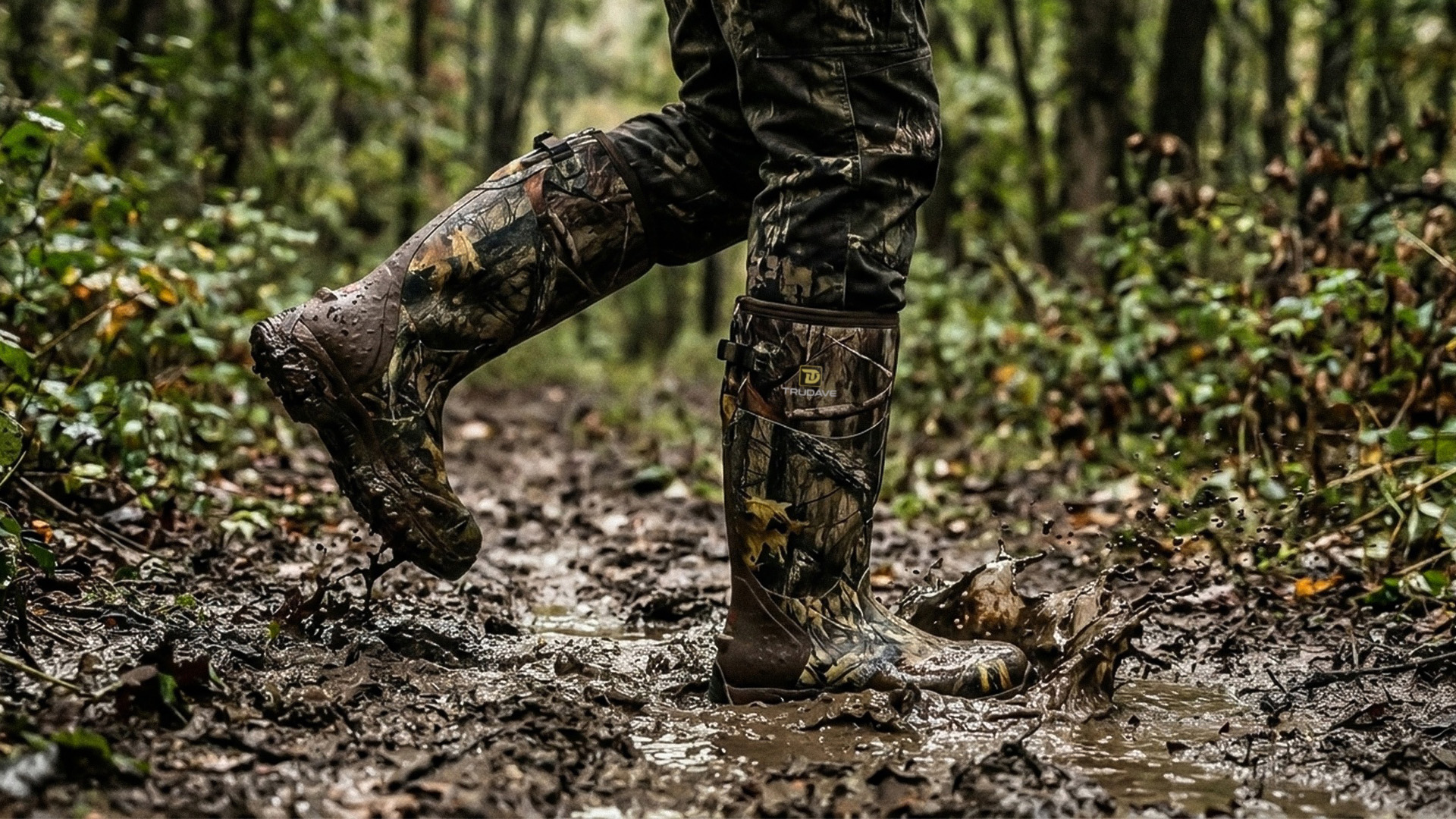
Hunters covering these conditions may benefit from waterproof hunting boots for spruce grouse hunting that provide reliable moisture protection, secure heel fit, and traction for moss, wet roots, mud, muskeg edges, and early snow.
The forest may look dry from the road.
Five minutes inside can tell a different story.
Lightweight Waterproof Boots Are Often a Good Balance
Spruce grouse hunting can involve long forest walks without extreme mountain elevation.
A lighter waterproof boot may provide:
- Mobility
- Comfort
- Moisture protection
without excessive bulk.
Match insulation to actual temperatures.
Too Much Insulation Can Be Uncomfortable
Active walking creates heat.
A heavily insulated boot may cause sweat during mild fall weather.
Sweaty socks can become cold later.
Choose insulation based on:
- Temperature
- Activity
- Snow depth
Secure Fit Matters in Muskeg
Wet peat can grab footwear.
Loose boots create:
- Heel movement
- Fatigue
- Blisters
A secure fit reduces this problem.
Moss Can Hide Holes
Soft forest floors may conceal:
- Roots
- Water
- Depressions
Do not assume every green surface is firm.
Test uncertain ground.
Wet Roots Are Extremely Slippery
Spruce and fir roots may cross trails.
After rain, they become slick.
Step over rather than directly on top when possible.
Good traction helps, but careful foot placement matters more.
Fallen Timber Creates Constant Obstacles
Boreal forest may contain:
- Deadfall
- Broken branches
- Windthrow
Step carefully.
Avoid jumping blindly.
Snow can hide obstacles later in the season.
Snow-Covered Deadfall Is Dangerous
A smooth white surface may conceal:
- Logs
- Holes
- Branches
Use slower movement in winter.
A walking stick or trekking poles can help in difficult sections.
Muskeg Water Can Be Deeper Than It Looks
Dark wet ground may contain:
- Soft peat
- Hidden channels
- Standing water
Do not follow wildlife blindly.
Use firmer routes.
Small Creeks Need Respect
Boreal grouse habitat often includes:
- Narrow creeks
- Beaver channels
- Wet crossings
Evaluate depth and footing.
A bird crossing a drainage does not mean the same path is safe for a hunter.
Beaver Country Can Create Good Habitat Edges
Old beaver systems may create:
- Shrubby margins
- Wet conifers
- Openings
These transitions can hold grouse.
But beaver habitat also introduces:
- Deep channels
- Mud
- Unstable banks
Move carefully.
Dogs Can Be Useful
A trained bird dog may help locate spruce grouse hidden in thick cover.
But boreal forest limits visibility.
Keep dogs under control.
Dog Range Should Be Conservative
Dense spruce can hide a dog almost immediately.
A close or moderate range helps hunters:
- Reach points
- Maintain safe shooting
- Track the dog
Wide-range prairie style is often less practical.
Wet Ground Tires Dogs
Muskeg requires constant effort.
Dogs may:
- Sink
- Jump
- Pull through mud
Give breaks.
Flat wet terrain can exhaust a dog more than dry rolling ground.
Cold Water Can Become a Dog Hazard
Late-season crossings can be extremely cold.
Monitor dogs after:
- Creek crossings
- Muskeg
- Snow
Watch for:
- Shivering
- Slowed movement
Carry Clean Water
Even in wet country, natural water may not always be suitable.
Carry clean water when practical.
This is especially important during warmer early-season hunts.
Paw Checks Matter
Boreal forest floors may contain:
- Sharp sticks
- Ice
- Rock
- Debris
Inspect paws regularly.
Small cuts can become serious over multiple days.
Hunting Without a Dog Works Well Too
Spruce grouse can be hunted effectively without dogs.
Use:
- Slow road-edge walking
- Conifer scouting
- Snow tracks
- Habitat transitions
Because birds may hold quietly, patient visual searching can be very effective.
Binoculars Can Help in Open Forest
Small binoculars are useful for checking:
- Distant road edges
- Tree bases
- Low branches
Do not glass while walking.
Stop first.
The forest floor contains too many hidden hazards.
Listen for Subtle Movement
Spruce grouse may produce:
- Wing noise
- Foot movement
- Branch movement
The boreal forest can be extremely quiet.
Use that silence.
Stop often.
Morning Can Be Productive Along Roads
Early birds may use:
- Grit
- Feeding edges
- Openings
before disturbance increases.
Scout quietly.
Then move into surrounding timber.
Midday Can Still Produce
Spruce grouse do not require a sunrise-only strategy.
Cool forest conditions can keep birds active through the day.
Use midday to hunt:
- Conifer edges
- Wet transitions
- Young stands
Evening Road Edges Can Be Useful
Low-light periods may bring birds toward:
- Gravel
- Open feeding areas
Watch quietly from legal access.
A roadside bird can identify an entire productive forest block.
Logging Activity Changes Habitat
Timber harvest can create:
- Young conifer regeneration
- Roads
- Openings
These changes may benefit birds at certain stages.
But active logging requires caution.
Stay Away From Active Logging
Do not interfere with:
- Machinery
- Trucks
- Work crews
Respect closures.
A grouse sighting is never worth entering an active work zone.
Old Cuts Can Create Better Structure
Several years after harvest, regenerating conifers may provide:
- Low branches
- Ground-level cover
Search edges where young regeneration meets older forest.
Public Forests Can Offer Good Opportunity
Spruce grouse habitat may occur on:
- State forest
- National forest
- Provincial or other public land where applicable and legal
- Wildlife areas
Research current access and regulations.
Northern Access Can Change With Weather
Fall rain and early snow can affect:
- Forest roads
- Gravel tracks
- Bridges
Check current conditions.
Do not assume a route remains passable all season.
Mud Roads Can Trap Vehicles
Boreal roads may become extremely soft.
If conditions deteriorate:
Park.
Walk.
Do not turn a bird hunt into a vehicle recovery problem.
Seasonal Gates Matter
Some forest roads close due to:
- Logging
- Weather
- Wildlife management
Know closure dates.
A gate that was open in September may be locked later.
Navigation Is Easy to Lose in Dark Conifers
Dense spruce reduces visibility.
Every stand can look similar.
Carry:
- Offline maps
- GPS
- Compass where appropriate
Mark the vehicle before leaving the road.
Fog Makes Boreal Navigation Harder
Lowlands can hold fog.
When distant landmarks disappear:
Slow down.
Confirm direction.
Do not rely on instinct alone.
Carry a Headlamp
Northern fall daylight can disappear quickly.
A late bird recovery or long wet detour can delay the return.
Carry a headlamp and backup power.
Wildlife Awareness Matters
Northern grouse habitat can overlap with:
- Moose
- Bears
- Other large wildlife
Stay alert.
Do not allow dogs to chase wildlife.
Give animals space.
Moose Can Be Hidden in Thick Spruce
A hunter focused on grouse may approach a moose at surprisingly close distance.
Listen.
Watch for:
- Tracks
- Browse
- Large movement
Do not push blindly into dense cover if a large animal is present.
Bear Awareness Should Match the Region
Follow current local guidance regarding:
- Food storage
- Game handling
- Encounters
Spruce grouse hunting may target small birds.
The surrounding ecosystem can still contain large predators.
Species Identification Is Critical
Spruce grouse may overlap with:
- Ruffed grouse
- Dusky grouse in some broader regions
- Other northern grouse
Hunters should know local field marks and habitat associations.
Positive identification comes before the shot.
Spruce Grouse and Ruffed Grouse Use Different Habitat
Ruffed grouse are commonly associated with:
- Young hardwood forest
- Aspen
- Alder
Spruce grouse are more strongly tied to conifer habitats.
Where both occur, vegetation can help narrow identification.
But habitat alone is not enough.
Confirm the bird.
Plumage Can Blend Extremely Well
Male and female spruce grouse may look different.
Season and light can further complicate identification.
Study current wildlife-agency identification materials before hunting.
Do not depend on one internet photo.
Low Flushes Require Discipline
Spruce grouse may fly low between trees.
Before shooting, know where:
- Dog
- Partners
- Road
- Buildings
are located.
If the background is unclear, let the bird go.
Birds in Trees Require Extra Caution
A grouse perched in a conifer can create uncertain background angles.
Never assume upward shooting is automatically safe.
Know what lies beyond.
Follow local legal-method rules.
Do Not Shoot at Movement Alone
A branch shaking inside spruce is not enough.
Wait for:
- Clear identification
- Legal target
- Safe background
Dense forest requires patience.
Mark Every Downed Bird
A grouse can disappear in:
- Moss
- Needles
- Brush
- Snow
Mark the exact fall.
Use:
- Spruce trunk
- Rock
- Road edge
as reference.
Dogs Can Help With Recovery
A trained dog can locate birds hidden beneath:
- Branches
- Moss
- Snow
Give the dog time.
Avoid trampling the area immediately.
Warm Early Season Requires Game Care
Northern forests can still be warm in early fall.
Keep harvested birds:
- Clean
- Cool
- Shaded
Follow current food-safety guidance.
Snow Does Not Eliminate Proper Handling
Cold weather helps preservation.
But birds still require proper field care.
Do not assume cold air solves everything automatically.
Regulations Must Be Checked Locally
Spruce grouse rules vary by state, province, region, and management area.
Before hunting, verify:
- Season dates
- Bag limits
- Possession limits
- License requirements
- Open units
- Legal methods
- Public-land restrictions
Use current official wildlife-agency information.
Some Areas May Protect Spruce Grouse
Spruce grouse status and hunting opportunity differ by jurisdiction.
Never assume the species is legally huntable just because birds are present.
Check current rules carefully.
Conservation Depends on Boreal Habitat
Spruce grouse depend on large northern conifer ecosystems.
Habitat can change through:
- Logging
- Fire
- Forest succession
- Wetland alteration
Healthy grouse populations benefit from landscapes containing diverse conifer age classes and functioning wetlands.
Common Spruce Grouse Hunting Mistakes
Hunting Every Conifer Stand Equally
Forest structure and food matter.
Walking Too Fast
Birds may remain nearly motionless.
Looking Only on the Ground
Spruce grouse may use low tree branches.
Ignoring Muskeg and Wet Edges
These transitions can hold excellent habitat.
Wearing Leaky or Poorly Fitting Boots
Wet boreal ground punishes bad footwear quickly.
Letting Dogs Range Too Far
Dense spruce eliminates visibility.
Assuming Every Northern Grouse Is a Spruce Grouse
Species identification is essential.
Failing to Check Local Hunting Status
Legal opportunity varies significantly.
Frequently Asked Questions
Where do spruce grouse usually live?
Spruce grouse commonly use northern conifer habitats containing spruce, pine, fir, muskeg edges, wet lowlands, and suitable young or mixed-age evergreen forest.
Are spruce grouse difficult to find?
They can be because their plumage blends extremely well into conifers and some birds may remain still instead of flushing immediately.
Is fresh snow good for spruce grouse hunting?
Fresh snow can reveal tracks, feeding areas, and current habitat use while improving visual contrast in some conditions.
Can you hunt spruce grouse without a dog?
Yes. Slow still-hunting along conifer edges, forest roads, wet transitions, and fresh snow tracks can be effective.
What boots are best for spruce grouse hunting?
Lightweight waterproof hunting boots with secure heel fit, good traction on moss, wet roots, mud, and early snow, and enough support for long forest walks are practical.
Are spruce grouse and ruffed grouse the same?
No. They are different species with different habitat preferences and identification characteristics.
Final Thoughts
Spruce grouse hunting teaches hunters that a dark northern forest is not empty just because nothing flushes.
A bird may be standing beside a spruce trunk.
Another may be sitting on a low branch.
Fresh tracks may cross moss only twenty yards from the road.
The forest keeps its birds close.
Hunters simply need to slow down enough to notice them.
Find spruce.
Study forest age.
Check muskeg edges.
Watch old roads.
Follow fresh snow tracks.
Look both on the ground and into low conifer branches.
Wear boots that let you cross wet moss, mud, roots, muskeg edges, rain, and early snow without choosing dry but unproductive ground.
And when you finally notice a grouse standing motionless in a place you stared at for several seconds, remember the lesson:
The bird did not suddenly appear.
You finally started seeing the forest at spruce grouse speed.
