
Sharp-tailed grouse country looks endless.
Grass.
Rolling hills.
Brushy draws.
Crop edges.
A few scattered trees.
Nothing seems capable of hiding an entire flock.
Then a hunter crosses one shallow depression and ten birds explode from knee-high grass.
A second group rises from a shrub patch farther down the ridge.
Suddenly the prairie does not look empty anymore.
The difference was subtle.
A slightly wetter draw.
A patch of taller grass.
A few berry-producing shrubs.
A transition from native prairie into agricultural ground.
That is the key to sharp-tailed grouse hunting.
These birds live across huge open landscapes, but they do not use every acre equally.
Successful hunters learn to identify the small habitat differences that concentrate food, winter cover, moisture, and security.
Once you understand those differences, thousands of acres of prairie become much easier to hunt.
Sharp-tailed Grouse Are Birds of Open Country
Sharp-tailed grouse occupy a variety of grassland and shrubland habitats across portions of northern and western North America.
Productive habitat may include:
- Native prairie
- Mixed-grass country
- Brushy draws
- Aspen parkland
- Agricultural edges
- Berry-producing shrubs
- Rolling grasslands
- Wet meadow transitions
Unlike ruffed grouse, sharptails are not primarily birds of dense young forest.
Unlike sage grouse, they are not completely tied to sagebrush.
Their world is more open.
That means hunters need to think on a larger scale.
Big Prairie Requires Better Scouting
Walking randomly across open grassland is inefficient.
A hunter can cover several miles without entering the habitat birds actually prefer.
Before walking, identify:
- Draws
- Wet areas
- Shrub patches
- Crop transitions
- Rolling ridges
These terrain changes concentrate resources.
The most productive ten acres may sit inside a thousand-acre pasture.
Start With Terrain Breaks
Sharp-tailed grouse often use subtle terrain features.
Look for:
- Shallow draws
- Low depressions
- Ridge shoulders
- Gentle coulees
These features provide:
- Wind protection
- Moisture
- Different vegetation
- Escape structure
A prairie that looks flat from a road may contain dozens of small terrain folds.
Those folds matter.
Brushy Draws Are Excellent Places to Hunt
Shrubby draws create diversity inside open grassland.
They may contain:
- Chokecherry
- Snowberry
- Willow
- Other shrubs
These areas provide:
- Food
- Winter shelter
- Escape cover
Work the grass on both sides.
Birds may feed in open ground and move into the brush when pressured.
Chokecherry Can Be a Strong Habitat Clue
In suitable regions, berry-producing shrubs such as chokecherry can attract sharp-tailed grouse.
Look for patches along:
- Draws
- Shelterbelts
- Brushy slopes
Fresh bird use may be visible through:
- Droppings
- Tracks
- Feeding activity
A small fruit-producing patch can concentrate birds from a much larger grassland area.
Snowberry and Low Shrubs Can Hold Birds
Low shrub cover may appear insignificant to hunters.
For sharptails, it can provide useful protection.
Especially during:
- Wind
- Cold
- Snow
Search grass-shrub transitions carefully.
Birds may sit just outside the thickest brush.
Native Prairie Can Be Excellent
Healthy native grassland provides structural diversity.
Look for a mix of:
- Shorter feeding areas
- Taller security cover
- Forbs
- Shrubs
Uniform vegetation is less interesting.
Patchiness creates options.
Grass Height Matters
Very short heavily grazed grass may provide too little cover.
Extremely dense tall grass may also be less useful in some situations.
Productive habitat often contains a mixture.
Birds need enough open ground to move and feed.
They also need enough cover to avoid predators.
Grazing Creates Different Habitat Patterns
Livestock can change prairie structure.
One pasture may be:
- Short
- Open
- Heavily used
The next may contain taller residual cover.
Sharp-tailed grouse may use the transition.
Study fence lines where vegetation changes dramatically.
Fence Lines Can Become Habitat Edges
Fence lines often collect:
- Taller grass
- Weeds
- Shrubs
These narrow strips may provide additional structure.
Look especially where fence lines intersect:
- Draws
- Crop edges
- Wet depressions
These intersection points can be surprisingly productive.
Agricultural Edges Can Attract Birds
Sharp-tailed grouse may use areas near agricultural crops where suitable grassland remains nearby.
Potential feeding areas may include:
- Grain
- Stubble
- Other agricultural residue
The key is security cover.
Birds may feed near crops and return to prairie or shrubs when disturbed.
Hunt the Transition, Not the Middle of the Field
A huge harvested field may offer food but little security.
The more productive location is often the first strip of grass or brush beside it.
Look for:
- Tracks
- Droppings
- Feather sign
along the edge.
Morning Feeding Can Be Productive
Early morning birds may move toward feeding areas.
Watch:
- Crop edges
- Short grass
- Ridge flats
Cool conditions can also make walking easier for hunters and dogs.
Midday Birds May Shift Toward Security
As the day progresses, sharptails may move toward:
- Shrub cover
- Taller grass
- Protected draws
If morning feeding edges become empty, do not assume the flock left the area.
It may only have shifted several hundred yards.
Evening Movement Can Reveal Patterns
Late afternoon can bring birds back toward feeding habitat.
Watching from a distance may reveal:
- Daily travel direction
- Favorite crop edges
- Regular roosting areas
Good scouting can turn one accidental flush into a repeatable pattern.
Wind Is One of the Biggest Factors
Open prairie means wind.
Strong wind can push birds toward:
- Leeward slopes
- Draws
- Shrub patches
- Lower terrain
Do not spend the whole day hunting the most exposed ridges.
The birds may be seeking the same protection you are.
Hunt the Leeward Side
A ridge can create two completely different environments.
One side takes the full wind.
The other is calmer.
Check the protected side carefully.
Even a small wind break can improve bird comfort.
Wind Also Changes Dog Work
Scent moves differently across open grass.
Dogs may work best:
- Into the wind
- Across the wind
depending on conditions.
Plan walking routes accordingly.
A strong tailwind can make birds harder to locate before hunters get too close.
Dogs Can Be Extremely Useful
Pointing dogs are commonly associated with sharptail hunting.
They help locate birds hidden in grass that looks completely empty.
A good dog can:
- Cover ground
- Locate scent
- Reveal running birds
But range needs to match conditions.
Wide Range Can Work in Open Prairie
Open habitat allows dogs to work farther than in dense grouse woods.
However, excessive range can create problems.
Sharp-tailed grouse may flush before hunters arrive.
Maintain a distance that still produces practical opportunities.
Sharptails Can Run Before Flushing
These birds do not always sit tight.
A flock may move ahead through grass.
Signs include:
- Dog repeatedly relocating
- Sudden scent loss
- Birds visible running
Do not simply increase speed.
Change the angle when possible.
Multiple Hunters Can Help With Running Birds
Where safe and legal, hunters working a broader line can reduce the birds’ ability to escape entirely on foot.
Maintain:
- Safe spacing
- Clear shooting lanes
- Awareness of dog position
Never allow the line to curve until hunters begin facing one another.
Do Not Crowd the Dog
When a dog becomes birdy, slow down.
Birds may be:
- Thirty yards ahead
- Running
- Holding
Allow the dog to solve the scent.
Rushing often causes a wild flush.
Hunting Without a Dog Is Possible
Hunters can still find birds by focusing on:
- Brushy draws
- Crop transitions
- Ridge shoulders
- Taller grass
Use a systematic walking pattern.
Do not wander randomly.
Use a Zigzag Through Productive Habitat
In a broad grass strip, a controlled zigzag can improve coverage.
Concentrate on the highest-probability areas.
Do not use the same pattern across low-quality uniform prairie.
Save energy.
Sharp-tailed Grouse Can Flush Wild
Heavily pressured birds may rise far ahead.
This is especially common in:
- Open terrain
- Late season
- Public land
Do not respond by taking excessively long shots.
Change:
- Approach angle
- Habitat
- Timing
Better positioning creates better opportunities.
Fresh Birds Behave Differently
Low-pressure flocks may allow hunters to approach much closer.
That makes scouting new or less pressured ground valuable.
Bird behavior can change dramatically after only a few hunting encounters.
Public Land Pressure Changes Patterns
Birds near obvious:
- Parking areas
- Roads
- Easy field edges
may become cautious.
Search secondary habitat farther from direct access.
But do not walk miles through poor grass simply to avoid people.
Habitat comes first.
Snow Changes the Prairie
Fresh snow creates new visual information.
Tracks show:
- Feeding areas
- Walking routes
- Roost zones
Open grassland becomes much easier to interpret.
First Snow Can Be Excellent
A light snowfall can reveal activity without making walking extremely difficult.
Look for concentrated tracks around:
- Shrubs
- Draws
- Crop edges
These areas deserve careful hunting.
Deep Snow Can Concentrate Birds
As snow accumulates, exposed food and cover become more limited.
Birds may favor:
- Windblown ridges
- Shrub patches
- Crop residue
- Protected draws
Snow reduces the amount of usable habitat.
That can make patterns more obvious.
Windblown Ground Can Become Important
Strong prairie wind may clear snow from:
- Ridges
- Field edges
- Short grass
Birds can use these areas for easier feeding and movement.
Glass exposed ground after storms.
Shrubs Become More Important in Cold Weather
Winter storms create harsh conditions.
Brushy cover offers:
- Wind protection
- Food
- Security
Late-season hunters should spend more time around woody habitat than they might earlier in the fall.
Snow Roosting Behavior Can Change Visibility
Grouse may use snow for shelter under suitable conditions.
This means birds are not always visible above the grass.
Fresh tracks can help hunters understand where they entered cover.
Move slowly.
Cold Weather Increases Hunter Footwear Demands
Late-season sharptail hunts can involve:
- Snow
- Frozen grass
- Mud during thaw
- Wet brush
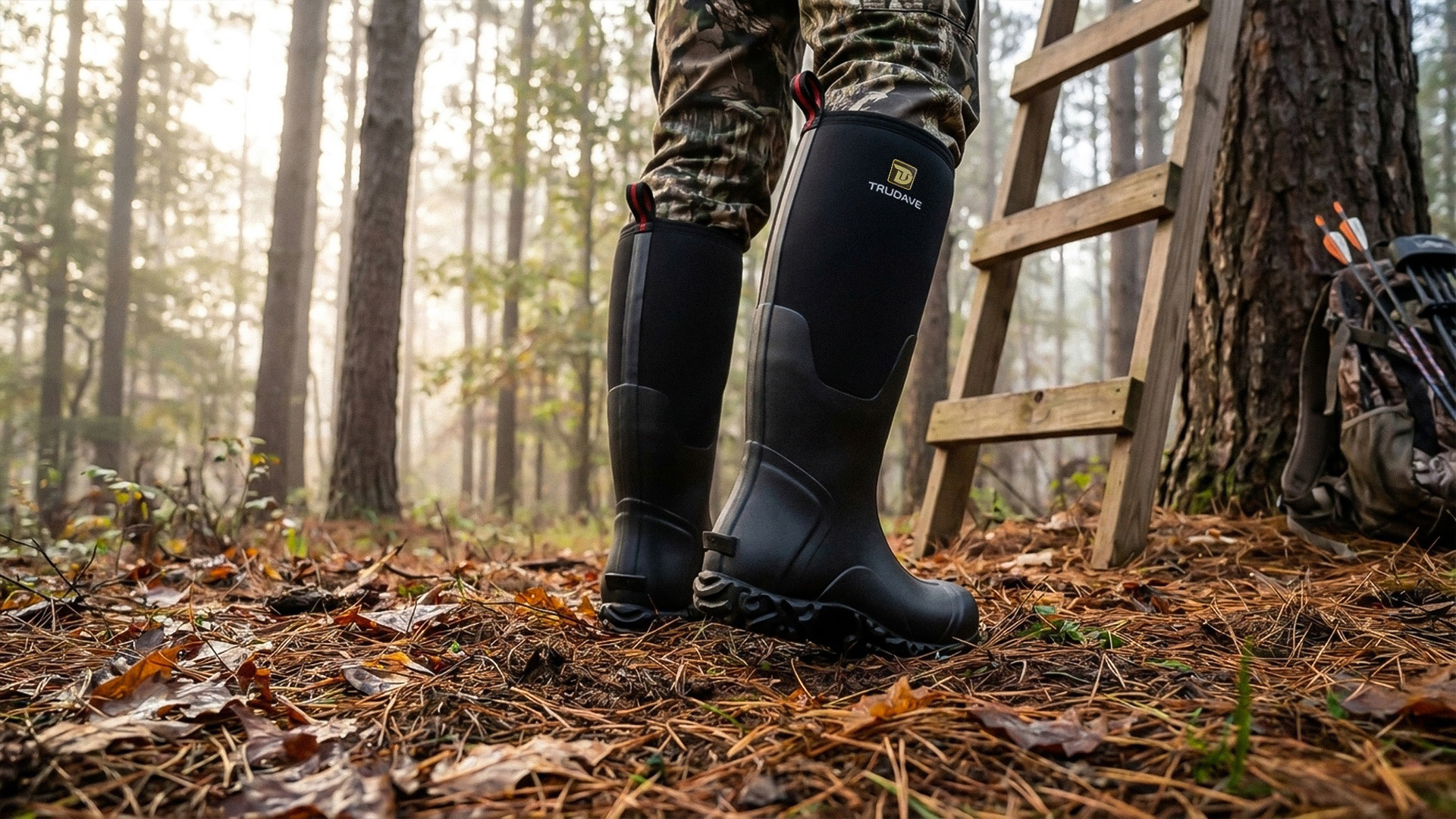
Hunters working these conditions may benefit from waterproof hunting boots for prairie grouse hunting that provide reliable traction, secure fit, and enough weather protection without becoming excessively heavy.
Lightweight Still Matters
Prairie hunting can involve long distances.
Heavy boots add fatigue.
Choose insulation according to:
- Temperature
- Snow depth
- Walking speed
A highly insulated stationary-hunting boot may be too warm for constant upland movement.
Waterproofing Is Useful Even Before Snow
Prairie mornings can produce:
- Heavy dew
- Wet grass
- Rain
- Mud
Non-waterproof boots may become soaked during the first mile.
Water protection keeps the day more comfortable.
Tall Grass Transfers Water Constantly
Even when there is no standing water, wet grass brushes against boots and pants with every step.
Gaiters can help reduce:
- Moisture
- Seeds
- Snow
entering footwear.
Muddy Prairie Roads Can Become Slick
After rain or thaw, dirt roads may become:
- Sticky
- Slick
- Deep
Outsole tread can fill with clay.
Use caution on slopes.
Clean packed mud when necessary.
Secure Heel Fit Matters Over Miles
Sharp-tailed grouse hunting often means five, eight, or more miles of walking.
Poor heel retention quickly creates:
- Hot spots
- Blisters
Break boots in before the season.
Uneven Prairie Hides Holes
Grass can hide:
- Badger holes
- Cattle tracks
- Washouts
Moderate ankle support can improve stability.
Still, hunters must watch the ground.
Cattle Country Adds More Footing Hazards
Livestock trails and watering areas can contain:
- Deep hoof prints
- Mud
- Frozen ruts
These become especially dangerous when hidden under snow.
Slow down around stock water.
Brush-Resistant Pants Can Help
Shrubby draws may contain:
- Thorns
- Dense stems
- Burrs
Durable clothing allows hunters to enter the cover birds use.
Avoiding every brush patch often means avoiding productive habitat.
Eye Protection Is Useful in Shrub Cover
Low branches can reach face level.
Clear protective glasses can prevent small injuries.
They are especially useful when hunters are watching dogs instead of nearby brush.
Grass Seeds Can Affect Dogs
Prairie vegetation can contain:
- Awns
- Burrs
- Sharp seeds
Check dogs after hunting.
Pay attention to:
- Eyes
- Ears
- Nose
- Paws
Persistent irritation should receive veterinary attention.
Dogs Need More Water Than Hunters Expect
Open-country dogs cover enormous distances.
Carry clean water.
Do not rely entirely on:
- Stock tanks
- Ponds
Water may be unavailable, frozen, or unsuitable.
Early-Season Heat Can Still Be a Problem
Northern country can produce surprisingly warm fall days.
Watch dogs for:
- Excessive panting
- Weakness
- Reduced coordination
Hunt early or take breaks when necessary.
Cold Weather Can Be Hard on Dogs Too
Late-season conditions may expose dogs to:
- Snow
- Ice
- Strong wind
Inspect:
- Paws
- Coat
- Overall energy
Snow can build between toes.
Stop and remove ice when necessary.
Public Prairie Can Offer Large Opportunities
Sharp-tailed grouse habitat may occur on:
- State land
- Federal land
- Grasslands
- Wildlife management areas
Research current access.
Do not assume every open grassland allows hunting.
Private Ranches Can Hold Excellent Birds
Large working ranches may contain outstanding sharptail habitat.
If permission is granted:
- Respect livestock
- Follow vehicle rules
- Leave gates correctly
- Avoid wet-road damage
Good landowner relationships matter.
Avoid Driving Soft Prairie Roads
Rain and snowmelt can destroy dirt roads quickly.
If conditions are soft:
Park.
Walk.
Do not create deep ruts simply to reach a covey faster.
Know Property Boundaries
Prairie fences may separate:
- Public land
- Private land
- Different management areas
Birds cross freely.
Hunters cannot.
Use reliable maps.
Fence Crossings Require Safe Firearm Handling
Use gates when possible.
When crossing fences, maintain full firearm safety.
Do not rush because birds are visible on the other side.
Barbed Wire Can Be Hard on Dogs
Dogs moving fast through grass may not see fences.
Know where major fence lines are.
Control range near them.
Birds Can Flush Low
Sharp-tailed grouse often leave the ground at relatively low angles before gaining height.
Know where:
- Partners
- Dogs
- Livestock
- Roads
are located.
Pick One Bird From the Flock
A flock flush can create visual chaos.
Select one bird.
Track it.
Shoot under control.
Do not fire into the center of the group.
Watch Where the Remaining Birds Land
Sharptails may split into:
- Singles
- Small groups
- Larger groups
after flushing.
Use landmarks to mark landing zones.
This can create another opportunity.
Do Not Immediately Chase a Long Flush
Pause.
Study the landing area.
Ask whether the birds moved into:
- Better cover
- Open ground
- Property you can legally access
Then decide whether another approach makes sense.
Singles Can Hold Better
Scattered birds may behave differently than the original flock.
They can hold more tightly.
Work landing zones slowly.
A good dog becomes especially valuable.
Mark Downed Birds Immediately
Prairie grass can hide a bird quickly.
Mark the location using:
- Shrub
- Fence post
- Hill
- Dog position
Walk directly toward the fall.
Snow Can Make Recovery Easier—or Harder
Fresh snow may reveal:
- Feathers
- Tracks
but white and brown background patterns can still hide birds.
Use the dog when available.
Wounded Birds May Run
If a bird is not located immediately, search for:
- Tracks
- Feathers
- Movement
- Dog behavior
Do not abandon recovery to chase the flock.
Early Season Heat Requires Proper Game Care
Open prairie can become warm under direct sun.
Keep harvested birds:
- Clean
- Cool
- Shaded
Handle them promptly.
Regulations Must Be Checked Locally
Sharp-tailed grouse seasons and regulations vary widely.
Before hunting, verify current:
- Season dates
- Bag limits
- Possession limits
- License requirements
- Open units
- Public-land restrictions
- Legal methods
Use current official wildlife-agency information.
Some Populations May Have Limited Hunting Opportunity
Sharp-tailed grouse management varies by state and population.
Certain regions may have:
- Short seasons
- Restricted areas
- No open season
Never assume birds are legally huntable simply because they are present.
Species Identification Matters
Prairie landscapes may contain other grouse species.
Hunters should understand differences between:
- Sharp-tailed grouse
- Greater prairie-chickens
- Sage grouse where ranges approach
Positive identification is essential.
Lek Locations Are Useful for Conservation Knowledge
Sharp-tailed grouse use traditional dancing or lek areas during breeding season.
These sites can be important for population monitoring and habitat management.
Hunters should avoid unnecessary disturbance to breeding areas outside the hunting context and follow current land-management guidance.
Healthy populations depend on healthy breeding habitat.
Prairie Conservation Is Central to Sharptail Hunting
Sharp-tailed grouse depend on connected grassland and shrubland landscapes.
Habitat loss and fragmentation can reduce populations.
Hunters benefit directly from conservation efforts involving:
- Native grasslands
- Shrub cover
- Wet areas
- Sustainable land management
There is no prairie grouse hunting without prairie.
Common Sharp-tailed Grouse Hunting Mistakes
Walking Uniform Grass for Miles
Find habitat changes first.
Ignoring Brushy Draws
Shrubs provide food and weather protection.
Following Running Birds Straight From Behind
Use terrain and angle.
Hunting Only Crop Edges
Birds may spend much of the day in grass or brush security cover.
Wearing Heavy or Leaky Boots
Prairie mileage rewards waterproof lightweight mobility.
Ignoring Wind
Birds often seek protected terrain.
Chasing the Same Flock Repeatedly
Sometimes finding another group is more productive.
Forgetting to Verify Open Areas
Sharptail hunting opportunities vary significantly by region.
Frequently Asked Questions
Where do sharp-tailed grouse usually live?
They commonly use northern grasslands, mixed prairie, shrublands, brushy draws, wet meadow transitions, and agricultural edges where sufficient native cover remains.
What is the best habitat for hunting sharp-tailed grouse?
Look for diverse prairie containing grass, shrubs, terrain breaks, food sources, and seasonal security cover rather than uniform grassland.
Do sharp-tailed grouse run before flushing?
Yes. They may move on foot ahead of hunters and dogs, especially when pressured.
Is snow good for sharp-tailed grouse hunting?
Fresh snow can reveal tracks and help identify winter habitat, while deeper snow may concentrate birds around exposed food and protected shrub cover.
Can you hunt sharp-tailed grouse without a dog?
Yes. Hunters can systematically target brushy draws, crop transitions, ridges, and other high-probability habitat without a dog.
What boots are best for sharp-tailed grouse hunting?
Lightweight waterproof hunting boots with secure heel fit, good wet-grass and mud traction, and enough weather protection for long prairie walks and early snow are practical.
Final Thoughts
Sharp-tailed grouse hunting teaches hunters that big country is usually decided by small habitat differences.
One shallow draw holds shrubs.
One ridge stays out of the wind.
One crop edge provides food.
One patch of taller grass gives birds security.
The rest of the prairie may look almost identical.
The birds know the difference.
Hunters need to learn it too.
Glass before walking.
Find brushy draws.
Follow grass transitions.
Watch how birds react to wind and snow.
Control the dog.
Carry enough water.
Wear boots that let you cross wet grass, clay mud, rolling prairie, brush, and early snow without wasting energy on every step.
And when a flock finally explodes from one small depression after miles of empty-looking grass, stop and study that spot.
The prairie just showed you why the birds were there.
