
Dusky grouse can make a mountain hunter feel like the birds disappeared overnight.
Early in the season, a hunter may find grouse feeding along a grassy forest edge.
The birds flush from huckleberry cover, young conifers, or an open logging road.
A few weeks later, the same hillside feels empty.
No birds.
No tracks.
No feathers.
The hunter keeps walking the same route because it produced before.
Still nothing.
The grouse may not be gone.
They may simply have changed elevation, food, and cover.
That is one of the most important lessons in dusky grouse hunting.
These western mountain birds use different habitat as seasons progress.
Early-season birds can be associated with relatively open forest edges, berries, grasses, and brood habitat.
Later, colder conditions may move birds toward higher conifer forests and different feeding patterns.
Successful hunters do not hunt one favorite trail all season.
They follow the birds uphill, downhill, and across habitat transitions as mountain conditions change.
Dusky Grouse Are True Mountain Birds
Dusky grouse occupy western mountain environments.
Depending on region, hunters may find them around:
- Douglas-fir forest
- Lodgepole pine
- Spruce
- Fir
- Aspen edges
- Mountain meadows
- Shrubby forest openings
- High ridges
- Conifer slopes
The exact habitat changes by elevation, season, and local vegetation.
That makes dusky grouse hunting less about memorizing one cover type and more about understanding how mountain habitat connects vertically.
Elevation Is One of the Biggest Clues
Many upland hunters think horizontally.
They search one valley.
One forest.
One road.
Mountain grouse require vertical thinking.
Ask:
- What elevation are birds using now?
- Where is current food?
- Where did snow fall?
- Which slopes still offer usable cover?
A shift of only several hundred feet can dramatically change bird numbers.
Early Season Can Begin Lower
Earlier in the season, family groups may use habitat containing:
- Grass
- Berries
- Forbs
- Open understory
- Young forest
Look around:
- Meadow edges
- Logging roads
- Aspen transitions
- Berry-producing shrubs
Broods need food and manageable ground-level cover.
The darkest mature conifer forest may not be the best starting point.
Berry Patches Can Be Excellent
Depending on region, dusky grouse may use berry-producing habitat.
Look for areas containing locally available:
- Huckleberry
- Serviceberry
- Other mountain fruits
Fresh feeding activity combined with:
- Grouse droppings
- Tracks
- Feather sign
can reveal productive areas.
Do not assume every berry patch holds birds.
Look for one that also offers nearby security cover.
Forest-Meadow Edges Deserve Attention
A mountain meadow creates several habitat advantages.
Birds can use:
- Grass
- Insects
- Forbs
while remaining close to timber.
Work the transition carefully.
The first twenty yards inside the trees may be more productive than the center of either habitat.
Logging Roads Can Help Locate Birds
Quiet mountain roads provide:
- Grit
- Open feeding space
- Easier walking
- Habitat edges
Dusky grouse may sometimes appear along:
- Gravel roads
- Decommissioned logging tracks
- Forest openings
Use road sightings as information.
Ask where the bird went after leaving the road.
That nearby cover often deserves more hunting effort.
Roads Are Scouting Tools, Not the Entire Hunt
It is easy to spend all day driving mountain roads hoping to see a grouse.
That may locate birds.
But it teaches less about habitat.
Once activity is found, get out and hunt the surrounding:
- Forest edge
- Draw
- Ridge
- Meadow
Understanding why the bird used the road is more useful than simply seeing it there.
Young Conifers Can Hold Early Birds
Regenerating forest may offer:
- Low cover
- Food
- Protection
A young conifer stand beside:
- Grass
- Aspen
- Berry shrubs
can be especially interesting.
Birds may feed along the open edge and retreat into thicker trees when disturbed.
Aspen Adds Habitat Diversity
Aspen pockets create:
- Different understory plants
- Insects
- Open ground
- Seasonal food
Search transitions where aspen meets conifer.
These mixed edges often support more diversity than one uniform block of forest.
Moist Draws Can Hold Better Vegetation
Mountain drainages often stay greener than exposed ridges.
They may contain:
- Shrubs
- Forbs
- Berry plants
- Water
During dry early seasons, these moist corridors can concentrate feeding opportunity.
Hunt the draw and the adjacent slope.
Birds may not stay directly at the creek.
Grouse May Walk Before They Flush
Dusky grouse sometimes remain on the ground and move through vegetation before flying.
Watch for:
- Rustling
- Walking birds
- Head movement
- Tracks in soft ground
Do not expect every encounter to begin with an explosive flush.
A bird may be only twenty yards ahead and moving quietly through cover.
Stop Frequently
Mountain forest makes continuous walking inefficient.
Use a stop-and-go rhythm.
Walk.
Pause.
Listen.
Scan.
A bird that froze when you approached may begin moving once the woods become quiet.
This gives you another chance to detect it.
Listen for Wing Noise
A grouse flushing through conifers can create a surprisingly loud burst of wing sound.
Even if the bird disappears instantly, pay attention to:
- Direction
- Elevation
- Landing area
A short flush may create a second opportunity.
Watch Exactly Where It Lands
Forest cover makes relocation difficult.
Mark:
- Large tree
- Rock
- Dead snag
- Ridge break
Do not use vague references such as “somewhere by those pines.”
Once you walk fifty yards, every tree begins to look identical.
Grouse Can Land in Trees
Dusky grouse may use trees, especially as seasonal behavior changes.
A flushed bird may move into:
- Conifers
- Elevated branches
Hunters need to know local legal methods and safe shooting requirements before pursuing any opportunity.
Never assume a bird in a tree automatically creates a legal or safe shot.
Seasonal Diet Changes Matter
As fall progresses, available food changes.
Early-season foods decline.
Cold weather alters vegetation.
Birds may shift toward different conifer-associated foods.
That can pull them away from the exact places hunters found them in September.
Follow food.
Late-Season Birds May Move Higher
One of the unusual aspects of dusky grouse ecology is that some birds may move toward higher-elevation conifer habitat as winter develops rather than simply descending like many mountain animals.
This can surprise hunters.
If low-country edges become empty as snow begins:
Look higher.
Study conifer ridges.
Do not assume winter always means downhill.
High Conifer Forest Can Become More Important
Later-season habitat may increasingly include:
- Fir
- Douglas-fir
- Spruce
- Other conifers
Birds may spend more time around:
- Dense tree cover
- High ridges
- Sheltered mountain slopes
The hunt begins to feel less like meadow-edge upland hunting and more like winter forest hunting.
First Snow Can Reveal the Transition
Early snowfall gives hunters valuable information.
Fresh snow can show:
- Tracks
- Feeding areas
- Travel
- Elevation use
If lower slopes show no fresh bird sign but higher conifer benches do, the seasonal shift is becoming visible.
Snow Makes Tracks Easier to Read
Fresh grouse tracks can be obvious in clean snow.
Look around:
- Conifer edges
- Open forest
- Ridge benches
- Feeding areas
Repeated tracks indicate current use.
One print can be accidental.
Multiple trails suggest a productive patch.
Snow Also Changes Visibility
Dark dusky grouse can become easier to detect against snow.
But tree shadows and exposed ground still create camouflage.
Look for:
- Body outline
- Movement
- Tracks
Do not assume every bird will stand out dramatically.
Patchy Snow Can Be Harder Than Full Snow
When ground contains alternating:
- Dark soil
- Needles
- Snow
- Shadow
grouse can disappear inside visual clutter.
Slow down.
Search transition edges.
The first snow is often more confusing than a fully white landscape.
South-Facing Slopes May Melt First
Sun-exposed slopes can retain more open ground.
This may provide:
- Easier walking
- Available vegetation
- Warmth
especially during transitional weather.
Search these slopes when snow depth differs strongly by aspect.
North-Facing Slopes Can Offer Security
Cool shaded slopes may retain:
- Dense conifer cover
- Snow
- Moisture
Depending on current conditions, these areas can provide shelter.
No single slope direction is always best.
Use weather, food, and elevation together.
Wind Changes Which Forest Is Comfortable
Mountain wind can make exposed ridges harsh.
Birds may seek:
- Leeward timber
- Protected draws
- Dense conifers
If one slope is taking the full wind, hunt the protected side.
Small changes in exposure can make a big difference.
Forest Density Matters
Extremely dense forest can make walking and shooting difficult.
Very open forest may provide less security.
Look for a mix of:
- Mature conifers
- Understory openings
- Shrubs
- Feeding edges
Habitat diversity repeatedly creates the best hunting opportunities.
Small Openings Can Be Valuable
Inside conifer forest, look for:
- Old logging landings
- Natural gaps
- Grass openings
- Small avalanche openings
These features provide feeding opportunity while leaving security close.
A clearing only thirty yards wide can hold birds.
Avalanche Paths Can Create Productive Edges
In mountainous areas, avalanche paths may create:
- Shrubby regrowth
- Grass
- Forbs
The edges often combine:
- Food
- Conifer security
Hunt them carefully.
Steep terrain can make access difficult.
Burns Can Change Grouse Habitat
Wildfire creates long-term habitat changes.
Depending on severity and age, burns can produce:
- Forbs
- Shrubs
- Young forest
- Insects
The transition between recovering habitat and surviving conifers may be productive.
Do not assume every burn is either good or bad.
Age and vegetation recovery matter.
Recently Burned Ground Can Be Too Open
A fresh severe burn may provide little cover initially.
As vegetation returns, conditions can improve.
Study:
- Regrowth
- Nearby timber
- Moisture
Habitat value changes every year after disturbance.
Dogs Can Be Useful
Pointing or flushing dogs can help locate grouse hidden in mountain vegetation.
But mountain terrain adds challenges:
- Elevation
- Rock
- Deadfall
- Snow
Dog control is important.
Dog Range Should Match Forest Visibility
A dog that works well at 150 yards in prairie may be difficult to manage in conifers.
Keep range appropriate to:
- Timber density
- Terrain
- Hunter position
The goal is bringing hunters to birds before they flush.
Grouse May Tree After Dog Pressure
A dog can push a bird into timber.
Maintain awareness.
Do not allow dogs to chase excessively.
Respect local hunting regulations and safe shot requirements.
Dogs Need Water in Mountain Forest
Cool weather can hide dehydration.
Carry clean water.
Do not depend completely on:
- Streams
- Snow
because access and water quality vary.
Snow Is Hard on Dog Paws
Later hunts may involve:
- Ice
- Crusted snow
- Frozen vegetation
Check paws for:
- Cuts
- Ice buildup
- Abrasions
Stop before minor problems become serious.
Deadfall Is a Major Hazard
Mountain forest often contains fallen timber.
Hunters and dogs both face:
- Hidden holes
- Rolling logs
- Broken branches
Slow down.
Do not jump over logs without seeing the landing.
Steep Ground Changes the Hunt
Dusky grouse habitat may involve:
- Sidehills
- Rocky slopes
- Ridge climbs
The hunt may feel closer to mountain big-game hiking than traditional flat-country bird hunting.
Fitness and footwear matter.
Sidehilling Punishes Poor Boot Fit
Repeated lateral movement creates pressure on:
- Heels
- Ankles
- Knees
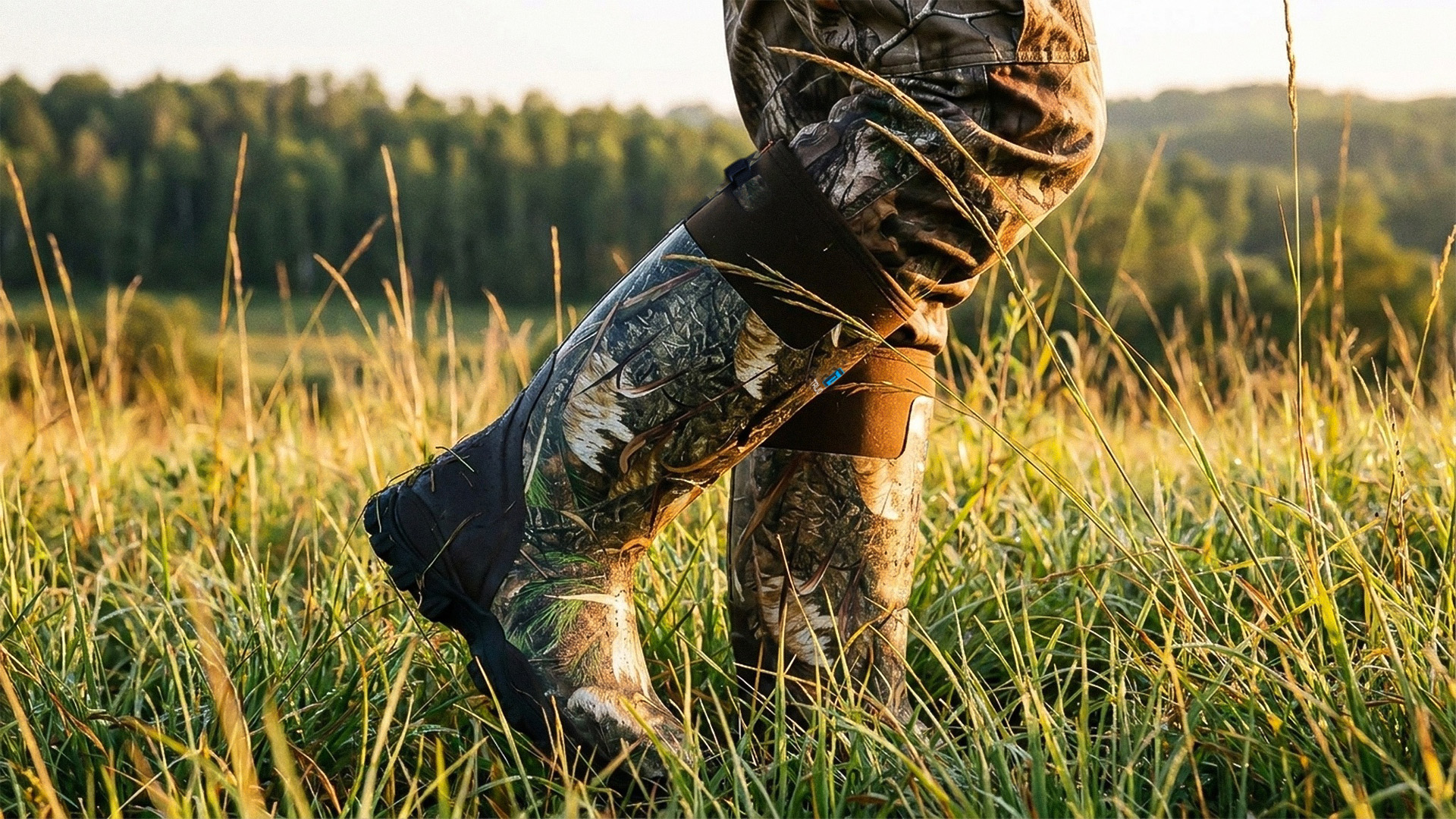
Hunters working these environments may benefit from waterproof hunting boots for mountain grouse hunting that provide secure heel retention, reliable traction, and enough support for wet forest, rock, snow, and long mountain walking.
Waterproofing Matters in Mountain Forest
Conditions can include:
- Wet grass
- Rain
- Snow
- Mud
- Creek crossings
A boot that becomes wet early in the day can turn colder conditions into a serious comfort problem.
Waterproof protection provides more flexibility.
Lightweight Support Is Usually Better Than Maximum Bulk
Dusky grouse hunting requires movement.
Heavy boots may be unnecessary unless conditions are extremely cold.
Choose based on:
- Snow depth
- Temperature
- Terrain
- Mileage
The best mountain grouse boot balances support with mobility.
Traction Matters on Pine Needles
Dry and wet conifer needles can be slippery.
They often cover:
- Hard soil
- Rocks
- Roots
Use controlled steps.
Especially on downhill slopes.
Wet Logs Are Extremely Slippery
After rain or snow, fallen timber becomes dangerous.
Step around large wet logs when possible.
Do not walk along their tops simply to save a few steps.
Snow-Covered Logs Are Worse
Fresh snow can hide deadfall completely.
A smooth white surface may contain:
- Logs
- Holes
- Branches
Slow down.
Use trekking poles or a walking stick where helpful.
Creek Crossings Can Become Icy
Late-season mountain creeks may develop:
- Ice
- Snow-covered rocks
- Frozen banks
Use safe crossings.
Do not follow a grouse directly across uncertain water or ice.
Mountain Weather Changes Quickly
A clear morning may become:
- Rain
- Snow
- Wind
- Fog
Carry appropriate layers.
Do not assume the forecast at the nearest town reflects high-elevation conditions exactly.
Fog Can Complicate Navigation
Dense forest already limits visibility.
Fog reduces it further.
Carry reliable navigation.
Mark:
- Vehicle
- Trail
- Road
- Major drainage
before hunting.
Offline Maps Are Important
Mountain cell service is often unreliable.
Download maps before the hunt.
Know:
- Public boundaries
- Roads
- Trails
- Elevation
Do not depend entirely on a live connection.
Forest Roads Can Change After Storms
Rain and snow may create:
- Mud
- Fallen trees
- Washouts
Check current access.
Do not force vehicles around closures.
Walking from a safe legal parking location protects both equipment and access.
Early Snow Can Close High Roads Quickly
A road that was easy in September may become difficult or impassable later.
Plan alternate access.
Do not allow one late-season bird chase to trap a vehicle on a deteriorating mountain road.
Public Land Can Offer Good Opportunities
Dusky grouse habitat often overlaps large western public-land systems.
Research:
- National forest
- State land
- Other legal hunting areas
Access can be extensive.
Habitat quality still matters more than property size.
Start With Habitat Maps
Use topographic and satellite maps to identify:
- Conifer forest
- Meadow edges
- Burns
- Logging cuts
- Elevation transitions
Then verify conditions on the ground.
Maps find possibilities.
Walking confirms birds.
Private Timberlands May Have Different Rules
Some mountain forest is privately managed.
Access can change due to:
- Logging
- Fire restrictions
- Seasonal closures
Always verify permission and current rules.
Grouse Seasons Can Overlap Big-Game Seasons
Mountain grouse hunting may occur at the same time as:
- Deer hunting
- Elk hunting
- Other seasons
Expect other hunters.
Visibility and communication matter.
Blaze Orange Can Improve Safety
Follow current legal requirements.
Even where not required for grouse, visible clothing may be prudent during overlapping big-game seasons.
Dense conifer forest can hide people quickly.
Positive Target Identification Is Essential
Mountain forest may contain different grouse species depending on location.
Hunters should learn to identify:
- Dusky grouse
- Ruffed grouse where ranges overlap
- Spruce grouse where relevant
Habitat is a clue.
Positive identification still comes first.
Do Not Shoot at Movement in Trees
A dark shape moving through branches is not enough.
Confirm:
- Species
- Legal target
- Background
before shooting.
Mountain forest backgrounds can include roads, trails, and other hunters.
Low and Upward Shots Both Require Care
Dusky grouse can flush:
- Low across slopes
- Upward into trees
Both create different background problems.
Know where:
- Partners
- Dogs
- Roads
- Buildings
are located.
Pick One Bird From a Group
Family groups can create multiple flushes.
Do not shoot at movement generally.
Pick one clearly identified bird.
Maintain control.
Watch for Additional Birds
After one grouse flushes, stay ready.
Others may remain on the ground.
Do not immediately rush toward the first landing point.
Pause and scan.
Young Birds May Hold Close Together
Earlier in the season, multiple birds can occupy a relatively small area.
One flush does not necessarily empty the cover.
Work it slowly.
Late Birds May Be More Spread Out
Seasonal movement can change group structure and habitat use.
Later hunts may involve fewer obvious family-group concentrations.
Adjust expectations.
Mark Downed Birds Carefully
A dusky grouse can disappear in:
- Needles
- Snow
- Shrubs
- Deadfall
Mark the exact fall.
Use:
- Snag
- Rock
- Tree cluster
before moving.
Recovery in Steep Terrain Requires Caution
A bird may fall downhill.
Do not run after it.
Descend carefully.
A grouse is not worth an ankle injury.
Dogs Can Help With Recovery
A trained dog may locate birds hidden under:
- Brush
- Snow
- Logs
Give the dog time.
Avoid trampling the entire fall area immediately.
Warm Early Seasons Still Require Game Care
High mountains can become warm during early season afternoons.
Keep harvested birds:
- Clean
- Cool
- Shaded
Follow current wildlife and food-safety guidance.
Late Cold Weather Does Not Eliminate Proper Handling
Cold weather helps.
But game can still remain warm under feathers.
Handle birds properly.
Do not assume snow automatically solves every game-care issue.
Regulations Must Be Checked Locally
Dusky grouse rules vary by state and region.
Before hunting, verify current:
- Season dates
- Bag limits
- Possession limits
- License requirements
- Open units
- Legal methods
- Public-land rules
Use current official wildlife-agency information.
Species Names Can Create Confusion
Dusky grouse were historically grouped differently in older hunting literature.
Hunters may encounter older references using terms such as “blue grouse.”
Modern species classifications distinguish dusky grouse from other related grouse.
Use current wildlife-agency identification materials when preparing for the hunt.
Conservation Depends on Healthy Mountain Forest
Dusky grouse benefit from landscapes containing:
- Conifer forest
- Openings
- Young growth
- Seasonal food
- Diverse age classes
Wildfire, logging, forest succession, and climate can all change local habitat.
Responsible hunters should support healthy, diverse mountain ecosystems.
Common Dusky Grouse Hunting Mistakes
Hunting the Same Elevation All Season
Seasonal movement can change dramatically.
Ignoring Meadow and Forest Edges Early
Food-rich transitions can be productive.
Staying Low After Early Snow
Some birds may shift toward higher conifer habitat.
Walking Too Fast
Mountain grouse may sit quietly before flushing.
Wearing Heavy or Leaky Boots
The hunt requires mountain support plus waterproof mobility.
Letting Dogs Range Too Far in Dense Timber
Visibility disappears quickly.
Ignoring Road and Weather Changes
High-country access can deteriorate rapidly.
Failing to Identify the Species
Western grouse ranges can overlap.
Frequently Asked Questions
Where do dusky grouse usually live?
Dusky grouse commonly use western mountain habitats containing conifer forest, meadow edges, young growth, shrubs, and seasonal feeding areas.
Do dusky grouse move higher in winter?
In some populations, dusky grouse may shift toward higher-elevation conifer habitat during colder seasons, making their seasonal movement different from many other mountain game species.
What is the best way to find dusky grouse early in the season?
Search meadow edges, berry-producing habitat, young conifers, aspen transitions, and moist forest openings where food and security overlap.
Is snow good for dusky grouse hunting?
Fresh snow can reveal tracks and current habitat use, but it also makes footing, road access, and weather management more difficult.
Can you hunt dusky grouse with a bird dog?
Where legal, pointing or flushing dogs can help locate birds, although dense timber, deadfall, elevation, and snow require close control.
What boots are best for dusky grouse hunting?
Waterproof hunting boots with secure heel retention, good wet-forest and snow traction, moderate mountain support, and manageable weight are practical for long forest hunts.
Final Thoughts
Dusky grouse hunting teaches hunters that a mountain changes faster than a favorite hunting route.
September grass becomes October frost.
Berries disappear.
Snow reaches the ridge.
Birds change food.
Birds change cover.
And sometimes they change elevation in the opposite direction a hunter expects.
Find meadow edges early.
Watch young forest.
Follow seasonal food.
Check higher conifers when cold weather arrives.
Use fresh snow to read current movement.
Wear boots that let you cross wet grass, pine needles, mud, rock, deadfall, and early snow without avoiding difficult mountain habitat.
And when a forest that held grouse three weeks ago suddenly feels empty, do not keep walking the same loop harder.
Change elevation.
Change habitat.
The birds probably already did.
