
A northern winter forest can look completely empty.
Snow covers the ground.
Spruce branches bend beneath ice.
Cedar swamps become quiet.
Every opening is white.
A hunter walks a hundred yards without seeing movement.
Then something changes.
Not much.
A black eye.
The tip of an ear.
A small shape sitting beneath a young spruce.
Suddenly a snowshoe hare appears in a place the hunter has been staring at for several seconds.
That is the challenge of snowshoe hare hunting.
During winter, these animals become almost perfectly adapted to the landscape around them.
Their seasonal white coat makes them difficult to see.
Their oversized hind feet allow them to move across snow that slows humans dramatically.
And they spend much of their time close to dense cover where one quick jump can make them disappear again.
Successful snowshoe hare hunting is not about walking every acre of forest.
It is about learning what winter cover looks like from the hare’s perspective.
Snowshoe Hares Are Built for Northern Winters
Snowshoe hares occupy northern forest environments across portions of North America.
Productive habitat may include:
- Young spruce
- Fir regeneration
- Cedar swamps
- Alder
- Willow
- Young aspen
- Logging cuts
- Brushy forest edges
- Conifer thickets
Dense low-level cover matters.
A mature open forest can look beautiful but provide relatively little protection.
A tangled young cut that is annoying for hunters to walk through may provide exactly what a snowshoe hare needs.
Young Forest Is Often Better Than Mature Timber
Snowshoe hares depend heavily on dense vegetation near ground level.
Young forests create:
- Food
- Security
- Escape cover
- Wind protection
Look for stands where branches and stems remain low enough to conceal a hare.
Productive areas may include:
- Five- to fifteen-year-old cuts
- Young spruce plantations
- Regenerating burns
- Thick aspen growth
When the understory becomes too open, hare habitat quality may decline.
Spruce and Fir Provide Excellent Security
Dense conifers are classic winter hare cover.
Their low branches help protect animals from:
- Wind
- Snow
- Predators
Check beneath:
- Young spruce
- Fir
- Balsam
- Dense evergreen edges
A hare may sit underneath the darkest portion of the tree and remain completely motionless.
Do not scan only open snow.
Search the shadow line beneath conifers.
Cedar Swamps Can Be Excellent
Northern cedar swamps create productive hare habitat in some regions.
They may provide:
- Thermal protection
- Dense cover
- Browse
- Travel corridors
The challenge is access.
Cedar swamp terrain may include:
- Deep snow
- Wet ground
- Frozen channels
- Hidden holes
Work the edges first.
Hares may use the transition between cedar and younger brush rather than the deepest interior.
Alder Is Worth Hunting
Alder thickets often grow in low, moist country.
They provide:
- Dense stems
- Browse
- Escape cover
Look along:
- Creek bottoms
- Wet depressions
- Beaver country
- Swamp edges
Alder can be extremely difficult to walk through.
That is part of why it protects hares so well.
Slow down instead of trying to force a straight path.
Willow Can Reveal Feeding Areas
Snowshoe hares feed on woody vegetation during winter.
Depending on local habitat, willow can become important.
Fresh browsing may appear as:
- Clipped twigs
- Clean cuts on young stems
- Tracks around shrubs
Look for feeding activity near dense security cover.
A willow patch surrounded by open snow may be less attractive than one directly beside spruce or alder.
Food and security need to work together.
Aspen Regeneration Can Hold Hares
Young aspen stands may provide both browse and dense stem structure.
Search areas where:
- Aspen meets spruce
- Young cuts meet older forest
- Logging roads intersect regeneration
Habitat diversity often improves hunting.
A hare can feed in one vegetation type and move into another for protection.
Logging Cuts Create Prime Habitat
Timber harvest can create excellent snowshoe hare habitat as vegetation regenerates.
The most productive stages often occur after the area becomes thick enough to provide real ground-level cover.
Look for:
- Young conifers
- Brush
- Aspen sprouts
- Logging slash
Do not assume the newest cut is best.
A freshly cleared area may be too open.
Several years of regrowth often creates better structure.
Slash Piles Can Hold Hares
Logging debris creates instant security.
Branches and tops may form tunnels and pockets beneath the snow.
Hares can use these for:
- Escape
- Resting
- Wind protection
Work around the edges carefully.
Do not climb blindly onto unstable piles.
A hare can move through spaces too small for a hunter to follow.
Fresh Snow Turns the Forest Into a Map
Fresh snow is one of the best tools a hare hunter can have.
Tracks reveal:
- Current activity
- Feeding areas
- Travel routes
- Cover preferences
A forest that looked uniform suddenly shows which ten percent of habitat the hares are actually using.
Look for concentrations of tracks rather than one isolated trail.
Repeated movement indicates good cover.
Learn the Difference Between Travel and Feeding Tracks
A hare traveling directly may leave a relatively consistent line.
Feeding activity can create:
- Short loops
- Multiple crossings
- Tracks around shrubs
- Areas with clipped stems
When tracks begin concentrating around young vegetation, slow down.
The hare may still be nearby.
Fresh Tracks Can Lead to a Sitting Hare
One of the most exciting winter hunting situations is finding very fresh tracks.
Do not immediately walk directly on them.
Instead:
- Stop.
- Look ahead.
- Scan beneath cover.
- Search for an eye or ear.
- Move only after checking carefully.
The hare may be sitting only a short distance from the trail.
Following too quickly may cause it to run before you ever see it.
Hare Tracks Can Circle
Snowshoe hares often move through familiar cover repeatedly.
Their tracks may:
- Cross older trails
- Circle brush
- Double back
- Enter dense conifers
This can make tracking confusing.
Do not obsess over one individual footprint.
Ask where the animal is most likely to feel secure.
The habitat often tells you more than the exact track.
Beds Can Appear in Snow
A hare may leave a shallow body impression beneath protected cover.
Look under:
- Spruce
- Fallen logs
- Brush
- Overhanging branches
Fresh beds tell you the location provides security.
Even if the hare is gone, similar nearby cover deserves attention.
Droppings Can Confirm Long-Term Use
Snow can make hare droppings easy to find.
Concentrations beneath cover or feeding shrubs suggest repeated activity.
One pile is useful.
Tracks, clipped stems, and droppings together are much stronger evidence.
When several signs overlap, hunt slowly.
Deep Snow Changes Everything
Snowshoe hares are named for their oversized hind feet.
Deep snow gives them an advantage.
Hunters sink.
Hares stay higher on the surface.
This can change where animals spend time.
They may use:
- Dense conifer edges
- Packed trails
- Windblown areas
- Brush extending above snow
As snow deepens, habitat that was chest-high in fall may barely show above the surface.
Snow Depth Can Change Available Food
Deep snow raises the hare’s effective feeding height.
Branches that were previously too high may become accessible.
At the same time, lower vegetation may disappear under snow.
This means winter habitat changes vertically as snow accumulates.
Look at what stems remain exposed.
The available food is now at a different level.
Crusted Snow Can Change Movement
A hard snow crust creates different conditions.
If the crust supports hares but breaks under hunters, movement becomes extremely difficult for people.
If the crust is strong enough to support hunters, walking may become easier.
Conditions vary with:
- Temperature
- Sun
- Freeze-thaw cycles
Adjust expectations.
Do not compare one snow day directly with another.
Sunny Days Can Make Hares Easier to Spot
Bright sunlight creates strong contrast.
Look where sun reaches:
- Conifer edges
- Brush openings
- South-facing slopes
A white hare can still disappear in snow, but shadows may reveal body shape.
Sometimes the easiest clue is not the hare.
It is the dark shadow beneath it.
Cloudy Days Reduce Contrast
Flat gray light can make snow-covered landscapes visually difficult.
Everything blends.
On cloudy days, focus more heavily on:
- Tracks
- Movement
- Dark conifer edges
- Vegetation transitions
Slow scanning becomes even more important.
Cold Weather Pushes Hares Toward Shelter
During severe cold or wind, hares may spend more time inside protected cover.
Search:
- Thick spruce
- Cedar
- Low depressions
- Leeward thickets
Open brush that produced well on a mild day may seem empty during harsh conditions.
Comfort influences wildlife.
Wind Changes Which Side of Cover Matters
Strong wind makes one side of a thicket more attractive than another.
Work the protected side.
For example:
A spruce patch with wind hitting from the west may provide calmer habitat on its eastern edge.
Small differences in exposure matter.
Calm Days Help Hunters Hear Movement
In still winter forest, sound carries.
Hunters may hear:
- Snow falling from branches
- A hare moving through crust
- Twigs snapping
Stop frequently.
Listen.
Your ears can reveal an animal hidden completely from sight.
Do Not Walk Constantly
Snowshoe hare hunting rewards a stop-and-go rhythm.
Walk several steps.
Pause.
Scan.
Listen.
Then continue.
A hare relying on camouflage may hold tight while you move.
When you stop, it may become nervous and move.
That movement reveals it.
Scan Beneath Every Dark Conifer
One of the easiest ways to improve hare hunting is changing where you look.
Do not stare only down trails.
Scan beneath:
- Spruce
- Fir
- Cedar
- Brush arches
Look for:
- Black eye
- Dark ear tip
- Curved back
- Shadow
Often only a tiny part of the animal is visible.
Search From Low Angles
Standing upright and looking downward may cause brush to block visibility.
Sometimes crouching slightly creates a clearer view beneath branches.
Do this carefully and safely.
Changing viewing height can reveal openings invisible from standing position.
A Hare May Let You Walk Past
Snowshoe hares often rely on remaining still.
A hunter may pass within yards.
After walking beyond the animal, the hare may move.
Look back occasionally.
The change in angle can expose an animal that was hidden from the first direction.
Circle Productive Cover
If fresh tracks enter one small spruce patch and do not clearly exit, work around it.
Change angles slowly.
The hare may remain in the center.
Do not crash directly through immediately.
A careful perimeter search often gives a better visual opportunity.
Snowshoes Can Be Useful for Hunters
In very deep snow, traditional snowshoes may improve travel efficiency.
They can help hunters:
- Stay higher in snow
- Reduce energy expenditure
- Cross open sections
But they also change movement.
They may be:
- Noisy
- Awkward in tight brush
Use them primarily where habitat and snow depth justify the tradeoff.
Dense spruce may still require normal foot travel.
Snowshoes Require Practice
Do not make hunting day your first time wearing snowshoes.
Practice:
- Turning
- Descending
- Crossing small logs
- Walking through uneven snow
Poor technique creates unnecessary fatigue.
Equipment only helps when the hunter knows how to use it.
Winter Footwear Is Critical
Snowshoe hare hunting can expose hunters to:
- Deep snow
- Slush
- Wet brush
- Frozen ground
- Mud during thaw periods
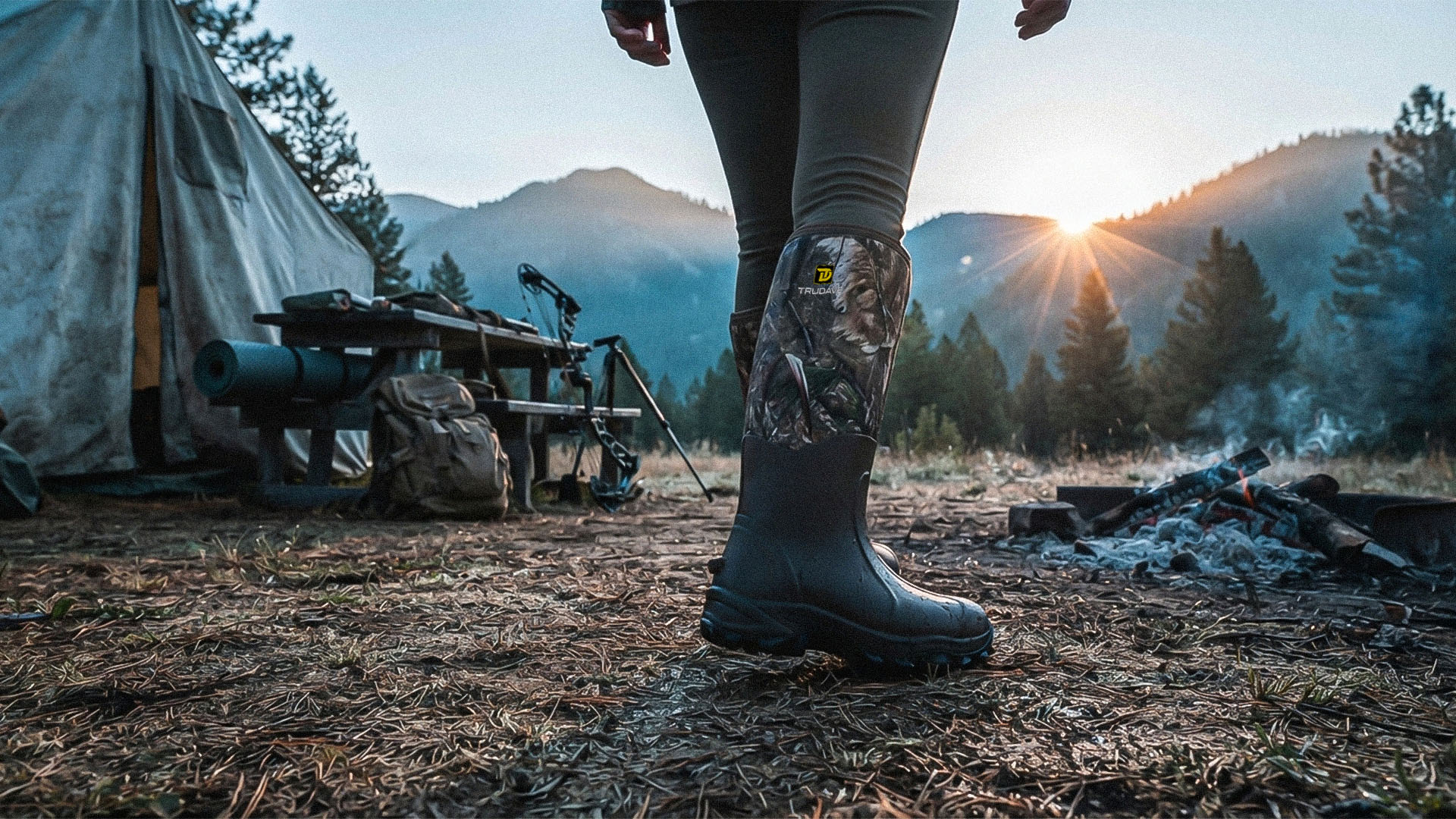
Hunters working these conditions may benefit from waterproof hunting boots for snowshoe hare hunting that provide reliable insulation, waterproof protection, secure fit, and dependable traction.
A winter small-game hunt may involve hours of continuous movement followed by periods of standing still.
Footwear needs to handle both.
Insulation Should Match the Temperature
Cold conditions demand warmth.
But hare hunting can be physically active.
Too much insulation may create sweat.
Sweat becomes dangerous once the hunter stops moving.
Choose insulation based on:
- Temperature
- Snow depth
- Walking intensity
- Hunt duration
Use moisture-managing socks.
Waterproofing Matters Even Below Freezing
Snow does not stay frozen forever.
Body heat melts snow around footwear.
Warm afternoon temperatures create slush.
Creek edges may remain wet.
Waterproof boots help prevent moisture from reaching insulation.
Once winter socks become wet, warmth drops quickly.
Boot Height Matters in Deep Snow
Higher boots help keep snow from entering around the ankle.
But height alone may not be enough.
Gaiters can add protection against:
- Powder snow
- Brush-loaded snow
- Slush
They also help keep pants drier.
Secure Heel Fit Matters
Deep snow pulls against boots.
Every step creates resistance.
A loose heel can lead to:
- Blisters
- Extra fatigue
- Poor control
Choose a boot that stays attached to the foot rather than moving independently inside deep snow.
Traction Matters on Frozen Ground
Forest trails can include:
- Ice
- Packed snow
- Frozen creek banks
Outsole traction becomes important.
However, no boot eliminates ice risk.
Slow down.
Use trees or trekking poles for balance where appropriate.
Freeze-Thaw Conditions Can Create Hidden Ice
A trail may look like snow.
Underneath may be hard ice.
Be especially careful around:
- Creek crossings
- Logging roads
- South-facing slopes that refreeze overnight
Morning conditions can be much different from afternoon conditions.
Logging Roads Are Useful Travel Corridors
Old roads help hunters move efficiently between hare covers.
They may also show excellent tracks.
Check intersections where roads meet:
- Young cuts
- Spruce
- Alder
- Willow
Hares may use road edges while staying close to security cover.
Packed Trails Can Concentrate Activity
Deep snow encourages many animals to use easier travel routes.
Hares may temporarily use:
- Snowmobile tracks
- Packed forest roads
- Deer trails
Do not assume tracks on a road mean the hare lives on the road.
Follow where the trails enter productive cover.
Snowmobile Trails Can Help Access
Where legal and safe, established winter trails may provide easier walking access to remote habitat.
Be aware of other users.
Do not block trails.
Move off the main travel route before actively hunting where appropriate.
Public winter forests are shared spaces.
Beaver Wetlands Can Hold Hares Around the Edges
Old beaver systems often support:
- Willow
- Alder
- Young aspen
These plants can provide useful food and cover.
Search the dry or frozen edges carefully.
But do not assume frozen wetlands are safe to cross.
Ice conditions vary.
Animal Tracks Do Not Prove Ice Is Safe
A hare may cross ice that cannot support a hunter.
Its body weight is dramatically lower.
Never use wildlife tracks as evidence of safe ice.
Evaluate frozen water independently using accepted local ice-safety practices.
If uncertain, go around.
Creek Ice Is Especially Unpredictable
Moving water weakens ice.
Avoid assuming frozen creek surfaces are solid.
Look for:
- Open water
- Dark ice
- Snow-covered weak areas
Use established bridges or safe crossings where available.
A rabbit hunt is never worth a cold-water accident.
Dogs Can Add a Different Hunting Style
In some regions and traditions, hunters may pursue snowshoe hares with hounds where legal.
Dogs can help locate animals inside thick cover.
This style of hunting requires additional planning around:
- Roads
- Deep snow
- Ice
- Property boundaries
Know where the dogs are at all times.
Hares May Circle Familiar Territory
When pursued, snowshoe hares may use familiar cover and sometimes circle through an area.
Hunters who understand likely crossings may have better opportunities than those constantly chasing the dog.
Patience matters.
Know the habitat.
Let the animal’s familiarity with cover create predictable movement.
Roads Are a Serious Dog Hazard
Northern hare habitat may be crossed by:
- Logging roads
- Snowmobile routes
- Highways
Before releasing dogs, study the surrounding road system.
A running hare does not respect traffic.
Handlers must plan ahead.
Hunting Without Dogs Is Effective Too
Still-hunting snowshoe hares is a classic option.
Without dogs, rely on:
- Fresh tracks
- Dense cover
- Slow movement
- Visual scanning
This style works especially well after new snow.
The hunter becomes the tracker.
Fresh Snow Is Often the Best Teacher
Even when you do not see a hare, tracks teach you:
- What vegetation they use
- How far they travel
- Which cover gets repeated use
Over time, the forest becomes easier to read.
You stop seeing random brush.
You see hare habitat.
Public Forests Can Offer Good Opportunities
State forests, national forests, and other public lands may contain suitable hare habitat depending on region.
Look for:
- Regenerating timber
- Young conifers
- Wetland edges
- Logging history
Habitat age can be more important than simply finding the largest public property.
Recent Timber Management Can Help Create Habitat
Snowshoe hares benefit from dense young forest structure.
Timber harvest and natural disturbance can sometimes create this habitat as vegetation regrows.
Hunters can use forest-management maps to identify:
- Young cuts
- Regeneration areas
- Disturbed forest
Then scout to see which locations actually contain current hare sign.
Old Cuts Eventually Become Less Productive
Young cover changes with time.
As trees grow taller:
- Lower branches disappear
- Understory opens
- Security declines
A location that was excellent five years ago may become mediocre later.
Follow the habitat as it ages.
Mark Productive Cover Types
When you find strong hare sign, record more than a GPS location.
Note:
- Tree age
- Species
- Stem density
- Nearby food
- Snow depth
This allows you to find similar habitat elsewhere.
The goal is learning the pattern.
Hunting Pressure Can Change Behavior
Popular access points may receive significant winter activity.
Hares near main roads may become harder to approach.
Try:
- Secondary cuts
- Less obvious trail systems
- Cover farther from parking
But do not walk miles into poor habitat simply to avoid people.
Good cover remains the priority.
Multiple Hunters Need Clear Shooting Zones
Dense winter forest can hide partners quickly.
Before hunting, establish:
- Direction of travel
- Spacing
- Safe shooting zones
Snow and conifers reduce visibility.
Communication matters.
Low Shots Require Extra Caution
Hare hunting often creates ground-level opportunities.
Before shooting, confirm the background.
Be aware of:
- Dogs
- Partners
- Roads
- Houses
- Vehicles
Never fire at movement without clear identification.
Snow Can Hide Other Hunters
White terrain and thick conifers reduce contrast.
Appropriate visible clothing can improve safety.
Follow local blaze-orange requirements.
Even small-game seasons may overlap with other hunting activity.
Mark Downed Hares Immediately
A white hare lying in snow can be surprisingly difficult to relocate.
Mark:
- Tree
- Brush patch
- Track
- Distinct snow feature
Walk directly toward the location.
Do not assume the animal will remain obvious.
Tracks Can Help Recovery
Snow gives hunters an advantage after the shot.
If the hare moves, look for:
- Fresh tracks
- Disturbed snow
- Hair
- Blood where present
Follow methodically.
Avoid allowing several people to destroy the trail.
Warm Spells Require Meat Care
Winter does not guarantee freezing temperatures.
A sunny afternoon can become unexpectedly mild.
Keep harvested game:
- Clean
- Cool
- Properly transported
Follow local food-safety and wildlife recommendations.
Regulations Vary by Region
Snowshoe hare seasons and bag limits vary widely.
Before hunting, verify:
- Season dates
- Daily limits
- Possession limits
- License requirements
- Legal methods
- Dog regulations
- Public-land rules
- Blaze-orange requirements
Use current official wildlife-agency information.
Do not assume snowshoe hare and cottontail regulations are identical.
Species Identification Matters
Snowshoe hares may overlap with other rabbits or hares depending on region.
Know local species.
Seasonal coloration can also vary.
Positive identification should occur before the shot.
Do not rely only on “white rabbit in snow.”
Common Snowshoe Hare Hunting Mistakes
Hunting Mature Open Timber
Young dense forest usually provides better cover.
Walking Too Fast
Hares often rely on staying still.
Looking Only at Tracks
Look beneath nearby cover before following.
Ignoring Conifer Shadows
A white hare can disappear beneath dark branches.
Assuming Deep Snow Makes Hunting Easier
The hare is better adapted to it than you are.
Wearing Poor Winter Boots
Snow, slush, and cold require secure waterproof footwear.
Following Wildlife Onto Ice
Animal tracks do not prove ice safety.
Hunting One Old Cut Forever
Hare habitat changes as forests mature.
Frequently Asked Questions
Where do snowshoe hares live in winter?
They commonly use dense young conifer forests, alder, willow, cedar, regenerating cuts, and other habitats providing low-level cover and winter browse.
Is fresh snow good for snowshoe hare hunting?
Yes. Fresh snow can reveal current tracks, feeding areas, bedding cover, and repeated travel routes.
Why are snowshoe hares difficult to see?
Their seasonal white coat blends extremely well into snowy environments, and they often remain motionless beneath dense vegetation.
Can you hunt snowshoe hares without dogs?
Yes. Still-hunting and tracking fresh sign through high-quality cover can be very effective.
What boots are best for snowshoe hare hunting?
Waterproof insulated hunting boots with secure heel fit, dependable snow traction, and enough height for deep snow and slush are practical choices.
Do snowshoe hares stay active during very cold weather?
Yes, but severe cold, wind, snow depth, food availability, and cover can influence where and when they are most visible.
Final Thoughts
Snowshoe hare hunting changes how a hunter sees winter forest.
A young spruce stand becomes shelter.
A clipped willow becomes a feeding clue.
A track becomes a travel map.
A dark shadow beneath one branch becomes a place worth staring at for another ten seconds.
The hares are not randomly scattered through the snow.
They are choosing the places that make winter easier.
Find young cover.
Read fresh tracks.
Study feeding sign.
Slow down beneath spruce and cedar.
Use snow depth and wind to understand where animals want to sit.
Wear boots that let you cross deep snow, slush, wet brush, and frozen forest without thinking about your feet all day.
And when a white hare suddenly appears in a place that looked completely empty, remember what happened.
The animal did not become visible.
You finally learned what to look for.
