
Winter changes rabbit country.
Tall summer weeds collapse.
Leaves disappear from hedgerows.
Crop fields become open.
Snow or frozen mud covers the ground.
At first, this seems like it should make cottontail rabbits easier to find.
Often, the opposite happens.
The landscape becomes easier for hunters to see through, but rabbits become concentrated in the few places that still provide real security.
A brush pile.
An overgrown fence line.
A creek bank.
A patch of briars behind an old barn.
A young pine thicket beside harvested corn.
Those small pieces of cover suddenly become extremely important.
Successful winter rabbit hunters learn one simple rule:
Do not hunt every acre.
Hunt the cover a rabbit can reach from food without exposing itself for long.
Cottontails Need Food Close to Security
Cottontail rabbits rarely want to travel farther than necessary across open ground.
Good winter habitat usually places food near dense cover.
Look for combinations involving:
- Briars
- Brush piles
- Hedgerows
- Creek bottoms
- Overgrown field corners
- Young timber
- Tall weeds
- Crop edges
- Abandoned farm structures
A large food source with no nearby security may receive less daylight use.
A tiny feeding area beside thick brush can be much more productive.
Brush Piles Are Classic Rabbit Cover
Few habitat features are more obvious than a good brush pile.
They may come from:
- Tree trimming
- Logging
- Farm cleanup
- Storm damage
- Old fence clearing
Brush piles provide:
- Escape holes
- Wind protection
- Overhead security
- Nearby feeding edges
Do not rush directly into them.
Work the perimeter first.
A rabbit may sit only a few feet inside the edge and move before the hunter ever reaches the center.
Old Logging Tops Can Hold Rabbits
Cut timber creates structure.
A pile of tree tops mixed with weeds and young regrowth can become excellent winter cover.
Check areas where logging debris sits beside:
- Clover
- Field edges
- Young hardwoods
- Creek bottoms
One isolated top may hold nothing.
Several interconnected piles with food nearby can create a dependable rabbit zone.
Briars Are Worth the Trouble
Hunters often avoid thick briars.
Rabbits do not.
Blackberry, raspberry, multiflora rose, and other thorny vegetation can provide excellent security depending on region.
The more unpleasant the patch looks to walk through, the more carefully it may deserve to be hunted.
Work:
- Outer edges
- Small openings
- Trails through the cover
- Connections to food
Do not destroy habitat unnecessarily.
The goal is finding rabbits, not flattening every patch.
Hedgerows Create Natural Travel Corridors
Farm hedgerows connect habitat.
A rabbit may use them to move between:
- Crop fields
- Brush piles
- Creek cover
- Woodlots
- Abandoned buildings
Good hedgerows often contain:
- Grass
- Shrubs
- Fallen limbs
- Old fence lines
Instead of crossing open fields, rabbits can move through these protected corridors.
Follow the edge slowly.
Fence Lines Can Hold More Than They Appear
Old farm fences frequently collect vegetation.
Birds drop seeds.
Shrubs grow.
Grass remains unmowed.
Over time, the fence becomes a narrow strip of cover.
Look especially where fences connect:
- Two brush patches
- Field and woods
- Creek and crop ground
A narrow fence row may function as a highway between larger rabbit habitats.
Creek Bottoms Are Excellent Winter Cover
Small creeks provide:
- Brush
- Uneven banks
- Water
- Wind protection
- Escape holes
They also frequently connect several farms or habitat types.
Check:
- High banks
- Brushy bends
- Fallen trees
- Grass strips
- Culvert areas
Do not assume rabbits stay directly beside the water.
The best cover may be twenty yards above the creek on a dry bench.
Drainage Ditches Are Easy to Overlook
Agricultural drainage ditches can provide surprisingly good habitat.
They may contain:
- Tall grass
- Weeds
- Brush
- Small trees
Especially where machinery does not regularly disturb the edges.
Hunt the transition between ditch cover and adjacent crops.
Small-game habitat often exists in the places farm equipment cannot easily reach.
Harvested Corn Can Support Winter Rabbits
Crop residue may provide food opportunities.
Fields involving:
- Corn
- Soybeans
- Wheat
- Other grains
can attract small game depending on local conditions.
But rabbits typically need nearby security.
A huge harvested field with bare borders is less attractive than one bordered by:
- Briars
- Grass
- Brush
- Creek cover
Focus on the edge rather than the center.
Food Plots Can Attract Rabbits Too
Where legal habitat management includes food plots, rabbits may use nearby edges.
The most productive setup usually combines feeding opportunity with dense cover.
Look around:
- Clover
- Brassicas
- Grain plots
- Native vegetation
The food plot itself may be open.
The rabbit may spend most of the day just inside surrounding brush.
Snow Makes Rabbit Sign Easier to Read
Fresh snow turns rabbit movement into a map.
Look for tracks connecting:
- Cover
- Food
- Bedding areas
- Trail crossings
Repeated tracks tell you more than one isolated print.
If several trails enter one brush pile or hedgerow, slow down.
The cover is being used.
Tracks Reveal How Close Rabbits Stay to Cover
A useful winter lesson comes from studying where tracks do not go.
Often, rabbit trails stay close to:
- Brush
- Fence rows
- Creek banks
- Weed strips
rather than crossing long open spaces.
This tells hunters how rabbits perceive risk.
Follow the same habitat logic when choosing where to walk.
Fresh Snow Can Show Feeding Loops
Rabbit tracks may form short loops between feeding and cover.
Study:
- Direction
- Number of trails
- Freshness
You may discover rabbits leave one side of a brush patch, feed along an edge, and return through another trail.
Those repeated patterns are more valuable than randomly searching the whole field.
Deep Snow Changes Rabbit Movement
Heavy snow makes travel harder.
Rabbits may concentrate around:
- Packed trails
- Brush tunnels
- Windblown field edges
- Dense evergreen cover
The deepest snow does not necessarily hold the most animals.
Look for places where food remains accessible and movement costs less energy.
Evergreens Provide Important Winter Security
Young pine, cedar, or other dense evergreen cover can protect rabbits from:
- Wind
- Snow
- Predators
Good evergreen rabbit cover often includes feeding habitat nearby.
Check:
- Young plantations
- Cedar edges
- Pine rows
- Shelterbelts
The outer edge may provide better hunting visibility than the center.
Sunny Edges Can Be Productive on Cold Days
Winter sun creates warmer microhabitats.
Rabbits may sit near:
- South-facing banks
- Sunny brush edges
- Rock piles
- Protected fence rows
especially during cold but calm weather.
Do not focus only on the darkest cover.
Comfort matters.
A sheltered sunny edge may be more attractive than a windy thicket.
Wind Changes Where Rabbits Sit
Strong winter wind can push rabbits deeper into protected cover.
Look for:
- Leeward brush piles
- Creek banks
- Low ditches
- Evergreen edges
The same property can hunt completely differently depending on wind direction.
Ask:
Where is the calmest secure cover?
That is often a good place to begin.
Cold Mornings Can Produce Tight-Holding Rabbits
During cold conditions, rabbits may remain tucked into cover longer.
This can create close flushes.
Move slowly.
Pause around:
- Brush edges
- Briars
- Log piles
A rabbit may not move until the hunter is surprisingly close.
Midday Can Be Productive in Winter
Winter rabbit hunting does not always depend on dawn.
Sunlight can warm habitat through late morning and midday.
Rabbits may become more active around:
- Sunny edges
- Feeding strips
- Creek banks
A cold morning followed by a mild afternoon can create excellent conditions.
Do Not Walk Too Fast
One of the biggest rabbit-hunting mistakes is covering habitat too quickly.
Rabbits rely heavily on staying still.
A hunter moving rapidly may pass within yards without seeing anything.
Use a rhythm:
Walk.
Pause.
Look.
Continue.
The pause can make a nervous rabbit break cover.
Kick Cover Selectively
You do not need to kick every clump of grass.
Focus on high-value cover.
Examples:
- Brush pile edges
- Briar pockets
- Weed clumps beside crops
- Logs beside thick grass
Move carefully.
Avoid damaging productive habitat more than necessary.
Circle Good Cover
If a promising brush pile produces nothing on the first side, change angle.
A rabbit may move around the cover rather than leaving it.
Circling helps expose:
- Escape trails
- Small openings
- Secondary edges
When hunting with partners, coordinate positions carefully.
Rabbits Often Escape Through the Same Openings
Repeated use creates trails.
Look for:
- Small tunnels
- Flattened grass
- Tracks
- Gaps beneath fences
These routes can reveal how rabbits exit security cover.
Fresh snow makes them especially obvious.
Beagles Can Transform the Hunt
Rabbit hunting with beagles is a classic tradition.
A trained dog can:
- Locate scent
- Follow running rabbits
- Help hunters understand movement
The excitement comes from hearing the chase develop through cover.
But hunters must know:
- Dog location
- Partner locations
- Roads
- Property boundaries
before any shot.
Rabbits Often Circle
When pursued by dogs, cottontails may circle back toward familiar cover.
This behavior can create opportunities for hunters who remain patient.
Do not chase the dog everywhere.
Listen.
Watch known trails.
Stay near escape routes.
The rabbit may return closer to its original location than expected.
Hunting Without Dogs Works Well Too
A dog is not required.
Solo or small-group hunters can still be effective by focusing on habitat.
Without dogs:
- Move slower
- Work smaller cover
- Use snow tracks
- Hunt edges methodically
Good habitat knowledge replaces some of the ground a dog would otherwise search.
Wet Winter Fields Create Footwear Problems
Winter rabbit country can combine:
- Mud
- Snow
- Frozen ruts
- Wet grass
- Creek edges
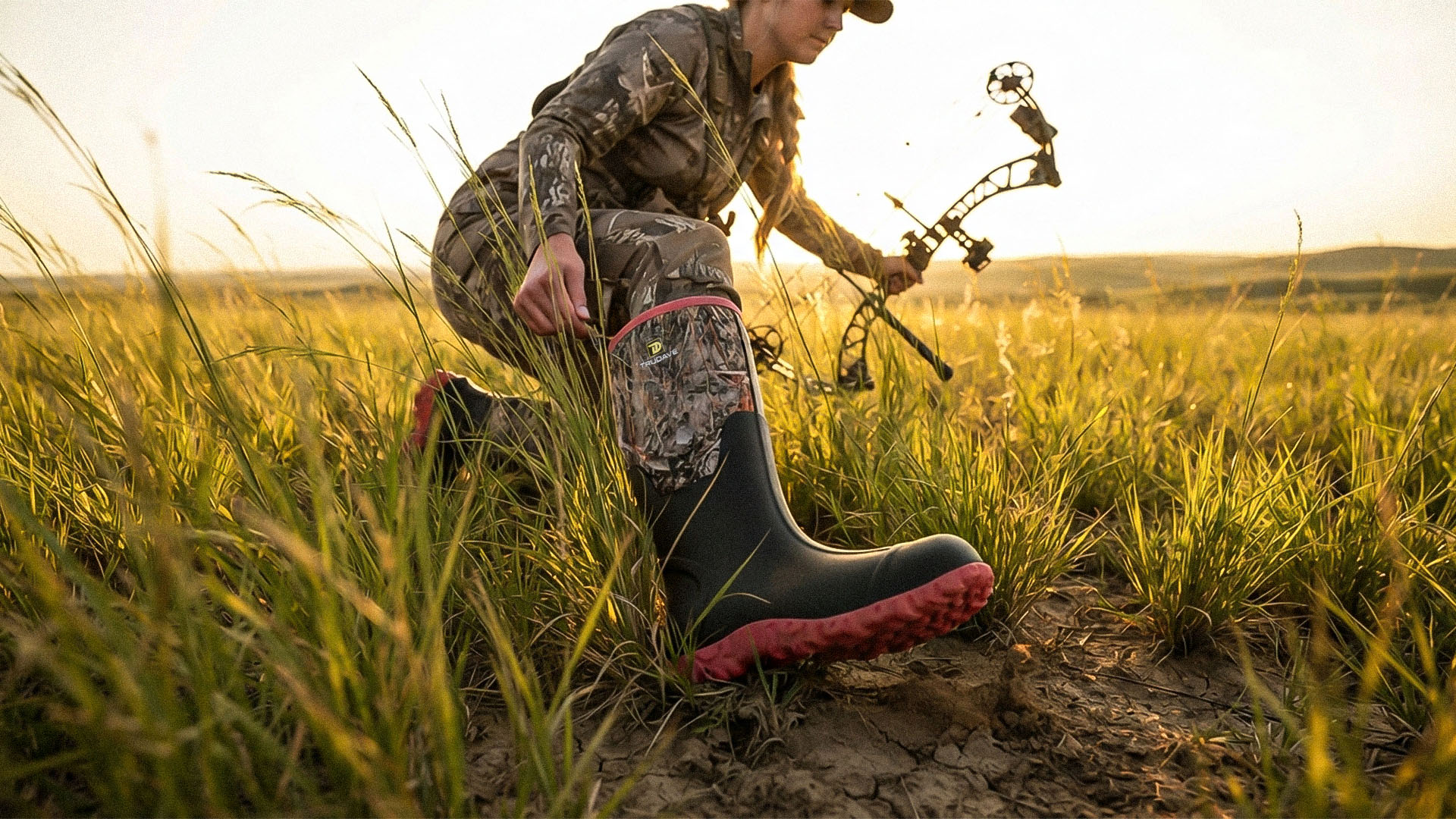
Hunters covering these environments may benefit from waterproof hunting boots for winter rabbit hunting that provide reliable traction, secure fit, and enough moisture protection for long walks through farm and brush country.
Rabbit hunting can involve constant walking.
Heavy or uncomfortable footwear becomes noticeable quickly.
Mud Can Be Worse Than Snow
Warm winter afternoons can turn frozen ground into soft mud.
Agricultural soil may:
- Pack into tread
- Pull at boots
- Become slippery
Use shorter steps.
Choose firm edges when possible.
A muddy field can become more tiring than a snow-covered one.
Boot Height Should Match the Habitat
Low footwear may be comfortable on dry field roads.
It becomes less useful when hunting:
- Wet creek bottoms
- Snow
- Muddy ditches
A moderate or taller waterproof hunting boot can provide additional protection.
The best choice depends on actual water depth and walking distance.
Too Much Insulation Can Create Sweat
Rabbit hunting is active.
Hunters frequently walk for hours.
Heavy insulation may become uncomfortable during mild winter weather.
Match footwear to:
- Temperature
- Snow depth
- Activity level
Warmth is useful.
Sweaty feet are not.
Gaiters Can Help in Snow and Wet Grass
Gaiters may reduce:
- Snow entering boots
- Wet vegetation soaking pants
- Seeds and debris getting inside footwear
They can be useful when hunting field edges and creek bottoms after fresh snow.
Brush Requires Durable Clothing
Rabbit habitat can be rough.
Expect:
- Briars
- Thorns
- Branches
- Weed seeds
Durable brush pants can make hunting more comfortable.
The goal is being willing to enter productive cover instead of walking around it.
Eye Protection Makes Sense
Brush and briars frequently reach face height.
Clear protective glasses can help prevent:
- Scratches
- Branch injuries
This is especially useful when following dogs or pushing thick hedgerows.
Old Farm Debris Requires Caution
Rabbit cover often develops around abandoned agricultural areas.
Hunters may encounter:
- Barbed wire
- Metal
- Old machinery
- Broken fencing
Watch footing.
Control dogs.
Never climb blindly into brush piles without knowing what is inside.
Fence Crossings Require Safe Gun Handling
Farm-country hunting frequently involves fences.
When crossing:
- Maintain safe firearm control
- Use gates when available
- Avoid damaging fences
Do not rush because a rabbit crossed first.
The animal does not
