
At first glance, a shallow marsh can look almost empty.
The water is barely deep enough to cover a hunter’s boots.
Wild rice, sedges, smartweed, cattails, and other wetland plants fill nearly every opening.
There are no obvious flocks circling overhead.
No loud geese.
No ducks pouring into decoys.
Then something small runs across a patch of floating vegetation.
A hunter takes several more steps.
A compact brown bird suddenly rises from the grass, flies low across the marsh, and disappears into another patch of vegetation before anyone has much time to react.
That is rail hunting.
For hunters accustomed to open-water waterfowl or dry upland birds, rails can feel like they belong to a completely different kind of hunt.
They spend much of their time walking rather than flying.
They use vegetation that appears impossibly dense.
They may remain hidden only a few yards from hunters.
And they thrive in the exact zone where land and water become difficult to separate.
Successful rail hunting begins by understanding one simple idea:
The best habitat is often neither dry land nor open water.
It is the messy ground in between.
Rails Are Birds of the Marsh Interior
Several rail species occur across North America, but sora and Virginia rails are among the species hunters may encounter in legal hunting areas.
They are strongly associated with shallow wetlands containing dense emergent vegetation.
Potential habitat can include:
- Wild rice marshes
- Smartweed flats
- Cattail edges
- Sedges
- Shallow freshwater wetlands
- Flooded grass
- Mud flats
- Moist-soil impoundments
- Marshy creek edges
The important feature is usually shallow water combined with vegetation.
A deep open pond may hold ducks but relatively few rails.
A marsh containing only damp vegetation but no shallow water may also be less productive.
Rails thrive in the transition.
Water Depth Matters More Than Marsh Size
A thousand-acre wetland can look impressive.
But if most of it is several feet deep, rail habitat may be limited.
A much smaller marsh with ankle- to lower-leg-deep water and dense vegetation may hold significantly more birds.
When scouting, look for water that allows rails to:
- Walk through vegetation
- Feed along muddy edges
- Hide immediately
- Move beneath plant cover
Hunters should focus less on total wetland acreage and more on the depth and structure of individual sections.
One shallow forty-acre pocket can be more productive than a massive open-water complex.
Sora Often Use Seed-Producing Wetland Plants
Sora are strongly associated with marsh vegetation and may use areas containing abundant seeds and aquatic food.
Productive plant communities can include:
- Wild rice
- Smartweed
- Sedges
- Other seed-producing wetland plants
Hunters do not need to become professional botanists.
But learning a few important wetland plants makes scouting much easier.
When one side of a marsh contains uniform cattails and the other contains diverse grasses, sedges, and seed-producing plants, the mixed side may deserve more attention.
Food diversity often creates bird diversity.
Virginia Rails Prefer Dense Cover Too
Virginia rails can be remarkably difficult to see.
Their narrow bodies allow them to move through dense vegetation with little disturbance.
They may use:
- Cattails
- Bulrush
- Sedges
- Dense marsh edges
- Shallow muddy channels
A bird can be only several yards away without being visible.
This is why rail hunting is usually not a glassing hunt.
It is a habitat-and-movement hunt.
You locate the correct cover and move through it carefully enough to cause birds to reveal themselves.
Wild Rice Marshes Can Be Excellent
Wild rice can create classic rail habitat where it occurs.
The plants provide:
- Food
- Concealment
- Shallow-water structure
- Travel corridors
The challenge for hunters is moving through it.
Dense rice can hide:
- Water channels
- Mud holes
- Logs
- Floating vegetation
Do not assume the surface beneath the plants is uniform.
One step may land on firm mud.
The next may sink much deeper.
Slow movement is essential.
Smartweed Flats Deserve Attention
Smartweed can create excellent wetland habitat.
Where shallow water floods or surrounds dense smartweed, hunters may find both rails and other wetland birds.
Look for areas with:
- Patchy open water
- Mud beneath vegetation
- Nearby sedges
- Narrow channels
The edge between two vegetation types can be especially productive.
Rails often use those transitions because they provide both feeding opportunities and multiple escape routes.
Cattails Can Be Good—but Not Every Cattail Marsh Is Good
Hunters often see cattails and assume “wetland birds.”
But huge solid cattail stands can be extremely difficult to hunt.
Some may contain:
- Water that is too deep
- Vegetation too dense for efficient walking
- Limited feeding diversity
The best cattail habitat often includes edges.
Look where cattails meet:
- Wild rice
- Sedges
- Mud flats
- Open shallow water
- Flooded grass
Habitat diversity matters.
A narrow cattail edge beside a productive shallow flat may hold more rails than acres of solid cattails.
Mud Flats Can Reveal Current Use
When water levels drop, exposed mud appears.
These areas can provide feeding opportunities and valuable scouting information.
Look for bird tracks along:
- Mud edges
- Shallow channels
- Small openings
- Water-control structures
- Marsh islands
Rail tracks can be difficult for beginners to identify confidently, especially where many wetland birds overlap.
Rather than relying on one track, use the overall evidence:
- Bird sightings
- Calls
- Habitat
- Repeated movement
- Fresh tracks
The more clues agree, the better.
Water-Level Changes Can Move Birds Quickly
Wetlands are dynamic.
A marsh can change dramatically after:
- Heavy rain
- Drought
- Managed drawdown
- Flooding
- Irrigation changes
- Storms
A productive rail location may become too deep after several days of rain.
Birds may shift toward the new shoreline or higher vegetation.
During falling water, fresh mud and newly exposed feeding zones can become productive.
Follow current water.
Do not hunt last month’s shoreline.
Rain Can Expand Rail Habitat
A wet summer or early fall can create temporary shallow wetlands.
Low agricultural ground may flood.
Grasslands may become saturated.
Drainage systems may spread into new areas.
Migrating rails can use these temporary habitats.
After significant rain, check legal wetland areas that were previously too dry.
Good rail habitat can appear quickly.
It can disappear just as quickly when conditions dry.
Drought Concentrates Birds
Dry conditions create the opposite pattern.
When wetland acreage shrinks, birds may concentrate around remaining shallow water.
This can make scouting easier.
Focus on:
- Permanent marsh edges
- Managed impoundments
- Creek-fed wetlands
- Remaining mud flats
- Water-control areas
However, drought may also reduce overall habitat quality.
Do not assume concentrated habitat means abundant birds.
Current bird observations remain important.
Rails Often Run Before They Fly
One of the biggest differences between rails and typical upland birds is how strongly they prefer to remain on the ground.
A rail may hear or see a hunter and simply run through vegetation.
This makes them frustratingly difficult to flush.
You may see:
- Grass moving
- A small wake
- Vegetation shaking
- A bird briefly crossing an opening
Then nothing.
The bird may still be only a few yards away.
Slow down.
Do not automatically assume it escaped.
Walking Too Fast Can Push Birds Without Showing Them
If hunters move quickly through a marsh, rails may stay ahead on foot.
The result is lots of walking and few visible birds.
A better rhythm is:
Walk several steps.
Stop.
Listen.
Watch vegetation.
Then continue.
Unpredictable pressure can sometimes encourage a bird to flush rather than continue running.
Rail hunting rewards patience more than speed.
Small Groups Can Cover Marshes Efficiently
Where legal and safe, two or three hunters can work shallow marsh cover methodically.
Maintain plenty of spacing.
Move in a coordinated general direction rather than clustering together.
The goal is to cover habitat while allowing everyone to know:
- Partner locations
- Safe shooting directions
- Boat position
- Dog position if used
Dense marsh vegetation can hide another person instantly.
Communication is essential.
Never Shoot at Moving Vegetation
Rails spend much of their time hidden.
Hunters may hear movement or see grass shaking.
That is not enough.
Never shoot at:
- Sound
- Vegetation movement
- A vague brown shape
Wait until the bird is clearly visible and positively identified.
Marshes can contain multiple legal and protected species, plus hunters and dogs hidden by cover.
Positive identification comes before every shot.
Rail Identification Matters
Different rail species can look similar to inexperienced hunters, especially during a sudden flush.
Learn identification before entering the marsh.
Study:
- Size
- Bill length
- Plumage
- Leg appearance
- Flight style
- Vocalizations
Also learn which rail species are legal in your specific hunting area.
Not every rail encountered is necessarily a legal target.
If uncertain, let the bird go.
Calls Can Help Scouting
Rails are often more easily heard than seen.
Listening during scouting can help confirm birds are present.
Early morning and evening can be especially useful for detecting vocal activity.
Use calls primarily as habitat information where appropriate.
If you repeatedly hear rails from one shallow vegetation zone, that tells you more than walking random sections of the marsh.
Learn natural sounds before relying heavily on imitation.
Morning Marshes Can Be Productive
Cool mornings offer several advantages.
Birds may be active.
Hunters face less heat.
Wind may be lighter.
Wetland vegetation can be easier to read.
Begin by checking:
- Shallow food-rich flats
- Marsh edges
- Channel intersections
- Dense vegetation transitions
Do not assume the middle of the marsh is always best.
Often, the first high-quality edge produces birds.
Midday Hunting Can Still Work
Unlike some hunts built heavily around dawn and dusk movement, rail hunting can remain productive later in the day.
If birds are already occupying dense shallow cover, they do not need to travel long distances to remain available.
Midday can still produce flushes.
The main limitation may be hunter comfort.
Heat and humidity in early rail seasons can become severe.
Manage temperature carefully.
Heat Is a Major Early-Season Issue
Many rail seasons occur when wetland conditions are still warm.
Marsh humidity can make moderate temperatures feel oppressive.
Hunters walking through mud work harder than they realize.
Carry plenty of water.
Watch for:
- Dizziness
- Headache
- Nausea
- Weakness
- Confusion
Take breaks.
Do not keep pushing because birds are present.
Heat illness can develop quickly in humid wetlands.
Hydration Is Easy to Underestimate
A hunter standing in water may not feel “dry.”
That has nothing to do with hydration.
Physical movement through mud creates significant effort.
Drink regularly.
Carry water in secure waterproof storage.
If hunting with a dog, carry water specifically for the dog as well.
Do not depend on marsh water.
Dogs Can Help Flush Rails
A close-working dog can help move birds from dense vegetation where legal and appropriate.
The best dog in this habitat needs control.
A wide-ranging dog may disappear quickly.
Potential advantages include:
- Finding hidden birds
- Forcing running birds to move
- Helping with retrieval
But wetland conditions create major hazards.
Dogs should not be sent blindly into unfamiliar water.
Deep Channels Can Hide Under Vegetation
A shallow marsh often contains narrow deeper channels.
From the surface, vegetation can hide them completely.
Hunters and dogs can suddenly drop into deeper water.
Before moving quickly:
- Test footing
- Watch vegetation changes
- Learn local drainage patterns
- Use known routes
Do not chase a bird blindly.
The bird weighs a fraction of what you do and may cross floating vegetation or soft ground that cannot support a person.
Mud Can Be Deeper Than Water
Shallow water creates false confidence.
The water may be only six inches deep.
The mud beneath it may be another eighteen inches.
Soft muck can make movement extremely difficult.
Every step requires pulling the boot free.
This is where secure footwear becomes important.
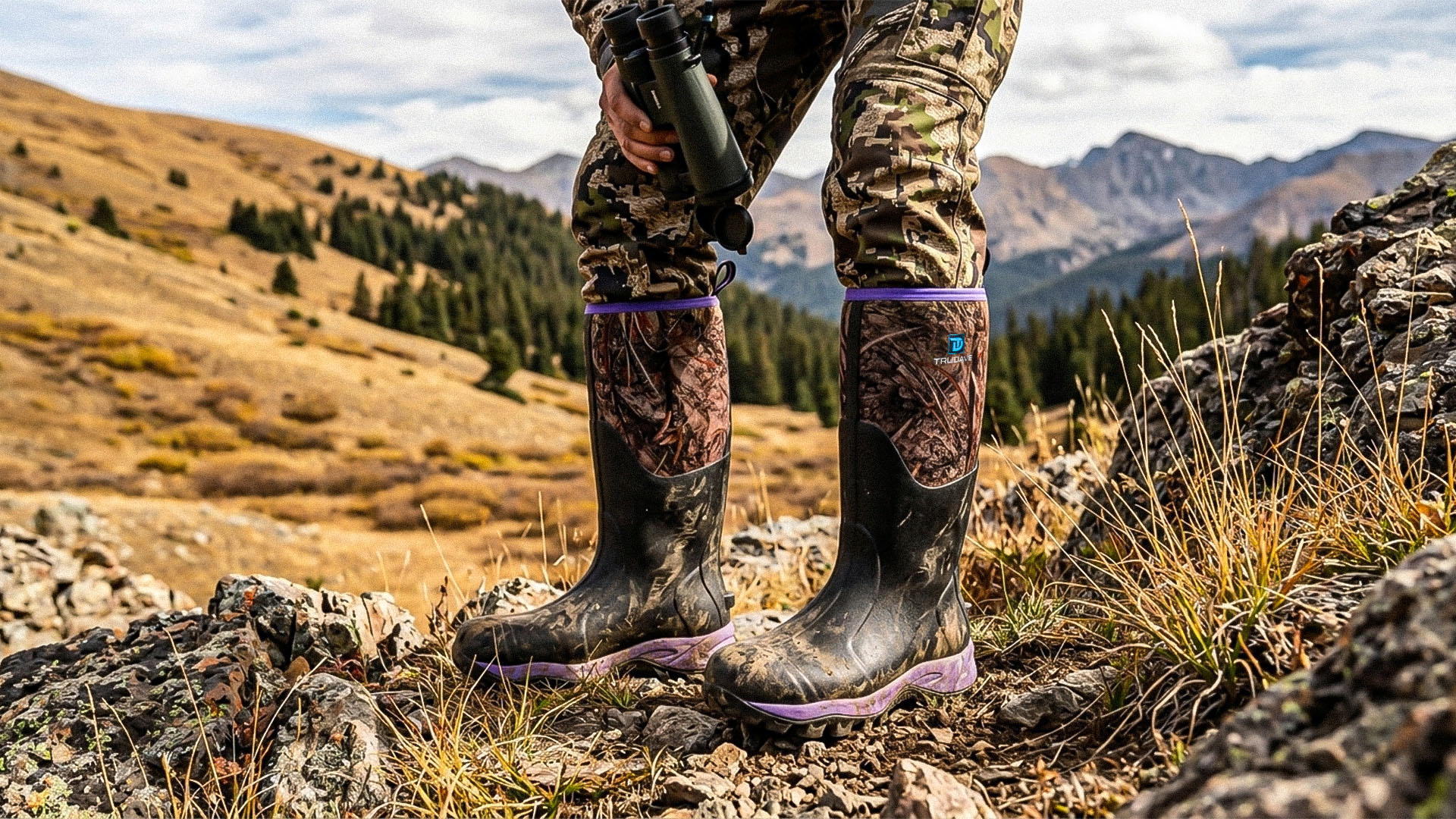
Hunters working these environments may benefit from waterproof hunting boots for shallow marsh hunting that provide adequate waterproof height, secure heel retention, and aggressive mud traction while remaining manageable for active walking.
Mud Suction Can Pull Loose Boots Off
A poorly fitted boot can remain stuck while the foot begins lifting inside.
That creates:
- Heel slip
- Blisters
- Fatigue
- Lost balance
Take shorter steps.
Lift deliberately.
Avoid extremely soft black mud when firmer vegetation exists nearby.
A secure fit is often more important than simply choosing the tallest boot available.
Boot Height Should Match the Marsh
Rail habitat varies.
Some areas require only ankle-deep water protection.
Others contain deeper channels.
Choose footwear based on actual scouting.
Possible options may include:
- Tall waterproof hunting boots
- Rubber boots
- Waders in deeper environments
The best choice is the least cumbersome option that safely handles the expected depth.
Do not wear chest waders for an ankle-deep meadow simply because the word “marsh” appears on the map.
Waders Can Be Useful—but Also Hot
Where deeper water must be crossed, waders may be necessary.
During warm early seasons, they can also trap substantial heat.
Plan routes carefully.
Vent and rest appropriately.
Avoid unnecessary long walks in heavy waders if shallower access is available.
Equipment needs to match both water and temperature.
Waterproof Boots Can Be Better for Shallow Marshes
Where water stays relatively shallow, tall waterproof hunting boots may offer better walking mobility than full waders.
They can be useful for:
- Mud
- Wet vegetation
- Shallow water
- Marsh islands
- Muddy access roads
Support and fit become especially important if the approach is long.
Rail hunting can involve far more walking than hunters expect.
Grass and Rice Can Pour Water Into Boots
Even if water never reaches the boot opening, wet vegetation can.
Tall plants rub against pants and transfer moisture downward.
Water eventually follows fabric toward the boot cuff.
Gaiters or appropriate waterproof pants can help.
Think of wetland clothing as a system.
Dry boots are less useful if water enters from above.
Slippery Marsh Banks Require Traction
Edges around drainage channels can be surprisingly steep.
Mud makes them slick.
Use controlled steps.
Avoid jumping.
A hunter carrying a shotgun should never sacrifice safe firearm control simply to cross a ditch faster.
Find a better route if necessary.
Boats Can Improve Access
Some rail habitat is easier to reach by shallow-draft boat or canoe where legal and appropriate.
A boat can transport hunters to:
- Marsh islands
- Interior shallows
- Remote vegetation flats
Once there, hunting may continue on foot.
Boat use introduces additional safety concerns.
Wear appropriate flotation equipment.
Know:
- Water depth
- Weather
- Navigation
- Boat capacity
Do not overload a small craft with hunters, dogs, firearms, and gear.
Canoes Require Stability Awareness
A narrow canoe can access excellent marsh habitat.
It can also become unstable when hunters suddenly move.
Remain seated or positioned appropriately.
Do not take unsafe shots from unstable positions.
Wet vegetation, dogs, and muddy boots make the interior slippery.
Practice boat handling before combining it with hunting.
Mark the Launch Point
Dense marsh vegetation can make navigation confusing.
A channel that looks obvious in the morning may disappear from view later.
Mark:
- Boat
- Launch
- Vehicle
- Main channel intersections
using reliable navigation.
Carry offline maps where appropriate.
Do not assume cell service exists.
Fog Can Make Marsh Navigation Difficult
Warm wetlands and cool mornings can create fog.
Visibility may fall rapidly.
When this happens:
- Slow down
- Confirm navigation
- Avoid unfamiliar channels
- Maintain group contact
Do not take shots at unclear silhouettes.
Fog reduces both species identification and knowledge of the background.
Wait for safe visibility.
Marsh Backgrounds Are Deceptive
A low-flying rail may cross just above vegetation.
Another hunter or dog may be hidden on the other side.
Never take low shots unless the background is unquestionably safe.
Dense marsh vegetation provides concealment in both directions.
If you lose track of a hunting partner, stop shooting until positions are re-established.
Eye Protection Can Be Useful
Wild rice, reeds, and stiff marsh plants can strike the face.
Clear protective glasses help while walking through dense vegetation.
They also provide basic protection from:
- Plant stems
- Insects
- Mud splash
Choose lenses that do not make bird identification more difficult.
Insects Can Be Relentless
Early wetland hunts often mean mosquitoes.
Prepare for:
- Mosquitoes
- Biting flies
- Ticks around drier edges
Use appropriate repellent and protective clothing.
A head net can be useful during breaks.
Good insect protection reduces constant movement and distraction.
Snakes Can Be Present in Warm Wetlands
Depending on region, shallow marsh habitat may contain venomous snakes.
Watch:
- Banks
- Logs
- Dry islands
- Thick vegetation
Do not place hands where you cannot see.
Give snakes space.
Keep dogs controlled.
Know local species and appropriate emergency procedures.
Leeches and Other Wetland Annoyances Exist
Wetlands come with small discomforts.
Depending on area, hunters may encounter:
- Leeches
- Aquatic insects
- Mud
- Plant seeds
- Burrs
Check exposed skin and equipment after the hunt.
These rarely define the hunt, but proper clothing makes them much less annoying.
Freshwater Marsh Mud Is Hard on Gear
After hunting, clean:
- Boots
- Firearms
- Packs
- Dog gear
- Boat equipment
Mud dries inside outsole tread and hardware.
Plant matter can remain wrapped around zippers and straps.
Basic cleaning improves gear longevity.
Wetland hunters who ignore maintenance eventually notice corrosion, odor, and equipment failure.
Keep the Firearm Muzzle Out of the Mud
This is especially important in shallow wetlands.
Hunters may stumble or use the gun unconsciously for balance.
Never place the muzzle into mud or water.
If the muzzle contacts debris, stop and safely inspect it before continuing.
A blocked barrel is a serious hazard.
Use a walking stick where appropriate rather than using a firearm as support.
A Walking Stick Can Help
A sturdy walking stick can help test:
- Mud depth
- Hidden channels
- Unstable ground
It also provides balance when stepping from water onto banks.
Keep it under control around other hunters and dogs.
One simple stick can prevent many unnecessary falls.
Retrieving Small Birds Can Be Difficult
A rail falling into dense vegetation can disappear instantly.
Mark the location.
Use a reference such as:
- Rice opening
- Tall reed
- Mud patch
- Channel bend
Walk directly to the spot.
A trained dog can be valuable, but do not send it into unsafe water.
Make every reasonable effort to recover harvested birds.
Running Birds Can Complicate Recovery
Rails are strong runners.
A wounded bird may disappear through vegetation before the hunter reaches the location.
Search:
- Mud trails
- Plant movement
- Small openings
- Water edges
Work methodically.
Do not trample the entire area immediately.
Preserving sign increases recovery chances.
Small Game Bags Should Stay Dry
Carry harvested birds in a way that protects them from soaking unnecessarily while allowing appropriate cooling.
Warm early-season weather requires attention to game care.
Do not leave birds inside a sealed hot bag for hours.
Keep them clean and cool according to applicable food-safety and wildlife-agency guidance.
Migratory Bird Regulations Apply
Rails are migratory game birds.
Hunters must verify current federal and state regulations before hunting.
Requirements may include:
- Open species
- Season dates
- Bag limits
- Possession limits
- Shooting hours
- Hunting license
- HIP registration
- Shotgun capacity
- Legal ammunition
- Area-specific rules
Do not assume all rails share identical regulations.
Check the species you may legally encounter.
Public Wetlands May Have Additional Rules
Wildlife management areas, refuges, and other managed wetlands may impose rules beyond general statewide regulations.
These can include:
- Access times
- Designated hunting zones
- Non-toxic shot requirements
- Boat restrictions
- Permit systems
- Closed areas
Read the specific property rules before entering.
Managed wetlands can have excellent rail habitat but more complicated regulations.
Non-Toxic Shot Requirements Should Be Confirmed
Wetlands frequently have specific ammunition rules.
Do not assume what is legal on nearby private upland ground is legal inside a managed marsh.
Verify current requirements before the hunt.
Using compliant ammunition is part of preparation.
Waterfowl Hunters May Share the Marsh
Rail seasons can overlap other migratory-bird activity.
You may encounter:
- Teal hunters
- Duck hunters
- Goose hunters
- Snipe hunters
Do not walk through another group’s setup.
Give decoys and blinds generous space.
If a shallow marsh is crowded, move elsewhere.
Responsible access protects everyone’s hunt.
Birdwatchers May Use the Same Habitat
Rails are also popular birds among wildlife observers.
Public wetland trails can attract photographers and birders.
Know where public-use trails are located.
Avoid shooting toward them.
Communicate politely when necessary.
Managed wetlands often exist for multiple recreational purposes.
Rail Conservation Depends on Wetlands
Rail hunting is directly connected to wetland health.
These birds depend on shallow marsh systems that are vulnerable to:
- Drainage
- Development
- Water-level changes
- Invasive vegetation
- Habitat loss
Hunters benefit from wetland conservation just as ducks and other wildlife do.
Supporting healthy wetland management protects future hunting opportunity.
Good habitat is the foundation of every successful marsh hunt.
Common Rail Hunting Mistakes
Hunting Water That Is Too Deep
Rails generally favor shallow vegetated marsh habitat.
Walking Too Fast
Running birds may remain ahead without flushing.
Ignoring Vegetation Diversity
Edges between rice, sedges, cattails, and open mud can be especially productive.
Assuming Every Rail Is Legal
Species identification and current regulations matter.
Shooting at Vegetation Movement
Always positively identify the bird.
Wearing Loose Footwear
Mud suction makes poor fit miserable.
Assuming Shallow Water Means Easy Walking
Deep mud and hidden channels can be more difficult than the water itself.
Losing Track of Partners
Dense vegetation hides hunters quickly.
Ignoring Heat
Early-season marsh hunting can be physically demanding.
Frequently Asked Questions
Where do sora rails live?
Sora commonly use shallow freshwater marshes containing dense emergent vegetation such as wild rice, sedges, smartweed, and other wetland plants.
What water depth is best for rail hunting?
Productive areas are generally shallow enough for rails to walk and feed through vegetation. Exact conditions vary by species and wetland, so current bird activity is the best guide.
Can you hunt rails without a dog?
Yes. Hunters can slowly walk productive shallow cover and flush birds on foot. A controlled dog can help locate and recover birds where legal.
Is rail hunting good after rain?
Rain can create additional shallow wetland habitat, but excessive flooding may move birds toward new edges and higher vegetation.
What boots are best for rail hunting?
Waterproof hunting boots with sufficient height, strong mud traction, secure heel fit, and manageable weight are useful for shallow marshes. Deeper areas may require appropriate waders.
Are rails migratory birds?
Yes. Legal rail hunting is subject to migratory game-bird regulations, including current seasons, limits, identification requirements, and other federal or state rules.
Final Thoughts
Rail hunting changes how hunters think about wetlands.
The deepest water is not always best.
The biggest marsh is not always best.
And the thickest cattails are not automatically best.
The productive zone is often a narrow strip where shallow water, soft mud, food, and vegetation all overlap.
That is where rails can walk.
Feed.
Hide.
Run.
And occasionally explode into flight only a few yards from the hunter.
Study water depth.
Learn wetland plants.
Slow down when vegetation looks right.
Watch for movement beneath the grass.
Keep track of partners.
Choose footwear that stays attached when the mud tries to keep it.
And remember that the hardest part of rail hunting is often not finding the marsh.
It is recognizing the few acres inside that marsh where the birds actually want to live.
