
Hungarian partridge country can look almost too simple.
A harvested wheat field.
A gravel road.
A grass ditch.
A shallow coulee cutting across rolling prairie.
From the truck, there seems to be nowhere for a covey to hide.
Then the birds flush.
Ten, twelve, maybe fifteen gray-brown shapes explode from stubble that barely reaches your ankles. The entire covey rises at once, catches the wind, and disappears over a hill before you have fully mounted the shotgun.
That is Hungarian partridge hunting.
Often called Huns by upland hunters, gray partridge live in landscapes where concealment seems limited but distance works in their favor.
They survive by seeing danger early, living in coveys, using subtle terrain, and moving between agricultural food sources and grassy escape cover.
Successful hunters learn that open prairie is full of small details.
A roadside ditch.
A patch of taller stubble.
A weedy field corner.
A shallow draw.
A grass strip between two crop fields.
Those features can determine whether a thousand-acre landscape holds no birds or several coveys.
Hungarian Partridge Are Birds of Working Landscapes
Gray partridge are strongly associated with agricultural prairie in parts of northern and western North America.
Productive country may contain:
- Wheat
- Barley
- Grain stubble
- Grass waterways
- Pasture
- Shelterbelts
- Roadside cover
- Coulees
- Weedy field margins
- Brushy draws
Unlike forest grouse, Huns do not require dense timber.
Unlike pheasants, they may spend much more time in relatively open landscapes.
The ideal property often contains a patchwork.
Food in one direction.
Grass cover in another.
Terrain breaks nearby.
The birds move between them.
Hunters who look only for tall cover often miss the places Huns actually use.
Coveys Change Everything
Hungarian partridge commonly live in coveys outside the breeding season.
That group behavior gives the birds several advantages.
More eyes detect hunters earlier.
More birds feeding together can locate food efficiently.
When danger appears, the entire group can flush at once.
For hunters, this means one bird usually means more birds.
If you see a single Hun crossing a road or feeding along stubble, stop and glass carefully.
The rest of the covey may be nearby.
Likewise, after a flush, do not focus only on the first bird.
Watch the entire group.
Where they land can determine the rest of the hunt.
Wheat Stubble Is Classic Feeding Habitat
Harvested grain fields can provide important feeding opportunity.
Wheat stubble is especially worth checking where it borders suitable security cover.
Look for fields with:
- Waste grain
- Weed seeds
- Uneven stubble
- Grassy edges
- Nearby coulees
- Roadside cover
- Lightly grazed pasture
A huge clean field surrounded by bare ground may offer food but limited security.
A smaller wheat field beside a grass drainage may be far more attractive.
Huns want to feed while remaining close enough to terrain or cover that gives them options when danger approaches.
Do Not Hunt the Center First
Walking directly into the middle of a large stubble field is exhausting and often unproductive.
Start with structure.
Work:
- Field corners
- Grass edges
- Weed patches
- Low swales
- Ditches
- Coulee margins
Birds often use these areas because the transition provides both food and concealment.
Once you establish fresh sign or flush a covey, you can decide whether working deeper into the field makes sense.
The objective is not covering acres.
It is covering the acres most likely to hold birds.
Coulees Are Natural Holding Cover
Shallow prairie coulees may look insignificant from the road.
To a covey, they can offer:
- Wind protection
- Taller vegetation
- Better moisture
- Insects
- Concealed travel
- Escape terrain
Huns may feed on open stubble and loaf near coulee edges.
During strong wind, they may use the protected side.
When hunting a drainage, do not walk only the bottom.
Work the upper edge where grass meets crop ground.
This allows you to cover both feeding and security habitat.
Small Elevation Changes Matter
Prairie terrain often looks flat from a vehicle.
Once you begin walking, small rises and depressions become obvious.
A low ridge can hide an entire covey.
A shallow depression can create protected feeding ground.
A small hillside can change wind direction.
Use these features during the hunt.
Before entering a field, study:
- Ridge lines
- Low spots
- Drainages
- Field rolls
- Gentle benches
Birds may be sitting where the ground blocks them from road traffic and prevailing wind.
Roadside Ditches Are Worth Checking
Road ditches can provide excellent grass and weed structure.
Huns may use them to move between fields or escape harsh weather.
Look for ditches containing:
- Tall grass
- Weed seeds
- Snow-free patches
- Nearby crop stubble
- Culverts
- Small brush pockets
However, roadside hunting carries legal and safety concerns.
Never assume a ditch is open to hunting.
Know local rules regarding:
- Road rights-of-way
- Firearm discharge
- Vehicle use
- Private property
- Shooting across roads
Use road observations for scouting even when hunting directly from the area is not legal or safe.
Gravel Roads Can Reveal Birds
Huns may move near gravel roads to pick grit or travel between cover.
Early or late in the day, hunters may see coveys standing along quiet roads.
This is valuable information.
Do not rush from the vehicle.
Watch where the birds move.
If they leave the road and enter legal hunting ground, mark the direction and terrain.
A covey observed from a road can provide an excellent starting point for a legal walk-in hunt.
Grit Matters
Like many upland birds, partridge use grit to help process food.
Gravelly roads, field edges, and exposed soil may attract birds.
Look for coveys near:
- Gravel lanes
- Sandy patches
- Dry field roads
- Exposed soil
- Farm entrances
Grit sites become more useful when they sit beside feeding habitat.
A road crossing between wheat and grass can combine several needs in one small area.
Weedy Corners Can Hold Entire Coveys
Modern agriculture often leaves small irregular corners where equipment cannot work efficiently.
These pockets may grow:
- Kochia
- Ragweed
- Foxtail
- Volunteer grain
- Other seed-producing weeds
To a hunter, the corner may look messy.
To a covey, it may be food and security.
Never walk past a weedy corner without slowing down.
Especially when it borders:
- Grass
- Shelterbelt
- Coulee
- Drainage ditch
Small habitat can create big opportunities.
Shelterbelts Add Winter Security
Tree and shrub shelterbelts may provide protection during harsh prairie weather.
Huns are not forest birds, but they may use the grass and brush around these windbreaks.
Productive shelterbelts often sit near grain fields.
Search:
- Grass margins
- Downwind edges
- Field corners
- Gaps between rows
- Adjacent stubble
Do not automatically push into thick trees.
The birds may be feeding just outside the belt and using it mainly for weather protection.
Wind Is One of the Biggest Variables
Prairie wind affects nearly every part of Hun hunting.
It changes:
- Where birds loaf
- How dogs scent
- How birds flush
- Shot difficulty
- Hunter approach
On windy days, search protected features first.
Examples include:
- Leeward coulees
- Shelterbelt edges
- Low field depressions
- Grass behind ridges
Birds sitting in strong open wind may be uncomfortable.
A twenty-yard-wide protected strip can hold the entire covey.
Use Wind With a Bird Dog
If hunting with a pointing or flushing dog, route selection matters.
Whenever possible, work into or across the wind.
A crosswind pass along a stubble-and-grass edge allows the dog to sample scent across a wider strip.
Watch the dog carefully.
Huns may run.
A dog may:
- Become birdy
- Lose scent
- Relocate
- Push forward quickly
Do not assume the birds disappeared.
They may simply be moving ahead.
Huns Are Famous for Running
Coveys do not always sit and wait.
Pressured birds may run through:
- Stubble
- Short grass
- Field edges
before flushing.
This creates one of the classic frustrations of Hun hunting.
The dog looks good.
The hunter expects a point.
Then the entire covey flushes fifty yards ahead.
When birds are running, avoid racing after them.
Speed often creates more distance.
Change the angle.
Use terrain.
Try to force the birds toward cover where they are more likely to hold.
Later-Season Birds Become Educated
Early in the season, coveys may tolerate closer approaches.
After repeated hunting pressure, everything changes.
Late birds may:
- Flush farther
- Avoid roads
- Move toward larger fields
- Use less obvious grass
- Run ahead of dogs
- Leave predictable cover earlier
This does not mean the population disappeared.
It means the surviving birds learned.
Late-season success requires better scouting and quieter access.
Avoid Parking Directly Beside the Covey
If birds regularly use one field, driving to the closest gate can ruin the approach.
A mature covey may associate:
- Truck doors
- Voices
- Dogs
- Familiar parking spots
with hunting pressure.
When possible and legal, park farther away.
Prepare quietly.
Use terrain to approach.
An extra half-mile of walking can be easier than chasing a wild-flushing covey all afternoon.
Fresh Snow Is Excellent Scouting
Light snow can make Hun habitat much easier to read.
Tracks may appear around:
- Grain stubble
- Road edges
- Grass strips
- Shelterbelts
- Coulees
Fresh snow shows which cover the birds used after the storm.
Look for clusters of small tracks rather than one isolated trail.
A covey feeding together can leave a concentrated pattern.
Once you find it, slow down.
The birds may still be nearby.
Deep Snow Changes Feeding Areas
When snow covers grain fields, birds must find accessible food.
They may move toward:
- Windblown ridges
- Exposed stubble
- Farm edges
- Shelterbelts
- Food plots where available
- Areas with thinner snow
Wind can strip snow from high points while filling low ground.
This can reverse normal habitat patterns.
A ridge ignored during mild weather may become a critical winter feeding zone.
Snow-Filled Coulees Can Offer Protection
While high ground may expose food, coulees can protect birds from severe wind.
Huns may travel between feeding ridges and protected low cover.
Look for tracks connecting the two.
This food-to-cover pattern can make winter movement more predictable.
Do not hunt only the feed.
The transition route may provide better opportunities.
Rain Changes Stubble Hunting Too
Early-season rain creates different conditions.
Dust becomes mud.
Stubble and grass hold moisture.
Low ground becomes soft.
Birds may shift toward slightly higher or firmer sections.
After rain, check:
- Raised field edges
- Gravelly corners
- Short grass beside crops
- Coulee shoulders
Wet weather can also improve scenting for dogs in some circumstances.
Let dog behavior tell you how conditions are affecting scent.
Wet Stubble Can Soak Hunters Quickly
A wheat field after rain may not contain standing water, yet everything touching your legs is wet.
Stubble.
Grass.
Weeds.
Within an hour, ordinary footwear may become saturated.
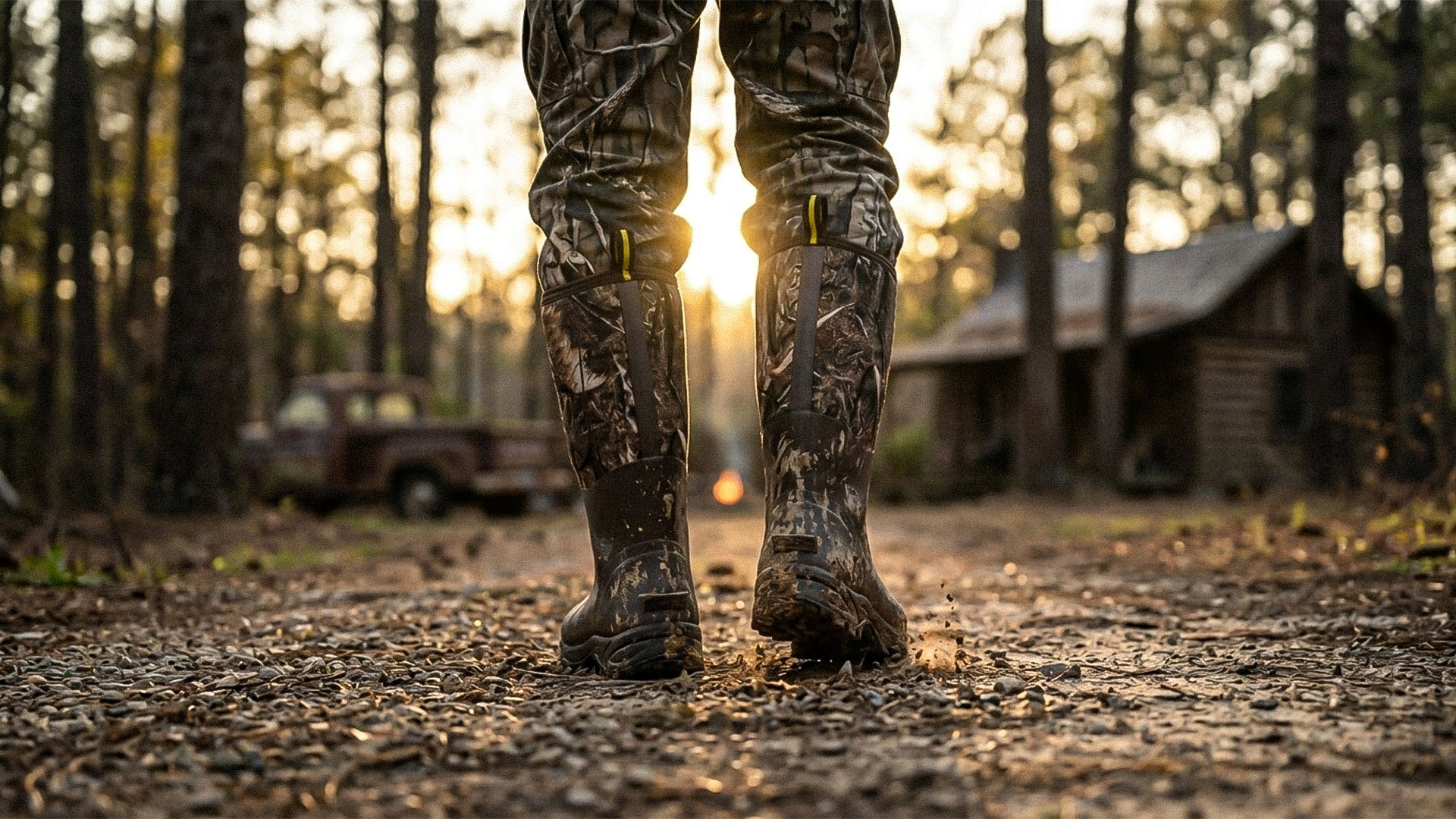
Hunters covering these conditions may benefit from lightweight waterproof hunting boots for prairie upland hunting that provide enough moisture protection for wet vegetation and shallow mud while remaining comfortable for several miles of walking.
Hun hunting is not usually stationary.
Weight matters.
Comfort matters.
A boot that feels fine for thirty minutes can become painful after six miles.
Avoid Overly Heavy Boots
Prairie bird hunters cover distance.
Heavy winter boots can make sense during extreme cold, but they may be unnecessary during mild fall weather.
Every extra pound adds fatigue.
Choose footwear based on:
- Temperature
- Snow
- Water
- Walking distance
- Terrain
The goal is adequate protection without carrying more boot than the hunt requires.
Heel Fit Matters on Rolling Ground
Even gentle prairie hills create constant uphill and downhill movement.
Poor heel retention causes friction.
Add wet socks and long distance, and blisters can develop quickly.
A secure boot should hold the heel without crushing the foot.
Break footwear in before the hunt.
Do not make an all-day prairie hunt the first serious test of new boots.
Mud Builds Under Outsoles
Agricultural soil can pack into tread.
Once outsole lugs fill with clay, traction decreases.
Clean heavy mud during breaks when necessary.
Watch your footing around:
- Creek banks
- Field roads
- Cattle areas
- Steep coulee sides
A prairie hunt does not need mountain terrain to produce a hard fall.
Cattle Pastures Can Hide Holes
Huns often occupy working agricultural landscapes.
Pastures may contain:
- Hoof holes
- Badger holes
- Gopher holes
- Washouts
Tall grass can hide them.
Do not sprint after a covey flush.
Watch every step.
A bird landing over the next ridge is not worth an ankle injury.
Badger Holes Demand Attention
Badger excavations can be large and surprisingly difficult to see from above.
Fresh or old holes may sit directly in walking routes.
Dogs can also be injured.
When moving through short prairie, glance ahead at the ground rather than watching the horizon constantly.
Stop when you need to glass.
Do not glass while walking blindly.
Glass Before Walking Huge Fields
Binoculars can save miles.
Before committing to a large stubble field, scan:
- Road edges
- Low ridges
- Fence corners
- Shelterbelt margins
- Bare ground
- Feeding birds
A covey may be visible as a cluster of small moving shapes.
Even if you cannot identify each bird immediately, concentrated movement can reveal where to focus your approach.
Morning Feeding Can Be Visible
Early morning is a good time to scout feeding areas.
Birds may be more exposed while using stubble or road edges.
Once they move toward loafing cover, finding them becomes harder.
Use morning observation to understand:
- Which field
- Which corner
- Which direction they travel afterward
That information can guide the rest of the day.
Midday Cover May Be Subtle
Huns do not always retreat into dramatically thick vegetation.
Midday loafing cover might be:
- Short grass beside a coulee
- A weedy depression
- A shelterbelt margin
- Slightly taller field edge
Do not assume birds left because the feeding field became empty.
They may be resting only a few hundred yards away.
Follow the habitat relationship.
Watch Every Covey Flush to the End
The first flush is not necessarily the end of the hunt.
Coveys often fly a considerable distance but can still be relocated.
Watch carefully.
Identify landmarks.
Do not lower the shotgun and start talking immediately.
Track the birds until they land or disappear behind terrain.
Mark:
- Fence posts
- Ridge points
- Rock piles
- Tall weeds
- Shelterbelts
That observation may create the best opportunity of the day.
Scattered Birds May Hold Better
A covey can sometimes split after flushing.
Singles and small groups may land separately.
Scattered birds may hold more tightly than the original covey.
When this happens, hunt slowly.
Let the dog work.
Avoid sweeping through the entire area too quickly.
A single bird can provide a much closer flush than fifteen nervous birds feeding together.
Give Landed Birds Time
Do not charge immediately toward the landing point.
Birds may:
- Run
- Regroup
- Watch the approach
Give them a short period to settle.
Then approach using wind and terrain.
A controlled second approach is more effective than turning the hunt into a race.
Do Not Overpressure Small Coveys
Local partridge populations can fluctuate.
Weather, habitat, agricultural practices, and predation all influence numbers.
Hunters should pay attention to covey size and local conditions.
Repeatedly chasing a small group may not be worthwhile.
A responsible hunter balances opportunity with long-term respect for the resource.
Good hunting includes knowing when to move on.
Dogs Need Water on the Prairie
Cool wind can hide how hard a dog is working.
Bird dogs may cover far more ground than the hunter.
Carry water.
Offer it regularly.
Do not depend entirely on:
- Cattle ponds
- Ditches
- Seasonal water
Some may be contaminated or dry.
Hydration affects scenting performance, endurance, and safety.
Check Dogs for Grass Seeds
Prairie cover can expose dogs to:
- Grass awns
- Burrs
- Seeds
- Thorny plants
Check:
- Eyes
- Ears
- Nose
- Paws
- Coat
after hunting.
Persistent sneezing, eye irritation, head shaking, or limping can indicate a problem requiring veterinary care.
Small plant material can cause serious issues.
Barbed Wire Is Everywhere in Farm Country
Fence crossings are a constant reality.
Never rush dogs or people through wire.
Use gates where allowed.
When crossing fences:
- Unload or safely manage firearms as appropriate
- Pass equipment safely
- Avoid damaging wire
- Watch dogs
Old fencing may be hidden in grass.
A rusty strand can be difficult to see until you are already tangled in it.
Respect Livestock
Partridge habitat often overlaps active cattle operations.
Do not:
- Chase livestock
- Block farm roads
- Leave gates incorrectly
- Shoot toward animals
- Disturb feeding areas unnecessarily
Ask landowners about current livestock locations before hunting.
The farm exists to produce income.
Your hunt is secondary.
Private-Land Permission Opens Opportunities
Much of the best Hun habitat may occur on private agricultural land.
When asking permission, be specific.
Explain:
- Number of hunters
- Whether dogs are involved
- Vehicle location
- Time of hunt
If permission is granted:
- Follow instructions
- Pick up shells
- Avoid crop damage
- Close gates
- Thank the landowner
One respectful hunt can create access for years.
Public Grasslands Can Hold Huns Too
Some public prairie and grassland areas support gray partridge.
Search landscapes containing a mix of:
- Native grass
- Agriculture nearby
- Coulees
- Shelterbelts
- Water
Public birds often receive more pressure.
Walk beyond obvious parking areas, but remain focused on good habitat.
Distance without habitat quality is wasted energy.
Multiple Hunters Should Maintain Spacing
Open terrain can still hide hunters behind ridges and coulees.
Establish:
- Direction of travel
- Spacing
- Shooting zones
- Dog locations
Wear required or appropriate blaze orange.
A covey flushing low over a ridge can put another hunter directly behind the birds.
If you do not know the background, do not shoot.
Covey Flushes Create Tempting Low Shots
The excitement of fifteen birds rising at once can overwhelm judgment.
Choose one bird.
Confirm the safe angle.
Do not swing through partners or dogs.
Let unsafe birds go.
There may be another opportunity after the covey lands.
Safety is more important than reacting to every bird.
Pick One Bird
Covey flushes create visual confusion.
Hunters who shoot at “the flock” often miss completely.
Focus on one clearly identified bird.
Mount smoothly.
Follow through.
Only consider another opportunity after completing the first shot safely.
Controlled shooting produces better results than panic.
Mark Downed Birds Immediately
Short stubble can still hide a gray partridge surprisingly well.
Mark the exact fall.
Use:
- Fence post
- Weed patch
- Rock
- Road edge
- Grass clump
Walk directly to the location.
If using a dog, give it time to search.
Do not chase the rest of the covey until recovery is complete.
Wounded Birds Can Run
A partridge hitting the ground may continue moving.
Look for:
- Feathers
- Tracks
- Dog behavior
- Disturbed grass
Search systematically.
Do not assume the bird simply vanished.
Recovery responsibility applies to small game as much as big game.
Early-Season Heat Still Matters
Prairie upland seasons can begin during warm conditions.
Hunters and dogs may be walking under direct sun with little shade.
Carry water.
Take breaks.
Watch dogs for:
- Excessive panting
- Weakness
- Loss of coordination
- Reduced interest
Do not continue simply because a covey is nearby.
Heat stress can become serious quickly.
Cold Weather Requires Layer Management
Late-season prairie wind can be brutal.
Hunters must balance warmth with active walking.
Dress in layers.
Avoid sweating during long approaches.
Add insulation when stopping.
Protect hands and face from wind.
A lightweight outer wind layer can sometimes add more comfort than simply stacking heavy insulation.
Regulations Must Be Verified Locally
Gray partridge seasons, bag limits, possession limits, land-access rules, and legal hunting methods vary by jurisdiction.
Before hunting, verify:
- Season dates
- Daily limits
- Possession limits
- License requirements
- Public-land rules
- Shooting hours
- Blaze-orange requirements
- Roadside restrictions
Use current official wildlife-agency information.
Do not rely on an older hunting article for legal guidance.
Common Hungarian Partridge Hunting Mistakes
Walking the Middle of Huge Fields
Start with edges, coulees, corners, and habitat transitions.
Ignoring Tiny Terrain Changes
Small ridges and depressions can hold entire coveys.
Moving Too Fast Behind Running Birds
Change angle instead of racing.
Giving Up After a Wild Flush
Watch where the covey lands and plan another approach.
Wearing Heavy or Leaky Footwear
Prairie hunting rewards lightweight walking comfort plus wet-ground protection.
Ignoring Wind
Wind changes bird location, dog scenting, and shot difficulty.
Chasing Coveys Without Recovering Downed Birds
Mark every fall first.
Treating Farm Ground Like Public Wilderness
Respect crops, livestock, roads, gates, and landowners.
Frequently Asked Questions
Where do Hungarian partridge live?
They commonly use agricultural prairie containing grain fields, grass edges, coulees, pasture, roadside cover, and shelterbelts in suitable parts of North America.
Are wheat fields good for Hungarian partridge?
Harvested wheat stubble can provide valuable feeding habitat, especially when nearby grass, coulees, or other security cover is available.
Why do Hungarian partridge flush so far away?
Coveys have many eyes and can detect pressure early. Educated late-season birds may also run ahead before flushing.
Can you hunt Huns without a dog?
Yes. Hunters can target stubble edges, coulees, grass strips, and other high-probability habitat without dogs, though a trained bird dog can greatly improve coverage and recovery.
Is hunting after rain productive?
It can be. Rain changes ground conditions, may improve scenting, and can shift birds toward firmer field edges and protected habitat.
What boots are best for Hungarian partridge hunting?
Lightweight waterproof hunting boots with secure heel fit, good traction, and enough comfort for long distances through wet stubble, mud, grass, and rolling prairie are a practical choice.
Final Thoughts
Hungarian partridge hunting teaches hunters that open ground is never as simple as it looks.
One wheat field can be empty.
The next can hold a covey.
One grassy ditch looks ordinary.
Another provides exactly the wind protection the birds want.
A rise that barely shows on a map can hide fifteen birds from the road.
The pattern is built from small things.
Food.
Grass.
Wind.
Terrain.
Pressure.
Watch before walking.
Hunt the field edges.
Study the coulees.
Slow down when the dog gets birdy.
Follow every covey flush until the birds disappear.
Protect your feet for the miles ahead.
And when a dozen Huns suddenly explode from ankle-high stubble that looked completely empty, remember the exact patch.
The birds did not choose it by accident.
Your next job is figuring out what made it different.
