
Above timberline, there does not seem to be anywhere for a bird to hide.
The mountain is open.
Rock fields stretch between patches of alpine grass. Small snowfields remain tucked beneath ridges, and low vegetation barely reaches a hunter’s ankles.
Then a white-tailed ptarmigan takes three steps beside a gray rock and disappears.
The bird never flew.
It never entered thick cover.
It simply stopped moving.
That is one of the strangest lessons of alpine bird hunting.
White-tailed ptarmigan survive in some of the most exposed terrain in North America by blending into rock, snow, tundra vegetation, and changing seasonal colors so effectively that hunters can look directly at a bird without recognizing it.
Finding them is not about pushing heavy brush.
It is about learning elevation, terrain, food, weather, snow edges, and the small protected pockets these birds use throughout the day.
It is also about accepting that the physical challenge of reaching ptarmigan country may be harder than the shooting itself.
Ptarmigan Hunting Starts With Elevation
White-tailed ptarmigan are associated with high alpine environments.
That immediately separates this hunt from most upland bird hunting.
Productive habitat may include:
- Alpine tundra
- Talus slopes
- Rock fields
- Snowfield edges
- High mountain basins
- Willow pockets
- Alpine creek heads
- Wind-protected benches
- Broken ridges above timberline
The first challenge is simply reaching suitable habitat.
A trail may begin in timber and climb thousands of feet before the country becomes productive.
Do not waste energy hunting every elevation equally.
Use maps, habitat knowledge, and scouting to identify where true alpine conditions begin.
Timberline Is a Useful Starting Point
The transition from subalpine trees into open tundra can help hunters narrow the search.
Ptarmigan may use habitat just above or around timberline depending on season and local conditions.
Look for areas where:
- Trees become scattered
- Low willow begins
- Rock becomes more exposed
- Snow remains longer
- Alpine vegetation replaces forest plants
Do not assume birds always sit on the highest ridge.
Some of the best habitat may be slightly lower in protected basins where food and moisture are more reliable.
Alpine Willow Deserves Attention
Low-growing willow patches can be important habitat.
They provide:
- Food
- Shade
- Wind protection
- Concealment
- Moisture
A willow patch may be only knee high, yet it can hold several birds.
Search the edges carefully.
Walk slowly.
A ptarmigan may stay motionless until the hunter is extremely close.
Unlike many upland birds, it may not flush simply because you are within shotgun range.
Sometimes you must first see it move.
Rock and Vegetation Transitions Hold Birds
Uniform rock fields can be difficult habitat.
Uniform grass can be too open.
The most productive places often occur where two types of terrain meet.
Look for transitions between:
- Talus and tundra
- Willow and rock
- Snow and vegetation
- Creek edges and grass
- Boulder fields and low plants
These edges create feeding opportunity while keeping escape terrain nearby.
A small band of green vegetation below a rock slope can hold more birds than an entire barren ridge.
Snowfields Create Microhabitat
Early snow or lingering summer snowfields change alpine bird habitat.
The edges often provide:
- Moisture
- Cooler temperatures
- Green vegetation
- Insects
- Feeding areas
Ptarmigan may move along these margins throughout the day.
Glass the transition between snow and exposed ground.
Tracks can also become visible after fresh snow.
One set of small bird tracks crossing a snow patch may reveal a flock feeding in rocks that otherwise appear completely empty.
Fresh Snow Can Make Birds Easier—and Harder—to Find
Snow provides sign.
It also improves camouflage.
During seasonal plumage changes, ptarmigan can blend exceptionally well into mixed snow and rock.
After an early storm, hunters may find:
- Tracks
- Droppings
- Feeding sign
- Wing marks
- Small trails between rocks
But seeing the actual bird can become more difficult.
Do not search only for a complete body.
Look for:
- A moving head
- A dark eye
- A shape beside a rock
- Tracks that suddenly stop
- Several similar shapes clustered together
Often, the bird reveals itself only by moving.
Stop When You Find Fresh Tracks
A common mistake is following tracks too aggressively.
If fresh ptarmigan tracks appear in snow, slow down immediately.
The birds may be very close.
Instead of walking directly along the trail:
- Stop.
- Glass ahead.
- Search nearby rocks.
- Inspect willow patches.
- Watch for movement.
A flock may be feeding only twenty yards away.
Fast movement can push birds unnecessarily.
The tracks already told you that you are in the right place.
Ptarmigan Often Hold Very Tight
Many hunters expect an explosive upland flush.
Ptarmigan can behave differently.
They may walk.
Freeze.
Move around rocks.
Allow hunters to approach surprisingly close.
That can create unusual shot opportunities, but it also means hunters must identify birds carefully.
Do not assume a bird will flush before you reach it.
Watch where every step lands.
A motionless ptarmigan may be closer than expected.
Use Binoculars at Close Range
Binoculars are extremely useful in ptarmigan country.
Not because birds are always miles away.
Because they are difficult to distinguish from the background.
Use binoculars to inspect:
- Rock clusters
- Willow edges
- Snow margins
- Low benches
- Alpine creek banks
A bird that disappears with the naked eye may become obvious through magnification.
Glassing can also prevent unnecessary walking across fragile alpine habitat.
Look for Groups
Ptarmigan may occur in small groups depending on season.
Finding one bird should immediately change how you search.
Do not focus only on the first bird.
Scan the surrounding ground.
Additional birds may be:
- Behind nearby rocks
- Slightly uphill
- Inside willow
- Spread across a snow edge
One visible bird can be the clue to several hidden birds.
Slow down before moving closer.
Do Not Rush the First Flush
If birds flush, watch them carefully.
Ptarmigan may not fly extremely far before landing again.
Mark where they go.
Use terrain landmarks such as:
- Large boulders
- Snow patches
- Creek bends
- Ridge notches
- Willow clusters
Give the birds time to settle.
Then approach carefully.
A second opportunity can be much better than the first if you know where the birds landed.
Alpine Distance Is Deceptive
Mountain terrain makes distances difficult to judge.
A flock appearing to land one hundred yards away may actually be several hundred yards across a basin.
Do not immediately chase.
Study the route.
Consider elevation gain.
A straight-line approach may involve:
- Loose talus
- Hidden cliffs
- Snow
- Creek crossings
- Steep sidehills
The smartest route is often not the shortest one.
Hunt Across the Slope
Walking straight uphill all day is exhausting.
Whenever possible, gain elevation strategically and then hunt across productive habitat bands.
Sidehill routes allow hunters to inspect:
- Willow strips
- Snowfield margins
- Rock transitions
- Benches
without repeatedly climbing and descending.
However, sidehilling is hard on ankles and feet.
Move carefully and avoid unstable talus.
Talus Requires Slow Footwork
Loose mountain rock is one of the biggest challenges of alpine bird hunting.
Every step can shift.
Large rocks may appear stable but roll under weight.
Move deliberately.
Avoid jumping between rocks.
Keep knees slightly flexible.
Test questionable stones before committing full weight.
Falling in remote alpine terrain can turn a bird hunt into an emergency quickly.
Wet Rock Is Even More Dangerous
Rain, melting snow, and morning frost can make rock extremely slick.
Lichen-covered stones can become especially slippery.
Slow down around:
- Snowmelt channels
- Creek crossings
- Shaded slopes
- Wet slabs
- Boulder fields
This is where proper footwear becomes especially important.
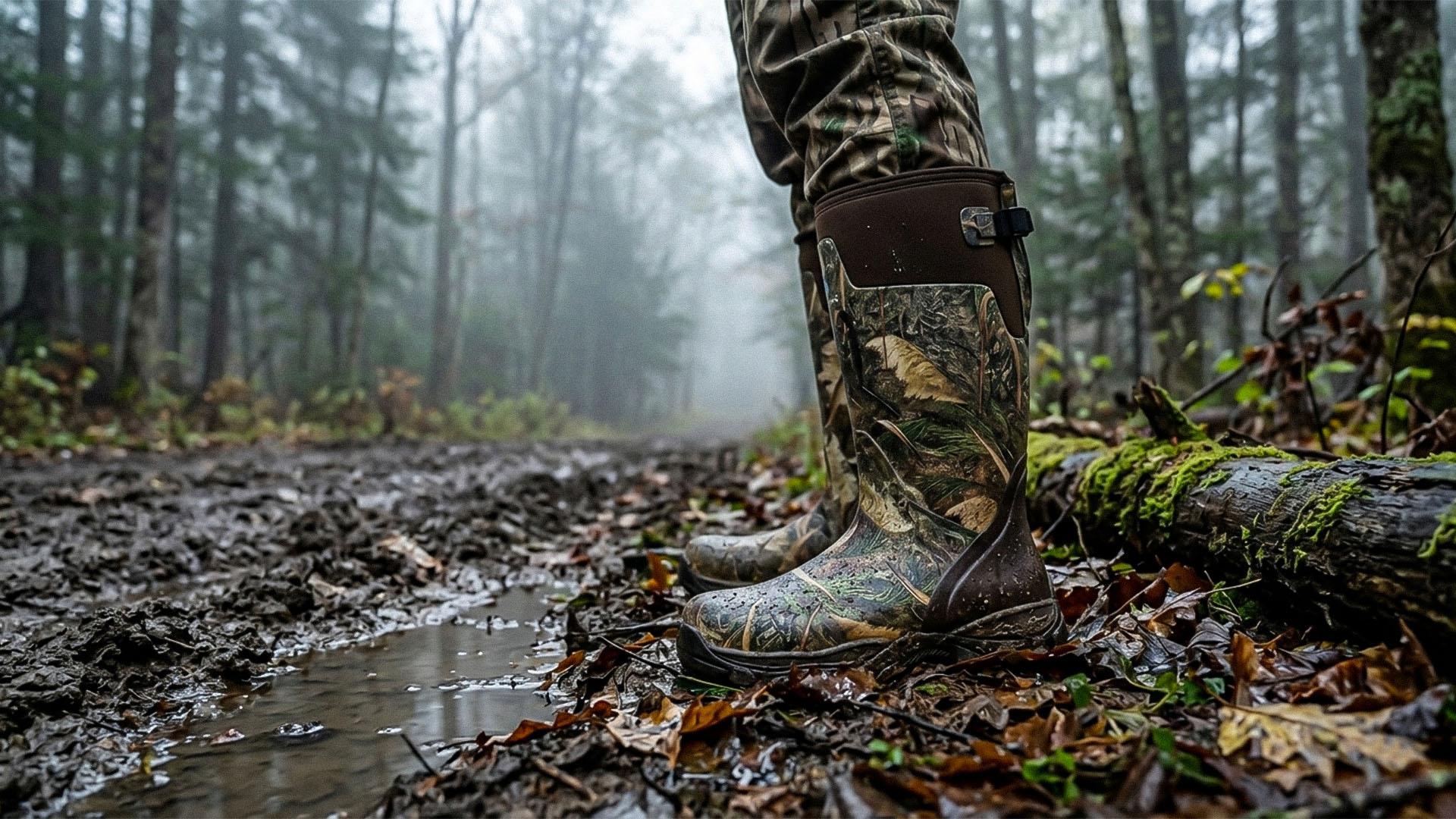
Hunters covering this terrain may benefit from waterproof hunting boots for alpine bird hunting that provide secure heel retention, strong traction, ankle support, and moisture protection without becoming excessively heavy for high-elevation walking.
Lightweight Matters at Elevation
Heavy boots feel heavier after thousands of feet of climbing.
Ptarmigan hunting often involves long approaches before the actual bird hunt begins.
A practical alpine boot should balance:
- Weight
- Support
- Waterproofing
- Traction
- Durability
- Fit
Too much boot can increase fatigue.
Too little support can become painful in talus.
The correct balance depends on terrain, pack weight, weather, and walking distance.
Waterproofing Is Useful Even on Sunny Days
Alpine country creates moisture in unexpected ways.
Hunters may encounter:
- Snow
- Meltwater
- Wet tundra
- Creek crossings
- Morning frost
- Sudden rain
A clear sunrise does not guarantee dry feet.
Weather can change quickly above timberline.
Waterproof footwear helps hunters move between changing surfaces without constantly avoiding wet ground.
Gaiters Can Be Helpful
Low or mid-height gaiters can help keep:
- Snow
- Water
- Gravel
- Tundra debris
out of boots.
They can also provide extra protection around snowfields.
Choose designs that allow comfortable movement.
Alpine hunting requires constant climbing and sidehilling, so excessive bulk can become annoying quickly.
Weather Is the Real Schedule
In lowland hunting, hunters often plan around sunrise and sunset.
In alpine hunting, weather may matter just as much.
A morning can begin calm and turn into:
- Strong wind
- Rain
- Snow
- Fog
- Thunderstorms
within a short period.
Check the forecast before leaving.
Continue watching the sky.
Cloud development over ridges deserves attention.
Do not assume the hunt must continue simply because you finally reached bird habitat.
Lightning Is a Serious Alpine Hazard
Open ridges and exposed tundra provide little protection during thunderstorms.
If storms develop, avoid remaining on:
- Ridge tops
- Isolated high points
- Open summits
- Exposed rock
Plan escape routes before weather arrives.
Know how long it takes to descend to safer terrain.
A ptarmigan hunt is never worth remaining exposed during lightning.
Fog Can Change Navigation Instantly
Alpine basins that look simple in clear weather can become confusing in fog.
Rock fields repeat.
Ridges disappear.
Trail entrances become difficult to locate.
Carry:
- Offline maps
- GPS
- Compass
- Backup battery
- Headlamp
Mark important points before visibility disappears.
Do not depend only on memory.
A familiar-looking drainage may lead into completely different terrain.
Cold Can Arrive in Any Season
High elevation creates large temperature swings.
A warm climb can become a cold glassing session within minutes.
Carry layers even when the trailhead feels comfortable.
Useful alpine clothing systems usually allow hunters to:
- Vent while climbing
- Add warmth while glassing
- Protect against wind
- Handle rain or snow
Sweating heavily during the climb creates problems once you stop.
Manage moisture early.
Wind Can Push Birds Into Protected Terrain
Strong wind makes exposed alpine ridges uncomfortable.
Ptarmigan may move into:
- Lee slopes
- Small depressions
- Willow pockets
- Rock shelters
- Protected basins
When the ridge is getting hammered by wind, do not assume birds left the area.
Search the protected side.
A small terrain fold can create dramatically calmer conditions.
Sun Can Move Birds Too
Cold mornings may make sun-exposed slopes more attractive.
Later, birds may shift toward shade or cooler snowfield edges.
Study the relationship between:
- Temperature
- Sun angle
- Snow
- Wind
- Vegetation
Bird habitat can change over the course of a single day.
The best morning slope may be empty during the afternoon.
Water Sources Create Green Pockets
Tiny alpine creeks and seeps often support greener vegetation than surrounding slopes.
These places may attract ptarmigan for food and moisture.
Look around:
- Creek heads
- Springs
- Snowmelt channels
- Wet meadow strips
- Seeps beneath rock
Do not focus only on the water itself.
The feeding edge beside it may be more important.
Avoid Damaging Fragile Alpine Habitat
High-elevation vegetation grows slowly.
Repeated trampling can damage sensitive areas.
Use durable surfaces such as established trails, rock, and stable ground when possible.
Avoid unnecessarily walking through delicate wet tundra.
Ethical hunting includes protecting habitat.
The birds depend on the same alpine vegetation hunters came to enjoy.
Physical Conditioning Matters More Than Shotgun Skill
A ptarmigan hunter may spend hours climbing for a handful of shooting opportunities.
Fitness affects:
- Safety
- Decision making
- Shooting steadiness
- Recovery
- Enjoyment
Train before the season.
Useful preparation can include:
- Hiking
- Hills
- Stair climbing
- Pack carrying
- Leg strength
- Balance work
The goal is arriving in bird country with enough energy left to hunt effectively.
Start Slower Than You Think
Excitement at the trailhead encourages hunters to climb too quickly.
That can lead to early fatigue.
Maintain a sustainable pace.
Drink water.
Eat before energy drops.
High-elevation hunts reward consistent movement more than short bursts of speed.
You still need energy for the descent.
Hydration Is Easy to Forget in Cool Air
Cool mountain conditions can reduce thirst.
That does not mean your body needs less water.
Climbing at elevation causes significant fluid loss.
Carry enough water or use a reliable treatment method for appropriate natural sources.
Dehydration can cause:
- Headache
- Fatigue
- Poor concentration
- Reduced coordination
Those problems become more serious in steep terrain.
Altitude Can Affect Hunters Differently
Hunters coming from lower elevations may feel the effects of altitude.
Symptoms can include:
- Headache
- Shortness of breath
- Fatigue
- Reduced appetite
- Poor sleep
Do not push aggressively when your body is struggling.
Severe or worsening symptoms require descending and appropriate medical attention.
No hunt is worth ignoring serious altitude problems.
Dogs Are Not Always Necessary
Unlike pheasant or quail hunting, ptarmigan can often be hunted successfully without a dog.
Open terrain and visual searching play a larger role.
A dog can still help find and recover birds where legal, but alpine terrain introduces additional risks.
Dogs must handle:
- Sharp rock
- Snow
- Heat from climbing
- Cold wind
- Limited water
- Steep drops
Only bring a dog prepared for the environment.
Protect Dog Paws
Talus can damage paw pads quickly.
Inspect feet throughout the hunt.
Watch for:
- Cuts
- Abrasions
- Limping
- Ice buildup
- Bleeding
Carry basic canine first-aid supplies.
A dog that performs well in grassland may struggle on rock.
Terrain experience matters.
Recovery Can Be Difficult on Steep Slopes
A downed bird may fall downhill, between rocks, or into low vegetation.
Mark the fall carefully.
Use:
- A distinctive boulder
- Snow edge
- Creek
- Rock color change
before moving.
Mountain angles distort distance.
Do not assume the bird landed where it first disappeared.
Search methodically.
Do Not Take Shots Over Cliffs
A bird crossing open air may look like an easy opportunity.
But recovery matters.
Avoid shots likely to send a bird into:
- Vertical cliffs
- Dangerous talus
- Deep snow chutes
- Inaccessible terrain
Ethical shot selection includes considering where the bird will land.
A bird recovered safely is more important than one difficult opportunity.
Know the Background
Open alpine terrain can create long shooting backgrounds.
Other hikers, hunters, or livestock may be far below and difficult to see.
Before shooting:
- Identify the bird
- Know the partner’s location
- Confirm safe background
- Check the terrain below
Do not shoot toward a skyline or uncertain area.
Open terrain does not automatically mean empty terrain.
Other Recreation Users May Be Present
Alpine areas are popular with:
- Hikers
- Climbers
- Backpackers
- Trail runners
- Photographers
especially during early fall.
Expect people even in remote-looking terrain.
Use extra caution around trails and popular basins.
Communicate politely.
Do not assume everyone understands hunting activity.
Public-Land Access Requires Preparation
Many alpine bird hunts involve public land.
Before leaving, research:
- Trail access
- Wilderness rules
- Seasonal closures
- Fire restrictions
- Parking requirements
- Land boundaries
Some trailheads fill early.
Have a backup route.
Do not create illegal parking or road damage simply to save walking distance.
Regulations Can Be Highly Localized
Ptarmigan hunting opportunities are not uniform across states or management areas.
Seasons, limits, open units, and species rules can vary.
Before hunting, verify current regulations regarding:
- Legal species
- Open areas
- Season dates
- Daily limits
- Possession limits
- License requirements
- Shooting hours
- Weapon rules
Use current official wildlife-agency information.
Never assume that seeing ptarmigan means hunting them is legal in that location.
Species Identification Matters
Hunters may encounter different grouse or ptarmigan species depending on region.
Know identification characteristics before the hunt.
Pay attention to:
- Plumage
- Tail
- Habitat
- Size
- Seasonal coloration
Do not shoot first and identify later.
Alpine birds can look different as seasonal plumage changes.
Positive identification is essential.
Common Alpine Ptarmigan Hunting Mistakes
Climbing to the Highest Point Automatically
Birds may use protected basins below the ridge.
Walking Too Fast Through Fresh Sign
Tracks may mean birds are only yards away.
Looking Only for Full Birds
Search for eyes, movement, and shapes among rock.
Ignoring Snowfield Edges
Moisture and green vegetation can attract birds.
Wearing Overly Heavy Boots
High-elevation walking rewards a balance of lightweight mobility, support, waterproofing, and traction.
Underestimating Wet Rock
Rain and snowmelt make alpine footing dangerous.
Ignoring Weather Changes
Storms develop rapidly above timberline.
Failing to Mark Downed Birds
Rocky backgrounds make recovery difficult.
Taking Shots Into Inaccessible Terrain
Think about recovery before pulling the trigger.
Frequently Asked Questions
Where do white-tailed ptarmigan live?
They are associated with high-elevation alpine habitats including tundra, rock fields, willow patches, snowfield edges, and mountain basins in suitable regions.
How do you find ptarmigan in alpine terrain?
Focus on habitat transitions, willow, snow edges, fresh tracks, creek-fed green pockets, and protected terrain. Slow glassing is extremely useful.
Are ptarmigan difficult to see?
Yes. Their seasonal coloration and habit of remaining still can make them extremely difficult to distinguish from rock, vegetation, and snow.
Do you need a bird dog to hunt ptarmigan?
Not necessarily. Hunters can locate birds through glassing, walking suitable habitat, and reading sign. Dogs may help where legal but need to be prepared for rugged alpine terrain.
What boots are best for alpine bird hunting?
Choose waterproof hunting boots with secure heel fit, good wet-rock traction, ankle support, and manageable weight for long climbs and sidehilling.
Is fresh snow useful for ptarmigan hunting?
Fresh snow can reveal tracks and current bird movement, although it may also improve the birds’ camouflage.
Final Thoughts
Ptarmigan hunting teaches a different kind of patience.
There may be no thick forest.
No waist-high grass.
No obvious hiding place.
Yet the bird can disappear five yards away.
The key is learning to see the mountain at bird level.
A willow patch is cover.
A snow edge is food.
A shallow depression is shelter.
A line of tracks is a warning to slow down.
And a rock field that looked empty from fifty yards away may hold an entire group.
Climb intelligently.
Glass slowly.
Respect the weather.
Protect your feet on wet rock and loose talus.
Watch where every bird lands.
And remember that in alpine country, the challenge is rarely getting birds to hide.
The mountain does most of that work for them.
