
A hunter can spend years learning Texas whitetails and still feel completely unprepared the first time he seriously hunts axis deer.
The country may look familiar.
Live oaks.
Cedar.
Rocky creek bottoms.
Limestone hills.
Open pastures broken by brush.
But the animals do not always follow the same script.
Axis deer can move in groups, travel long distances between food and security cover, use water aggressively during dry conditions, and appear in places where a whitetail hunter would never have expected to see a mature buck in daylight.
Their spotted coats also create a strange visual problem.
Axis deer look obvious in photographs.
In Hill Country shade, they can almost disappear.
A buck standing under live oaks may blend into broken sunlight, cedar shadows, yellow grass, and limestone rock so effectively that a hunter can glass directly past him several times.
Success begins by treating axis deer as their own animal rather than simply another version of a whitetail.
Axis Deer Country Is Built Around Edges
Texas Hill Country contains endless transitions.
That is one reason axis deer fit the landscape so well.
Productive habitat may combine:
- Live oak cover
- Juniper and cedar
- Open grass
- Creek bottoms
- Agricultural fields
- Limestone ridges
- Brushy draws
- Water sources
- Ranch pasture
- Shaded benches
Axis deer can move rapidly between these habitat types.
They may feed in open ground, disappear into cedar after sunrise, travel a shaded drainage during midday, and return to a completely different feeding area that evening.
Do not focus only on one stand.
Understand how the entire property connects.
Start With Food
Axis deer are highly influenced by available forage.
Depending on the property and season, they may use:
- Grasses
- Forbs
- Browse
- Agricultural crops
- Food plots
- Mast
- Native vegetation
- Ranch pasture
The best feeding area is not necessarily the biggest field.
A smaller opening may receive more daylight use if secure cover sits nearby.
When scouting, look for feeding areas connected to:
- Cedar edges
- Creek corridors
- Brushy draws
- Hillside cover
- Low saddles
Ask how an axis deer can reach the food without exposing itself for long.
That route may become more valuable than the food source itself.
Hill Country Creeks Are Major Travel Corridors
Dry or seasonal creek systems cut through much of Texas Hill Country.
Even when little water is visible, these drainages can provide:
- Shade
- Cooler temperatures
- Travel cover
- Softer ground
- Denser vegetation
- Water after rain
- Escape routes
Axis deer may move along a creek rather than crossing an exposed ridge.
Look for trails on:
- Creek benches
- Gravel bars
- Low banks
- Shaded bends
- Crossings beneath cedar
- Points where side draws enter
Do not assume the deepest part of the drainage is the main trail.
Frequently, the easiest walking route lies several feet above the channel.
Rain Makes Creek Country Easier to Read
Hill Country soil can be difficult to read during long dry periods.
Rocky ground holds little track detail.
Dust can disappear quickly under livestock traffic.
After rain, everything changes.
Soft soil around creeks, roads, tanks, and low areas can reveal fresh movement.
Look for tracks around:
- Creek crossings
- Muddy ranch roads
- Water holes
- Fence gaps
- Tank edges
- Low pasture trails
- Draw bottoms
Fresh tracks made after rain give you current information.
A trail filled with tracks from multiple deer can reveal which corridor the herd is using now rather than where animals traveled several weeks earlier.
Limestone Changes How Deer Travel
Hill Country limestone looks rough because it is rough.
Broken rock, ledges, shelves, and exposed slabs create countless travel decisions.
Axis deer often use the easiest line through complicated terrain.
Look for:
- Natural ramps
- Gaps between rock shelves
- Low saddles
- Creek crossings
- Bench systems
- Trails beneath cliffs
The steepest route is rarely the most efficient route.
A mature animal may repeatedly use one subtle limestone gap because it allows fast travel between two larger habitat zones.
Those small terrain features deserve scouting attention.
Benches Can Hide Deer in Plain Sight
A bench is a flatter strip on an otherwise sloping hillside.
Hill Country benches may hold:
- Grass
- Oak shade
- Bedding cover
- Travel trails
- Droppings
- Rubs
From below, the bench may be invisible.
From across the drainage, it may become obvious.
Use binoculars to inspect these shelves slowly.
An axis deer bedded behind one cedar may show only:
- Antler tips
- Ears
- Part of a spotted flank
- A dark neck
The animal may remain there for hours.
Water Becomes Critical During Dry Conditions
Texas heat and dry periods can make reliable water extremely important.
Potential axis deer water sources include:
- Springs
- Creeks
- Ranch tanks
- Stock ponds
- Troughs
- Seep areas
- Natural pools
However, hunting directly over water is not always the smartest strategy.
Animals may approach cautiously.
Livestock can create constant disturbance.
Wind may be difficult.
Instead, identify the travel cover leading toward the water.
A shaded trail fifty to one hundred yards away may provide a better daylight opportunity.
Rain Can Completely Change Water Patterns
After extended dry weather, one permanent tank may receive heavy use.
Then several inches of rain arrive.
Suddenly, water exists in:
- Rock depressions
- Creek pools
- Road ruts
- Seasonal drainages
- Low pasture areas
The old water pattern can weaken overnight.
Hunters who keep sitting the same tank may assume the deer disappeared.
They probably did not.
The landscape simply gave them more options.
After major rain, scout again.
Morning Movement Can Continue Longer Than Expected
Axis deer do not always follow the exact daylight patterns hunters associate with pressured whitetails.
On low-pressure ranches or during favorable weather, deer may remain visible later into the morning.
Do not automatically leave at 8:30 because the first hour was quiet.
Continue glassing:
- Oak openings
- Creek bottoms
- Shaded field edges
- Brushy hillsides
- Cedar transitions
A group may step out briefly before moving toward bedding cover.
Midmorning can create opportunities for hunters who remain patient.
Midday Glassing Can Produce
Hot weather pushes many hunters back to camp.
Axis deer still exist somewhere.
They may move less, but midday glassing can reveal where they bed.
Focus on:
- Dense shade
- North-facing slopes
- Creek bottoms
- Live oak clusters
- Cedar pockets
- Rock overhangs
- Protected benches
Search slowly.
A stationary axis deer can become almost invisible in broken shade.
The objective during midday is often locating deer for a later move rather than expecting them to walk across an open field.
Shade Is a Habitat Feature
In hot climates, shade matters.
A group may use a specific live oak pocket because it stays cooler than surrounding grassland.
When scouting from aerial imagery, vegetation can help identify potential shaded bedding zones.
On the ground, look for:
- Large oaks
- Cedar clusters
- Creek walls
- North-facing slopes
- Rock shadows
If feeding sign exists nearby, these locations become even more valuable.
Food brings deer into the area.
Shade may keep them there through daylight.
Wind Still Controls the Hunt
Axis deer have excellent noses.
A perfect food source, water route, or bedding area is useless if the wind carries human scent into it.
Before setting up, determine:
- Expected deer direction
- Bedding cover
- Feeding cover
- Wind direction
- Thermal behavior
- Access route
Hill Country terrain can make wind inconsistent.
Rock walls, creek cuts, cedar pockets, and warming slopes can redirect air.
Use a wind indicator regularly.
Do not depend only on the weather forecast.
Creek Bottom Thermals Can Be Tricky
Cool air often collects in low drainages.
As the day warms, air movement may change.
In the evening, scent may begin dropping back toward the creek.
This can ruin a stand located above a travel corridor.
Watch actual wind movement around the setup.
A location that works perfectly in the morning may be wrong for an evening hunt.
Good deer hunters do not hunt stands because they are convenient.
They hunt them when conditions fit.
Glass Before Crossing Open Ground
Hill Country terrain often looks brushy enough to hide movement.
From a deer’s perspective, a standing human may still be obvious.
Before crossing:
- Pastures
- Senderos
- Open limestone slopes
- Ranch roads
- Food plots
glass carefully.
A deer may already be watching from the shade.
Once you are exposed, the opportunity may disappear without a sound.
Senderos Can Be Excellent Observation Lanes
Many Texas properties contain senderos—cleared lanes running through brush.
These openings create useful visibility.
Axis deer may cross them while moving between cover.
Productive sendero setups often occur near:
- Creek systems
- Food sources
- Water
- Bedding cover
- Trail intersections
Do not assume the middle of the longest sendero is best.
Look for crossings with fresh tracks.
A narrow lane in the right location can outperform a huge open corridor with little deer movement.
Trail Intersections Deserve Attention
A single trail tells you deer passed through.
Multiple trails converging in one location tell you something more.
Intersection areas often occur near:
- Water
- Feed
- Fence gaps
- Creek crossings
- Saddles
- Bedding edges
After rain, inspect these points carefully.
Fresh tracks traveling in several directions may indicate regular herd movement.
A camera where legal and appropriate can help reveal timing, but repeated checking can also create pressure.
Use low-impact access.
Herd Behavior Changes the Hunt
Axis deer commonly occur in groups.
That creates a different challenge from hunting a solitary buck.
More animals mean:
- More eyes
- More ears
- More noses
- More movement
The buck you want may be relaxed.
One doe on the edge of the group may be staring directly at you.
Before making a stalk, study every visible deer.
Assume there are additional animals you cannot see.
Moving when only the target looks away is not enough.
One Alert Deer Can Ruin Everything
Axis deer often communicate alarm through sudden body language and group movement.
If one animal detects danger, the entire herd may leave quickly.
During a stalk:
Move only when conditions allow.
Use terrain.
Stay patient.
Do not assume you can recover from a careless exposure simply because the buck did not react immediately.
Another deer may already have seen you.
Rutting Behavior Can Create New Opportunities
Axis deer are unusual because breeding activity can vary more than hunters accustomed to tightly defined northern deer seasons might expect.
When rutting behavior is active, bucks may:
- Become more vocal
- Travel more
- Follow females
- Challenge other males
- Use traditional travel routes differently
Hunters should rely on current local behavior rather than assuming a specific calendar pattern.
Listen.
Watch group structure.
Look for fresh sign.
The deer will show you what phase they are in.
Axis Deer Vocalizations Can Help Locate Animals
Axis deer can be vocal.
During periods of increased breeding activity, listening from a distant ridge can help locate animals.
Stop before daylight or during quiet evening conditions and listen across:
- Creek systems
- Basins
- Ranch pastures
- Brushy valleys
Sound can travel surprisingly far.
Use it to narrow the search.
Do not charge directly toward the first sound.
Glass the terrain and determine a smarter approach.
Rubs and Sign Can Confirm Buck Activity
Axis bucks may leave rubs and other sign during active periods.
Look for fresh bark damage along:
- Trails
- Creek edges
- Bedding transitions
- Senderos
- Water routes
Freshness matters.
Bright wood and newly damaged bark are more useful than an old weathered rub.
Sign should reinforce a larger pattern.
One rub does not automatically mean a buck is living beside the tree.
Rain Can Improve Stalking Conditions
Dry Hill Country can be noisy.
Crunchy leaves.
Dry grass.
Loose limestone.
Dead cedar branches.
Rain softens much of that.
Wet vegetation reduces noise and can make careful stalking more effective.
However, wet ground also makes deer quieter.
Move slowly.
Stop often.
Use your eyes as much as your ears.
A deer may step through damp grass with almost no sound.
Wet Limestone Is Slick
Rain improves stalking noise but creates a different problem.
Limestone can become extremely slippery when wet, particularly where mud or algae covers the surface.
Watch footing on:
- Creek crossings
- Rock shelves
- Steep banks
- Road cuts
- Exposed slabs
Short controlled steps are safer than rushing.
Do not stare at deer while walking.
Stop first.
Then glass.
Footwear Matters in Hill Country More Than It Appears
Texas Hill Country is not high alpine terrain, but it can punish poor footwear.
A hunting day may include:
- Sharp limestone
- Mud
- Wet grass
- Creek crossings
- Loose gravel
- Cedar
- Thorny brush
- Steep banks
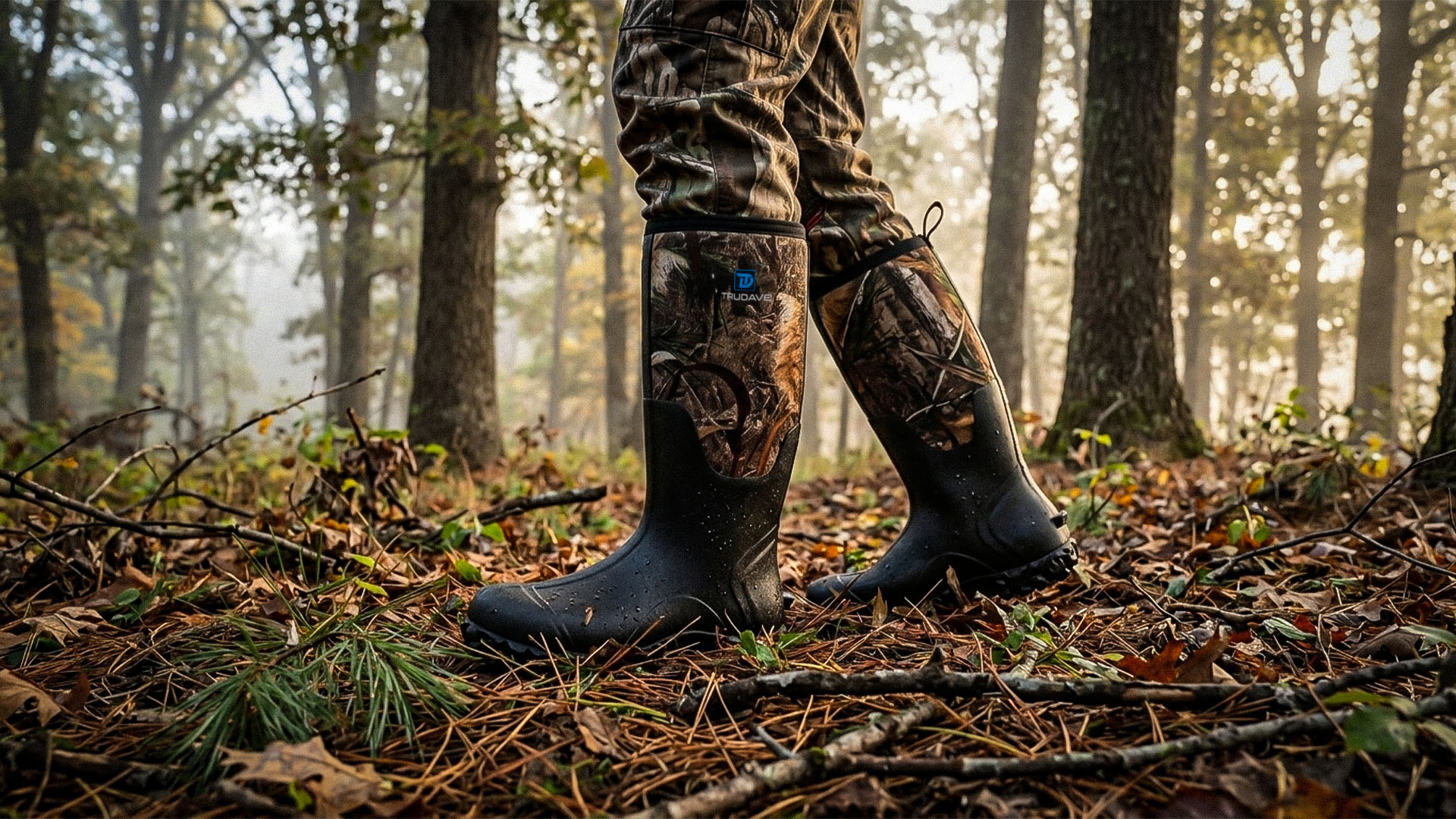
Hunters moving through these conditions may benefit from waterproof hunting boots for rocky Hill Country hunting that provide secure heel fit, reliable wet-rock traction, and enough protection for brush without becoming unnecessarily heavy in warm conditions.
The ideal boot balances durability with mobility.
This is walking country.
Heavy Insulation Can Work Against You
Texas weather can change, but many axis hunts occur in relatively warm conditions.
A heavily insulated cold-weather boot may cause excessive sweating during active hunting.
That moisture creates:
- Hot spots
- Blisters
- Discomfort
Choose insulation based on actual temperature.
For mobile Hill Country hunting, a lighter waterproof boot may be more practical than a heavy stationary-hunt design.
Thorn Protection Matters
Hill Country vegetation can include:
- Cactus
- Mesquite
- Agarita
- Cedar branches
- Other thorny brush
Thin footwear and lightweight pants may take a beating.
Choose gear that balances breathability with protection.
Watch where you step rather than kicking through brush.
A cactus encounter can turn a simple stalk into an unpleasant afternoon.
Gaiters Can Help With Seeds and Debris
Low gaiters can reduce:
- Grass seeds
- Gravel
- Burrs
- Mud
entering the boot.
They may also protect lower pants during wet mornings.
Choose breathable gear.
Heat management remains important in Texas.
Heat Can Become the Biggest Hunting Hazard
Warm-season axis hunting requires serious heat awareness.
Carry more water than you think you need.
Monitor:
- Headache
- Dizziness
- Nausea
- Confusion
- Weakness
- Reduced coordination
Schedule long walks around cooler periods when possible.
Shade during midday.
Do not allow excitement over a visible buck to override basic heat safety.
Hydration Begins Before the Stalk
A hunter who starts dehydrated is already behind.
Drink throughout the day.
Carry water independently rather than leaving the entire supply in the vehicle.
A stalk that looks short can turn into a long loop around a ridge or creek.
Texas heat makes distance feel very different.
Prepare accordingly.
Ranch Roads Can Be Useful Scouting Tools
Many Hill Country properties contain networks of ranch roads.
These roads reveal:
- Tracks
- Crossings
- Feeding routes
- Water access
- Herd movement
Drive slowly where permitted.
Stop and glass.
Do not assume seeing deer from a vehicle means you can repeatedly approach them the same way.
Animals learn disturbance patterns.
Use roads for information, then build a hunting plan.
Avoid Overpressuring Water and Feed
Repeated human visits can shift deer movement toward darkness.
This is especially important around concentrated resources.
Minimize unnecessary trips.
Do not walk through major trails.
Approach cameras carefully where legal.
Use wind-friendly access.
A productive location can become nocturnal quickly when hunters constantly disturb it.
Private Ranch Rules Matter
A significant amount of axis deer hunting occurs on private land.
Every property may have different rules regarding:
- Roads
- Feed
- Vehicles
- Gates
- Livestock
- Hunting areas
- Retrieval
- Guides
- Guest access
Follow landowner instructions exactly.
Do not assume a practice allowed on one ranch is acceptable on another.
Protecting access is part of responsible hunting.
Fences Can Control Movement
Axis deer may cross fences, but fence structure can still influence travel.
Look for:
- Low points
- Damaged sections
- Gates
- Creek crossings
- Established trails
Never modify a fence without explicit permission.
A well-used crossing can become a predictable travel feature without hunters changing anything.
Livestock Can Complicate Sign
Cattle, sheep, goats, and exotic livestock may share the same landscape.
Their tracks can cover deer trails and muddy water sources.
When reading sign, look beyond individual prints.
Study:
- Trail width
- Direction
- Repeated axis tracks
- Droppings
- Bedding sign
- Camera observations where permitted
Livestock activity does not necessarily mean deer avoid the area.
It may simply make the pattern harder to read.
Shot Opportunities Can Happen Fast
Axis deer may cross senderos, creek openings, and pasture edges quickly.
Know distances before animals arrive.
Range important landmarks where appropriate.
Prepare safe shooting positions.
A fast opportunity does not justify a rushed shot.
Wait for:
- Positive identification
- Stable shooting position
- Safe background
- Proper angle
- Clear separation from other animals
Groups make shot discipline especially important.
Do Not Shoot Into a Herd
Multiple axis deer may overlap visually.
A bullet or projectile can pass beyond the intended animal.
Always confirm what stands behind and beside the target.
Wait until the chosen deer is clearly separated.
One additional minute can turn a questionable opportunity into a clean one.
Recovery Is Harder in Cedar Than It Looks
A deer can disappear quickly in Texas brush.
After the shot, mark:
- Exact animal position
- Last visible point
- Direction of travel
- Creek crossings
- Distinctive trees or rocks
Do not immediately walk toward where you think the animal went without a plan.
Once inside cedar, every opening can look similar.
Use GPS or mapping tools where helpful.
Rain Can Reduce Blood Sign
Rain can complicate tracking.
Water may dilute or remove blood from:
- Grass
- Rocks
- Leaves
- Creek crossings
Mark the shot location precisely.
Look for additional evidence:
- Hair
- Tracks
- Broken vegetation
- Disturbed mud
- Body impressions
Move methodically.
Do not destroy the trail by allowing several people to wander randomly.
Warm Weather Makes Meat Care Urgent
One of the biggest considerations in Texas axis hunting is temperature.
A successful shot begins a clock.
Have a plan for:
- Field dressing
- Quartering where appropriate
- Game bags
- Cooler space
- Ice
- Vehicle access
- Help
Do not wait until after the shot to figure out how to cool the meat.
Warm weather can reduce meat quality quickly.
Plan Recovery Before Hunting Deep Cover
Before pursuing deer far from access, ask:
- How far is the vehicle?
- Can we drive closer legally after harvest?
- How steep is the terrain?
- How hot will it be?
- How much meat can each person carry?
- Is enough ice ready?
Recovery planning affects ethical shot selection.
A deer is not successfully harvested until the meat is properly cared for.
Glassing From Shade Improves Patience
Long Hill Country glassing sessions can become uncomfortable under direct sun.
Whenever possible, choose observation locations with shade.
Good glassing points may include:
- Oak-covered ridges
- Cedar edges
- High creek banks
- Shaded rock overlooks
Comfort keeps hunters behind optics longer.
Longer glassing often means seeing deer that rushed hunters miss.
Do Not Glass Only Open Fields
Axis deer may appear along openings, but much of the important activity occurs inside broken cover.
Use binoculars to inspect:
- Oak shade
- Cedar gaps
- Creek banks
- Brush openings
- Rock shelves
Look for fragments of animals.
Spotted coats can resemble sunlight passing through leaves.
Movement is often the first clue.
Public Road Sightings Can Be Misleading
Axis deer may sometimes be visible near roads or developed areas.
Visibility does not equal legal hunting access.
Always confirm:
- Land ownership
- Shooting restrictions
- Road regulations
- Nearby homes
- Property boundaries
Do not assume an animal seen from a public road can legally be pursued from that location.
Regulations Can Differ From Native Deer Rules
Axis deer regulations and hunting opportunities can differ from those for native deer depending on jurisdiction, property type, and location.
Hunters should verify current rules before the hunt.
Check:
- License requirements
- Season structure
- Legal methods
- Public versus private land rules
- Shooting-hour restrictions where applicable
- Tagging or reporting requirements
- Local discharge ordinances
Use current official wildlife information.
Do not rely on assumptions simply because axis deer are non-native.
Common Axis Deer Hunting Mistakes
Treating Axis Deer Exactly Like Whitetails
Study axis behavior rather than assuming identical movement.
Hunting One Food Source Repeatedly
These deer can shift patterns quickly.
Ignoring Creek Systems
Shaded drainages can function as travel corridors.
Watching Only the Target Buck
Other herd members may detect you first.
Ignoring Water After Dry Weather
Reliable water can strongly influence movement.
Failing to Rescout After Rain
Temporary water can completely alter the pattern.
Wearing Heavy, Hot Boots
Hill Country hunting rewards durable but mobile footwear.
Underestimating Wet Limestone
Rain makes rocky terrain dangerously slick.
Forgetting Warm-Weather Meat Care
Recovery preparation should begin before the shot.
Frequently Asked Questions
Where do axis deer live in Texas Hill Country?
They can use a mixture of oak and cedar cover, rocky hills, creek bottoms, grasslands, ranch pastures, agricultural areas, and locations with reliable food and water.
Are axis deer harder to hunt than whitetails?
The challenge is different. Axis deer may travel in groups, use habitat differently, and create more eyes and ears that can detect hunters.
Is axis deer hunting good after rain?
Rain can improve tracking and stalking conditions, but it can also create temporary water sources that change established movement patterns.
What time of day should you hunt axis deer?
Morning and evening are natural starting points, but axis deer can remain active or visible during other parts of the day depending on temperature, pressure, food, and breeding behavior.
Why are creek bottoms important?
They can provide shade, water, cooler temperatures, vegetation, and concealed travel through rocky Hill Country terrain.
What boots are best for Texas Hill Country deer hunting?
Waterproof hunting boots with dependable wet-rock traction, secure fit, brush protection, and manageable weight are useful for limestone, mud, creek crossings, wet grass, and long walking hunts.
Final Thoughts
Axis deer force hunters to pay attention.
They may live in familiar deer country, but they do not always behave like the whitetails hunters expect.
A creek that looked unimportant can become the main travel route.
A shaded bench can hide an entire group.
One summer storm can change the water pattern.
One alert doe can end a perfect stalk.
And one rocky half-mile can make poor footwear feel like the most important piece of gear you brought.
Find the food.
Understand the water.
Glass the shade.
Read the creek systems.
Watch every animal in the herd.
Respect the heat.
And plan meat recovery before pulling the trigger.
Texas Hill Country may look rough, dry, and simple from a distance.
To an axis deer, it is a network of shade, water, rock, cover, and escape routes.
The hunter who learns that network stops guessing—and starts hunting the same landscape the deer actually live in.
