
Sharp-tailed grouse country can look almost too open to hold birds.
Grass rolls toward the horizon. Shallow coulees break the prairie. Scattered shrubs line wet draws, and the occasional shelterbelt or agricultural field interrupts miles of open ground.
A hunter may stand on a ridge and think every bird should be visible.
Then a covey erupts from knee-high grass thirty yards ahead.
Birds rise fast, turn with the wind, and disappear over the next ridge before the hunter fully understands where they came from.
That is one of the lessons sharp-tailed grouse teach quickly.
Open prairie is not empty habitat.
It is layered habitat.
Small differences in grass height, moisture, topography, shrubs, food, grazing pressure, and wind can determine where birds spend the day.
The successful hunter does not simply walk miles of grass.
He learns which parts of the prairie give sharp-tails food, visibility, thermal comfort, and protection from predators.
Sharp-Tailed Grouse Are Prairie Specialists
Sharp-tailed grouse occupy grasslands, shrublands, mixed prairie, brushy coulees, and other open habitats across parts of northern and western North America.
Unlike forest grouse, they do not depend on dense timber.
They are adapted to landscapes where visibility is high and escape comes through:
- Early detection
- Group behavior
- Fast flight
- Rolling terrain
- Grass cover
- Brushy draws
- Long-distance movement
This makes them very different from ruffed grouse.
A ruffed grouse may disappear behind saplings.
A sharp-tail may see a hunter from hundreds of yards away and simply move before the hunter ever knows birds were there.
That is why habitat selection and approach matter so much.
Coulees Are More Important Than They Look
A prairie coulee is a shallow drainage or depression cutting through otherwise open grassland.
From a distance, it may appear insignificant.
At bird level, it can provide several advantages.
Coulees may contain:
- Taller grass
- Snow protection
- Shrubs
- Better moisture
- Insects
- Berry-producing vegetation
- Wind shelter
- Travel structure
Sharp-tailed grouse may feed on adjacent uplands and drop into coulees for loafing or protection.
Hunters should not automatically walk the bottom.
Instead, study the upper edges where grassland transitions into the drainage.
Birds often sit where they can see open country while remaining close to thicker cover.
Hunt the Top Third of the Coulee
One productive strategy is working the upper third of a coulee rather than marching directly through the lowest ground.
Why?
The bottom may be:
- Too wet
- Too thick
- Harder to walk
- Less visible
- Poorer shooting terrain
The upper edge often combines usable grass with escape visibility.
Walk parallel to the drainage.
Let the dog search both uphill and downhill.
Pause near:
- Small benches
- Brush pockets
- Grass-height changes
- Side draws
- Agricultural transitions
One covey can teach you the elevation and cover birds prefer that day.
Grass Height Matters
Not all prairie grass is equally useful.
Extremely short grazed ground may offer limited concealment.
Very tall dense grass can reduce visibility and mobility.
Sharp-tails often use intermediate structure where they can feed and remain aware of predators.
Look for a mixture of:
- Native bunchgrass
- Shorter feeding openings
- Taller resting patches
- Forbs
- Shrubs
- Sparse bare ground
Variation matters more than one uniform grass height.
When you find birds, stop and look carefully at what was under your feet.
That specific structure may repeat elsewhere.
Grazing Can Improve or Reduce Habitat
Livestock grazing influences prairie structure.
Moderate grazing may create diverse grass heights and open feeding areas.
Heavy grazing can remove too much cover.
No grazing at all may allow some areas to become overly dense depending on plant community and local conditions.
When scouting cattle country, compare different pastures.
One pasture may hold birds because it provides:
- Better grass structure
- More insects
- Shrubby edges
- Accessible water
- Reduced hunting pressure
The pasture next door may look similar from the road but hunt completely differently.
Wet Grasslands Can Hold More Birds
Moisture creates habitat diversity on the prairie.
Wet meadows, sedge flats, creek edges, and low grasslands can support insects and plant growth unavailable on dry ridges.
During warmer parts of the season, these areas may provide important feeding opportunities.
Look for birds around:
- Wetland edges
- Seasonal creeks
- Sedge pockets
- Springs
- Damp coulees
- Green strips running through dry prairie
Do not assume the wettest center is best.
The transition from damp vegetation to drier upland grass may offer the most useful combination.
Agricultural Edges Can Concentrate Feeding Birds
Sharp-tailed grouse may use agricultural areas where native grasslands meet crop fields.
Potential food-related edges include:
- Wheat stubble
- Barley fields
- Sunflower areas
- Alfalfa
- Grain residue
- Weedy field margins
The strongest locations usually combine agricultural food with nearby native cover.
Birds may feed in or beside crop residue and move back into grasslands when disturbed.
Hunt the grass side of the transition carefully.
A covey may be sitting only a short distance from the field.
Early Morning Can Be Excellent
Sharp-tails often feed during the morning.
Cool temperatures and lower wind can make birds easier to locate.
During early hours, focus on:
- Feeding flats
- Crop edges
- Short grass near coulees
- Ridge shoulders
- Open prairie near roosting cover
Glassing from a distance before beginning can save enormous amounts of walking.
If you spot birds feeding, watch where they move after leaving the open area.
That direction may reveal the loafing cover you should hunt later.
Midday Requires a Different Approach
By midday, birds may move toward cover providing shade, wind relief, or security.
Search:
- Brushy coulees
- Taller grass
- Shrub patches
- Protected side slopes
- Wet meadow edges
Warm conditions may also reduce dog performance.
Carry water.
Take breaks.
Do not assume a quiet midday means birds have left the property.
They may simply be sitting tighter in cover you ignored during the morning.
Wind Controls Prairie Hunting
Wind is almost always part of sharp-tail country.
It affects:
- Bird behavior
- Dog scenting
- Shot difficulty
- Hunter fatigue
- How birds use terrain
Strong wind often pushes birds toward protected slopes and coulees.
Leeward cover deserves attention.
If the prevailing wind crosses a ridge, search the protected side.
Birds may concentrate where grass remains calm enough for comfortable feeding or resting.
Work Into or Across the Wind With Dogs
A pointing or flushing dog can be extremely useful on the prairie.
Whenever practical, plan the route so the dog works into or across the wind.
This improves scent contact and makes searching more efficient.
A crosswind route along a coulee allows the dog to sample habitat both above and below the hunter.
Watch how the dog reacts to the wind.
Sharp-tails may move before the dog establishes a solid point, especially later in the season.
Sharp-Tails Can Flush Wild
Early-season birds may hold reasonably well.
Later, after hunting pressure increases, coveys can become difficult.
Birds may flush:
- Far ahead
- From open ridges
- After spotting hunters
- Before dogs get close
- In large groups
When this happens, stop chasing directly.
Watch the birds.
Mark where they land.
Then plan a new approach using terrain.
A covey that flushes wild may settle into better cover and provide another opportunity if the hunter avoids pushing too aggressively.
Watch the Entire Covey
A large covey rarely lands in one exact spot.
Birds may split into:
- Small groups
- Pairs
- Singles
This can create better hunting.
Scattered birds may hold more tightly than the original group.
Watch individual flight paths.
Mark landmarks such as:
- Lone shrubs
- Fence corners
- Coulee bends
- Rock piles
- Grass patches
- Small hills
Give birds time to settle before moving in.
Do Not Chase the First Landing Spot Blindly
Prairie distance is deceptive.
A bird appearing to land beside one shrub may actually travel several hundred yards farther.
Before moving, keep watching until the bird completely disappears.
Use several landmarks.
Once you start walking, the landscape may flatten and landmarks can look different.
A thoughtful approach is more effective than rushing toward the first place you think the covey landed.
Small Shrub Patches Matter
Sharp-tailed grouse often use low shrubs as part of their habitat.
Depending on region, useful shrub species and structures may include:
- Snowberry
- Willow
- Buffaloberry
- Chokecherry
- Low brush in coulees
Shrubs provide:
- Seasonal food
- Shade
- Wind protection
- Escape structure
A tiny shrub patch surrounded by grass can hold birds because it is the only structural cover for hundreds of yards.
Hunt these islands slowly.
Berry-Producing Shrubs Become Important Seasonally
Later in the year, berry-producing shrubs can attract sharp-tails.
Look for activity around brushy coulees containing fruit.
Fresh sign may include:
- Droppings
- Feathers
- Tracks
- Birds seen entering the brush
Food availability changes through the season.
Do not expect the same patch to remain productive indefinitely.
Follow current food sources.
Snow Changes Prairie Bird Location
Early snow can transform sharp-tail hunting.
Some ridges become exposed.
Other areas accumulate deep drifts.
Birds may adjust toward:
- Windblown slopes
- Shrubby coulees
- Agricultural food
- Protected grasslands
- Areas with exposed vegetation
Fresh snow also reveals tracks.
Look for bird sign along:
- Coulee edges
- Crop-field margins
- Shrub patches
- Ridge shoulders
Do not follow every trail.
Use the tracks to identify the cover birds are using.
Windblown Ridges Can Stay Productive
Strong prairie winds remove snow from exposed ridges.
These areas may expose seeds and vegetation while lower ground remains buried.
Sharp-tails may feed there during winter conditions.
Glass before approaching.
Birds feeding on open windblown ground can see hunters from a long distance.
Use low terrain and avoid skylining yourself.
Snow-Filled Coulees Can Become Thermal Cover
While exposed ridges provide food, deeper coulees can offer protection from brutal wind.
Birds may move between the two.
This creates a useful daily pattern:
Feed in exposed areas.
Retreat into protected cover.
Hunt the travel relationship rather than only one habitat feature.
Glassing Saves Miles
Prairie hunting can involve enormous amounts of walking.
Binoculars help determine where that walking is worth the effort.
Glass:
- Feeding fields
- Ridge lines
- Short-grass flats
- Shrub patches
- Coulee edges
- Prairie roads
Look for movement rather than only complete birds.
A flock feeding several hundred yards away may appear as small shapes changing position.
Good glassing can prevent spending hours in empty grass.
Use Roads for Scouting, Not the Entire Hunt
Gravel and two-track roads provide convenient scouting routes.
You may see birds near:
- Roadside grass
- Crop edges
- Fence lines
- Short-grass openings
But road pressure can educate birds.
Park legally and walk into habitat rather than hunting only visible roadside locations.
Avoid shooting from, across, or along roads where prohibited or unsafe.
Follow all local regulations.
Fence Lines Are Worth Checking
Fence lines create habitat changes.
Grass may grow differently near them.
Shrubs may develop where mowing or grazing is reduced.
Birds may travel parallel to fences or use nearby cover.
Fence corners are especially useful because they can connect:
- Multiple pastures
- Crop edges
- Coulees
- Roadside grass
Cross fences carefully and legally.
Do not damage wire.
Use gates when available and follow landowner instructions.
Prairie Ground Can Be Hard on Feet
Sharp-tail hunting may look easier than mountain hunting because the landscape is less steep.
But a full day can involve many miles over:
- Wet grass
- Mud
- Uneven prairie
- Cattle holes
- Gravel
- Rolling hills
- Snow
- Marshy coulees
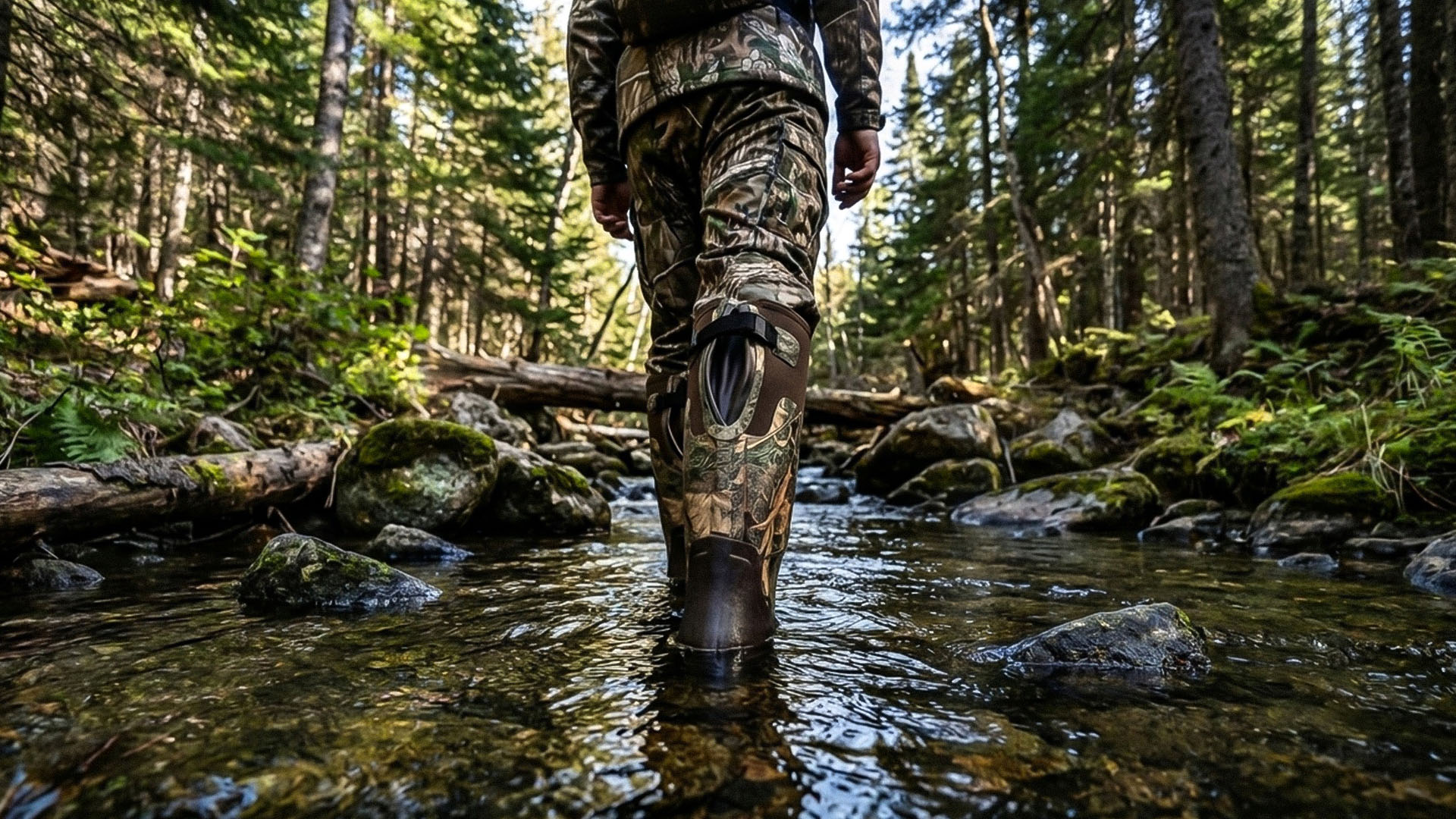
Hunters covering these conditions may benefit from lightweight waterproof hunting boots for prairie bird hunting that provide reliable traction, secure heel retention, and enough moisture protection without the weight of a heavily insulated stationary hunting boot.
The best footwear supports walking.
Prairie grouse hunting is an endurance hunt.
Wet Grass Soaks Ordinary Footwear Quickly
Morning dew can be enough to soak boots.
After rain, every grass blade holds water.
A hunter walking miles through prairie vegetation may become wetter from plants than from actual rainfall.
Waterproof boots help, but the system matters.
Consider:
- Appropriate boot height
- Gaiters
- Moisture-managing socks
- Breathable pants
- Spare socks
Feet that remain comfortable allow hunters to cover productive habitat longer.
Heavy Boots Create Unnecessary Fatigue
Sharp-tail hunting rarely requires extremely heavy footwear during mild conditions.
Every extra pound matters after several miles.
Choose insulation based on temperature.
An active hunter generates heat.
A boot that feels comfortable while standing at the truck may become too warm once the dog has pulled you across three coulees.
Balance warmth with mobility.
Gaiters Can Help in Prairie Cover
Low or mid-height gaiters can reduce:
- Wet grass contact
- Seeds entering boots
- Mud
- Snow
They can also protect lower pants.
Choose designs that do not restrict movement or trap excessive heat.
Prairie hunting often involves constant walking.
Breathability remains important.
Muddy Coulees Can Hide Deep Holes
Low ground may contain:
- Cattle tracks
- Badger holes
- Drainage cuts
- Soft mud
- Hidden water
Watch your footing.
Do not stare at the dog or distant birds while walking through rough ground.
Stop when glassing.
Move when watching the ground.
A simple ankle injury can end a remote prairie hunt quickly.
Badger Holes Are a Serious Hazard
Prairie landscapes can contain burrows that are difficult to see in tall grass.
A hunter stepping into one can injure:
- Ankle
- Knee
- Hip
Dogs can also be injured.
Pay attention when running or moving quickly after a flush.
Do not sprint blindly after birds.
The prairie looks smooth from far away.
It rarely is.
Dogs Need Water Even in Cool Weather
Prairie dogs—meaning bird dogs working prairie cover—can cover far more distance than hunters realize.
Carry water.
Offer it regularly.
Do not depend on stock ponds or natural water.
Some may be:
- Dry
- Contaminated
- Difficult to access
- Used heavily by livestock
Monitor dogs for fatigue.
Wind and cool temperatures can hide dehydration.
Grass Seeds Can Cause Dog Problems
Prairie vegetation may contain seeds and awns that affect dogs.
Check:
- Eyes
- Ears
- Nose
- Paws
- Coat
after the hunt.
Remove visible seeds early.
If the dog shows persistent sneezing, eye irritation, head shaking, or limping, seek veterinary attention as appropriate.
Small plant material can become a serious issue.
Porcupines Can Be Present in Brushy Areas
Depending on region, dogs may encounter porcupines around shelterbelts, wooded coulees, and shrub cover.
Keep dogs under control.
Do not allow them to chase unfamiliar animals.
A porcupine encounter can end a hunt immediately.
Carry basic canine first aid and know the nearest veterinary option when hunting remote country.
Prairie Roads Can Turn Bad After Rain
A dry-looking two-track can become impassable after a storm.
Clay soil can become extremely slick.
Avoid driving roads when doing so will create damage.
Check:
- Weather
- Soil
- Landowner instructions
- Public-land road restrictions
Park and walk when necessary.
A long approach is better than a stuck vehicle and a destroyed road.
Public Land Birds Receive Pressure
Sharp-tailed grouse on public land learn quickly.
Road-accessible areas may empty early.
Hunters willing to walk farther can find less disturbed birds, but distance alone is not enough.
Look for habitat others overlook:
- Small coulees
- Awkward corners
- Wet ground
- Mixed grass height
- Shrub pockets
- Areas without obvious parking
A half-mile walk into good habitat is better than a five-mile walk into poor habitat.
Private Grasslands Can Be Excellent
Many productive prairie habitats exist on private ranches and farms.
Always obtain permission.
Respect:
- Livestock
- Gates
- Fences
- Crops
- Water systems
- Roads
Ask where you can park and whether cattle are present.
Do not assume permission to hunt one pasture includes the entire property.
Good relationships can create long-term access.
Leave Gates as You Found Them
This simple rule matters.
If a gate is closed, close it after passing unless the landowner instructed otherwise.
If it is open, leave it open unless told differently.
A gate position may be intentional for livestock movement.
Hunters who change it can create serious problems.
Multiple Hunters Need Spacing
Open prairie can make hunters feel visible to each other, but coulees and rolling terrain can hide partners quickly.
Establish:
- Direction of travel
- Spacing
- Shooting zones
- Dog locations
- Meeting points
Wear required or appropriate blaze orange.
Never shoot at low birds when another hunter or dog may be beyond the ridge.
Terrain changes background instantly.
Low Birds Can Be Dangerous
Sharp-tails sometimes fly low across grass after flushing.
Wait for a safe angle.
Know where dogs and partners are.
A bird crossing a ridge may suddenly place houses, roads, livestock, or hunters behind it.
Do not focus only on the bird.
The background is part of every shot.
Shot Distance Discipline Matters
Open prairie encourages long shooting.
A bird flushing far ahead may tempt hunters to stretch range.
Resist poor opportunities.
Long shots increase:
- Misses
- Wounding risk
- Difficult recovery
Focus on clean opportunities within the effective range of your equipment and ability.
Late-season wild-flushing birds may require better strategy, not longer shooting.
Mark Downed Birds Immediately
Tall prairie grass can swallow a bird.
When a grouse falls:
- Keep watching.
- Mark a specific landmark.
- Walk directly toward the location.
- Let the dog search carefully.
- Do not continue hunting until recovery is complete.
Wind and rolling ground distort distance.
A bird that looked close may be farther than expected.
Wounded Birds Can Run
Sharp-tails can move through grass after landing.
Look for:
- Feathers
- Tracks
- Dog interest
- Flattened vegetation
Search systematically.
Do not wander randomly and destroy remaining sign.
Make every reasonable effort to recover birds before moving on.
Warm Early Seasons Require Quick Game Care
Prairie temperatures can still be warm during early upland seasons.
Do not leave harvested birds trapped inside a hot vehicle or sealed plastic bag.
Allow appropriate airflow.
Keep birds shaded and cool.
Follow current state rules regarding transport and species identification.
Proper game care starts in the field.
Lek Locations Can Help With Habitat Knowledge
Sharp-tailed grouse are famous for communal dancing grounds known as leks.
Spring lek activity can help wildlife managers and observers understand local populations.
However, hunting-season bird locations may differ from spring display sites.
Do not assume a spring lek is automatically the best fall hunting location.
Instead, use broader knowledge of the surrounding grassland, shrub cover, and seasonal food sources.
Avoid disturbing active leks during sensitive periods.
Habitat Conservation Matters
Prairie grouse depend on large connected grassland systems.
Habitat loss, conversion, invasive plants, woody encroachment, and inappropriate land management can all affect populations.
Hunters benefit directly from healthy grasslands.
Support conservation efforts that maintain:
- Native prairie
- Wetland complexes
- Shrub habitat
- Working ranchlands
- Large landscape connectivity
Good hunting requires good habitat.
The two cannot be separated.
Regulations Must Be Verified Locally
Sharp-tailed grouse seasons, hunting zones, bag limits, possession limits, license requirements, and public-land rules vary by state and region.
Some populations may have limited or closed seasons.
Before hunting, verify:
- Current season dates
- Legal hunting units
- Daily bag limits
- Possession limits
- Shooting hours
- License requirements
- Non-toxic shot requirements where applicable
- Public-land restrictions
Use current official wildlife-agency information every season.
Do not assume a state with sharp-tails automatically allows hunting everywhere they occur.
Common Sharp-Tailed Grouse Hunting Mistakes
Walking Random Prairie
Focus on coulees, grass structure, food, and edges.
Ignoring Small Terrain
Shallow depressions can concentrate birds.
Hunting Only Crop Fields
Native grass and security cover remain essential.
Moving Too Fast After a Wild Flush
Watch where the covey lands and plan the second approach.
Wearing Heavy Boots
Prairie hunting rewards lightweight mobility and waterproof protection.
Ignoring Wind
Wind changes both bird location and dog performance.
Letting Dogs Overheat or Dehydrate
Prairie cover can demand enormous effort.
Taking Long Low-Percentage Shots
Better positioning is preferable to stretching range.
Failing to Mark Downed Birds
Tall grass makes recovery difficult.
Frequently Asked Questions
Where do sharp-tailed grouse live?
They commonly use prairie, grasslands, shrublands, coulees, wet meadow edges, and agricultural transitions in suitable parts of North America.
What is the best way to hunt sharp-tailed grouse?
Scout current habitat, glass feeding areas, work coulee edges and grass transitions, use wind effectively with dogs, and watch carefully where coveys land after flushing.
Are sharp-tailed grouse difficult to hunt?
They can be, especially after receiving hunting pressure. Late-season coveys may flush at long distance and require careful approaches.
Do sharp-tails use agricultural fields?
They may feed around agricultural fields and grain residue, especially when productive native cover exists nearby.
Are coulees good for sharp-tail hunting?
Yes. Coulees can provide taller vegetation, shrubs, wind protection, food, and travel structure compared with open surrounding prairie.
What boots are best for prairie grouse hunting?
Lightweight waterproof hunting boots with secure fit, good traction, and enough comfort for long walks through wet grass, mud, rolling prairie, and occasional snow are a strong choice.
Final Thoughts
Sharp-tailed grouse hunting teaches hunters to stop thinking of prairie as empty ground.
A shallow coulee matters.
A small shrub patch matters.
A strip of wet grass matters.
A change in grazing pressure matters.
A crop edge beside good native cover matters.
The birds understand those details.
Successful hunters learn them too.
Glass before walking.
Follow the wind.
Hunt the transitions.
Watch where the covey lands.
Keep the dog hydrated.
Wear footwear light enough for miles of prairie but protective enough for wet grass and muddy coulees.
And when a covey suddenly erupts from a patch of grass that looked exactly like every other acre around it, stop after the flush and study the ground.
That patch was different.
Your job is figuring out why.
