
A southern bottomland after several days of rain can look more like duck habitat than rabbit country.
Water fills shallow depressions between hardwoods. Cypress knees rise from muddy ground. Briars hang over creek banks, and old logging roads disappear beneath puddles and wet leaves.
A hunter accustomed to chasing eastern cottontails through brush piles may wonder why anyone would look for rabbits here.
Then a large rabbit slips from beneath a fallen tree, hits the edge of the water, and disappears into thick cane before the hunter gets a clear look.
That is swamp rabbit country.
Swamp rabbits are closely associated with wet bottomlands, river systems, sloughs, wooded wetlands, and dense vegetation near water. They are larger than many cottontails and often behave differently when pressured.
Water is not merely something they tolerate.
It is part of how they survive.
For hunters, that changes everything.
The best cover may require crossing mud.
The easiest trail may be underwater.
A rabbit may circle through cane, cross a slough, or use a raised bank that looks insignificant on a map.
Successful swamp rabbit hunting begins by understanding how dry ground, water, feeding cover, and escape habitat fit together.
Swamp Rabbit Habitat Begins With Water
Swamp rabbits are strongly associated with wet landscapes.
Depending on region, productive habitat may include:
- River bottom hardwoods
- Cypress swamps
- Creek floodplains
- Slough edges
- Cane thickets
- Wet briar patches
- Bottomland clear-cuts
- Beaver-influenced wetlands
- Brushy levees
- Drainage corridors
The best habitat usually contains a mixture of wet cover and slightly higher ground.
A completely flooded forest may force rabbits elsewhere.
A dry upland far from water may be better suited to other rabbit species.
Swamp rabbits thrive where they can move between both environments quickly.
Slightly Higher Ground Matters
In flat bottomland terrain, one or two feet of elevation can make a major difference.
A raised strip may remain dry while everything around it holds water.
These subtle high spots can become:
- Bedding areas
- Feeding locations
- Travel corridors
- Resting cover
- Escape routes during flooding
Look for:
- Old levees
- Natural river ridges
- Logging roads
- Ditch banks
- Root mounds
- Raised field borders
- Beaver-dam edges
- Old railroad grades
A rabbit does not need a large hill.
It needs ground dry enough to rest while remaining close to thick wet cover.
Flooding Changes the Habitat Quickly
A productive rabbit area can look completely different after heavy rain.
Water may:
- Cover feeding ground
- Flood bedding cover
- Concentrate rabbits on higher ridges
- Block hunter access
- Create new escape routes
- Push rabbits toward road edges or levees
This is why post-rain scouting can be productive.
Instead of searching the same areas used during dry weather, look for remaining dry islands.
Fresh tracks, droppings, and feeding sign may become concentrated there.
When water rises, available dry cover shrinks.
That can make rabbit movement more predictable.
Mud Reveals Current Movement
Wet bottomland soil records sign clearly.
Look along:
- Muddy roads
- Slough edges
- Creek crossings
- Raised trails
- Field borders
- Levee tops
- Beaver dams
- Bare patches beneath briars
Fresh tracks can help confirm current use.
Rabbit tracks often show paired larger hind-foot impressions ahead of the smaller front feet when the animal is moving normally.
Track clarity depends on mud depth, speed, and weather.
Do not rely on one print.
Repeated tracks along the same raised trail are much more useful.
Droppings Show Feeding and Resting Areas
Rabbit droppings can help identify regularly used cover.
Look beneath:
- Cane edges
- Briar patches
- Logs
- Elevated brush
- Field margins
- Young hardwood growth
Clusters of droppings suggest repeated use.
Fresh droppings combined with tracks and browse damage can indicate that rabbits are currently living nearby.
Old sign confirms habitat.
Fresh sign helps build a hunt.
Feeding Sign Can Be Subtle
Swamp rabbits feed on a variety of grasses, sedges, herbs, woody plants, bark, and agricultural vegetation depending on season and location.
Hunters should look for:
- Cleanly clipped vegetation
- Browsed stems
- Fresh bark damage
- Tracks around green growth
- Droppings near feeding cover
- Trails leading from bedding habitat
Winter feeding patterns may differ significantly from early-season patterns.
Current vegetation tells you more than general habitat theory.
Find what the rabbits are using now.
Cane Can Be Excellent Security Cover
Dense cane provides concealment and travel structure.
A rabbit can disappear inside cane only a few feet from the hunter.
Productive cane habitat often sits near:
- Sloughs
- River banks
- Wet hardwoods
- Levees
- Brushy openings
- Raised ground
Do not attempt to push blindly through the thickest section.
Work the edges.
Look for trails exiting the cane.
If hunting with dogs, position hunters where likely escape routes cross more open ground.
The rabbit knows the cane better than you do.
Briars Along Water Edges Deserve Attention
Briar patches provide another form of dense security cover.
Swamp rabbits may bed beneath tangled vegetation only yards from water.
Look for briars near:
- Creek banks
- Old fields
- Logging roads
- Slough edges
- Fallen timber
- Young forest regeneration
The best patch often provides both overhead concealment and a nearby escape route into wetter terrain.
A briar patch isolated in open dry ground may hold rabbits.
A briar patch connected to water and bottomland cover may hold them more consistently.
Fallen Timber Creates Excellent Hiding Cover
Flooded hardwood forests contain abundant downed trees.
Hollow logs, root balls, treetops, and debris piles can provide rabbit security.
Check around:
- Storm-damaged timber
- Logging slash
- Uprooted trees
- Driftwood piles
- Beaver-cut trees
- Fallen hardwood tops
Rabbits may sit beneath this cover until pressure becomes very close.
Move slowly.
A sudden flush beside a log can create a quick shot opportunity.
Always know where dogs and partners are before firing.
Beaver Activity Can Create Great Rabbit Habitat
Beaver-modified wetlands produce habitat diversity.
Water backs into timber.
Willow and brush grow around edges.
Old dams create elevated crossings.
Abandoned ponds may develop into dense young vegetation.
Swamp rabbits may use:
- Dam edges
- Willow thickets
- Raised banks
- Brush around old ponds
- Timber islands
- Feeding cover above water
Beaver areas also contain hazards.
Hidden channels, deep mud, unstable dams, and submerged timber require caution.
Do not assume an animal trail across a dam means the route is safe for hunters.
Hunt the Transition Between Wet and Dry
One of the most consistent swamp-rabbit patterns is the edge between saturated low ground and usable dry cover.
This may appear as:
- Levee-to-swamp transition
- Dry road beside a slough
- Hardwood ridge above flooded timber
- Field border above a creek bottom
- Brushy bank beside shallow water
These edges allow rabbits to feed while remaining close to escape habitat.
They also give hunters better visibility than the interior of a cane brake or swamp.
When in doubt, hunt the transition.
Old Logging Roads Can Be Excellent
Logging roads cut through otherwise difficult cover.
They provide:
- Easier hunter travel
- Rabbit crossings
- Feeding vegetation
- Mud for fresh tracks
- Visibility
- Edge habitat
After rain, inspect every road crossing.
A heavily used rabbit trail may cross the road at the same brushy gap repeatedly.
Do not spend the entire hunt walking quickly down the center.
Move slowly.
Stop.
Watch both sides.
A rabbit may sit just inside the edge until you pass.
Roadside Grass Can Become Feeding Cover
Sunlight reaching logging roads encourages grasses and low plants.
Rabbits may feed along the margin during early or late periods.
Look for:
- Clipped vegetation
- Droppings
- Tracks
- Trails entering cover
- Low briars
- Young hardwood sprouts
A road with feeding sign on one side and dense wet cover on the other can be highly productive.
The road provides food.
The swamp provides security.
Swamp Rabbits May Use Water as an Escape Route
Swamp rabbits are capable swimmers.
When pressured, they may enter water and cross channels, sloughs, or flooded areas.
That behavior surprises hunters accustomed to ordinary cottontail cover.
A rabbit disappearing at a water edge may not have stopped.
It may have crossed.
Watch the opposite bank.
Look for movement through reeds, brush, or shallow water.
If hunting with dogs, understand that a water crossing can complicate the chase quickly.
Do not rush into deep water after the animal.
Safety comes first.
Water Crossings Can Break a Dog Track
A rabbit crossing water can make scenting more difficult.
Dogs may lose the trail at:
- Creek banks
- Flooded roads
- Slough crossings
- Standing water
- Beaver channels
Give the dog time to work.
Do not immediately crowd the crossing.
The rabbit may exit on the opposite side and continue through the cover.
Experienced dogs often search the far bank for renewed scent.
Handlers should remain patient.
Dogs Can Transform Swamp Rabbit Hunting
Hounds are commonly associated with rabbit hunting because they can follow scent and keep a chase moving through thick cover.
Swamp habitat, however, adds difficulty.
Dogs may encounter:
- Deep water
- Mud
- Cane
- Barbed wire
- Snakes during warm periods
- Alligators in some southern regions
- Roads
- Flooded ditches
- Cold water
- Hidden debris
Know the local hazards.
A productive rabbit patch is not worth putting a dog into unsafe water or dangerous wildlife habitat.
Know Where the Dogs Are
A swamp rabbit may circle back through the original cover with dogs close behind.
Dense vegetation can hide everything.
Before shooting, confirm:
- Rabbit identity
- Dog location
- Partner location
- Safe background
- Clear shot path
Never shoot at sound or shaking brush.
Low visibility makes discipline essential.
The dog may be only seconds behind the rabbit.
Hunting Without Dogs Can Still Work
Swamp rabbits can also be hunted by still-hunting and carefully pushing cover.
Without dogs, focus on:
- Fresh tracks
- Droppings
- Feeding areas
- Logging-road edges
- Dry islands
- Fallen timber
- Briars near water
- Cane edges
Move several steps.
Stop.
Look into cover.
A rabbit may remain completely still until you are close.
Pausing often increases the chance that the rabbit moves before you do.
Two Hunters Can Work Opposite Edges
Where legal and safe, hunting partners can work a strip of cover strategically.
For example, one hunter may move slowly along a levee while another watches a parallel logging road.
Always establish:
- Exact hunter positions
- Safe shooting directions
- Travel direction
- Dog locations
- Communication methods
Never shoot through thick cover toward the other hunter.
Visibility in bottomlands can disappear quickly.
Planning matters.
Raised Levees Can Become Natural Funnels
Levees provide dry travel through wet country.
Wildlife often uses them too.
Rabbit sign may appear where:
- Briars cross the levee
- Drainage pipes create openings
- Brush grows beside the bank
- Fields meet wet timber
- Cane touches the raised ground
A levee can give hunters better visibility while rabbits move between cover types.
However, levees may also carry vehicles, farm traffic, or other hunters.
Know the rules and expected use before setting up.
After Heavy Rain, Hunt the Highest Cover First
Floodwater often concentrates rabbits.
Begin by checking:
- Levees
- Raised roads
- Natural ridges
- Timber islands
- Elevated brush piles
- Field margins
- Higher cane edges
Look for fresh sign showing animals were pushed upward.
This strategy saves time.
There is little reason to force your way through flooded low ground if all current rabbit tracks are concentrated thirty yards higher.
Falling Water Changes the Pattern Again
As floodwater recedes, rabbits may spread back into low habitat.
Fresh mud along the new waterline can reveal the change.
Check:
- Newly exposed banks
- Drying logging roads
- Lower briar patches
- Creek edges
- Trails leaving high ground
A productive high-water location may become quiet once the swamp drains.
Continue following current conditions.
Wetland habitat never stays exactly the same.
Rain Can Quiet the Woods
Wet leaves make still-hunting easier.
Footsteps become softer.
Dry sticks are less likely to snap loudly.
This allows hunters to move closer to resting rabbits before detection.
But wet cover also allows the rabbit to move quietly.
Do not assume silence means nothing is nearby.
Move slowly.
Watch grass and briars for subtle movement.
Morning Dew Can Be Enough to Soak You
You do not need heavy rain to get wet in bottomlands.
Tall grass, cane, briars, and low brush hold moisture.
Within twenty minutes, ordinary footwear and pants can become soaked.
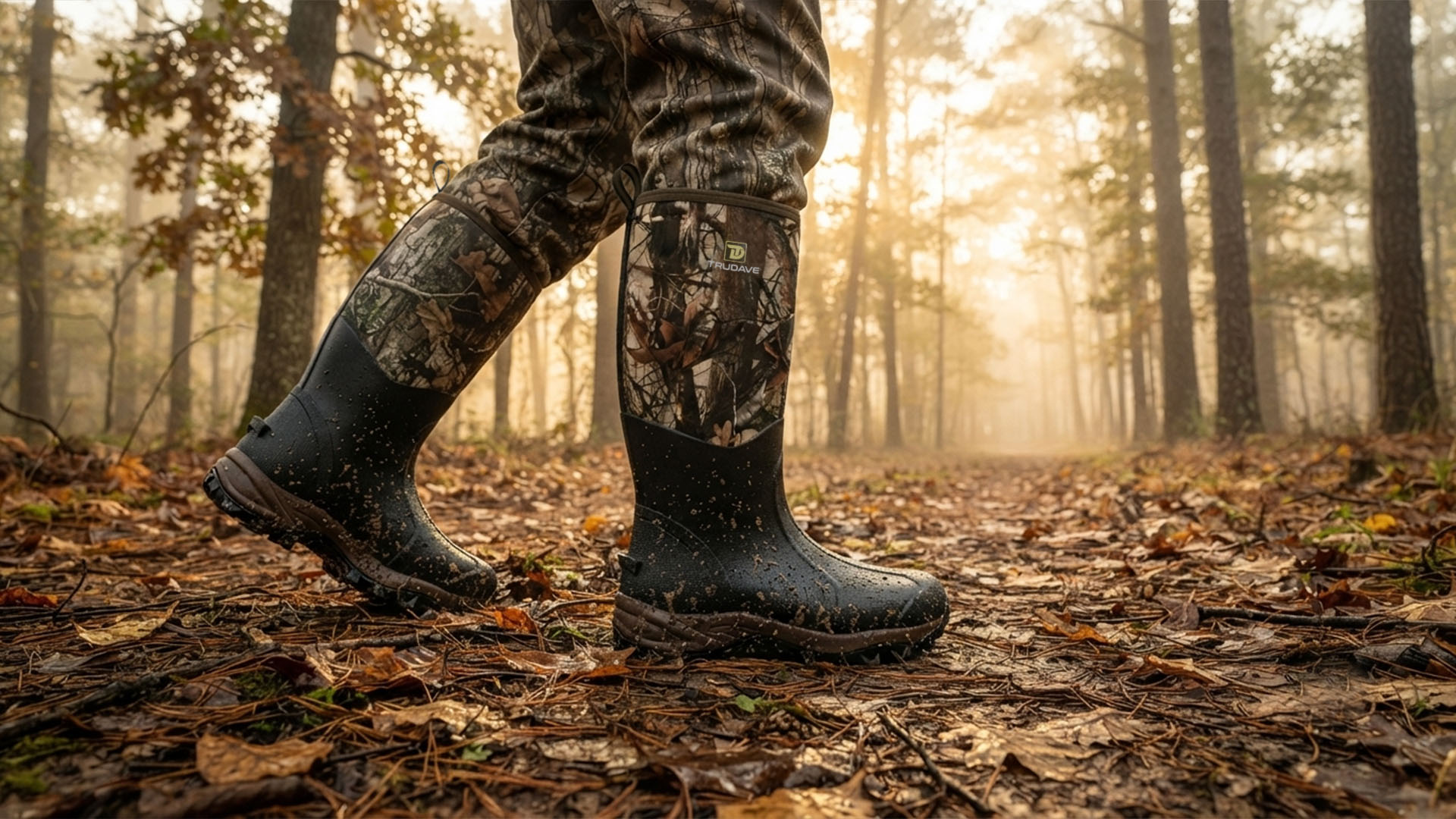
Hunters working this terrain may benefit from waterproof hunting boots for flooded bottomland hunting that provide adequate height, secure heel fit, and reliable traction through mud, wet vegetation, shallow water, and slick forest ground.
The right boot helps hunters stay mobile without constantly searching for a dry route that may not exist.
Rubber Boots Can Be Useful in Lowland Terrain
Rubber hunting boots can work well when conditions include:
- Mud
- Shallow water
- Wet fields
- Slough edges
- Saturated vegetation
But fit remains important.
A loose rubber boot can become exhausting in suction mud.
Long walking distances may also require more support than some pull-on designs provide.
Evaluate the complete hunt.
If you are walking miles through uneven timber, support matters.
If you are crossing constant shallow water, waterproof height may matter more.
Waterproof Lace-Up Boots Can Offer More Support
In bottomlands with steep creek banks, roots, logs, and longer walking distances, a supportive waterproof boot can be advantageous.
Hunters should balance:
- Height
- Traction
- Ankle support
- Weight
- Waterproofing
- Fit
There is no one perfect boot for every swamp.
The correct footwear depends on how deep the water is and how far you expect to walk.
Mud Suction Makes Fit Critical
Deep mud pulls against every step.
If the heel lifts inside the boot, friction develops quickly.
That creates:
- Blisters
- Fatigue
- Poor balance
- Extra noise
Take shorter steps.
Avoid deep black mud when a firmer bank is available.
Test boots in realistic wet conditions before the season.
A boot that feels comfortable on concrete can behave very differently in a swamp.
Wet Logs Are Extremely Slippery
Bottomland forests are full of logs.
Water, moss, mud, and algae make them dangerous.
Step around rather than over when practical.
If you must cross:
- Test the surface
- Keep weight controlled
- Look for hidden holes on the far side
- Maintain safe firearm control
Do not stare into rabbit cover while stepping blindly onto a log.
The hunt can wait two seconds while you find solid footing.
Waders Are Not Always the Best Answer
Some hunters assume waders solve every wetland problem.
They can be useful where deeper water must be crossed safely and conditions permit.
But waders can also be:
- Hot
- Heavy
- Difficult in briars
- Less comfortable for long walking
- Dangerous in deep moving water if used improperly
Use them only when the environment requires them.
For many shallow flooded bottomlands, tall waterproof hunting boots may provide better mobility.
Match equipment to actual water depth.
Never Enter Water You Have Not Evaluated
Flooded woods hide hazards.
Dark water may conceal:
- Deep ditches
- Beaver channels
- Holes
- Logs
- Wire
- Strong current
- Soft mud
Test questionable water before stepping in.
Use known crossings.
A rabbit can swim through places that are unsafe for hunters.
Do not follow an animal blindly into water.
Snakes Can Remain Active in Mild Weather
Southern bottomlands can hold venomous snakes during warm periods.
Watch around:
- Logs
- Root systems
- Cane
- Water edges
- Brush piles
- Sunny banks
Never place hands where you cannot see.
Keep dogs controlled.
Know local species and emergency procedures.
If a snake is encountered, give it space.
Do not attempt to handle it.
Alligator Awareness Matters in Some Regions
In portions of the Southeast and Gulf Coast, swamp-rabbit habitat may overlap with alligator habitat.
Hunters using dogs near water should understand the local risk.
Avoid sending dogs blindly into deep or warm water where alligators may be present.
Follow wildlife-agency guidance for the region.
Environmental conditions, season, and temperature all influence risk.
If a location looks unsafe for the dog, choose another cover.
Barbed Wire Can Be Hidden in Old Bottomlands
Old farms, floodplain pastures, and abandoned homesteads may contain wire buried under vegetation.
Look for:
- Rusted fence posts
- Old gates
- Wire wrapped around trees
- Broken fence lines
- Debris near field edges
Dogs can be injured badly by hidden wire.
Hunters can trip or cut themselves.
Slow down around old property boundaries.
Public Land Can Offer Great Rabbit Habitat
River-bottom public land and wildlife management areas may contain excellent habitat.
Look for areas with:
- Young bottomland forest
- Cane
- Briars
- Sloughs
- Managed openings
- Beaver wetlands
- Regenerating cuts
- Levees
Public land can also have overlapping hunting seasons.
You may encounter:
- Deer hunters
- Duck hunters
- Hog hunters
- Squirrel hunters
- Trappers
- Other rabbit hunters
Follow visibility requirements and communicate respectfully.
Waterfowl Season Can Affect Access
Some bottomlands used by swamp rabbits are also popular duck-hunting areas.
During waterfowl season, certain roads, boat ramps, wetlands, or management zones may have special rules.
Check current property regulations before hunting.
Avoid walking through an active duck setup.
Have alternate rabbit cover away from major waterfowl areas.
A good small-game hunt should not interfere unnecessarily with another legal hunt.
Trapping Seasons Require Dog Awareness
Bottomland habitat may overlap with trapping activity.
Keep dogs under control.
Do not disturb traps or sets.
Understand local trapping seasons and legal practices.
GPS tracking collars can be valuable in thick terrain where dogs disappear from view quickly.
Know how far you are from roads and private boundaries.
Rabbit Recovery Can Be Difficult in Wet Cover
A downed rabbit may disappear into:
- Cane
- Briars
- Standing water
- Root tangles
- Logs
- Muddy depressions
Mark the fall immediately.
Use a fixed landmark.
Search carefully.
If using dogs, give them time to locate the rabbit.
Do not abandon recovery simply because the animal fell in unpleasant terrain.
Make every reasonable effort to retrieve game.
Game Care Still Matters
Swamp rabbit hunting often occurs in cool weather, but southern temperatures can rise quickly.
Keep harvested rabbits clean and cool.
Avoid leaving game lying in warm wet vegetation.
Use breathable storage where appropriate.
Follow local regulations regarding possession, transport, and field dressing.
Know how long you will remain in the field and plan accordingly.
Regulations Must Be Checked Locally
Swamp rabbit hunting regulations vary by state and property.
Before hunting, verify:
- Season dates
- Daily limits
- Possession limits
- Hunting license requirements
- Legal methods
- Dog-use rules
- Public-land restrictions
- Hunter-orange requirements
- Water-access rules
- Area-specific closures
Also confirm species identification, because swamp rabbits and eastern cottontails may overlap in some regions.
Use current official wildlife-agency information.
Common Swamp Rabbit Hunting Mistakes
Treating Swamp Rabbits Like Ordinary Cottontails
Water and bottomland structure strongly influence their escape behavior.
Hunting the Wettest Ground Instead of the Highest Usable Cover
Flooding often concentrates rabbits on slightly elevated habitat.
Ignoring Logging-Road Crossings
Roads can reveal fresh tracks and create better visibility.
Following a Rabbit Straight Into Deep Water
Rabbits may swim; hunters should evaluate water safety first.
Walking Too Fast
Still rabbits can disappear beneath briars and logs.
Wearing Poor Footwear
Mud, shallow water, wet vegetation, and slick logs demand waterproof protection and traction.
Losing Track of Dogs
Dense cane and water can hide dogs quickly.
Ignoring Flood Conditions
Habitat and access can change overnight.
Forgetting Other Hunting Seasons
Bottomland public areas often host multiple hunting activities.
Frequently Asked Questions
Where do swamp rabbits live?
Swamp rabbits commonly use bottomland hardwoods, river floodplains, sloughs, cane thickets, creek systems, wet briar cover, and slightly elevated habitat near water.
Can swamp rabbits swim?
Yes. Swamp rabbits are capable swimmers and may use water as part of their escape strategy when pressured.
Is rabbit hunting good after rain?
It can be. Rain creates fresh mud for tracking, quiets leaves, and may concentrate rabbits on higher ground when low areas flood.
Can you hunt swamp rabbits without dogs?
Yes. Hunters can still-hunt fresh sign, logging-road edges, cane borders, briars, dry islands, and fallen timber without dogs.
What boots are best for swamp rabbit hunting?
Waterproof hunting boots with adequate height, secure heel fit, good mud traction, and enough walking comfort are useful for flooded bottomlands and wet brush.
Where should you look during high water?
Focus on levees, natural ridges, elevated logging roads, dry islands, high briar patches, and other remaining dry cover near flooded habitat.
Final Thoughts
Swamp rabbit hunting is really a lesson in reading water.
When the water rises, the rabbits rise with it.
When it falls, they spread back into the low cover.
A slough becomes an escape route.
A levee becomes a travel corridor.
A muddy logging road becomes a record of the night before.
The hunter who treats every acre of bottomland the same will work harder than necessary.
The hunter who studies elevation, water, tracks, feeding cover, and escape routes begins to understand where the rabbit wants to be.
Hunt the wet-to-dry transition.
Watch the cane.
Check the road crossings.
Respect the water.
Wear footwear built for mud rather than hoping the ground stays dry.
And remember: in swamp rabbit country, the rabbit may not run away from the water.
Sometimes, it runs straight toward it.
