
The desert can look completely empty after sunrise.
A few mesquite trees break up the horizon. Prickly pear covers rocky slopes, and dry washes twist between low hills before disappearing into the distance.
Nothing moves.
No deer.
No cattle.
No obvious wildlife.
Then you notice a fresh track in damp sand.
A few yards later, another.
Several smaller tracks cross it.
The trail turns toward a patch of prickly pear where fresh bites expose bright green tissue beneath the outer skin.
Nearby, the ground smells stronger than the surrounding desert.
The country was never empty.
A group of javelina passed through before you arrived.
Javelina hunting rewards hunters who learn to read small clues in big landscapes. These animals can disappear into desert washes, cactus flats, mesquite thickets, rocky foothills, and brushy drainages that appear too open to hide anything.
After winter rain, finding them can become easier.
Soft ground records tracks. Damp sand preserves direction. Fresh feeding becomes easier to separate from old damage, and vegetation may begin producing the green growth that attracts wildlife into particular washes and slopes.
The challenge is not simply finding javelina sign.
The challenge is determining which sign is fresh enough to hunt.
Javelina Are Not Feral Hogs
One of the first things hunters should understand is that javelina are not pigs.
They are collared peccaries.
Although they may look somewhat pig-like, they belong to a different biological family and have their own behavior, habitat preferences, and social structure.
That distinction matters because hunters coming from feral hog hunting may expect the wrong pattern.
Javelina commonly live in groups and may use relatively small home ranges compared with wide-ranging feral hogs.
Once you find a group and understand its feeding and bedding areas, you may be much closer to a huntable pattern than you realize.
Look for Groups, Not Just One Animal
Javelina are social animals.
Seeing one often means others are nearby.
A group may contain several animals feeding, bedding, and traveling together.
This creates advantages for hunters.
Multiple animals leave more:
- Tracks
- Droppings
- Feeding damage
- Bedding sign
- Trails
- Scent
- Disturbed vegetation
The downside is that more eyes and ears can detect movement.
Once you locate a group, slow down.
Do not focus so heavily on one animal that you fail to notice several others hidden nearby.
Winter Is a Good Time to Read the Desert
Cool-season desert hunting can provide excellent tracking conditions.
Winter storms soften the ground.
Cold mornings reduce heat stress.
Animals may spend more time feeding during daylight.
After rain, check areas with:
- Sandy washes
- Clay road sections
- Water holes
- Seep areas
- Cattle trails
- Prickly pear flats
- Mesquite bottoms
- Foothill drainages
A track in dry gravel may disappear quickly.
A track in damp sand can remain clear enough to show direction and freshness.
This makes post-rain scouting especially valuable.
Desert Washes Function Like Wildlife Highways
A wash may remain dry most of the year.
That does not make it unimportant.
Desert washes collect moisture, create softer soil, support thicker vegetation, and provide easier travel through rough terrain.
Javelina may use washes to move between:
- Bedding cover
- Feeding areas
- Water
- Foothills
- Mesquite flats
- Cactus patches
- Agricultural edges
The bottom of a wash may also provide protection from wind.
In open country, even a shallow drainage can allow animals to travel without exposing their entire body.
For hunters, washes are excellent places to search for tracks.
Hunt the Wash Edges Too
The center of the wash records sign well, but javelina do not always stay in the bottom.
They may feed along the banks or move through brush immediately above the drainage.
Look for trails leading from the wash into:
- Prickly pear
- Mesquite
- Palo verde
- Thick brush
- Rocky benches
- Low hills
Tracks disappearing from the sand may not mean the animals vanished.
They may simply have climbed onto harder ground.
When a trail leaves the wash, stop and glass the surrounding cover before following.
Prickly Pear Can Be a Major Food Clue
In many areas, prickly pear cactus can be an important javelina food source.
Hunters should inspect cactus patches for fresh feeding.
Look for:
- Recently bitten pads
- Exposed green tissue
- Pieces on the ground
- Tracks between plants
- Droppings nearby
- Trails through cactus
- Fresh disturbance around the base
Old cactus damage becomes dry and discolored.
Fresh bites usually look brighter.
Several recently fed-on plants in one small area suggest current use.
Javelina Also Use Other Foods
Do not build the entire hunt around cactus.
Depending on habitat and season, javelina may feed on a variety of plant material and other available foods.
Useful habitat may contain:
- Mesquite
- Agave
- Roots
- Tubers
- Succulent vegetation
- Seeds
- Seasonal green growth
- Agricultural food where access is legal
Rainfall affects what is available.
A desert that looked dry a month ago may produce fresh vegetation after winter storms.
Follow current food rather than last season’s assumptions.
Fresh Droppings Confirm Use
Javelina droppings can help identify areas with repeated activity.
Look near:
- Bedding cover
- Trails
- Wash banks
- Feeding patches
- Water sources
- Brushy loafing areas
A concentration of droppings often indicates more than a single animal passing through.
Freshness matters.
Old dry droppings confirm historical use.
Fresh sign combined with tracks and feeding damage suggests the group may still be nearby.
Smell Can Give Them Away
Javelina have a strong scent gland and can create a noticeable musky odor.
In calm conditions, hunters may smell animals before seeing them.
This is especially useful around:
- Dense mesquite
- Bedding pockets
- Brushy drainages
- Cactus flats
- Rock shelters
If you suddenly notice a strong unfamiliar musky smell in otherwise clean desert air, slow down.
Scan carefully.
A group may be much closer than expected.
Bedding Cover Can Be Surprisingly Small
Javelina do not always need large blocks of dense cover.
A group may bed in a relatively small patch containing enough shade, wind protection, and concealment.
Possible bedding areas include:
- Mesquite thickets
- Brushy washes
- Rock ledges
- Shaded canyon walls
- Thick cactus
- Palo verde clusters
- Dense desert shrubs
- Protected foothill pockets
From a distance, the bedding area may look insignificant.
That is why glassing every small patch of shade matters.
Cold Mornings Can Put Animals in the Sun
Desert nights can be surprisingly cold.
After a cold morning, javelina may use sun-exposed slopes and open feeding areas.
Search sunny sides of:
- Low ridges
- Rocky benches
- Canyon walls
- Brushy hillsides
- Cactus flats
Sunlight can make animals easier to see.
But their gray-brown coloration still blends extremely well with rock and desert vegetation.
Look for movement, ears, and body shape rather than waiting for a complete animal to stand in the open.
Midday Can Be Productive
Many big-game hunters focus heavily on sunrise and sunset.
Javelina can offer opportunities later in the morning or during midday, particularly in cool winter conditions.
They may spend time:
- Feeding
- Sunbathing
- Moving between shade and sun
- Bedding near food
- Traveling short distances between cover pockets
This makes them well suited to patient glassing.
Do not abandon a good basin simply because the first hour produced nothing.
The group may emerge when sunlight reaches the slope.
Glass More Than You Walk
Javelina country can be large.
Random walking burns energy and often alerts animals.
Use optics first.
Choose glassing positions overlooking:
- Wash networks
- Cactus flats
- Mesquite pockets
- Rocky hills
- Water
- Agricultural edges
- Canyon mouths
Scan slowly.
Then scan again.
Javelina may be visible only when one animal moves between shrubs.
A stationary group can disappear completely.
Look for Horizontal Shapes
Desert vegetation creates vertical and irregular shapes.
Animal bodies often create horizontal lines.
Look for:
- A flat back
- A rounded body
- Legs beneath brush
- Ears above cactus
- A dark head
- Multiple similar shapes together
Do not search only for movement.
A bedded javelina may remain still long enough for a hunter to glass past it several times.
Groups Can Hide Behind One Bush
One animal steps into view.
The hunter assumes it is alone.
Then five more animals appear.
This is common enough to influence shot planning.
Before making any decision, scan the entire area.
Know where other animals are.
Make sure the target is clearly separated.
The group may be packed tightly in cover.
Patience improves both safety and shot selection.
Tracking Works Best When You Know When to Stop
Fresh tracks are exciting.
Following every step is not always smart.
If the tracks lead toward dense bedding cover, consider stopping and glassing instead.
Walking directly behind the group may push them farther.
Tracking is most useful when it helps answer questions:
- Which direction are they traveling?
- What are they feeding on?
- Are they moving uphill or downhill?
- Are they heading toward bedding?
- How fresh is the sign?
Once you have enough information, shift from tracking to hunting.
Watch for Tracks Crossing Roads
Unpaved roads are excellent tracking surfaces after rain.
Check crossings where roads pass:
- Washes
- Cactus flats
- Saddles
- Mesquite corridors
- Water sources
- Foothill bases
A fresh group of tracks crossing after the latest vehicle traffic can narrow the search considerably.
Determine direction.
Then move to a glassing point rather than simply walking the road behind them.
Road Hunting Alone Misses Too Much
Roads are useful for finding sign.
They should not become the entire strategy.
Javelina may spend most of their day out of sight behind terrain.
Use roads to collect information, then hunt from:
- Low ridges
- Basin edges
- Foot-access points
- Wash overlooks
- Hills above feeding cover
Getting even a short distance away from vehicle traffic can change animal behavior.
Rain Creates Better Tracking—but Worse Roads
The same rain that improves tracks can make desert access difficult.
Clay roads can turn into deep mud.
Wash crossings can flood.
Ruts become slippery.
Before driving into remote country, consider:
- Soil type
- Storm forecast
- Road grade
- Wash crossings
- Vehicle capability
- Land-management restrictions
- Whether you can turn around
Do not damage soft roads.
Parking and walking is often the better choice.
Flash Floods Are a Serious Desert Hazard
Rain does not need to fall directly above you for a wash to flood.
Storms miles upstream can send water through a dry drainage.
Never camp or park in a wash when storms are possible.
Watch for:
- Dark clouds upstream
- Rising water
- Debris movement
- Sudden changes in water color
- Thunder
- Strong runoff
Move to higher ground early.
Do not wait until water reaches you.
Mud and Cactus Create Unusual Footwear Demands
Javelina country can look dry while creating difficult walking conditions.
A single hunt may include:
- Wet grass
- Muddy washes
- Loose rock
- Sand
- Cactus
- Thorny brush
- Steep banks
- Clay roads
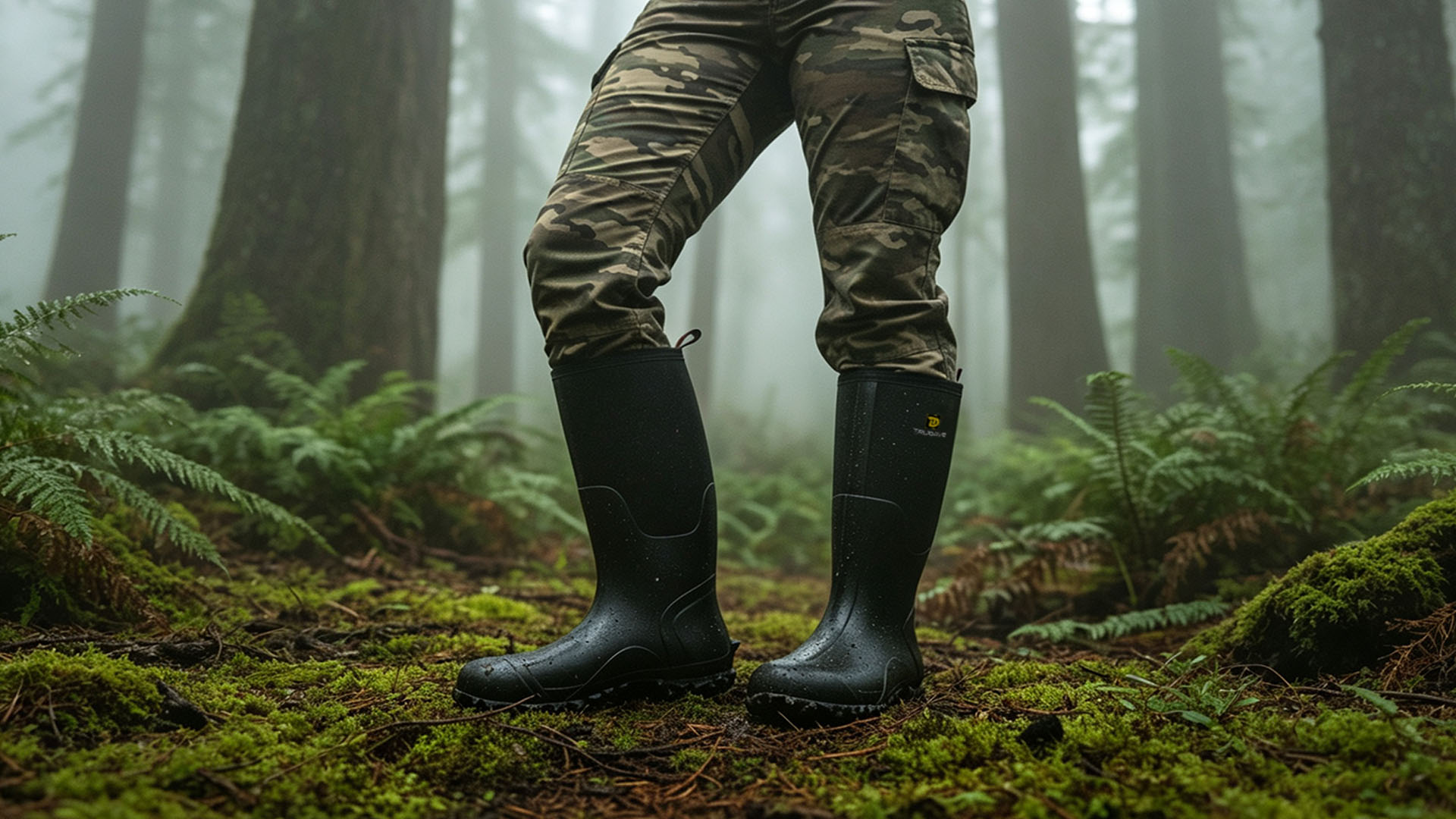
Hunters covering this terrain may benefit from lightweight waterproof hunting boots for desert hunting that provide dependable traction, protection from wet ground, secure heel fit, and enough flexibility for long glassing-and-stalking days.
Heavy insulated boots are usually unnecessary in active desert hunting unless temperatures demand them.
The goal is balancing protection with mobility.
Waterproofing Still Matters in the Desert
“Desert” does not always mean dry.
Winter rain can leave:
- Muddy wash bottoms
- Wet grass
- Shallow standing water
- Damp agricultural edges
- Snow at higher elevations
- Saturated clay
A lightweight waterproof boot can help protect feet without adding the bulk of a swamp or deep-winter boot.
Match footwear to actual conditions.
Traction Matters on Loose Rock
Foothill javelina hunting often requires climbing rocky slopes.
Loose gravel can roll beneath the foot.
Wet rock becomes slick.
Choose controlled routes.
Do not rush downhill after animals move.
A short stalk is not worth an ankle injury.
Secure outsole grip and stable heel fit are especially important when carrying optics and hunting equipment.
Cactus Can Damage Lightweight Gear
Prickly pear, cholla, agave, and thorny shrubs can punish thin footwear and clothing.
Watch every step.
Do not kick through cactus simply because tracks lead that way.
Carry appropriate tools for removing cactus spines.
Never grab cholla segments with bare hands.
A boot designed for desert hunting should provide enough protection for rough vegetation without becoming unnecessarily heavy.
Gaiters Can Help With Debris
Low-profile gaiters can keep:
- Sand
- Gravel
- Grass seeds
- Mud
- Small plant debris
from entering boots.
They can also add some lower-leg protection.
Choose breathable designs.
Desert hunting can become warm quickly once the sun rises.
Too much waterproof layering can trap heat and sweat.
Manage Temperature Carefully
A javelina hunt may begin near freezing and become warm by noon.
Layering matters.
Wear clothing that can be adjusted as temperatures rise.
Avoid sweating heavily during climbs.
Carry water even on cold mornings.
Dry air can hide dehydration.
Hunters may lose more fluid than they realize.
Water Is Important for Hunters Too
Do not assume a short winter hunt requires little water.
Glassing, hiking, sun exposure, and dry air add up.
Carry enough water for the full outing.
If hunting with a dog where legal and appropriate, carry additional water.
Never depend entirely on natural desert water sources.
Some may be dry, contaminated, inaccessible, or intended for wildlife and livestock.
Wind Still Controls the Stalk
Javelina have a strong sense of smell.
Once you locate a group, plan the approach around wind.
Check:
- General wind direction
- Wash airflow
- Slope thermals
- Midday changes
- Brush movement
- Terrain effects
Do not assume open desert wind is simple.
Small canyons and washes can redirect air.
A stalk that keeps you hidden visually can still fail when scent reaches the group.
Approach From Terrain, Not Vegetation
Desert vegetation rarely provides enough cover for a human.
Use terrain instead.
Helpful features include:
- Wash bottoms
- Low ridges
- Rock formations
- Terrain folds
- Small hills
- Canyon walls
A longer route behind a ridge is usually better than crossing open desert directly.
Stay below skylines.
Javelina may not have pronghorn-level eyesight, but unnecessary exposure still ends opportunities.
Move Slowly During the Final Approach
The final distance is where excitement causes mistakes.
Slow down.
Watch the group.
Move only when:
- Animals are feeding
- Heads are down
- Terrain blocks visibility
- The wind is stable
- Other animals are not watching
Stop if the group becomes alert.
One animal may notice movement before the others.
Do not assume you can keep moving because the target animal is looking away.
Javelina Can Stand Their Ground When Surprised
Javelina generally prefer avoiding people, but close encounters in thick cover can be unpredictable.
Do not intentionally crowd animals.
Give them room to escape.
Be especially cautious around groups, young animals, and close-range surprise encounters.
If animals become agitated, increase distance rather than trying to force the situation.
Respecting the animal makes the hunt safer.
Identify the Target Carefully
Javelina are often found in groups.
Before taking any shot, confirm:
- Legal animal
- Safe background
- Clear separation from the group
- Ethical distance
- No roads or buildings beyond
- No livestock
- No other hunters nearby
Do not shoot into a clustered group.
Wait for a clear opportunity.
Good hunting is controlled hunting.
Recovery Can Be Difficult in Cactus Country
A javelina may disappear into surprisingly thick desert vegetation.
After the shot, mark:
- Animal’s location
- Hunter’s location
- Last visible point
- Direction of travel
- Nearby landmarks
Look for:
- Tracks
- Blood
- Hair
- Broken vegetation
- Disturbed sand
Do not wander randomly.
A systematic search preserves sign.
Cactus and rocks make careless recovery movement painful and inefficient.
Warm Days Require Prompt Meat Care
Even winter desert hunts can warm quickly after sunrise.
Prepare for field care before hunting.
Bring appropriate:
- Knives
- Gloves
- Game bags
- Cooler
- Ice
- Clean transport equipment
Follow current local requirements for tagging, evidence of sex, reporting, and transport.
Prompt cooling helps protect meat quality.
Odor Control During Processing Helps
Javelina possess a dorsal scent gland.
Hunters processing an animal should avoid contaminating meat with gland material, hair, dirt, or digestive contents.
Use clean field-dressing techniques.
Change or clean gloves and knives when necessary.
Keep edible meat clean and cool.
If unfamiliar with javelina processing, review official wildlife-agency field-care guidance before the hunt.
Private and Public Boundaries Matter
Javelina may move between public desert, ranch land, agricultural ground, and developed edges.
Hunters need to know exactly where they can hunt.
Confirm:
- Public land boundaries
- Private parcels
- State trust land rules
- Tribal land restrictions
- Access roads
- No-shoot zones
- Developed areas
- Required permissions
Do not follow animals across a boundary because the tracks continue.
Legal access is part of the hunting strategy.
Suburban-Edge Javelina Are Not Automatically Huntable
Javelina are sometimes seen around neighborhoods, golf courses, parks, and developed desert communities.
The presence of animals does not make those locations legal or safe to hunt.
Firearm and archery discharge regulations may restrict hunting near:
- Homes
- Roads
- Parks
- Schools
- Businesses
- Recreational trails
Move your scouting toward legal hunting habitat away from developed areas.
Never assume open desert beside a neighborhood is open hunting land.
Regulations Must Be Checked Carefully
Javelina hunting rules vary by state, unit, season, weapon type, and tag system.
Some opportunities may involve draws or specific permit structures.
Before hunting, verify current requirements for:
- Hunting license
- Javelina tag
- Season dates
- Unit boundaries
- Legal method
- Hunter-orange requirements if applicable
- Public-land access
- Reporting
- Tagging
- Evidence-of-sex rules
- Special hunt restrictions
Use current official wildlife-agency information.
Do not rely on an old article or another hunter’s memory.
Common Javelina Hunting Mistakes
Treating Javelina Like Feral Hogs
They are peccaries with different behavior and social patterns.
Walking Randomly Through the Desert
Glass first and use sign to narrow the search.
Following Every Track Into Bedding Cover
Know when to stop tracking and start glassing.
Ignoring Prickly Pear Feeding Sign
Fresh cactus damage can reveal current activity.
Hunting Only at Sunrise
Cool-season javelina can remain active later in the day.
Underestimating Winter Rain
Rain improves tracking but can make roads and washes dangerous.
Wearing Heavy Boots
Active desert hunts usually reward lightweight support and traction.
Ignoring Wind
Javelina have a strong sense of smell.
Failing to Check the Entire Group
Several animals may be hidden around the target.
Frequently Asked Questions
Where is the best place to find javelina?
Look for desert washes, prickly pear flats, mesquite cover, brushy foothills, rocky drainages, and areas showing fresh tracks, droppings, and feeding activity.
Is javelina hunting good after rain?
Yes. Rain can soften the ground, reveal fresh tracks, quiet walking conditions, and create new vegetation. It can also make roads and washes more hazardous.
What do javelina eat?
Diet varies by region and season, but javelina may use prickly pear and other cactus, roots, vegetation, seeds, and other available plant foods.
Do javelina travel in groups?
Yes. Javelina commonly live in social groups, so hunters should expect additional animals near the first one they locate.
Can you hunt javelina by tracking?
Fresh tracks can help locate groups, especially after rain, but glassing and understanding bedding and feeding habitat are often more effective than blindly following every track.
What boots are best for javelina hunting?
Lightweight waterproof hunting boots with good traction, secure heel fit, and enough protection from mud, rock, cactus, and uneven desert terrain are a practical choice.
Final Thoughts
Javelina country is full of information.
Most hunters simply drive past it too quickly.
Tracks in damp sand.
Fresh bites on prickly pear.
Droppings beneath mesquite.
A musky smell in still air.
A trail leaving a wash toward one shaded hillside.
Winter rain makes those clues easier to see.
But the real skill is connecting them.
Food tells you why the animals are there.
Tracks tell you where they went.
Terrain tells you where they may bed.
Wind tells you whether you can get close.
Slow down.
Glass more.
Follow fresh sign without walking directly into the group’s security cover.
Protect your feet from mud, rock, and cactus.
And remember that the desert rarely gives away the whole animal first.
Usually, it gives you one small clue.
The hunter who notices it gets to see what happens next.
