
A berry patch after rain can look quiet.
Wet leaves hang heavy. Ferns drip onto old logging roads. The clear-cut smells like damp brush, and the mud along the edge records every animal that crossed during the night.
At first, nothing moves.
Then you notice the sign.
A pile of dark scat filled with berry skins.
A flattened trail through salmonberry, blackberry, huckleberry, or blueberry cover.
Claw marks on a rotting log.
Mud on a stump where something stepped over it.
A torn patch of brush where a bear fed before daylight.
Black bear hunting often begins with food.
In many parts of North America, late summer and fall bear movement is closely tied to seasonal food sources. Berries, mast, insects, carrion, agricultural crops, and soft green vegetation can all influence where bears spend time.
After rain, those food areas become easier to read.
Mud reveals tracks. Wet vegetation shows fresh disturbance. Scat remains more visible on roads and trails. Quiet ground allows slower access.
But rain also complicates the hunt.
Scent moves unpredictably in drainages. Wet brush soaks clothing. Tracks can age quickly. Logging roads can become slick, and a bear may feed silently inside cover without ever stepping into the open.
The best bear hunters do not simply find a berry patch and sit down.
They determine whether bears are feeding there now, how they enter and exit, where they bed, and whether the setup can be hunted with the wind.
Food Controls Much of Bear Movement
Black bears are opportunistic feeders.
Their daily movement can shift quickly as food sources appear, peak, and disappear.
A hillside loaded with berries may attract bears for several days or weeks. Once the fruit is gone, activity can drop sharply.
Productive food sources may include:
- Huckleberries
- Blueberries
- Blackberries
- Raspberries
- Salmonberries
- Elderberries
- Chokecherries
- Acorns
- Beechnuts
- Hazelnuts
- Clover
- Insects in logs and stumps
- Agricultural crops where legal access applies
The exact food depends on region and season.
The important question is not whether a plant species can attract bears.
The important question is whether bears are feeding on it right now.
Rain Makes Fresh Sign Easier to See
Rain resets the woods.
Dust disappears. Old tracks soften. Leaves are flattened. Mud develops along roads, trails, creek crossings, and field edges.
After rain, fresh bear sign may stand out clearly.
Look for:
- Sharp tracks in mud
- Wet scat with visible food content
- Broken berry stems
- Freshly flattened vegetation
- Mud on logs or rocks
- Claw marks on rotten stumps
- Torn-apart insect logs
- Trails through thick brush
- Hair caught on rough bark or fences
A muddy road crossing made after the storm is more valuable than an old track hardened into dry soil.
Rain does not make every sign current, but it gives hunters a better chance to separate old use from fresh activity.
Bear Scat Can Tell You What They Are Eating
Bear scat is one of the most useful clues in food-source hunting.
In berry season, scat may be filled with skins, seeds, pulp, and plant material.
The color and texture can vary depending on what the bear has been eating.
Fresh scat near a berry patch suggests current feeding.
Look for scat on:
- Logging roads
- Game trails
- Clear-cut edges
- Field roads
- Creek crossings
- Old skid trails
- Ridge benches
- Trails entering thick bedding cover
Do not just note that scat exists.
Study where it is located.
A pile in the middle of an old road may show a travel route.
Several piles around one brushy opening may indicate regular feeding.
Tracks Show Direction
Bear tracks can be obvious in mud, but many hunters fail to study direction.
The front track is often wider and shorter, while the rear track is longer and may resemble a human footprint shape in some mud conditions.
Fresh tracks can show:
- Direction of travel
- Size class of the bear
- Whether several bears are using the area
- Entry and exit routes
- Time since rain
- Whether the bear crossed a road or followed it
- How close the trail runs to cover
A single track is useful.
A sequence of tracks leading from feeding cover toward thick timber tells a much better story.
Do Not Hunt Old Berry Patches
A berry patch can look good after the fruit is gone.
The plants remain.
The opening still looks productive.
Old scat may still be visible.
But bears may have already shifted to another food source.
Before committing to a setup, confirm:
- Are ripe berries still present?
- Are stems recently broken?
- Is there fresh scat?
- Are tracks made after the latest rain?
- Are bears feeding during daylight or only at night?
- Is there nearby bedding cover?
- Is the area receiving human pressure?
A historically good berry patch is only useful when it still fits the current bear pattern.
Clear-Cuts Can Be Excellent Bear Habitat
Regenerating clear-cuts often produce the low vegetation bears use for feeding.
Depending on region and age, a clear-cut may contain berries, grasses, forbs, insects, and escape cover.
The best cuts usually include a mix of:
- Food
- Visibility
- Thick edges
- Travel routes
- Bedding cover nearby
- Limited human disturbance
- Safe glassing positions
A very fresh cut may lack food and cover.
An older cut may become too dense to see into.
The most productive stage often occurs when plants are mature enough to feed bears but short enough for hunters to glass openings and edges.
Hunt the Edges, Not Only the Center
Bears may feed in the middle of a berry patch, but they often enter and exit through specific edges.
The best sign may be along:
- Timber borders
- Old skid trails
- Brushy draws
- Creek edges
- Logging-road bends
- Small benches
- Clear-cut corners
- Pockets where two cover types meet
A bear may spend daylight close to cover and move into the open later.
Instead of sitting directly in the widest opening, study the trails that connect food and security.
The edge is often where a hunt becomes realistic.
Bedding Cover Is Usually Close
Bears feeding heavily may bed surprisingly close to food.
They may rest in:
- Thick timber
- Blowdowns
- Alder patches
- Fern-covered draws
- Conifer pockets
- Brushy creek bottoms
- Dense regeneration
- North-facing timber
- Steep benches
- Logging slash
If food is abundant and pressure is low, a bear may feed, bed, and feed again within a small area.
This can create excellent hunting.
It can also make access risky.
Walking carelessly into the feeding area may bump the bear from nearby bedding cover before the hunt begins.
Wind Is Still Critical
Black bears rely heavily on smell.
A food source with fresh sign can be difficult to hunt if wind carries scent into bedding cover or the main entry trail.
Before choosing a setup, determine:
- Where the bear likely beds
- How it enters the food source
- Where thermals move in the evening
- Whether creek bottoms pull scent downhill
- Whether wind swirls around the clear-cut
- How you can access without crossing bear trails
A bear may not need to see you.
If it smells human scent around the food source, it may wait until dark or leave completely.
Evening Thermals Can Make or Break the Hunt
Many bear hunts around food sources happen in the afternoon and evening.
As the ground cools, thermals may begin falling downhill.
If your scent drops into a berry patch, creek bottom, or bear trail, the setup can fail silently.
Watch how air moves near sunset.
A safe wind at 3:00 p.m. may become poor by the final hour of light.
Position slightly higher, crosswind, or off the main route when possible.
Do not force a setup when the air is unstable.
Rain Can Help Still-Hunting
Wet ground can make movement quieter.
A careful hunter may move along old logging roads, skid trails, or clear-cut edges without the constant crunch of dry leaves and brush.
This helps when checking sign or slipping into a glassing position.
However, bears can also move quietly in wet conditions.
A feeding bear may be inside thick brush only yards away.
Move slowly.
Stop often.
Look into the cover before stepping forward.
The quiet ground helps both hunter and bear.
Wet Brush Can Soak You Fast
Bear country after rain is wet from every direction.
Even after the sky clears, brush holds water.
Walking through berry canes, alder, ferns, huckleberry, or young conifers can soak pants and boots quickly.
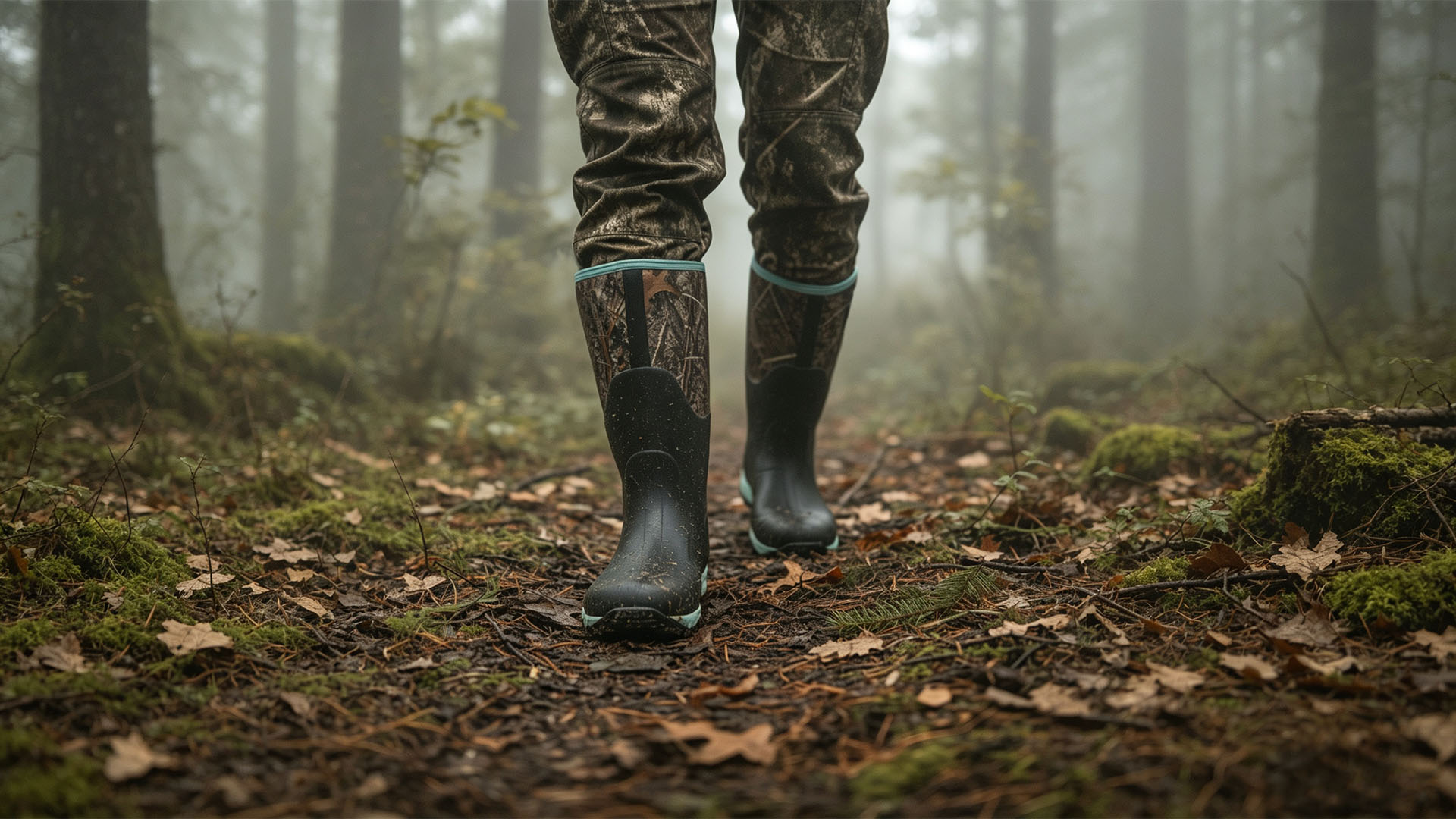
Hunters covering these conditions may benefit from waterproof hunting boots for wet bear hunting that provide dependable traction, secure heel retention, and moisture protection for long approaches through soaked vegetation, muddy roads, and creek-bottom edges.
Footwear should match the terrain.
Steep logging country may require more ankle support.
Lowland berry patches may require more waterproof height.
Long glassing-and-stalking hunts require comfort as much as protection.
Muddy Logging Roads Need Caution
After rain, logging roads can become slick and unstable.
Clay, wet gravel, moss, leaves, and old tire ruts can make walking and driving difficult.
Watch for:
- Washed-out culverts
- Soft shoulders
- Slick switchbacks
- Deep ruts
- Standing water
- Loose rock
- Muddy landings
- Road edges hidden by grass
Do not drive roads that are too soft or restricted.
Damaging roads can harm access and create safety problems.
A longer walk is better than getting stuck behind a locked gate or tearing up a landowner’s road.
Glassing Is Often Better Than Walking
Bears can be difficult to spot because they may feed slowly inside brush.
A black bear in a dark clear-cut shadow can look like a stump.
Instead of walking through every patch of cover, choose a position where you can glass carefully.
Good glassing spots may overlook:
- Clear-cut openings
- Berry slopes
- Old roads
- Creek draws
- Brushy benches
- Timber edges
- Avalanche chutes in mountain country
- Logged ridges
Do not scan once and leave.
Pick apart the cover.
A bear may appear only when it stands, turns, or moves between berry patches.
Look for Movement and Shape
A feeding bear may not show its full body.
You may see:
- A round black shape
- An ear
- A shoulder moving through brush
- A patch of wet fur
- A head rising above berries
- A stump that changes position
- Brush shaking without wind
- A dark shape crossing an old road
Take your time.
Use binoculars.
Confirm the animal completely before planning a stalk or preparing for a shot.
Many bears are first detected as movement rather than a full animal.
Do Not Mistake a Bear for a Stump
Wet forest conditions create shadows.
Burned stumps, black logs, dark rocks, and root balls can all look like bears.
Glass carefully.
A real bear usually has soft edges, changing shape, and movement.
Watch the object for several minutes.
Look for ears, head movement, body posture, and walking rhythm.
Never shoot at a dark shape.
Positive identification is essential.
Size Judging Requires Patience
Judging a bear’s size can be difficult, especially in thick vegetation.
A lone bear has no obvious comparison.
Wet fur can change appearance.
Distance can be deceptive in clear-cuts and mountain openings.
Consider:
- Body shape
- Leg length relative to body
- Ear size compared with head
- Belly line
- Shoulder mass
- Walking behavior
- Head size
- Overall proportions
Do not rush.
If legal requirements involve sex, age class, or specific restrictions, verify carefully before taking any shot.
Regulations vary by jurisdiction.
Cubs and Sows Require Extra Caution
In many places, taking a sow with cubs is illegal or strongly discouraged.
Before shooting any bear, watch long enough to determine whether cubs are present.
Cubs may be hidden in brush, trees, or nearby cover.
A sow may appear alone at first.
Wait.
Glass the surrounding area.
Listen for movement.
Do not make a quick decision just because the bear steps into the open.
Responsible bear hunting requires patience and identification.
Trails Through Berry Patches Can Be Subtle
A bear trail may look like a slight tunnel through brush rather than a clean path.
Look for:
- Flattened vegetation
- Broken berry stems
- Mud on leaves
- Hair on rough bark
- Tracks in soft spots
- Scat along the route
- Repeated openings through thick cover
- Logs crossed in the same place
Bear trails often connect food to security cover.
A subtle trail with fresh scat and tracks can be more valuable than a wide old road with only old sign.
Logs and Stumps Reveal Insect Feeding
Bears often tear into rotten logs, stumps, and ground nests to reach insects and larvae.
Fresh insect feeding sign may include:
- Newly shredded wood
- Damp exposed interior
- Claw marks
- Rolled logs
- Broken chunks scattered nearby
- Tracks around the site
- Fresh smell of disturbed wood
Old torn logs turn dry, gray, and weathered.
Fresh disturbance looks raw.
If you find several recently torn logs near berry cover, bears may be feeding on more than fruit in that area.
Acorns Can Change the Pattern
When hard mast becomes available, bears may shift from berries to acorns or other nuts.
Oak ridges, creek-bottom hardwoods, and mixed timber edges can become more important.
If a berry patch suddenly goes quiet, look for nearby mast.
Signs include:
- Scat containing acorn fragments
- Tracks under oaks
- Claw marks near feeding areas
- Turned leaves
- Broken branches
- Fresh droppings on old roads
Food transitions can happen quickly.
A good bear hunter tracks the food calendar, not just one location.
Agricultural Edges Can Attract Bears
Where legal access allows, bears may feed near agricultural crops, orchards, or rural food sources.
Possible attractants include:
- Corn
- Oats
- Clover
- Apples
- Berries
- Grain fields
- Livestock feed areas from a distance
- Food plots where legal
- Abandoned orchards
Private property rules and state regulations matter.
Do not assume a bear damaging crops creates permission to hunt.
Always obtain clear landowner approval and follow current laws.
Bears May Move in Daylight When Food Peaks
When a high-value food source is abundant and undisturbed, bears may feed during daylight.
This is especially true when pressure is low and bedding cover is close.
Daylight movement may occur:
- Early morning
- Late afternoon
- During cool weather
- During light rain
- After human pressure drops
- When food is highly concentrated
- In remote areas with little disturbance
Trail cameras where legal can help confirm timing.
So can repeated glassing from a distance.
Pressure Pushes Bears Nocturnal
Bears can quickly adjust to human pressure.
Repeatedly walking through a berry patch, checking cameras too often, driving close to feeding areas, or sitting poor winds can shift activity after dark.
Reduce disturbance.
Approach carefully.
Glass from a distance when possible.
Avoid crossing main trails.
Do not leave unnecessary scent in the food source.
A bear may tolerate natural forest disturbance but avoid repeated human patterns.
Trail Cameras Can Help Identify Current Use
Where legal, cameras can help determine if bears are using a food source during daylight.
Good camera locations include:
- Logging-road crossings
- Berry patch entrances
- Trails between bedding and food
- Scat-heavy road sections
- Creek crossings
- Old skid trails
- Rub trees
- Torn log areas
Place cameras where checking them does not require walking through the main feeding zone.
Follow all local rules because trail-camera regulations vary by state, season, and land type.
Do Not Check Cameras Too Often
Every camera visit leaves scent and disturbance.
In bear country, this can matter quickly.
Check cameras only when conditions are favorable, and use low-impact routes.
If the camera shows daylight use, do not keep visiting it out of excitement.
Build a hunt plan and let the area settle.
Information is valuable only if the animal continues using the area.
Calling Bears Is Different From Food-Source Hunting
Some hunters use predator or distress calls for bears where legal.
This can be effective in some situations, but food-source hunting around berry patches is a different approach.
Calling may bring a bear from cover.
It may also attract nothing or create unsafe uncertainty in thick terrain.
If using calls, verify legality and understand local bear behavior.
Always set up with visibility, safe shooting lanes, and awareness that a bear may approach silently.
Do not call in cover so thick that you cannot identify the animal before it is close.
Safety Around Bears Requires Respect
Black bears are often cautious around people, but they are powerful animals.
Hunters should avoid careless behavior.
Important safety habits include:
- Identify the bear completely
- Watch for cubs
- Avoid surprising bears at close range
- Keep a clean camp
- Store food properly
- Carry required or appropriate safety gear
- Know local bear behavior
- Follow agency guidance
- Communicate with hunting partners
Do not treat a bear like a slow deer.
A wounded bear in thick cover can be dangerous.
Recovery Can Be Difficult in Wet Brush
A bear shot near berry cover may run into:
- Thick brush
- Ferns
- Blowdowns
- Creek bottoms
- Steep timber
- Wet clear-cuts
- Private boundaries
- Dark conifer cover
Before taking the shot, consider:
- Shot angle
- Distance to cover
- Rain intensity
- Light remaining
- Recovery route
- Help available
- Meat care
- Legal tagging requirements
- Whether cubs or other bears are nearby
Wet vegetation can reduce blood sign.
Thick hair and fat may make blood trails harder to see.
Plan carefully.
Mark the Shot Location Immediately
After the shot, mark:
- Hunter position
- Bear position at impact
- Last visible location
- Direction of travel
- First blood
- Tracks
- Broken vegetation
- Entry into cover
Use a GPS point, mapping app, or clear natural landmarks.
Wet clear-cuts and berry patches can look confusing once you start tracking.
Do not rely on memory alone.
Follow-Up Requires Caution
A wounded bear can be dangerous, especially in thick cover.
Approach slowly.
Listen carefully.
Work with partners when possible.
Keep communication clear.
Do not push blindly into brush without understanding the situation.
If legal and available, trained tracking dogs may be used in some states, but regulations vary widely.
Verify current rules before relying on that option.
Meat and Hide Care Matter
Bear meat and hides require timely care.
Warm weather, rain, mud, and thick vegetation can complicate field processing.
Prepare before the hunt with:
- Sharp knives
- Gloves
- Game bags
- Rope
- Pack frame
- Tarp or clean working surface
- Cooling plan
- Knowledge of sealing or check-in rules
- Understanding of evidence-of-sex requirements if applicable
Bear regulations often include specific tagging, reporting, tooth submission, hide sealing, or meat requirements depending on the jurisdiction.
Confirm current rules before hunting.
Bear Meat Should Be Handled Safely
Bear meat can carry parasites such as Trichinella.
Hunters should follow current food-safety guidance and cook bear meat thoroughly to safe internal temperatures according to reliable public-health recommendations.
Do not treat bear meat like rare steak.
Field care, cooling, cleanliness, and proper cooking all matter.
When unsure, follow official wildlife-agency and food-safety guidance.
Public Land Bear Hunting Requires Extra Patience
Public clear-cuts and berry patches can receive pressure.
Road-accessible areas may be glassed by multiple hunters.
Bears may shift into:
- Thicker cover
- More remote cuts
- Nighttime feeding
- Smaller hidden food sources
- Brushy drainages
- Areas beyond closed roads
- Pockets near human activity but away from foot traffic
Do not assume distance alone solves pressure.
A small berry patch behind a gated road or hidden draw may outperform a famous clear-cut visible from a main road.
Closed Roads Can Create Opportunity
Closed logging roads, walk-in areas, and gated access can reduce vehicle disturbance.
Bears may feed along these roads when food and cover are present.
Look for:
- Scat on the road
- Tracks in puddles
- Torn logs along the edge
- Berry brush growing in the roadbed
- Trails entering timber
- Rubs or claw marks
- Quiet clear-cut pockets nearby
Walking closed roads slowly after rain can be an excellent scouting strategy.
Just confirm the road is legally open to foot access.
Do Not Ignore Small Berry Patches
Large berry slopes attract attention, but small hidden patches can hold bears too.
A small patch becomes valuable when it is:
- Close to bedding cover
- Protected from wind
- Away from roads
- Connected to travel trails
- Producing ripe fruit
- Near water or shade
- Low in human pressure
A bear does not need an entire mountain of berries if one secure pocket provides enough food.
Small food sources can be easier to hunt because entry and exit routes may be more predictable.
Morning Hunts Can Be Productive but Risky
Bears may feed at night and remain close to the food source near daylight.
A morning approach can bump them if you cross the wrong route.
Morning hunts work best when you can access from a direction that avoids feeding trails and bedding cover.
If access requires walking through the berry patch in the dark, reconsider.
A late-afternoon setup with better wind may be more effective.
Evening Hunts Often Fit Food Patterns
Evening hunts around food sources are common because bears may leave bedding cover to feed before dark.
Set up early enough that the area settles.
Choose a position that allows you to watch entry trails and feeding openings without placing scent into them.
Pay close attention to thermals as sunset approaches.
Many good bear setups fail in the final thirty minutes because air begins falling toward the food source.
Rain Breaks Can Trigger Movement
After a steady rain, bears may begin moving again when the weather eases.
They may enter openings, feed along roads, or move between bedding and food.
If the forecast shows a break in the rain during the afternoon, be in position before it happens.
Do not use the best movement window to walk into the area.
Let the weather change while you are already settled and glassing.
Fog Can Hide Bears and Hunters
Fog can make visibility difficult, but bears may feel more secure moving in it.
Use optics carefully.
Scan open roads, clear-cut edges, and berry pockets.
Do not shoot at dark shapes in fog.
Wait for a complete identification and safe shot.
Fog also complicates navigation and recovery.
Mark routes and landmarks clearly.
Common Black Bear Berry-Patch Hunting Mistakes
Hunting Berries That Are No Longer Producing
Current food matters more than old habitat memory.
Ignoring Fresh Scat
Scat reveals both current use and what bears are eating.
Walking Through the Feeding Area
Human scent can push bears nocturnal.
Forgetting Evening Thermals
Falling air can carry scent into the food source.
Glassing Too Quickly
Bears may appear as small movement inside brush.
Assuming Rain Makes All Sign Fresh
Track age still matters.
Wearing Poor Footwear
Wet brush, mud, slick roads, and long approaches demand waterproof protection and traction.
Rushing Bear Identification
Always check for cubs and confirm legal requirements.
Taking a Shot Without Recovery Planning
Wet brush and rain can make tracking difficult.
Frequently Asked Questions
Are berry patches good places to hunt black bears?
Yes. When berries are ripe and bears are feeding on them, berry patches can be excellent food-source hunting locations.
How do you know if bears are using a berry patch?
Look for fresh scat, tracks, broken stems, flattened trails, feeding disturbance, hair, and repeated sign along entry and exit routes.
Is bear hunting good after rain?
It can be. Rain makes tracks easier to read, quiets access, and may trigger movement when the weather breaks. Heavy rain can also complicate visibility and recovery.
Where should you set up near a bear food source?
Set up where you can watch feeding areas or entry trails while keeping wind and thermals from carrying scent into the bear’s approach route.
Do bears feed during daylight?
They can, especially when food is abundant, pressure is low, weather is comfortable, and bedding cover is close. Pressure often shifts activity later.
What boots are best for wet bear hunting?
Choose waterproof boots with reliable traction, secure heel fit, and enough support for wet brush, muddy logging roads, creek crossings, and steep clear-cut edges.
Final Thoughts
A berry patch after rain is more than a food source.
It is a record.
Tracks in mud.
Scat on old roads.
Broken stems.
Flattened trails.
Torn logs.
Wet brush showing where a bear moved before daylight.
The hunter who only sees berries may miss the pattern.
The hunter who reads the sign can understand how the bear uses the entire area.
Food.
Cover.
Wind.
Bedding.
Access.
Timing.
Rain helps reveal those details, but only if you slow down and look carefully.
Find the fresh food.
Confirm current sign.
Glass patiently.
Respect the wind.
Plan recovery before the shot.
And remember that in bear country, the best clue may not be the bear itself.
It may be one muddy track beside a berry patch that tells you where the bear will return when the woods get quiet again.
