
Mention snipe hunting around people who did not grow up hunting wetlands, and someone will probably laugh.
They may assume you are talking about a prank involving a paper bag, a flashlight, and an imaginary animal.
Wilson’s snipe are real.
They are fast, unpredictable migratory birds found across much of North America, and hunting them can be one of the most challenging forms of wingshooting available to an upland or waterfowl hunter.
The habitat rarely looks impressive.
There may be no large marsh filled with ducks, no dramatic forest edge, and no obvious bird activity. A productive field may appear to be nothing more than wet grass, shallow mud, cattle tracks, sedges, and scattered puddles.
Then a bird erupts almost beneath your feet.
It climbs sharply, changes direction, and races across the field in a twisting flight that makes a straightaway pheasant look slow and predictable.
Snipe hunting rewards hunters who understand moisture, soil conditions, feeding habitat, migration timing, and subtle changes in ground cover.
The best location is not always the wettest place.
It is often the narrow transition between water deep enough to soften the soil and ground firm enough for birds to stand, feed, and escape.
Wilson’s Snipe Are Not Woodcock
Wilson’s snipe and American woodcock share several characteristics.
Both have long bills.
Both feed by probing soft soil.
Both can flush from wet cover at close range.
But they are different birds using different habitat.
Woodcock are commonly associated with young forests, alder, brushy creeks, and early-successional woodland.
Wilson’s snipe generally favor more open wet habitat such as:
- Wet meadows
- Grazed pastures
- Marsh edges
- Flooded agricultural fields
- Muddy shorelines
- Shallow wetlands
- Irrigated ground
- Sedge flats
- Pond margins
Snipe often use landscapes with limited overhead cover.
They rely on camouflage, quick flushing, and erratic flight rather than dense brush.
Correct identification is essential because several shorebirds may occupy similar habitat, and not every long-billed bird is legal game.
Start With Soft Ground
A snipe’s long bill is designed for probing wet soil in search of worms, insects, larvae, and other invertebrates.
Ground moisture strongly influences where birds can feed.
Dry, hard soil offers limited opportunity.
Deep water may be too wet.
The best habitat often contains:
- Soft mud
- Saturated soil
- Short wet grass
- Shallow puddles
- Moist cattle tracks
- Sedge clumps
- Exposed shoreline
- Recently flooded vegetation
A hunter should be able to press a boot into the ground without sinking dangerously deep.
If the surface is completely dry, birds may have moved elsewhere.
If every step drops into knee-deep water, the area may be better suited to ducks than snipe.
The Best Water Depth May Be Almost No Water
New hunters often search for visible standing water.
Snipe can use shallow puddles, but they may spend more time on saturated ground beside the water.
Look for a moisture gradient.
One section may be dry.
Another may hold several inches of water.
Between them is a narrow strip where the soil remains soft and vegetation stays low.
That transition can hold multiple birds.
Walk the edge rather than marching directly through the deepest section.
Muddy Cattle Pastures Can Be Excellent Habitat
Grazed pastures sometimes provide ideal snipe conditions.
Livestock keep vegetation relatively short.
Hoofprints collect water.
Manure and disturbed soil support invertebrate activity.
Drainage areas remain damp.
Productive pasture features may include:
- Low corners
- Pond edges
- Irrigation channels
- Creek crossings
- Cattle trails
- Shallow depressions
- Areas around stock tanks
Always obtain permission before hunting private agricultural land.
Avoid disturbing livestock, fences, equipment, and water systems.
Do not assume an open gate or visible pasture means public access.
Grazing Pressure Changes the Cover
Pastures with extremely short grass may provide feeding ground but limited concealment.
Ungrazed wetlands may become too tall and dense for comfortable feeding.
Moderate grazing can create a useful combination of short vegetation, exposed mud, and scattered cover.
Snipe habitat can change from year to year depending on:
- Livestock numbers
- Rainfall
- Irrigation
- Mowing
- Flooding
- Seasonal plant growth
A pasture that held birds last fall may look completely different this season.
Scout current conditions.
Wet Meadows Deserve a Slow Walk
A wet meadow may appear uniform from the road.
On foot, it often contains small differences.
One side may be slightly higher and drier.
A shallow channel may run through the center.
Sedge clumps may border a muddy opening.
Snipe frequently concentrate around these microhabitats.
Break the meadow into sections.
Focus on:
- Darker soil
- Shorter vegetation
- Puddle edges
- Drainage lines
- Spring seeps
- Muddy livestock trails
- Areas with scattered rather than continuous cover
The birds may occupy only ten percent of the field.
Walking every acre at the same speed wastes effort.
Look for Moisture From a Distance
Binoculars can help identify productive sections before entering.
Dark soil often indicates moisture.
Shiny patches may reveal shallow water.
Greener vegetation can show where the ground remains damp.
Livestock or game trails may lead toward low areas.
From an elevated road or field edge, study the complete wetland.
Then plan a route through the highest-probability sections.
This reduces unnecessary walking and disturbance.
Fresh Rain Can Create New Habitat
A field that is too dry today may become productive after several days of rain.
Water softens the soil and fills shallow depressions.
Migrating birds may stop quickly when suitable feeding conditions appear.
Check known areas after:
- Heavy rain
- Irrigation
- River flooding
- Pond-level changes
- Tropical systems in southern regions
- Early fall storms
The opportunity can be temporary.
If the field dries again, birds may leave within days.
Too Much Rain Can Push Birds to the Edges
Flooding can cover feeding ground with water that is too deep.
When this happens, snipe may shift toward:
- Higher pasture edges
- Roadside swales
- Raised levees
- Muddy field corners
- Shallow upper ends of wetlands
- Newly flooded vegetation
Do not abandon the property because the center is underwater.
Search the new moisture boundary.
The productive zone may have moved only fifty yards.
Drought Concentrates Birds Around Reliable Moisture
During dry periods, large areas of suitable-looking habitat may become unusable.
Birds concentrate near remaining water.
Look for:
- Spring-fed wetlands
- Irrigated fields
- Pond margins
- Creek seepage
- Reservoir drawdowns
- Stock tanks
- Drainage ditches
A small reliable wet area can hold more birds than a large seasonal marsh.
It can also attract more hunting pressure.
Scout quietly and prepare backup locations.
Migration Can Change Bird Numbers Overnight
Wilson’s snipe are migratory.
A field containing one bird in the afternoon may hold several the next morning after favorable migration conditions.
A productive location can also empty quickly.
This makes repeated scouting valuable.
Record:
- Date
- Weather
- Wind
- Rainfall
- Water level
- Number of flushes
- Habitat type
Patterns may emerge over several seasons.
The exact migration timing varies by latitude, weather, and local habitat.
Cold Fronts Can Bring New Birds
Fall weather systems can move migratory birds into new regions.
After a cold front, hunters may notice increased snipe numbers in suitable habitat.
However, a weather event does not create birds where feeding conditions are poor.
The best results come when migration timing overlaps with fresh wet ground.
Monitor both weather and habitat.
Do not rely only on generalized migration reports.
Snipe May Sit Tighter During Cool Conditions
Bird behavior changes with weather and pressure.
During cooler, damp conditions, snipe may remain in feeding cover until a hunter approaches closely.
On warm or heavily pressured days, they may flush farther ahead.
No single rule applies everywhere.
Walk slowly enough to be prepared.
A close-flushing bird can surprise even an experienced hunter.
Expect an Erratic Flush
The classic snipe flight is fast and unpredictable.
A bird may rise sharply, zigzag, level out, and change direction again within seconds.
This difficult flight is one reason the term “sniper” is historically associated with skilled snipe shooting.
The best strategy is not trying to predict every turn.
Mount the shotgun smoothly.
Focus on the bird’s body.
Avoid rushing the shot the instant it leaves the ground.
A brief moment of patience may allow the flight to become more readable.
Do Not Shoot Too Quickly
A snipe flushing at close range can create a reflexive response.
Immediate shooting often leads to:
- Poor gun mount
- Unsafe muzzle movement
- Firing before identification
- Shooting toward a dog or partner
- Wasting ammunition
Let the bird clear nearby hunters, dogs, livestock, fences, and low cover.
Positive identification and a safe background matter more than speed.
Many opportunities should be passed.
Know the Difference Between Snipe and Other Shorebirds
Wet fields can hold several bird species.
Hunters may encounter:
- Yellowlegs
- Sandpipers
- Dowitchers
- Killdeer
- Rails
- Other protected shorebirds
Body shape, bill length, flight pattern, markings, vocalizations, and habitat all help with identification.
Wilson’s snipe typically show a chunky body, long straight bill, striped head and back, and rapid twisting flight.
Never shoot based only on size or the presence of a long bill.
Study current identification resources before the season.
Listen for the Flight Call
A flushing snipe may make a sharp call as it leaves.
Learning the sound can help confirm identification after the bird is already visible.
Sound should support visual identification, not replace it.
Wind, distance, and other birds can create confusion.
Hunters should be confident before firing.
Snipe Often Flush in Loose Groups
Snipe are not always found alone.
Several birds may use the same productive feeding patch without forming a tight flock.
One bird flushes.
The hunter walks ten more yards.
Another rises from nearly the same area.
After the first flush, slow down.
The habitat that held one bird may hold several more.
Do not immediately leave the field to search for a new location.
Mark Every Flush Location
The exact place a bird flushed provides useful habitat information.
Notice:
- Water depth
- Vegetation height
- Soil softness
- Distance from open water
- Nearby cattle tracks
- Wind direction
- Cover density
If several birds flush from similar conditions, you have identified the pattern.
Return to matching sections of the field.
This is more effective than walking random straight lines through the entire wetland.
Work the Field in a Grid
Large wet meadows can be difficult to cover efficiently.
A controlled grid helps reduce missed sections.
Walk parallel lines with enough spacing to flush birds between them.
The appropriate distance depends on:
- Vegetation height
- Number of hunters
- Dog use
- Bird behavior
- Visibility
Maintain safe spacing.
Every hunter should know the direction of travel and permitted shooting zones.
Do not spread so far apart that communication becomes difficult.
Use the Wind to Plan the Route
Wind influences bird behavior and dog scenting.
Working into or across the wind can help a dog locate birds.
A strong tailwind may carry scent away and cause birds to flush unexpectedly behind the line.
Consider beginning on the downwind side of the field and moving toward likely habitat.
Wind can also affect the bird’s escape direction.
However, safety and legal access should determine the route before shooting convenience.
Hunting Without a Dog Can Still Be Effective
A dog is useful but not required.
Hunters without dogs should focus on high-probability habitat and walk systematically.
Move slowly.
Pause near wet depressions and vegetation transitions.
After a bird flushes, mark where it landed when possible.
A snipe may fly only a short distance and settle into similar cover.
Careful observation can create a second opportunity.
A Pointing Dog Can Help Locate Tight-Holding Birds
Snipe scent can be difficult under certain conditions, but a trained pointing dog may help find birds in scattered wet cover.
Watch for subtle changes in behavior.
The dog may slow down or point from very close range.
Wet fields create hazards, so the handler must monitor footing, water depth, livestock fencing, and heat.
Do not let the dog range blindly into deep drainage channels or unsafe marsh.
Flushing Dogs Can Cover Wet Grass Efficiently
A flushing dog may work well in short wet vegetation and pasture edges.
Control remains important.
Snipe can flush rapidly, and a dog chasing beyond reasonable range may create unsafe or wasted opportunities.
Use commands and positioning to keep the dog within an effective hunting distance.
Know where the dog is before every shot.
Dogs Face Hidden Wire and Drainage Hazards
Wet agricultural ground can contain:
- Barbed wire
- Electric fencing
- Irrigation pipe
- Drainage holes
- Culverts
- Metal debris
- Deep hoofprints
- Soft mud
- Chemical-treated areas
Inspect the property during daylight.
Keep the dog controlled near livestock and roads.
Carry basic canine first-aid supplies.
Ask the landowner about hazards before the hunt.
Protect the Dog From Livestock
Cattle and horses may react unpredictably to dogs.
Some livestock can become aggressive or defensive.
Avoid hunting through occupied pasture without clear landowner guidance.
Keep the dog close.
Do not allow chasing, barking at livestock, or approaching calves.
Leave immediately if the situation appears unsafe.
Wetland Footwear Must Balance Waterproofing and Walking Comfort
Snipe hunters often walk continuously through wet grass, shallow mud, puddles, soft banks, and saturated soil.
Ordinary hiking shoes can become soaked within minutes.
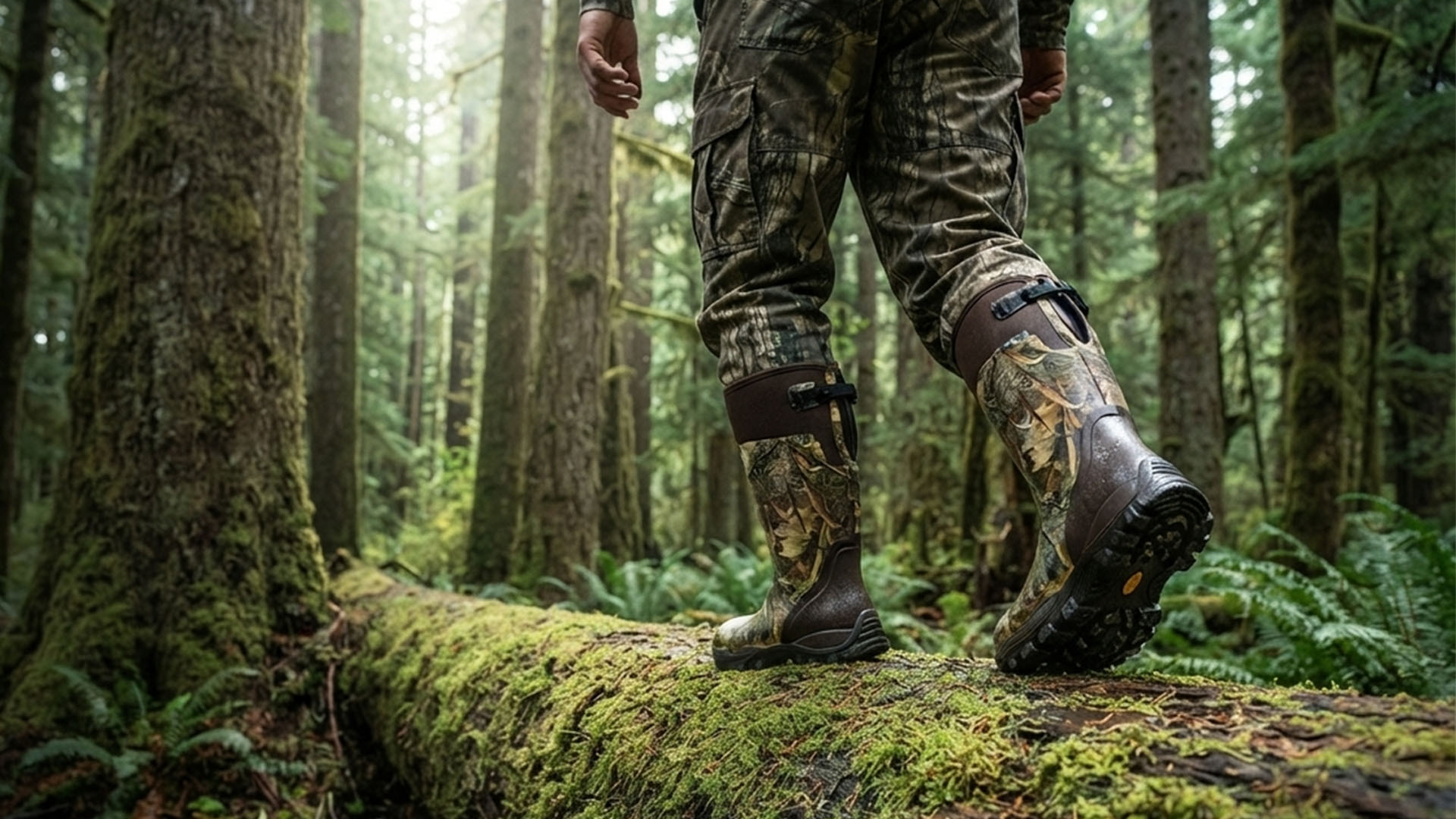
Hunters covering these conditions may benefit from waterproof hunting boots for muddy wetland bird hunting that provide secure heel retention, dependable traction, and enough flexibility for hours of active walking.
Boot choice depends on expected depth.
Tall rubber boots may work well in shallow water and muddy pasture.
Supportive waterproof lace-up boots may be better when the route includes uneven banks, long distances, or drier upland sections.
Avoid Boots That Are Too Loose
Mud creates suction.
Loose footwear allows the heel to lift while the boot remains stuck.
This increases fatigue and may cause blisters or falls.
Test boots in realistic conditions before the season.
Wear the same sock system planned for the hunt.
Do not rely on extra-thick socks to fix a poor fit.
Deep Mud Requires Shorter Steps
Long strides make it harder to break suction.
Move slowly.
Place the foot flat.
Twist gently before lifting when necessary.
Avoid stepping into dark holes without testing depth.
A walking stick can help evaluate questionable ground.
Do not rush toward a flushed bird and forget about the terrain.
Wet Grass Can Soak Pants Before Boots
Even when water remains below ankle height, tall wet vegetation can saturate clothing.
Water runs down the legs and into footwear.
Waterproof lower-body protection or gaiters may help, depending on temperature and habitat.
Avoid heavy clothing during warm hunts.
Breathability matters because active walking creates heat and sweat.
Carry Dry Socks
A spare pair of socks stored in a sealed bag can improve a long hunt.
Change them when moisture, friction, or cold becomes noticeable.
Inspect the feet for hot spots.
Treat small problems before they become blisters.
Wetland hunts involve continuous walking, making foot care especially important.
Clay and Gumbo Mud Can Pack Into Outsoles
Some agricultural soils stick aggressively to footwear.
Tread fills with mud.
Boots become heavier.
Traction declines.
Walk on short grass or firmer soil when possible.
Clean outsole channels during breaks.
Use extra care on levees, banks, and field roads.
An aggressive tread pattern cannot work when it is completely packed with clay.
Drainage Channels Can Be Deeper Than They Appear
A narrow ditch may be hidden by grass.
Water can conceal steep banks and soft bottom.
Do not step across until the depth and width are understood.
Use bridges, culverts, and stable crossings when permitted.
A snipe hunter looking toward the next patch of cover can easily miss a channel directly ahead.
Irrigation Systems Require Respect
Irrigated fields may create outstanding bird habitat.
They are also working agricultural systems.
Never:
- Move irrigation pipe
- Block water
- Drive across saturated ground
- Open gates without instruction
- Damage pumps
- Park near equipment
- Interfere with workers
Ask the landowner where to park, walk, and hunt.
Responsible behavior protects future access.
Rice Fields Can Provide Seasonal Habitat
In some regions, harvested or flooded rice ground attracts snipe and other migratory birds.
The value depends on:
- Water depth
- Harvest timing
- Field management
- Vegetation
- Invertebrate availability
- Hunting pressure
Field roads, shallow corners, drainage edges, and partially flooded sections may hold birds.
Private ownership and agricultural operations require explicit permission.
Waterfowl hunting rules and non-toxic ammunition requirements may also apply depending on location and regulation.
Drawdown Wetlands Can Concentrate Feeding Birds
As managed wetland water levels fall, exposed mud can create excellent feeding habitat.
Snipe may gather around newly exposed edges.
These areas change quickly.
A productive mudflat today may dry and crack within a week.
Monitor water management schedules where public information is available.
Do not enter closed management zones or interfere with water-control structures.
Pond Margins Can Produce Small Pockets of Birds
Farm ponds and shallow reservoirs can hold snipe along exposed edges.
Focus on sections containing:
- Soft mud
- Short vegetation
- Shallow water
- Limited disturbance
- Nearby wet meadow
A steep rocky shoreline is usually less attractive than a gradual muddy bank.
Walk the margin carefully.
Avoid shooting across open water when the background or opposite shore is unsafe.
Public Wetlands May Receive Uneven Pressure
Snipe hunters often share public areas with:
- Duck hunters
- Rail hunters
- Dove hunters
- Anglers
- Birdwatchers
- Dog trainers
- Wildlife workers
The most obvious parking area may lead to the most heavily pressured field.
Small wet meadows away from boat ramps and large marshes may hold less disturbed birds.
Prepare several options.
Respect other users.
Know all overlapping seasons.
Duck Pressure Can Move Snipe
Gunfire and human activity around major water can push snipe toward:
- Small wet fields
- Higher marsh edges
- Back pastures
- Drainage ditches
- Quiet pond margins
A location with little preseason activity may become productive after waterfowl season begins.
Scout secondary habitat rather than assuming birds left the entire area.
Avoid Shooting Toward Roads, Buildings, or Livestock
Open wet fields can create a false sense of safety.
Vegetation may hide:
- Farm roads
- Houses
- Workers
- Cattle
- Other hunters
- Vehicles
- Equipment
Determine safe shooting directions before beginning.
Do not fire at low birds when the background is uncertain.
Snipe flight is unpredictable, and hunters must maintain muzzle control through every turn.
Small Shot and Open Chokes Are Common—but Regulations Come First
Snipe are small, fast birds often encountered at relatively close range.
Hunters commonly prefer equipment suited to quick upland-style shooting.
However, ammunition rules can vary by location.
Some wetlands require non-toxic shot.
Federal and state migratory-bird regulations apply.
Verify current rules before selecting ammunition or entering the field.
Do not rely on equipment advice from another state or an older season.
Practice Smooth Mounting
Snipe shooting rewards a clean, repeatable gun mount.
Practice:
- Starting from a safe field-ready position
- Mounting without looking at the barrel
- Following a small crossing target
- Maintaining balance on uneven ground
- Stopping the swing safely
Dry practice should always use an unloaded firearm in a safe setting.
Live practice should occur only at an appropriate shooting facility.
Keep Ammunition Dry
Wet fields expose ammunition to mud, water, and humidity.
Use secure storage.
Do not place shells loose in open pockets where they collect debris.
Inspect wet or damaged ammunition.
Follow manufacturer guidance.
Keep mud and water away from the shotgun chamber and barrel.
Check the Barrel After a Fall
Slips happen in wet habitat.
If the muzzle contacts mud, grass, or water, stop immediately.
Unload the firearm safely.
Inspect for obstruction.
Never fire a shotgun with a potentially blocked barrel.
A missed bird is insignificant compared with the danger of firing through an obstruction.
Retrieval Can Be Harder Than the Shot
A downed snipe can disappear in short grass, mud, or shallow water.
Mark the fall immediately.
Choose a visual landmark.
Walk directly to the location without taking your eyes from it.
A dog can help, but hunters without dogs should search methodically.
Look beneath grass clumps and along small water channels.
Make every reasonable effort to recover downed birds.
Do Not Assume the Bird Fell Where It Disappeared
A snipe may continue moving after entering low cover.
Wind and perspective can make distance difficult to judge.
Begin at the last clear visual point and expand the search gradually.
Avoid wandering randomly.
Mark the starting location with a hat or other visible item.
Search in a controlled pattern.
Heat Can Affect Early-Season Hunts
Some snipe seasons overlap with warm weather.
Open wetlands provide limited shade.
Hunters and dogs can overheat.
Carry water.
Take breaks.
Use lightweight clothing and sun protection.
Know the signs of heat illness.
End the hunt when conditions become unsafe.
Cold Rain Can Become Dangerous Too
Later-season wetland hunts may involve wind, rain, and falling temperatures.
Continuous walking generates warmth, but soaked clothing can create rapid cooling during breaks.
Use a layering system.
Carry dry insulation in waterproof storage.
Do not remain in an exposed wet field when shivering, confusion, or loss of coordination develops.
Lightning Is a Serious Open-Field Hazard
Wet meadows and agricultural flats offer little shelter.
If thunderstorms approach, leave the field.
Avoid:
- Fence lines
- Isolated trees
- Open high ground
- Irrigation equipment
- Metal structures
Do not wait for the storm to arrive overhead.
Monitor forecasts and visible conditions.
Regulations Must Be Verified Every Season
Wilson’s snipe are migratory game birds.
Hunters must verify current federal and state regulations, including applicable:
- Season dates
- Daily bag limits
- Possession limits
- Shooting hours
- Licenses
- Federal or state stamps
- Harvest-information requirements
- Ammunition restrictions
- Approved hunting methods
Snipe can be confused with protected shorebirds, making species identification especially important.
Use official wildlife-agency resources before hunting.
Common Snipe-Hunting Mistakes
Hunting the Deepest Water
Snipe often prefer saturated soil and shallow edges rather than deep water.
Walking the Entire Field at One Speed
Birds usually concentrate in specific moisture zones.
Shooting Immediately at the Flush
Allow time for positive identification and a safe shot.
Confusing Snipe With Other Shorebirds
Study identification before the season.
Ignoring Small Wet Pastures
A small muddy field can hold multiple birds during migration.
Wearing Loose Boots
Mud suction makes poor fit exhausting and unsafe.
Failing to Mark the Fall
Small birds disappear quickly in wet vegetation.
Hunting One Location Only Once
Migration and water levels can change bird numbers overnight.
Entering Agricultural Land Without Permission
Wet habitat does not equal public access.
Frequently Asked Questions
Is snipe hunting a real type of hunting?
Yes. Wilson’s snipe are legal migratory game birds where seasons are established, subject to current federal and state regulations.
What habitat is best for Wilson’s snipe?
Look for wet meadows, muddy pastures, marsh edges, shallow wetlands, pond margins, irrigated fields, and other areas with soft soil and short cover.
Do you need a dog to hunt snipe?
No. Hunters can walk productive habitat in a controlled pattern. A trained pointing or flushing dog can help locate birds in scattered cover.
Why are snipe difficult to shoot?
They often flush close and fly rapidly with sudden changes in direction, making smooth gun mounting and disciplined shot selection important.
How do you identify an active snipe field?
Look for saturated soil, short vegetation, shallow water, probing holes, repeated flushes, and habitat that provides feeding conditions without deep flooding.
What boots are best for snipe hunting?
Choose waterproof footwear based on mud depth, water, walking distance, and terrain. Secure fit and reliable traction are especially important.
Final Thoughts
The best snipe field often looks empty.
It may be a muddy pasture.
A shallow marsh edge.
A wet meadow beside a farm pond.
A narrow strip of saturated ground between dry grass and deeper water.
The birds are small.
The cover is subtle.
The flight is fast.
Success begins with understanding the soil beneath your boots.
Find soft ground.
Search the moisture transitions.
Walk slowly.
Mark every flush.
Study the habitat where birds were actually feeding.
Identify the bird before raising the shotgun.
Respect private land, livestock, wetland rules, and migratory-bird regulations.
Snipe hunting does not require a huge marsh, a boat full of decoys, or miles of open water.
Sometimes the entire hunt happens in one overlooked muddy field that every other hunter drove past.
