
The buck falls less than one hundred yards from the stand.
For a few minutes, the recovery feels simple.
Then you walk to the deer and look back toward the truck.
Between you and the parking area are a steep creek bank, two muddy logging roads, a thick patch of young timber, and nearly a mile of uneven ground.
The temperature is rising.
Daylight is disappearing.
Your hunting partner is forty minutes away, and the deer is much heavier than it looked through the scope.
This is the moment many hunters realize the hardest part of the hunt may be starting rather than ending.
Recovering a deer requires more than enough strength to pull an animal through the woods. A safe and efficient pack-out depends on planning, equipment, terrain, weather, access, physical condition, and knowing when to ask for help.
Hunters spend hours studying bedding areas, food sources, wind direction, and stand placement. The recovery route deserves the same attention.
A successful hunt should end with the deer properly recovered and every hunter returning safely.
Plan the Recovery Before the Hunt
The best time to plan a deer drag is before an animal is on the ground.
Study the property and identify likely recovery routes.
Look for:
- Logging roads
- Farm lanes
- Trails
- Creek crossings
- Gates
- Gradual slopes
- Open timber
- Legal vehicle-access points
- Property boundaries
- Areas that become muddy after rain
A direct line to the truck is not always the easiest route.
Dragging a deer eight hundred yards along a relatively level logging road may require less effort than pulling it four hundred yards through brush and steep terrain.
Mark several possible routes on your mapping application.
Weather, hunting location, and where the deer falls will determine which one works best.
Think About Recovery When Choosing a Stand
Hunters naturally select stands based on deer movement.
That should remain the priority, but access and recovery also matter.
A productive stand located below a steep ridge may create a difficult drag. A setup across a creek may become hard to reach after heavy rain. A public-land location near a private boundary may limit recovery options.
Before hunting a location, ask:
- How will I reach a deer that falls below the stand?
- Can I cross the creek while carrying equipment?
- Is there a trail nearby?
- Can another hunter reach me?
- Is the route safe after dark?
- Will rain make the exit significantly harder?
- Does the recovery route cross restricted property?
These questions do not mean hunters should avoid difficult locations.
They help prevent surprises.
Confirm the Deer Is Ready to Recover
Do not begin dragging immediately after reaching the animal.
First, confirm that the deer is dead from a safe position.
Approach carefully and remain alert.
Once recovery is confirmed, follow all applicable tagging and reporting requirements before moving the animal.
Regulations vary by state, season, species, and hunting method.
Hunters should understand the current rules before entering the field.
Mark the Recovery Location
Save the location on your phone or GPS device.
This is useful even when you know the property well.
Darkness, fog, snow, and thick vegetation can make a familiar area confusing.
A marked location also helps hunting partners find you.
Record:
- Deer location
- Stand location
- Vehicle location
- Nearest trail
- Creek crossings
- Property boundaries
- Planned recovery route
If you leave to retrieve equipment, the saved point prevents wasted time when you return.
Slow Down Before Making a Plan
Excitement encourages hunters to begin pulling immediately.
Take a few minutes.
Drink water.
Remove unnecessary clothing.
Evaluate the terrain.
Check the weather.
Contact a hunting partner if help is available.
A short planning break may save significant effort.
Look at the route in sections rather than treating the entire recovery as one continuous drag.
The first hundred yards may require pulling through brush. The next section may follow a logging road. A steep bank may require rope or an alternate path.
Solve each problem before beginning.
Dragging, Carting, or Packing: Choose the Right Method
There is no single best way to recover every deer.
The correct method depends on terrain, regulations, equipment, animal size, distance, and hunter ability.
Common options include:
- Direct dragging
- Dragging with a harness or rope
- Using a deer sled
- Using a game cart
- Using a pack system where legal and appropriate
- Carrying separated meat according to local regulations
- Using permitted vehicle access
- Requesting help from other hunters
Each method has advantages and limitations.
A wheeled cart may work extremely well on logging roads but poorly in thick brush.
A plastic sled may move easily over snow but collect friction on rocks and dry ground.
A direct drag may work for a short distance but become exhausting over a mile.
Match the method to the route.
Why a Drag Harness Helps
Pulling a deer by the antlers or legs places the hunter in an inefficient position.
A drag harness distributes the load across the shoulders, chest, or waist, depending on its design.
This allows the hunter to walk facing forward and use larger muscle groups.
A simple rope can work, but it should be secured carefully.
Avoid creating a setup that tightens dangerously around the body or interferes with balance.
Keep hands available for stability when crossing uneven ground.
Test recovery equipment before hunting season.
Opening day should not be the first time you try to understand how the harness attaches.
Secure the Deer Before Moving
Loose legs catch on brush, roots, rocks, and saplings.
Securing the front legs and positioning the head can create a smoother profile.
The exact method depends on the equipment and whether the deer has antlers.
Avoid attachment points that can damage edible meat or become loose during the drag.
Check the setup regularly.
A rope that shifts can create unnecessary friction or allow the deer to become caught.
Drag With the Hair Direction
Dragging a deer headfirst generally allows the hair to lie in its natural direction.
Dragging in the opposite direction can create additional resistance as the hair catches against the ground.
A headfirst position also helps the shoulders move over obstacles.
Terrain and equipment may require adjustments, but orientation can make a noticeable difference during long recoveries.
Use Existing Trails Whenever Possible
A longer trail can be easier than a shorter route through rough cover.
Trails reduce contact with:
- Briars
- Fallen trees
- Thick saplings
- Rocks
- Ditches
- Uneven vegetation
Study the map before pulling the deer toward the truck.
A nearby logging road may not be visible from the recovery location.
Walk ahead briefly if necessary and confirm the connection before committing to the route.
Avoid dragging across active bedding areas, food plots, or sensitive hunting locations when another route is available.
Reducing disturbance protects future hunts.
Steep Terrain Requires a Different Strategy
Dragging downhill may appear easy.
It can become dangerous when the animal begins sliding faster than the hunter.
Do not position yourself directly below a heavy deer on a steep slope.
Maintain control with a rope.
Move diagonally across the slope when that creates safer footing.
Watch for rocks, loose soil, logs, and sudden drop-offs.
Dragging uphill requires steady pacing.
Use shorter sections.
Rest frequently.
Do not continue until exhaustion causes poor balance or careless decisions.
A second person or mechanical advantage can make steep recoveries significantly safer.
Creek Crossings Need Extra Planning
A shallow creek during the morning may become deeper after rain.
Banks can be muddy and unstable.
Before pulling the deer into the crossing, inspect:
- Water depth
- Current
- Bottom condition
- Bank angle
- Exit point
- Hidden holes
- Ice
- Logs and debris
Do not enter moving or deep water simply because it creates the shortest recovery route.
Find another crossing when conditions are unsafe.
If the crossing is manageable, secure the animal so it cannot drift away or pull the hunter off balance.
Protect electronics, keys, and emergency equipment before approaching the water.
Mud Increases the Work Quickly
Mud creates suction around boots and increases friction beneath the deer.
It can turn a moderate drag into an exhausting recovery.
Use firm ground whenever possible.
Look for:
- Raised roadbeds
- Gravel
- Leaf-covered edges
- Grass
- Roots
- Higher terrain
Avoid the deepest ruts.
When the deer becomes stuck, do not pull harder without checking the obstruction.
A leg, antler, or shoulder may be caught.
Free the animal and reposition it before continuing.
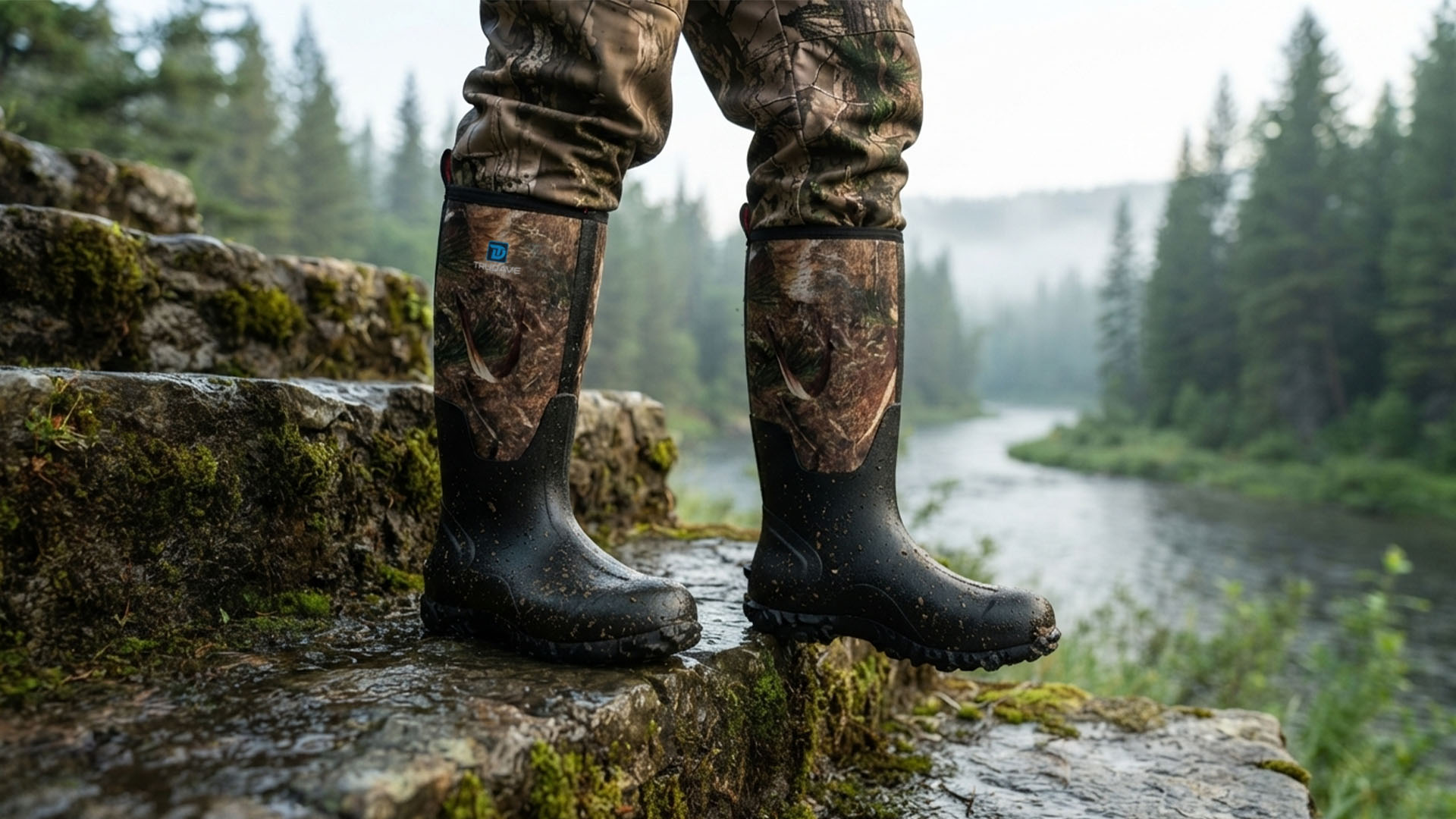
Hunters making recoveries across saturated logging roads, wet leaves, creeks, and muddy public land may benefit from waterproof hunting boots for long pack-outs through wet terrain that provide secure heel retention and reliable traction.
Good footwear does not make the deer lighter.
It helps the hunter remain stable and continue working without soaked socks or repeated slipping.
Footwear Fit Becomes Critical During a Pack-Out
A recovery places different demands on footwear than the walk to the stand.
The hunter is tired.
The load is heavier.
Steps become shorter and less controlled.
Feet may swell.
Loose boots increase heel movement.
Tight boots create pressure during descents.
Before the season, test hunting footwear while carrying weight and walking uneven terrain.
Pay attention to:
- Heel retention
- Downhill toe room
- Ankle stability
- Mud traction
- Wet-rock performance
- Sock moisture
- Blister development
A small hot spot during the hunt can become a serious blister during a long recovery.
Remove Unnecessary Clothing Before Pulling
Hunters often begin a recovery while wearing clothing selected for sitting still.
Heavy jackets, insulated bibs, and multiple layers can cause rapid overheating during physical work.
Remove layers before starting.
Store them in the pack.
Avoid sweating heavily, especially during cold weather.
Once the hunter stops moving, wet clothing can create a serious loss of warmth.
Adjust layers throughout the recovery.
Hydration Matters in Cold Weather Too
Cold temperatures reduce the feeling of thirst.
The physical work of dragging a deer still requires water.
Drink before starting.
Carry enough for the return.
Take regular breaks.
Fatigue, dizziness, headache, and poor decision-making may be signs that the hunter needs rest, water, or food.
Do not wait until exhaustion becomes severe.
Eat Before the Hardest Section
A successful recovery may take several hours.
Small, calorie-dense foods provide useful energy.
Carry snacks that remain easy to eat in cold or wet conditions.
Examples include:
- Trail mix
- Jerky
- Nuts
- Energy bars
- Dried fruit
- Sandwiches
Eat before beginning the steepest climb rather than waiting until energy is completely depleted.
Break the Recovery Into Short Sections
Looking at a distant ridge or parking area can make the task feel overwhelming.
Choose a closer goal.
Drag to the next tree.
The next bend.
The next trail intersection.
Then rest.
Short, controlled sections reduce the temptation to pull until technique and balance deteriorate.
Use planned rest intervals instead of waiting until you physically cannot continue.
Rest Without Losing Control
Choose stable ground for breaks.
Do not leave the deer on a slope where it can slide.
Secure the rope.
Set the firearm or bow in a safe location.
Avoid sitting directly on wet ground during cold weather.
Use the break to inspect equipment, check the map, and adjust the route.
A five-minute rest can prevent a much longer delay caused by injury or equipment failure.
Keep Hunting Equipment Organized
A recovery becomes harder when the hunter is carrying loose equipment.
Secure:
- Firearm or bow
- Backpack
- Jacket
- Optics
- Climbing equipment
- Seat cushions
- Calls
- Tree-stand accessories
A sling or pack system may free the hands.
Make sure no equipment interferes with walking or the drag rope.
Do not attach so much equipment to the deer that the load becomes difficult to control.
Unload Firearms Before Difficult Recovery Work
Handling a heavy animal through mud, water, steep ground, or thick cover requires full attention.
Follow safe firearm practices throughout the recovery.
When appropriate, unload the firearm before beginning difficult physical work.
Keep the muzzle pointed safely.
Prevent mud, snow, or debris from entering the barrel.
If the firearm contacts the ground or water, inspect it carefully before future use.
Darkness Changes the Recovery
A familiar property looks different after sunset.
Trails become harder to identify.
Creek banks become less visible.
Weather conditions may be harder to evaluate.
Carry:
- A dependable headlamp
- A second light
- Spare batteries
- A charged phone
- Offline maps
- Reflective markers where permitted
Do not rely entirely on one light source.
Cold weather can reduce battery life.
Slow down after dark, even when the truck appears close.
Mark Difficult Intersections
A logging-road system may contain several similar intersections.
Mark important turns on your mapping application.
Temporary reflective markers may be useful where legal and removed afterward.
Avoid making unnecessary vegetation changes.
Accurate navigation reduces wasted distance, which matters when pulling a heavy animal.
Snow Can Help and Hurt
A deer sled can move extremely well over packed snow.
Deep, loose snow creates more resistance for the hunter.
Ice may improve sliding but reduce footing.
Evaluate whether the route is safer and more efficient with a sled.
Watch for hidden rocks, logs, and frozen creeks beneath the snow.
Snow also covers trails and property markers.
Continue checking the map.
Warm Weather Makes Time More Important
In warm conditions, meat care becomes a priority.
Hunters should understand appropriate field-dressing, cooling, and transport practices before the season.
The recovery method may need to change when temperatures are high.
A long whole-animal drag may not be the best option where legal alternatives exist.
Prepare coolers, ice, game bags, and transportation before the hunt.
Do not begin researching meat care after the animal is already down.
Cold Weather Does Not Eliminate Meat-Care Concerns
Cold air can help cool a carcass, but hunters should not assume every winter condition is safe.
Direct sunlight, insulated hide, internal heat, and changing temperatures all matter.
Handle the animal properly.
Keep it clean.
Avoid unnecessary contamination during the drag.
Follow accepted game-care practices appropriate for local conditions.
Keep the Deer Out of Mud and Standing Water
Dragging through mud, manure, standing water, or contaminated areas can make later processing more difficult.
Choose a cleaner route when possible.
A sled can help protect the animal.
If dragging directly, avoid unnecessary travel through livestock areas, drainage water, and roadside debris.
Clean handling begins in the field.
Know When Quartering or Packing Is More Practical
On remote or extremely rough terrain, dragging a whole deer may be unrealistic.
Where legal, hunters may process the animal in the field and carry the meat using game bags and a suitable pack.
This requires:
- Proper equipment
- Knowledge of anatomy
- Clean technique
- Understanding of local regulations
- A plan for multiple trips
- Meat-cooling preparation
Learn and practice the necessary skills before the season.
Do not attempt an unfamiliar method under pressure without preparation.
Use a Game Cart on the Right Terrain
A game cart can reduce physical effort on:
- Logging roads
- Farm lanes
- Wide trails
- Open fields
- Relatively firm ground
It can become difficult in:
- Thick brush
- Deep mud
- Sidehills
- Rocky drainages
- Fallen timber
- Narrow creek crossings
Check wheel width, frame strength, attachment straps, and load capacity before the season.
A cart stored in the truck is useful only when the recovery route allows it to reach the deer.
Deer Sleds Work Beyond Snow
Plastic recovery sleds can move effectively across:
- Wet grass
- Leaves
- Light mud
- Agricultural ground
- Snow
They also protect the animal from some ground contamination.
Rocks, roots, and dry soil create friction and damage.
Secure the deer inside the sled so the load does not shift on slopes.
Test the pull system before relying on it.
E-Bikes and Vehicles Require Legal Access
Motorized recovery equipment can be useful where permitted.
Rules vary across public land agencies, private property, wildlife areas, and seasons.
A trail that allows foot travel may prohibit vehicles or e-bikes.
Know current access rules in advance.
Do not assume game recovery creates an exception.
Planning around illegal access can leave a hunter with no workable recovery method.
Ask for Help Before You Are Exhausted
Hunters sometimes view asking for help as weakness.
It is usually good judgment.
A second person can:
- Share the pulling load
- Control the deer on slopes
- Carry equipment
- Navigate
- Provide emergency assistance
- Help cross obstacles safely
Contact a partner before fatigue becomes severe.
Provide a clear location.
Share the planned route.
Two hunters arriving with energy are more useful than one arriving after the first hunter has already become exhausted.
Communicate Before Splitting Up
One hunter may return for a cart while another remains with the deer.
Agree on:
- Meeting location
- Route
- Expected return time
- Communication method
- What to do if plans change
Poor communication can create unnecessary searches or safety concerns.
Do not assume both hunters understand the same route.
Leave a Recovery Plan With Someone
Solo hunters should tell someone:
- Property location
- Parking area
- Planned stand
- Expected return time
- Vehicle description
- Emergency contact plan
Update that person after a successful shot if the recovery will take longer than expected.
A routine hunt can become an overnight situation when tracking or pack-out conditions are difficult.
Know Your Physical Limits
A deer is not worth a heart attack, fall, or serious injury.
Age, conditioning, health, terrain, weather, and animal size all affect recovery ability.
Stop when symptoms become concerning.
Do not ignore chest pain, severe dizziness, confusion, unusual shortness of breath, or loss of coordination.
Seek emergency help when necessary.
Preparing physically before the season makes recoveries easier, but fitness does not eliminate risk.
Train for the Pack-Out
Walking to a stand does not fully prepare the body for dragging a deer.
Preseason conditioning can include:
- Hiking hills
- Carrying a weighted pack
- Pulling a training sled
- Strength work
- Balance exercises
- Long walks in hunting footwear
Increase workload gradually.
Training also reveals equipment problems.
A pack that feels comfortable empty may create pressure when loaded.
Practice With Recovery Equipment
Attach the harness.
Load the cart.
Secure a weighted sled.
Walk through uneven ground.
Practice in daylight before the season.
Check:
- Rope length
- Knot security
- Strap comfort
- Cart balance
- Sled control
- Equipment storage
Do not wait until dark, in rain, with a deer on the ground to discover that a buckle does not work.
Protect the Property During Recovery
A successful hunt does not justify damaging the land.
Avoid:
- Cutting unnecessary trails
- Driving where prohibited
- Leaving ropes or markers
- Damaging fences
- Crossing crops without permission
- Littering
- Disturbing livestock
Close gates.
Remove temporary markers.
Respect landowner instructions.
Responsible recovery protects future access.
Public Land Requires Additional Preparation
Public-land hunters may face:
- Longer distances
- Limited vehicle access
- More difficult boundaries
- Competition
- Unfamiliar trails
- Restrictions on equipment
- Limited communication service
Carry a recovery plan into every remote hunt.
Know whether a cart can use the trail.
Understand whether field processing is allowed.
Identify the nearest legal exit.
A successful shot deep on public land can create several hours of work.
Do Not Leave Valuable Meat Because the Drag Is Difficult
The possibility of a hard recovery should influence hunting decisions before the shot.
Hunters must consider whether they can retrieve the animal from the location where it stands.
A deer near a dangerous cliff, flooded river, private boundary, or inaccessible ravine may require additional judgment.
Ethical hunting includes preparing to recover and use the animal.
Do not take a shot without considering what happens afterward.
Common Deer Recovery Mistakes
Planning Only the Hunt In
The exit with an animal may be significantly harder.
Choosing the Shortest Route Automatically
A longer trail can require less effort than direct travel through rough cover.
Pulling Until Completely Exhausted
Use controlled sections and regular breaks.
Wearing Too Many Layers
Physical work creates rapid overheating.
Ignoring Water and Food
Recovery can take several hours.
Carrying Loose Equipment
Secure gear and keep hands available.
Attempting Unsafe Creek Crossings
Find another route when water conditions are dangerous.
Waiting Too Long to Ask for Help
Contact partners before fatigue becomes severe.
Using Equipment Without Practicing
Test harnesses, carts, sleds, and packs before hunting season.
Forgetting About Current Regulations
Access, tagging, transport, and field-processing rules vary.
Frequently Asked Questions
What is the easiest way to drag a deer out of the woods?
The easiest method depends on distance and terrain. A drag harness, sled, game cart, or legal pack-out system may reduce effort compared with pulling directly by the antlers or legs.
Should you drag a deer headfirst?
Dragging headfirst generally follows the natural direction of the hair and allows the shoulders to move over obstacles more easily.
Is a game cart worth carrying?
A game cart can be very useful on logging roads, farm lanes, and firm trails. It may perform poorly in deep mud, brush, rocks, and steep sidehills.
How do you drag a deer uphill?
Use a secure harness or rope, take short controlled sections, rest frequently, and ask for help when possible. Avoid pulling until fatigue affects balance.
What should you carry for deer recovery?
Useful equipment can include a drag harness, rope, knife, gloves, headlamp, navigation, water, food, first-aid supplies, game bags where appropriate, and equipment matched to the expected terrain.
Can you use an ATV to recover a deer?
Only where vehicle access is legally permitted and authorized by the property owner or managing agency. Rules vary significantly by location.
Final Thoughts
A deer recovery should never be an afterthought.
The work begins with planning.
Study access routes.
Mark logging roads.
Identify creek crossings.
Understand property boundaries.
Carry equipment suited to the terrain.
Manage clothing, water, food, and energy.
Break the recovery into controlled sections.
Ask for help before exhaustion creates danger.
And consider the pack-out before taking the shot.
The shortest route is not always the best route.
The strongest hunter is not always the safest hunter.
A successful recovery belongs to the hunter who combines preparation, patience, equipment, and good judgment from the first pull to the final step at the truck.
