
A mature hardwood ridge can look like perfect grouse country.
The trees are tall. Visibility is good. Walking is easy, and the open forest floor allows a hunter to cover ground without fighting brush every ten yards.
It is also often empty.
Meanwhile, the abandoned logging cut below the ridge is a wall of young aspen, blackberry canes, saplings, fallen branches, and waist-high vegetation. Walking through it is slow. Visibility is measured in feet instead of yards, and every step seems designed to catch a pant leg or slap a branch across your face.
That is where the grouse flushes.
Ruffed grouse do not choose habitat because hunters enjoy walking through it. They choose habitat that provides food, protection from predators, thermal cover, escape routes, and the dense stem structure they need throughout the year.
For hunters accustomed to searching beautiful mature timber, this can require a complete change in perspective.
The best grouse cover is often the cover you would rather walk around.
Why Mature Forests Often Hold Fewer Grouse
Mature forests are not useless to ruffed grouse.
Large trees can provide mast, roosting sites, and seasonal food. Older timber may also connect more productive feeding and escape cover.
The problem is usually what mature forests lack near ground level.
An open understory gives grouse fewer places to hide from hawks, owls, foxes, coyotes, bobcats, and other predators. It may also provide limited browse and fewer insects for young birds.
Young forests create a different environment.
Dense stems break up visibility. Low vegetation provides food. Logging debris creates escape cover, and multiple habitat types can exist within a relatively small area.
Hunters should stop evaluating grouse cover based only on the size and beauty of the trees.
What happens between ground level and head height is often more important.
Look for Young Forests, Not Just “Thick Woods”
Not all thick cover is equally useful.
A solid wall of one plant species may offer concealment but limited food. Productive grouse habitat often combines dense structure with nearby feeding opportunities.
Look for young forests containing a mixture of:
- Aspen
- Birch
- Alder
- Young maple
- Hawthorn
- Dogwood
- Blackberry
- Raspberry
- Willow
- Regenerating hardwoods
- Evergreen pockets
The exact plant community depends on the region.
The common feature is a high density of relatively young stems close to the ground.
This creates the protected travel and feeding environment grouse prefer.
Aspen Deserves Special Attention
Across much of the northern United States, aspen is strongly associated with ruffed grouse habitat.
Young aspen stands provide dense stem cover. Buds and catkins become important seasonal foods, and different stand ages can support grouse throughout the year.
However, hunters should not assume every aspen stand holds birds.
Pay attention to:
- Stand age
- Nearby conifer cover
- Ground vegetation
- Food diversity
- Edge habitat
- Hunting pressure
- Recent grouse sign
A young aspen cut beside older timber, alder, and evergreen cover may be more productive than a large, uniform stand with limited habitat diversity.
Edges Create Opportunities
Ruffed grouse commonly use transitions between habitat types.
These edges provide access to several resources without requiring long travel through exposed ground.
Productive transitions may include:
- Young cuts beside mature timber
- Alder beside an old logging road
- Aspen meeting evergreen cover
- Brushy creek bottoms below hardwood ridges
- Abandoned fields growing back into forest
- Clear-cuts beside older regeneration
- Wetland edges beside dry ground
When entering a large piece of cover, begin by hunting the transitions.
A grouse may remain only a few yards inside the thick vegetation while feeding near the edge.
Old Logging Roads Are More Than Walking Trails
Logging roads give hunters easier access through difficult cover.
They also create habitat edges.
Sunlight reaches the road margins, encouraging low vegetation, berries, insects, and young growth. Grouse may feed along these openings before moving back into thicker security cover.
Walk slowly.
Pay attention to:
- Brushy road corners
- Overgrown skid trails
- Drainage crossings
- Small openings
- Young cuts entering the road
- Sections where evergreen cover meets hardwood regeneration
Do not stare only down the center of the road.
Most grouse will flush from the cover beside it.
Abandoned Skid Trails Can Be Better Than Main Roads
Main logging roads often receive hunters, vehicles, and recreational traffic.
Old skid trails may receive less disturbance.
These narrow routes penetrate young forest cover and frequently connect feeding, roosting, and escape habitat.
A skid trail that has partially grown over may provide the ideal balance.
It is open enough for walking but thick enough to feel secure to grouse.
Study satellite imagery and timber-management maps when available. Then verify whether the trail still exists on the ground.
Grouse Need More Than One Type of Cover
Ruffed grouse habitat changes with the season.
The cover that holds birds in early fall may become less productive after snow and cold weather arrive.
A quality hunting area often contains several habitat types close together.
These may include:
- Young deciduous growth for feeding and concealment
- Mature trees producing mast
- Evergreen cover for protection from weather
- Dense shrubs
- Creek-bottom vegetation
- Openings containing insects and berries
Habitat diversity allows grouse to meet changing needs without traveling long distances.
A large block of uniform timber may look impressive but provide fewer resources than a smaller, more complicated piece of ground.
Early-Season Grouse Can Be Difficult to See
Early in the season, leaves remain on the trees and shrubs.
Visibility is limited.
A grouse may flush ten yards away and disappear before the hunter clearly identifies the bird.
This makes positioning and firearm safety especially important.
Do not fire at movement.
Identify the bird completely.
Know where hunting partners and dogs are located.
Understand what lies beyond the target.
Dense foliage creates fast opportunities, but it also demands discipline.
Late-Season Cover Becomes More Predictable
After leaf drop, visibility improves.
Some cover that looked completely closed in September becomes easier to hunt.
Grouse may also concentrate around dependable food and weather protection.
Evergreen edges, alder bottoms, young aspen, and sheltered slopes deserve attention.
Snow can reveal tracks and feeding areas.
However, cold weather also increases the need to hunt efficiently.
Do not force birds to spend unnecessary energy during severe winter conditions.
Rain Can Improve Grouse Hunting Conditions
Light rain changes upland cover.
Leaves become quieter.
Logging roads soften.
Human activity often decreases, and scenting conditions may improve for bird dogs.
After rain, grouse may use road edges, sunny openings, and protected cover as conditions improve.
Wet weather can also make the hunt more difficult.
Vegetation soaks clothing. Mud reduces traction, and low branches continually drop water onto hunters and dogs.
The period when steady rain begins to weaken can provide a useful opportunity.
Birds may resume feeding while the woods remain quiet.
Wet Cover Requires Deliberate Access
Ruffed grouse habitat frequently overlaps with wet terrain.
Alders grow along drainages.
Young cuts hold morning dew.
Logging roads collect mud.
Creek bottoms remain saturated after storms.
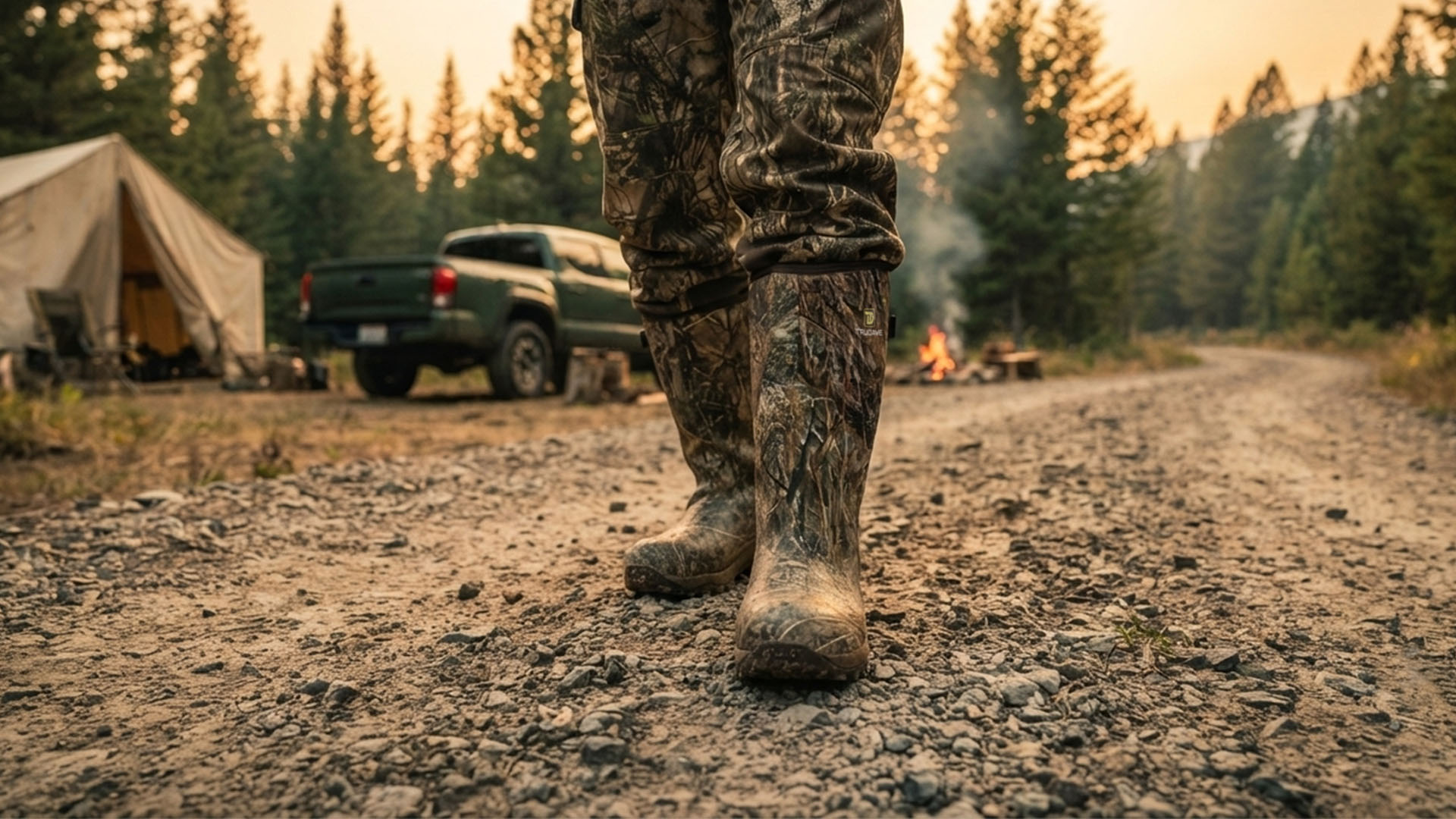
Hunters covering these areas may benefit from waterproof hunting boots for wet upland hunting that provide secure heel retention, dependable traction, and enough flexibility for hours of stop-and-go walking.
The heaviest boot is not automatically the best option.
Grouse hunters are usually mobile. Excessive insulation and weight can cause sweating and fatigue during long walks.
Choose footwear based on temperature, water depth, terrain, and expected mileage.
Walk Slowly Enough to Notice the Cover
Grouse hunting is not a hiking competition.
Moving quickly can push birds ahead or cause hunters to miss productive microhabitat.
Slow down near:
- Thick corners
- Downed trees
- Creek crossings
- Evergreen pockets
- Brush piles
- Young stands beside feeding cover
Take several steps.
Stop.
Listen.
A grouse may move during the pause.
Hunters with dogs should watch for changes in the dog’s speed, posture, and level of concentration.
Pause Before Entering the Best Cover
When you identify a high-probability area, resist the urge to charge directly into it.
Stop outside.
Check the wind.
Confirm partner positions.
Prepare for a close flush.
Examine likely escape routes.
A bird may be sitting only a few yards inside the edge.
Entering carelessly can create a rushed, unsafe opportunity.
Listen for More Than Wingbeats
A grouse flush is loud and sudden.
Other sounds may reveal birds before they fly.
Listen for:
- Movement in dry leaves
- Soft clucking
- Branches shifting
- Drumming during appropriate seasons
- A dog working concentrated scent
- Alarm calls from other birds
Dense cover limits vision.
Hearing becomes more important.
Stop frequently enough for natural forest sounds to return.
Drumming Logs Reveal Long-Term Habitat Use
Male ruffed grouse perform their drumming display from logs, rocks, and other elevated surfaces.
A drumming log may contain droppings, feathers, tracks, or repeated sign.
Finding one confirms grouse use of the area, although activity can vary throughout the year.
Do not focus the entire hunt on one log.
Study the surrounding habitat.
The location may reveal nearby escape cover, feeding routes, and preferred stem density.
Food Changes Throughout the Season
Grouse diets are diverse.
Depending on location and season, they may feed on:
- Berries
- Insects
- Clover
- Leaves
- Buds
- Catkins
- Mast
- Fruits
- Green vegetation
Early-season hunters may find birds near berry-producing shrubs and insect-rich openings.
Later, buds, catkins, mast, and woody browse may become more important.
Current food matters more than what the area produced last month.
Look for fresh feeding sign and grouse droppings.
Clover Roads Can Be Productive Early
Logging roads and forest openings sometimes contain clover and other green plants.
These areas may attract grouse during early fall, especially when insects remain active.
Birds often feed near the opening while staying close to thick cover.
Hunt the road margins carefully during the first hours after sunrise and again later in the day when temperatures become comfortable.
Avoid assuming every green road contains birds.
Fresh sign and adjacent cover determine its value.
Berries Can Concentrate Birds
Blackberries, raspberries, dogwood fruits, and other seasonal foods can create temporary concentrations of grouse.
Food availability may vary significantly from one year to another.
A berry patch that produced birds last season may be empty after poor fruit production.
Scout current conditions.
Check several patches.
Focus on those connected to dense escape cover.
Evergreen Pockets Matter During Bad Weather
Conifers provide protection from wind, rain, and snow.
Small evergreen pockets inside young hardwood cover can be more valuable than large uniform plantations.
Grouse may use the edge where feeding habitat meets thermal cover.
Pay attention to:
- Spruce
- Fir
- Cedar
- Young pine
- Hemlock where present
Hunt the downwind and sun-exposed sides depending on weather conditions.
South-Facing Edges Can Warm First
During cold weather, south-facing slopes and openings receive more sunlight.
These areas may warm earlier and expose food.
Grouse may use sunny cover during late morning or midday.
Look for dense shrubs, young trees, and nearby conifers.
Sunlight alone does not create habitat.
The location still needs food and security.
Creek Bottoms Can Hold Excellent Cover
Creek bottoms often support alder, willow, dogwood, and thick young vegetation.
They also provide moisture and insect life.
The irregular habitat can create excellent grouse cover.
Access requires caution.
Wet rocks, mud, hidden holes, and steep banks can create hazards.
Wind may also behave unpredictably in narrow drainages.
Move slowly and plan how you will hunt both sides without repeatedly crossing the creek.
Snow Helps Reveal Grouse Activity
Fresh snow can show:
- Walking tracks
- Feeding areas
- Roost locations
- Wing marks
- Trails beneath shrubs
Grouse tracks are smaller than turkey tracks and may weave through dense cover.
Use them to identify active habitat rather than following every individual print.
A concentration of tracks near buds, shrubs, and evergreen cover deserves attention.
Snow Roosts Require Careful Interpretation
In deep, soft snow, ruffed grouse may dive beneath the surface to roost.
This provides insulation and protection from weather.
A snow roost may look like a hole or depression, sometimes with wing marks nearby.
Do not assume every opening contains a bird.
Approach carefully and avoid disturbing wintering grouse unnecessarily.
Severe winter conditions already create significant energy demands.
Hunting Pressure Can Make Easy Cover Empty
The most obvious logging roads and young cuts often attract hunters.
Grouse respond to repeated disturbance.
Birds may shift toward:
- Steeper cover
- Wet alder bottoms
- Smaller cuts
- Secondary skid trails
- Cover farther from parking
- Thick patches beside human activity that hunters overlook
Distance helps only when it reduces pressure.
A difficult fifty-yard section of brush may create more security than an easy two-mile trail.
Small Habitat Patches Can Produce Consistently
Hunters often search for large clear-cuts.
A small patch of quality habitat may hold one or two birds regularly.
Look for young forest pockets beside:
- Fields
- Wetlands
- Mature timber
- Logging roads
- Abandoned farms
- Creek systems
These small patches can be hunted efficiently and may receive less pressure.
Mark them for future visits.
Do Not Hunt Every Patch the Same Way
Cover density, wind, visibility, dog handling, and partner positioning should change your approach.
In open young timber, hunters may spread out while maintaining safe spacing.
In extremely dense cover, a narrower formation and slower pace may be safer.
Along a logging road, one hunter may watch the edge while another works nearby cover.
Discuss the plan before entering.
Never improvise shooting lanes after a bird flushes.
Bird Dogs Require Constant Monitoring
Dogs improve grouse hunting by locating scent in cover hunters cannot search efficiently.
They also face hazards.
Watch for:
- Barbed wire
- Porcupines
- Traps where legal trapping occurs
- Sharp logging debris
- Broken glass
- Roads
- Deep water
- Heat stress
- Cold stress
Carry water, basic canine first-aid supplies, and location-tracking equipment where appropriate.
Know the nearest veterinary services before hunting remote ground.
Check Paws After Every Hunt
Young forest cover contains sharp stems, rocks, thorns, and logging debris.
Inspect the dog’s paws for:
- Cuts
- Cracked pads
- Thorns
- Ice buildup
- Abrasions
- Swelling
Small injuries can become serious when ignored.
Also inspect the dog’s eyes, ears, chest, and legs for brush-related injuries.
Protect Your Eyes in Dense Cover
Branches and brush create constant eye hazards.
Hunters should consider appropriate protective glasses, particularly in extremely dense young forest.
Clear or lightly tinted lenses can provide protection while maintaining visibility.
Do not follow a dog or bird into cover so aggressively that you stop watching where you are walking.
Wear Clothing That Can Handle Brush
Lightweight clothing designed only for open terrain may tear quickly in grouse cover.
Durable pants, brush protection, gloves, and appropriate eye protection improve comfort.
Bright hunter orange is especially important in dense vegetation where hunting partners can disappear from view within seconds.
Follow all state clothing requirements.
Carry Less Gear
Heavy packs make pushing through young forest more difficult.
Branches catch straps.
Extra weight increases fatigue.
For a day hunt, focus on essential equipment:
- Water
- Ammunition
- Navigation
- First-aid supplies
- Dog equipment
- Weather protection
- Food
- Basic survival gear
Keep equipment secured close to the body.
Loose items create noise and become caught in vegetation.
Mark Productive Cover by Habitat Type
Finding one grouse does not guarantee the same bird will remain there throughout the season.
Record why the location was productive.
Was it:
- Young aspen?
- An alder drainage?
- A berry patch?
- A conifer edge?
- A logging-road corner?
- A clear-cut of a certain age?
This information helps identify similar habitat elsewhere.
Successful grouse hunters build a mental library of productive cover types.
Return at Different Times
A cover may be empty in the morning and productive later.
Food, temperature, sunlight, weather, and hunting pressure influence bird location.
Revisit good habitat under different conditions.
One unsuccessful walk does not prove the cover lacks grouse.
Look for sign before removing it from your list.
Common Ruffed Grouse Hunting Mistakes
Hunting Only Mature Timber
Young, dense forest often provides better security and food.
Walking Too Fast
Slow movement and frequent pauses reveal more birds.
Ignoring Habitat Edges
Transitions between cover types often concentrate activity.
Focusing Only on Large Clear-Cuts
Small habitat patches can hold birds consistently.
Carrying Too Much Equipment
Heavy, loose gear makes dense-cover hunting harder.
Failing to Watch the Dog
Changes in dog behavior may provide the first warning of a nearby bird.
Using Footwear Built Only for Stationary Hunting
Mobile grouse hunters need fit, traction, waterproof protection, and manageable weight.
Shooting at Unidentified Movement
Always identify the bird and confirm a safe background.
Frequently Asked Questions
What type of cover do ruffed grouse prefer?
Ruffed grouse commonly use young forests with dense stem growth, nearby food, escape cover, and habitat diversity. Aspen, alder, young hardwood cuts, brushy edges, and evergreen pockets can all be productive.
Are mature hardwood forests good for grouse hunting?
They can provide mast and seasonal habitat, but open mature forests often lack the dense understory grouse use for security. Focus on nearby young cover and transitions.
What time of day is best for ruffed grouse hunting?
Grouse may be active throughout the day. Early morning and late afternoon can be productive near feeding areas, while weather and temperature influence movement.
Is grouse hunting good after rain?
Light rain can quiet the forest floor and may improve scenting conditions for dogs. Hunters should focus on protected cover as conditions begin improving.
Are logging roads good places to find grouse?
Yes. Overgrown logging roads and skid trails create edges, feeding opportunities, and access through young forest cover.
What boots are best for grouse hunting?
Choose boots based on temperature, terrain, water exposure, and walking distance. Mobile hunters often prioritize waterproof protection, secure fit, traction, and moderate weight.
Final Thoughts
The best ruffed grouse habitat rarely looks comfortable to hunt.
It is young.
Dense.
Wet.
Brushy.
Complicated.
That structure protects grouse from predators and places food close to security cover.
Stop judging the woods by how easily you can walk through them.
Look for young forest growth.
Aspen.
Alder.
Regenerating cuts.
Old skid trails.
Evergreen pockets.
Creek-bottom brush.
Habitat edges.
Then slow down.
Watch the dog.
Listen.
Pause before entering the best cover.
And remain ready for a bird that may explode from only a few yards away.
Pretty woods make pleasant walks.
The cover that scratches your hands, soaks your pants, and forces you to fight for every step is often the cover holding the grouse.
