
Rain begins falling before daylight.
The parking lot is empty.
The truck that usually arrives before you is not there.
Neither is the group that normally hunts the neighboring access road.
The woods are quiet.
No doors closing.
No headlamps moving through the timber.
No hunters walking the ridge.
For the first time in several weekends, you have the area almost to yourself.
Most deer hunters think about rain in one way.
Will the deer move?
That is an important question.
But rain changes something else too.
Hunting pressure.
Bad weather keeps some hunters at home.
Others leave early.
Public land receives less foot traffic.
Private land neighbors may avoid checking stands.
Logging roads remain quieter.
Access routes receive less disturbance.
In heavily hunted areas, the reduction in human activity may be just as important as the direct effect of rain on deer movement.
Understanding both factors can help hunters decide when wet weather is worth hunting.
Do Deer Move in the Rain?
Yes.
Deer still feed, travel, bed, and interact with their environment during rain.
However, the type of rain matters.
Light rain is different from a severe storm.
Steady drizzle is different from heavy rain combined with strong wind.
Temperature changes matter.
Barometric pressure changes may coincide with weather systems.
Seasonal timing matters.
Hunting pressure matters.
There is no simple rule that says rain always increases or decreases deer movement.
Hunters should evaluate the complete situation.
Light Rain Often Creates Huntable Conditions
A light, steady rain can create useful hunting conditions.
Wet leaves reduce noise.
Human scent may behave differently near the ground.
Visibility can remain acceptable.
Deer may continue normal movement.
Hunters can access locations more quietly.
This can be particularly useful when approaching bedding areas or hunting close to known travel routes.
The key is remaining prepared for changing weather.
Light rain can become heavy rain.
Temperatures can fall.
Wind can increase.
Check the forecast throughout the day.
Heavy Rain Can Reduce Visible Movement
Severe weather can change deer activity.
Heavy rain reduces visibility.
Strong wind makes it more difficult for deer to hear approaching danger.
Falling branches and unstable trees create hazards.
During intense storms, deer may seek protected locations.
That does not mean they remain there all day.
Movement can increase when conditions improve.
Hunters who understand weather transitions may be able to position themselves before deer begin moving again.
The Period After Rain Can Be Important
When a long rain ends, deer may return to feeding and travel.
The timing depends on:
- Storm duration
- Temperature
- Wind
- Time of day
- Season
- Local habitat
- Hunting pressure
Do not wait until the sky is completely clear before going hunting.
If the forecast shows improving conditions, consider being in position before the transition.
The best opportunity may occur while other hunters are still driving to the property.
Rain Changes Human Behavior
This is where wet-weather hunting becomes particularly interesting.
Deer live with hunting pressure.
They learn where people walk.
When vehicles arrive.
Which trails receive human scent.
Where stands are located.
When hunters leave.
Weather changes those patterns.
Rain may reduce hunter participation.
A normally crowded property can become quiet.
That change creates opportunity.
Public Land Can Feel Completely Different in Bad Weather
Public land pressure is often predictable.
Parking areas fill before daylight.
Popular trails receive repeated traffic.
Hunters use the same ridges.
The same field edges.
The same creek crossings.
Rain disrupts that routine.
Some hunters stay home.
Others hunt from vehicles or locations close to access points.
Fewer people may travel deep into the property.
This can reduce disturbance in areas that normally receive regular pressure.
Hunters willing to handle wet conditions may gain access to opportunities that do not exist on clear weekends.
Reduced Pressure Does Not Mean Deer Immediately Become Unafraid
Deer do not forget previous hunting pressure because it rains for one day.
They may continue using nocturnal patterns.
Avoiding open areas.
Traveling through thick cover.
Using terrain to detect danger.
However, reduced human activity creates less immediate disturbance.
Over multiple days of poor weather, this effect may become more significant.
Hunters should pay attention to weather patterns that keep pressure low for extended periods.
Wet Leaves Can Improve Access
Dry leaves are noisy.
One step can be heard a long distance in calm woods.
Rain changes that.
Wet leaves become quieter.
Hunters may be able to approach stands and ground setups with less noise.
This is especially useful when hunting close to bedding cover.
But quiet access creates another risk.
Hunters may move too quickly.
Wet roots, rocks, logs, and steep ground become slippery.
Slow down.
Use the quiet conditions without sacrificing safety.
Rain Can Make Scent Strategy More Complicated
Some hunters believe rain completely eliminates human scent.
It does not.
Deer can still detect hunters.
Wind direction remains important.
Thermals still matter.
Terrain still influences air movement.
Rain may affect how scent behaves near surfaces, but hunters should not ignore basic wind strategy.
Plan access carefully.
Avoid crossing expected deer movement.
Monitor actual air movement throughout the hunt.
Wet Ground Reveals Fresh Sign
Rain can erase older tracks.
New tracks become easier to identify.
Soft soil can reveal:
- Hoofprints
- Travel direction
- Fresh crossings
- Activity near scrapes
- Movement along field edges
- Creek crossings
- Logging road use
Hunters can use wet-weather conditions to gather information.
Even when deer movement is limited, scouting can improve future hunts.
Use Rain to Check Areas Other Hunters Avoid
Bad weather creates an opportunity to evaluate overlooked locations.
Thick cover.
Long access routes.
Wet creek bottoms.
Remote public land.
Marsh edges.
Areas requiring difficult approaches.
Hunters often choose convenient locations during poor weather.
Going farther can separate you from pressure.
But only when conditions are safe.
Do not cross dangerous water or unstable terrain simply to avoid other hunters.
Your Equipment Determines How Long You Can Stay
Rainy hunts become difficult when clothing and footwear fail.
Wet socks.
Cold hands.
Water inside the pack.
Fogged optics.
Soaked gloves.
Hunters become uncomfortable.
Then they leave.
Equipment should allow you to remain focused.
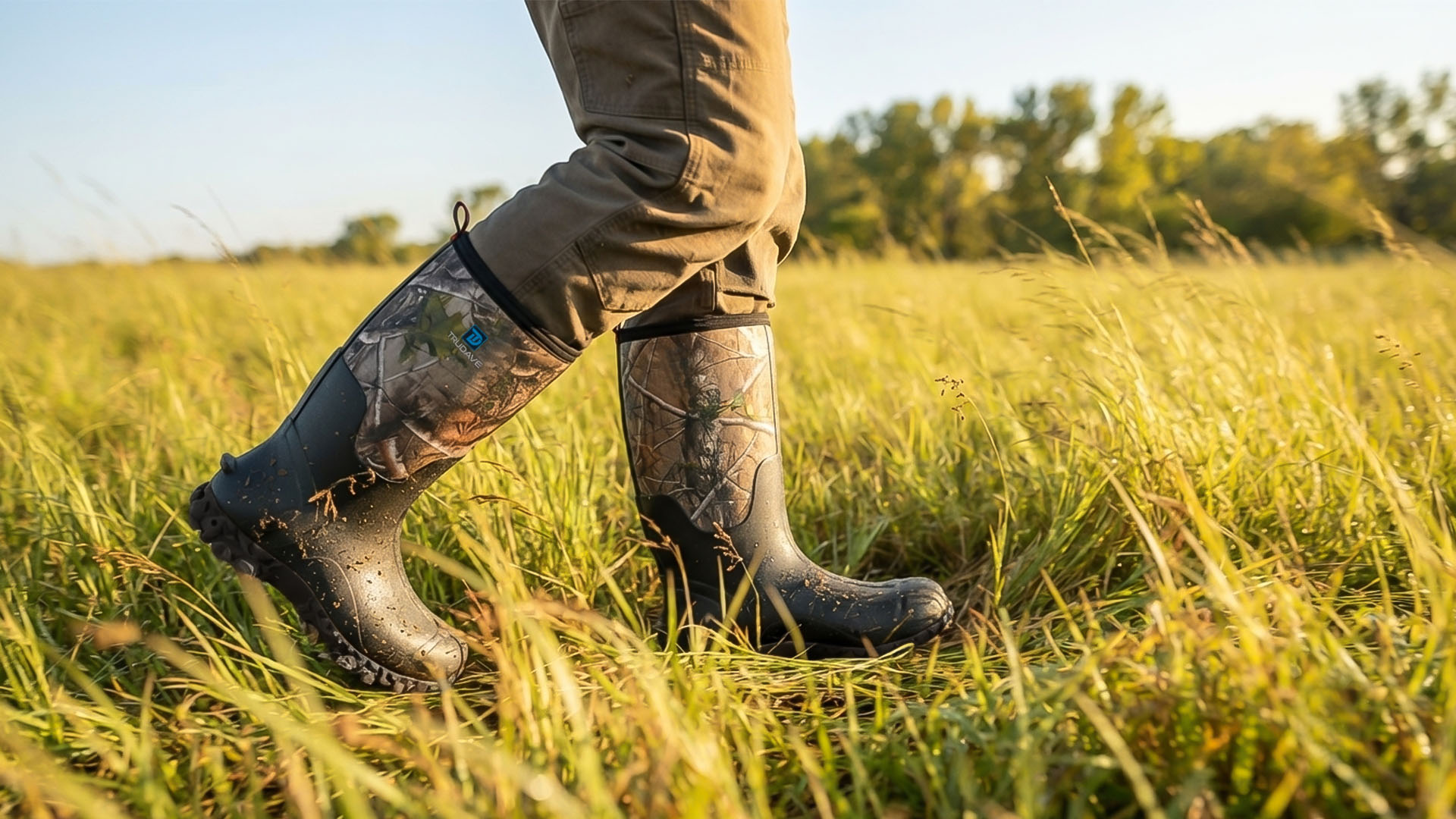
Hunters who regularly cover muddy trails, wet vegetation, creek bottoms, and saturated ground may benefit from waterproof hunting boots for rainy deer hunting conditions that provide traction, secure fit, and protection from repeated moisture exposure.
Footwear is only one part of the system.
Rain gear, pack protection, dry clothing, and equipment storage matter too.
Keep Critical Gear Dry
Protect:
- Phone
- Vehicle keys
- Ammunition
- Rangefinder
- GPS devices
- Spare clothing
- Fire-starting equipment
- Medical supplies
Use waterproof storage.
Assume rain will eventually reach unprotected equipment.
A wet hunt becomes more difficult when critical gear stops working.
Pay Attention to Temperature
Rain at 65°F is uncomfortable.
Rain at 38°F can become dangerous.
Cold rain removes heat quickly.
Wind increases heat loss.
Hunters should monitor their physical condition.
Carry dry layers when necessary.
Know when to leave.
Do not allow the desire to take advantage of reduced hunting pressure to override basic safety.
Consider Ground Hunting During Wet Weather
Wet conditions can make some tree stands uncomfortable or unsafe.
Platforms become slippery.
Climbing equipment requires additional care.
Ground hunting may provide an alternative.
Use natural cover.
Set up along travel routes.
Take advantage of quiet access.
Maintain safe shooting directions.
Ground hunting allows hunters to adjust locations more easily when deer movement changes.
Track Weather Transitions
The beginning and end of rain events can create useful hunting windows.
Watch:
- Falling temperatures
- Rising pressure after storms
- Decreasing wind
- Breaking cloud cover
- Rain intensity
- Time until sunset
Do not focus only on whether rain is falling.
Look at what the weather is doing next.
Hunt the First Good Weather After Several Bad Days
Several days of severe weather can reduce hunting pressure.
When conditions improve, hunters return.
But there may be a short window before normal pressure resumes.
If possible, hunt the transition.
Arrive early.
Use access routes that avoid disturbing deer.
Be in position before other hunters begin moving through the property.
Timing matters.
Rain Can Change Where Hunters Enter the Property
Flooded roads.
Muddy parking areas.
High creeks.
Soft agricultural fields.
These conditions change access.
Hunters may concentrate at easier entry points.
That can increase pressure in some locations while reducing it in others.
Study the entire property.
Ask where people are likely to go.
Then consider where deer may move in response.
Use Parking Lots as Hunting Information
On public land, parking areas provide useful information.
How many vehicles are present?
Which access points are crowded?
Which areas are empty?
Rainy days can reveal how pressure changes.
Keep notes.
You may identify properties that become significantly less crowded during poor weather.
This information can improve future hunting decisions.
Common Rainy Day Deer Hunting Mistakes
Staying Home Every Time It Rains
Wet weather can reduce hunting pressure and create useful access conditions.
Hunting Severe Storms Without Considering Safety
Strong wind, flooding, cold exposure, and falling branches create real hazards.
Assuming Rain Eliminates Human Scent
Continue using wind and thermal strategy.
Leaving Before Conditions Improve
Weather transitions can create movement opportunities.
Wearing Equipment That Cannot Handle Repeated Moisture
Comfort affects how long you can remain focused.
Ignoring Fresh Tracks
Rain can make recent deer movement easier to identify.
Hunting the Same Location Regardless of Pressure
Human activity changes deer behavior.
Adjust accordingly.
Frequently Asked Questions
Do deer move during rain?
Yes.
Deer continue moving during many rain events.
Movement may change depending on rain intensity, wind, temperature, season, and local conditions.
Is deer hunting good in light rain?
Light rain can create quiet access conditions and reduce hunting pressure while allowing deer to continue normal movement.
Do deer move after heavy rain?
Deer may increase movement when severe weather improves, particularly if the storm limited feeding or travel.
Does rain remove human scent?
No.
Rain does not eliminate the need for wind and scent strategy.
Hunters should continue monitoring air movement.
Is public land less crowded when it rains?
Many hunters avoid poor weather, which can reduce pressure on some public properties.
The effect varies by location.
Should you hunt before or after rain?
Both periods can provide opportunities.
Hunters should pay attention to weather transitions, deer patterns, and changes in hunting pressure.
Final Thoughts
The question is not only whether deer move in the rain.
The better question is how the entire hunting environment changes.
Rain affects visibility.
Noise.
Access.
Fresh sign.
Temperature.
Wind.
Hunter participation.
Public land pressure.
Deer movement is only one part of the equation.
A rainy morning may create fewer deer sightings.
But it may also create quieter access, empty parking lots, fresh tracks, and hunting opportunities that disappear when the weather improves.
Study how hunters respond to weather.
Watch the forecast.
Prepare your equipment.
Use wet conditions to access areas quietly.
Monitor deer sign.
And pay attention to the transition when the rain begins to end.
Sometimes the biggest advantage of hunting in the rain is not that deer move more.
It is that fewer hunters are there to disturb them.
