
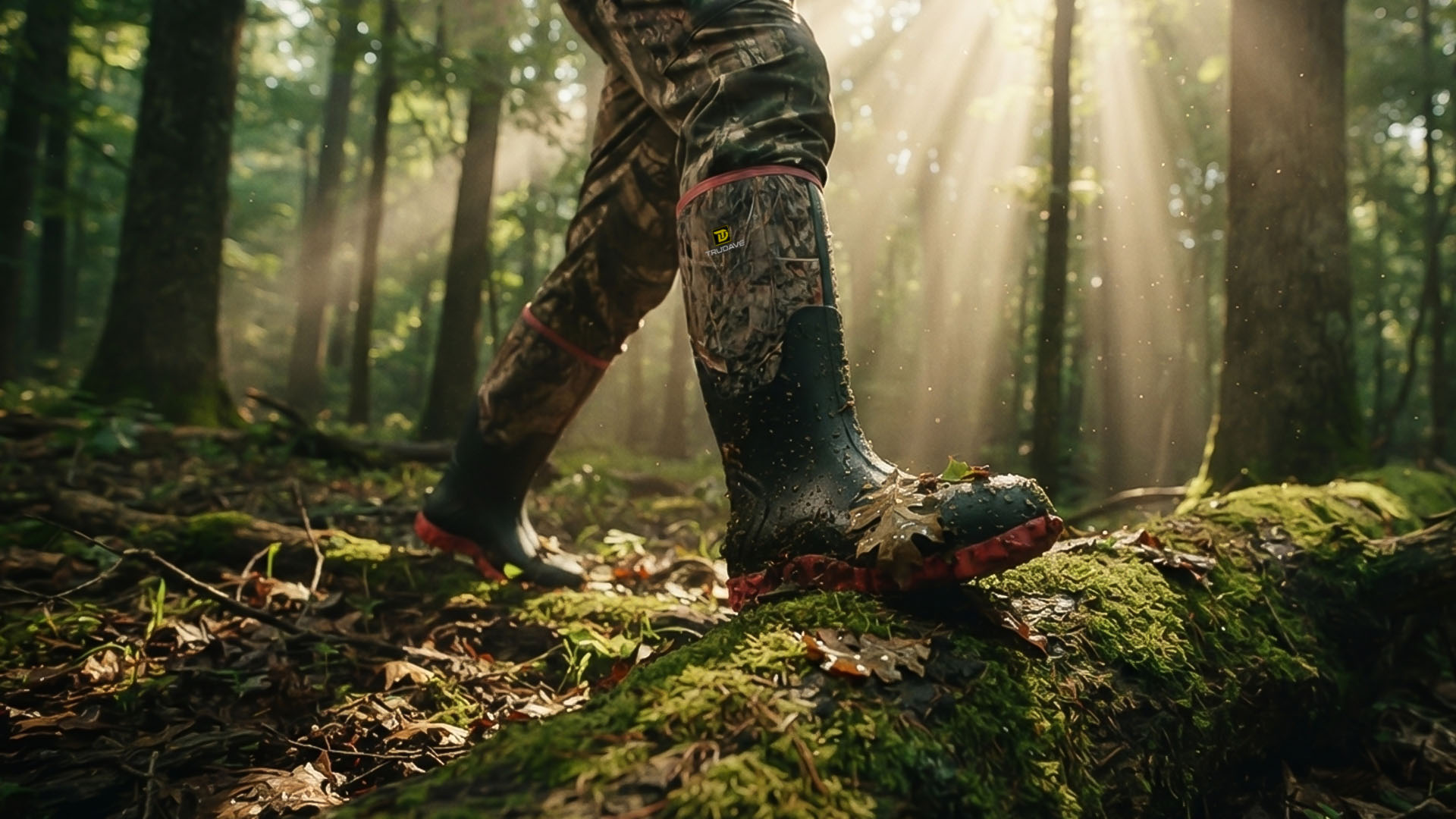
Opening week of deer season rarely feels like the hunting photos printed on boot boxes.
There may be no snow.
No frozen creek crossings.
No hours spent sitting in single-digit temperatures.
Instead, the morning starts in the upper 50s, humidity hangs over the woods, and the afternoon temperature climbs high enough to make every unnecessary layer feel like a mistake.
You leave the truck before daylight.
The walk to your stand is less than a mile.
By the time you arrive, your socks are damp, your feet are hot, and the heavy insulated boots you bought for late-season hunting already feel like they weigh twice as much.
The hunt has barely started.
For early-season deer hunters, choosing footwear based on maximum insulation can create more problems than it solves.
Heavy boots can increase sweating, slow your walking pace, reduce comfort, and leave your feet wet from the inside even when the boot never leaks.
The best early-season hunting boot is not necessarily the lightest boot on the market.
It is the boot that matches your temperature, terrain, moisture, walking distance, and hunting style.
Early Season Hunting Creates a Different Footwear Problem
Cold-weather hunters worry about losing heat.
Early-season hunters often need to manage heat and moisture.
Those are different problems.
A boot designed for long sits in freezing temperatures may use thick insulation, heavy construction, and materials intended to retain warmth.
That can be useful in December.
In September, the same design may cause excessive sweating.
Once your socks become wet, comfort decreases.
Friction increases.
Long walks become more difficult.
And if temperatures drop later in the evening, sweat trapped inside your footwear can make your feet feel colder than expected.
Early-season footwear should help hunters manage moisture without sacrificing the protection needed for real hunting terrain.
More Insulation Is Not Always Better
Hunters often compare boots by insulation weight.
Two hundred grams.
Four hundred grams.
Eight hundred grams.
One thousand grams or more.
The natural assumption is that more insulation means a better hunting boot.
That is not true.
Insulation should match conditions.
During warm-weather hunts, excessive insulation traps heat.
Feet sweat.
Socks absorb moisture.
Boot linings become damp.
The problem becomes worse for mobile hunters.
A hunter walking two miles into public land produces significantly more body heat than someone stepping 300 yards from a truck into a ground blind.
Before buying hunting boots, ask how you actually hunt.
Not how the coldest hunter in an advertisement hunts.
Sweaty Feet Can Become a Bigger Problem Than Rain
Waterproofing gets most of the attention.
Hunters worry about wet grass, mud, creeks, and standing water.
Those are real concerns.
But moisture inside the boot matters too.
Feet produce sweat.
Walking increases heat.
Waterproof materials can reduce how quickly internal moisture escapes.
The result is a boot that remains dry from the outside while becoming wet inside.
This is why sock selection, boot fit, insulation, and walking distance matter.
A waterproof boot is not automatically comfortable in hot weather.
Match the Boot to Your Hunting Style
Two hunters can hunt the same property and need different footwear.
One hunter walks a short distance to a ladder stand.
The other covers several miles while scouting, checking wind, and adjusting locations.
The first hunter may tolerate a heavier boot.
The second may prioritize lower weight and walking comfort.
Consider your typical hunt.
Short Walks and Long Sits
If you walk less than a mile and remain stationary for several hours, moderate boot weight may not be a major problem.
Moisture and temperature still matter, but walking efficiency becomes less important.
Mobile Public Land Hunting
Hunters who cover long distances should pay close attention to weight, fit, flexibility, and heat management.
Every unnecessary ounce becomes more noticeable after several miles.
Wet Agricultural Ground
Morning dew, irrigation, muddy field edges, and drainage ditches may require waterproof footwear even when temperatures are warm.
Swamps and Marsh Edges
Tall waterproof boots can be useful, but hunters should consider heat buildup and walking comfort.
Terrain determines the correct compromise.
Do You Need Waterproof Boots in the Early Season?
In many hunting environments, yes.
Warm weather does not mean dry ground.
Early-season hunters may deal with:
- Heavy morning dew
- Wet grass
- Muddy trails
- Creek crossings
- Marsh edges
- Standing water
- Agricultural drainage
- Sudden thunderstorms
Walking through knee-high wet vegetation can soak ordinary hiking footwear quickly.
The challenge is finding waterproof footwear that does not create unnecessary bulk for your hunting conditions.
Hunters who regularly encounter moisture without needing extreme cold-weather insulation may want to consider waterproof hunting boots for early-season conditions that balance wet-ground protection, traction, and walking comfort.
The correct boot should allow you to stay mobile without carrying insulation you do not need.
Boot Weight Matters More Than You Think
Pick up a heavy hunting boot in a store.
It may not feel particularly difficult to lift.
Now wear that boot for four miles.
Every step requires you to move the weight.
The difference between lightweight and heavy footwear becomes more noticeable over distance.
Heavy boots can:
- Increase fatigue
- Reduce walking efficiency
- Make steep terrain more difficult
- Encourage shorter steps
- Increase heat buildup
- Become even heavier when covered in mud
This does not mean every lightweight boot is better.
Durability, traction, protection, and support still matter.
The goal is avoiding unnecessary weight.
Fit Becomes More Important During Long Walks
A poorly fitting boot may feel acceptable in the parking lot.
After several miles, small problems become serious.
Your heel slips.
Your toes hit the front of the boot on downhill sections.
Hot spots develop.
Socks bunch.
Blisters begin.
Early-season heat can make these problems worse because feet may swell during long walks.
Try hunting boots with the socks you plan to wear.
Walk on inclines if possible.
Check heel movement.
Make sure your toes have room without allowing the entire foot to slide.
Do not assume your hunting boot size will always match your casual footwear size.
Boot shape and sock thickness affect fit.
Thick Socks Are Not Always the Answer
Heavy socks can improve warmth.
They can also trap more heat than you need.
Early-season hunters should choose socks based on temperature, moisture management, and boot fit.
Avoid cotton.
Cotton absorbs moisture and dries slowly.
Synthetic and wool-blend hunting socks are common choices because they can manage moisture more effectively.
The correct sock should fit comfortably without making the boot too tight.
A tight boot can reduce comfort and create additional friction.
Change Socks After the Walk In
One useful strategy for early-season hunters is carrying an extra pair of socks.
If the access route is long and your feet sweat heavily, change socks after reaching your hunting location.
Store the wet pair in a separate bag.
Dry feet can improve comfort during a long sit.
The same strategy can help during multi-day hunts.
A spare pair of socks weighs very little compared to the comfort it can provide.
Consider the Height of the Boot
Tall boots provide additional protection from water, mud, vegetation, and insects.
They can also trap more heat.
Lower boots may feel more comfortable for long-distance walking but provide less protection in wet ground.
Choose boot height based on terrain.
A hunter crossing shallow creeks and marsh edges has different needs from someone hunting dry mountain ridges.
Do not automatically choose the tallest boot available.
More material is useful only when the conditions require it.
Traction Still Matters in Dry Weather
Early-season ground is not always dry.
Even when rain is limited, morning dew can make grass slippery.
Creek banks hold moisture.
Steep terrain may contain loose soil.
Agricultural ground can become muddy.
Look for an outsole appropriate for your terrain.
Deep, aggressive tread can improve grip in mud.
However, extremely aggressive outsoles may collect heavy clay.
Harder outsole compounds may perform differently on wet rocks.
No tread design is perfect for every environment.
Choose based on where you hunt most often.
Snake Protection May Matter in Some Regions
Early deer seasons in parts of the United States overlap with warm temperatures and active snakes.
Hunters in these regions may consider snake-resistant hunting boots.
This adds another factor to the footwear decision.
Snake protection, waterproofing, weight, comfort, and heat management must all be balanced.
Hunters should evaluate actual local risks.
Do not buy equipment based only on fear.
Use terrain, season, and regional conditions to make the decision.
Your Boots Should Be Broken In Before Opening Day
Do not wear new hunting boots for the first time on opening morning.
Even boots that fit correctly may require adjustment.
Wear them during preseason scouting.
Walk on similar terrain.
Test them with hunting socks.
Pay attention to:
- Heel movement
- Toe pressure
- Hot spots
- Ankle support
- Flexibility
- Heat buildup
- Traction
Opening day is not the time to discover that your boots become painful after two miles.
Keep Early-Season Boots Clean and Dry
Warm temperatures and sweat can create odor problems quickly.
After every hunt:
Remove the insoles if possible.
Allow the boots to dry completely.
Clean mud before it hardens.
Wash socks.
Avoid storing damp footwear in a vehicle or sealed container.
Proper maintenance improves comfort and helps extend the useful life of hunting boots.
Do Not Wear Hunting Boots Everywhere
It is convenient to put hunting boots on at home.
Then stop for fuel.
Buy breakfast.
Drive to the hunting property.
Walk through the parking area.
Finally enter the woods.
This exposes your footwear to unnecessary odors.
Gasoline, food, vehicle fluids, household chemicals, and other scents can collect on the boots.
Consider transporting clean hunting boots separately and changing footwear near the hunting area.
This is particularly useful for deer hunters concerned about scent control.
Common Early-Season Hunting Boot Mistakes
Buying Boots for the Coldest Day of the Year
Choose footwear for the conditions you hunt most often.
Late-season boots may be uncomfortable during early-season heat.
Assuming Waterproof Means Breathable
Waterproof construction helps block outside moisture.
It does not guarantee your feet will remain dry from sweat.
Ignoring Boot Weight
Weight becomes more important as walking distance increases.
Wearing Cotton Socks
Cotton absorbs moisture and dries slowly.
Choose socks designed for moisture management.
Using New Boots on Opening Day
Test and break in footwear before the season.
Choosing Boots Based Only on Insulation Numbers
Fit, terrain, moisture, walking distance, and hunting style are equally important.
Forgetting Spare Socks
A dry pair can significantly improve comfort during long hunts.
Frequently Asked Questions
What hunting boots are best for early-season deer hunting?
The best boots depend on temperature, terrain, moisture, and walking distance.
Many early-season hunters benefit from waterproof, uninsulated or lightly insulated boots with reliable traction and a comfortable fit for walking.
Are insulated boots too hot for early-season hunting?
Heavy insulation can cause excessive heat and sweating during warm-weather hunts, especially for mobile hunters.
Choose insulation based on actual hunting temperatures and activity levels.
Do you need waterproof hunting boots in September?
That depends on terrain.
Morning dew, wet vegetation, muddy trails, creek crossings, marshes, and storms can make waterproof footwear useful even during warm weather.
Are rubber boots good for early-season deer hunting?
Rubber hunting boots can provide waterproof protection and scent-control advantages.
However, hunters should consider weight, heat buildup, fit, and walking distance before choosing them.
How many grams of insulation do you need for early-season hunting?
There is no universal number.
Many hunters prefer uninsulated or lightly insulated footwear in warm conditions.
Temperature, activity level, sock choice, and individual cold tolerance all matter.
Should hunting boots fit loose or tight?
Hunting boots should hold the heel securely while providing enough room for the toes and intended hunting socks.
Boots that are too tight can create pressure and friction.
Boots that are too loose can cause heel movement and blisters.
Final Thoughts
Early-season deer hunting creates a footwear problem that cold-weather equipment cannot automatically solve.
You need protection from wet grass, mud, rough terrain, and unpredictable weather.
But you may not need heavy insulation.
You need traction.
But you also need walking comfort.
You need waterproof protection.
But moisture from sweat still has to be managed.
The best early-season hunting boots balance these competing requirements.
Choose footwear based on the conditions you actually hunt.
Consider how far you walk.
Pay attention to temperature.
Wear appropriate socks.
Carry a dry pair when necessary.
Break your boots in before the season.
And avoid carrying unnecessary weight and insulation simply because a boot was designed for hunting.
A good early-season boot should help you stay in the woods longer.
It should not make you wish you were back at the truck before the morning hunt has even started.
