
American black duck country can look empty until the tide begins to move.
A salt marsh stretches toward the bay.
Cordgrass hides narrow tidal channels.
Mud flats appear between creek bends.
A flooded hardwood edge sits farther inland.
Nothing seems unusual.
Then one dark duck lifts from a creek corner.
Another pair swings over the marsh.
Several birds drop into a quiet pocket hidden behind grass.
For a few minutes, the entire wetland seems alive.
That is black duck hunting.
These birds often use coastal habitats that combine:
- Shallow water
- Tidal creeks
- Salt-marsh vegetation
- Mud flats
- Freshwater edges
- Flooded timber
- Low disturbance
The challenge is not simply finding water.
It is finding the water that provides food, security, and the right conditions at the right time.
American Black Ducks Are Closely Tied to Wetlands
American black ducks use a wide range of wet environments.
Productive habitat may include:
- Salt marshes
- Tidal creeks
- Estuaries
- Freshwater marshes
- Flooded timber
- River backwaters
- Coastal ponds
- Mud flats
They often occupy habitats that overlap with other dabbling ducks.
Quiet Habitat Can Be Extremely Important
Black ducks are often associated with wetlands that provide both food and security.
A small quiet creek may hold birds even when larger nearby water is heavily disturbed.
Disturbance Changes Bird Distribution
Hunting pressure, boating, and human activity can push birds toward:
- Back creeks
- Hidden marsh pockets
- Remote flooded timber
- Less accessible shorelines
Do Not Hunt Only the Most Obvious Water
Large open bays are easy to see.
Small hidden wetlands may be more productive.
Tidal Creeks Can Be Excellent
Tidal creeks organize movement through salt marshes.
They connect:
- Feeding flats
- Open bays
- Interior marsh
- Mud edges
Creek Bends Can Hold Birds
A bend creates:
- Wind protection
- Reduced visibility
- Feeding edges
Small Creeks Can Be Better Than Main Channels
Large channels receive more traffic.
Narrow side creeks may offer more security.
Creek Junctions Deserve Attention
Where two channels meet, water movement and food can concentrate.
Tide Is Part of the Habitat
One of the defining features of coastal black duck hunting is changing water level.
A productive creek at low tide may hunt completely differently at high tide.
Low Tide Exposes Feeding Ground
Falling water can reveal:
- Mud flats
- Marsh edges
- Aquatic food
Birds May Concentrate in Remaining Water
As shallow flats drain, ducks may gather in:
- Deeper creek bends
- Small pools
- Channel edges
Rising Tide Opens New Habitat
Water moves back into marsh grass.
Birds may follow it.
High Tide Can Spread Ducks Out
When more habitat becomes flooded, birds gain more options.
Hunt the Tide, Not Just the Clock
A marsh that produces birds at 9 a.m. one day may peak at noon another day depending on the tide.
Tide Tables Help With Planning
But actual water level can differ.
Wind Changes Tidal Water
Strong wind can push water into or out of coastal systems.
Onshore Wind Can Raise Water
A route that was shallow yesterday may be deeper.
Offshore Wind Can Expose More Mud
This may improve access in one place while making boat travel harder elsewhere.
Do Not Depend on Predictions Alone
Observe current conditions.
Salt-Marsh Mud Is One of the Biggest Challenges
Coastal mud can be:
- Soft
- Sticky
- Deep
- Uneven
A Marsh Can Look Solid
Then suddenly sink beneath your weight.
Test Unknown Ground
A walking staff can help assess:
- Depth
- Bottom firmness
- Hidden channels
Mud Suction Is Exhausting
Each step may require pulling the foot free.
Secure Footwear Matters
Loose boots can become nearly impossible to walk in.
Grass Can Hide Channels
Salt-marsh vegetation may cover the edge of a deep cut.
Never Run Through Unknown Marsh
Move deliberately.
Mud Flats Can Hold Feeding Ducks
Exposed tidal flats may provide:
- Seeds
- Invertebrates
- Aquatic food
Birds Often Work the Water Line
The narrow edge between:
- Wet mud
- Shallow water
can be especially productive.
Watch Where Birds Feed
Do not simply note:
“Black ducks are in the marsh.”
Record whether they use:
- Creek mouth
- Mud edge
- Grass point
- Flooded pocket
Exact Location Matters
Coastal marshes contain thousands of similar-looking acres.
Birds usually have a reason for favoring one section.
Salt-Grass Edges Provide Structure
Marsh grass gives birds:
- Concealment
- Wind protection
- Feeding edges
Hunt Broken Edges
Irregular shorelines create more habitat than long uniform banks.
Marsh Points Can Influence Flight
A grass point extending into water may become a natural travel marker.
Small Openings Matter
A tiny pocket behind grass can provide enough room for a pair of black ducks.
Do Not Ignore Interior Marsh
Some ducks may spend more time inside back channels than on the main bay.
Flooded Coastal Timber Can Be Productive
Where freshwater forest meets tidal or river systems, black ducks may use:
- Flooded hardwoods
- Swamp edges
- Backwaters
Fallen Mast Can Provide Food
Flooded forest may contain natural feeding opportunities.
Shallow Timber Water Is Often Better Than Deep Flooding
Birds can access food more easily.
Look for Small Sloughs
A narrow backwater can be more valuable than a broad exposed river.
River Backwaters Can Offer Security
Main channels may receive:
- Boat traffic
- Current
- Disturbance
Backwaters are often quieter.
Creek Mouths Can Connect Fresh and Salt Water
These transition zones can be productive.
Brackish Habitat Adds Diversity
Black ducks may use both:
- Coastal salt marsh
- Freshwater wetland
within the same region.
Watch Daily Movement
Birds may feed in one habitat and rest in another.
Morning Movement Can Be Strong
Early flights may connect:
- Roosting water
- Feeding marshes
But Midday Can Still Be Productive
Tidal movement may produce activity long after sunrise.
Do Not Automatically Leave After Morning
Check:
- Tide
- Wind
- Bird movement
Afternoon Hunts Can Be Excellent
If rising or falling water aligns with feeding habitat.
Evening Movement Can Reveal Tomorrow’s Pattern
Watch where birds travel before dark.
Scouting Is Critical
Black ducks can respond quickly to pressure.
Observe From Distance
Do not repeatedly push feeding birds.
Binoculars Help
Use them to evaluate:
- Bird numbers
- Species
- Flight direction
- Feeding location
Record Exact Habitat
A simple note like “black ducks in marsh” is not enough.
Better notes include:
- Falling tide
- West creek bend
- Mud exposed
- Light north wind
Patterns Become Easier to Recognize
Black Ducks Can Be Wary
Repeated pressure may cause birds to:
- Circle more
- Avoid exposed setups
- Use smaller hidden water
Concealment Matters
Reduce:
- Head movement
- Standing
- Bright equipment
Natural Marsh Cover Can Help
Use existing vegetation where legal.
Do Not Destroy More Cover Than Necessary
Dark Birds Can Be Difficult to See
American black ducks blend surprisingly well with:
- Mud
- Dark water
- Marsh shadow
- Cloudy skies
Movement Often Reveals Them
Watch for:
- Head turns
- Swimming wake
- Wing movement
Low-Light Identification Can Be Difficult
This is especially important because black ducks can occur with mallards.
Learn Black Duck Identification Carefully
Important characteristics can include:
- Overall dark brown appearance
- Head contrast
- Bill coloration
- Wing markings
Hens and Hybrids Can Complicate Identification
Do not rely on one feature alone.
Black Duck and Mallard Hybrids Exist
Hunters should study current official identification material before hunting.
If You Are Unsure, Do Not Shoot
Positive identification matters.
Mixed Flocks Require Discipline
A group may contain:
- Black ducks
- Mallards
- Other dabblers
Identify the Individual Target
Do not assume every bird in the flock is the same species.
Wind Strongly Affects Coastal Hunting
Open salt marshes can be extremely windy.
Birds Use Wind When Landing
A good habitat location can still produce poor opportunities if the setup ignores wind direction.
Crosswinds Can Change Flight Lines
Birds may favor one side of the creek.
Strong Wind Can Push Birds Toward Protected Water
Search:
- Creek bends
- Leeward marsh edges
- Interior pockets
Calm Conditions Can Make Birds More Cautious
They may circle longer.
Concealment Becomes Even More Important
Coastal Wind Also Changes Hunter Comfort
Cold wet wind can be more difficult than dry cold.
Windproof Layers Matter
Rain Can Improve Some Marsh Conditions
Rain may:
- Freshen shallow water
- Increase backwater depth
- Quiet access routes
Black Duck Hunting After Rain Can Be Productive
Birds may move into:
- Flooded timber
- Shallow grass
- Newly flooded marsh
Heavy Rain Can Raise Creeks
Access routes may become unsafe.
Rescout After Major Storms
Coastal Storms Can Change Shorelines
Water levels and mud exposure can shift dramatically.
Do Not Assume Last Week’s Crossing Still Works
Fog Can Be Dangerous
Coastal fog reduces both:
- Visibility
- Navigation
Do Not Depend on Distant Shorelines
They can disappear completely.
Use Reliable Navigation
Carry:
- Offline maps
- GPS
- Marine navigation where appropriate
Mark the Launch Point
A marsh looks different from the water.
Tidal Creeks Can Be Confusing
Many channels look nearly identical.
One Wrong Turn Can Lead to Shallow Water
Low Tide Can Strand Boats
A creek navigable at high tide may become mud later.
Plan the Return Route
Before launching, ask:
Will there still be enough water to get back?
Small Boats Can Be Useful
Where legal, marsh boats or other appropriate craft can access:
- Back creeks
- Hidden ponds
- Marsh islands
Do Not Overload
Hunters may carry:
- Decoys
- Waders
- Dogs
- Cold-weather clothing
Weight Adds Quickly
Wear Appropriate Flotation Equipment
Cold coastal water increases consequences.
Shallow Water Is Not Harmless
A marsh may contain:
- Deep cuts
- Strong current
- Oyster beds
Hidden Channels Can Flip or Ground Boats
Travel cautiously.
Muddy Boat Ramps Are Slippery
Wet:
- Concrete
- Wood
- Algae
can become hazardous.
Walk Slowly
Many accidents happen before the hunt begins.
Saltwater Is Hard on Equipment
Salt accelerates corrosion.
Clean Appropriate Gear After Hunting
Follow manufacturer guidance for:
- Firearms
- Boats
- Zippers
- Hardware
Salt-Marsh Vegetation Can Be Abrasive
Durable clothing helps.
Grass Can Hide Sharp Debris
Coastal wetlands may contain:
- Shell
- Broken wood
- Trash
Watch Footing
Oyster Shell Can Be Extremely Sharp
Where oyster beds occur, avoid stepping directly on them.
They Can Damage:
- Waders
- Boots
- Dog paws
Dogs Need Extra Care in Coastal Marshes
Retrievers can be valuable for recovering birds.
But Salt Marsh Creates Unique Hazards
Dogs may face:
- Cold water
- Tidal current
- Oyster shell
- Deep mud
- Boat traffic
Saltwater Is Not Drinking Water
Carry fresh water.
Do Not Let Dogs Drink Heavily From The Bay
Wet Dogs Chill Quickly
Cold wind across wet fur can reduce body temperature fast.
Provide a Dry Protected Resting Area
Dog Vests May Be Useful
depending on temperature and conditions.
Watch for Fatigue
Mud Exhausts Dogs Too
Short retrieves can require significant effort.
Oyster Cuts Need Immediate Attention
Check paws regularly.
Sharp Marsh Grass Can Irritate Skin
Inspect dogs after hunting.
American Black Duck Hunting Is Hard on Footwear
A typical hunt may involve:
- Salt-marsh mud
- Wet grass
- Tidal creeks
- Flooded timber
- Slippery boat ramps
- Shallow water
- Cold shoreline
- Long gear carries
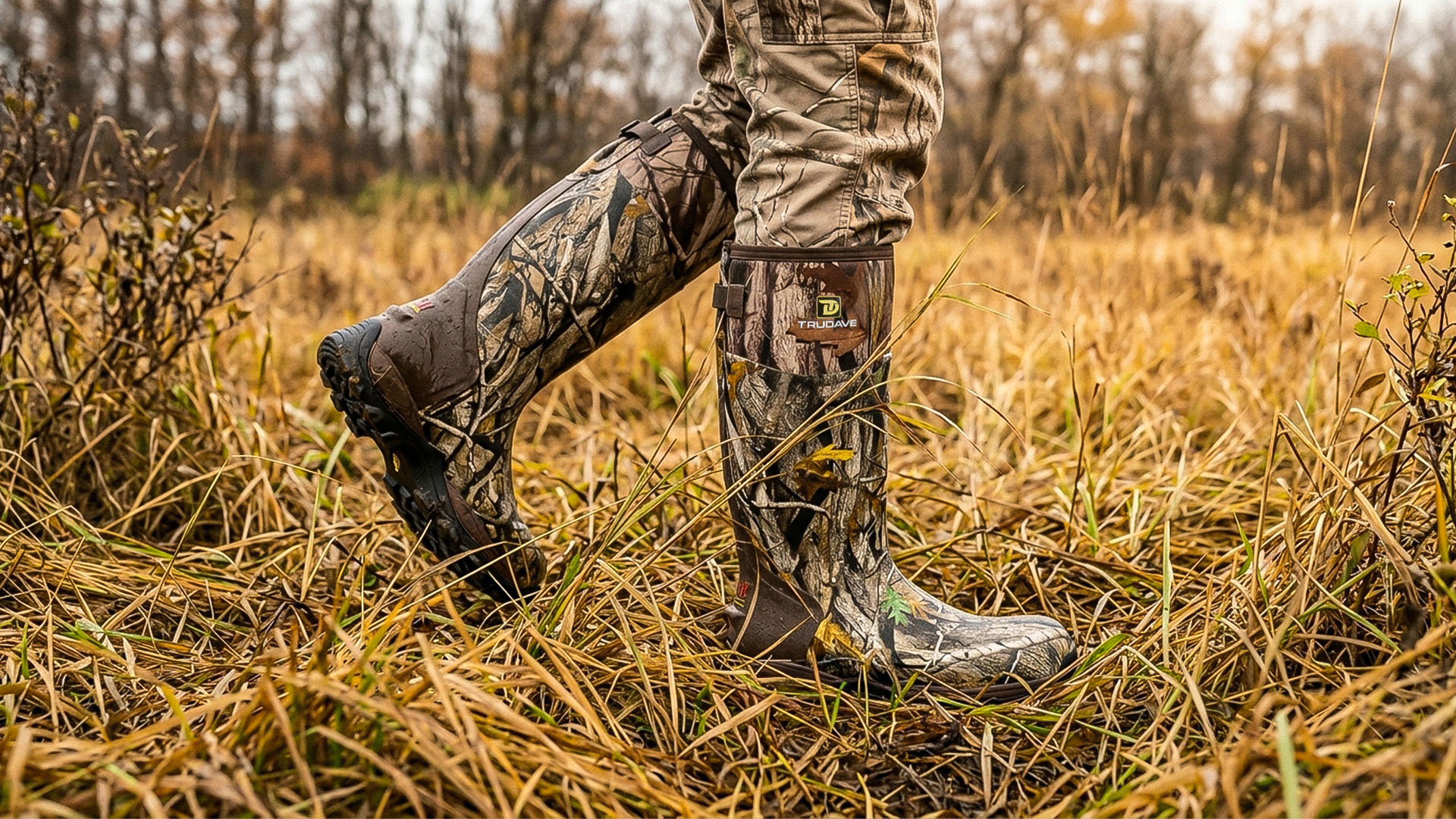
Hunters may benefit from waterproof hunting boots for coastal duck hunting that provide secure heel retention, strong mud traction, and enough waterproof protection for repeated exposure to wet coastal terrain.
Tall Rubber Boots Can Be Excellent
Where water stays below boot height, rubber hunting boots work well in:
- Mud
- Wet grass
- Shallow tidal water
Secure Heel Fit Is Critical
Marsh suction pulls aggressively at loose boots.
Heel Movement Creates Fatigue
A poor-fitting boot becomes uncomfortable very quickly.
Boot Height Matters
One hidden creek edge can fill shorter footwear.
Traction Is Essential
Salt-marsh mud can be extremely slick.
Deep Tread Helps
But mud can still pack into the sole.
Clear Tread When Practical
Lace-Up Waterproof Boots Can Work on Firmer Access
If much of the route includes:
- Dikes
- Forest trails
- Gravel roads
supportive waterproof lace-ups may provide better walking comfort.
Choose Boots for the Entire Hunt
Think about:
- Parking
- Ramp
- Marsh
- Timber
- Water depth
Waders Are Often Useful
When water regularly exceeds boot height, properly fitted hunting waders may be necessary.
Waders Do Not Make Water Safe
They do not replace:
- Route knowledge
- Flotation
- Good judgment
Use a Wader Belt Correctly
Follow manufacturer guidance.
Chest Waders Are Not Flotation Devices
Avoid Deep Channels
Do not enter water that cannot be safely waded.
Tidal Current Can Be Strong
Even narrow creeks can move quickly.
Cold Water Raises Risk
A fall during winter can become serious.
Carry Dry Clothes
Protect them in waterproof storage.
Spare Socks Are Valuable
Insulation Depends on Activity
Walking through marsh mud generates heat.
Standing still later creates cold.
Dress in Layers
Avoid Sweating During Access
Vent before overheating.
Add insulation once stationary
Gloves Get Wet Easily
Handling:
- Decoys
- Boats
- Wet vegetation
- Birds
soaks hands quickly.
Carry a Backup Pair
Late Season Can Bring Ice
Salt and brackish marshes may develop irregular ice.
Never Assume Ice Is Safe
Tidal movement makes it unpredictable.
Snow Can Hide Water
Stay on known routes.
Ice Around Creek Edges Can Be Weak
Do Not Walk Unknown Marsh Ice
Wildlife tracks do not prove human-safe conditions.
Flooded Timber Has Different Hazards
Submerged:
- Logs
- Roots
- Old creek channels
make footing difficult.
Use a Wading Staff
Test each uncertain step.
Wet Logs Are Extremely Slippery
Step around them when possible.
Muddy Hardwood Leaves Can Slide
Take short steps.
Creek Banks Can Collapse
Saturated soil may break under weight.
Stay Back From Undercut Edges
Public Coastal Wetlands Can Be Productive
Wildlife management areas may provide significant habitat.
But Property Rules Can Be Complex
Check:
- Entry time
- Parking
- Boats
- Hunting zones
- Permits
Refuge Boundaries Matter
Closed sanctuary water may sit beside open hunting habitat.
Know Exact Lines
Water does not make boundaries obvious.
Wind or Tide Can Move a Boat Across a Boundary
Monitor position.
Private Shoreline Requires Respect
Water access does not always give legal land access.
Do Not Walk Onto Private Marsh Without Permission
Retrieval Rules Should Be Understood Before Hunting
Agricultural Coastal Land Can Add More Complexity
Marshes may border:
- Farms
- Pastures
- Homes
Safe Background Matters
Flat wetlands provide little backstop.
Know Where Roads and Buildings Are
Low-Flying Ducks Require Strict Discipline
Never shoot toward:
- Dogs
- Boats
- Partners
- Houses
Establish Safe Shooting Zones
Before legal shooting time.
Partners Can Disappear Behind Grass
Maintain communication.
Do Not Relocate Silently
Black Ducks Are Migratory Game Birds
Hunters should verify current official regulations before hunting.
Check:
- Season dates
- Daily bag limits
- Possession limits
- Species-specific restrictions
- Shooting hours
- License requirements
- Migratory bird requirements
- Non-toxic ammunition rules
Black Duck Limits May Be Restrictive
Do not assume the general duck limit applies equally to every species.
Rules Can Differ by Flyway or State
Do Not Use Last Year’s Regulations
Migratory bird regulations can change.
Species Identification Has Legal Consequences
Know the bird before shooting.
Public Wetlands May Add More Restrictions
Some properties can have:
- Closed days
- Draw systems
- Boat rules
Check the exact management area
Hunting Pressure Changes Behavior
Black ducks can become extremely cautious later in the season.
Easy-access marshes may receive heavy pressure
Birds may shift toward quieter habitat.
Back Creeks Become More Important
But Food Still Matters
Remote water without food may hold few birds.
Scout Before Walking Far
Quiet Approach Helps
Boat noise and repeated movement can push birds.
Avoid running directly through feeding habitat while scouting
Observe first.
Concealment Can Matter More Late in the Season
Educated birds often respond to small mistakes.
Keep Movements Slow
Do not stand unnecessarily
Recovery Can Be Difficult
A downed black duck can disappear in:
- Marsh grass
- Creek current
- Flooded timber
Watch Every Bird to the Water
Do not immediately focus on another flock.
Mark the Fall
Use:
- Marsh point
- Creek bend
- Tree
- Dike
Wind Can Move Birds
Current Can Move Birds Even Faster
Begin recovery promptly.
Dogs Improve Recovery
But only where water conditions are safe.
Do Not Send a Dog Into:
- Strong current
- Dangerous ice
- Heavy boat traffic
Without a Dog, Use Boat or Wading Access Carefully
Ethical Shot Selection Includes Recovery
A bird headed toward:
- Deep channel
- Closed refuge
- Unsafe water
may be a poor opportunity.
Warm Weather Can Still Occur
Early coastal seasons may have mild days.
Keep Harvested Birds Cool
Follow current food-safety guidance.
Direct Sun Adds Heat Quickly
Clean Storage Matters
Mud and saltwater can contaminate game.
Carry Appropriate Game Bags or Containers
Common American Black Duck Hunting Mistakes
Hunting Only Large Open Bays
Black ducks often use small protected creeks and hidden marsh pockets.
Ignoring the Tide
Water depth changes feeding habitat and access constantly.
Treating Every Marsh Edge the Same
Mud, vegetation, pressure, and current create important differences.
Scouting Too Aggressively
Repeated disturbance can move cautious birds.
Wearing Loose Boots in Salt-Marsh Mud
Suction makes poor fit exhausting.
Assuming Waders Make Tidal Water Safe
They do not.
Misidentifying Black Ducks and Mallards
Positive identification is essential.
Using Old Species-Specific Regulations
Always check current rules.
Frequently Asked Questions
Where do American black ducks usually live?
American black ducks commonly use salt marshes, tidal creeks, estuaries, freshwater wetlands, flooded timber, river backwaters, and other shallow feeding habitats.
Are tidal creeks good for black duck hunting?
Yes. Tidal creeks can provide feeding edges, protection from wind, access to interior marsh, and quieter habitat than larger open bays.
Does tide affect black duck hunting?
Yes. Tide changes water depth, exposed mud, feeding opportunities, boat access, and how birds move through marsh systems.
Is black duck hunting good after rain?
Rain can flood new shallow habitat, raise backwaters, and change feeding conditions, but heavy rain may also make creeks and marsh access more difficult.
What boots are best for black duck hunting?
Waterproof hunting boots with secure heel fit, strong traction in salt-marsh mud, and sufficient waterproof height are practical. Tall rubber boots work especially well in shallow tidal habitat.
Are waders necessary for black duck hunting?
Not always. Many marsh edges and shallow creeks can be hunted in tall waterproof boots, while deeper flooded timber or tidal setups may require properly fitted hunting waders.
Can retrievers help with black duck hunting?
Yes. Retrievers can be extremely useful in marsh grass, flooded timber, and shallow coastal water, but tidal current, cold water, oyster shell, and mud require careful management.
Do black duck hunting regulations vary?
Yes. Seasons, species-specific bag limits, possession limits, shooting hours, licensing, migratory-bird requirements, ammunition rules, and public-land restrictions vary by jurisdiction and year. Hunters should verify current official regulations before hunting.
Final Thoughts
American black duck hunting teaches hunters that coastal wetlands are never static.
One creek bend provides protection from wind.
One mud flat exposes food.
One rising tide floods a grass edge.
One hidden backwater offers security after hunting pressure increases.
One storm changes both the water and the birds’ daily route.
The marsh may look simple.
It is constantly moving.
Learn the tide.
Watch the wind.
Scout feeding behavior.
Check back creeks.
Respect soft mud, deep channels, cold water, dogs, private shorelines, and refuge boundaries.
Wear boots that let you cross salt-marsh mud, wet grass, tidal creek edges, flooded timber, slippery ramps, shallow coastal water, and miles of marsh access without making soaked feet, heel slip, mud suction, or poor traction the reason the hunt ends early.
Use properly fitted waders when water depth actually requires them.
And when a pair of black ducks ignores the open bay and disappears into one narrow creek hidden behind a wall of marsh grass, remember the lesson.
They are not looking for the largest water.
They are looking for the right combination of food, depth, security, wind, tide, and low disturbance.
Find that combination.
That is where the black ducks are likely to be.
