
Goldeneye country rarely feels comfortable.
Cold wind moves across a northern lake.
Snow covers the shoreline.
Ice forms around protected bays.
A river channel remains open where current keeps the surface moving.
Dark diving ducks sit far from shore.
Then one flock lifts.
The birds fly low over the water.
Another group follows the river bend.
Several swing across a rocky point before dropping into open water beside the ice.
That is late-season goldeneye hunting.
These ducks often live in conditions that test:
- Clothing
- Boats
- Footwear
- Navigation
- Cold-water judgment
Successful hunters learn to focus on the places where:
- Open water
- Current
- Food
- Rocky shoreline
- Ice
- Wind
come together.
The colder the season becomes, the more important those habitat differences can be.
Common Goldeneyes Are Diving Ducks
Common goldeneyes are diving ducks that frequently use northern freshwater environments.
Productive habitat may include:
- Large lakes
- Rivers
- Reservoirs
- Protected bays
- Rocky shorelines
- Open water beside ice
Unlike many shallow-water dabbling ducks, goldeneyes often spend significant time in deeper water.
Think Below the Surface
For a diving duck, the shoreline is only part of the habitat.
What lies underwater matters greatly.
Goldeneyes may feed on:
- Aquatic invertebrates
- Mollusks
- Small crustaceans
- Other aquatic prey
depending on location.
Feeding Depth Matters
Some sections of a lake or river provide better underwater food than others.
Birds may repeatedly return to:
- Shoals
- Rocky bottoms
- Current edges
- Shallow offshore structure
Watch Where Birds Dive
Repeated diving in one small zone often reveals a productive feeding area.
Do Not Simply Record “Goldeneyes on the Lake”
Record whether birds are using:
- One point
- One river bend
- One shoal
- One ice edge
Exact Habitat Matters
A large body of water may contain only a few consistently productive sections.
Rivers Can Be Excellent Late-Season Habitat
As smaller ponds freeze, moving water may remain open.
Current Keeps Water Available
That can concentrate diving ducks later in the season.
Look for Current Breaks
Birds may use areas where:
- Fast water
- Slower water
meet.
River Bends Can Be Important
The inside and outside of a bend may have different:
- Depth
- Current
- Bottom type
Watch Bird Position
They often reveal which section is more productive.
Islands Can Create Protected Water
A small island can divide current and create:
- Eddies
- Calmer pockets
- Feeding zones
Downstream Edges Deserve Attention
Water behind structure may move more slowly.
Bridge Areas Can Change Current
But hunting near bridges can involve:
- Safety issues
- Road restrictions
- Legal setbacks
Always verify local rules.
Rocky Shorelines Can Be Productive
Rocky lake margins often support aquatic food.
Points Can Influence Bird Movement
A shoreline point may:
- Extend feeding structure
- Create a flight reference
- Break wind
Birds May Follow Shore Contours
Especially during lower flights over cold water.
Small Rocky Bays Can Hold Birds
They may offer both:
- Feeding opportunities
- Protection from strong wind
Do Not Ignore Offshore Rock
Submerged structure can matter even when nothing is visible above water.
Ice Changes Goldeneye Habitat Dramatically
Late-season cold may freeze:
- Small ponds
- Shallow bays
- Protected shoreline
Remaining Open Water Becomes More Valuable
Birds may concentrate around:
- River channels
- Windblown lakes
- Current
- Ice edges
Ice Edges Can Organize Feeding
The boundary between:
- Frozen water
- Open water
creates a clear habitat line.
Birds May Rest Near Ice
But hunters must treat ice cautiously.
Never Assume Ice Is Safe
Moving water creates unstable conditions.
River Ice Can Be Especially Dangerous
Current weakens ice from below.
Snow Can Hide Thin Areas
A white surface may look solid.
It may not be.
Wildlife Tracks Do Not Prove Human-Safe Ice
Do not use animal movement as an ice-safety test.
Wind Can Keep Large Water Open
Strong wind prevents some lakes from freezing quickly.
But That Same Wind Creates Dangerous Conditions
Cold open-water wind can produce:
- Waves
- Spray
- Rapid heat loss
Late-Season Water Requires Conservative Decisions
A productive hunt is not worth unsafe boating.
Wind Direction Affects Bird Position
Goldeneyes may use:
- Protected shorelines
- Leeward bays
- Current breaks
during strong wind.
But Some Feeding Areas Remain Wind-Exposed
Food may matter more than comfort.
Watch Actual Birds
Real behavior should guide the setup.
Strong Crosswinds Change Flight Lines
Low-flying diving ducks can move rapidly across the water.
Pick Setup Locations With Safe Angles
Know where:
- Partners
- Dogs
- Boats
- Shoreline structures
are located.
Goldeneyes Can Fly Fast
Diving ducks often move low and quickly.
Stay Ready
A flock can appear around a river bend with little warning.
Do Not Rush Identification
Speed does not justify guessing.
Pick One Bird
If several cross together:
Choose one.
Do Not Shoot Into the Flock
Target discipline improves:
- Safety
- Recovery
Common Goldeneye Identification Matters
Hunters should learn both:
- Drakes
- Hens
before the season.
Mature Drakes Are Distinctive
Their black-and-white appearance is recognizable under good light.
Females Are More Subtle
Hens have less dramatic coloration.
Low Light Changes Everything
Color becomes less reliable.
Study Shape and Flight Too
Use multiple features together.
Goldeneyes May Mix With Other Diving Ducks
Possible companions can include:
- Buffleheads
- Scaup
- Mergansers
- Other diving ducks
Mixed Flocks Require Individual Identification
Do not assume every bird in a group is legal under the same limit.
If Unsure, Do Not Shoot
Diving Ducks Often Fly Close to the Water
That creates unique safety challenges.
Water Is Not a Backstop
Shot can continue beyond the bird.
Know What Lies Behind the Flock
Potential hazards include:
- Boats
- Shore houses
- Roads
- Other hunters
Rocky Points Can Hide People
A hunter on the opposite shoreline may be difficult to see.
Establish Safe Shooting Zones
Before legal shooting time.
Boat Hunting Can Be Effective
Where legal and appropriate, boats can provide access to:
- River channels
- Offshore points
- Large lakes
Cold-Water Boating Requires Serious Preparation
Wear appropriate flotation equipment.
Do Not Treat a Small Boat Like Warm-Weather Gear
Cold water dramatically increases consequences.
Boat Capacity Matters
Hunters may carry:
- Decoys
- Heavy clothing
- Dogs
- Waders
- Anchors
Weight Builds Quickly
Do not overload.
Gear Weight Also Affects Freeboard
A low boat takes spray more easily.
Ice Adds Another Risk
Floating ice can:
- Damage hulls
- Block ramps
- Trap boats
Watch Conditions Throughout the Hunt
A ramp open in the morning may become icy later.
Boat Ramps Can Be Extremely Slick
Late-season ramps may contain:
- Ice
- Snow
- Mud
- Algae
Walk Slowly
A fall at the ramp can end the hunt immediately.
Vehicle Traction Matters Too
A steep icy ramp can create serious recovery problems.
Plan Before Launching
Keep Sand or Appropriate Traction Equipment Available
according to local conditions.
Small River Boats Need Current Awareness
Anchoring in moving water is different from still-water hunting.
Never Anchor Carelessly in Strong Current
Use equipment and techniques appropriate to the boat and water.
Current Can Pull Harder Than Expected
Do Not Position a Boat Where Failure Creates Immediate Danger
Always leave room to recover safely.
Shore Hunting Can Be Effective Too
Some goldeneye areas can be hunted from:
- Rocky points
- Riverbanks
- Lake shores
where legal.
Shore Access Can Reduce Boat Risk
But it creates different challenges.
Rocky Banks Become Slippery
Ice, snow, and wet stone reduce traction.
Moss Can Be Dangerous
Wet moss over rock can be nearly frictionless.
Short Steps Improve Stability
Snow Hides Loose Rock
Take your time.
Riverbanks Can Be Undercut
Current may remove soil beneath apparent solid ground.
Stay Back From Fragile Edges
Mud Can Exist Even in Freezing Weather
Sunny banks may thaw during the day.
Morning Frozen Ground Can Become Afternoon Muck
Plan footwear accordingly.
Goldeneye Hunting Is Hard on Footwear
A typical hunt may involve:
- Frozen ground
- Snow
- Muddy riverbanks
- Rocky shoreline
- Shallow water
- Icy boat ramps
- Long gear carries
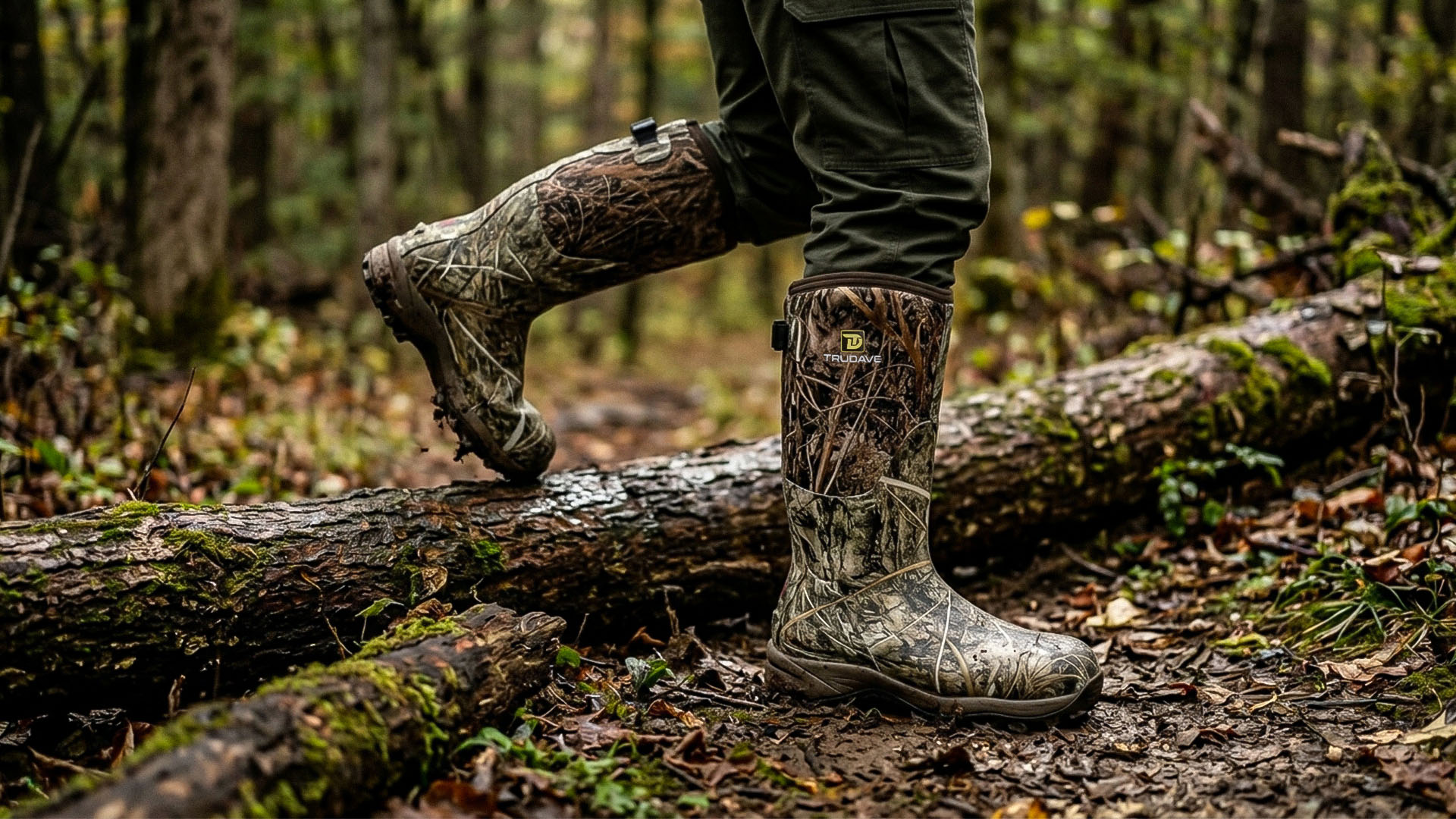
Hunters may benefit from waterproof hunting boots for late season duck hunting that provide secure heel retention, dependable traction, and enough insulation for cold northern conditions without becoming unnecessarily cumbersome.
Waterproofing Is Essential
Cold wet feet quickly become a serious comfort problem.
Moisture Can Come From:
- Snow
- Spray
- Slush
- Mud
- Shallow water
Tall Rubber Boots Can Be Useful
Where the route includes:
- Slush
- Mud
- Shallow shoreline water
rubber hunting boots provide simple waterproof protection.
Insulated Rubber Boots May Be Helpful
during long cold stationary hunts.
But Fit Still Matters
A warm boot that slips at the heel creates problems.
Secure Heel Retention Is Important
Especially when walking through:
- Mud
- Snow
- Uneven rock
Lace-Up Waterproof Boots Can Be Better on Rocky Ground
Supportive lace-up boots may offer:
- Better ankle control
- More precise fit
- Improved stability
Choose Boots for the Entire Route
Consider:
- Ramp
- Shoreline
- Boat
- Snow
- Temperature
Traction Is Critical
Icy rock is one of the most dangerous surfaces.
No Ordinary Boot Guarantees Ice Grip
Walk carefully and use appropriate traction aids where suitable and legal.
Mud-Tread Alone Is Not Ice-Tread
Different surfaces require different caution.
Gaiters Can Help
They reduce:
- Snow
- Slush
- Water
entering lace-up boots.
Snow Down the Boot Collar Is a Quick Way to Soak Socks
Carry Spare Socks
Protect them inside waterproof storage.
Waders May Be Useful
Where shore access requires entering shallow water above normal boot height, properly fitted hunting waders can provide additional waterproof protection.
Waders Do Not Make Cold Water Safe
They are not substitutes for:
- Flotation
- Route knowledge
- Judgment
Wading in Winter Is High Consequence
A fall can rapidly become an emergency.
Avoid Deep Water
Test Bottom Depth
Use a wading staff where appropriate.
Rocky Bottoms Can Shift
Do not assume every stone is stable.
Current Makes Wading More Dangerous
Moving water increases force against the body.
Do Not Force River Crossings
A longer shore route is better than an unsafe crossing.
Wader Belts Should Be Used Correctly
Follow manufacturer guidance.
Chest Waders Are Not Flotation Devices
Cold Weather Clothing Requires Balance
Hunters often make one of two mistakes:
- Too little insulation
- Too much insulation while walking
The Walk In Generates Heat
Heavy gear and winter clothing can produce sweat.
Sweat Becomes Dangerous Discomfort Later
Once stationary, trapped moisture cools quickly.
Start Slightly Cool
Add layers at the setup.
Windproof Layers Are Extremely Important
Cold wind over open water strips heat quickly.
Insulation Needs Protection From Moisture
Keep dry layers in waterproof storage.
Gloves Are Critical
Late-season hunters handle:
- Cold metal
- Wet birds
- Boat lines
- Decoys
Carry More Than One Pair
A wet glove becomes nearly useless.
Waterproof Gloves Help With Setup
A warmer dry pair can be reserved for waiting.
Head and Face Protection Matter
Open-water wind can become severe.
Neck Protection Helps Too
Sunglasses or Eye Protection Can Reduce Glare
Snow and water reflect light strongly.
Cold Air Can Make Eyes Water
Wind protection improves comfort.
Ice Can Form on Equipment
Decoy lines, anchors, and boat hardware may freeze.
Keep Critical Gear Functional
Do Not Let Ice Build Around Safety Equipment
Frozen Zippers Can Become Difficult
Maintain gear according to manufacturer instructions.
Decoys Can Ice Up
Freezing spray may coat surfaces.
Ice Changes Visibility and Movement
Goldeneyes Often Use Open Water Far From Shore
Scouting optics become valuable.
Binoculars Can Save Hours
Glass:
- River bends
- Ice edges
- Offshore structure
before walking or launching.
Use a Spotting Scope Where Appropriate
Large lakes can require longer viewing distances.
Identify Bird Position, Not Just Bird Presence
Record whether they are:
- Feeding
- Resting
- Moving
Feeding Birds Are More Useful Than Passing Birds
Watch Repeated Flight Lines
Birds may follow:
- Shoreline
- River channel
- Island edge
consistently.
One Good Flight Corridor Can Be More Important Than a Large Random Setup
Morning Movement Can Be Strong
But diving ducks may move throughout the day.
Midday Can Be Productive
Weather and disturbance often create additional flights.
Late Afternoon Can Produce Return Movement
Especially toward preferred resting water.
Do Not Hunt Only Sunrise
Current behavior matters.
Cold Fronts Can Change Goldeneye Numbers
Migration can shift rapidly.
New Birds May Appear Overnight
Freeze-Up Can Concentrate Them
When smaller waters close, larger open systems become more important.
A Lake Empty Last Week Can Become Productive Later
Scout Repeatedly During Seasonal Change
Snowstorms Can Change Access Faster Than Bird Distribution
The birds may still be there.
You may no longer have a safe route.
Safety Overrides the Pattern
Fog Can Be Extremely Dangerous on Large Water
Visibility can disappear.
Do Not Depend on Shoreline landmarks
alone.
Carry reliable navigation
and know how to use it.
Mark the launch point
Do Not Launch Into Conditions Beyond Your Experience
Darkness Increases Risk
Late-season daylight is limited.
Plan Return Time Conservatively
Carry Headlamps
Even if hunting primarily from a boat.
Keep Backup Lights
Cold reduces battery performance.
Dogs Can Be Useful Retrievers
A trained retriever may help recover diving ducks.
But Goldeneye Habitat Creates Serious Dog Risks
Cold water is the biggest concern.
Dogs Lose Heat Rapidly
Especially after repeated retrieves.
Watch for:
- Shivering
- Weakness
- Slowed response
Provide a Dry, Wind-Protected Area
Dog Vests May Be Appropriate
depending on conditions and fit.
Carry Towels
Drying the dog between retrieves helps.
Do Not Send Dogs Into Unsafe Ice
Floating ice can trap or injure them.
Thin shoreline ice is dangerous
Current Adds Risk
River retrieves can pull a dog downstream.
Do Not Send a Dog Into Water Beyond Its Training and Conditions
Keep Boat Access Ready
Recovery plans should include the dog.
Carry Fresh Drinking Water
Cold does not eliminate hydration needs.
Dogs should not depend on lake or river water
Paw Checks Matter
Rocky shores, ice, and frozen gravel can damage pads.
Ice can collect between toes
Remove buildup.
Common Goldeneye Hunting Mistakes
Hunting Any Open Water Without Scouting Food
Not all open water provides productive diving habitat.
Ignoring Current Breaks
River structure can strongly influence feeding locations.
Treating Ice Only as an Obstacle
Ice also changes where birds concentrate.
Underestimating Late-Season Water
Cold water dramatically raises the consequences of mistakes.
Wearing Warm Boots With Poor Traction
Insulation does not help if the hunter slips on icy rock.
Assuming Waders Make Cold Water Safe
They do not.
Failing to Learn Female Diving Duck Identification
Hens can be more difficult than drakes.
Using Old Waterfowl Regulations
Always verify current species and area rules.
Positive Identification Is Essential
Goldeneyes may share water with several diving ducks.
Learn Common Goldeneye Carefully
Study:
- Drake plumage
- Female plumage
- Head shape
- Wing pattern
- Flight style
Buffleheads Can Appear Similar at Distance
Especially in poor light.
Barrow’s Goldeneye May Occur in Some Regions
Hunters in overlapping areas need to understand identification and current legal requirements.
Do Not Depend Only on One White Patch
Lighting and distance can mislead.
If Unsure, Do Not Shoot
Common Goldeneyes Are Migratory Game Birds
Before hunting, verify current official:
- Season dates
- Daily bag limits
- Possession limits
- Species-specific limits
- Shooting hours
- License requirements
- Migratory-bird requirements
- Non-toxic ammunition requirements
Regulations Can Vary by Jurisdiction
Do not assume one state or province matches another.
Species-Specific Diving Duck Restrictions May Apply
Check the exact current rule.
Do Not Use Last Year’s Regulations
Migratory-bird rules can change.
Public Water Can Still Have Access Restrictions
Boat launches and shorelines may have:
- Seasonal closures
- Refuge boundaries
- No-hunting zones
Know the Exact Property
Open Water Does Not Mean Open Hunting
Refuge Boundaries Can Extend Onto Water
Use current maps.
Shoreline Homes Can Create No-Shooting Zones
Know local setbacks.
Private Land Access Still Matters
Public water may be bordered by private shore.
Do Not Assume You Can Cross Private Ground to Reach It
Parking Rules Matter
Late-season snow can block normal pullouts.
Do Not Block Plowed Roads
Emergency and maintenance access must remain open.
Boat Ramps May Close Seasonally
Verify current access.
Recovery Should Be Planned Before the Shot
Diving ducks can be difficult to recover.
Goldeneyes May Dive After Being Hit
A wounded bird can move significant distance underwater.
Watch Every Bird Carefully
Mark the Last Surface Position
Use:
- Shoreline feature
- Island
- Rock point
- Ice edge
Begin Recovery Promptly
Wind Can Move a Bird
Current Can Move It Even Faster
Dogs Can Improve Recovery
But only when conditions are safe.
Boat Recovery May Be Better in Cold Water
depending on conditions.
Do Not Pursue Into Dangerous Ice
Ethical Shot Selection Includes Recovery
A bird flying toward:
- Moving ice
- Strong current
- Unsafe open water
may be a poor opportunity.
Clean Game Handling Still Matters in Cold Weather
Cold air helps but does not replace proper care.
Keep Harvested Birds Clean
Avoid contamination from:
- Mud
- Fuel
- Boat water
Use appropriate storage
Do Not Assume Freezing Temperatures Solve Everything
Follow current food-safety guidance.
Habitat Conservation Matters
Northern rivers and lakes support far more than diving ducks.
They provide habitat for:
- Fish
- Waterfowl
- Aquatic mammals
- Other wildlife
Avoid Fuel or Oil Spills
Boat maintenance matters.
Clean Boats and Gear Between Water Bodies
Aquatic invasive species can spread on:
- Boats
- Anchors
- Waders
- Trailers
Drain Water Where Required
Follow local invasive-species rules.
Remove Aquatic Vegetation
Pick Up All Trash
Do not leave:
- Line
- Food packaging
- Spent hulls
Late-Season Habitats Are Already Harsh
Leave them clean.
Frequently Asked Questions
Where do common goldeneyes usually live during hunting season?
Common goldeneyes commonly use lakes, reservoirs, rivers, rocky shorelines, protected bays, and other northern open-water habitats where suitable diving food is available.
Are rivers good for goldeneye hunting?
Yes. Rivers can become particularly important when lakes and smaller wetlands freeze because current may keep water open while also concentrating feeding habitat.
Do goldeneyes use ice edges?
They can. Ice edges can create clear boundaries between frozen and open feeding or resting water, especially later in the season.
Are goldeneyes diving ducks?
Yes. Goldeneyes commonly dive underwater to feed on aquatic invertebrates and other food.
What boots are best for goldeneye hunting?
Waterproof hunting boots with secure heel fit, reliable traction on snow, mud, and rocky shoreline, plus insulation appropriate to late-season temperatures are practical.
Are rubber boots good for late-season goldeneye hunting?
Insulated rubber boots can work very well around slushy ramps, muddy shoreline, and shallow water, while rocky or steep shore access may favor supportive waterproof lace-up boots.
Are waders necessary for goldeneye hunting?
Not always. Shoreline and boat hunts may only require waterproof boots. Properly fitted waders can be useful for shallow-water setup or retrieval, but they do not make cold, deep, or moving water safe.
Can retrievers help hunt goldeneyes?
Yes. Retrievers can improve recovery, but cold water, ice, current, wind, and rocky shorelines require conservative dog management.
Do goldeneye hunting regulations vary?
Yes. Seasons, daily limits, possession limits, species-specific rules, licenses, shooting hours, ammunition requirements, and public-water restrictions vary by jurisdiction. Hunters should verify current official regulations before hunting.
Final Thoughts
Goldeneye hunting teaches hunters that winter concentrates both ducks and risk.
One river channel stays open.
One rocky shoal holds more food.
One protected bay blocks the wind.
One ice edge creates a feeding boundary.
One cold front pushes new birds onto water that looked empty only days before.
The pattern can become easier to see as winter tightens its grip.
The consequences of mistakes become greater too.
Scout before launching.
Watch current.
Read the wind.
Respect ice.
Know the shoreline.
Plan recovery before the birds arrive.
Carry enough dry gear.
Treat every cold-water decision conservatively.
Wear boots that let you cross snowy shorelines, muddy riverbanks, frozen gravel, rocky points, icy ramps, shallow water, and long late-season access routes without making wet feet, poor traction, or cold discomfort the reason the hunt ends early.
Use properly fitted waders only when conditions and water depth make them appropriate.
And when a flock of goldeneyes ignores miles of frozen shoreline and drops into one strip of open river water beside a rocky current break, remember the lesson.
In late winter, open water alone is not enough.
The birds are looking for open water that also provides food, manageable current, security, and enough room to survive the cold.
Find that intersection.
That is where the goldeneyes are likely to be.
