
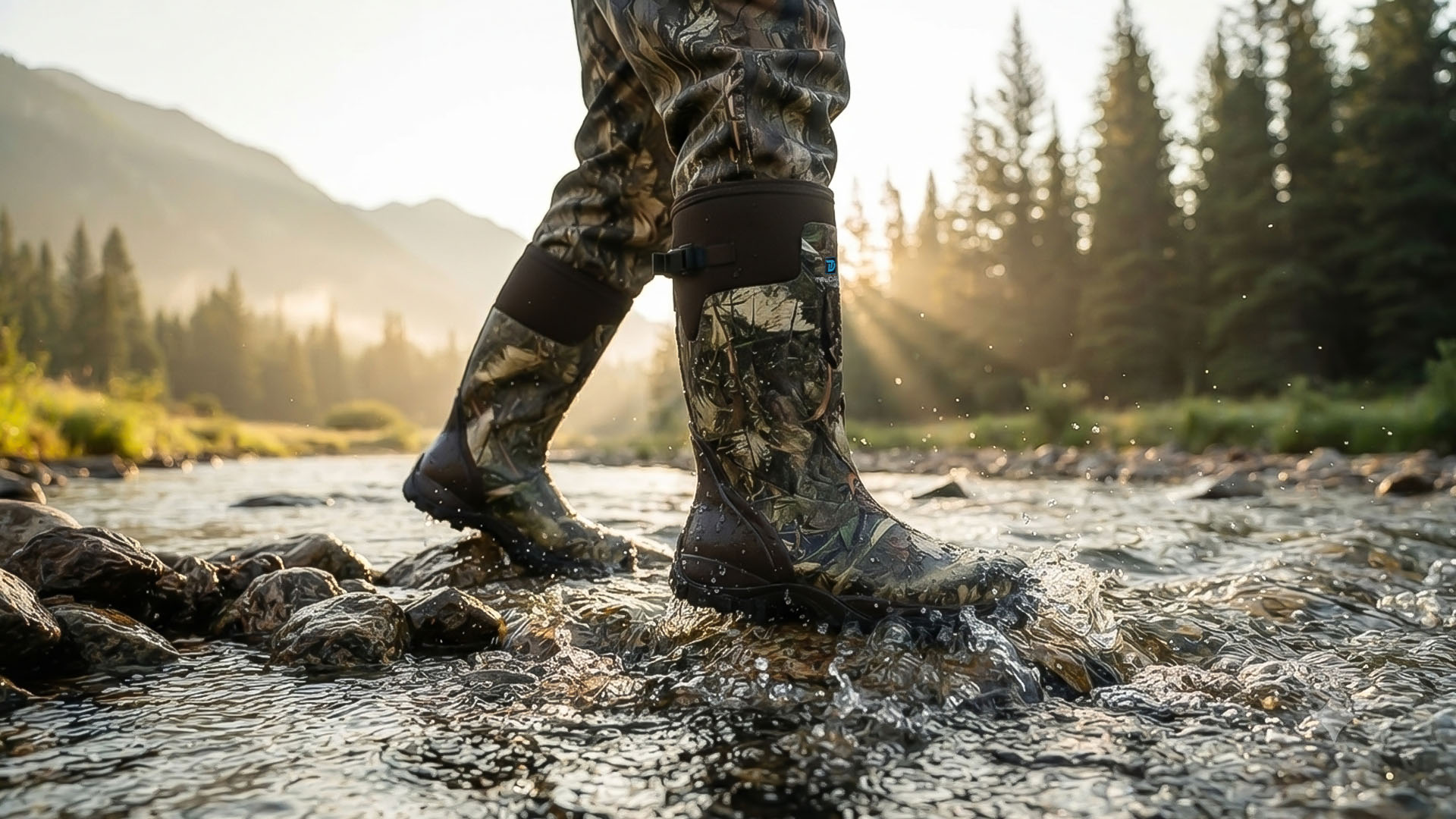
Heavy rain can make good deer ground look almost unrecognizable.
Logging roads turn into mud. Small creeks rise. Low spots collect standing water. Leaves stick to the forest floor, and access routes that were easy to walk two days earlier suddenly require more time and effort.
Many hunters look at those conditions and assume the woods will be dead.
Sometimes they are.
During the hardest rain, deer movement may slow, especially when heavy precipitation is combined with strong wind or rapidly changing temperatures.
But once the weather begins to break, the hours following heavy rain can create a useful hunting opportunity.
Deer that have spent hours bedded may get back on their feet. Wet leaves can make the woods quieter. Fresh tracks become easier to identify in soft ground, and standing water can change how deer move through familiar terrain.
The key is understanding that hunting after heavy rain is not simply a matter of returning to the same stand and hoping deer show up.
Access conditions change.
Food availability can change.
Water levels can temporarily alter travel routes.
And hunters who recognize those changes can adjust faster.
Do Deer Move After Heavy Rain?
Yes, deer can move after heavy rain.
The more important question is when they begin moving and where they go.
There is no single rule that applies to every property or weather system.
Rain intensity, temperature, wind, hunting pressure, time of year, and the duration of the storm can all influence deer behavior.
A short summer shower is different from twelve hours of cold November rain.
Likewise, a mature buck living on heavily pressured public land may respond differently from deer using agricultural ground with limited human disturbance.
In general, hunters should pay attention to the transition period when heavy precipitation begins to weaken or stop.
Deer that remained bedded during poor conditions may begin feeding, checking scrapes, or moving between bedding cover and food.
That does not guarantee daylight movement.
But changing weather often creates a new set of conditions that hunters can use.
Hunt the Weather Transition, Not Just the Forecast
One of the most useful strategies after heavy rain is watching the transition between the storm and the weather that follows.
A weather application might show rain ending at 10 a.m.
That does not mean you should arrive at the parking area at 10 a.m.
Conditions may begin improving earlier.
Rainfall can weaken.
Wind can change direction.
Barometric pressure may shift.
Cloud cover can begin breaking.
If you wait until the weather is completely clear, you may miss the first period of increased movement.
When possible, position yourself before the heaviest rain ends.
This is especially effective when the storm is followed by falling temperatures or more stable weather.
The goal is to already be hunting when deer begin moving again.
Start With Bedding Cover
After long periods of heavy rain, bedding areas deserve attention.
Deer may remain in protected cover during the worst conditions.
Thick vegetation, young clear-cuts, evergreen cover, leeward sides of ridges, and areas protected from strong wind can all provide bedding security.
The challenge is getting close without creating unnecessary pressure.
Do not immediately walk into the center of known bedding cover.
Instead, hunt the edges and travel routes leading away from it.
Look for terrain features that naturally concentrate movement.
These can include:
- Narrow strips of dry ground
- Creek crossings
- Benches along hillsides
- Logging roads
- Fence gaps
- Drainage crossings
- Saddles
- Edges between thick cover and open timber
After the weather improves, deer leaving bedding cover may use these routes to reach food or other parts of their home range.
Pay Attention to High Ground
Heavy rain can temporarily reduce the amount of usable ground in low-lying areas.
This is especially important in river bottoms, swamps, marsh edges, and flat agricultural country.
Standing water may cover trails.
Small drainage ditches may become difficult to cross.
Soft ground can slow movement.
In these conditions, slightly higher ground becomes more important.
You do not need to find a mountain.
A small ridge, old roadbed, field edge, elevated island of timber, or narrow strip of dry ground can become a natural travel route.
Study your hunting area before entering.
Compare known deer trails with elevation changes.
Then confirm what is happening on the ground.
Fresh tracks in soft soil can quickly show whether deer are using higher terrain.
Use Fresh Tracks to Your Advantage
Heavy rain erases old sign.
That can be useful.
Tracks, disturbed mud, and fresh trails found after a storm are more likely to represent recent movement.
Instead of trying to interpret several days of deer activity, you may be looking at sign created within the last few hours.
Slow down when scouting.
Look at:
- Muddy trail intersections
- Creek banks
- Field entrances
- Logging roads
- Edges of standing water
- Gaps in fences
- Soft ground near food sources
Fresh tracks can help identify where deer are currently moving.
This can be particularly useful during mobile hunts on public land.
If the sign is not there, keep moving.
If you find multiple fresh tracks traveling in the same direction, you may have identified a current travel route worth hunting.
Wet Leaves Can Help You Move Quietly
Dry leaves are one of the biggest challenges for mobile deer hunters.
After heavy rain, the forest floor often becomes much quieter.
That can make it easier to:
- Access remote hunting locations
- Adjust stand positions
- Still-hunt through suitable terrain
- Scout while hunting
- Move closer to bedding cover
Do not confuse quiet conditions with permission to move carelessly.
Branches still break.
Equipment still makes noise.
Mud can create suction around boots.
Water can splash.
But wet leaves often allow hunters to move through hardwoods with significantly less ground noise.
Use that advantage.
If you have been waiting for conditions that allow you to reach a difficult location quietly, the hours after heavy rain may provide the opportunity.
Adjust Your Access Route
Your normal access route may not be your best route after a storm.
A trail that was dry during scouting season may now be covered in mud.
A shallow creek may have become deeper.
Low ground may hold standing water.
Trying to force the same access route can create noise, leave excessive ground scent, and waste time.
Before entering the woods, consider alternative routes.
Look for:
- Ridges
- Gravel roads
- Higher logging trails
- Field edges
- Stable creek crossings
- Firm ground along terrain transitions
Hunters who regularly deal with muddy trails, creek bottoms, marsh edges, and standing water should also match their footwear to those conditions.
A pair of waterproof hunting boots for muddy conditions can help hunters stay mobile when ordinary footwear begins absorbing water, losing traction, or becoming difficult to clean after repeated exposure to wet ground.
The goal is not simply staying dry.
Reliable wet-weather footwear allows you to continue using effective access routes when conditions become difficult.
Watch Creek Crossings and Drainages
Water levels can change deer movement.
A creek that deer normally cross anywhere may temporarily become passable in only a few locations.
That creates potential funnels.
Look for shallow crossings, gravel bars, narrow sections of water, and established trails entering both sides of the creek.
Fresh tracks are especially valuable.
If deer are concentrating around a limited number of crossings, hunters may be able to identify predictable movement.
However, be careful with access.
Walking directly through an active creek crossing can leave scent and disturb the area.
Whenever possible, approach from the side and hunt downwind.
Check Food Sources After the Storm
Deer eventually need to feed.
After extended poor weather, food sources can become important.
The correct location depends on the season and region.
Possible food sources include:
- Agricultural fields
- Acorns
- Browse
- Food plots
- Cut corn
- Soybeans
- Soft mast
- Regenerating clear-cuts
The mistake is assuming deer will immediately walk into the center of an open food source during daylight.
Mature deer may stage inside cover before entering open areas.
Look for fresh tracks and trails between bedding cover and food.
Hunting these transition areas can provide better opportunities than sitting directly over the food source.
Do Not Ignore Midday Movement
Many hunters focus entirely on the first and last hours of daylight.
After a major weather event, midday movement may deserve attention.
Deer that delayed normal movement because of poor conditions can become active at unusual times.
This can be especially relevant during the rut, when bucks may already be covering more ground.
If heavy rain ends during the late morning, leaving the woods at 10 a.m. may be a mistake.
Consider staying longer.
Watch the weather.
Pay attention to fresh sign.
Adjust based on what the deer are doing instead of following a fixed schedule.
Use the Wind Created by the New Weather System
Storms can change wind direction.
A stand that was impossible to hunt before the rain may become usable afterward.
The opposite can also happen.
Always check the wind again before entering.
Do not rely on the forecast you checked the night before.
Terrain can also influence wind behavior.
Creek bottoms, ridges, valleys, and thick vegetation can create local air movement that differs from the general forecast.
Use wind indicators regularly.
After heavy rain, humidity and changing temperatures can also create shifting thermal conditions.
If the wind is unstable, give bedding areas more distance.
Expect Mud to Slow You Down
One of the most common mistakes hunters make after rain is underestimating travel time.
Mud changes everything.
Every step requires more effort.
Steep banks become slippery.
Creeks take longer to cross.
Wet vegetation adds resistance.
A route that normally takes thirty minutes may require forty-five.
Leave earlier than normal.
Moving quickly through muddy terrain creates unnecessary noise and increases the risk of falling.
Extra time allows you to choose better footing, protect your equipment, and approach hunting areas more carefully.
Protect Your Hunting Gear
Wet ground creates problems even after the rain stops.
Your pack may be placed on saturated soil.
Water can drip from vegetation.
Mud can cover binoculars, rangefinders, and other equipment.
Keep essential gear protected.
Use waterproof bags or pack compartments for:
- Phone
- Hunting license
- Batteries
- Fire-starting equipment
- First-aid supplies
- Extra clothing
- Dry socks
If you are hunting far from the vehicle, keeping one set of essential items dry can become important.
Be Careful Around Rising Water
Heavy rain creates opportunities, but it also creates hazards.
Do not attempt to cross flooded creeks or moving water without carefully evaluating the conditions.
Water depth can be difficult to judge.
Current speed can increase quickly.
Banks can collapse.
Roads can become impassable.
Always have an alternative route.
Tell someone where you are hunting.
Know whether additional rain is expected upstream.
No hunting opportunity is worth taking unnecessary risks around floodwater.
Common Mistakes Hunters Make After Heavy Rain
Returning to the Same Stand Automatically
Conditions changed.
Deer movement may have changed with them.
Evaluate fresh sign before assuming yesterday’s location is still the best place to hunt.
Ignoring Access Conditions
Mud, standing water, and higher creeks can make normal access routes ineffective.
Plan alternatives.
Arriving After the Weather Has Completely Cleared
Deer may begin moving during the transition period.
Whenever possible, be positioned before conditions fully improve.
Walking Through Fresh Sign
Finding fresh tracks is useful.
Walking directly down the trail can contaminate the area.
Observe the direction of travel and set up with wind direction in mind.
Wearing the Wrong Footwear
Wet feet, poor traction, and heavy mud-covered boots can shorten a hunt.
Use footwear designed for the conditions you expect to encounter.
Leaving Too Early
Weather-related movement does not always follow the normal morning and evening schedule.
Consider staying through midday when conditions are improving.
Frequently Asked Questions
Is deer hunting good after heavy rain?
It can be.
The period when heavy rain weakens or ends may create increased deer movement, particularly when animals have remained bedded during poor conditions.
Hunters should evaluate temperature, wind, time of year, hunting pressure, and local deer behavior.
How long after rain stops do deer start moving?
There is no fixed amount of time.
Deer may begin moving while rain is still falling lightly, immediately after the storm, or several hours later.
Watching the weather transition and being positioned early is often more effective than waiting for completely clear conditions.
Where should you hunt deer after heavy rain?
Start by evaluating bedding cover, higher ground, food sources, creek crossings, terrain funnels, and fresh tracks.
The best location depends on how water has changed deer movement.
Does rain wash away human scent?
Rain can reduce some scent on vegetation and the ground, but hunters should not assume it completely eliminates human scent.
Continue paying attention to wind direction and access routes.
Are wet conditions good for still-hunting?
Wet leaves can reduce ground noise and create useful conditions for still-hunting.
Hunters should move slowly, use cover, monitor the wind, and avoid unnecessary movement near known bedding areas.
What gear should you carry when deer hunting after heavy rain?
Useful equipment includes waterproof footwear, rain gear, dry socks, waterproof storage, a navigation device, wind indicators, and clothing appropriate for changing temperatures.
Final Thoughts
Heavy rain changes deer country.
It erases old tracks, floods low ground, changes access routes, softens the forest floor, and can temporarily alter how deer travel between bedding cover and food.
Those changes create problems for hunters who refuse to adjust.
They also create opportunities.
Watch the transition between the storm and improving weather.
Look for fresh sign.
Check higher ground.
Evaluate creek crossings.
Use wet leaves to access locations that are normally difficult to approach quietly.
And plan for mud, water, and longer travel times before entering the woods.
Successful deer hunting after heavy rain is not about finding one perfect weather rule.
It is about recognizing that the landscape has changed, identifying how deer are responding, and making better decisions before other hunters adjust.
