
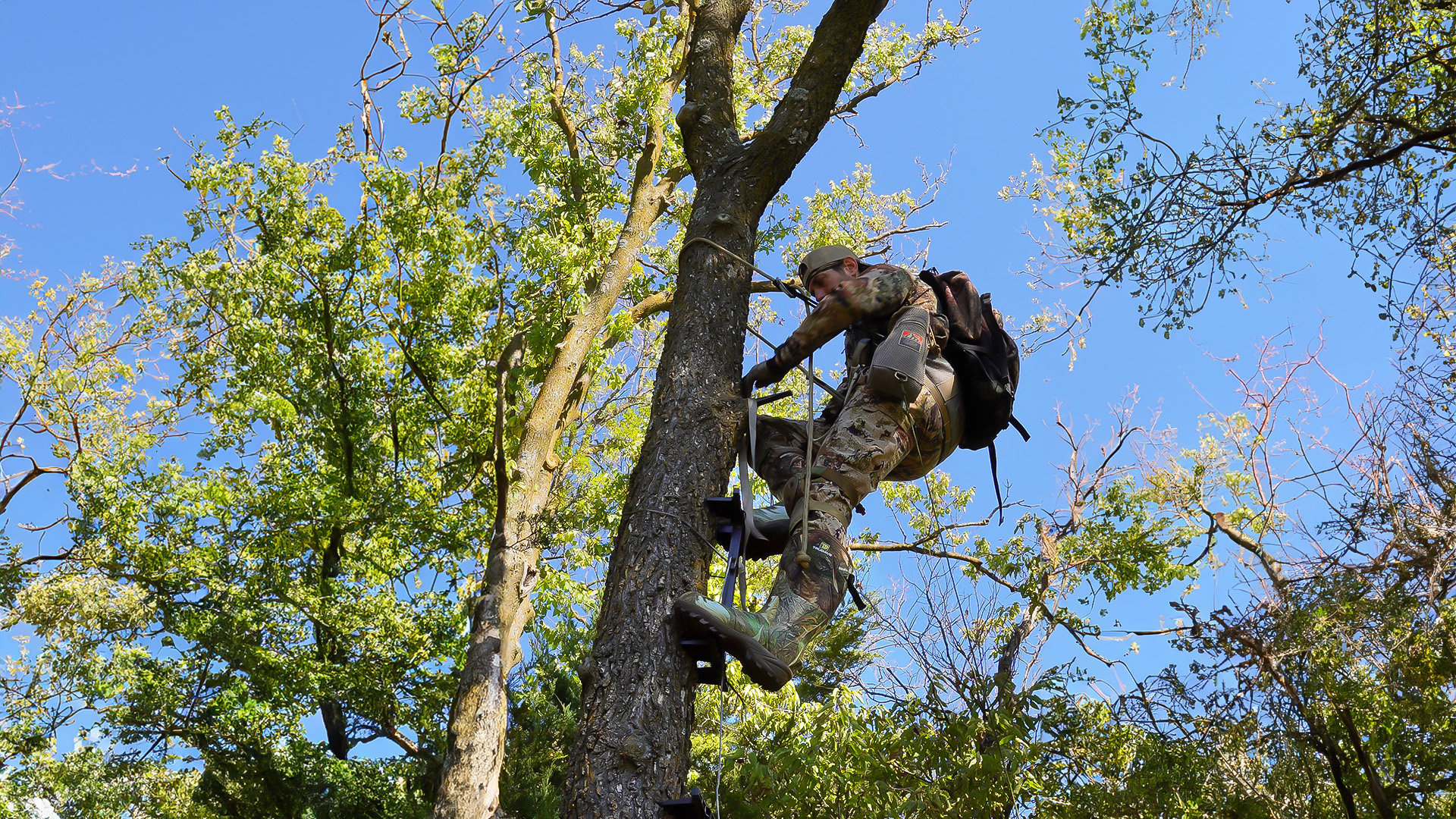
Introduction: One Boot, One Season, One Mistake
Every hunter who has spent enough time in the field has made the same mistake at least once. You buy a pair of heavily insulated, 1000-gram Thinsulate boots for late-season whitetail, and they’re perfect—in December. But then September rolls around, the temperature is 65°F, and you’re walking two miles into a public land spot with your feet swimming in sweat. By the time you reach your stand, your socks are soaked, your feet are starting to blister, and you’re already dreading the walk out.
The mistake isn’t buying the insulated boots. The mistake is assuming they’d work for every hunt. No single boot can optimally serve a season that spans 70-degree bowhunts and -10-degree muzzleloader sits, dry September ridges and flooded November timber, spot-and-stalk miles and motionless stand hours. The right tool in the wrong conditions is just as useless as the wrong tool entirely.
Trudave Gear has built its 2026 hunting boot lineup—WildGuard, TrailGuard, and DryFlow—around the recognition that different hunts demand different boots. But the boots themselves are only half the solution. The complete system includes the socks that manage moisture, the insoles that support your arches, the gaiters that seal out debris, and the care protocols that keep every component performing through multiple seasons. This guide is about building that system: matching the right Trudave boot to each phase of your hunting year, layering the right accessories, and creating a rotation that keeps your feet dry, warm, and comfortable from opening day to the final sunset of the season.
Part 1: The Seasonal Reality—Why Three Boots Cost Less Than You Think
Let’s start with the economics, because they’re the first objection most hunters raise. “I can’t afford three pairs of hunting boots.” But can you afford to replace a single pair of overworked boots every two seasons? Can you afford to cut a hunt short because your feet are frozen or blistered? Can you afford to spend $350 on one pair of premium boots that still leaves you compromised in half your hunting conditions?
The truth is that Trudave’s direct-to-consumer model changes the math entirely. By selling directly to hunters rather than through retailers who double the price, Trudave delivers vulcanized natural rubber, 5mm neoprene, and EVA midsoles at prices that reflect the materials rather than the brand markup. A full three-boot system—DryFlow for early season, WildGuard for the rut, TrailGuard for late season—costs roughly the same as a single pair of premium boots from a legacy brand sold through traditional retail.
This isn’t about owning more boots. It’s about owning the right boot for each set of conditions, and not burning through any single pair because it’s being asked to do something it wasn’t designed for. Boots that are rotated seasonally last longer per pair because each pair is only seeing a few months of hard use per year, with the rest of the year spent properly stored and cared for. The economics of a rotation system actually favor your wallet over the long run.
Part 2: The Three-Boot Rotation—What Each Trudave Boot Does Best
A complete Trudave hunting boot rotation covers the full calendar, from early bow season through late muzzleloader. Here’s how each boot fits into the system.
Early Season: DryFlow (September – Mid-October)
The early season is defined by warmth, miles, and active hunting. Temperatures range from the 40s at dawn to the 70s by midday. You’re scouting, hanging stands, and bowhunting over food sources. You’re walking—a lot. Insulation in these conditions is a liability. Your body is generating heat through movement, and any insulation in your boot traps that heat, causing sweat that turns cold the moment you stop.
The DryFlow is Trudave’s zero-insulation specialist. Built from industrial-grade waterproof rubber with vulcanized sealed seams, it keeps the dew, creek water, and morning mud out while letting your body manage its own temperature. The aggressive cleated outsole pushes mud out with every step for constant ground contact, and the non-slip rubber compound grips on mixed surfaces—gravel roads, dirt trails, rocky ridges. A structured heel cup locks the foot in place to prevent blister-causing heel slip on long descents.
Pair the DryFlow with lightweight merino wool socks for warm afternoons, midweight merino for cool mornings. The boot’s uninsulated interior means the sock is your primary thermal regulation layer, giving you more control than a fixed-liner boot can offer.
The Rut: WildGuard (Mid-October – Late November)
The rut is the transition zone. Temperatures swing from the 20s at dawn to the 50s by midday. You’re walking to stands in the dark through wet grass and frost, sitting for hours, still-hunting through midday, and sitting again until dark. You need insulation for the sits but breathability for the walks. You need waterproofing for the creek crossings and scent control for the pressured deer.
The WildGuard is Trudave’s wet-terrain, variable-condition specialist. Its 5mm neoprene upper bonded to a vulcanized rubber lower provides insulation with a breathable liner that traps warmth without overheating. The neoprene insulates even when wet—unlike synthetic fiber insulations that collapse—making it the right choice for creek crossings and wet-ground approaches. The camo finish keeps you hidden in timber, reeds, or brush. The deep-lug outsole grips on wet logs, muddy banks, and uneven ground.
Pair the WildGuard with midweight merino wool socks for most rut conditions. On especially cold mornings, step up to heavyweight merino. The breathable liner will manage moisture during the walk in, and the 5mm neoprene will keep you warm during the sit.
Late Season: TrailGuard (Late November – January)
Late season is the deep freeze. Temperatures are in the single digits or below zero. The ground is frozen into jagged ruts. You’re walking moderate distances and then sitting motionless for hours. Your body is generating minimal heat. The boot has to do all the work.
The TrailGuard is Trudave’s maximum-warmth stand boot. It pairs the same 5mm neoprene upper as the WildGuard with a fleece liner—a dual-layer insulation system engineered for static warmth. The neoprene traps body heat in its closed-cell foam structure. The fleece provides immediate warmth against the skin and wicks moisture outward. Together, they create an insulation profile that has been validated in -8°F conditions.
The TrailGuard’s outsole is built for frozen terrain, with aggressive lugs that bite into crusted snow and frozen mud, and self-cleaning tread spacing that sheds the chunky, half-frozen debris of late-season approaches. A reinforced kick-off heel tab allows hands-free removal at the end of a long, cold day.
Pair the TrailGuard with a two-layer sock system for the coldest conditions: a thin synthetic liner sock against the skin to wick moisture, and a heavyweight merino wool outer sock for maximum insulation. The boot’s intentional volume accommodates this thick sock combination perfectly.
Part 3: The Accessories That Complete the System
A boot rotation is the foundation, but the accessories are what make it work seamlessly across changing conditions.
Socks: The Adjustable Insulation Layer
The right sock system can extend the temperature range of a single boot by 20 degrees or more. For the DryFlow, socks are your only insulation—lightweight merino for warm days, midweight for cool. For the WildGuard, midweight merino handles most conditions; heavyweight merino extends its range into the 20s. For the TrailGuard, the two-layer system (liner + heavyweight merino) maximizes static warmth. Never wear cotton—it absorbs moisture, collapses, and actively cools your feet.
Insoles: Customized Support
All three Trudave hunting boots come with removable EVA insoles. These provide solid baseline support, but they can be upgraded. Trudave’s ToughCush Comfort Insoles offer more pronounced arch support and a shock-absorbing heel pad, beneficial for high arches or anyone standing for long hours. For flat feet, a flatter aftermarket insole can replace the stock footbed. The removable design means you’re not stuck with whatever the factory decided was “average.”
Gaiters: Sealing the Gap
The junction between your boot and your pant leg is a vulnerability. Wet snow, mud, pine needles, and trail debris enter through this gap. For the WildGuard and TrailGuard, a waterproof gaiter seals that gap during wet or snowy approaches. Trudave’s mid-calf boot height works seamlessly with standard gaiters, providing full protection without the bulk of knee-high boots.
Traction Devices: Ice Security
No rubber outsole, no matter how aggressively lugged or siped, can provide reliable traction on sheer ice. For the TrailGuard during late-season hunts, lightweight ice cleats that slip over the boot are a safety necessity. They take thirty seconds to put on and can prevent the fall that ends your season.
Boot Dryer: The Off-Day Essential
A low-heat convection boot dryer is a worthy investment for the multi-season hunter. It circulates room-temperature air through the boot interior, drying them thoroughly between hunts without the damaging heat of a radiator or campfire. This is particularly useful for the insulated TrailGuard, where the fleece lining can retain moisture.
Part 4: Care and Storage in a Rotation System
A rotational system means your boots spend part of the year in storage. How you store them determines whether they’ll be ready when their season returns.
After each hunt, rinse off mud and debris with clean water. Use mild soap and a soft brush for stubborn grime. Remove the insoles and let them dry separately. Air-dry the boots at room temperature, away from direct sunlight and heat sources—heat destroys vulcanized rubber.
When a boot’s season ends, give it a thorough cleaning. Ensure it’s completely dry—interior and exterior—before storage. Stuff the boots with crumpled newspaper to wick any residual moisture and help them hold their shape. Store upright in a cool, dark, dry place. Never store boots folded or crumpled, which creates permanent weak points. Condition the rubber exterior with a silicone-free rubber conditioner before storage to keep it supple through the off-season.
The boots you store in December will be ready for you in September. The boots you store in September will be ready for you in December. Properly maintained in a rotation, each pair can last five or more seasons.
Part 5: The Seasonal Rotation Matrix
| Season | Temperatures | Primary Activity | Trudave Boot | Sock System |
|---|---|---|---|---|
| Early (Sept – Mid-Oct) | 40°F – 75°F | Active, scouting, bowhunting | DryFlow | Lightweight to midweight merino |
| Rut (Mid-Oct – Late Nov) | 20°F – 55°F | Mixed walk/sit, wet conditions | WildGuard | Midweight to heavyweight merino |
| Late (Late Nov – Jan) | Below 30°F, often below zero | Stationary stand sits | TrailGuard | Synthetic liner + heavyweight merino |
This rotation covers the full spectrum of North American hunting conditions. No single boot is asked to do what it wasn’t designed for. Each boot is used during its optimal window, properly maintained during its off-season, and ready to perform when its season comes back around.
Part 6: What Hunters Who Rotate Say
The concept of a boot rotation isn’t new—it’s been standard practice among serious hunters for decades. What’s changed is that direct-to-consumer pricing has made it accessible to hunters who can’t justify spending $1,000 on three pairs of boots from a legacy brand.
A Trustpilot reviewer who adopted the full Trudave rotation wrote: “I used to wear one pair of insulated boots for everything from September bow season through January muzzleloader. My feet were either sweating or freezing half the time. Now I’ve got the DryFlow for early season, the WildGuard for the rut, and the TrailGuard for the deep cold. My feet are comfortable all season, and I’m not replacing boots every two years.”
Another hunter, a public-land whitetail hunter in Michigan, noted: “The WildGuard is my rut boot, and it handles the wet creek bottoms and cold mornings perfectly. When the freeze hits in December, I switch to the TrailGuards and my feet stay warm through four-hour sits. The system just works.”
The consistent theme is that a rotation isn’t about having more—it’s about having the right tool for each phase of the season, and not compromising anywhere along the way.
Conclusion: The System That Keeps You Hunting
The hunting industry has spent decades selling the myth of the all-season boot—the one pair that handles September scouting and January stand sits with equal competence. It’s a compelling story, but materials science tells a different one. Insulation, breathability, weight, and traction are trade-offs. A boot optimized for one set of conditions is inherently suboptimal for another. The only way to have the right tool for every hunt is to have more than one tool.
Trudave Gear’s WildGuard, TrailGuard, and DryFlow series make a three-boot rotation accessible to working hunters. Each boot is purpose-built for a specific phase of the season. Each is constructed from premium vulcanized natural rubber, neoprene insulation, and EVA midsoles—materials that match or exceed what’s found in boots costing twice as much. And because they’re sold directly to you, the price reflects the materials rather than the retail markup.
Build your rotation. Dial in your socks and insoles. Add the gaiters and traction devices your terrain demands. And then hunt every phase of the season with the quiet confidence that your feet are the last thing you’ll be thinking about when the moment comes.
To explore the complete Trudave Gear hunting boot lineup and build your seasonal rotation, visit trudavegear.com.
