
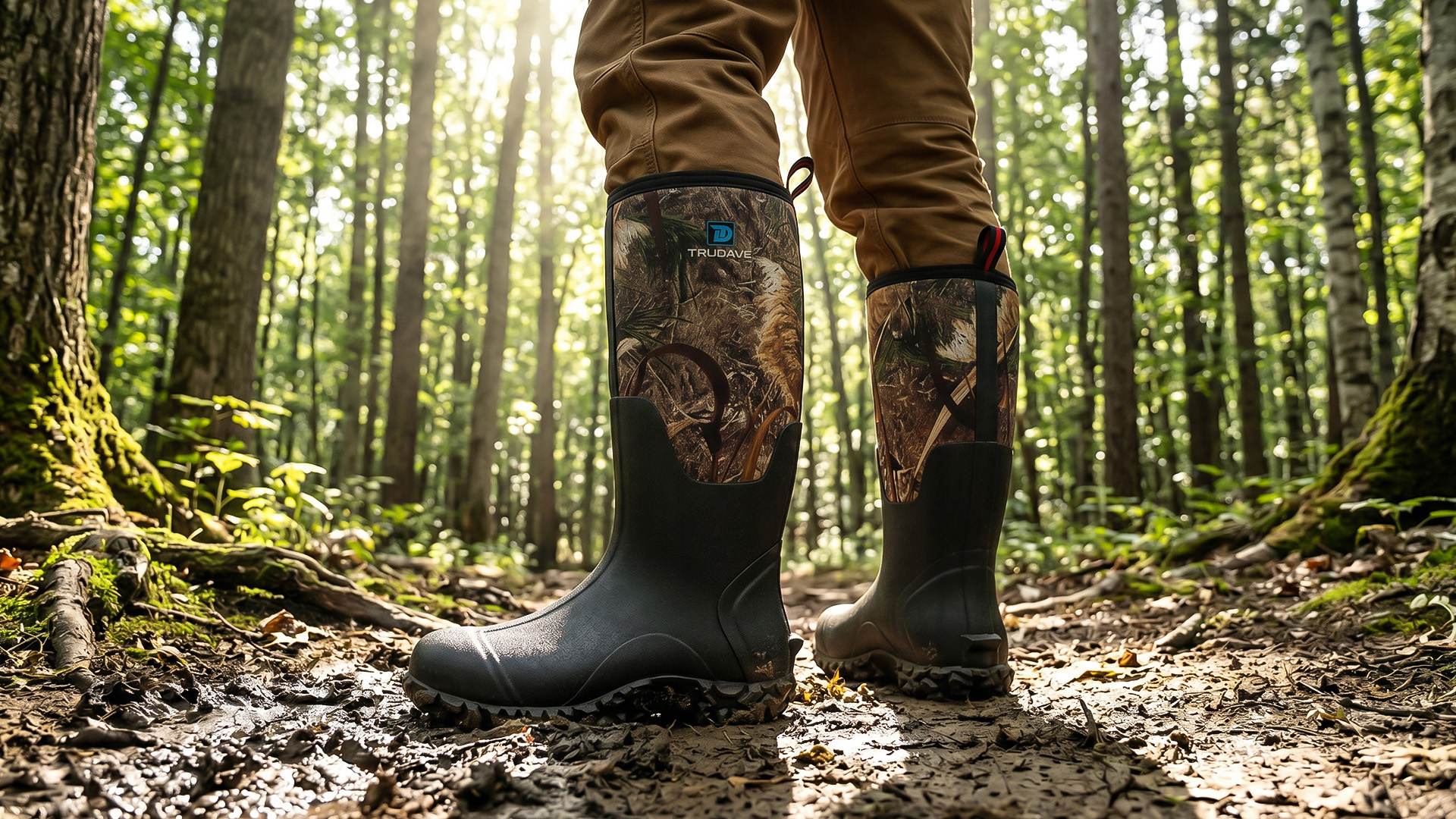
Introduction: The Price Tag Mirage
Walk into any high-end outdoor retailer, and the wall of hunting boots tells a story. The story is that the more you spend, the better you’ll hunt. 400forapairofstiff,Italian−leathermountainbootswithaVibramsole.350 for the latest waterproof-breathable membrane wrapped in 1000 grams of Thinsulate. The message is clear: if you’re serious, you’ll pay serious money.
But spend enough time in hunting camps—not the glossy catalog shoots, but the real ones, with muddy trucks and mismatched gear and guys who fill their tags every year—and you’ll notice something. Some of the most successful hunters are wearing boots that cost less than a tank of gas. They’re not wearing junk. They’re wearing boots built from the same premium materials as the $400 models—vulcanized natural rubber, 5mm neoprene, EVA midsoles—sold directly to them without the retail markup that doubles the price on a store shelf.
The hunting boot market has a transparency problem. The gap between a 100direct−to−consumerbootanda400 retail boot isn’t as wide as the price tag suggests. In many cases, the materials and construction are nearly identical. What you’re paying for at the high end isn’t always better performance. It’s a brand name, a retail distribution network, and a marketing budget that has nothing to do with keeping your feet dry or warm.
This article isn’t about bashing premium boots. There are scenarios—technical mountaineering, sheep hunts in the Alaska Range—where a $400 boot is the right tool, and I’ll tell you exactly when that’s the case. But for the vast majority of hunters, a well-engineered, direct-to-consumer boot like those in Trudave Gear’s lineup will perform every bit as well, last just as long, and leave enough cash in your pocket for gas, tags, and time in the field. Let’s break down the materials, the construction, and the honest trade-offs so you can make the decision with your eyes open.
Part 1: The Material Equation — Premium Means Vulcanized Rubber and Neoprene, Not a Logo
The most important thing to understand about hunting boots is that the materials that actually keep you dry and warm—vulcanized natural rubber, high-density neoprene, EVA foam—are not proprietary technologies. They are commodity materials used by every reputable boot manufacturer, from the 450Kenetrekstothe130 Trudave TrailGuards. The difference in cost between a boot made from these materials and a boot made from cheaper alternatives (PVC, low-density foam, glued construction) is real and justifiable. The difference in cost between two boots made from the same materials but sold through different channels is mostly retail markup and brand tax.
Let’s look at what actually matters.
Vulcanized Natural Rubber
Vulcanization is a chemical process discovered by Charles Goodyear in 1839. It cross-links rubber polymer chains with sulfur and heat, transforming raw rubber into a stable, elastic, permanently waterproof material. A vulcanized rubber boot is, at the molecular level, a single continuous unit. There are no glued seams to separate. There are no stitches to rot. Water doesn’t get in because there is no “in” for it to get through.
Both Trudave and the $300+ premium brands use vulcanized natural rubber in their hunting boots. Not all of them, of course—some premium brands use full-grain leather for the upper, which has its own trade-offs—but when it comes to the rubber lower shell that actually contacts the mud, water, and frozen ground, vulcanized natural rubber is the standard. Trudave’s WildGuard, TrailGuard, and DryFlow all use it. So does the LaCrosse Alphaburly Pro. So does the Muck Boot Arctic Pro. The material is the same. The performance is the same. The price is not.
5mm Neoprene
Neoprene, invented by DuPont in 1930, is a closed-cell foam that traps millions of insulating air bubbles in its polymer matrix. It’s the same material used in wetsuits. Five millimeters of high-density neoprene—the thickness Trudave uses in its insulated WildGuard and TrailGuard boots—provides substantial insulation that doesn’t collapse when wet the way synthetic fiber insulations (like Thinsulate) can. Premium cold-weather boots from brands like Muck and LaCrosse also use 5mm neoprene for their insulating shafts. The neoprene itself is not what drives the price difference. It’s the distribution channel and the brand equity layered on top.
EVA Midsoles
EVA (ethylene-vinyl acetate) is a lightweight, shock-absorbing foam that replaced heavy steel shanks in most modern performance footwear. An EVA midsole cushions every step, reduces lower back fatigue, and provides arch support without the weight and cold-conduction of a steel shank. Trudave puts EVA midsoles in all its hunting boots. Premium brands do the same. The technology is identical. The comfort and weight savings are identical. What changes between a 130bootanda350 boot is often not the midsole at all—it’s the marketing story around it.
The conclusion from a materials standpoint is straightforward: a Trudave TrailGuard with a vulcanized rubber lower, 5mm neoprene upper, EVA midsole, and sealed construction is materially equivalent to a premium cold-weather hunting boot from a legacy brand. Both will keep your feet dry. Both will keep you warm. Both will last for multiple seasons if properly cared for. The $200+ price difference is not buying you better materials. It’s buying you a different purchasing channel and a different logo on the side.
Part 2: Construction — Vulcanized vs. Glued, and Why It Matters for Longevity
Materials are half the story. How those materials are put together determines whether the boot stays waterproof for five seasons or starts leaking in five months.
Glued Construction
Glued boots are the industry standard at the low end. The upper, outsole, and lining are bonded with waterproof adhesives. On day one, the bond holds. But adhesives degrade over time. Water exposure weakens them. Temperature swings cause the rubber and adhesive to expand and contract at different rates, creating microscopic gaps that widen with every flex cycle. Within a season—sometimes within a few months—those gaps become leaks. The boot fails, and you buy another one.
Vulcanized Construction
Vulcanization, as described above, fuses the boot’s components into a single continuous unit at the molecular level. There is no adhesive bond to degrade. There is no seam to separate. The boot is permanently waterproof. The structural integrity does not weaken with flexing, freezing, or exposure to water. A vulcanized boot costs more to manufacture than a glued boot, which is why many budget brands avoid it. But once the vulcanization is done, the durability difference is enormous.
Trudave vulcanizes every hunting boot they make. So do the premium brands. The construction method that determines long-term durability is the same across the price spectrum. The difference in longevity between a properly cared-for Trudave boot and a properly cared-for 350bootisnegligible—bothshoulddeliverfiveormoreseasonsofharduse.The30 glued PVC boot at the big-box store, by contrast, is engineered to fail within a year. That’s where the real waste happens, and it’s the false economy that Trudave’s direct-to-consumer model is designed to eliminate.
Part 3: When the High-Dollar Boot Earns Its Price
So far, the argument sounds one-sided: buy the cheaper boot with the same materials and pocket the difference. But there are real, legitimate reasons to spend more on hunting boots. They just apply to a much smaller percentage of hunters than the marketing suggests.
Technical Mountaineering and Sheep Hunts
If you’re chasing Dall sheep in the Alaska Range, spot-and-stalk hunting in terrain so steep you need to use your hands, or carrying a 70-pound pack over boulder fields for ten days, you need a boot with a stiff shank, a Vibram sole rated for technical rock, and a full-grain leather or synthetic upper that provides ankle support far beyond what a rubber-and-neoprene boot can offer. Boots like the Kenetrek Mountain Extreme or the Crispi Nevada are built for this specific, punishing work. They cost 400to500 because the materials, construction, and low-volume manufacturing for this niche are genuinely expensive.
Trudave does not build a technical mountaineering boot. The TrailGuard and WildGuard are designed for the stand hunter, the wet-terrain stalker, and the cold-weather sitter—not for vertical rock scrambling at 10,000 feet. If your hunt requires that level of technical performance, the premium boot is the right tool, and the price is justified.
Extreme Sub-Zero Stationary Hunting
For the hunter who sits motionless in a tree stand at -20°F for hours on end, insulation requirements can exceed what a 5mm neoprene boot can provide. Some premium boots in the $300+ range offer 2000 grams of Thinsulate or incorporate aerogel insulation for extreme cold. The TrailGuard’s 5mm neoprene and fleece liner are rated for serious cold—one reviewer stayed warm at -8°F—but if your regular hunting conditions dip below -20°F with long periods of absolute stillness, you may need the specialized insulation that only the top tier offers. That’s a small subset of hunters, but it’s real.
Fit and Sizing Orthotics
Some hunters have feet that are difficult to fit off-the-shelf. Premium boot brands often offer multiple width options, custom molding, and more size gradations. Trudave boots run slightly large by design to accommodate thick socks (a feature, not a flaw, as confirmed by multiple user reviews), but they are not available in wide or narrow widths. If you need a specific width or a medically prescribed orthotic fit, you may need to shop at the premium tier where those options exist.
For the other 90% of hunters—the whitetail stand sitter in Ohio, the duck hunter in Arkansas flooded timber, the public-land still-hunter in Michigan, the spring turkey chaser in Kentucky—the performance requirements are well within the capabilities of a well-engineered direct-to-consumer boot. The WildGuard, TrailGuard, and DryFlow will keep your feet dry, warm, and comfortable through a full season and beyond. The extra 200to300 buys you a logo, not a better hunt.
Part 4: The Trudave Lineup — Which Boot for Which Budget-Conscious Hunter
Trudave’s three hunting boot series are not a single “budget boot” masquerading in different colors. They are purpose-built tools with distinct material profiles, each designed for a specific hunting style. Because they are sold directly to consumers, the price reflects the materials—not a retail markup.
TrailGuard Series — The Extreme-Cold Stand Hunter
- Materials: 5mm high-density neoprene with fleece liner, vulcanized natural rubber lower, EVA midsole, self-cleaning deep-lug outsole.
- What It Replaces: Premium cold-weather stand boots in the 250–400 range.
- When to Choose It: Late-season whitetail, frozen-marsh duck hunting, any hunt where you sit motionless for hours in freezing temperatures.
WildGuard Series — The Wet-Terrain Stalker
- Materials: 5mm neoprene with breathable liner, vulcanized natural rubber lower, camo finish, EVA midsole, deep-lug outsole for wet logs and mud.
- What It Replaces: Premium camo hunting boots in the 200–350 range.
- When to Choose It: Marshes, flooded timber, creek crossings, any hunt where water and concealment are the primary challenges.
DryFlow Series — The Active Mobile Hunter
- Materials: Industrial-grade vulcanized natural rubber, zero insulation, EVA midsole, aggressive cleated outsole, structured heel cup.
- What It Replaces: Lightweight, uninsulated waterproof hunting boots in the 150–250 range.
- When to Choose It: Early-season bowhunting, spring turkey, spot-and-stalk in mild weather, any hunt where your body generates its own heat through movement.
Each of these boots delivers the same core performance as its premium counterparts—100% waterproofing, durable construction, terrain-appropriate traction, all-day comfort—at a fraction of the cost. The savings come not from cutting corners on materials but from cutting out the middlemen who double the price before the boot reaches a shelf.
Part 5: Real-World Value — What Hunters Are Saying
The best evidence for the direct-to-consumer value proposition comes from the hunters who have put Trudave boots through genuine abuse and reported back honestly.
On Trustpilot, where Trudave maintains a “Great” rating of 4.1 out of 5, a reviewer who tested the TrailGuard in extreme cold wrote: “After walking over a mile in -8°F weather, my feet stayed warm and comfortable the entire time—even during the early morning hours when temperatures bottomed out.” That’s the same cold-weather performance you’d expect from a $300+ boot.
Another reviewer, a farmer who purchased Trudave boots for daily outdoor work, captured the core value proposition: “The boots have made our jobs and lives sooo much better and easier. And best of all, our feet stay DRY!!! It has been about two months now and these boots are still going strong and keeping our feet protected. Would recommend these boots 100%.”
The “runs slightly large” feedback that appears consistently across reviews is not a quality issue—it’s a design feature. As one reviewer explained: “The size is slightly larger, but with socks they fit well and comfortably. A size smaller would be too tight.” The intentional volume accommodates the thick socks that cold-weather hunting demands. This is the same design philosophy used by premium brands. It’s a feature that enables a customizable sock system, not a sizing flaw to be corrected.
Independent gear reviews echo the value assessment. One reviewer of Trudave’s neoprene boots noted “Exceptional all-day comfort, often compared to slippers or tennis shoes” with “Guaranteed 100% waterproofing and effective 6mm neoprene insulation” and “Superior anti-slip traction on diverse, challenging terrains.” Another concluded that Trudave “delivers surprisingly solid value… What you trade in price, you gain in honest, dependable performance.”
Part 6: The Sock-System Advantage — Stretch Your Dollar Further
One of the smartest ways to extend the value of any hunting boot is to pair it with the right sock system, and Trudave boots are built with this in mind. Because they are sized with intentional volume, you can adapt a single pair of boots to a wider temperature range simply by changing your socks.
For cold-weather stand hunting with the TrailGuard, a two-layer system—thin synthetic liner plus heavyweight merino wool outer—maximizes insulation without requiring a second pair of boots. For active hunting with the WildGuard, a single midweight merino sock provides the right balance of warmth and moisture management. For warm-weather hunting with the DryFlow, a lightweight merino or synthetic sock keeps feet cool and dry.
This sock adaptability means you don’t need separate boots for every 10-degree temperature swing. The 130TrailGuardwiththerightsockscanhandleeverythingfrom30°Fdowntowellbelowzero.A350 boot with a fixed liner cannot adjust. The sock system is where smart hunters stretch their gear budget without sacrificing comfort or performance.
Avoid cotton socks entirely—they absorb moisture, collapse into a cold, wet rag, and actively pull heat from your feet. Merino wool is the default for a reason: it insulates when damp, wicks moisture, and resists odor over multiple days. It’s a small investment that multiplies the performance of any boot.
Part 7: The Decision Framework — When to Spend, When to Save
By now the framework should be clear. The question isn’t “Which brand?” but “Which boot for my actual hunting conditions, and am I paying for materials or for marketing?”
| Your Hunt Profile | Right Boot | Approx. Price (DTC) | Premium Equivalent | When Premium Is Worth It |
|---|---|---|---|---|
| Late-season stand sits (below freezing) | TrailGuard | $130 | 250–400 | Extreme cold below -20°F requiring 2000g insulation |
| Wet-terrain stalking (marshes, creeks) | WildGuard | $130 | 200–350 | Technical rock scrambling requiring stiff mountaineering shank |
| Early-season / active / mild weather | DryFlow | $100 | 150–250 | Ultralight long-distance backpack hunting requiring specialized fit |
| Multi-season hunter | Two-boot system | 230–260 | 400–800+ | When your season spans mountaineering in August and stand sits in January |
For the majority of North American hunters, the left side of this chart is all you need. A TrailGuard for the cold sits, a WildGuard for the wet stalks, and a DryFlow for the warm, active days. At Trudave’s direct-to-consumer pricing, you can own all three for less than the cost of a single pair of top-tier premium boots. That’s not a compromise. That’s value engineering.
Conclusion: The Boot That Hunts, Not the Brand That Markets
The hunting boot industry has spent decades convincing hunters that you get what you pay for. Like most simple narratives, it’s partly true and mostly misleading. You do get what you pay for when you pay for materials—vulcanized rubber, 5mm neoprene, EVA midsoles. You don’t get what you pay for when you pay for a retail distribution network, a celebrity endorsement, and a glossy magazine spread.
Trudave Gear has built its hunting boot lineup on the first half of that equation. The materials are premium. The construction is vulcanized. The comfort architecture is modern. And because they sell directly to hunters rather than through retailers who double the price, the cost reflects the boot itself, not the overhead layered on top.
For the whitetail hunter in a freezing tree stand, the duck hunter in flooded timber, the public-land stalker covering miles of creek bottoms, and the spring turkey chaser running ridges—the TrailGuard, WildGuard, and DryFlow deliver the performance you need at a price that leaves more of your budget where it belongs: on gas, tags, and days in the field.
The right boot isn’t the one with the highest price tag. It’s the one whose materials match your hunt. Know what you’re paying for. Choose accordingly. And hunt longer.
To explore the complete Trudave Gear hunting boot lineup and find the right pair for your next hunt, visit trudavegear.com.
