
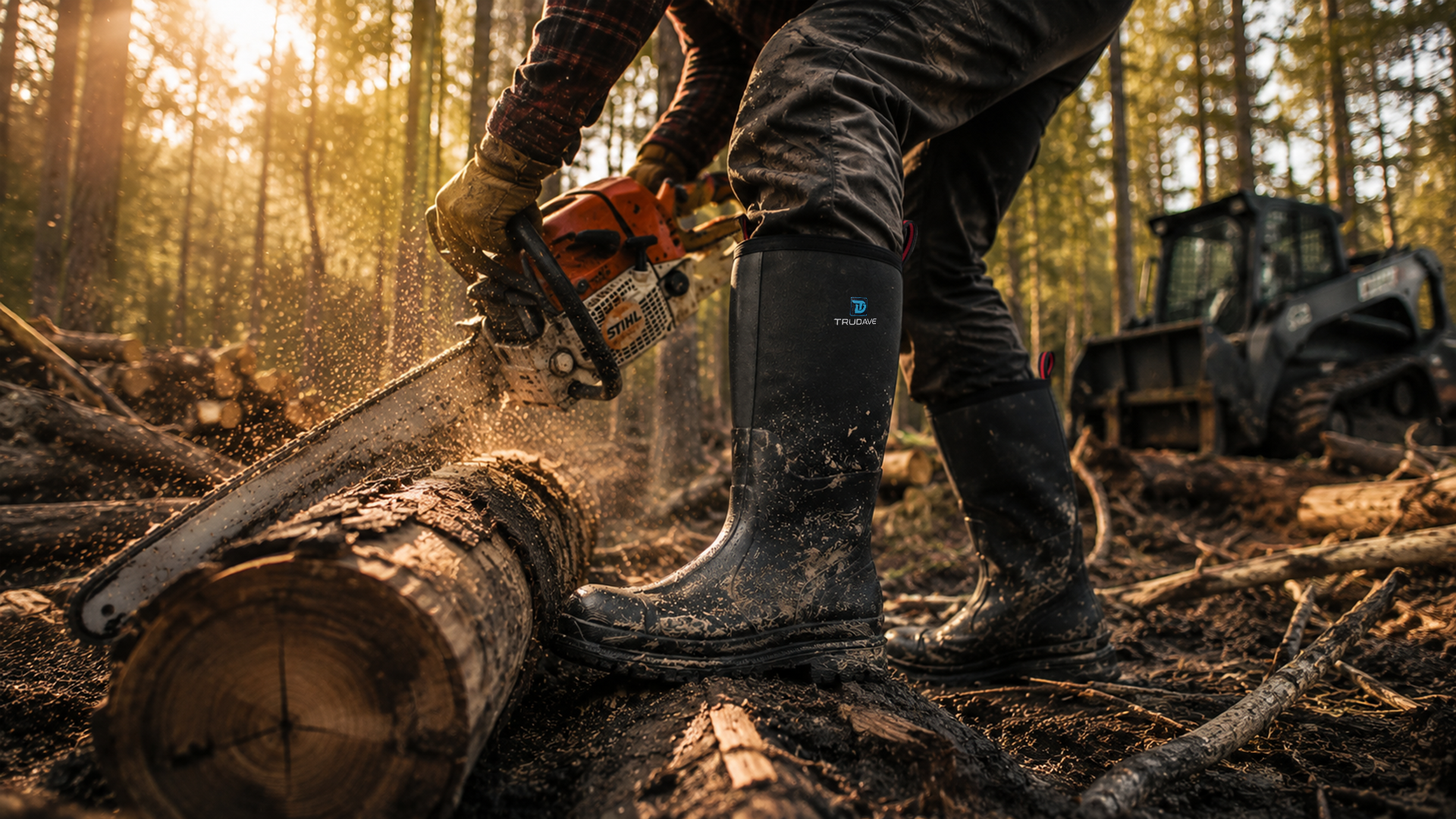
Introduction: A Long Walk in the Wrong Boots
In 1857, French inventor François-Louis Godillot patented a boot made entirely of vulcanized rubber, designed to keep soldiers’ feet dry in the muddy trenches of the Crimean War. It was a revolution—for the first time, a soldier could stand in ankle-deep water and emerge with dry socks. What Godillot couldn’t have known was that his invention would also set in motion a 160-year quest to solve a related problem that turned out to be far more stubborn: how to keep feet warm and comfortable at the same time.
That quest has taken hunting boots through several distinct eras. The pure rubber era, dominated by boots like the LaCrosse Grange (introduced in 1957), proved that vulcanized rubber could be 100% waterproof and naturally scent-free. The insulated era, driven by materials like Thinsulate and felt liners, added warmth but often at the cost of weight and bulk. And the modern neoprene era has combined these benefits, using the same material found in wetsuits to create boots that are simultaneously waterproof, insulating, and flexible.
Today, the global hunting apparel market is valued at 3.40billion,andhuntingbootsaloneareprojectedtogrowfrom2.3 billion in 2025 to $4.25 billion by 2035, driven by hunters demanding better performance from their gear in more extreme conditions. Trudave Gear has entered this market with a specific philosophy: that modern materials science has finally solved the problems that plagued Godillot’s original invention, and that those solutions should be available at honest, direct-to-consumer prices rather than inflated by retail markups and brand-name taxes.
This article traces the full arc of that evolution—from vulcanization to neoprene to EVA midsoles—and explains how Trudave’s WildGuard, TrailGuard, and DryFlow series represent the current endpoint of a journey that began with wet socks in a Crimean trench.
Part 1: The Vulcanization Revolution—Why 1839 Still Matters in 2026
The single most important technology in any hunting boot is invisible to the naked eye. It happens at the molecular level, and it was discovered by accident.
In 1839, Charles Goodyear accidentally dropped a mixture of rubber and sulfur onto a hot stove. Instead of melting into a sticky puddle, the rubber charred and became elastic, stable, and waterproof. Goodyear had discovered vulcanization—a chemical process that cross-links rubber polymer chains using heat and sulfur, transforming raw rubber (which is sticky in heat, brittle in cold, and generally useless as a structural material) into a stable, elastic, durable substance.
For hunting boots, the implications were immediate and permanent. Vulcanized rubber is 100% waterproof not because of a coating or a membrane, but because of its molecular structure. There are no pores for water to penetrate. This is why the LaCrosse Grange, introduced in 1957, established rubber as simultaneously the best scent-free and 100% waterproof material available to hunters. The boot is still sold today, more than six decades later, a testament to the durability of vulcanized construction.
But the Grange also revealed vulcanized rubber’s fatal flaw: it is a thermal conductor. Standing in 40-degree mud in pure rubber boots will chill your feet within 20 minutes regardless of sock thickness, because there is nothing between the cold ground and your foot except a thin layer of rubber that is, physically speaking, a heat sink. The Grange kept water out perfectly. It just couldn’t keep heat in.
Trudave builds on vulcanization’s waterproofing advantage while addressing its insulation limitation through material combination. The WildGuard Series, for example, uses a 5mm neoprene upper vulcanized to a natural rubber lower shell—creating a boot where the waterproof barrier is permanent (no glued seams to separate) and the insulation is built into the shaft material. The vulcanization process also prevents fading, chipping, or peeling of the rubber surface over time. This matters for hunting boots that scrape against rocks, brush, and frozen ground—damage that, on a cheaper boot, creates entry points for water.
Part 2: Neoprene—The Material That Solved the Cold-Feet Problem
If vulcanization solved the waterproofing problem in 1839, it took nearly a century for materials science to solve the insulation problem. The answer came from an unexpected source: wetsuits.
Neoprene, technically polychloroprene, was invented by DuPont scientists in 1930 as an oil-resistant synthetic rubber. Its original applications were industrial—gaskets, hoses, corrosion-resistant coatings. But its physical structure turned out to have properties that made it revolutionary for cold-weather outdoor gear: neoprene is manufactured as a foam, with millions of microscopic air bubbles trapped within its polymer matrix. Air is one of the poorest conductors of heat in nature, making it an exceptional insulator.
This is the fundamental physics that makes neoprene hunting boots different from pure rubber boots. Pure rubber conducts cold from the frozen ground directly into your foot. Neoprene breaks that thermal bridge. The 5mm neoprene upper on Trudave’s WildGuard and TrailGuard boots creates a warm pocket of air around your foot and lower leg while remaining flexible enough to walk naturally.
The thickness of the neoprene matters enormously. Trudave uses 5mm neoprene in its insulated boots—not the thinner 3mm found in budget alternatives. That extra 2mm represents significantly more trapped air and significantly more insulation value. For a hunter sitting motionless in a tree stand at 15°F, that difference is the gap between finishing the sit and climbing down early with numb toes.
Premium brands in the hunting space have recognized neoprene’s advantages for decades. LaCrosse Footwear, for example, builds its premium Alphaburly Pro hunting boot around “high quality, scent-free rubber with naturally insulating neoprene”. The combination has become the industry standard for serious cold-weather hunting footwear. What Trudave adds to this equation is accessibility: the same 5mm neoprene and vulcanized rubber construction, delivered through a direct-to-consumer model that eliminates the retail markup.
Part 3: The EVA Midsole and the Death of the Steel Shank
The third major evolution in hunting boot technology addresses a problem that most hunters don’t think about until it’s too late: the cumulative damage of standing on hard ground for hours.
Traditional work boots and many hunting boots use a steel shank—a rigid metal plate running through the midsole under the arch. The idea sounds reasonable: a steel shank provides arch support and torsional rigidity for uneven terrain. In practice, on a long hunt, a steel shank is dead weight that numbs the foot’s ability to feel the ground and transmits every step’s impact directly through the skeleton. By the end of a day, the hunter’s lower back, knees, and arches have absorbed thousands of un-cushioned impacts.
EVA (ethylene-vinyl acetate) midsoles solve this differently. EVA is the same shock-absorbing foam used in high-performance running shoes. It is lightweight, flexible, and provides excellent cushioning and shock absorption out of the box. It doesn’t add the weight that steel does, and it absorbs impact rather than transmitting it.
Trudave has eliminated the steel shank across its hunting boot lineup, replacing it with EVA midsoles that “reduce fatigue on long treks”. The WildGuard includes “cushioned EVA midsoles and arch support”. The TrailGuard features “cushioned EVA insoles, breathable lining, and shock-absorbing midsoles” that “provide lasting comfort and stability for all-day wear in rugged environments”. The DryFlow comes with “cushioned EVA insoles and arch support that reduce fatigue during long hours of work”.
The weight difference is significant and compounds over miles. Every ounce on the feet translates to roughly five times that in perceived exertion over a long day of walking. An EVA midsole weighs a fraction of what a steel shank weighs, and unlike steel, it provides cushioning that protects the joints rather than punishing them. For the hunter covering miles of public land, that difference translates directly into more energy for the hunt itself.
Part 4: The Three-Series System—Matching Material Profiles to Hunting Styles
Trudave’s 2026 hunting boot lineup represents the logical endpoint of 160 years of material evolution, organized into three purpose-built tools for three distinct hunting profiles. Rather than asking one boot to serve every hunter in every condition—the “one boot to rule them all” fantasy that has sold millions of uncomfortable boots—each series is built around a specific set of material properties matched to a specific set of hunting demands.
WildGuard Series: The Wet-Terrain Stalker
The WildGuard is Trudave’s camouflage hunting boot for marshes, flooded timber, and wet woods—environments where water is the primary challenge and concealment is critical. “Designed to blend seamlessly with the landscape,” the camo finish keeps you hidden in timber, reeds, or brush, while the “deep-lug outsole grips confidently on wet logs, rocky trails, and uneven ground”.
The material profile is 5mm neoprene bonded to a tough natural rubber shell. The neoprene provides insulation with a breathable liner that traps warmth without overheating—critical for the hunter who walks long distances through wet terrain and then sits for extended periods. The vulcanized construction means the bond between the neoprene and rubber is permanent, a chemical fusion that cannot delaminate even after repeated submersion in standing water.
The WildGuard is ideal for deer, duck, and upland hunting in wet conditions. For the whitetail hunter navigating November marshland in Michigan, the duck hunter working flooded timber in Arkansas, or anyone whose hunt involves more water than solid ground, the WildGuard’s balance of waterproofing, warmth, and concealment makes it the right tool for the job.
TrailGuard Series: The Deep-Cold Stand Hunter
If the WildGuard is a wet-cold specialist, the TrailGuard is a deep-cold specialist, built for the late-season hunter who faces frozen ground, single-digit temperatures, and long, still sits in tree stands or ground blinds. “Silent. Steady. Secure,” the TrailGuard is designed for long sits and stealthy approaches.
The insulation system is the engineering centerpiece: 5mm neoprene combined with a fleece liner. This dual-layer approach uses neoprene for structural insulation and fleece for the soft, moisture-wicking surface against the skin. Together, they create a thermal barrier that has been validated in genuinely extreme conditions—one reviewer reported walking over a mile in -8°F weather with warm, comfortable feet throughout.
The outsole is engineered for the unique challenges of frozen late-season terrain. The deep-lug pattern “locks onto wet ladders, metal rungs, and soft ground,” giving reliable traction when setting stands or tracking game. The self-cleaning tread spacing sheds frozen mud, and the reinforced kick-off heel tab allows hands-free removal at the end of a long, cold day. For the stand hunter who measures their day in hours of stillness rather than miles of movement, the TrailGuard is the anchor of the system.
DryFlow Series: The Active Mobile Hunter
The DryFlow takes a fundamentally different approach to the material equation: it provides no insulation at all. This is not a cost-saving measure. It is a deliberate engineering decision for the hunter who generates body heat through continuous movement—spot-and-stalk bowhunters, spring turkey hunters, and anyone covering serious miles in mild-to-cool conditions where traditional insulation would cause overheating and sweat buildup.
The DryFlow is built from industrial-grade waterproof rubber with sealed seams, featuring non-slip, oil-resistant rubber outsoles that provide superior grip and stability on wet or slick surfaces. The boot is designed for active work—construction, farming, and outdoor labor where the primary demand is keeping water out without trapping heat in.
For the early-season bowhunter in September, the spring turkey hunter covering ridges in May, or the mobile public-land hunter who walks miles between setups, the DryFlow’s zero-insulation design is a feature, not a compromise. It keeps water out while allowing the body’s own heat to dissipate naturally, preventing the sweat-soaked feet that become cold and clammy the moment movement stops.
Part 5: The Direct-to-Consumer Model—Material Science Without the Markup
The materials that make modern hunting boots effective—vulcanized natural rubber, 5mm neoprene, EVA midsoles, sealed seams—are not proprietary technologies. They have existed for decades and are used by premium brands across the hunting footwear market. The difference is in how those materials reach the consumer.
Traditional retail involves multiple layers of markup: the manufacturer sells to a wholesaler, who sells to a retailer, who marks the product up—often by 50% to 100%—to cover rent, staffing, and profit. On top of that, the brand invests in advertising and sponsorships. All of these costs are baked into the final price tag. When a pair of hunting boots sells for 200to450 at a retail store, a significant portion of that cost has nothing to do with the boot itself.
Trudave operates on a direct-to-consumer model. As the company states, Trudave is “an outdoor sports company dedicated to providing footwear for hunting, fishing, farm work and other outdoor activities to users around the world at direct prices”. By eliminating the wholesale and retail middlemen, more of the final price goes into the materials and construction: vulcanized natural rubber rather than PVC, 5mm neoprene rather than thin synthetic liners, and EVA midsole architecture rather than flat rubber footbeds.
This is not a “budget” approach—budget means cheap materials and a short lifespan. It is a value-engineering approach: delivering the same premium materials and construction methods as the $200 brands at a lower price by eliminating the retail markup. For the hunter who cares about what’s on their feet rather than what logo is printed on the side, that distinction is the difference between paying for performance and paying for a brand name.
Part 6: The Decision Framework—Matching the Boot to Your Body of Work
| Your Hunting Profile | Primary Conditions | Trudave Match | Key Material Feature |
|---|---|---|---|
| Wet-terrain stalker (marshes, flooded timber, duck hunting) | Water, moderate cold, need for concealment | WildGuard | 5mm neoprene + vulcanized rubber, camo finish |
| Late-season stand hunter (single-digit to sub-zero temps) | Extreme cold during stationary sits | TrailGuard | 5mm neoprene + fleece liner, deep-lug outsole for frozen ground |
| Early-season mobile hunter (spot-and-stalk, spring turkey, scouting) | Overheating during active movement, mild conditions | DryFlow | Zero insulation, oil-resistant outsole, industrial-grade rubber |
| Multi-season hunter (spans early bow through late muzzleloader) | Variable temperature and terrain across calendar year | Two-boot or three-boot system | Full temperature-spectrum coverage |
The hunters who benefit most from a multi-boot system aren’t gear-obsessed. They’re hunters whose season spans enough temperature and terrain variation that one boot cannot serve every condition optimally. An early-season DryFlow for September bowhunting when overheating is the primary threat, a WildGuard for November rut hunts when water and moderate cold dominate, and a TrailGuard for late-December stand sits when extreme cold demands maximum insulation. At Trudave’s direct-to-consumer pricing, owning the right tool for each job costs less than a single pair of premium-brand boots from a legacy manufacturer sold through traditional retail.
Conclusion: The Boot That Matches Your Body of Work
The hunting boot has come a long way since Godillot’s vulcanized rubber trench boots of 1857. Each era has solved one piece of the puzzle: vulcanization solved the waterproofing problem, neoprene solved the insulation problem, and EVA midsoles solved the weight and comfort problem. The modern hunting boot—exemplified by Trudave’s WildGuard, TrailGuard, and DryFlow series—combines all three solutions into purpose-built tools for specific hunting profiles.
The right boot isn’t the one with the highest price tag or the longest brand heritage. It’s the one whose material profile matches the body of work you’re asking it to do. For the wet-terrain stalker, the WildGuard’s neoprene-and-rubber construction. For the deep-cold stand hunter, the TrailGuard’s fleece-lined insulation. For the active mobile hunter, the DryFlow’s zero-insulation, industrial-grade waterproofing. Know your hunt. Choose your materials. And stay out there longer.
To explore the complete Trudave Gear hunting boot lineup and find the right pair for your next hunt, visit trudavegear.com.
