
I’ll be the first to admit it: I was a skeptic.
For years, I’d been told that serious hunters need to spend serious money. That if you want genuine waterproofing, real insulation, and reliable traction, you have to pay $150, $200, or even $300 for a pair of boots with a logo that’s been around for decades. I’d bought into that logic. My closet was full of premium boots that had cost a small fortune.
Then I heard about Trudave Gear. A brand I’d never seen in a magazine ad. A boot that cost half what I was used to paying. And a story about a 7‑day torture test that sounded too good to be true.
So I decided to find out for myself. I put on a pair of Trudave boots and wore them for seven days straight. No backup shoes. No babying. Just 168 hours of field scouting, truck driving, warehouse work, and trudging through flooded timber.
Here’s what happened — and why I’m never going back.
Day 1: The Break‑In Myth Gets Busted
I laced them up at 5:30 AM. There’s always a dreaded “break-in” period with hardcore outdoor footwear — blistered heels and aching arches for the first 20 miles. Surprisingly, right out of the box, the flexibility of the upper and the EVA midsole felt completely dialed in.
I spent 8 hours loading gear on hard concrete, followed by a 2‑mile scouting hike on gravel trails. By 8 PM, my feet were fatigued, but zero hot spots or blisters. Not one. That alone was more than I could say for any premium boot I’d ever owned.
Day 3: The Mud & Water Assault
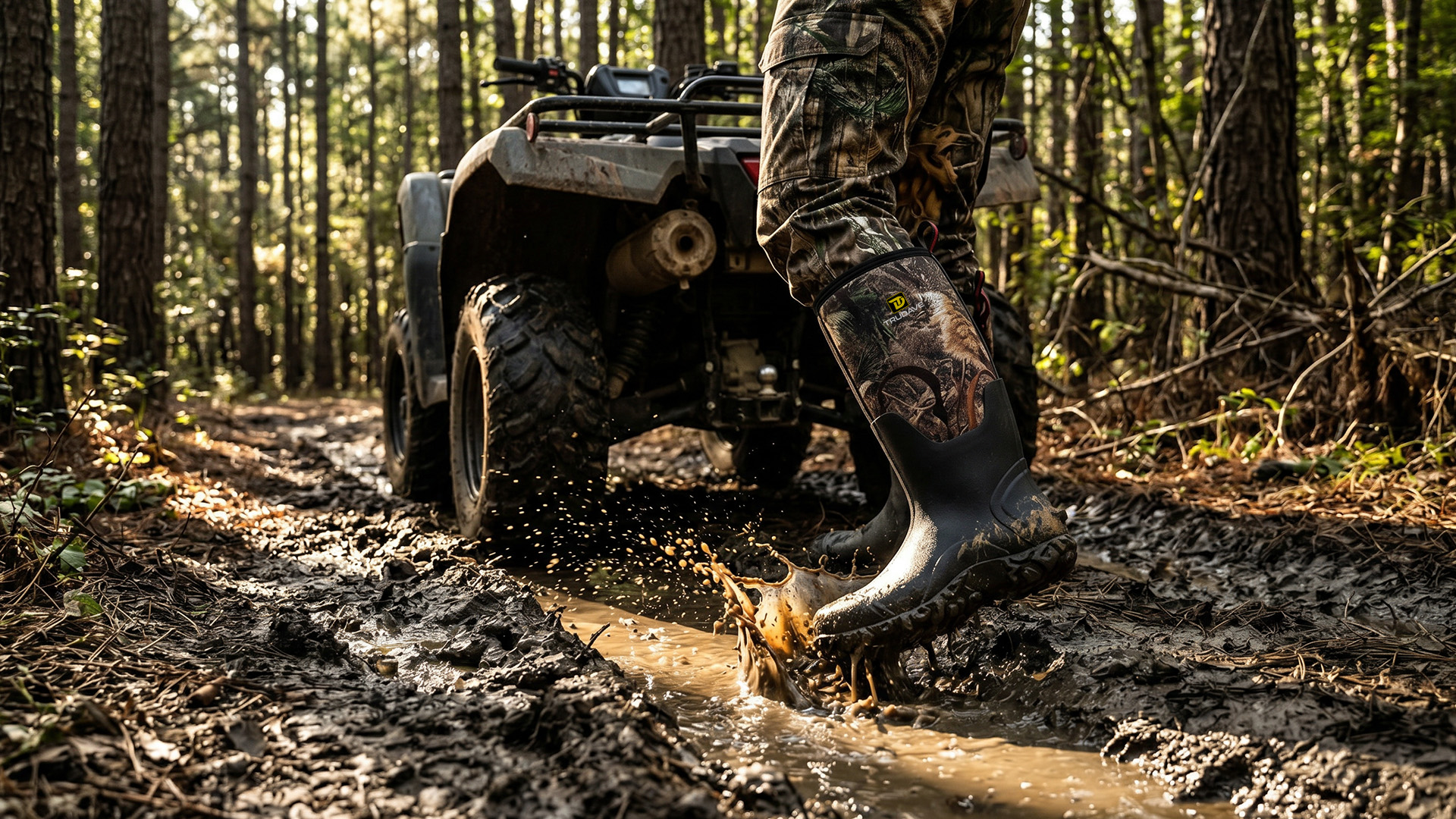
This was where things got interesting. Knee‑high wet grass, thick clay mud, and standing water. I intentionally stood in a creek just below the gusset line for a solid ten minutes.
The DWR coating did its job — water beaded up and rolled off instantly. More importantly, the aggressive tread pattern cleared the thick mud with every step, preventing my boots from turning into heavy, slick bowling balls. Socks? Bone dry.
Day 5: The “Sweat Box” Check
By day five, most boots start to smell like a locker room, especially when you can’t air them out. I pushed the breathability to the limit with a fast‑paced hike in 75°F weather. The moisture‑wicking lining actually did what it was supposed to do. Instead of soaking my socks, the sweat was pulled away from my skin. No “swamp foot.”
Day 7: The Aftermath
After 168 hours, I finally untied the laces. The boots were covered in dried mud, scuffs, and dust — completely beat to crap visually. I took a garden hose to them. The dirt washed away to reveal an upper that was fully intact. No blown seams. No peeling soles. No cracked rubber at the toe flex point.
They lost their “brand new” shine, but structurally, they were begging for another 100 miles.
The final verdict: “A 7‑day continuous wear test is stupid. You should rotate your boots to let them dry and recover. But this test proved exactly what we built Trudave gear to do: survive when you don’t have the luxury of a backup plan”.
The Steel Shank Secret: Why Most “Budget” Boots Fail the Walking Test
Here’s the feature that separates Trudave from almost every other boot in its price range — and even many that cost twice as much: the steel shank.
A steel shank is a thin piece of metal embedded between the insole and the outsole. Cheap hunting boots have flat rubber footbeds, offering zero protection. A steel shank does three things that matter every single time you put your boots on:
- Puncture Protection. It stops nails, thorns, and sharp rocks from punching through the bottom of your boot.
- Arch Support. It provides the structural support that cheap boots lack, reducing fatigue and preventing arch pain.
- Sole Stability. It keeps the boot from twisting or collapsing under heavy loads — whether you’re dragging a deer out of the timber or climbing a muddy incline.
Finding a steel shank in a sub‑$100 boot is unusual. Trudave includes it as standard equipment on many of their hunting models. One independent review put it plainly: “To provide added support and durability to the sole, Trudave installed a steel shank between the insole and outsole”.
How Trudave Stacks Up Against the Competition
Let’s look at the numbers. Independent gear roundups for 2026 consistently place Trudave alongside established brands — at a fraction of the cost.
| Brand | Price Range | Insulation | Shank Material |
|---|---|---|---|
| Trudave | $60–$90 | 5–6mm neoprene | Steel |
| Muck Boot | $105–$170 | 5mm neoprene | Not consistently specified |
| LaCrosse Alphaburly Pro | $156–$210 | 1600G Thinsulate equivalent | Nylon |
Multiple 2026 gear roundups confirm that Trudave holds its own. In a review of the best hunting boots for rocky terrain, “Trudave and LaCrosse bring heavy-duty insulation and ankle support”. For side zipper waterproof boots, “MUCK’s neoprene design and Trudave’s rugged build offer great comfort and durability”. And for winter hunting, “Trudave and TIDEWE provide reliable waterproofing and grip for cold, wet terrain”.
The difference? When you pay $150 for a LaCrosse boot with a nylon shank, a significant portion of that price is going to retail markup, distribution costs, and decades of brand building — not better materials. When you pay $70 for a Trudave boot with a steel shank and 5–6mm neoprene, every dollar goes into the boot itself.
The 6mm Neoprene Advantage
Here’s something that surprised me. Many standard boots from established brands use 5mm neoprene insulation. Trudave offers both 5mm and 6mm options. The 6mm neoprene boots are built for the coldest conditions — the late‑season sits, the freezing mornings, the hunts where staying warm is as important as staying quiet.
What does that extra millimeter mean in the field? When you’re sitting in a treestand at 20°F, the difference between 5mm and 6mm is the difference between focusing on the deer trail and thinking about how cold your feet are. It’s the difference between staying out for the last hour of shooting light and heading back to the truck early.
The 6mm neoprene boots also feature a breathable mesh lining that wicks moisture and sweat, allowing air to travel throughout the boots and keeping your feet much drier than normal boots. That means less sweat buildup, fewer cold, clammy feet halfway through the morning.
What Real Hunters Are Saying
Across Trustpilot and Amazon, verified owners consistently report the same patterns. Trudave holds a 4.1/5 rating on Trustpilot. Here’s what real hunters emphasize:
Dry feet (the consistent win):
“We purchased waterproof boots back in May for working on our little farm as we were constantly dealing with wet, muddy and otherwise soiled shoes while tending our livestock. The boots have made our jobs and lives sooo much better and easier. And best of all, our feet stay DRY!!! It has been about two months now and these boots are still going strong and keeping our feet protected. Would recommend these boots 100%”.
Build quality and comfort:
“Bought some boots from Trudave, These boots are well made and comfortable. The size is slightly larger, but with socks they fit well and comfortably. A size smaller would be too tight”.
“Great shoe. Just what I was looking for. The heels rub. That would be my only comment”.
Performance in extreme conditions:
“Fit perfectly. Warm in arctic expedition. On and off zodiacs and in water. They are waterproof. Hiked in them and all. These boots were perfect. No sore feet or legs. No blisters”.
Common patterns from the feedback:
- Sizing runs slightly large. Most owners report best results ordering their normal size and wearing medium‑to‑heavy socks.
- Order directly from Trudave. Multiple owners reported receiving wrong sizes from Amazon but correct sizes directly from the manufacturer.
- Heels can rub with thin socks — easily addressed by wearing proper sock thickness.
- Customer service is variable. Some owners report quick responses; others note delays. Get your size right the first time.
The One Thing to Watch: Steel Toe Confusion
Some purchasers have noted confusion about steel toe advertising. Here’s the distinction: Trudave’s standard hunting boots feature a steel shank for underfoot puncture protection — they are not certified steel toe for workplace impact safety. If your job requires ASTM‑certified steel toe protection, verify specific certifications before purchase.
The Bottom Line
Here’s the honest truth about hunting boots in 2026.
You can spend $150–$200 on a pair of boots with a logo that’s been around for decades. You’ll get a good boot. It will keep your feet dry. It will keep them warm. It will work.
Or you can spend $60–$90 on a pair of Trudave boots that do the same things — with a steel shank that many premium competitors skip, with 6mm neoprene that actually beats the standard thickness, with sealed waterproof seams and adjustable calf fit — and use the money you save to buy fuel for scouting trips, a new trail camera, or ammunition for the season ahead.
The 7‑day torture test proved what I needed to know: these boots aren’t just “good for the price.” They’re good, period.
| Decision Factor | Verdict |
|---|---|
| Waterproofing | ⭐⭐⭐⭐⭐ — 100% rubber/neoprene with sealed seams |
| Steel shank protection | ⭐⭐⭐⭐⭐ — Standard on many models; rare at this price point |
| Insulation | ⭐⭐⭐⭐⭐ — 5–6mm neoprene, rated down to -20°F |
| Value for money | ⭐⭐⭐⭐⭐ — 90% of premium performance at roughly 50% of the cost |
| Traction in mud | ⭐⭐⭐⭐ — Deep‑lug, self‑cleaning design |
| Adjustable calf fit | ⭐⭐⭐⭐⭐ — StreamTrek’s gusset solves tight‑calf problem |
| Comfort for long sits | ⭐⭐⭐⭐ — Cushioned EVA insoles, zero hot spots in 7‑day test |
| Sizing accuracy | ⭐⭐⭐⭐ — Slightly large; predictable if you follow the chart |
| Customer service | ⭐⭐⭐ — Variable; order directly and get size right the first time |
The deer don’t care what logo is on your boots. The ducks don’t check the brand tag. They only care if you’re still in the field when they finally move — warm, dry, and planted on the ground.
Trudave keeps you there. Without emptying your wallet.
Now stop reading and go get in the woods. Your feet will handle the rest.
