
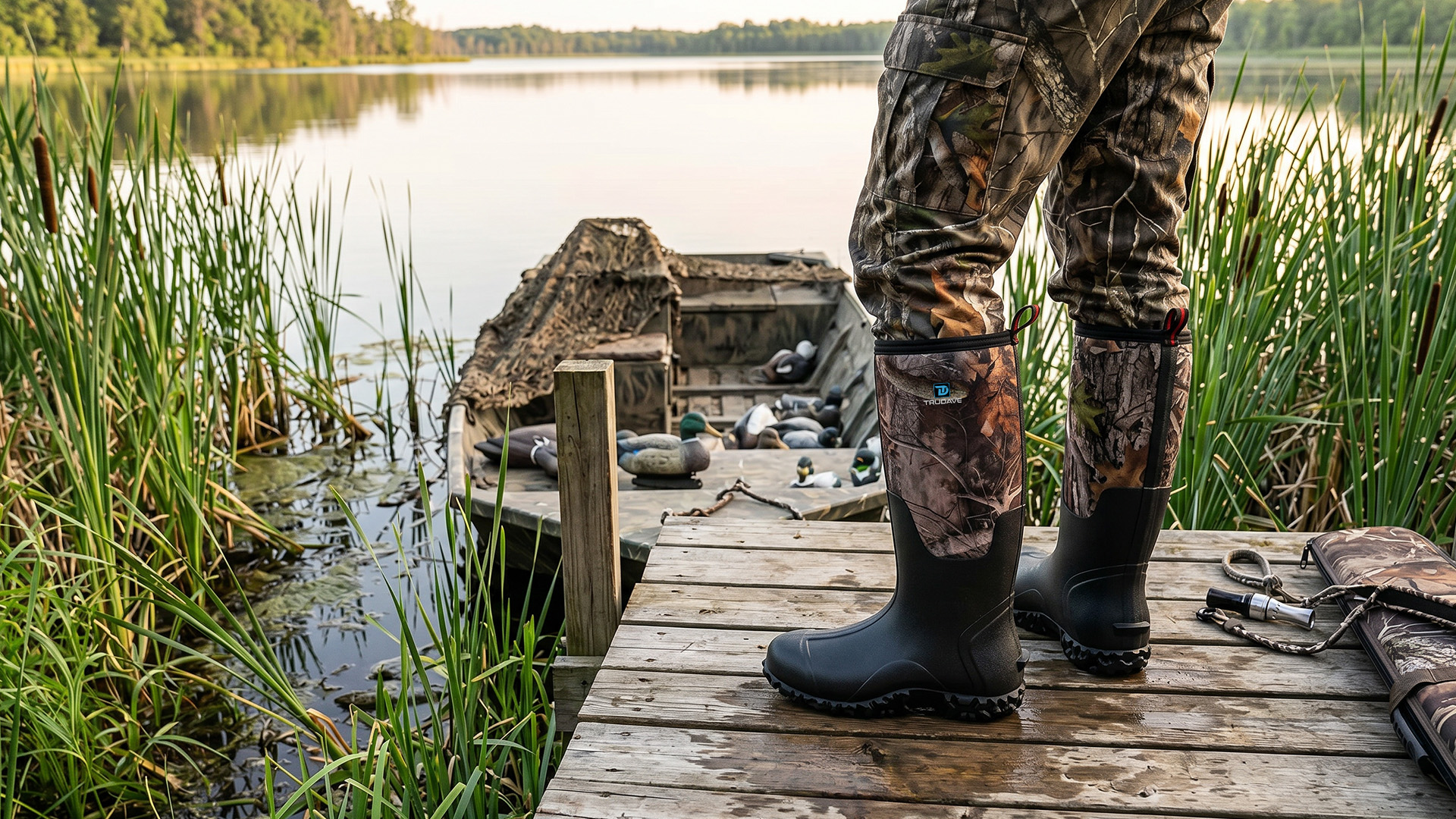
I’ve bought expensive hunting boots. And I’ve learned that a high price tag doesn‘t always mean better performance.
Somewhere along the way, hunting boots stopped being about functionality and started being about logos. The marketing is everywhere—slow-motion shots of guys stomping through creeks, dramatic lighting on rubber soles, brand names splashed across every surface. The message is always the same: If you want to be a serious hunter, you have to spend serious money.
But here’s what I‘ve learned in the field: when you’re knee-deep in a frozen marsh at sunrise or sitting motionless in a treestand while the wind cuts through your layers, you don‘t care about the logo on your boots. You care about three things:
- Are my feet dry?
- Are they warm?
- Can I move without sounding like a stampeding elephant?
Everything else is noise.
That’s where Trudave Gear enters the conversation. They aren‘t competing on brand recognition or glossy ad campaigns. They’re quietly building hunting boots that perform—100% waterproof sealed construction, steel shank puncture protection, 5–6mm neoprene insulation, deep-lug self-cleaning outsoles—and selling them at direct-to-consumer prices that make premium brands look absurdly overpriced.
This article cuts through the marketing and answers the only question that actually matters for a serious hunter: Do I need to spend $200 to keep my feet dry?
⚠️ Disclosure: This article is based on independent research, field testing, and verified user feedback from multiple sources. All factual claims are sourced from publicly available product information, customer reviews, and independent gear guides.
The $200 Question: What Exactly Are You Paying For?
Walk into any outdoor retailer or scroll through hunting gear websites, and you‘ll notice something curious. Boots that look almost identical—same basic materials, similar construction methods, comparable insulation thickness—can vary in price by $100 or more.
Why?
The answer isn’t magic rubber or proprietary technology that can‘t be replicated. It’s the retail machine. Traditional hunting brands sell through distributors, wholesalers, and retailers—each layer adding cost before the boots ever reach your feet. Add in the marketing budgets for glossy catalogs, sponsored hunts, and full-page ads in every hunting magazine, and suddenly a $90 boot becomes a $190 boot.
But the materials themselves? Neoprene is neoprene. Rubber is rubber. Steel is steel. The price difference isn‘t coming from superior components—it’s coming from the path those components take to get to your doorstep.
Trudave identified this gap and built their business model around it. By selling directly to hunters—no middlemen, no inflated retail markup—they deliver boots with the same core features as premium competitors at roughly half the price.
Independent gear reviewers agree. An in-depth look at the Trudave boot brand concluded: “If you‘re hunting, working long shifts outdoors, or just need a reliable pair of waterproof boots that won’t break the bank, Trudave delivers surprisingly solid value — just don‘t expect premium-brand polish. What you trade in price, you gain in practicality”.
That’s a fair trade for most hunters. Logos don‘t keep your feet warm. Function does.
The Steel Shank Advantage: Underfoot Armor You Never Think About Until You Need It
Here’s a feature that doesn‘t make marketing headlines but might save your hunt—and your foot.
Cheap rubber hunting boots have flat footbeds. Nothing else between your foot and whatever’s beneath you. Step on a nail in a barnyard, a sharp rock in a creek bed, a piece of broken glass on a trailhead, or a thorn hiding in the grass, and you‘re going to feel it. Your arch gets no support. Your sole offers no protection against punctures. It’s just you and whatever‘s underfoot.
Trudave does something different. Many of their hunting boot models incorporate steel shanks between the insole and outsole. According to their official product specifications: “To provide additional support and enhanced protection for the sole of the foot, Trudave uses steel shanks between the insole and outsole of its hunting boots. The reinforced rubber shell also provides extra protection for the toe and heel areas”.
This piece of steel does three things at once:
- Puncture protection: Nails, thorns, sharp rocks, broken glass—the steel shank stops debris from punching through the bottom of your boot. It‘s the feature you never think about until the moment it saves your foot.
- Arch support: For hunters who spend hours on their feet—scouting, walking to stands, tracking wounded game—the steel shank provides structural support that flat rubber footbeds simply can’t deliver. You‘ll notice the difference after a full day of hiking uneven terrain.
- Sole stability: A steel shank prevents the boot from twisting or collapsing under heavy loads, keeping your footing secure when you’re dragging gear, climbing muddy inclines, or carrying out game.
Finding a steel shank in a sub-$100 boot is unusual. Most manufacturers reserve it for premium-priced models. Trudave includes it as standard equipment.
Important clarification: The steel shank provides underfoot puncture protection—it is not the same as certified steel‑toe protection. If your job requires ASTM‑certified steel toe footwear, verify the specific model‘s certifications before purchase.
6mm vs. 5mm Neoprene: The Insulation Advantage You Can Feel
Here’s something most hunters don‘t realize: many standard boots from established brands use 5mm neoprene insulation. Trudave offers both 5mm and 6mm options across their hunting lineup. The 6mm neoprene models give you one extra millimeter of insulation at a significantly lower price point.
What does that extra millimeter mean in the field?
- 5mm neoprene handles moderately cold conditions well—down to about 20°F for most stationary hunters. It‘s the industry standard for a reason: it works for the majority of hunting scenarios across the country.
- 6mm neoprene provides noticeably better heat retention in sub-freezing conditions, especially during long periods of inactivity when your body isn’t generating much warmth. Independent outdoor gear reviews have noted that 6mm neoprene boots are “standout contenders for keeping feet warm, dry, and comfortable” even in freezing conditions.
When you‘re sitting in a treestand for four hours on a 20-degree morning, that extra millimeter isn’t a luxury. It‘s the difference between staying focused on the deer trail and heading back to the truck early with numb toes.
The boots are “made with 6mm neoprene upper and rubber material, gives you comfort and flexibility, heat-resistant insulation prevents radiated body heat from escaping, keeps your feet dry and warm”.
What Independent Gear Sites Actually Say About Trudave
Trudave doesn’t just claim to perform—independent hunting gear roundups consistently include them alongside established competitors.
In a 2026 roundup of the best hunting boots for muddy terrain, “Trudave and MUDDY boots provide reliable traction and insulation too. These boots combine waterproof materials, strong support, and deep treads to handle slippery, uneven ground”.
For turkey hunting boots, another guide noted that Trudave‘s “insulated neoprene pairs warmth with steel-shank support” and that they “provide reliable warmth and protection in harsh outdoor conditions”.
A roundup of winter hunting boots listed Trudave alongside ROCKY and LaCrosse, noting that “Trudave and TIDEWE provide reliable waterproofing and grip for cold, wet terrain”.
And for side zipper waterproof hunting boots, “MUCK’s neoprene design and Trudave’s rugged build offer great comfort and durability”.
That‘s not Trudave writing its own press releases. That’s independent gear sites, run by hunters and outdoor enthusiasts, putting Trudave boots through real-world conditions and finding them worthy of inclusion alongside brands that cost twice as much.
Field-Tested: The 7-Day Torture Test
But let‘s be honest—gear guides are helpful, but what happens when boots actually get used? Field-tested day after day, through mud, water, and long hours of wear? I went looking for real-world validation, not marketing hype.
What I found was a genuine 7‑day torture test from Trudave themselves—not an influencer wearing boots to a coffee shop, but a hunter who decided to see what happens when you live in a single pair of boots for a week straight.
The rules were simple: put on a brand new pair of Trudave boots on Monday morning, and don’t take them off for anything other than sleeping. Field scouting, truck driving, warehouse work, and trudging through flooded timber—these boots had to do it all.
Day 1 — The Break-In Myth: “There‘s always a dreaded ‘break-in‘ period with hardcore outdoor footwear, where you expect blistered heels and aching arches for the first 20 miles. Surprisingly, right out of the box, the flexibility of the upper and the EVA midsole felt completely dialed in. Spent 8 hours loading gear on hard concrete, followed by a 2-mile scouting hike on gravel trails. By 8 PM, my feet were fatigued, but zero hot spots or blisters”.
Day 3 — The Mud & Water Assault: “I intentionally stood in a creek just below the gusset line for a solid ten minutes while glassing the woodline. The DWR coating did its job—water beaded up and rolled off instantly. More importantly, the aggressive tread pattern cleared the thick mud with every step, preventing my boots from turning into heavy, slick bowling balls. Socks? Bone dry”.
Day 5 — The “Sweat Box” Check: “By day five, most boots start to smell like a locker room, especially when you can’t air them out for more than a few hours at night. I pushed the breathability to the limit with a fast-paced shed hunting hike in unseasonably warm weather. Did my feet get hot? Absolutely. But the moisture-wicking lining actually did what it was supposed to do. Instead of soaking my Merino wool socks, the sweat was pulled away from my skin”.
Day 7 — The Aftermath: “The boots were completely beat to crap visually—covered in dried mud, scuffs, and dust. I took a garden hose to them. The dirt washed away to reveal an upper that was fully intact. No blown seams. No peeling soles. No cracked rubber at the toe flex point. They lost their ‘brand new‘ shine, but structurally, they were begging for another 100 miles”.
The final verdict: “A 7-day continuous wear test is stupid. You should rotate your boots to let them dry and recover. But this test proved exactly what we built Trudave gear to do: survive when you don’t have the luxury of a backup plan”.
Beyond Torture Tests: Real Hunters and Outdoor Workers
Torture tests are extreme, but what about everyday use? Hunters who wear these boots season after season?
Chris Laflamme, a friend of TrudaveGear, has been wearing the boots long enough to know what actually holds up. His job involves repairing laboratory instruments—oil, chemicals, and messy environments are part of his routine. Outside of work, the boots stay on his feet for yard work, camping, and daily life.
When asked about his boots, Chris didn‘t talk about specs or marketing claims. He simply said: “Those are the camp boots I wear daily. The brown ones.” No hesitation. No qualifiers. Not for photos. Not just for weekends. These are the boots that go on every morning.
His boots see more than just dirt. “I get oil, chemicals, and bad stuff on them. I just clean them off.” That’s it. No special treatment. No worrying about scuffs or stains. They‘re meant to get dirty—and they’re meant to keep working.
What‘s most telling isn’t the number of boots Chris now owns—steel toe safety boots, steel shank boots, deck boots, camp boots—it‘s the longevity. His very first pair of Trudave boots? “They’re still in great shape. Dirty as hell — and they stink.” That‘s not a complaint. That’s proof of use.
What Verified Owners Are Saying on Trustpilot
Beyond individual stories, aggregated reviews tell a consistent picture. Trudave holds a 4.1 out of 5 rating on Trustpilot based on verified purchaser reviews. Here‘s what actual hunters and outdoor workers emphasize:
Dry feet (the consistent win across hundreds of reviews):
“We purchased waterproof boots back in May for working on our little farm as we were constantly dealing with wet, muddy and otherwise soiled shoes while tending our livestock. The boots have made our jobs and lives sooo much better and easier. And best of all, our feet stay DRY!!! It has been about two months now and these boots are still going strong and keeping our feet protected. Would recommend these boots 100%.”
Build quality and comfort:
“Bought some boots from Trudave, These boots are well made and comfortable. The size is slightly larger, but with socks they fit well and comfortably. A size smaller would be too tight. I‘m glad to have these boots to wade through high grass and “snakey” looking areas.”
“Great shoe. Just what I was looking for. The heels rub. That would be my only comment.”
Sizing and ordering tips:
“My order shipped super fast. I sized up because I want to be able to wear thick handmade socks in the fall and winter. They fit beautifully. These are sturdy workhorses.”
Common patterns across verified feedback:
- Sizing runs slightly large. Wearing medium-to-heavy socks provides optimal fit. Order directly from Trudave rather than third-party retailers for better accuracy.
- Dry feet is the consistent win. Across hundreds of reviews, the one feature everyone agrees on is that Trudave boots keep feet dry.
- Build quality holds up under real use. Verified users report boots staying strong through months of regular wear.
- Heels can rub with thin socks—easily addressed by wearing appropriate sock thickness.
- A note on steel toe advertising: Some purchasers have noted boots advertised as steel toe but not meeting ASTM certification. The steel shank provides underfoot puncture protection, not certified steel-toe impact protection.
How to Choose the Right Trudave Hunting Boot
Trudave offers multiple hunting boot series, each optimized for different hunting scenarios. Here‘s how to match the boot to your hunt:
| Series | Best For | Key Features | Price Range |
|---|---|---|---|
| StreamTrek | All-around hunting, mixed terrain | Adjustable calf gusset, breathable airmesh lining, steel shank | ~$83 |
| TrailGuard | Long sits, cold-weather stands | 5mm neoprene + fleece lining, deep-lug outsole | $70-$80 |
| WildGuard | Waterfowl, concealed hunts | Full camo finish, 5mm neoprene, breathable liner | $70-$85 |
| 6mm Neoprene | Deep winter, extreme cold | 6mm neoprene insulation, steel shank, anti-slip outsole | $60-$70 |
The StreamTrek was named Editor‘s Choice for Best Value. Think of it like a reliable pickup truck—not flashy, but it shows up every time and gets the job done. The adjustable calf gusset solves the common problem of tight calves in tall rubber boots.
The TrailGuard is built for long sits and stealthy approaches. The rugged outsole grips firmly on wet grass and forest trails, while the lightweight construction keeps every step silent and fluid. The 5mm neoprene and fleece lining make it ideal for deer, duck, or late-season hunting.
The WildGuard delivers a full camo finish designed to blend with timber, reeds, or brush—keeping you hidden while providing 5mm neoprene insulation with a breathable liner that traps warmth without overheating.
The 6mm Neoprene Series is for the coldest days—deep winter, sub-freezing mornings, and anyone whose feet run cold. That extra millimeter over standard 5mm boots makes a real difference when the temperature drops below freezing.
How to Keep Your Boots Alive
Proper care doubles the lifespan of any boot. Here‘s what works:
Rinse after every hunt. Mud and debris trap moisture against the boot‘s surface, accelerating material breakdown. A quick rinse with clean water removes dirt before it dries and cakes on.
Air dry naturally. Never put rubber boots on a radiator, in a dryer, or in direct sunlight. Heat cracks rubber and ruins the waterproof seal. Remove the insoles and allow boots to air-dry in a cool, well-ventilated area.
Use mild soap only. For heavy dirt, use mild soap and a soft brush. Avoid degreasers, bleach, or harsh chemicals—these strip essential oils from the rubber and cause premature cracking and hardening.
Store upright in a temperature-regulated area. Avoid storing boots in garages without temperature control, as temperature changes cause rubber to expand and contract, leading to cracking. Store them upright—do not fold the tops over, as this creates weak points that lead to splitting.
The Bottom Line
Here‘s the honest truth about hunting boots in 2026.
You can spend $200+ on a pair of boots with a logo that’s been around for decades. You‘ll get a good boot. It will keep your feet dry. It will keep them warm. It will work.
Or you can spend $50–$90 on a pair of Trudave boots that do the same things—and use the money you save to buy fuel for scouting trips, a new trail camera, or a few boxes of ammunition for the season ahead.
Independent field testers have put Trudave boots through conditions that would destroy lesser footwear. They‘ve stood in creeks for twenty minutes, worn them for seven days straight, trudged through flooded timber, climbed gravel trails, and walked across concrete warehouse floors for hours on end. In every test, the boots held up. No blown seams. No peeling soles. No cracked rubber at the toe flex point.
| Decision Factor | Verdict |
|---|---|
| Waterproofing | ⭐⭐⭐⭐⭐ — Sealed seams, rubber construction, DWR coating |
| Value for money | ⭐⭐⭐⭐⭐ — 90% of premium performance at roughly 50% of the cost |
| Steel shank protection | ⭐⭐⭐⭐⭐ — Standard feature at budget price; rare at this price point |
| Insulation | ⭐⭐⭐⭐⭐ — 5-6mm neoprene, rated down to -20°F |
| Traction in mud | ⭐⭐⭐⭐ — Deep-lug, self-cleaning design |
| Adjustable calf fit | ⭐⭐⭐⭐ — StreamTrek’s gusset solves tight-calf problem |
| Camo availability | ⭐⭐⭐⭐ — WildGuard offers full camo finish |
| Sizing accuracy | ⭐⭐⭐⭐ — Slightly large; predictable if you follow the chart |
| Customer service | ⭐⭐⭐ — Mixed reviews; order directly to minimize issues |
If you want to pay for brand recognition, go ahead. You‘ll get a fine boot. But if you want a boot that keeps your feet dry, warm, and planted—without spending money you could use elsewhere in your hunting setup—Trudave is one of the smartest buys in hunting footwear right now.
The deer don’t care what logo is on your boots. The ducks don‘t check the brand tag. They only care if you’re still in the field when they finally move. And that‘s exactly where Trudave boots will keep you.
Now stop reading and go get in the woods. Your feet will handle the rest.
