
Dall sheep country has a way of making distance meaningless.
A white ram may appear close through binoculars.
He stands on a gray mountainside above a narrow creek.
The route looks simple.
Cross the valley.
Climb the ridge.
Reach the basin.
Then the walking begins.
The creek is deeper than expected.
The tundra is soft.
The first ridge hides another ridge.
Loose rock covers the final thousand vertical feet.
Hours later, the ram seems almost exactly as far away as when the stalk began.
That is mountain sheep hunting.
The challenge is not only finding sheep.
It is understanding terrain well enough to reach them without:
- Exhausting yourself
- Being seen
- Getting caught by changing weather
- Committing to unsafe ground
Dall sheep live in landscapes where one bad route choice can cost hours.
Successful hunters learn to read mountains before they enter them.
Dall Sheep Are Animals of Open Mountain Country
Dall sheep are associated with northern mountain environments.
Depending on location and season, useful habitat may include:
- Alpine ridges
- Open slopes
- Rocky basins
- Scree fields
- Mountain saddles
- Steep escape terrain
- High tundra
Unlike animals that depend on dense forest, sheep often live where visibility is enormous.
That creates both an advantage and a problem.
You can see them from a long way away.
They can often see you too.
Glass Before You Climb
One of the biggest mistakes in sheep country is spending energy before locating animals.
Good glassing can save thousands of unnecessary vertical feet.
Find a position with visibility into:
- Basins
- Ridge systems
- Cliff bands
- Open slopes
and spend time behind optics.
White Sheep Can Still Be Hard to Spot
Dall sheep are bright compared with many big-game animals.
That does not mean they are easy to locate.
Light-colored rock, snow patches, and distance can hide them surprisingly well.
Look for:
- Movement
- Body shape
- Horizontal backs
- White patches in unexpected places
Use Binoculars First
Binoculars help cover broad country efficiently.
Once a possible animal is located, higher magnification may help evaluate it where appropriate.
Glass the Same Slope Repeatedly
A sheep may be:
- Bedded
- Behind rock
- Inside shadow
during the first scan.
Minutes later it can become obvious.
Morning Light Changes the Mountain
Low-angle sunlight creates strong shadows.
This can make animals easier to separate from rock.
Evening Light Can Do the Same
Late daylight may reveal sheep feeding on slopes that looked empty at midday.
Heat Shimmer Can Reduce Visibility
Long-distance glassing during warmer periods may be affected by atmospheric distortion.
Early and late periods often provide clearer viewing.
Elevated Glassing Positions Matter
A small ridge may reveal an entire basin hidden from the valley floor.
Do not assume the first available viewpoint is the best one.
But Do Not Skyline Yourself
Sheep can see movement from long distance.
Glass from slightly below the ridge crest when possible.
Mountain Terrain Must Be Read in Three Dimensions
A route that looks short on a map may contain:
- Hidden cliffs
- Deep drainages
- Scree
- Impassable rock
Distance alone tells you very little.
Contour Lines Matter
Topographic maps can reveal:
- Slope steepness
- Saddles
- Ridges
- Basins
- Drainages
Study them before moving.
Satellite Imagery Adds Context
Aerial imagery may help identify:
- Snowfields
- Rock bands
- Vegetation zones
- Creek systems
But images never replace ground judgment.
Saddles Can Be Strategic
A low point between ridges may provide:
- Easier travel
- Access between basins
- Reduced climbing
Sheep may use these routes too.
Ridge Systems Can Save Energy
Traveling a ridge may be easier than repeatedly dropping into and climbing out of drainages.
But exposed ridges create visibility and weather problems.
Creek Bottoms Can Be Harder Than They Look
A drainage shown as a thin blue line may involve:
- Alder
- Boulder fields
- Swift water
- Steep banks
Avoid Unnecessary Elevation Loss
Every thousand feet you descend may need to be climbed again.
Mountain hunting rewards route efficiency.
Escape Terrain Is an Important Habitat Clue
Sheep often remain near terrain that provides security.
This can include:
- Cliffs
- Steep rock
- Broken ridges
- Difficult slopes
Feeding Habitat May Be Close to Escape Cover
Animals may move between:
- Grassy alpine slopes
- Rocky security terrain
throughout the day.
Hunt the Transition
A productive area may be where:
- Green feed
- Rock
- Escape terrain
meet.
Alpine Grass Patches Can Concentrate Feeding
A small green bench can attract animals inside otherwise rocky country.
Do not overlook tiny feeding areas.
South-Facing Slopes Can Become Important
Depending on season, sun exposure may create:
- Earlier snowmelt
- Warmer bedding
- Accessible vegetation
North-Facing Slopes Can Stay Cooler
During warmer conditions, these slopes may provide:
- Cooler temperatures
- Moist vegetation
Season Determines Which Exposure Matters
Do not memorize one slope direction as always best.
Read current conditions.
Snow Changes Sheep Country Dramatically
Fresh snow can improve visibility and reveal:
- Tracks
- travel routes
But it can also make mountain travel much more dangerous.
Early Snow May Concentrate Sheep
As high feeding areas become covered, animals may shift toward more exposed or windblown slopes.
Windblown Ridges Can Stay Open
Strong wind may remove snow and expose vegetation.
Snowfields Can Hide Hazards
What appears smooth may contain:
- Ice
- Rocks
- Drop-offs
Do Not Cross Steep Snow Without Proper Experience
Mountain snow travel can require specialized knowledge and equipment.
Choose safer routes when uncertain.
Scree Is One of the Defining Challenges
Loose rock covers many alpine slopes.
Each step can slide.
That makes climbing inefficient and descending dangerous.
Small Scree Can Behave Like Ball Bearings
Foot placement matters.
Short controlled steps help.
Large Talus Requires Different Movement
Boulder fields can contain:
- Gaps
- Unstable rocks
- Hidden holes
Test footing.
Never Assume a Large Rock Is Stable
A rock weighing hundreds of pounds can still shift.
Wet Rock Is Much More Dangerous
Rain or melting snow can turn normally manageable terrain slippery.
Moss and Lichen Reduce Traction
Rock that looks rough may be slick when wet.
Dall Sheep Hunting Is a Serious Boot Test
A typical hunt may involve:
- Wet tundra
- Scree
- Talus
- Steep grass
- Creeks
- Snow
- Long climbs
- Heavy pack-outs
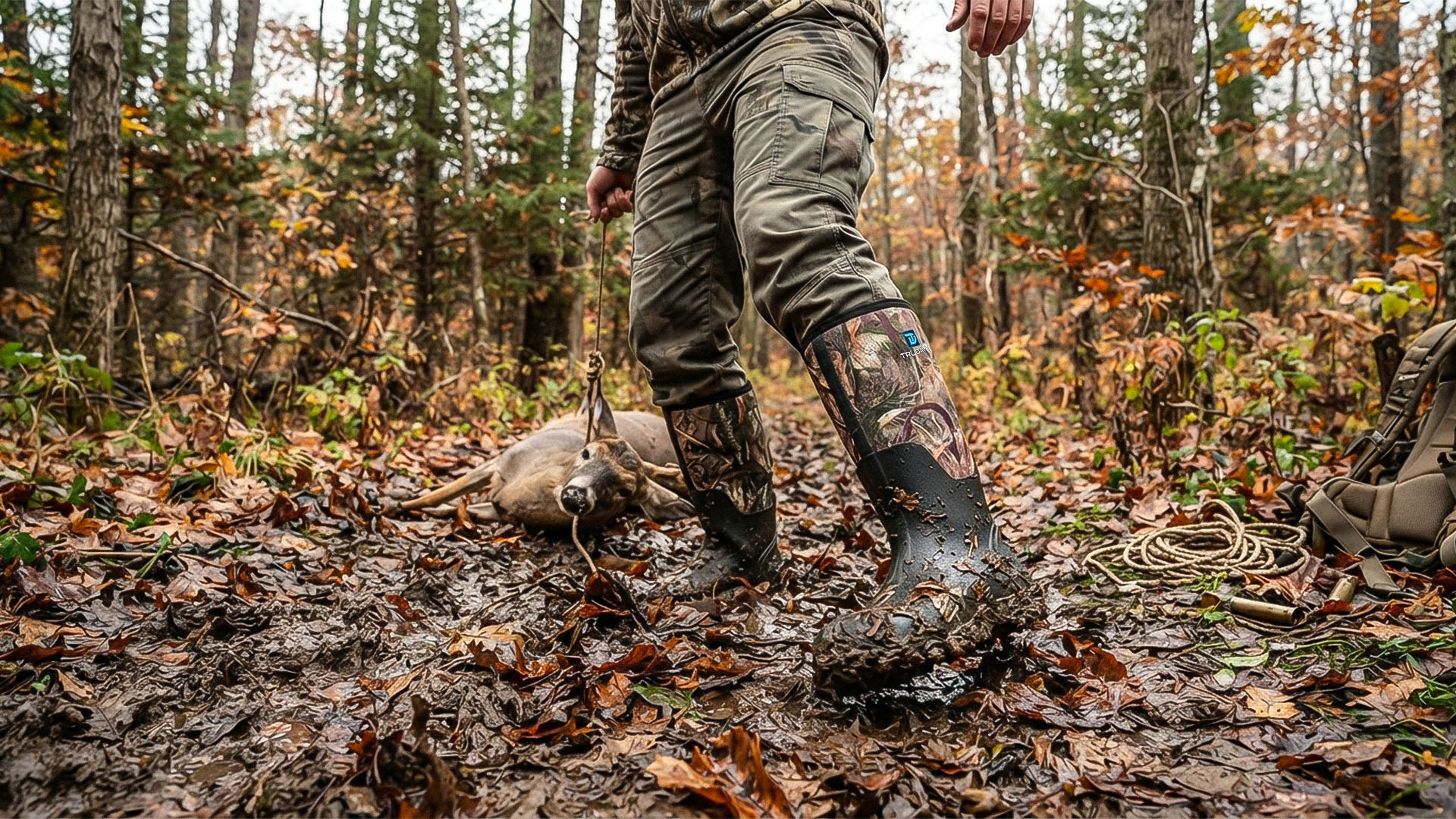
Hunters may benefit from waterproof hunting boots for mountain sheep hunting that provide secure heel retention, dependable traction, and enough ankle support for steep alpine terrain while remaining comfortable during long-distance travel.
Heel Lock Is Critical
Repeated uphill climbing exposes poor boot fit immediately.
Heel movement creates:
- Hot spots
- Blisters
Toe Room Matters Downhill
Long steep descents push the foot forward.
If boots are too short, toenails can take constant impact.
Ankle Support Becomes More Important
Sidehilling and unstable rock place stress on the lower leg.
A structured boot can improve control.
But Maximum Stiffness Is Not Always Best
Very rigid footwear may reduce comfort during long approaches.
Balance:
- Support
- Walking comfort
- Terrain
Waterproofing Matters in Alpine Country
Hunters may encounter:
- Rain
- Dew
- Wet tundra
- Snow
- Creek crossings
within the same day.
Tundra Can Soak Boots Quickly
Low vegetation may hold significant moisture.
A slope that appears dry from distance may be saturated.
Gaiters Are Extremely Useful
Gaiters can reduce:
- Rain
- Snow
- Wet vegetation
- Scree
entering boots.
Scree Inside a Boot Can End a Stalk
Small stones create immediate discomfort.
Gaiters help prevent this.
Socks Matter
Moisture-managing socks can reduce friction during long climbs.
Carry Spare Socks
A wet creek crossing does not need to ruin the rest of the hunt.
Break Boots In Before the Hunt
Mountain sheep country is one of the worst places to discover a fit problem.
Train in the Same Boots
Preseason hikes should include:
- Elevation
- Pack weight
- Long descents
Physical Conditioning Is Central
Sheep hunting often requires sustained:
- Climbing
- Sidehilling
- Descending
- Pack carrying
Train Uphill
Flat-road fitness does not fully prepare the legs for mountain climbing.
Train Downhill Too
Long descents place significant load on:
- Quadriceps
- Knees
- Feet
Use a Loaded Pack During Preparation
A successful hunt can create much heavier return loads.
Do Not Train Only for the Hike In
Train for the pack-out.
Mountain Weather Changes Rapidly
A clear morning can become:
- Rain
- Snow
- Fog
- Strong wind
within hours.
Carry Layers Even When the Forecast Looks Good
Alpine exposure increases weather consequences.
Wind Can Be Severe
Ridge-top wind may be dramatically stronger than valley conditions.
Windproof Layers Matter
A lightweight wind-resistant shell can greatly improve comfort.
Rain Gear Must Be Reliable
There may be nowhere to hide from prolonged mountain rain.
Vent During Climbs
Sweating inside waterproof clothing creates its own moisture problem.
Add Insulation When Stationary
Long glassing sessions can cool the body quickly after climbing.
Protect Dry Layers
Keep insulation inside waterproof storage.
Gloves Matter
Rock, cold, and rain punish bare hands.
Carry a dry backup pair.
A Warm Hat Is Worth the Weight
Even during relatively mild hunts, high ridges can become cold.
Fog Can Completely Remove Navigation References
A visible ridge can disappear within minutes.
Do Not Depend on Visual Navigation Alone
Carry reliable:
- Offline maps
- GPS
- Backup navigation
Mark Camp and Access Points
Mountain terrain can force unexpected reroutes.
Carry a Headlamp
Late recovery can continue well beyond daylight.
Carry Backup Light
Cold weather reduces battery performance.
Creek Crossings Require Judgment
Glacier-fed and mountain streams can be:
- Cold
- Fast
- Unpredictable
Water Levels Can Change
Rain and warm temperatures can increase flow.
Do Not Force Dangerous Crossings
A longer route is better than a bad crossing.
Trekking Poles Can Help
They may improve stability during:
- Creek crossings
- Scree
- Descents
- Heavy pack-outs
Mountain Streams Are Extremely Cold
Wet boots can become more than a comfort issue in cold conditions.
Choose Crossings Carefully
Look for:
- Wider shallow areas
- Stable bottom
- Lower current
Do Not Jump Between Wet Rocks Unnecessarily
A fall with a heavy pack can cause serious injury.
Tundra Walking Can Be Surprisingly Difficult
Soft ground absorbs energy.
Each step may sink.
Tussocks Can Twist Ankles
What appears like flat grass can contain uneven hummocks.
Lift Your Feet
Avoid shuffling through hidden holes.
Wet Tundra Is Slippery
Vegetation can slide over saturated soil.
Alder Can Complicate Lower Approaches
Some mountain valleys contain dense alder.
This can make a short horizontal distance extremely slow.
Alder Holds Rainwater
Even after a storm ends, hunters can become soaked from vegetation.
Avoid Fighting Brush When a Better Route Exists
Maps may reveal:
- Gravel bars
- Ridges
- Open tundra
that save time.
Route Selection Is Part of Hunting Skill
The fastest-looking line is often not the fastest route.
Sheep Can See Movement From Long Distance
A poor stalk may end before you know the animals detected you.
Stay Behind Terrain
Use:
- Ridges
- Rock bands
- Basin folds
to hide movement.
Avoid Skyline Movement
Cross ridges at low points whenever possible.
Crawl Only When Necessary
The final approach may require staying low.
But sharp rock quickly damages:
- Knees
- Gloves
- Clothing
Wind Still Matters
Open mountain country does not eliminate scent.
Plan approaches with both:
- Terrain
- Wind
Wind Direction Can Change Around Ridges
Air may flow differently on:
- Windward
- Leeward
sides.
Check Conditions Repeatedly
A stalk may take hours.
The wind you started with may not be the wind you finish with.
Thermals Matter
Morning warming and evening cooling can move air through basins.
Do Not Assume Mountain Air Is Stable
Watch lightweight indicators frequently.
Long Stalks Require Patience
If wind becomes poor:
Stop.
Waiting may save hours of effort.
Sheep May Bed for Long Periods
This can give hunters time to plan.
Use Bed Time to Study the Route
Identify:
- Terrain cover
- Final approach
- Potential obstacles
before moving.
Do Not Rush Because the Animal Is Visible
Visibility creates false urgency.
A sheep that is comfortable may remain in the area much longer than expected.
Legal Animal Identification Can Be Challenging
Dall sheep hunts may involve strict legal definitions.
Hunters need to understand exactly what constitutes a legal animal for their specific hunt.
Do Not Judge Legality From One Angle
Horn appearance changes with:
- Head position
- Viewing angle
- Distance
Use Adequate Optics
Where regulations require horn or age characteristics, careful evaluation is essential.
If You Are Unsure, Pass
A difficult hunt does not justify uncertainty.
Regulations Can Be Highly Specific
Before hunting, verify current official rules concerning:
- Season dates
- Permit or tag validity
- Hunt area boundaries
- Legal animal definitions
- Horn restrictions
- Reporting requirements
- Sealing or inspection requirements where applicable
- Transport rules
Alaska and Other Northern Jurisdictions May Have Complex Unit Rules
Do not assume regulations apply uniformly across all sheep country.
Guide Requirements Can Apply to Some Hunters
Residency and jurisdiction can affect guide requirements.
Verify current official rules before planning the hunt.
Access Regulations Matter Too
Some sheep country may involve:
- Federal land
- State land
- Restricted areas
Know where you can legally hunt and camp.
Aircraft and Transport Rules Can Be Specific
Remote mountain hunts often involve specialized transportation.
Hunters should understand all current legal restrictions.
Do Not Rely on Old Forum Advice
Sheep regulations can be too consequential for outdated information.
Use current official sources.
Mountain Safety Must Come Before the Animal
A ram standing across unsafe terrain is not worth an injury.
Cliff Bands Can Trap Hunters
A slope that looks passable from across the valley may contain vertical sections.
Always Maintain a Retreat Route
Do not climb into terrain you cannot safely descend.
Weather Can Close the Route Behind You
Snow and rain may change previously manageable terrain.
Rockfall Is a Real Hazard
Steep mountain faces can release:
- Loose rock
- Falling debris
especially during freeze-thaw conditions.
Avoid Traveling Directly Below Unstable Slopes
Choose protected routes where possible.
Partners Should Avoid Climbing Directly Above One Another
A dislodged rock can become dangerous below.
Space Out on Scree
This reduces risk from falling debris.
Remote Country Requires Emergency Planning
Cell service may be nonexistent.
Carry Appropriate Communication
Depending on trip remoteness, satellite communication can provide an important safety backup.
Leave a Trip Plan
Someone should know:
- Hunting area
- Expected route
- Return plan
Do Not Depend on Rescue as the Plan
Self-sufficiency remains important.
Carry Essential Emergency Equipment
Mountain weather can force an unplanned delay.
Water Planning Matters
High-country streams may seem abundant.
But ridges and dry slopes can create long stretches without easy water.
Carry Enough Between Sources
Do not assume every blue map line contains water.
Treat Natural Water Appropriately
Clear mountain water can still contain pathogens.
Food Weight Matters
Remote sheep hunts reward calorie-efficient food choices.
Every Ounce Adds Up
But cutting essential safety equipment to save weight is a poor trade.
Pack Organization Saves Time
Keep frequently needed gear accessible:
- Rain shell
- Optics
- Gloves
- Navigation
Do Not Constantly Unpack Everything
Efficiency conserves energy.
Sheep Hunting Can Require Camping High
A high camp can save repeated climbing.
But exposed camps face:
- Wind
- Weather
- Limited water
Choose Camp Locations Carefully
Avoid obvious:
- Avalanche paths
- Drainages
- exposed ridges
Keep Camp Away From Main Animal Travel When Possible
Reduce disturbance.
Food Storage Should Follow Local Wildlife-Safety Rules
Mountain sheep country may overlap with bears.
Bear Awareness Matters
Follow current regional guidance for:
- Food
- camp
- harvested meat
Harvest Recovery Is a Major Part of the Hunt
A successful shot may occur far from:
- Camp
- Trail
- Aircraft pickup
- Road
Plan the Pack-Out Before the Final Stalk
Ask:
If the animal is harvested there, where does it go?
Gravity Can Become the Enemy
A sheep traveling downhill after a shot can add:
- Distance
- Cliffs
- Vertical loss
to recovery.
Mark the Exact Location
Use:
- Rock bands
- drainage
- ridge
- snow patch
as reference.
Mountain Features Look Different Once You Move
Use multiple landmarks.
GPS Marking Can Help
Save relevant positions before leaving the shooting location.
Recovery Routes May Differ From Stalking Routes
The best concealed approach is not always the easiest pack-out.
Heavy Packs Change Everything
A slope that felt easy while climbing light can become difficult under meat and gear.
Use Manageable Loads
Multiple safe trips are better than one dangerous overload.
Trekking Poles Become More Valuable
Heavy descents benefit from extra stability.
Boots Matter Even More During Pack-Out
Heel lock and toe room become critical under weight.
Game Care Must Be Planned Before Success
Remote mountain hunts make cooling and transport challenging.
Cool Air Does Not Guarantee Proper Cooling
Large meat loads still require appropriate care.
Use Clean Game Bags
Protect meat from:
- Dirt
- Rock
- Insects
Airflow Matters
Follow current wildlife-agency and food-safety recommendations.
Warm Early Seasons Can Increase Urgency
Direct sun on alpine slopes can be surprisingly warm.
Shade Can Be Limited
Plan accordingly.
Keep Meat Away From Camp Food When Bear Risk Exists
Follow local wildlife safety rules.
Recovery Time Should Influence Shot Decisions
A marginal location late in the day may create difficult logistics.
Ethical Decisions Include Terrain
A legal opportunity is not automatically a good opportunity if recovery would require unsafe travel.
Common Dall Sheep Hunting Mistakes
Climbing Before Glassing
Optics save enormous amounts of energy.
Judging Distance From Appearance Alone
Mountain terrain makes distances deceptive.
Choosing the Shortest Route Instead of the Best Route
Hidden cliffs, brush, and scree can make short lines slow.
Underestimating Descents
Going down can be harder than climbing up.
Wearing Boots That Have Not Been Tested Under Load
Foot problems can end a mountain hunt.
Ignoring Weather Because the Morning Is Clear
Alpine conditions can change rapidly.
Committing to Unsafe Terrain for an Animal
Safety comes first.
Using Outdated Sheep Regulations
Legal-animal definitions and hunt rules must be verified carefully.
Frequently Asked Questions
Where do Dall sheep usually live?
Dall sheep commonly use northern mountain habitat including alpine ridges, rocky basins, scree slopes, open tundra, mountain saddles, and terrain near steep escape cover.
Why is glassing so important for Dall sheep hunting?
Sheep country is enormous and physically demanding. Glassing allows hunters to locate animals and evaluate terrain before spending energy on unnecessary climbs.
Are scree slopes difficult to hunt?
Yes. Loose rock can make both climbing and descending slow and unstable. Proper footwear, deliberate movement, and route selection are important.
What boots are best for Dall sheep hunting?
Waterproof mountain hunting boots with secure heel lock, good toe room, dependable traction, and enough ankle support for scree, talus, steep grass, wet tundra, and heavy pack-outs are practical.
Are gaiters useful for sheep hunting?
Yes. Gaiters can help keep scree, wet vegetation, snow, and rain from entering boots during long mountain hunts.
Does weather change Dall sheep movement?
It can. Snow, wind, temperature, and seasonal vegetation influence which slopes and elevations animals use, while weather also strongly affects hunter access and safety.
Why are Dall sheep regulations complicated?
Mountain sheep populations are carefully managed, and legal animal definitions, permits, hunt units, reporting, horn requirements, access, and transport rules can be highly specific.
Do Dall sheep hunting regulations vary by area?
Yes. Season dates, permits, hunt areas, legal animal definitions, horn restrictions, residency requirements, guide requirements, transport rules, and reporting can vary. Hunters should verify current official regulations for the exact hunt.
Final Thoughts
Dall sheep hunting teaches hunters that mountain distance is measured differently.
A mile on the map may contain:
- A creek
- A ridge
- A scree field
- A cliff band
- Two thousand feet of elevation
The animal may be visible the entire time.
That does not make it easy to reach.
Glass first.
Read contour lines.
Use saddles.
Stay below skylines.
Respect weather.
Choose safe creek crossings.
Test every boot before the season.
Train for the downhill as seriously as the climb.
Plan the pack-out before the stalk.
Wear boots that let you cross wet tundra, loose scree, broken talus, snow, cold creeks, steep grass, and miles of alpine terrain without making blisters, poor traction, or unstable footing the reason the hunt ends early.
And when you finally reach the ridge you thought was the last ridge only to discover another basin beyond it, remember the lesson.
In sheep country, seeing the animal is often the easy part.
Understanding the mountain between you and the animal is the real hunt.
