
Snow goose country can look almost impossible to understand.
Thousands of birds may be visible from miles away.
White flocks cover one field.
Another flock circles a shallow wetland.
Long strings of geese cross the horizon.
The sky can seem full of birds.
Yet a hunter can set up in what looks like perfect habitat and watch nearly every flock pass hundreds of yards away.
That is snow goose hunting.
The challenge is rarely finding geese somewhere in the region.
The challenge is understanding why they choose one field over another.
Snow geese respond constantly to:
- Food
- Wind
- Water
- Hunting pressure
- Weather
- Migration timing
- Agricultural activity
A field covered with birds today can be almost empty tomorrow.
Successful hunters learn to scout movement rather than simply memorize locations.
Snow Geese Are Highly Mobile
Snow geese can travel substantial distances between:
- Roost water
- Feeding fields
- Resting areas
- Migration staging zones
That mobility makes current scouting especially important.
Do not assume birds feeding in one field yesterday will automatically return.
Watch Where Birds Go
When geese leave a roost, pay attention to:
- Flight direction
- Altitude
- Flock size
- Which fields they begin dropping into
The pattern matters more than simply seeing birds.
Feeding Fields Are the Core of Many Hunts
Agricultural landscapes can provide abundant food.
Depending on region and season, snow geese may use fields containing:
- Corn residue
- Rice
- Small grain
- Soybeans
- Other crop waste
The actual crop matters less than whether food remains available.
Harvested Corn Can Be Extremely Attractive
Waste grain provides high-energy food during migration.
But cornfields can vary significantly.
One field may contain abundant spilled grain.
Another may have very little.
Watch the Birds, Not the Crop Name
Two neighboring cornfields may look identical to a hunter.
The geese may strongly prefer one.
Scout actual feeding activity.
Recently Worked Fields Can Change Patterns
Agricultural operations may:
- Expose food
- Cover food
- Change surface water
- Disturb birds
A field’s value can change quickly.
Flooded Crop Fields Can Be Powerful
Shallow water over agricultural ground can combine:
- Food
- Drinking water
- Resting habitat
within one location.
Snow geese may respond strongly to these areas.
Newly Flooded Fields Deserve Attention
Rain, snowmelt, or water management may create temporary shallow water.
A field that was average before flooding can suddenly become attractive.
Water Depth Matters
Snow geese generally do not need deep water to use a flooded field.
Shallow water may allow easy:
- Feeding
- Standing
- Drinking
Deep Water Changes the Habitat
If water becomes too deep, birds may shift toward:
- Field margins
- Higher ground
- Shallower pockets
Muddy Edges Can Be Productive
Where shallow water meets harvested field, geese may find both:
- Food
- Open visibility
Watch these transitions.
Prairie Wetlands Can Support the Larger Pattern
Agricultural feeding areas are often connected to:
- Potholes
- Reservoirs
- Marshes
- Large lakes
- River systems
used for resting or roosting.
Find the Connection Between Water and Food
Birds often create repeatable travel routes between:
- Roost
- Feeding field
Understanding that corridor can make scouting much more efficient.
Do Not Disturb the Roost Unnecessarily
Pushing birds from secure resting water can change movement across a large area.
Observe from distance where possible.
Morning Flights Reveal the Pattern
At first light, watch where large groups leave the roost.
One broad direction may dominate.
Follow that movement carefully.
Evening Flights Can Confirm It
Birds returning from feeding areas can reveal where they spent the day.
Scouting at both ends of the cycle provides a fuller picture.
Migration Changes Everything
Snow goose numbers can change dramatically over short periods.
A weather system may bring:
- New flocks
- Departing birds
- Different field use
Do Not Hunt the Calendar
Migration timing is influenced by current conditions.
Bird observations matter more than assuming a traditional date is always best.
Warm Weather Can Push Birds North
During migration periods, favorable weather can accelerate movement.
A strong concentration may not remain long.
Cold Fronts Can Pause Migration
Birds may stage longer when conditions slow movement.
That can concentrate feeding pressure in one region.
Snow Cover Changes Food Access
A field buried under deep snow may become less useful.
Wind or thaw may expose food elsewhere.
Windblown Fields Can Become Important
Strong wind may clear portions of:
- Corn stubble
- Grain fields
while neighboring fields stay covered.
Thawing Creates New Feeding Opportunities
As snow melts, waste grain becomes accessible again.
Freshly exposed fields deserve scouting.
Snowmelt Also Creates Mud
This is one of the defining physical challenges of snow goose hunting.
A frozen field before sunrise can become a muddy mess by afternoon.
Spring Mud Can Be Brutal
Agricultural soil may turn into:
- Deep clay
- Sticky black mud
- Standing water
Each step becomes harder.
Field Access Can Change Within Hours
A road firm at dawn may become soft after warming.
Plan the exit before driving in.
Never Damage Private Farm Roads
Landowner relationships matter.
If ground becomes too soft:
Park farther away and walk.
Mud Is Hard on Vehicles and Hunters
Deep ruts can:
- Damage fields
- Trap vehicles
- Ruin future access
Walking is often the better choice.
Snow Goose Hunting Requires Serious Footwear
A typical hunt may involve:
- Frozen ground
- Thawing mud
- Wet corn stubble
- Shallow flooded fields
- Snow
- Grass waterways
- Long equipment carries
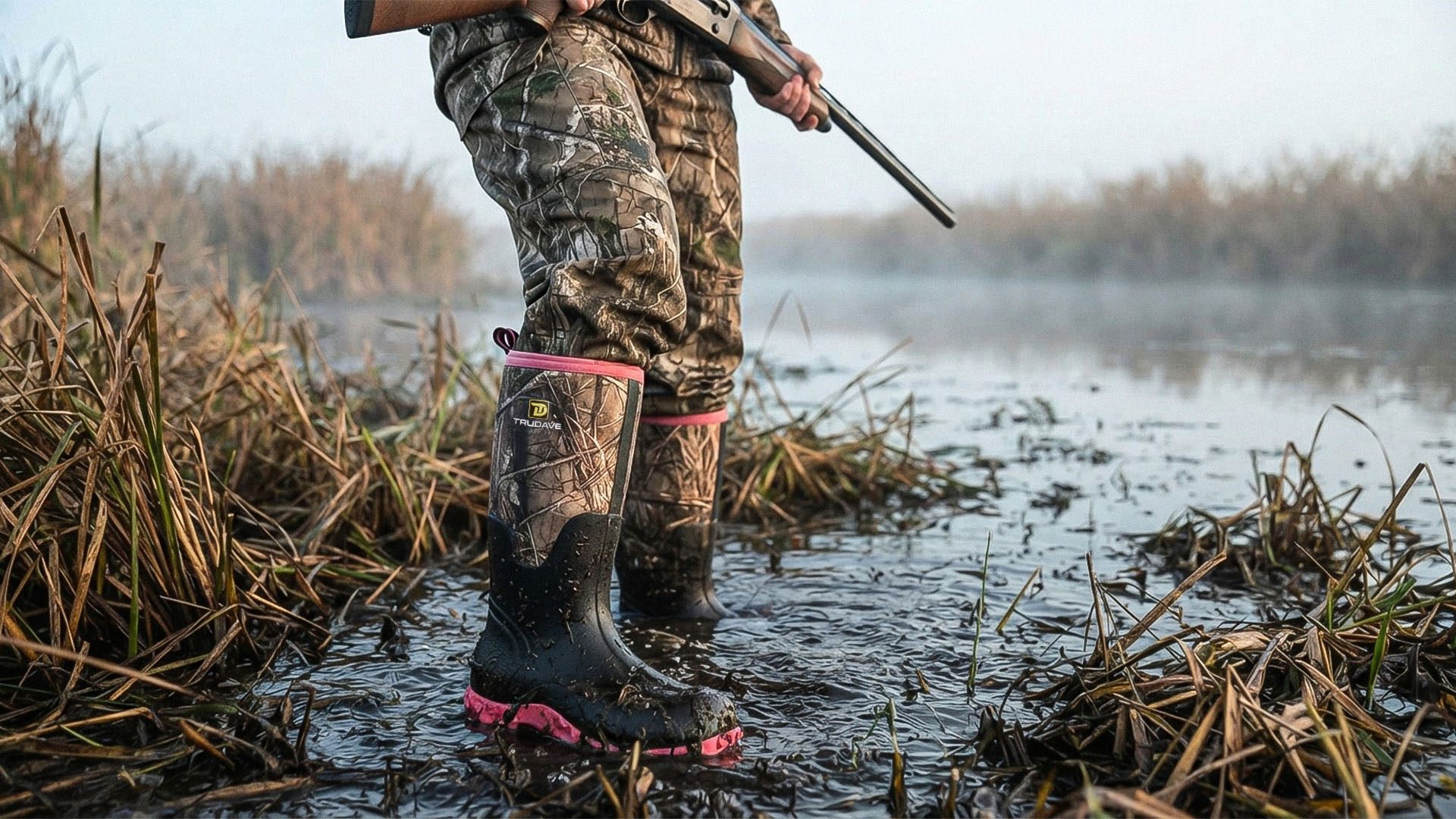
Hunters may benefit from waterproof hunting boots for snow goose hunting that provide secure heel retention, dependable mud traction, and enough waterproof protection for long days in changing agricultural conditions.
Waterproofing Is Essential
Snow goose fields may appear dry from a road.
Once inside, hunters can encounter:
- Meltwater
- Standing water
- Wet vegetation
- Mud
Tall Rubber Boots Can Be Excellent
Where terrain is relatively flat and wet, rubber hunting boots can provide practical protection.
They work especially well around:
- Muddy fields
- Shallow water
- Drainage edges
Secure Heel Fit Matters
Sticky mud pulls on every step.
A loose boot creates:
- Heel movement
- Fatigue
- Blisters
Boot Weight Matters Too
Snow goose hunters may carry significant equipment.
Heavy footwear adds even more effort.
Choose Traction Carefully
Agricultural mud can completely fill tread.
Aggressive soles help, but mud buildup still needs to be cleared.
Frozen Ground Creates a Different Problem
Before thawing, hard ruts can be:
- Uneven
- Slippery
- Difficult on ankles
Moderate Support Helps
Repeated walking across frozen clods and equipment tracks can stress feet.
Lace-Up Waterproof Boots Can Work on Firmer Fields
Where most of the hunt involves:
- Dry stubble
- Long road walks
- Moderate mud
lighter supportive waterproof boots may be more comfortable.
Choose Boots for the Entire Day
Do not choose footwear based only on morning conditions.
Ask what the field may look like:
- At noon
- After rain
- During snowmelt
Waders May Be Useful in Flooded Agricultural Habitat
Where water regularly rises above boot height, properly fitted hunting waders may provide additional protection.
Waders Are Not Necessary for Every Snow Goose Hunt
Many agricultural setups are better suited to:
- Tall waterproof boots
than full waders.
Waders Do Not Fix Deep Mud
A hunter can still become stuck in soft ground.
Move carefully.
Irrigation Ditches Can Be Deeper Than They Appear
Never step into unknown water blindly.
Drainage Channels May Cross Flat Fields
Tall vegetation can hide them.
Scout during daylight.
Grass Waterways Can Be Wet
Farm drainage often concentrates runoff into narrow low areas.
These strips may remain muddy long after the field dries.
Use Firm Crossings
Avoid damaging soft drainage structures.
Field Edges Can Provide Easier Walking
Margins may be firmer than the center.
But always respect:
- Crops
- Fences
- Property lines
Wind Is Central to Snow Goose Hunting
Snow geese use wind heavily during flight and landing.
Hunters need to understand:
- Wind direction
- Wind speed
- Gusts
before choosing a setup location.
Birds Typically Want a Controlled Approach
A good setup works with natural flight behavior rather than fighting it.
Study how geese are using the wind that day.
Wind Can Shift During Long Hunts
A morning setup may become poorly positioned after a major wind change.
Stay adaptable.
Crosswinds Can Move Flight Lanes
Birds may slide to one side of a field rather than approach directly.
Observe actual flock behavior.
Strong Wind Can Lower Birds
In some conditions, geese may travel closer to the ground.
But strong wind also makes hunting more physically difficult.
Calm Days Can Be Challenging
Without wind, birds may:
- Circle longer
- Approach from varied directions
- Remain more cautious
Concealment Matters More on Calm Days
Human movement becomes easier to detect.
Stay disciplined.
Snow Geese Have Excellent Vision
Large flocks mean many birds are watching the ground.
One suspicious movement can affect the entire group.
Flock Size Creates More Eyes
A small group may contain dozens of observers.
A large migration flock can contain hundreds or thousands.
Hide Movement
Reduce unnecessary:
- Standing
- Head movement
- Gear adjustment
when birds approach.
Agricultural Fields Offer Little Natural Cover
Hunters often need to use existing terrain or legal concealment carefully.
Field Depression Can Help
Even small low areas reduce visibility from distant birds.
Corn Residue Can Break Up Shapes
Where appropriate and lawful, existing crop residue may help hunters blend with the field environment.
Do Not Damage Standing Crops
Landowner permission does not automatically mean every type of disturbance is acceptable.
Follow property instructions.
Scouting Is More Important Than Equipment Quantity
A massive setup in the wrong field is still in the wrong field.
Find the birds first.
Watch Where They Finish Feeding
A field used repeatedly throughout the day deserves attention.
Note Exact Field Position
Do not record only:
“Birds in corn.”
Record:
- North end
- Low corner
- Flooded center
- Along a ditch
- Near a ridge
Birds May Favor One Section
The entire field may not be equally useful.
Food distribution can vary.
Wind and Food Together Determine Position
One area may offer both:
- Better feeding
- Better landing conditions
Mud Can Reveal Goose Activity
Fresh tracks and droppings can confirm field use after birds leave.
Tracks Can Be Dense
A heavily used feeding area may contain thousands of footprints.
Look for freshness.
Droppings Confirm Use
Fresh droppings can reveal where birds concentrated.
Feather Concentrations Add Evidence
Feathers may accumulate in heavily used areas.
But wind can move them.
Use several signs together.
Older Sign Can Mislead
A field heavily used three days ago may already be abandoned.
Current flight observation is stronger evidence.
Hunting Pressure Moves Birds
Snow geese can become extremely cautious after repeated pressure.
They may begin avoiding:
- Easy-access fields
- Common setup locations
- Frequently hunted zones
Do Not Expect Yesterday’s Success to Repeat Automatically
Birds learn.
Rescout.
Midday Movement Can Matter
Snow geese do not always fly only at dawn and dusk.
Weather and disturbance can create movement throughout the day.
Stay Alert Between Major Flights
A quiet period can end suddenly.
Feeding Flocks Can Pull Other Birds
Large groups on the ground may attract passing geese toward the same area.
This is one reason established feeding fields can become powerful concentration points.
But Birds Can Also Become Suspicious
Heavy hunting pressure changes how flocks evaluate ground activity.
Spring Conservation Seasons May Have Different Rules
Where special snow goose conservation frameworks exist, rules may differ from regular waterfowl seasons.
Hunters must verify current regulations for the exact jurisdiction.
Never Assume Spring Rules Apply Everywhere
Season structure varies geographically.
Snow Goose Identification Still Matters
Snow goose flocks may include:
- White morph birds
- Blue morph birds
and may occur near other goose species.
Blue Morph Birds Can Look Very Different
Hunters should study both major color forms.
Do Not Identify Only by White Plumage
Other white birds or geese may be present depending on location.
Use:
- Body shape
- Head
- Wing pattern
- Size
Ross’s Geese Can Be Confused With Snow Geese
In overlapping areas, hunters should know distinguishing features.
Use official identification resources.
Mixed Goose Flocks Require Attention
Do not assume every bird in a flock is the same species.
Low-Light Identification Can Be Difficult
If uncertain:
Do not shoot.
Positive Identification Comes First
Large flock excitement should never replace species confirmation.
Legal Limits Can Differ by Species
Know whether regulations distinguish among:
- Snow geese
- Ross’s geese
- Other geese
in the jurisdiction.
Migratory Bird Regulations Can Change
Before hunting, verify current official:
- Season dates
- Daily bag limits
- Possession limits
- Conservation-season provisions where applicable
- Shooting hours
- License and stamp requirements
- Legal equipment
- Non-toxic ammunition requirements
- Public-land regulations
Do Not Rely on Old Waterfowl Rules
Migratory bird regulations can change annually.
Use the current season.
Public Areas May Add Restrictions
Individual properties may regulate:
- Access
- Parking
- Hunting days
- Equipment
- Entry times
Private Agricultural Land Requires Clear Permission
Snow goose hunting often occurs on working farms.
Landowner relationships are central.
Ask Where You Can Drive
Do not assume field access is allowed simply because hunting is permitted.
Ask About Equipment Placement
Some landowners may have restrictions involving:
- Crops
- Field entrances
- Drainage
- Irrigation
Do Not Block Farm Access
Tractors and other equipment may need gates and roads.
Leave Gates As Directed
Working farms depend on correct livestock and equipment management.
Clean Up Completely
Large waterfowl hunts can generate significant gear and packaging.
Leave nothing behind.
Retrieve All Equipment
A single forgotten item can damage:
- Farm machinery
- Landowner trust
Pick Up Broken Pieces
Do not leave:
- Line
- Plastic
- Food packaging
in fields.
Roads and Property Boundaries Matter
Agricultural landscapes may contain multiple owners within a short distance.
Know where permission ends.
A Goose Landing Across the Fence Does Not Grant Access
Respect boundaries.
Retrieval Permissions Should Be Discussed Before Hunting
Do not wait until after a bird crosses property lines.
Safe Shooting Background Is Critical
Open farmland can contain:
- Houses
- Roads
- Livestock
- Farm workers
far beyond the immediate field.
Flat Ground Is Not a Backstop
Know the entire direction of every shot.
Low-Flying Geese Can Create Unsafe Angles
Never shoot toward:
- Partners
- Vehicles
- Buildings
- Livestock
Partner Position Must Be Clear
Large setups can spread hunters over a wider area.
Everyone needs to know:
- Who is where
- Which directions are safe
Communication Matters
Before birds approach, agree on:
- Safe sectors
- Movement
- Recovery responsibilities
Do Not Change Position Without Telling Others
Flat fields can make visibility deceptive.
Dogs Can Help With Recovery
Trained retrievers may be useful in suitable agricultural and wetland environments.
Mud Is Hard on Dogs Too
Deep fields can exhaust them rapidly.
Frozen Stubble Can Damage Paws
Corn and grain residue can be:
- Sharp
- Abrasive
Check Paws Regularly
Look for:
- Cuts
- Ice buildup
- Irritation
Snow Can Ball Between Toes
Remove ice before it causes problems.
Dogs Need Fresh Water
Do not rely on:
- Floodwater
- Agricultural runoff
Cold Wind Can Chill Wet Dogs
Provide appropriate shelter between retrieves.
Warm Spring Weather Can Cause Heat Stress
Conservation-season conditions may range from:
- Freezing dawn
- Warm afternoon
Monitor dogs carefully.
Dogs Need Shade on Warm Days
Agricultural fields often provide none.
Use safe artificial or vehicle shade where appropriate.
Recovery Can Be Difficult in Large Fields
A goose can fall into:
- Standing stubble
- Grass waterways
- Shallow water
- Mud
and disappear visually.
Mark Every Bird
Use:
- Utility pole
- Field corner
- Ditch
- Tree line
as reference.
Do Not Immediately Focus on the Next Flock
Recover downed birds promptly.
Wind Can Move Feathers, Not Birds on Land
Do not rely on feather location alone.
Wounded Geese Can Move
Search beyond the initial fall point.
Dogs Can Improve Recovery
Allow a trained retriever to work the area systematically.
Without a Dog, Use Organized Search Patterns
Work:
- Parallel lines
- Expanding circles
from the marked location.
Flooded Fields Complicate Recovery
A downed goose may drift slightly in water.
Watch carefully.
Ethical Shot Selection Improves Recovery
A bird flying toward:
- Deep drainage
- Neighboring property
- Unsafe background
may be a poor opportunity.
Warm Weather Requires Game Care
Snow goose hunting does not always mean freezing temperatures.
Spring conditions can warm quickly.
Keep harvested birds:
- Clean
- Cool
according to current food-safety guidance.
Direct Sun Warms Birds Quickly
Do not leave harvested game lying on dark wet soil or exposed ground longer than necessary.
Muddy Conditions Require Clean Storage
Use appropriate containers or game bags.
Prepare Before the Hunt
Bring the cooling equipment needed for expected conditions.
Common Snow Goose Hunting Mistakes
Hunting a Field Because Birds Used It Last Week
Snow goose movement changes rapidly.
Scouting Only the Roost
Feeding-field location matters more for many agricultural hunts.
Ignoring Wind
Flight and landing behavior are strongly wind-dependent.
Underestimating Spring Mud
Frozen access can turn into deep mud within hours.
Wearing Loose Boots
Mud suction makes poor fit exhausting.
Carrying Too Much Gear Too Far
Field conditions multiply every pound.
Assuming All White Geese Are Snow Geese
Positive identification matters.
Using Old Migratory Bird Regulations
Current rules must be checked every season.
Frequently Asked Questions
Where do snow geese usually feed during migration?
Snow geese commonly use harvested agricultural fields, grain stubble, flooded crop ground, grasslands, and other food-rich areas near suitable resting or roosting water.
Are flooded cornfields good for snow goose hunting?
They can be excellent when shallow water overlaps with available waste grain, allowing birds to feed, drink, and rest in the same area.
Does wind matter for snow goose hunting?
Yes. Wind strongly influences travel routes, flock approach, landing direction, and which parts of a field birds prefer.
Is snow goose hunting good after rain?
Rain can create newly flooded feeding habitat and fresh mud sign, but it can also make farm roads and fields extremely difficult to access.
What boots are best for snow goose hunting?
Waterproof hunting boots with secure heel fit and strong traction in mud, wet stubble, shallow water, and thawing agricultural ground are practical. Tall rubber boots can work especially well in flat flooded fields.
Are waders necessary for snow goose hunting?
Not always. Many agricultural hunts only require tall waterproof boots. Properly fitted hunting waders may be useful in deeper flooded fields or wetland edges, but they do not make deep mud or unknown drainage channels safe.
How important is scouting for snow goose hunting?
Extremely important. Snow geese are highly mobile, respond quickly to pressure and weather, and can change feeding fields within a short period.
Do snow goose hunting regulations vary?
Yes. Regular seasons, conservation-season frameworks, bag limits, equipment rules, shooting hours, licenses, non-toxic ammunition requirements, and public-land restrictions can vary by jurisdiction and year. Hunters should verify current official regulations before hunting.
Final Thoughts
Snow goose hunting teaches hunters that thousands of birds can make a landscape look easier to understand than it really is.
The flock is obvious.
The pattern is not.
One field holds more grain.
One low corner collects water.
One wind direction creates the best approach.
One warm afternoon turns frozen ground into deep mud.
One weather system brings new birds into the entire region.
Successful hunters learn to follow those changes.
Scout the feeding fields.
Watch migration movement.
Study the wind.
Check flooded ground.
Protect landowner relationships.
Plan vehicle access for what the field may look like later, not only what it looks like at sunrise.
Wear boots that let you cross frozen stubble, thawing mud, flooded crop ground, drainage ditches, wet grass, and long agricultural fields without making soaked feet or mud suction the reason the hunt ends early.
Use properly fitted waders when water depth truly requires them.
And when thousands of geese ignore several apparently identical fields and descend into one shallow flooded corner full of exposed grain, remember the lesson.
They did not choose the field because it looked good from the road.
They chose it because food, water, wind, and security all lined up in the same place.
